 Skip to content
Written By: Don Dodi
Fact Checked By: Kristen Brown
Reviewed By: Diego Rosenberg
You should be aware of the fact that most of the car water spots are not dirt, but you just let the water dries out and there are tiny mineral crystals that are left behind.
So, drying a car in the right way is actually important, otherwise the water spots can be formed during the drying stage, if they are not appeared during cleaning.
Basically, water spots are caused by the dissolved minerals such as: calcium, magnesium and silica that actually remains on the surface whenever water evaporates.
And, according to the automotive detailing studies: the hard water can contain over 200 parts per million of minerals, which can easily bond with the hot paint, glass and trim whenever you left your vehicle to the air-dry.
Plus, sunlight and warm panels can speed up evaporation process, that literally allows these minerals to harden and sometimes it digs into the clear coast as well, that result it to make a spots really difficult to remove later on.
Now-a-days, modern car paint is protected by the thin clean-coat layer, so repeated minerals and other deposits can slowly reduce the glossy look and smoothness of you car.
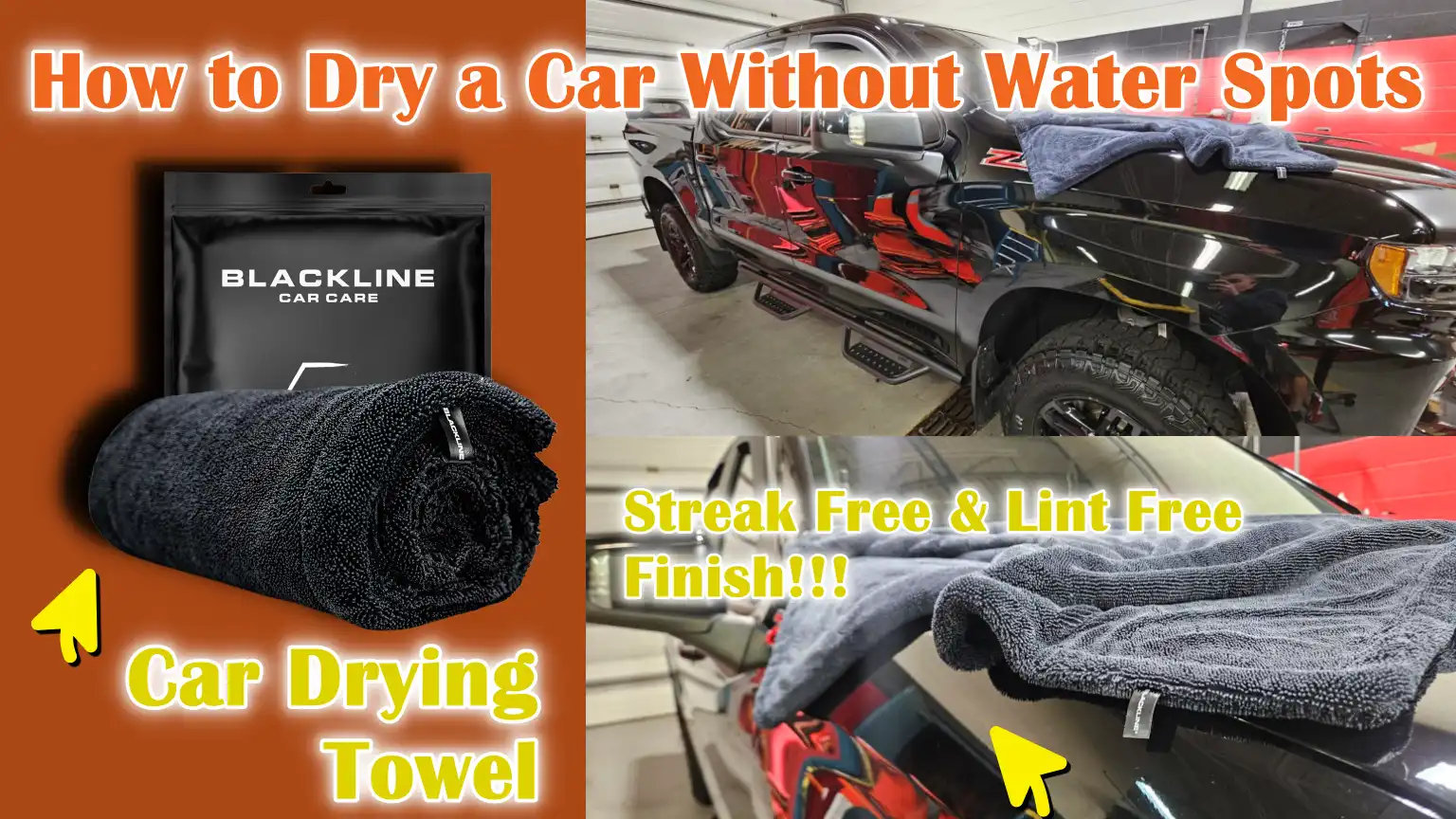
That’s why, you need to know How to Dry a Car Without Water Spots, so that you can prevent both stains and fine scratches as well.
Let’s, Understand About the Causes of Water Spots
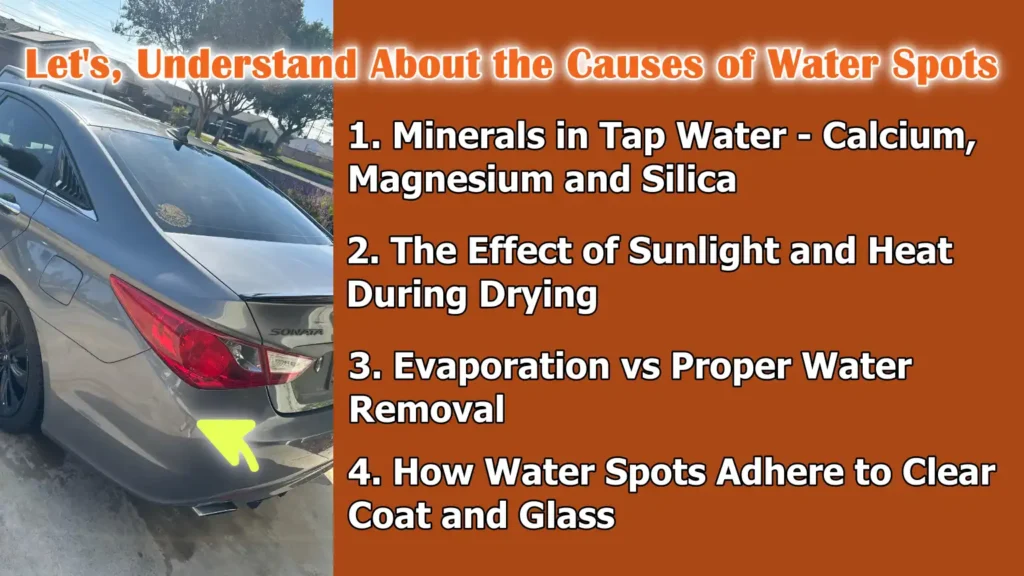
1. Minerals in Tap Water – Calcium, Magnesium and Silica
Most water used for washing cars contains dissolved minerals, particularly calcium, magnesium and silica.
These minerals are naturally present in tap water and are more prevalent in hard water areas.
When water sits on your car and begins to evaporate, the liquid portion turns into vapor, but the minerals are left behind.
These remaining minerals form white or light-colored deposits known as water spots.
The higher the mineral content in the water, the faster and more pronounced these spots will be, specially on dark-colored paint and glass.
This is why cars washed with untreated tap water are more susceptible to water spots if not dried quickly and properly.
2. The Effect of Sunlight and Heat During Drying
Sunlight and heat play a significant role in how quickly water spots form.
When a car is parked in direct sunlight, the paint, glass and metal panels heat up rapidly.
The hot surfaces cause the water to evaporate very quickly, not giving the minerals time to run off or be wiped away.
As a result, the minerals adhere firmly to the surface and can harden within minutes.
Over time, repeated exposure to sun-dried mineral deposits can weaken the clear coat and diminish its shine.
Drying your car in the shade or on a cool surface significantly reduces the risk of these stubborn, hard-to-remove spots.
3. Evaporation vs Proper Water Removal
Water spots are primarily caused by evaporation, not because the water itself is harmful.
When water evaporates naturally, it leaves behind everything that was dissolved in it.
Proper water removal means physically removing the water before it dries on its own.
Using tools like absorbent microfiber towels or air blowers removes both the water and the minerals simultaneously.
This simple step prevents minerals from depositing on the surface and is one of the most effective ways to completely avoid water spots.
4. How Water Spots Adhere to Clear Coat and Glass
A car’s paint is protected by a clear coat, which is smooth but also slightly porous at a microscopic level.
When mineral-rich water dries on this surface, the minerals can bond strongly to the clear coat and glass.
If the surface is hot, these minerals can bond even more strongly and begin to etch into the clear coat.
Glass is also vulnerable because the minerals can harden on its surface, reducing clarity and creating rough spots.
Once bonding or etching occurs, simply washing the vehicle is often not enough to remove the spots, which is why preventing them from forming during the drying process is far easier than trying to correct them later.
What are The Best Time and Environment for Drying Your Car
1. Drying in the Shade vs Drying in Direct Sunlight
Drying your car in the shade is the easiest and most effective way to prevent water spots.
When a car is in direct sunlight, its surface heats up very quickly, even if the ambient air temperature seems normal.
The hot paint and glass cause water to evaporate rapidly, leaving minerals behind before you can wipe them away.
In shaded areas, the car stays cooler, giving you more time to safely and evenly wipe away the water.
This slower drying process significantly reduces the likelihood of mineral deposits and makes the entire drying step much gentier and safer for the paint.
2. Ideal Temperature and Humidity Conditions
The best conditions for drying a car are mild temperatures and moderate humidity.
Very hot weather accelerates the evaporation process, while very cold conditions can make towels less effective at absorbing water.
Moderate humidity is helpful because it slows down the evaporation process just enough for proper drying.
In very dry air, water evaporates too quickly, leaving minerals behind, while very high humidity can lead to streaks if the water isn’t completely removed.
A comfortable outdoor temperature where you’re neither too hot nor too cold is usually ideal for drying your car without leaving spots.
3. Why Controlling Airflow During Drying is Important
Airflow might seem helpful because it removes water, but uncontrolled airflow can actually cause problems.
Strong winds can dry some parts of the car too quickly while other parts remain wet, leading to uneven drying and streaking.
Wind can also blow dust and debris onto the wet paint, increasing the risk of scratches when wiping.
Drying in a shaded area or garage helps maintain a consistent moisture level on the surface and keeps the paint clean during the drying process.
4. The importance of drying before water evaporates
Water spots form when water is allowed to dry naturally on the car’s surface.
The secret to a spot-free finish is removing the water before it evaporates.
When water is quickly wiped or blown away, the minerals are removed along with it, instead of being left behind.
This is specially important after washing, when large amounts of water accumulate on flat panels.
Drying quickly and thoroughly ensures that minerals don’t have a chance to settle, harden, or damage the paint and glass.
Tools
| Tool Name | What It Is | How It Helps Prevent Water Spots |
|---|---|---|
| Microfiber Drying Towels – Twisted Loop | Soft towels made with long, curly fibers that absorb large amounts of water. | It absorbs water quickly before drying out and leaving behind minerals. |
| Microfiber Drying Towels – Waffle Weave | Water Absorbent Square Waffle Pattern Towels. | This allows the towel to absorb water and keep it away from the surface. |
| Car Air Blower | An electric blower specially designed for drying cars. | It removes water from the surface without touching the paint. |
| Leaf Blower – Electric | A typical electric blower used to move air. | Pushes water away before it can evaporate. |
| Deionized (DI) Water System | A filtration system that removes minerals from water. | Even after drying, there is no mineral residue left in the water. |
| Filtered Water System | A water filter that reduces mineral deposits. | Reduces the amount of minerals left on the car. |
| Spray Sealant | A protective liquid sprayed during drying. | This creates a smooth layer through which water easily slides down. |
| Drying Aid | A lubricating spray used with a drying towel. | This allows the towel to slide off easily and remove any remaining water. |
How to Dry a Car Without Water Spots – Full Steps
1. Washing Technique to Minimize Standing Water
The drying process actually begins during the final rinse.
Using a slow, continuous stream of water allows the water to sheet off the car rather than breaking into small droplets.
This way, the water flows off the surface in a sheet, leaving less water to dry.
When less water remains on the paint, there’s less chance of minerals being left behind on the surface.
This simple washing habit makes drying faster and significantly reduces the risk of water spots, specially on flat areas like the hood and roof.
2. Using Air to Remove Water from Crevices
After washing, air is incredibly helpful for removing water from areas where towels can’t easily reach.
Water often hides around mirrors, door handles, badges, trim edges and wheel lug areas.
If this trapped water remains, it will drip later and create spots after the rest of the car is dry.
Using a gentle air blower forces the water out of these tight spaces before it has a chance to dry.
This step is crucial because it prevents unexpected drips that can ruin a clean finish.
3. Towel Drying with Minimal Pressure
When using drying towels, the goal is to lift the water from the surface, not rub the paint.
Soft microfiber towels are designed to quickly absorb water with very little pressure.
Applying too much pressure can spread dirt across the surface and cause fine scratches.
Simply laying the towel on the paint and gently moving it allows the fibers to safely absorb the water.
This method protects the clear coat and ensures that water and minerals are removed before they can dry.
4. Panel-by-Panel Drying Method
Drying one section of the car at a time gives you complete control over the process.
Instead of jumping around, completely finishing one panel before moving on to the next prevents water from sitting on any surface for too long.
This method is specially helpful in warm weather, where water evaporates quickly.
By focusing on one panel at a time, you ensure that no surface remains wet long enough for minerals to deposit and create water spots.
Now, Time for Learning The Right Way to Dry with a Towel
1. Patting vs Rubbing with a Towel
Patting involves placing the towel on the surface and allowing it to absorb the water without rubbing.
This method is safer for car paint because it minimizes movement on the surface, reducing the risk of scratches.
Gently rubbing with a towel can also be effective, but it should be done with very light pressure and a clean, high-quality microfiber towel.
The main goal is to remove the water while creating as little friction as possible.
Less friction means a lower chance of swirl marks and less stress on the clear coat.
2. Folding the Towel for Maximum Absorption
Folding a microfiber towel correctly makes drying more efficient and safer.
When the towel is folded into sections, each side can absorb water independently.
This allows you to quickly switch to a fresh, dry surface of the towel when one side becomes saturated.
The folded towel also creates a thicker layer, which helps absorb more water and provides a soft cushion between your hand and the paint.
This simple technique improves absorption capacity and reduces the likelihood of spreading dirt across the surface.
3. Changing Towels to Avoid Saturation
Once a towel becomes too wet, it can no longer efficiently absorb water.
A saturated towel will push water around on the surface instead of lifting it, potentially causing streaks and water spots.
Using multiple clean, dry towels ensures that the water is removed quickly and completely.
Changing towels at the appropriate time helps prevent minerals from being spread across the paint and keeps the drying process smooth and controlled.
4. Avoiding Swirl Marks During Drying
Swirl marks often occur during drying when towels are dirty, too much pressure is applied, or there is still loose dirt on the surface.
Using clean microfiber towels, applying very light pressure and keeping the towel well-lubricated with a drying aid can significantly reduce this risk.
Drying in straight lines rather than random movements also helps protect the paint.
Careful towel technique during drying is one of the most important steps in maintaining a smooth and glossy finish on your car over time.
How to Use Drying Aids to Prevent Water Spots
1. What are Drying Aids and How Do They Work?
Drying aids are spray products designed for use during the car drying stage, while the car is still wet.
They work by creating a slick layer between the towel and the paint, allowing water to be easily removed.
This slick layer helps the water slide off the surface rather than clinging to it and drying into mineral spots.
Many drying aids also contain mild protective elements that help slow down the process of water spot formation in the future.
By reducing friction and improving the water removal process, drying aids make the drying process safer and more effective.
2. Spray Waxes vs Quick Detailers
Spray waxes and quick detailers are the most common types of drying aids, but they serve slightly different purposes.
Spray waxes focus more on enhancing shine and adding a thin layer of protection that helps water bead up and run off quickly.
Quick detailers are primarily designed to increase lubricity and remove light water marks or fingerprints.
Both can be used during drying, but spray waxes are better for added protection, while quick detailers are better for making the towel glide easily.
The right choice depends on whether your main goal is protection or ease of drying.
3. How Drying Aids Provide Lubrication and Protection
The lubrication in drying aids reduces friction between the towel and the paint, minimizing the risk of swirl marks.
This is important because even clean paint can have small particles that can cause scratches when rubbed against the surface.
Many drying aids also leave behind a thin protective layer that helps repel water and minerals during future washes.
This protection prevents minerals from adhering to the surface, reducing the likelihood of water spots reappearing.
4. Application for a Streak-Free Finish
Using too much product during drying is a common cause of streaks.
A light mist on one panel at a time is usually sufficient to help the towel glide easily.
Drying in the shade and on a cool surface also helps prevent streaks, as heat can cause the product to dry too quickly.
Using a clean, dry towel for the final wipe ensures that any remaining product is evenly removed, resulting in a clean and streak-free finish.
Now, Learn About Advanced Spot-Free Drying Techniques
1. The Sheeting Method Explained
The sheeting method is an advanced rinsing technique that helps minimize water spots before drying.
Instead of spraying water at high pressure, a gentle and continuous flow of water is allowed to run over the car’s surface.
This causes the water to cling together and flow in large sheets rather than breaking into small droplets.
With fewer droplets remaining on the surface, there is less water available to evaporate and leave behind mineral deposits.
This method works best on well-maintained paint that already has some form of protection, such as wax or sealant, as water flows more easily over smooth surfaces.
2. Using Deionized Water for the Final Rinse
Deionized water is water from which minerals such as calcium, magnesium and silica have been removed.
Because water spots are caused by these minerals, deionized water will not leave spots even if it dries on the surface.
This makes it one of the most effective methods for achieving a spot-free finish.
Many professional detailers use deionized water systems for the final rinse because it allows the car to air dry safely with minimal risk of water spots.
For home users, this method significantly reduces drying time and virtually eliminates mineral staining.
3. The Benefits of Touchless Drying
Touchless drying uses air instead of towels to remove water from the car.
By avoiding physical contact with the paint, the risk of scratches and swirl marks is greatly reduced.
A strong, controlled airflow removes water from the surface and from tight areas such as mirrors, grilles and trim edges.
Touchless drying is particularly beneficial for newly polished or coated vehicles where maintaining a pristine finish is crucial.
Although it can’t remove every single drop of water on its own, it significantly reduces the need for towel contact.
4. Professional-Level Drying Equipment
Professional-level drying equipment is designed to remove water quickly and safely.
High-powered car blowers deliver filtered, warm air that dries surfaces rapidly without blowing dust onto the paint.
Advanced microfiber drying towels are made with special fiber patterns that absorb more water with less effort.
Some professionals even use deionized water systems in conjunction with air drying for near-perfect results.
These tools help ensure faster drying, fewer water spots and long-lasting protection for your car’s paint and glass.
What are The Common Drying Mistakes That Cause Water Spots
1. Letting the Car Air Dry
Letting your car air dry is the most common cause of water spots.
When water dries naturally, the liquid evaporates, but the minerals within the water remain on the surface.
These minerals turn into visible spots on the paint, glass and trim.
Air drying happens unevenly, specially in warm or windy weather, causing some areas to dry faster than others.
This uneven drying makes water spots more pronounced and harder to remove later.
Manually removing the water before it evaporates, either with a towel or an air blower, is much safer for your car’s finish.
2. Using Household Towels or Chamois
Household towels and traditional chamois are not designed for car paint.
Many household cloths are abrasive and don’t absorb water evenly, spreading water and dirt across the surface instead of removing it.
Chamois can trap dirt within their surface and rub it against the paint, increasing the risk of scratches.
These materials also leave streaks because they don’t absorb water as efficiently as microfiber towels.
Using the wrong drying materials can undo all the hard work you put into properly washing your car.
3. Drying in Direct Sunlight
Drying your car in direct sunlight significantly increases the likelihood of water spots.
The sun heats the car’s surface, causing the water to evaporate very quickly.
This rapid evaporation leaves minerals behind almost instantly, sometimes even before you’ve finished drying a section.
The hot surfaces can also cause water spots to adhere more strongly to the paint and glass.
Drying in the shade or during the cooler parts of the day allows more time for safe and even water removal.
4. Reusing Dirty or Dropped Towels
Reusing towels that are already dirty or have been dropped on the ground is a serious mistake.
Towels easily pick up sand, dust and small particles that can scratch the paint when rubbed against the surface.
These small particles can also create swirl marks that dull the finish over time.
Dirty towels spread leftover minerals and water instead of removing them.
Always using clean, dry towels and replacing them when they become dirty protects the paint and prevents water spots and scratches.
How to Properly Dry Different Car Surfaces
1. Paint and Clear Coat
The paint and clear coat are the most sensitive parts of the car and require the most careful drying.
The clear coat is a thin protective layer that gives the car its shine, but it is easily scratched and prone to water spots from mineral deposits.
Using a clean microfiber towel with very light pressure helps absorb water without scratching the surface.
Drying immediately after washing is crucial to prevent mineral buildup.
Working panel by panel and keeping the surface cool reduces the risk of water spots and helps maintain a smooth, glossy finish.
2. Glass and Mirrors
Water spots are more visible on glass and mirrors than on paint because the minerals dry into sharp, noticeable marks.
These surfaces should be dried with a dedicated microfiber towel that is clean and free of any product residue.
Waffle-weave towels are particularly good for glass as they absorb water into the fabric rather than spreading it.
Drying the glass early in the process prevents mineral deposits from hardening and helps maintain clear visibility.
A final wipe with a dry cloth ensures no streaks or residue are left behind.
3. Wheels and Brake Calipers
Wheels and brake calipers accumulate heavy dirt, brake dust and road grime, making them more susceptible to water spots and staining.
These areas should be dried last with a separate towel that has not been used on the paint or glass.
Any remaining water on the wheels can dry quickly due to the heat generated from driving, causing minerals to adhere firmly to the surface.
Thorough drying helps prevent water spots and rust, specially on painted or polished wheels.
Removing trapped water around lug nuts and calipers also prevents streaks and mineral deposits.
4. Trim, Badges and Door Edges
Trim, badges and door edges often trap water in small gaps and crevices.
If this water isn’t removed, it can later drip out and leave streaks on previously dried panels.
Using compressed air or carefully placing microfiber towels helps remove water from these tight spaces.
Plastic and rubber trim are easily stained by minerals, causing them to turn white or chalky over time.
Thoroughly drying these areas keeps them clean, prevents staining and helps maintain a clean and polished look.
Read More:
What to Do If Water Spots Appear After Drying
1. Identifying Fresh vs Old Water Spots
Not all water spots are created equal and understanding the difference helps in choosing the right solution.
Fresh water spots are formed by mineral deposits on the surface and typically appear as light white or hazy marks.
These spots haven’t yet etched into the clear coat or glass and are easier to remove.
Older water spots form when minerals remain on a hot surface for an extended period and begin to etch into the clear coat or glass.
These spots often feel rough to the touch and may persist even after washing.
Identifying whether a spot is fresh or old saves time and prevents unnecessary damage during removal.
2. Quick Removal Methods
Fresh water spots can often be removed quickly if treated promptly.
A light wash with clean water and proper drying can sometimes remove them before they harden.
Using a mild quick detailer or drying aid with a soft microfiber towel helps dissolve and lift mineral residue from the surface.
Acting quickly is crucial because the longer the minerals remain on the paint, the more likely they are to bond strongly and become difficult to remove later.
3. Safely Using Water Spot Removers
Water spot removers are designed to safely break down mineral deposits when used correctly.
These products typically contain mild acids that, when applied as directed, dissolve the minerals without damaging the surface.
It’s essential to use them on a cool surface and prevent the product from drying.
Thoroughly rinsing and drying the area after use prevents residue and further spotting.
Overuse of strong removers or using them in direct sunlight can damage the clear coat, so caution is always necessary.
4. When is Polishing Necessary?
If water spots have penetrated deep into the clear coat or glass, simple cleaning and spot removers may not be effective.
In such cases, polishing becomes necessary to level the surface and remove the damaged layer.
Polishing removes a very small amount of the clear coat to restore smoothness and shine.
This process must be done carefully because the clear coat is thin and cannot be replaced.
Knowing when to polish and when to stop helps protect the paint while restoring the car’s appearance.
How to Ensure Long-Term Protection Against Water Spots
1. Applying Paint Sealants and Ceramic Coatings
Paint sealants and ceramic coatings create a protective layer on the clear coat, making it difficult for water and minerals to adhere.
These products smooth the surface at a microscopic level, causing water to bead up and roll off the paint instead of drying on it.
When water runs off quickly, fewer minerals are left behind to form spots.
Ceramic coatings also offer longer-lasting protection than waxes, reducing water spots for months or even years with proper maintenance.
This extra layer not only prevents spots but also keeps the paint looking shiny and makes it easier to clean.
2. Regular Washing for Maintenance
Regular washing plays a crucial role in preventing long-term damage from water spots.
Mineral deposits, dirt and environmental pollutants can accumulate on the surface over time, increasing the likelihood of water spot formation and making them harder to remove.
Frequent, gentle washing removes these contaminants before they can firmly bond to the paint and glass.
Washing also refreshes protective layers like sealants, allowing them to function more effectively.
Consistent maintenance reduces the need for aggressive cleaning or polishing later on.
3. Using a Filtered Water System at Home
Filtered water systems remove or reduce minerals like calcium and magnesium from tap water.
By lowering the mineral content, filtered water significantly reduces the likelihood of water spot formation during washing and rinsing.
Deionized or softened water is specially helpful in areas with hard water, where spotting is more common.
Using filtered water makes drying easier, reduces drying time and protects paint and glass from repeated exposure to minerals over time.
Also, using deionized water for the final rinse, is really effective way to prevent drying water spots, as deionized systems can remove dissolved minerals from the water before it actually hits the car, so whenever the water evaporates, then it doesn’t leave any mineral residue behind, even this method is widely used in professional car wash systems to achieve the truly spot-free finish after cleaning process take place.[¹]
4. Regular towel care and replacement are also crucial
Drying towels play a vital role in preventing water spots and paint damage.
Over time, towels can become less absorbent and accumulate dirt or mineral residue.
Properly washing and replacing microfiber towels when they become worn ensures they continue to absorb water rather than simply spreading it around.
Using clean, high-quality towels prevents streaks, scratches and leftover mineral deposits.
Proper towel care promotes safe drying practices and helps maintain a flawless finish over time.
Now, Time for the Professional Tips for Spot-Free Results Every Time
1. Drying Sequence for Optimal Efficiency
Professionals follow a specific drying sequence to prevent water from dripping onto already dried areas.
Drying typically starts from the top of the car and works its way down, as gravity naturally pulls water downwards.
The roof, windows and upper panels are dried first, followed by the doors, fenders and lower panels.
This sequence prevents re-wetting and keeps water from sitting on flat surfaces for too long.
Working in this order ensures faster water removal and reduces the likelihood of mineral spots forming.
2. Tips on the Number of Towels
Using the right number of towels is a crucial professional technique.
One towel often becomes saturated too quickly and stops absorbing water effectively.
Professionals typically use multiple towels, replacing them as soon as they become damp.
Using separate towels for paint, glass and wheels also prevents the spread of dirt and minerals.
Using enough clean, dry towels speeds up the drying process and provides better control over water removal.
3. How Professionals Avoid Re-Spotting
Re-spotting occurs when hidden water droplets drip after the car has been dried.
Professionals prevent this by using compressed air to remove water from crevices, trim, badges and door handles before towel drying.
They also inspect the car after drying and immediately wipe away any new drips.
Applying a drying aid or sealant helps water bead up and slide off the surface, rather than clinging to it.
These extra steps prevent late-dripping water from creating new spots.
4. Maintaining Consistent Drying Habits
Maintaining consistent drying habits makes it easier to achieve spot-free results every time.
Drying the car immediately after washing, using clean tools and working in a shaded area are all effective techniques when practiced regularly.
Professionals don’t rush the drying process because careful and deliberate drying prevents mistakes.
Over time, these habits protect the paint, reduce the need for major corrections and keep the car looking clean and shiny for longer.
Conclusion – How to Dry a Car Without Water Spots
Now, you have clearly understood that most of the water spot problems can be avoided with these easy and quick drying habits.
As, when mineral-rich water is allowed to dry on paint, glass and trim, specially on hot surfaces, water spots can form.
Drying the car quickly in the right environment and with the right tools removes these minerals before they can harden or damage the clear coat.
Simple habits like drying in the shade, using clean microfiber towels, controlling water flow during washing and removing trapped water from tight spaces make a big difference.
Protective layers like sealants or ceramic coatings further reduce mineral bonding by causing water to bead up and slide off the surface.
Over time, consistent and careful drying not only prevents visible spots but also maintains shine, paint smoothness and the long-term health of the surface.
When drying is done correctly, the car stays cleaner longer, requires less corrective work and maintains a well-maintained, professional look.
Now, you can comment down you feedback or unsolved questions below.
Frequently Asked Questions
Q1. Why do water spots appear on a car after it dries?
Answer: Water spots form when water containing minerals like calcium and magnesium dries on the car’s surface. As the water evaporates, these minerals are left behind, creating white or light-colored marks. Heat and sunlight accelerate this process, which is why water spots often appear after washing or drying a car in direct sunlight. If the water is removed before it evaporates, the minerals are removed with it and water spots do not form.
Q2. Is air drying a good way to prevent water spots on a car?
Answer: Air drying a car is not recommended because it allows the water to dry naturally on the surface. As the water evaporates, the minerals are left behind, causing spots on the paint, glass and trim. Air drying is specially risky in hot or windy weather, where the water evaporates quickly. It is safer and more effective to remove the water with a towel or air blower before it evaporates.
Q3. What is the best way to dry a car without leaving water spots?
Answer: The best way to dry a car without leaving water spots is to dry it immediately after washing, in the shade, using clean microfiber drying towels and gentle techniques. Removing water panel by panel and using air to remove water from tight areas helps prevent hidden water droplets. The most important thing is to remove the water before it evaporates and leaves behind minerals.
Q4. Do microfiber towels really prevent water spots?
Answer: Microfiber towels help prevent water spots because they absorb large amounts of water quickly and safely. Good quality microfiber lifts the water off the surface rather than spreading it around. When used with light pressure on clean paint, microfiber towels reduce drying time and minimize the chance of minerals drying onto the surface. Using multiple clean towels also improves results.
Q5. Can drying aids help prevent water spots?
Answer: Drying aids can be very helpful in preventing water spots. They create a slick layer on the surface, allowing water to sheet off more easily as it dries. This reduces friction between the towel and the paint and helps remove any remaining water before it dries. Many drying aids also provide a light layer of protection, further reducing the likelihood of water spots in the future.
Q6. Is it better to dry your car in the morning or evening?
Answer: It’s best to dry your car early in the morning or late in the evening because the temperature is typically cooler and there is less direct sunlight. Water dries more slowly on a cooler surface, giving you more time to remove it. Drying at these times significantly reduces the risk of water spots compared to drying in the middle of the day.
Q7. How does hard water affect car drying?
Answer: Hard water has a higher mineral content, which increases the risk of water spots. When hard water dries on paint or glass, it leaves behind more mineral residue. In areas with hard water, drying quickly becomes even more crucial. Using filtered or deionized water can significantly reduce the problem of water spots.
Q8. Can water spots damage car paint if left untreated?
Answer: Yes, water spots can damage car paint if left untreated for extended periods. The minerals can gradually etch into the clear coat and, in severe cases, cause permanent damage. Removing water spots may require polishing, which removes a thin layer of the clear coat. Preventing water spots during drying is much easier than fixing the damage later.
Q9. What should I do if water spots appear after drying?
Answer: If water spots appear immediately after drying, they should be addressed as soon as possible. Fresh water spots can usually be easily removed with a light wash or a quick detailer. The longer the spots remain, the more difficult they will be to remove. Taking immediate action helps prevent permanent damage and reduces the need for harsh cleaners or polishing.
Q10. How many towels should I use to properly dry my car?
Answer: Using more than one towel is essential for proper drying. One towel often becomes too saturated to effectively absorb water. Using several clean towels allows you to switch to a fresh one as needed, speeding up the drying process and minimizing streaks and spots. Having separate towels for the paint, glass and wheels also helps protect the surfaces.
Q11. Does ceramic coating completely prevent water spots?
Answer: Ceramic coating helps reduce water spots but does not completely eliminate them. It creates a smooth surface that allows water to bead and roll off easily, minimizing mineral deposits. However, if the water is allowed to dry, the minerals can still dry onto the surface. Proper drying is still necessary even on coated cars.
References:
[1] The Advantages of Deionized Water in Car Washing
https://ncswash.com/the-advantages-of-deionized-water-in-car-washing/

Guys, I’m a car audio enthusiast and customization expert and I love clear sound and clean installation. Plus, I have spent years helping people build their dream audio setups. And whenever I’m working on cars, I probably listen to music and thinks about the next big upgrade.
