
Written By: Don Dodi
Fact Checked By: Kristen Brown
Reviewed By: Diego Rosenberg
It is true that: the dirtiest and most vulnerable part of your vehicle is undercarriage, but the problem with this it rarely visible.
In the entire bottom section; it has parts such as: frame, suspension, exhaust system, brake lines, fuel lines and protective panels as well.
So, the thing is; this area literally exposed to the harsh conditions with the road dust, mud, water, salt, oil residue and there are small stones as well that can hit the parts while driving.
And, according to the automotive maintenance studies, if the dirt and salt trapped under a vehicle then it is one of the leading causes of rust, corrosion and even premature part failure as well, or if you lives in the regions with the heavy rain, snow, coastal air or poorly maintained roads then you need to check them regularly.
Also, over the period of time, this buildup actually weakens metallic components, damage protective coatings and even it can affect braking and suspension performance as well, even when you won’t see any visible signs from the outside.
So, this guide is all about How to Clean Undercarriage of Car, as regular undercarriage cleanup actually helps you to wash off the corrosive materials and literally prevents moisture from sitting on the metallic surfaces.
Even, you can detect the leaks, cracks or possible rust way more early than you would notice, that’s how it extends the overall lifespan of the car.
Why Underbody Cleaning is Actually Important?
1. Protection Against Rust and Corrosion on Metal Parts
The underside of a car is made up of numerous metal parts that are constantly exposed to water, dirt, road salt and moisture from the road surface.
When these elements remain on the metal for extended periods, they gradually react with oxygen, leading to rust and corrosion.
This process is accelerated in wet or salty conditions and often begins in hidden areas that are difficult to see.
Once rust starts, it spreads and weakens the metal, reducing its structural integrity over time.
Regular undercarriage cleaning removes salt, mud and moisture before they can accumulate and damage the metal, helping to prevent rust and keeping essential parts strong and secure.
2. Protection of Brake Lines, Fuel Lines and Suspension Parts
Critical systems such as brake lines, fuel lines and suspension components run along the underside of the car and are directly exposed to road conditions.
Dirt and grime can trap moisture around these parts, increasing the risk of corrosion or blockages.
In severe cases, corroded brake or fuel lines can crack or leak, potentially leading to dangerous driving conditions or complete system failure.
Suspension parts can also experience reduced movement and premature wear when dirt accumulates around joints and mounts.
Underbody cleaning helps keep these parts free from harmful buildup, allowing them to function correctly and reducing the likelihood of sudden or costly failures.
3. Reduced Repair and Maintenance Costs in the Long Run
When dirt, salt and debris are allowed to accumulate on the underside of a car, minor problems often go unnoticed until they become serious and expensive to repair.
Rusted bolts, seized components, corroded lines and weakened structural parts typically require extensive repairs or parts replacement.
Regular undercarriage cleaning is a low-cost maintenance step that helps prevent these problems from developing.
By removing harmful substances before they can cause damage, car owners can avoid unexpected repair bills and reduce the overall cost of vehicle maintenance over the years.
4. Improved Vehicle Longevity and Structural Integrity
A vehicle’s structural integrity depends heavily on the condition of its underbody and frame.
Rust gradually weakens these structures, reducing the car’s ability to withstand stress, weight and impacts.
Over time, this can affect driving stability, safety and overall reliability.
A clean undercarriage allows protective coatings to last longer and keeps metal parts in better condition.
By maintaining the underside of the car, owners help preserve the vehicle’s structural integrity, leading to a longer lifespan and improved performance over time.
5. Importance in Coastal, Snowy, Muddy and Off-Road Driving Conditions
Cars driven in coastal areas are exposed to salt-laden air, which accelerates the rusting process even without direct contact with water.
In snowy regions, road salt used for de-icing adheres to the undercarriage and aggressively attacks metal surfaces.
In muddy and off-road conditions, thick layers of dirt accumulate in crevices, trapping moisture for extended periods.
These environments significantly increase the risk of corrosion and mechanical damage.
In such conditions, undercarriage cleaning is essential, not optional.
Regular cleaning helps remove the specific contaminants associated with these environments, preventing premature deterioration of the vehicle and ensuring safe operation in challenging driving conditions.
When Should You Clean Your Undercarriage?
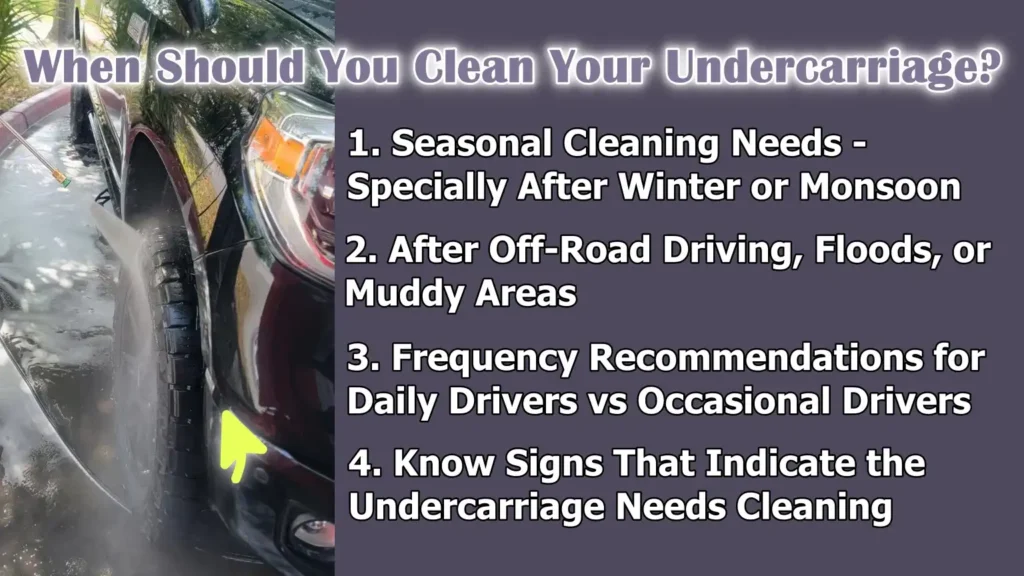
1. Seasonal Cleaning Needs – Specially After Winter or Monsoon
Weather conditions significantly impact the rate at which dirt and contaminants accumulate on a car’s undercarriage.
In winter, roads are often coated with salt or chemical de-icers, which stick to the undercarriage and accelerate the rusting process on metal parts.
During monsoons or heavy rains, water mixed with mud, sand and road grime splashes onto the undercarriage and gets trapped in small gaps and joints.
If this moisture isn’t removed, it creates the perfect environment for rust to form.
Cleaning the undercarriage at the end of winter or after prolonged rain washes away these contaminants and prevents long-term, unseen damage to the metal.
2. After Off-Road Driving, Floods, or Muddy Areas
Driving on off-road routes, flooded roads, or muddy areas can leave a thick layer of dirt, mud and debris on the undercarriage.
This dirt is heavier and more difficult to remove than normal road dust and often clogs drainage holes.
Mud can retain moisture for weeks, leaving metal parts constantly wet and increasing the risk of rust and wear.
Floodwater may also contain contaminants such as oil, chemicals, or sewage, which can damage protective coatings and rubber parts.
Cleaning the undercarriage as soon as possible after such driving conditions helps prevent trapped moisture, rust and hidden damage from accumulating over time.
3. Frequency Recommendations for Daily Drivers vs Occasional Drivers
How often the vehicle is driven has a significant impact on how often the undercarriage should be cleaned.
Cars used daily are regularly exposed to road grime, water and pollutants, which means dirt accumulates quickly underneath.
These cars benefit from more frequent undercarriage cleaning to prevent gradual damage.
On the other hand, cars that are driven infrequently may accumulate less dirt on a daily basis, but if they are left unused for long periods of time, specially in humid environments, they may suffer damage from moisture buildup.
Regular, but less frequent, cleaning is still necessary to ensure that dirt, moisture and contaminants don’t accumulate and cause rust while parked.
4. Know Signs That Indicate the Undercarriage Needs Cleaning
There are several clear signs that indicate it’s time to clean the undercarriage.
Mud or dirt dripping from the undercarriage after driving is a common sign.
Strange odors, specially after rain or driving on wet roads, can indicate trapped moisture or organic debris.
Squeaking or stiffness in suspension movement can occur when dirt accumulates around joints and parts.
Rust spots on the underside of the vehicle, peeling metal, or wet areas are also warning signs.
Paying attention to these signs and cleaning the underside promptly can prevent minor problems from turning into serious and costly issues.
How to Ensure Safety By Taking Precautions Before Cleaning the Undercarriage Part
1. Ensuring the Engine and Exhaust System Are Completely Cool
Before cleaning the undercarriage, it’s crucial to ensure the engine and exhaust system are completely cool.
After driving, the exhaust pipe, catalytic converter and engine components can remain very hot for extended periods.
Pouring cold water on hot metal can cause a sudden temperature change, which can crack parts or damage protective coatings.
Accidentally touching hot surfaces also increases the risk of serious burns.
Allowing the vehicle to cool completely maintains safe working conditions and helps prevent heat damage to vital components during the cleaning process.
2. Using Wheel Chocks and the Parking Brake for Stability
Stability is crucial when working around or under the vehicle.
Even the slightest movement can be dangerous, specially on uneven or sloped surfaces.
Applying the parking brake locks the wheels in place, while wheel chocks prevent the vehicle from rolling forward or backward.
This extra support is even more important when using water, as wet surfaces can be slippery.
Properly securing the vehicle before cleaning reduces the risk of accidents and ensures that the vehicle remains firmly in place throughout the cleaning process.
3. Proper Ventilation When Cleaning in Closed Spaces
Cleaning the undercarriage often involves water, cleaning agents and loose dirt, which can produce fumes or strong odors.
When done in a garage or enclosed space, poor airflow can cause moisture to accumulate, making the air uncomfortable or unsafe to breathe.
Some cleaning products can also release vapors that should not be inhaled for long periods.
Ensuring good ventilation by opening doors and windows or using fans keeps fresh air flowing, reduces humidity and creates a safe environment during cleaning.
4. Wear protective gloves, goggles and clothing
The undercarriage contains sharp edges, loose debris, rust fragments and chemical residue from the road.
Without proper protection, hands and eyes can easily be injured.
Wearing gloves helps protect the skin from cuts, chemicals and dirt, while goggles protect the eyes from dirt and splashes.
Protective clothing prevents stains and reduces direct contact with harmful substances.
Using basic safety equipment makes the cleaning process safer and more comfortable, specially when working close to the ground.
5. Avoid spraying water directly onto sensitive electrical components
Modern vehicles have many electrical components underneath, including sensors, connectors and wiring harnesses.
Spraying high-pressure water directly onto these parts can cause moisture to penetrate seals and connectors, potentially causing electrical faults or triggering warning lights.
Although the undercarriage is designed to withstand some degree of water, it is important to spray with control and caution.
Avoiding applying direct pressure to sensitive electrical components helps prevent damage and ensures the vehicle continues to function properly after cleaning.
Tools
| Tool or Material | What It Is | Why It Is Needed |
|---|---|---|
| Water Source (Hose or Pressure Washer) | A simple water hose or pressure washer that sprays water with controlled force. | Water is necessary to wash away loose dust, mud, salt and road grime from the underside of the vehicle. |
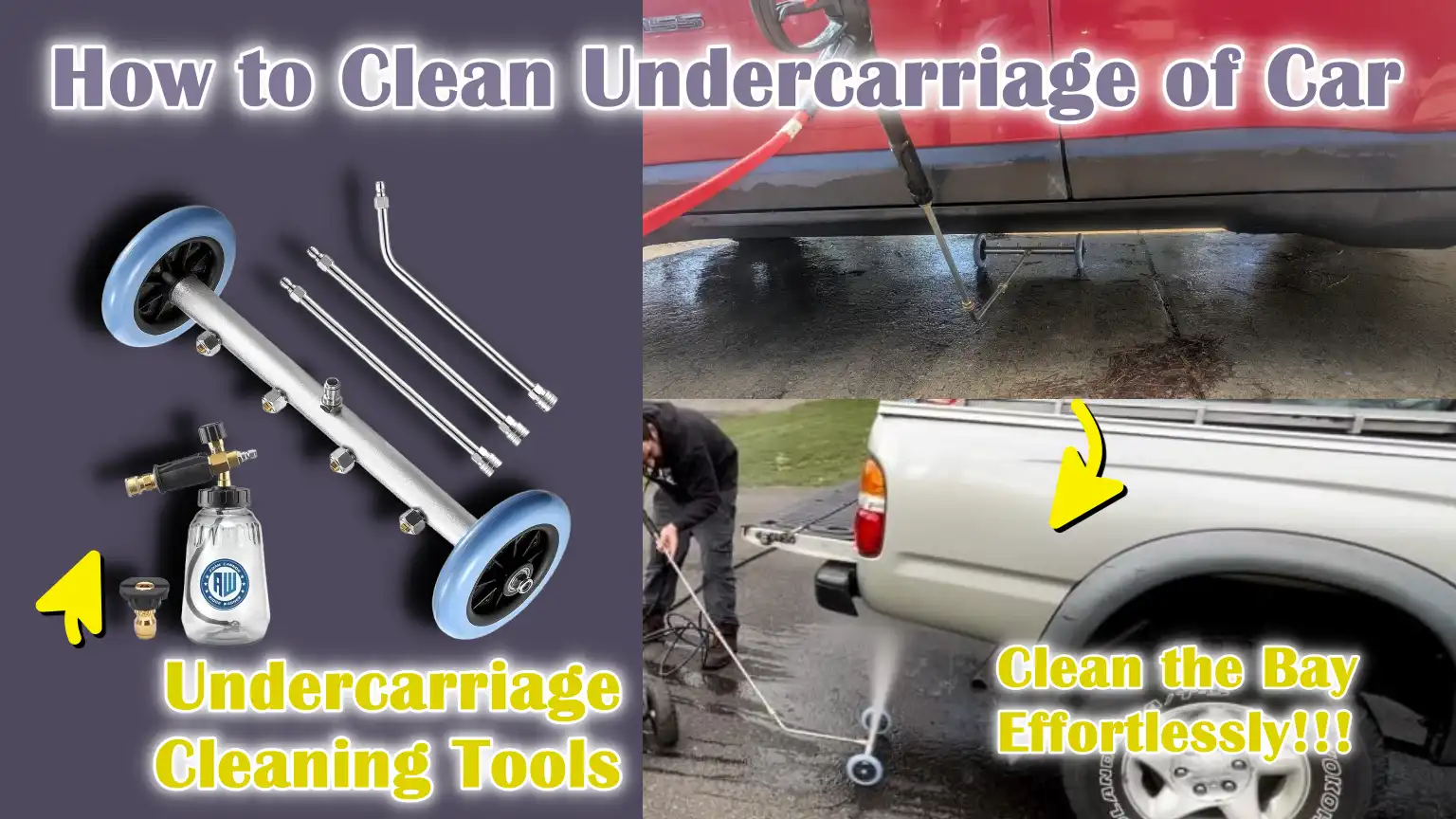
| Undercarriage Washer or Spray Wand | A long, flat spray tool or bent wand designed to easily reach under a car. | This allows water to reach deep and hidden areas that are difficult to clean by hand. |
| Degreaser or Underbody-Safe Cleaner | It is a cleaning fluid designed to safely remove oil, grease and heavy dirt. | Grease and oil cannot be removed with water alone and require a proper cleaner. |
| Soft and Stiff Brushes | Hand-held brushes with soft and stiff bristles. | Different surfaces require brushes with different capacities to remove dirt and dirt without damaging them. |
| Jack and Jack Stands or Vehicle Ramps | Devices that can safely lift a car off the ground. | Having extra space makes it easier to clean and see hidden parts. |
| Microfiber Towels or Air Blower | Use a soft drying cloth or air blower. | Drying removes trapped moisture that can cause rust. |
How to Clean Undercarriage of Car – Easy Method
1. Initial Wash to Remove Loose Dirt, Sand and Debris
The first step in cleaning the undercarriage is to wash away loose dirt, sand and small debris that accumulate under the car during normal driving.
These materials often collect on flat surfaces and in crevices, where they can trap moisture and gradually damage metal components.
This loose buildup can be washed away using a steady, controlled stream of water, without forcing the dirt further into joints or cracks.
Starting with a wash also makes subsequent cleaning steps more effective, as it reveals areas where grease and heavier grime have accumulated.
2. Applying a Cleaning Solution to Greasy and Grimy Areas
After removing the loose dirt, the next step is to apply an appropriate cleaning solution to areas with oil stains, grease, or heavy road grime.
These substances are typically caused by engine leaks, road tar, or prolonged exposure to dirty water and cannot be removed with water alone.
Allowing the cleaner to sit for a short period breaks down the grease and loosens the caked-on dirt.
This step is crucial as it reduces the need for excessive scrubbing, which could potentially damage protective coatings or sensitive components.
3. Removing Stubborn Grime with the Right Brush
Even after applying the cleaner, some dirt and grease will remain, specially in corners, joints and textured surfaces.
Gently scrubbing these areas with the right type of brush helps remove the grime without damaging the components.
Soft brushes work well on delicate parts, while stiffer brushes are useful for thicker grime on metal surfaces.
Careful brushing enhances the cleaning process and allows the cleaning solution to penetrate deeper, ensuring that hidden dirt is not left trapped under the vehicle.
4. Rinse thoroughly to ensure no residue remains
Once the dirt and grease have been loosened and removed, it’s crucial to rinse thoroughly to wash away all remaining cleaner and debris.
Leaving cleaning residue behind can attract more dirt and potentially damage metal or rubber parts over time.
Rinsing slowly and evenly ensures that the water reaches all cleaned areas and flushes away any remaining grime from tight spaces.
Proper rinsing also reduces the likelihood of streaks, buildup, or chemical residue drying on the undercarriage.
5. Repeat the process for heavily soiled areas
In cases where the undercarriage is heavily soiled, one cleaning cycle may not be sufficient to completely remove all the dirt and grease.
Areas that have been exposed to mud, salt, or oil for extended periods may require repeating the cleaning steps for best results.
Repeating the process ensures that deeply embedded grime is fully removed and that no residue remains that could trap moisture.
Taking the time to properly clean these areas helps protect the vehicle from rust, corrosion and potential future mechanical problems.
How to Use Pressure Washer – What are Do’s and Don’ts
1. Recommended Pressure Levels to Avoid Damage
Using the correct water pressure is crucial when cleaning the undercarriage.
While pressure washers are effective at removing dirt, excessive force can strip protective coatings, force water into seals, or bend thin metal components.
Often, a lower pressure is sufficient to remove dirt, salt and grime without causing damage.
The goal is to clean, not to force water into joints or components.
Maintaining controlled pressure protects sensitive areas while still ensuring thorough cleaning.
2. Safe Spraying Angles for the Undercarriage
The angle at which water is sprayed plays a significant role in safe cleaning.
Spraying at a shallow angle allows dirt to be naturally washed away rather than forced into crevices.
Avoid spraying directly upwards, as this can force water into seals, wiring and connectors.
Moving the spray slowly from front to back and keeping the nozzle at a shallow angle ensures effective cleaning while minimizing the risk of water damage.
3. Areas to Avoid High Pressure
Some undercarriage components are not designed to withstand high water pressure.
Electrical connectors, sensors, rubber boots, seals and protective covers can be damaged if water is forced into them.
Caution should also be exercised around brake lines and fuel lines, as high pressure can loosen mounts or strip protective layers.
Gently cleaning these areas preserves their functionality and prevents problems that might arise days or weeks after washing.
4. Benefits of Using a Wide-Spray Nozzle
A wide-spray nozzle disperses the water over a larger area, reducing the intensity of the pressure at any single point.
This makes undercarriage cleaning safer and more effective at removing dirt.
A wide spray pattern helps ensure even cleaning, reduces the risk of surface damage and prevents water from penetrating coatings or seals.
This type of nozzle is particularly useful for regular maintenance cleaning where deep scrubbing is not required.
5. Common Mistakes That Can Damage Components
A common mistake is using the highest pressure setting, thinking it will provide better cleaning, when it often causes damage.
Holding the nozzle too close to the parts or spraying directly into open areas can force water into places where it shouldn’t go.
Skipping the initial rinse and immediately using high pressure on thick dirt can also push the dirt further into the components.
Avoiding these mistakes ensures that the undercarriage is cleaned safely and remains protected after washing.
How to Clean the Undercarriage Without Lifting the Car
1. Using Undercarriage Spray Attachments
Undercarriage spray attachments are specially designed tools that connect to a garden hose or pressure washer.
They feature long, flat spray heads that reach under the vehicle without requiring it to be lifted.
These attachments deliver water and cleaning solutions to hard-to-reach areas, helping to remove loose dirt, mud and salt.
While they don’t replace a complete deep cleaning, undercarriage spray attachments are very useful for regular maintenance and for cars parked in tight spaces or garages where lifting is difficult.
2. Drive-Through Underbody Wash Systems
Many car washes, specially automated ones, offer drive-through underbody wash systems.
These systems use high-pressure water jets mounted in the wash bay to clean the underside of the vehicle as it passes through.
They are convenient, fast and effective at removing surface dirt and road salt.
However, they may not reach all nooks and crannies, specially in older vehicles with complex suspension parts or protective shields.
Drive-through systems are best for routine cleaning, but manual washing should also be performed for heavy grime or deeply embedded dirt.
3. Limitations of Ground-Level Cleaning Methods
Cleaning the undercarriage without lifting the car has several limitations.
Water pressure and spray angles from ground level may not reach tight crevices, joints and hidden areas where rust often begins.
Grease, oil stains and thick mud are difficult to remove completely without direct access from below.
While ground-level methods are helpful for routine maintenance, they can leave residue that traps moisture and accelerates the rusting process if not addressed periodically.
4. Situations Where Lifting the Car Becomes Necessary
There are certain situations where lifting the vehicle with a jack, ramps, or a lift becomes necessary for proper undercarriage cleaning.
Vehicles with heavy mud or debris buildup, oil leaks, or significant rust require complete access to the underside.
Lifting also allows for a thorough inspection of suspension parts, brake lines and protective coatings, ensuring that no damage is overlooked.
In such cases, ground-level cleaning is insufficient and safely lifting the car enables comprehensive cleaning, preventing long-term damage to the vehicle’s components.
Read More:
How to Remove Corrosion-Causing Contaminants
1. Identifying Salt Deposits, Mud and Organic Buildup
The underside of a car often accumulates substances that can lead to corrosion over time.
Road salt, specially in snowy or coastal areas, adheres to metal surfaces and accelerates the rusting process.
Mud from wet or off-road driving traps moisture and sometimes contains small stones that scratch protective coatings.
Organic matter such as leaves, grass and dirt can hold water against the metal, creating conditions for rust formation.
Identifying these substances early is crucial as they are primary contributors to undercarriage corrosion and can cause significant damage to components if left untreated for extended periods.
2. The Importance of Removing Road Salt and Chemical Residues
Road salt and chemical de-icers are particularly damaging because they contain compounds that react with metal surfaces, accelerating the rusting process and weakening structural components.
Even small residues of salt left over from winter can continue to corrode bolts, frames and suspension parts for months.
Regularly washing the undercarriage and removing these residues not only prevents rust but also helps maintain the vehicle’s structural integrity and longevity.
Removing chemical deposits is essential to prevent long-term damage to metal, rubber and plastic components.
3. Areas Requiring Special Attention for Potential Corrosion
Certain areas of the undercarriage are more susceptible to corrosion than others.
Joints, seams, wheel wells, suspension mounts, brake lines and areas around protective shields often accumulate trapped dirt and moisture.
Corrosion typically begins in these hidden crevices where water and debris collect.
Paying extra attention to these areas during cleaning ensures that rust doesn’t start unnoticed.
Focusing on these critical areas protects both safety and mechanical integrity in the long run.
4. Cleaning Techniques for Hidden Crevices
Proper washing is a crucial step in removing contaminants and preventing rust.
Water should be directed gently and evenly to the undercarriage, as well as into small gaps, seams and crevices where dirt or salt can hide.
Using an angled spray or an undercarriage attachment helps dislodge trapped dirt and chemicals.
Ensuring these hidden crevices are clean prevents moisture from accumulating and reduces the likelihood of rust forming in areas that would otherwise be difficult to reach.
How to Dry and Inspect After Cleaning
1. The Importance of Drying to Prevent Moisture
After cleaning the undercarriage, drying is a crucial step to prevent moisture from remaining on metal parts.
Water trapped in joints, crevices, or corners can lead to rust over time, even on protected surfaces.
Moisture can also damage rubber components, brake lines and electrical connectors.
Using microfiber towels, air blowers, or allowing the car to air dry in a well-ventilated area ensures that no water remains.
Proper drying prevents rust, extends the lifespan of components and keeps the undercarriage in good condition after each wash.
2. Inspecting for Rust Spots, Leaks, or Damaged Parts
Once the undercarriage is clean and dry, a thorough inspection is essential.
Look for early signs of rust, corrosion, or discoloration on metal parts, specially around joints and connections.
Check for leaks or visible damage to brake lines, fuel lines and suspension components.
Identifying minor issues at this stage can prevent major problems in the future.
Early detection allows for timely maintenance and can save significant repair costs, ensuring the vehicle remains safe and reliable.
3. Checking Protective Coatings or Shields
Many vehicles have protective coatings, underbody sealants, or plastic shields to protect against damage and corrosion.
After cleaning, it’s important to ensure these coatings are intact and the shields are properly attached.
Damaged or missing protective layers expose the underlying metal to water, salt and dirt, accelerating wear and corrosion.
Repairing or reapplying protective coatings as needed maintains the undercarriage’s defense system and extends the lifespan of critical components.
4. Addressing problems that may require professional assistance
During the post-cleaning inspection, some issues may go beyond basic DIY maintenance.
Deep rust, fluid leaks, worn suspension mounts, or damaged brake lines are examples of problems that require professional attention.
Documenting these findings helps schedule repairs before further damage occurs.
Recognizing when expert help is needed ensures the vehicle remains safe to drive and prevents costly damage in the long run.
How to Ensure Underbody Protection After Cleaning
1. Benefits of Rust Inhibitors and Protective Sprays
After cleaning and drying the undercarriage, applying a rust inhibitor or protective spray significantly reduces the risk of corrosion.
These products create a thin protective layer on metal surfaces, preventing water, salt and road chemicals from reaching the metal.
Rust inhibitors can slow down the natural oxidation process and protect exposed bolts, joints and suspension parts.
Regular application of these sprays, specially after seasonal cleaning or off-road driving, helps maintain the integrity of the undercarriage and extends the lifespan of critical components.
2. Importance of Underbody Coating for Older Vehicles
Older vehicles are often more susceptible to rust because the protective coating may have worn off or deteriorated over time.
Applying a professional underbody coating provides an extra layer of protection against water, mud, salt and chemical contaminants.
These coatings not only prevent rust but also help mitigate the impact of small stones or debris hitting the undercarriage.
For cars that have been on the road for many years, underbody coating is an effective way to maintain structural integrity and avoid costly repairs caused by long-term corrosion.
3. Regular Maintenance Habits for a Clean Undercarriage
Protecting the undercarriage isn’t just about a one-time cleaning; it requires regular maintenance.
Washing the underside after driving on salted roads, muddy trails, or in wet conditions helps prevent the accumulation of damaging contaminants.
Checking for early signs of rust, loose protective shields, or debris also contributes to long-term maintenance.
A regular undercarriage cleaning routine ensures that dirt and grime don’t accumulate over time, reducing the risk of rust and extending the lifespan of essential mechanical components.
4. Parking and Driving Habits That Minimize Underbody Contamination
How and where a vehicle is parked, as well as driving habits, can also affect the condition of the undercarriage.
Parking on dry, clean surfaces instead of wet or muddy areas reduces the amount of mud and water that can reach the underside.
Driving carefully on gravel or muddy roads, avoiding deep potholes and minimizing exposure to road salt whenever possible also helps keep the undercarriage clean.
Combining careful driving and parking habits with proper cleaning and protective measures significantly reduces the risk of rust and mechanical damage over time.
What are The Common Mistakes to Avoid During Cleaning The Car Underbody
As well as, there’s research that shows that road salt environments significantly accelerates the metallic corrosion, specially in the exhaust systems and other undercarriage parts, as more frequent exposure to the salt actually increases the rate of damaging chemical reactions, which is why you need regular undercarriage washing: particularly in the winter, so the regular cleanup actually helps you to eliminate the salt residues and prevents the early failures of exposed components as well.[¹]
1. Using Harsh Chemicals
One of the most common mistakes when cleaning the undercarriage is using harsh or inappropriate chemicals.
Strong cleaners can strip away protective coatings, damage rubber and plastic parts and even accelerate the rusting process on metal surfaces.
Many household cleaning products are not designed for automotive use and applying them to the undercarriage can cause long-term damage that isn’t immediately apparent.
Using mild, underbody-safe cleaners effectively removes dirt and grease without harming the car’s components or protective layers.
2. Spraying Directly onto Seals, Bearings, or Sensors
Another common mistake is directing high-pressure water or spray directly onto seals, bearings, or electrical sensors.
These parts are designed to keep water and dirt out, but excessive pressure can compromise their protective function.
Water entering bearings can wash away lubrication, leading to accelerated wear, while moisture in electrical sensors can trigger warning lights or cause malfunctions.
Avoiding direct spraying on sensitive areas ensures that mechanical and electrical systems function correctly and prevents costly repairs.
3. Skipping Drying and Inspection Steps
Many car owners overlook the importance of drying and inspecting the undercarriage after cleaning.
Leaving water on metal surfaces or inside joints creates ideal conditions for rust and corrosion.
Failing to inspect after cleaning means that early signs of damage, rust spots, leaks, or loose components will go unnoticed.
Thorough drying with microfiber towels or an air blower, followed by a careful inspection, ensures that all dirt has been removed and potential problems are addressed before they worsen.
4. Infrequent Cleaning in Harsh Environments
Vehicles driven on salted roads, in coastal areas, or in conditions involving heavy rain, snow, or off-road driving require more frequent undercarriage cleaning.
Waiting too long between washes allows salt, mud and chemical residue to accumulate, increasing the risk of corrosion and mechanical wear.
Regular cleaning in these harsh environments is essential for maintaining structural integrity, protecting suspension and brake components and preventing hidden damage that can become costly over time.
Adhering to a regular cleaning schedule is crucial for long-term vehicle maintenance.
When You Should Go for Professional Undercarriage Cleaning Services
1. Situations Where DIY Cleaning Isn’t Enough
While regular at-home cleaning is effective for general maintenance, some situations require professional assistance.
Vehicles with excessive rust, oil or grease leaks, heavy mud buildup from off-road driving, or those exposed to prolonged salt exposure cannot be adequately cleaned with standard household equipment.
DIY methods may leave dirt trapped in hard-to-reach areas or fail to completely remove chemical residues.
In such cases, professional cleaning ensures all contaminants are properly removed and the undercarriage is thoroughly inspected for hidden damage.
2. Advantages of Professional Equipment and Lifts
Professional service centers utilize advanced tools, high-pressure washers and vehicle lifts that provide complete access to the underside of the car.
Lifts make it easy to reach every part of the undercarriage, including suspension components, joints and protective shields.
Specialized cleaning solutions and sprayers are designed to remove stubborn dirt and corrosive substances without damaging metal, rubber, or plastic parts.
Using professional equipment minimizes the risk of missing any spots and ensures a thorough and safe cleaning of the vehicle.
3. Cost vs Long-Term Maintenance Savings
Although professional undercarriage cleaning involves a cost, it often saves money in the long run.
Proper cleaning removes corrosive substances and allows for early detection of problems such as rust, leaks, or worn components.
Addressing these issues promptly can prevent costly repairs, maintain the vehicle’s structural integrity and ensure the safety of critical systems like brakes and suspension.
Over time, investing in professional cleaning reduces maintenance costs and preserves the car’s value.
4. Ideal Conditions for Annual Professional Cleaning
Despite regular DIY cleaning, many experts recommend a professional undercarriage cleaning at least once a year.
This is specially important for vehicles exposed to harsh environments such as snowy roads, salted roads, sea air, or frequent off-road driving.
An annual professional cleaning ensures that hidden areas are inspected, protective coatings remain intact and any rust-prone areas are addressed before problems develop.
Scheduling an annual professional cleaning provides vehicle owners with an extra layer of protection and peace of mind.
Conclusion – How to Clean Undercarriage of Car
So, the rust and dirt does damage the vehicle’s underneath in the silent way, which is why the regular cleaning is necessary to maintain the cleanliness and reliability over the time.
A car’s undercarriage is constantly exposed to dirt, mud, road salt, water and other debris, which can lead to rust, corrosion and damage to critical components such as brake lines, suspension parts and fuel lines.
Regular cleaning, combined with proper drying, inspection and protective treatments, helps prevent long-term damage and ensures the vehicle remains safe, reliable and efficient.
By using the right tools, cleaners and techniques, both new and experienced car owners can effectively remove dirt, grime and corrosive substances.
In challenging environments such as coastal areas, snowy regions, or off-road conditions, undercarriage maintenance becomes even more crucial.
Professional cleaning can provide a deeper level of protection and inspection, identifying potential problems that might be missed in a DIY routine.
By adopting a regular cleaning schedule, protective habits and a thorough inspection routine, car owners can extend the lifespan of their vehicle, reduce repair costs and maintain optimal performance, as well as preserve its resale value.
Ultimately, a well-maintained undercarriage is the foundation of a safe, durable and long-lasting vehicle.
Now, it is time to ask some questions in the comment box below this guide.
Frequently Asked Questions
Q1. Why is it important to clean the undercarriage of a car?
Answer: The undercarriage is the underside of your car, containing essential parts such as the frame, suspension, exhaust system, brake lines and fuel lines. It is constantly exposed to water, mud, road salt and debris. Over time, these elements can cause corrosion, rust and damage to these critical components. Cleaning the undercarriage removes harmful substances, prevents rust, protects mechanical parts and extends the lifespan of the vehicle. It also enhances safety by ensuring the proper functioning of brakes, suspension and other systems.
Q2. How often should I clean my car’s undercarriage?
Answer: The frequency depends on your driving conditions. Cars driven daily on normal roads may require undercarriage cleaning every few months. Vehicles exposed to salt, heavy rain, mud, or off-road conditions should be cleaned more frequently, sometimes after every trip in harsh conditions. Seasonal cleaning after winter, monsoon, or off-road driving is particularly important. Regular maintenance helps prevent long-term corrosion and keeps the vehicle’s components in good condition.
Q3. Can I clean the undercarriage myself at home?
Answer: Yes, most undercarriage cleaning can be done at home using a hose, pressure washer, undercarriage spray attachment, brushes and appropriate cleaning solutions. DIY cleaning is effective at removing dirt, mud and salt, specially when done regularly. However, for older vehicles, heavy mud, oil or grease buildup, rust prevention, or hard-to-reach areas, professional cleaning may be preferable. Using the right tools and following safety precautions makes DIY cleaning both safe and effective.
Q4. Is it safe to use a pressure washer on the undercarriage?
Answer: Yes, it is safe if used correctly. Pressure washers effectively remove dirt and grime, but using excessive pressure can damage seals, rubber parts, wiring and protective coatings. Use low pressure, a wide spray nozzle and a safe angle to avoid spraying directly onto sensitive areas. Always keep the nozzle moving and clean hard-to-reach areas gently. Following these guidelines ensures thorough cleaning without causing damage.
Q5. What chemicals or cleaners should I use on the undercarriage?
Answer: It’s best to use a mild, underbody-safe cleaning solution or degreaser. Avoid using harsh chemicals, household cleaners, or acids, as these can strip protective coatings, damage rubber parts and accelerate the rusting process. Professional underbody cleaners are formulated to remove grease, oil and road grime while being safe for metal, plastic and rubber components. Always follow the manufacturer’s instructions for proper dilution and application.
Q6. Can rust still occur after undercarriage cleaning?
Answer: Yes, rust can still occur if moisture, salt, or debris remains trapped in hidden areas. This is why thoroughly drying the undercarriage after cleaning is crucial. Using an air blower, microfiber towels, or allowing the car to air dry in a well-ventilated area helps prevent rust. Applying a rust inhibitor or protective spray after cleaning provides additional protection to metal surfaces, specially in areas prone to rust, such as joints, seams and suspension mounts.
Q7. Are professional undercarriage cleaning services necessary?
Answer: Professional cleaning isn’t always necessary, but it can be very beneficial in certain situations. Older cars, heavily soiled vehicles, cars exposed to salt or off-road conditions, or those with parts prone to rust benefit from professional cleaning. Professionals have lifts, specialized equipment and high-pressure systems that can clean hard-to-reach areas that are difficult to access with DIY methods. They also perform inspections to identify hidden problems such as rust, leaks, or damage that might be overlooked at home.
Q8. What are the risks of not regularly cleaning the undercarriage?
Answer: Neglecting undercarriage cleaning can lead to rust, corrosion and damage to critical components such as brakes, suspension and fuel lines. Dirt, mud and salt trap moisture, causing metal parts to deteriorate over time. Ultimately, this can compromise the vehicle’s safety, lead to expensive repairs, affect handling and reduce the car’s resale value. Regular cleaning prevents these problems and keeps the vehicle durable and safe.
Q9. Can undercarriage cleaning improve car safety?
Answer: Yes, undercarriage cleaning improves safety by ensuring that brakes, suspension and other critical systems function correctly. Rust, corrosion, or debris buildup can obstruct mechanical parts, reduce performance, or even cause malfunctions over time. A clean undercarriage ensures these parts operate as designed, preventing accidents and reducing the risk of sudden breakdowns.
References:
[1] Corrosion of materials used for car exhaust systems in road salt environment
https://www.researchgate.net/publication/385276443_Corrosion_of_materials_used_for_car_exhaust_systems_in_road_salt_environment

Guys, I’m a car audio enthusiast and customization expert and I love clear sound and clean installation. Plus, I have spent years helping people build their dream audio setups. And whenever I’m working on cars, I probably listen to music and thinks about the next big upgrade.