 Skip to content
Written By: Don Dodi
Fact Checked By: Kristen Brown
Reviewed By: Diego Rosenberg
With the help of paddle shifters you can manually change the gears, even while keeps your both hands on the steering wheel, that improves the control and safety during the drive.
Basically, it is first popularized in the Formula 1 racing and now it is widely used in the modern automatic and semi-automatic vehicles.
So, the paddle shifters actually sends electronic signals to the transmission control unit (TCU), this work in the cars equipped with compatible automatic transmission; so it instruct it to shift the gears in faster and more precise way than a traditional gear lever.
Not only this, there’s studies and manufacturer data that shows that the paddle shifting that can reduce the shift response time, even it improves the driver control on hills and corners, that also helps it to maintain optimal engine RPM during the acceleration or engine braking as well.
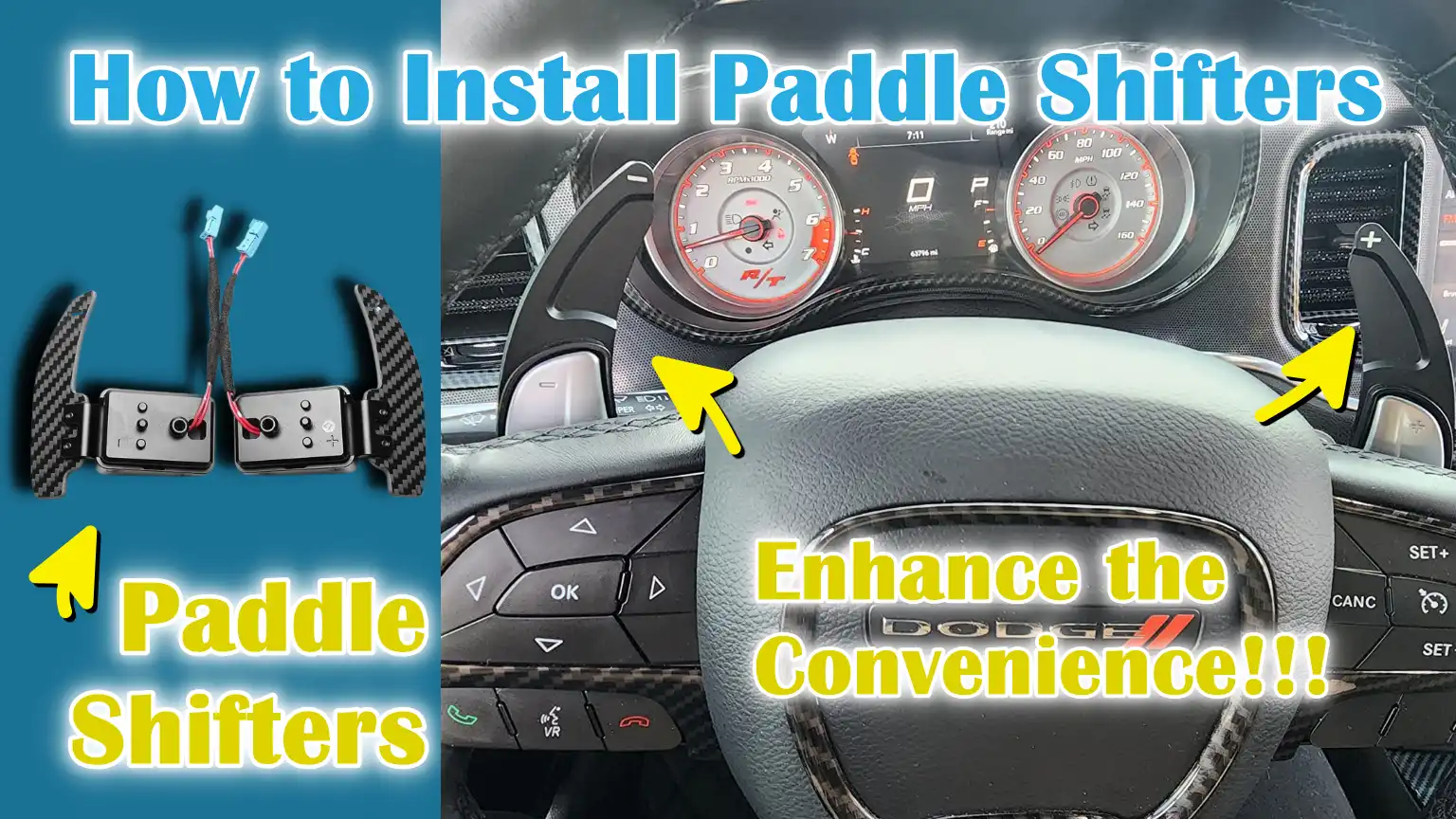
Now, in this guide you’ll learn specifically about How to Install Paddle Shifters, so that you can enhance how you can interacts with it.
Tools
| Item Name | Why It Is Necessary | Detailed Explanation (Easy Words) |
|---|---|---|
| Screwdriver set – Phillips & flat | It is used to remove the steering wheel cover and screws. | Most steering wheels and trim panels are attached with standard screws. This typically requires a Phillips head screwdriver, while a flathead screwdriver can be used to gently pry open clips without damaging the plastic parts. |
| Trim removal tool – Plastic | it is used to safely remove steering wheel covers. | These plastic trim tools prevent scratches and cracks on the steering wheel panel. Metal tools can damage the surface, so plastic tools are safer and recommended for use. |
| Socket wrench set | It is used to loosen or tighten steering wheel bolts. | Some parts of the steering wheel are attached with bolts, not screws. A socket wrench provides controlled force and prevents damage to the bolt heads. |
| Torque wrench | It is used to tighten bolts correctly. | Steering wheel bolts must be tightened to a specific torque. Too loose can cause movement and overtightening can strip the threads. A torque wrench ensures proper tightening. |
| Paddle shifters – Left and Right | It is the core control parts for gear shifting. | The driver presses the paddles to upshift or downshift gears. The left paddle typically downshifts and the right paddle upshifts. |
| Mounting brackets or screws | It is used to hold paddles firmly in place. | These parts securely attach the paddle shifters to the steering wheel frame so they don’t move or rattle during driving. |
| Wiring harness – Included with kit | It sends shift signals to the car system. | The wiring harness connects the paddle shifters to the steering wheel electronics or the transmission control unit. Without it, the paddles cannot communicate with the car. |
| Steering wheel support check | It confirm paddle mounting points exist. | Some steering wheels already have factory slots or holes for paddle shifters. If these are not present, installation may not be possible without modifications. |
| Transmission type check | It ensure the car can accept paddle input. | Paddle shifters only work with automatic, CVT, or dual-clutch transmissions that support manual gear selection. Fully manual cars are not compatible. |
| Clock spring compatibility | It allow electrical signals while turning. | The clock spring transfers electrical signals as the steering wheel rotates. It must support paddle shifter wiring; otherwise, the signals will not be transmitted correctly. |
| Vehicle-specific wiring harness | To avoid signal errors and warning lights. | A vehicle-specific harness matches the car’s connectors and voltage requirements. Universal wiring can lead to issues such as delayed gear shifts, error codes, or non-functional paddles. |
| Secure connector clips | To keep wires fixed and really stable. | The correct clips prevent wires from coming loose due to steering movement or vibrations, ensuring long-term reliability. |
| Battery disconnect tools | It is used to prevent electrical shock or airbag risk. | Disconnecting the battery cuts power to the airbag system and other electronics, reducing the risk of accidental airbag deployment. |
| Anti-static gloves – Recommended | It is used to protect you from electronic parts. | Static electricity from your hands can damage sensitive electronic components. Anti-static gloves minimize this risk during wiring work. |
| Safety glasses | It is used to protect eyes during disassembly. | Small clips or screws can suddenly fly out. Safety glasses protect the eyes from injury. |
How to Ensure Safety By Taking Precautions Before Working on the Steering Wheel
1. Properly Disconnecting the Vehicle Battery
Before touching the steering wheel, it is crucial to disconnect the vehicle’s battery to prevent power flow to essential systems.
The negative battery terminal should always be disconnected first, as this minimizes the risk of electrical short circuits.
Disconnecting the battery protects the sensitive electronics within the steering wheel and prevents accidental activation of electrical components while working on it.
After disconnecting, it is important to keep the cable away from the battery post to prevent accidental reconnection during the installation process.
2. Airbag System Safety and Required Waiting Time
The steering wheel contains an airbag system, designed to deploy with considerable force in an emergency.
Even after the battery is disconnected, the airbag system can retain stored electrical power for several minutes.
Therefore, it is essential to wait at least ten to fifteen minutes before working on the steering wheel.
This waiting period allows all stored energy to fully discharge, minimizing the risk of accidental airbag deployment, which could cause serious injury and damage to vehicle components.
3. Steering Wheel Alignment Precautions
Maintaining proper alignment is crucial when working on the steering wheel.
Before removing any covers or parts, the front wheels should be straight and centered.
This helps maintain the correct steering position and prevents misalignment after reassembly.
If the steering wheel is rotated while parts are removed, it can affect the clock spring inside the wheel, which controls the electrical connections.
Proper alignment ensures smooth steering operation and prevents subsequent warning lights or steering issues.
4. Static Electricity and Electronic Component Protection
Static electricity discharged from the human body can damage the small electronic parts inside the steering wheel.
Touching a metal part of the vehicle’s body before touching the electronic connectors will dissipate any accumulated static charge.
Wiring connectors should always be handled gently and never pulled by the wires.
Protecting these electronic components ensures that the paddle shifters, airbag sensors and steering controls continue to function correctly after installation.
How to Remove the Steering Wheel Cover and Access the Paddle Mounting Area
1. Safely Removing the Trim Panel Without Damage
The steering wheel cover and trim panel are typically held in place by clips and small screws designed for a tight fit.
It’s crucial to remove them gently and evenly to prevent cracking the plastic or breaking the clips.
Applying light pressure around the edges will release the clips one by one, rather than forcing them all off at once.
Pulling too hard or twisting the panel can cause permanent damage, leading to loose covers or unwanted noises after reassembly.
Taking your time with this step preserves the steering wheel’s appearance and ensures all parts can be reused.
2. Accessing the Rear of the Steering Wheel
Once the front trim is removed, the rear of the steering wheel becomes accessible.
This area contains electrical connectors, wiring harnesses and sometimes airbag mounting points.
Care should be taken to handle the wiring gently and never pull or twist it forcefully.
Proper access to this area provides a clear view of where the paddle shifters will be mounted and how the wires should be routed.
Proper access also helps prevent accidental damage to nearby controls such as the horn contact or steering wheel buttons.
3. Identifying Factory Mounting Points
Most vehicles that support paddle shifters have factory mounting points built into the steering wheel frame.
These mounting points are typically threaded holes or specially shaped slots designed to hold the paddle shifters in the correct position.
Identifying these points ensures that the paddles are securely mounted and function smoothly when pressed.
Using the correct mounting location prevents misalignment and ensures the pedals operate smoothly, in sync with the natural movement of your feet while driving.
4. Common Mistakes to Avoid During Disassembly
A common mistake is rushing the disassembly process, which often leads to broken clips or scratched surfaces.
Another common problem is pulling on the wires instead of the connectors, which can damage the internal wiring and cause electrical problems later.
Forgetting the original positions of screws and covers can also make reassembly difficult.
Working slowly, staying organized and paying attention to how parts are removed helps avoid these mistakes and makes the entire installation process easier and safer.
How to Safely Install Paddle Shifters on the Steering Wheel
1. Positioning the Paddle Shifters Correctly
The correct positioning of the paddle shifters is crucial for comfortable and safe use while driving.
The paddle shifters should be mounted directly behind the spokes of the steering wheel so that the driver’s fingers can easily reach them without changing their hand position.
When positioned correctly, the paddles can be easily operated both during straight driving and when the steering wheel is slightly turned.
Incorrect positioning can lead to missed gear shifts or hand strain, specially during long drives.
Proper positioning also ensures that the paddles do not interfere with other controls on the steering wheel.
2. Attaching the Paddle Shifters Using Screws or Clips
Once correctly positioned, the paddle shifters should be securely attached using the screws or clips provided in the kit.
The screws should be tightened evenly to keep the paddles stable, but overtightening should be avoided, as this can strip the threads or crack the mounting points.
Clip-based systems should snap securely into place without any looseness.
A properly attached paddle shifter will not move, vibrate, or rattle during driving, which is essential for safety and longevity.
3. Ensuring Smooth Movement of the Paddles
After installation, each paddle should move smoothly when pressed and quickly return to its original position.
Smooth movement ensures precise gear shifts and reduces wear and tear on the internal components.
If a paddle feels stiff or sticks, it may be rubbing against the steering wheel cover or mounted at the wrong angle.
Making slight adjustments to the position can improve movement and ensure consistent performance during both slow driving and rapid gear changes.
4. Checking Left and Right Pedal Alignment
A final alignment check is crucial to ensure both pedals function identically.
The left and right pedals should feel the same in terms of pressure, travel distance and response.
Correct alignment ensures that downshift and upshift functions activate correctly every time.
Uneven alignment can lead to delayed gear shifts or unintended inputs.
Confirming proper alignment before reassembly ensures that the paddle shifters operate reliably and feel natural during everyday driving.
Now, Understand How to Connect Paddle Shifter Wiring to Your Vehicle’s Transmission System
1. Understanding the Paddle Shifter Wiring Layout
Paddle shifter wiring works by sending simple electrical signals from the paddles to the vehicle’s transmission control system.
Each paddle typically has its own signal wire, along with a common power and ground connection.
When a paddle is pressed, the signal travels through the steering wheel wiring and tells the transmission when to shift gears.
Understanding this layout helps prevent incorrect connections that could lead to delayed shifting or trigger warning lights on the dashboard.
Most paddle shifter kits are designed to match the factory wiring path to ensure the system integrates seamlessly with the existing vehicle electronics.
2. Connecting the Wiring Harness to the Steering Wheel Clockspring
The clockspring is a crucial component inside the steering wheel that allows electrical signals to pass through as the wheel turns left and right.
The paddle shifter wiring harness must be connected to the correct clockspring port to ensure continuous signal transmission during steering movements.
A proper connection ensures that the paddles function in all steering positions, not just when the wheel is straight.
Loose or incorrect connections can result in intermittent shifting or complete signal loss, so a secure and accurate attachment is essential.
3. Securely Routing the Wires to Prevent Interference
Proper wire routing prevents damage and signal interference over time.
The wires should follow the existing factory channels within the steering wheel and column so they can move naturally with the wheel.
Routing the wires too tightly or across moving parts can damage the insulation and break connections.
Secure wire routing also prevents interference with airbag components, steering controls, or horn contacts, which is essential for long-term safety and reliable paddle shifter operation.
4. Ensuring Proper Grounding and Secure Connections
Proper grounding completes the electrical circuit and allows the paddle shifters to function correctly.
Poor ground connections can lead to delayed shifting, erratic responses, or system malfunctions.
All connectors must be fully seated and locked in place to prevent them from becoming loose due to vibrations or steering movements.
Secure connections ensure a stable electrical flow and help the paddle shifters respond correctly every time they are used, whether during normal driving or rapid gear changes.
How to Reinstall Steering Wheel Components After Installation
1. Replacing the Steering Wheel Cover and Trim
After installing the paddle shifters and wiring, the steering wheel cover and trim should be carefully reinstalled in their original positions.
These covers are designed to fit in a specific way, so proper alignment is crucial before pressing them into place.
Applying even pressure ensures the clips lock securely without breaking the plastic.
Correct placement maintains the original look of the steering wheel and prevents loose panels that could cause noise or rattling while driving.
2. Proper Reinstallation of Screws and Clips
Screws and clips should be reinstalled using the same locations and tightening levels as before removal.
Overtightening screws can strip threads or damage plastic mounts, while loose screws can lead to vibrations and rattling.
Each clip should be firmly locked into place, ensuring the trim is secure.
Proper reinstallation keeps all steering wheel components stable and prevents future loosening due to normal driving vibrations.
3. Checking for Free Movement of the Steering Wheel
Before reconnecting the battery, the steering wheel should be gently rotated from left to right to check for smooth movement.
The wheel should turn freely without any binding, clicking noises, or resistance.
Any resistance could indicate pinched wires or misaligned trim inside the wheel.
Ensuring free movement protects the clockspring and prevents damage to the wiring and steering controls during normal driving.
4. Final Check Before Reconnecting the Battery
A final check helps ensure all parts are correctly and securely installed.
All connectors must be fully seated, the wires secured and there should be no loose components inside the steering wheel.
Taking the time to verify this reduces the risk of warning lights, electrical malfunctions, or steering problems after power is restored.
Once everything is confirmed, safely reconnecting the battery completes the installation and the vehicle is ready for testing.
How to Activate Paddle Shifters Using Vehicle Software or ECU Settings
1. Vehicles Requiring Software Activation
Many modern vehicles are already designed to support paddle shifters at the hardware level, but this feature may be disabled in the vehicle’s software.
In these cars, the transmission control unit and engine control unit need to be instructed to recognize the paddle inputs.
Vehicles with automatic, dual-clutch, or continuously variable transmissions often fall into this category.
Without software activation, the paddles may physically function but will not trigger gear changes, making this step essential for full functionality.
2. Using OBD Tools or Diagnostic Scanners
Software activation is typically performed using an on-board diagnostic (OBD) tool that connects to the vehicle’s data port.
This tool communicates with the car’s computer and allows for the enabling of specific features, such as paddle shifting.
This process usually involves selecting the correct vehicle model and activating the manual shift option within the transmission settings.
When done correctly, the system immediately recognizes the paddle inputs without requiring any modifications to the vehicle’s mechanical components.
3. Dealer Activation vs DIY Activation Options
Some manufacturers restrict software access, meaning only authorized dealers can activate paddle shifters using official software.
Dealer activation ensures compatibility and minimizes the risk of errors, but it may incur additional costs.
In some vehicles, DIY activation is possible using third-party diagnostic tools, but this requires careful selection of settings to avoid system conflicts.
Choosing the right method depends on the vehicle brand, software access level and user experience.
4. Warning Lights or Error Codes to Watch For
After activation, you should monitor the dashboard for any warning lights or error messages.
Common signs of incorrect activation include a transmission warning light, delayed shifting response, or the vehicle refusing to shift gears manually.
These issues typically indicate incorrect software settings or incomplete communication between the paddle shifters and the transmission system.
Addressing warning codes promptly helps prevent driving problems and ensures that the paddle shifters operate smoothly and safely.
How to Test Paddle Shifters for Its Proper Functioning
1. Testing Upshift and Downshift Response
The first test should be performed with the vehicle safely parked and the engine running.
Pressing the right paddle should result in an upshift, while pressing the left paddle should result in a downshift.
The response should be immediate and consistent with each press.
A correct response confirms that the paddle signals are properly reaching the transmission control system.
If there is no reaction or the response is inconsistent, it may indicate a wiring or software activation issue.
2. Checking Paddle Responsiveness While Driving
A road test helps confirm that the paddle shifters function in real-world driving conditions.
While accelerating gradually, pressing the paddles should result in smooth and predictable gear changes without any hesitation.
The paddles should remain responsive even with slight movements of the steering wheel.
Consistent responsiveness during driving confirms proper clockspring connections within the steering wheel and correct wire routing.
3. Verifying Gear Changes on the Instrument Cluster
When the paddle shifters are functioning correctly, the instrument cluster provides clear feedback.
Each paddle press should result in a visible gear change display on the dashboard, such as a changing number or letter.
This visual confirmation ensures that the vehicle is recognizing the manual shift commands.
If the display does not change, the system may not be fully activated or properly connected.
4. Troubleshooting Delayed or Unresponsive Shifts
Delayed or unresponsive shifts typically indicate loose connections, incorrect software settings, or incomplete grounding.
Checking connector seating and ensuring proper grounding often resolves delayed response issues.
In some cases, restarting the vehicle resets the control units, allowing them to recognize pedal inputs.
Addressing these issues promptly ensures reliable performance and helps prevent long-term transmission control problems.
What are the Common Paddle Shifter Installation Problems and How to Fix Them

And, according to the IJIRMPS study on paddle shifting systems, so basically paddle shifters work by transmitting the electrical signals directly to the transmission control unit (TCU), so it manages the gear changes via the electronic solenoids. Plus, this method actually allows the drivers to decide when to shift and it is the TCU that executes the shift process, particular in the dual-clutch transmissions where the responsiveness is really critical, also this research shows that ergonomic benefits of having the paddles on the steering column, is that if there’s the need for manual mode engagement in some of the cars, then the system’s fallback to the automatic mode whenever the paddles remain unused.[¹]
1. Paddle Shifters Not Working
One of the most common problems after installation is the paddle shifters not sending signals to the transmission.
This can occur if the wiring harness isn’t fully connected, the clock spring isn’t installed properly, or software activation is incomplete.
To fix this, first double-check all wiring connections and ensure the harness is securely attached to both the steering wheel and clock spring.
Next, verify that the vehicle’s ECU is recognizing the paddles through software activation or diagnostic scanning.
Properly connecting both hardware and software usually resolves the paddle problem.
2. Loose or Misplaced Paddles
Paddle shifters that feel loose or are misplaced can affect both comfort and performance.
Loose paddles are often caused by screws or clips not being fully tightened or improperly positioned on the steering wheel.
Misalignment can occur when the pedals are installed at an angle or at the wrong mounting point.
To correct this, tighten the screws or clips securely and ensure the pedals are evenly positioned behind the wheel spokes.
Proper alignment ensures smooth movement, natural finger reach and consistent gear changes during driving.
3. Error Messages or Dashboard Warnings
After installation, the vehicle may display warning lights or error codes related to the transmission or steering wheel controls.
Common causes include incomplete software activation, disconnected or loose wiring, or incorrect connections to the clock spring.
Correcting these errors involves checking all connections, verifying correct ECU settings and, if necessary, using a diagnostic scanner to reset the system.
Prompt attention to these warning lights can prevent potential transmission problems and ensure safe operation.
4. Wiring and Compatibility Issues
Wiring problems or lack of compatibility between the paddle shifter kit and the vehicle are common causes of installation difficulties.
Using a wiring harness that isn’t specific to the vehicle can cause signal interference, gear shift delays, or dashboard errors.
Compatibility issues can also occur if the vehicle doesn’t support manual paddle input or requires special software activation.
Resolving these issues typically involves replacing the wiring harness with a model specific to the vehicle, verifying transmission compatibility and ensuring proper grounding.
Careful attention to correctly matching components and wiring paths guarantees reliable performance and can prevent long-term electronic damage.
Read More:
How to Maintain the Paddle Shifters for Having Long-Term Smooth Operation
1. Proper Cleaning of Paddle Shifters
Regular cleaning is essential to keep paddle shifters responsive and free from debris.
Dust and oils from hands can accumulate around the paddles and inside the mounting points, potentially causing stiff or uneven movement.
Use a soft microfiber cloth slightly dampened with water or a mild cleaning solution to gently wipe the paddles.
Avoid using harsh chemicals or excessive liquids, as these can damage the electronics or plastic surfaces.
Proper cleaning ensures smooth operation and extends the lifespan of the paddle shifters.
2. Periodic Inspection of Wiring Connections
Over time, vibrations from driving and repeated use of the paddles can cause wiring connections inside the steering wheel to loosen.
Periodically inspecting the connectors, harnesses and grounding points ensures that signals remain consistent and reliable.
During inspection, check for loose wires, damaged insulation, or corrosion on the connectors.
Maintaining secure wiring prevents delayed gear shifts, error messages, or intermittent malfunctions of the paddles.
3. Preventing Wear and Tear from Frequent Use
Paddle shifters are designed for frequent use, but excessive force or abrupt pressing can lead to mechanical wear and tear on the mounting points and electronic contacts.
Using the paddles with light pressure, avoiding unnecessary force and ensuring smooth finger movements helps prevent premature wear.
Monitoring the paddles for any unusual looseness, abnormal noises, or reduced responsiveness can help detect problems before they become serious.
4. When to Seek Professional Inspection
Even with proper cleaning and careful use, some issues may require professional assistance.
If the paddle shifters are not working, warning lights are repeatedly appearing on the dashboard, or they feel loose despite proper installation, a trained technician should inspect the system.
A professional can check the steering wheel electronics, clock spring, transmission communication and ECU settings to ensure safe and reliable operation.
Seeking expert assistance can prevent further damage and ensure that the paddle shifters function correctly for years to come.
Conclusion – How to Install Paddle Shifters
So, its now clear that when you properly install those paddle shifters then it becomes the bridge between automatic convenience and manual control, as it gives the drivers the best of both kind of experience.
Even, it literally transforms the driving experience as it gives the driver greater control over the gear selection and big thing is that while keeping the both of the hands on the steering wheel itself.
But, you need to do preparation such as: check the vehicle compatibility first, then using the correct kinds of tools, also you need to handle the steering wheel and airbag system safely, also you have to securely mount the paddles, connect the wires and in some of the vehicles, you need to activate the feature through the ECU or software as well.
Plus, you have to do regular care such as: cleanup of the paddles, inspect the wiring and monitor for any wear or error in codes; so that you can easily ensure the long-term reliability and safety as well.
So, that’s all from this guide and if you still have questions in mind, then you’re welcome in the comment box below.
Frequently Asked Questions
Q1. Can paddle shifters be installed in any car?
Answer: Paddle shifters can only be installed in vehicles with automatic, dual-clutch, or CVT transmissions that support manual gear input. They cannot be used in cars with traditional manual gearboxes because there is no electronic transmission system to control them. Some vehicles may require additional wiring, adapters, or software activation for the paddles to function. It’s crucial to check compatibility before purchasing a kit to avoid installation problems or paddle malfunction.
Q2. Will installing paddle shifters affect my car’s warranty?
Answer: If installing paddle shifters involves cutting wires, modifying the ECU, or altering factory electronics without manufacturer approval, it may void your warranty. Many dealerships allow professional installation of approved kits without voiding the warranty, but self-installation with unapproved parts can sometimes lead to warranty issues. It’s always a good idea to confirm with your car dealer or review your warranty terms before attempting to install paddle shifters yourself.
Q3. Do I need to activate the paddle shifters using software after installation?
Answer: In some vehicles, yes. Many cars have the hardware to support paddle shifters, but the function is disabled in the software. The ECU can be enabled to recognize paddle inputs using an OBD diagnostic tool or by visiting a dealership, allowing the paddles to control the transmission. Cars that don’t require software activation will work immediately after installation if the wiring is connected correctly.
Q4. How do I clean and maintain paddle shifters?
Answer: The paddle shifters should be kept free from dust, dirt and hand oils. Use a soft microfiber cloth slightly dampened with water or a mild cleaning solution to gently wipe the paddles. Avoid using harsh chemicals or excessive liquid, as these can damage the electronics. Periodically check the wiring and connectors inside the steering wheel to ensure everything is secure. Proper care will ensure the paddles last longer and function smoothly.
Q5. Why aren’t my paddle shifters working?
Answer: Paddle shifters typically stop working due to loose wiring, incorrect connections to the clock spring, or incomplete software activation. This can also happen if the kit is not fully compatible with your vehicle. Checking all the wiring, ensuring the connectors are securely attached and confirming software activation often resolves the issue. If the problem persists, a professional technician may be needed to diagnose the system.
Q6. Can installing paddle shifters damage my steering wheel or transmission?
Answer: Yes, incorrect installation can damage both the steering wheel and the electronics associated with the transmission. Forcing the removal of trim panels can break plastic parts and mishandling the clock spring can damage sensitive wiring. Always disconnect the battery before beginning installation to avoid accidental airbag deployment or electrical shorts. Following the correct installation steps and working carefully minimizes the risk of damage.
Q7. Do paddle shifters wear out over time?
Answer: Yes, paddle shifters can wear out with repeated use, specially if they are pressed too hard or used carelessly. The mounting points or internal electronics can become loose over time. Using the correct force, keeping them clean and checking the connections periodically will help prevent premature wear and tear. Signs of malfunction include loose pedals, sticking when pressed, or difficulty shifting gears.
Q8. Can I install paddle shifters myself, or will I need a professional?
Answer: Many people with basic mechanical skills can install paddle shifters themselves if they carefully follow the instructions. However, tasks such as dealing with the clock spring, wiring and software activation can be challenging for novices. If you are not confident working with your car’s electronics or ECU settings, it’s best to have a professional install the paddles to ensure proper operation and prevent damage.
Q9. Will paddle shifters improve my car’s performance?
Answer: Paddle shifters don’t increase engine power, but they do improve control over gear changes. They offer faster, smoother and more precise shifting compared to a standard automatic gear lever. This can be particularly useful during sporty driving, cornering, or engine braking and can make the car feel more responsive and enjoyable to drive. The improvement is primarily in the driving experience and control, not directly in speed.
References:
[1] Introduction of Paddle Shifter in Formula Student Car Following with Design and Analysis of Wheel Assembly and Suspension System
https://www.ijirmps.org/papers/2021/4/1111.pdf

Guys, I’m a car audio enthusiast and customization expert and I love clear sound and clean installation. Plus, I have spent years helping people build their dream audio setups. And whenever I’m working on cars, I probably listen to music and thinks about the next big upgrade.
