
Written By: Don Dodi
Fact Checked By: Kristen Brown
Reviewed By: Diego Rosenberg
If you’re Audi Q7’s wiper blades are worn-out or damaged somehow, then the clarity becomes a joke as it won’t protect your vision from heavy rain, snow and other harsh elements that nature has to offer.
And, for Audi Q7 you actually need specifically designed wiper blades, otherwise the universal kind of blades won’t be enough to fit in those curves and corners.
That’s why, we have come up with these 5 Best Audi Q7 Windshield Wipers that is made of high-quality materials and engineered to apply even pressure all across the glass, that literally enough to remove all the water, dirt and road grime from the outside world, even it doesn’t leave streaks or annoying noise as well.
Not only this, these are fully aerodynamically shaped so to ensure the stability and stay firmly against the windshield at the high speeds, that literally reduces the lifting and vibration during the drive.
Because of the customized-design and easy to install quality, you can easily maintain their cleanliness as you can easily remove, clean them and install them again easily.
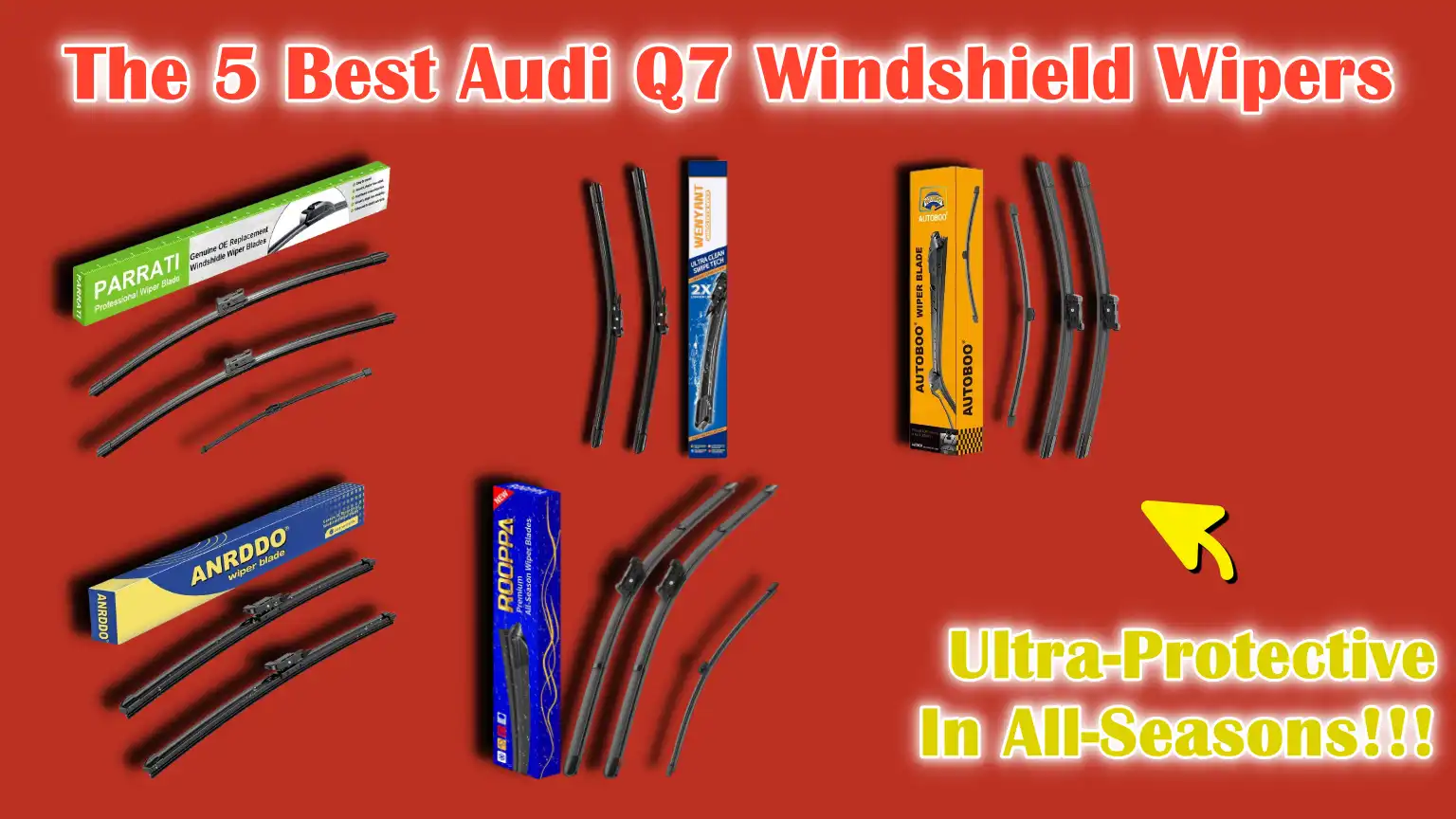
The 5 Best Audi Q7 Windshield Wipers – Build With High Quality Materials
These are designed in a way that can support the Audi Q7 in perfect way, even these Audi Q7 Windshield Wipers comes with the useful features that can make sure to maintain the cleanliness during the harsh weather.
#1. PARRATI

Size: 27-Inch Driver Side + 20-Inch Passenger Side + 15-Inch Rear Side
This is the advanced windshield wiper blade for Audi Q7 and it is designed by PARRATI, who is known for high quality wipers.
As well as, it is designed in a aerodynamic way that provides much needed high performance in all-weather conditions.
Plus, it is custom-fit for Audi Q7 from 2016 to 2023 models, as these comes with sizes of 27-inch driver side, 20 inch passenger side and 15-inch rear side for meeting the exceptional cleanliness.
#2. Wenyant

Size: 26-Inch Driver Side + 26-Inch Passenger Side
It is designed in a way to match the original equipment specifications of Audi Q7, so that makes these wiper blade a OEM-quality replacement wiper blades that can provide the same level of performance and fits as the factory-installed units.
Plus, it is made of premium quality materials that provides durability and its precised engineered frame geometry ensures excellent contact with the glass surface even in wet,dusty or light snow conditions as well.
As well as, it has 26 inch driver and 26 inch passenger side blades that makes them compatible with Audi Q7 from 2007 to 2008 and 2015 models.
#3. AUTOBOO

Size: 27 Inch Driver Side + 20-Inch Passenger Side + 15-Inch Rear Side
Now, AUTOBOO designed this ultra-protective Audi Q7 windshield wipers, even it comes with traditional frame with the flexible structure of a modern blade; which is why it can deliver superior wiping performance across all kinds of seasons.
Even, it is made of advanced rubber and stainless steel materials that’s why it contacts with the windshield firmly and the rubber edges gently clean everything that comes in its way, even because of the quality materials it won’t harm, scratch or streak your windshield anyway.
Additionally, you can quickly change it with the older one, also it is fully compatible with 2017 to 2023 Audi Q7 models, which is why you can easily maintain consistent cleanliness whether there is steady rain, road debris or early morning dew.
#4. ANRDDO

Size: 26-Inch Driver Side + 26-Inch Passenger Side
It is built for challenging climates and heavy rainfall, as these are made of high-durability in extreme weather that’s how it can take care of dust and other road challenges with confidence.
Also, its aerodynamic profile truly enhances the stability at the higher driving speeds, that literally helps it to reduce the wind-resistance and it doesn’t lift and produce noise as well.
Moreover, to maintain the consistent wiping pressure and minimize the streaks and skipping, it has come up with the specially engineered rubber edges that resists deformation in high heat and the freezing conditions as well.
Because of the size and design, these are the truly compatible with 2007 to 2008 and 2015 Audi Q7 models without any kind of adjustment.
#5. Rooppa
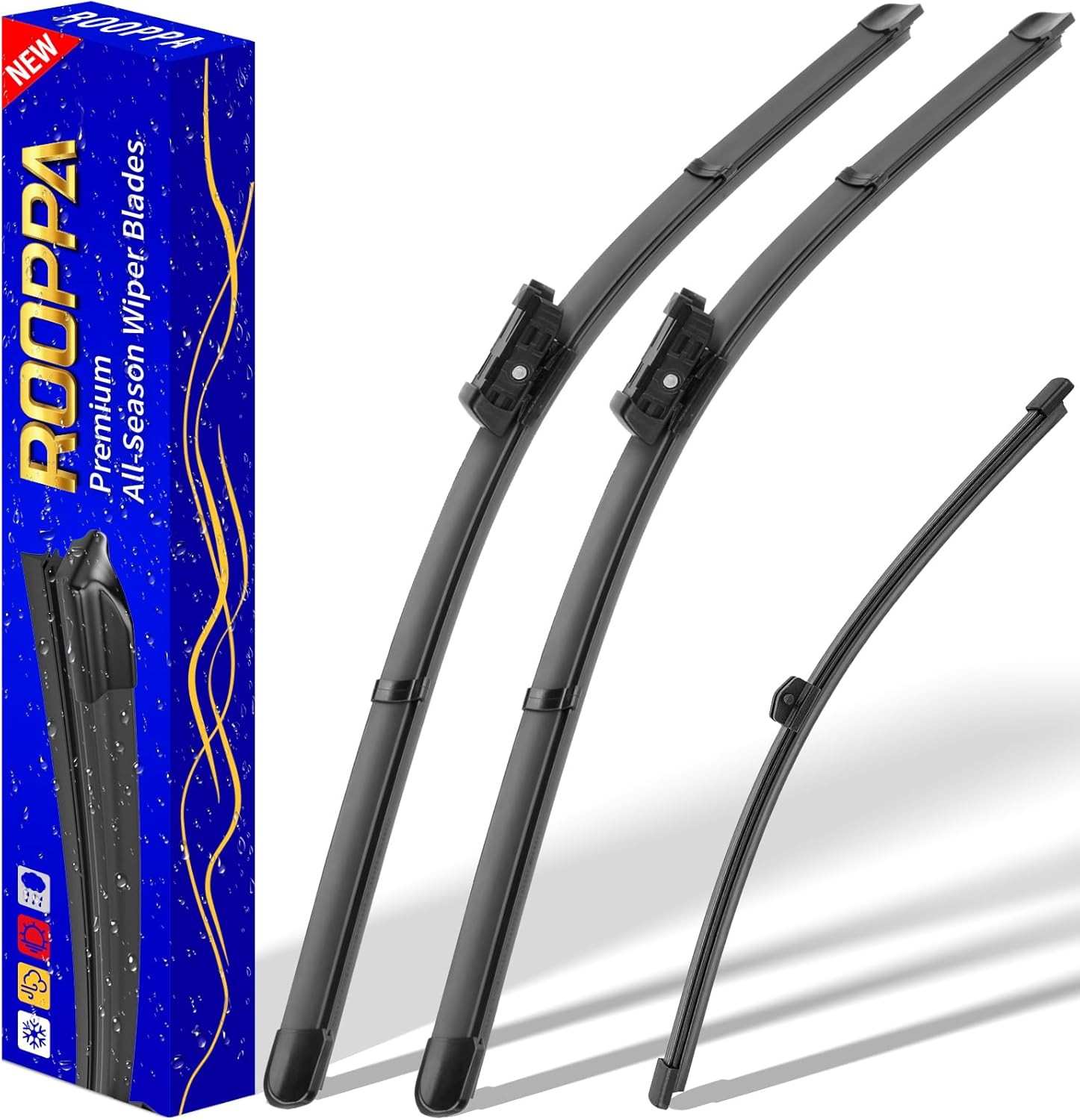
Size: 27-Inch Driver Side + 20-Inch Passenger Side + 15-Inch Rear Side
These are the ultra-quiet and properly engineered Audi Q7 windshield wipers that delivers the smooth wipes and doesn’t product that irritating noise as well.
Because of the premium rubber and stainless steel materials, it reduces chatter and vibration as combination of these materials provide it true stability, even it is designed specifically for 2016 to 2023 Audi Q7 that’s why it wipes the windshield by following the curvature of the Q7’s in a accurate way.
Furthermore, you can use them in all-weather conditions, which is why you doesn’t have to worry about the protectiveness in different weather conditions.
At First, We Should Understand About Audi Q7 Windshield Wiper and Their Specifications
1. OEM-Recommended Wiper Sizes for Different Audi Q7 Model Years
Audi designs each Q7 model year with a specific windshield shape and curve, which is why the company recommends precise wiper blade lengths from the factory.
Using the correct OEM-recommended size ensures the blades cover the maximum amount of glass without hitting the edges of the windshield or leaving uncleared areas.
If the wiper blade is too long, it can hit the trim or overlap with the other blade, leading to noise and premature wear.
If it’s too short, it reduces driver visibility during rain.
Audi’s recommended sizes are tested for correct pressure, smooth movement and quiet operation, helping maintain clear visibility in all weather conditions.
2. Driver-Side vs Passenger-Side Length Differences
The driver-side and passenger-side windshield wipers on the Audi Q7 are intentionally different in length because the driver’s visibility needs to remain as clear as possible.
The driver-side blade is typically longer so it can clear a larger section of the windshield directly in front of the driver.
The passenger-side blade is slightly shorter to match the windshield’s shape and prevent interference during operation.
This difference in length allows both wipers to move smoothly together, while providing balanced cleaning and reducing stress on the wiper motor.
3. Front vs Rear Windshield Wiper Requirements
The front and rear windshield wipers on the Audi Q7 serve different purposes and therefore have different sizes and designs.
The front wipers are built to handle heavy rain, high speeds and frequent use, which is why they are more robust and longer.
The rear windshield wiper is smaller and primarily designed to clear dust, light rain and road spray that accumulates on the back of the vehicle.
Using a front wiper blade on the rear window, or vice versa, can result in poor wiping performance and may even damage the wiper arm or motor.
4. Hook, Push-Button, or Integrated Arm Compatibility
Audi Q7 windshield wipers utilize specific attachment systems that connect the blades to the wiper arm.
Older models may use a hook-style connection, while newer models often use a push-button or fully integrated arm for a cleaner look and improved stability.
Correct compatibility is crucial, as an incorrect connection can cause the blade to come loose or malfunction while driving.
OEM-compatible attachment systems ensure a secure fit, even pressure on the windshield and reliable operation even at high speeds and in heavy rain.
Basic Types of Windshield Wipers Which Is Suitable for the Audi Q7
1. Conventional Frame Windshield Wipers
Conventional frame windshield wipers have a metal or plastic frame with multiple joints that hold the rubber blade against the glass.
This basic design has been in use for many years and is both economical and readily available.
For Audi Q7 owners, frame wipers may work adequately for light weather conditions and general city driving.
However, because the Audi Q7 has a large and curved windshield, traditional frame wipers may not always apply even pressure across the entire glass surface.
Over time, dirt and debris can accumulate in the joints, leading to less smooth movement and potential issues such as uneven wiping or streaking.
2. Advantages of Basic Design and Cost
The main advantage of conventional frame wipers is their simple construction, which keeps their cost lower compared to more advanced designs.
They are easy to replace and widely available, making them a practical option for drivers who prefer basic maintenance and shorter replacement cycles.
For occasional use or in areas with light rainfall, these wipers can provide acceptable performance.
However, they may wear out quickly in dusty, hot, or very wet conditions, which are common challenges for larger vehicles like the Audi Q7.
3. Beam/Frameless Windshield Wipers
Beam, or frameless, windshield wipers are designed as a single curved piece without any external joints.
This design allows the blade to follow the natural curvature of the Audi Q7 windshield more closely.
Beam wipers apply even pressure from end to end, resulting in more effective water removal and less streaking.
Because they lack exposed metal parts, they are less prone to dirt or debris accumulation and perform better in heavy rain and adverse weather conditions.
4. Aerodynamic Design for High-Speed Driving
The biggest advantage of beam wipers is their aerodynamic shape, which helps them stay firmly pressed against the windshield at high speeds.
The Audi Q7 is often driven on highways, where strong gusts of wind can lift poorly designed wipers off the glass.
Beam wipers are shaped to minimize wind pressure and vibration, resulting in quieter operation and more consistent wiping.
This makes them a popular choice for drivers who value clear vision during high-speed or long-distance driving.
Yes, even there’s technical analyses from the SAE technical paper, they used engineering methods to calculate how aerodynamic uplift actually alters the pressure distribution under the wiper blades, so that shows how important it is to have practical design, also it shows that you should always use optimized blade profile and spoiler shape because it’s not just a theoretical thing as it literally has measurable effects on wiping pressure, visibility and safety that is important in real driving conditions.[¹]
5. Hybrid Windshield Wipers
Hybrid windshield wipers combine the best features of both conventional frame and beam designs.
They utilize an internal frame for support, while being covered by a sleek outer shell that improves airflow and protection.
For the Audi Q7, hybrid wipers offer more balanced pressure distribution and better stability compared to traditional frame wipers.
They also have a more modern look and are designed to handle a wide range of weather conditions, from heavy rain to dusty roads.
6. Combination of Frame Support and Beam Flexibility
The internal frame of hybrid wipers helps maintain strong contact with the windshield, while the flexible outer design allows the blade to conform to the curved glass surface.
This combination results in smoother wiping and a longer blade lifespan.
Hybrid wipers are particularly useful for drivers who want better performance than basic frame wipers, but at a lower price than premium beam blades.
7. Durability, Pressure Distribution and Noise Level Comparison
When comparing these three types of wipers for the Audi Q7, beam and hybrid wipers generally offer better durability because they are more effective at preventing dust buildup and weather-related damage.
Beam wipers typically provide the most even pressure distribution, resulting in a cleaner wipe and fewer streaks.
Hybrid wipers offer a strong balance of stability and flexibility, making them reliable in various driving conditions.
Traditional frame wipers tend to become noisier over time due to wear at the joints, while beam and hybrid designs generally operate more quietly, specially at higher speeds.
Understand What Is The Best Materials to Consider for Audi Q7 Windshield Wipers
1. Natural Rubber vs Synthetic Rubber Blades
Natural rubber windshield wiper blades are made from plant-derived rubber and are known for their soft and flexible texture.
This softness allows them to wipe the windshield quietly and smoothly when new.
However, natural rubber can degrade quickly as it is more susceptible to heat, sunlight and air pollution.
Synthetic rubber blades are made using specially formulated rubber compounds that are more resistant to cracking, hardening and aging.
For a large SUV like the Audi Q7, synthetic rubber blades often provide more consistent wiping and a longer service life, specially in hot, dusty, or high-traffic driving conditions.
2. Silicone Wiper Blades and Their Lifespan Advantages
Silicone windshield wiper blades are considered a premium option for the Audi Q7 because they last significantly longer than standard rubber blades.
Silicone does not degrade easily under heat or UV rays, meaning it can maintain its flexibility for an extended period.
These blades also leave a thin water-repellent layer on the windshield, causing rainwater to bead up and roll off, even when the wipers are not in use.
This improves visibility during light rain and reduces the workload on the wiper motor, making silicone blades an excellent choice for drivers seeking long-lasting performance and reduced maintenance.
3. Coated Rubber Technology – Graphite and Teflon
Many modern Audi Q7 windshield wipers utilize coated rubber technology to enhance performance and comfort.
Graphite-coated blades reduce friction between the rubber and the glass, allowing the wipers to move smoothly and quietly.
Teflon coatings work similarly and also increase resistance to wear.
These coatings help prevent skipping, chattering and squeaking noises, which are common problems with uncoated rubber blades.
Over time, coated blades maintain better contact with the windshield, resulting in a cleaner wipe and improved driving comfort.
4. Performance in Rain, Dust, Heat and Cold Conditions
Different wiper materials perform differently depending on weather and environmental conditions.
In heavy rain, silicone and high-quality synthetic rubber blades provide superior water removal and clear visibility.
In dusty conditions, coated and beam-style blades prevent dirt buildup and maintain smooth operation.
Extreme heat and direct sunlight can degrade natural rubber quickly, while synthetic and silicone materials remain stable and flexible.
In cold conditions, silicone and advanced synthetic rubber blades resist hardening, which helps prevent streaking and uneven wiping.
Choosing the right wiper material for your Audi Q7 ensures reliable performance throughout the year and in various driving conditions.
How to Consider Features and Build Quality According to Weather and Driving Conditions
1. Performance in Heavy Rain and Monsoon Conditions
In heavy rain and monsoon conditions, the Audi Q7’s windshield wipers must be able to clear large amounts of water quickly and evenly.
Water can accumulate rapidly on a wide windshield like that of the Q7 and if the wipers don’t maintain consistent contact with the glass, visibility can be compromised in just seconds.
High-quality wiper blades with even pressure distribution help remove water without streaks or water marks.
Durable rubber or silicone materials also prevent the blades from bending or lifting during heavy rain, which is specially crucial when driving through standing water or sudden downpours.
2. Impact of Dust, Pollution and Road Grime
Dust, air pollution and road grime gradually accumulate on both the windshield and wiper blades, specially in urban and highway driving.
When dirt particles adhere to the rubber edge, they reduce wiping effectiveness and can cause scratches on the glass.
For the Audi Q7, using wiper blades made from durable materials helps prevent damage from abrasive dust.
Regular cleaning of the windshield and blades improves wiping performance and extends blade life, while worn blades should be replaced promptly to maintain clear visibility.
3. Wiping Performance and Ice Resistance in Cold Weather
In cold climates, windshield wipers must remain flexible even at low temperatures.
When the rubber hardens due to the cold, it cannot properly conform to the windshield’s curvature, resulting in streaks and missed areas.
Advanced synthetic rubber and silicone wiper blades are designed to remain flexible in cold weather, ensuring smooth wiping even in frost or light snow.
Some blades also resist ice buildup, which helps protect the wiper motor and ensures reliable operation during winter driving.
4. High-Speed Stability on the Highway
Driving at high speeds creates a strong airflow over the windshield, which can lift poorly designed wiper blades off the glass.
The Audi Q7 is often driven at highway speeds, making wiper stability crucial.
Aerodynamically shaped wipers are designed to maintain even pressure on the windshield as speed increases.
This reduces vibration, noise and skipping and ensures consistent water removal.
Stable wipers improve visibility and reduce driver fatigue during long-distance and high-speed travel.
Know, Difference Between the OEM vs Aftermarket Windshield Wipers for Audi Q7
1. Advantages of Audi OEM Windshield Wipers
Audi OEM windshield wipers are specifically designed for the Audi Q7 and tested to match the windshield’s curvature, wiper arm design and pressure requirements.
Because these wipers are manufactured to factory standards, they typically provide precise fitment, smooth movement and quiet operation.
OEM blades are engineered to work seamlessly with the Q7’s wiper system, minimizing uneven wiping and strain on the motor.
Many drivers choose OEM wipers for peace of mind, knowing the blades meet Audi’s safety and performance expectations.
2. Price, Availability and Quality Comparison
Audi Q7 OEM windshield wipers are often more expensive than aftermarket options due to the brand name and factory-level testing.
They are typically available at authorized dealerships and select service centers, but may not always be readily available.
Aftermarket wipers are widely available online and at auto parts stores, offering a wider range of prices.
While some lower-priced aftermarket blades may wear out quickly, many high-quality aftermarket options offer comparable or superior performance to OEM wipers at a lower price, making them a popular choice for budget-conscious buyers.
3. Reliable Aftermarket Brands Compatible with the Audi Q7
Several reputable aftermarket brands manufacture windshield wipers that are fully compatible with the Audi Q7.
These brands invest in advanced materials, aerodynamic designs and precision attachment systems to meet or exceed OEM standards.
Many aftermarket manufacturers also offer a variety of blade types, such as beam, hybrid and silicone options, allowing Q7 owners to choose based on driving conditions and weather.
Choosing a reputable brand ensures reliable wiping performance and reduces the risk of poor fit or premature failure.
4. Warranty and Fitment Reliability
Warranty coverage and fitment reliability are crucial factors when choosing between OEM and aftermarket windshield wipers.
OEM wipers typically come with a limited warranty from Audi, instilling confidence in their quality and durability.
Reputable aftermarket brands also offer warranties and provide clear vehicle compatibility information to ensure proper fitment.
Properly matched aftermarket wipers can fit just as securely as OEM blades and, when installed correctly, provide safe and consistent performance.
Read More:
How to Install and Accurately Fit The Audi Q7 Windshield Wipers
1. First, Identify the Correct Wiper Arm Type
Before installing new windshield wipers on an Audi Q7, it’s crucial to identify the correct wiper arm type.
Audi Q7 models may have different attachment systems depending on the model year, such as a hook-style arm, a push-button connector, or a fully integrated arm.
Checking the existing wiper blade connection or consulting the vehicle’s manual ensures that the new blade will fit correctly.
Using the correct arm type prevents loose installation, uneven wiping and the risk of the blade detaching while driving.
2. Install Them – Easy Way
Installing windshield wipers on an Audi Q7 is generally a straightforward process if done carefully.
The old blade is gently lifted away from the windshield and detached from the arm using the built-in locking mechanism.
The new blade is then aligned with the arm and clicked into place until it is securely locked.
After installation, the wipers should be gently lowered back onto the glass to prevent damage to the windshield.
Testing the wipers with washer fluid ensures they operate smoothly and clean the glass evenly.
3. Common Installation Mistakes You Should Avoid
A common mistake is forcing a blade onto the wrong type of wiper arm, which can damage both the blade and the arm.
Another common mistake is allowing the bare metal arm to snap back onto the windshield during replacement, which can cause serious damage to the glass.
Failing to fully lock the blade in place can lead to noise, streaking, or the blade detaching while driving.
Taking a few extra moments to double-check the fitment helps avoid these problems.
4. Ensure Correct Blade Alignment and Pressure
For effective windshield wiping on the Audi Q7, correct alignment and even pressure are crucial.
After installation, the blades should sit flat against the windshield without any gaps or uneven contact.
If the blade doesn’t sit evenly, it can leave streaks or fail to clean certain areas of the glass.
Properly fitted blades apply even pressure across the entire windshield, resulting in smooth wiping, quiet operation and improved visibility in all weather conditions.
How to Maintain Windshield Wipers of Audi Q7
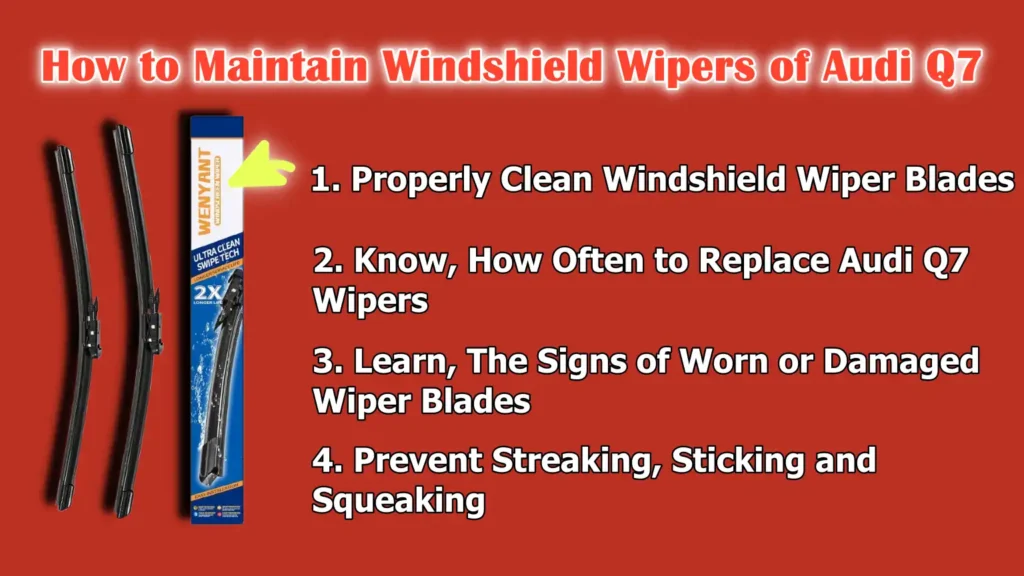
1. Properly Clean Windshield Wiper Blades
Regularly cleaning your windshield wiper blades is the easiest way to keep your Audi Q7’s wipers working effectively.
Over time, dirt, oil and road grime accumulate on the rubber edge, reducing its ability to clear water.
Gently wiping the blades with a soft cloth and clean water, or a mild glass cleaner, helps remove this buildup.
Clean blades glide more smoothly across the windshield, reduce noise and prevent scratching the glass.
2. Know, How Often to Replace Audi Q7 Wipers
Audi Q7 windshield wipers should typically be replaced every six to twelve months, depending on driving conditions and climate.
In hot, dusty, or rainy areas, wipers may wear out faster due to heat, UV exposure and frequent use.
Even if the wipers look fine, the rubber can harden or lose its flexibility over time.
Replacing them regularly ensures clear visibility and reduces strain on the wiper motor.
3. Learn, The Signs of Worn or Damaged Wiper Blades
Worn or damaged windshield wiper blades show clear signs during use.
Common indicators include streaking on the windshield, intermittent or jerky movement, squeaking noises and missed areas on the glass.
Cracks, tears, or rough edges on the rubber blades also indicate a need for replacement.
Ignoring these signs can lead to reduced visibility in bad weather and increased driving risk.
4. Prevent Streaking, Sticking and Squeaking
Preventing wiping problems starts with proper care and choosing the right blades for your Audi Q7.
Keeping the windshield clean reduces friction and allows the blades to move smoothly.
Using high-quality blades made from durable materials ensures even pressure and quiet operation.
Regular inspections and timely replacements prevent minor issues from escalating into major visibility problems, helping to maintain safe and comfortable driving in all weather conditions.
How to Point Out Performance Problems and Solve Those Issues
1. Streaking and Smearing Causes
Streaking and smearing on the Audi Q7 windshield are typically caused by dirt buildup, worn rubber, or hardened wiper blades.
When dust, oil, or road grime accumulates on the blade edge, it prevents the rubber from making clean contact with the glass.
Over time, exposure to sunlight and heat can cause the rubber to lose its flexibility, resulting in uneven wiping.
A dirty windshield can also contribute to smearing, as the dirt is spread rather than cleaned away.
2. Wiper Chattering and Noise Issues
Wiper chattering and squeaking noises often occur when the blade does not glide smoothly across the windshield.
This can be due to a dry windshield, worn rubber edges, or misalignment of the blades.
Improper installation or using blades that are not fully compatible with the Audi Q7 can also cause noise.
Increased friction between the blade and the glass causes the wiper to move intermittently rather than smoothly, resulting in vibrations and noise.
3. Uneven Wiping or Missed Areas
Uneven wiping or missed areas on the windshield usually indicate uneven pressure or blades that no longer conform to the curvature of the glass.
Bent wiper arms, worn blade frames, or incorrect blade size can all reduce contact with the windshield.
On large windshields like the Audi Q7, even small pressure differences can leave unwiped areas that affect driver visibility, specially during heavy rain.
4. Solutions and Quick Fixes
Many wiper performance problems can be resolved with simple solutions.
Cleaning both the windshield and the wiper blades often restores smooth wiping.
Checking that the blade is securely attached and properly aligned helps reduce noise and intermittent operation.
If problems persist, replacing the blade with a high-quality, compatible alternative is the most effective solution.
Regular checks and timely replacements ensure consistent performance and clear visibility in all driving conditions.
How to Ensure Safety, Visibility and Legal Considerations As Well
1. The Importance of Clear Visibility in Bad Weather
Clear visibility is crucial for safe driving, specially in conditions such as rain, fog, dust storms, or low light.
The Audi Q7 has a large windshield that can quickly become obscured by water or dirt, making effective windshield wipers an essential safety feature.
When wipers function correctly, they help the driver clearly see road signs, lane markings, pedestrians and other vehicles.
Poor visibility reduces reaction time and increases the risk of accidents, which is why well-maintained wipers are just as important as good brakes or tires.
2. Wiper Performance and Road Safety
Windshield wiper performance directly impacts road safety by ensuring the driver maintains a clear view of the road at all times.
Wipers that clean evenly and quietly help reduce driver stress and distraction, specially during heavy rain or long drives.
Conversely, worn or poorly fitted wipers can leave streaks on the windshield, create glare from oncoming headlights and leave uncleared areas on the windshield.
These issues can make it difficult to judge distance and speed, increasing the likelihood of a collision.
3. Legal Requirements for Functioning Windshield Wipers
In many jurisdictions, road safety laws require vehicles to have fully functional windshield wipers that can effectively clear the windshield in bad weather.
Driving with faulty or non-functioning wipers can result in fines, failure of vehicle inspections, or other penalties for violating safety regulations.
These regulations are in place to protect both the driver and other road users, as clear visibility is a fundamental requirement for safe driving.
Keeping the Audi Q7’s wipers in proper working order ensures compliance with local traffic laws.
4. Inspection and Maintenance Tips
Regular inspection of the windshield wipers helps Audi Q7 owners drive safely and legally.
Checking for cracks in the rubber edges, testing the wiping performance and ensuring the blades are securely attached are simple yet crucial steps.
Replacing worn blades before the rainy season and checking them during routine vehicle inspections helps prevent sudden visibility problems.
Consistent maintenance ensures the vehicle remains safe, reliable and ready for inspection at any time.
Conclusion – Best Audi Q7 Windshield Wipers
The most important thing during drive is: clear vision, as it is literally the foundation of safe driving, so you actually need really good Audi Q7 windshield wiper to ensure the protectiveness and cleanliness during all-weather conditions.
As well as, the Q7 has a large, curved windshield and is often driven at highway speeds, the wipers must provide consistent pressure, smooth movement and reliable performance in all weather conditions.
High-quality wiper blades help clear rain, dust and road grime quickly, ensuring clear visibility for the driver and allowing them to react safely to changing road conditions.
Understanding wiper types, materials, fitment and proper maintenance helps owners avoid common problems such as streaking, noise and uneven wiping.
Regular checks and timely replacements ensure that the wipers continue to function correctly, reducing strain on the wiper motor and improving driving comfort.
Whether choosing OEM or a reputable aftermarket option, properly fitted and well-maintained windshield wipers play a crucial role in visibility, safety and confidence when driving an Audi Q7 in any weather.
Now, you can ask unsolved queries in the comment box.
Frequently Asked Questions
Q1. How often should I replace the windshield wipers on my Audi Q7?
Answer: Audi Q7 windshield wipers should typically be replaced every six to twelve months. In hot, dusty, or rainy climates, they may need to be replaced more frequently, as heat, sunlight and dirt can degrade the rubber more quickly. Even if the wipers appear to be in good condition, the rubber can harden over time, reducing wiping performance and visibility.
Q2. What type of windshield wipers work best for the Audi Q7?
Answer: Beam or hybrid windshield wipers generally work best for the Audi Q7 because they provide even pressure across the large, curved windshield. Beam wipers are particularly good for high-speed driving and heavy rain, while hybrid wipers offer a balance of durability and flexibility. Traditional frame wipers may work in light weather but may not perform as well on larger windshields.
Q3. Why are my Audi Q7 windshield wipers leaving streaks?
Answer: Streaking is usually caused by worn rubber, dirt buildup on the blades, or a dirty windshield. When the blade edge becomes rough or hardened, it can’t wipe water evenly. Cleaning the blades and windshield may help temporarily, but persistent streaking means the wipers need replacing.
Q4. Why are my Audi Q7 windshield wipers making noise?
Answer: Noise or chattering occurs when the wiper blade doesn’t glide smoothly across the glass. This can be due to a dry windshield, worn rubber, poor quality blades, or improper installation. Using properly fitting, high-quality blades and keeping the windshield clean reduces noise and vibration.
Q5. Can I use aftermarket windshield wipers on my Audi Q7?
Answer: Yes, aftermarket windshield wipers can be safely used on an Audi Q7, provided they are compatible with the vehicle’s wiper arm type and windshield size. Many aftermarket brands design blades specifically for Audi models and offer excellent durability and performance. Always confirm fitment before installation to avoid loose or uneven wiping.
Q6. How do I know if my Audi Q7’s windshield wipers are worn out?
Answer: Signs of worn-out windshield wipers include streaking, skipping, chattering noises, uneven wiping and missed spots on the windshield. Visible cracks or rough edges on the rubber blades also indicate wear. If you notice any of these signs, replacing the wipers is the safest course of action.
References:
[1] Simulation of Aerodynamic Uplift Consequences on Pressure Repartition – Application on an Innovative Wiper Blade Design
https://trid.trb.org/View/1790403

Guys, I’m a car audio enthusiast and customization expert and I love clear sound and clean installation. Plus, I have spent years helping people build their dream audio setups. And whenever I’m working on cars, I probably listen to music and thinks about the next big upgrade.