
Written By: Don Dodi
Fact Checked By: Kristen Brown
Reviewed By: Diego Rosenberg
The Honda HR-V has the curved windshield design, which is why you need really specifically-designed wiper blades that can maintain even contact from edge to edge and provide really effective cleanup during harsh weather conditions.
So, it is really important to have correct blade size and aerodynamic shape, which is why these blades provides downward pressure during the high speed driving, that’s how it makes consistent contact with the windshield.
Which is why, we have listed 5 Best Honda HR-V Windscreen Wiper Blades that has correct size and shape to provide high quality wipes without any streaks, skipping and noise.
Plus, these are made with combination of good-quality material that helps them to be durable and have truly stable base that leads to the improved vision.
Know, All About Honda HR-V Windscreen Wiper Blade Sizes and Fitment Details
| Honda HR-V Model Year | Driver’s Side Blade Size | Passenger’s Side Blade Size | Rear Side Blade Size |
|---|---|---|---|
| From 2016 to 2022 | 26-Inch | 18-Inch | 10-Inch |
| From 2023 to 2025 | 26-Inch | 17-Inch | 12-Inch |
1. Standard Front and Rear Wiper Blade Sizes by Model Year
The Honda HR-V uses different windscreen wiper blade sizes depending on the model year and windshield design, so it’s crucial to verify the correct size before purchasing replacements.
On most Honda HR-V models, the front windshield utilizes two different blade lengths to accommodate the wide and slightly curved glass, while the rear windshield has a shorter blade specifically designed for compact rear visibility.
Over the years, Honda has made minor changes to the windshield size and wiper arm geometry, meaning that a blade size that fits an older model year may not work correctly on a newer model.
Using the correct size ensures the wipers cover the maximum windshield area without hitting the edges, lifting during operation, or leaving unswept areas.
When the blade length is correct for the model year, the wiping action remains smooth, balanced and efficient in both light and heavy rain.
2. Differences Between Driver-Side, Passenger-Side and Rear Wiper Blades
In the Honda HR-V, the driver-side, passenger-side and rear wiper blades are designed for different purposes and therefore are not interchangeable.
The driver-side blade is typically the longest as it cleans the most critical viewing area directly in front of the driver.
The passenger-side blade is slightly shorter to match the curvature of the windshield and prevent overlap or uneven pressure.
The rear wiper blade is considerably shorter and shaped to work on a more vertical glass surface, where water, dust and debris behave differently than on the front windshield.
Each blade also experiences varying pressure angles as it moves, meaning using the wrong blade in the wrong place can lead to skipping, noise, poor cleaning, or even damage to the wiper arm or windshield.
Properly fitting these blades ensures consistent visibility from all angles.
3. OEM Specifications vs Aftermarket Sizing Accuracy
OEM windshield wiper blades for the Honda HR-V are designed to precisely match the vehicle’s windshield curve, wiper arm tension and wiping pattern, so they generally provide reliable and predictable performance.
Aftermarket wiper blades can perform just as well, but only if their size and connector compatibility exactly match OEM specifications.
The problem arises when aftermarket blades are slightly too long, too short, or not properly contoured to the HR-V’s windshield, resulting in uneven contact or missed areas.
High-quality aftermarket brands often adhere to OEM sizing standards, while lower-quality options may offer “compatible” sizes that don’t translate to real-world performance.
Understanding this difference helps readers avoid purchasing blades that technically fit but don’t wipe properly.
4. The Importance of a Precise Fit for Streak-Free Cleaning
For clean, streak-free wiping on a Honda HR-V windshield, a precise fit of the wiper blades is the most crucial factor.
When the blade fits perfectly, it applies even pressure across the entire glass surface, easily removing water, dust and debris in a single pass.
If the blade is even slightly off in size or shape, the pressure becomes uneven, leading to streaks, water lines, skipping, or chattering noises.
A poor fit increases wear and tear on both the wiper blades and the windshield, reducing their lifespan and cleaning effectiveness over time.
A properly fitted blade immediately improves visibility, reduces strain on the driver’s eyes during rain and ensures safer driving in low-visibility conditions.
Therefore, a perfect fit is not only a matter of convenience but also crucial for safety.
What are the Types of Windscreen Wiper Blades That are Suitable for the Honda HR-V
1. Conventional Frame Windscreen Wiper Blades – Design and Considerations
Conventional frame windscreen wiper blades feature a metal or composite frame with multiple pressure points that press the rubber edge against the windshield.
This traditional design has been in use for many years and is commonly found as factory-installed blades on older vehicles or early models of the Honda HR-V.
The frame structure helps maintain contact across the entire glass during light to moderate rain, making it suitable for everyday city driving.
However, because the Honda HR-V’s windshield has a modern, curved shape, conventional frame blades can sometimes struggle to apply even pressure across the entire wiping path, specially near the edges.
Dust, dirt and moisture can also accumulate within the frame, potentially reducing smooth movement over time.
These blades work best in milder weather conditions and for drivers who primarily use their HR-V in urban areas with regular maintenance.
2. Flat or Beam Windscreen Wiper Blades – Aerodynamic Advantages
Flat or beam windscreen wiper blades are designed without an external frame and instead utilize a single flexible structure that conforms to the natural curvature of the windshield.
This design helps the blade maintain consistent pressure from one end to the other, which is particularly beneficial for the Honda HR-V’s wide and curved windshield.
The aerodynamic shape reduces wind lift at higher speeds, ensuring the blade remains firmly pressed against the glass during highway driving and heavy rain.
Because they have fewer exposed parts, flat blades are less prone to accumulating dirt, ice, or debris, resulting in quieter operation and smoother wiping.
For drivers who frequently face heavy rain, high-speed driving, or changing weather conditions, flat wiper blades often provide superior visibility and longer-lasting performance.
3. Hybrid Windscreen Wiper Blades – A Balance of Strength and Flexibility
Hybrid windscreen wiper blades combine the structural support of a conventional frame with the smooth, flexible wiping action of a flat blade.
They feature an internal frame that provides strength and stability, covered by a sleek outer shell that improves airflow and protects the moving parts.
This balance makes hybrid blades particularly suitable for the Honda HR-V, as they can conform to the windshield’s curvature while still maintaining robust and even pressure.
Hybrid blades are specially helpful in mixed driving conditions, such as highway travel combined with city traffic, where both durability and smooth wiping are crucial.
They offer improved performance compared to traditional frame blades and are also more robust than some flat blade designs.
4. Which Wiper Blade Type Works Best for the Honda HR-V Windshield Curve?
The Honda HR-V windshield is designed with a specific curve for improved aerodynamics and driver visibility, meaning the wiper blades must flex evenly to maintain full contact with the glass.
Flat or beam wiper blades typically work best on this type of windshield because their flexible design naturally follows the curve, ensuring consistent wiping pressure and minimizing streaking.
Hybrid blades are also a good option, offering reliable contact and durability, specially for drivers who want a balance between strength and smooth performance.
Conventional frame blades can also work, but they don’t provide consistent contact on curved glass.
Choosing a blade type that matches the curvature of the windshield ensures better visibility in all weather conditions, quieter operation and safer driving.
How Material Quality and Build Features Actually Affects Performance
1. Durability and Weather Resistance of the Rubber Compound
The quality of the rubber compound used in Honda HR-V windscreen wiper blades plays a crucial role in how well they perform and how long they last.
High-quality rubber remains flexible and smooth even after months of use, allowing the blade to glide smoothly across the windshield.
Poor-quality rubber hardens quickly due to heat, sunlight and constant friction, leading to streaking, noise and uneven wiping.
In real-world driving conditions, wiper blades are exposed to UV rays, rainwater, dust and air pollution, all of which gradually degrade weaker rubber.
A durable rubber compound resists cracking, drying out and deterioration, ensuring that water and debris are effectively cleared in a single pass.
For Honda HR-V owners who drive in varying weather conditions, weather-resistant rubber helps maintain clear visibility year-round without the need for frequent replacements.
2. Frame Strength and Corrosion Resistance
The frame of a windscreen wiper blade provides the structure that holds the blade evenly against the glass, so frame strength is a critical performance factor.
A strong frame maintains its shape under pressure, at high speeds and during repeated movements, preventing uneven contact with the windshield.
Weaker frames can bend or lose tension over time, causing parts of the blade to lift and leaving unwiped areas.
Corrosion resistance is equally important because moisture, rain and road salt can corrode metal components, specially in humid or coastal regions.
Corrosion weakens the frame and hinders smooth movement, leading to rattling and noise from the wipers.
The corrosion-resistant frame ensures consistent wiping pressure and reliable operation over extended periods, even in challenging conditions.
3. Edge Precision for Clean and Quiet Wiping
The precision of the wiping edge determines how cleanly and quietly the wiper blade operates on the Honda HR-V windshield.
A well-designed edge maintains consistent contact with the glass, allowing it to effectively remove water and debris without leaving streaks or water lines.
If the edge is uneven, rough, or poorly shaped, the blade may vibrate, chatter, or skip across the windshield.
Over time, poor edge quality also accelerates wear, reducing wiping effectiveness.
Precise edge design helps the blade conform to the curved windshield surface, ensuring quiet operation and clear visibility in both light drizzle and heavy rain.
This feature directly impacts driving comfort and minimizes distractions in wet weather.
4. Performance in Heavy Rain, Dust, Heat and Cold Conditions
Honda HR-V windscreen wiper blades must perform reliably in diverse driving environments, whether it’s heavy rain, dusty roads, or extreme temperatures.
During heavy rain, high-quality materials help the blade maintain firm contact with the windshield, preventing water buildup and ensuring clear visibility.
In dusty conditions, durable rubber and a robust design help the blade effectively clear fine particles without leaving streaks.
Heat can cause lower-quality materials to harden and crack, while cold can make inferior rubber stiff and less effective.
Blades made with weather-resistant materials remain flexible and functional in both hot and cold conditions, providing consistent wiping performance and safe visibility throughout the year.
How Windshield Curvature and Even Pressure Distribution Improve Wiping Efficiency on Honda HR-V
As well as, research from International Journal of Automotive Technology shows that internal geometry of flat wiper flexors components significantly influences that how evenly pressure is applied along the blade’s contact surface, so by using the sensors and simulation tools, finally researchers have found out that optimized flexor shapes provides more uniform pressure distribution, that ultimately contributes to more stable and really effective wiping performance all-year round.[¹]
1. Honda HR-V Windshield Shape and Pressure Requirements
The Honda HR-V is designed with a wide and gently curved windshield that improves aerodynamics and provides the driver with a large field of vision.
This curved shape means that the windscreen wiper blades must apply the correct amount of pressure across the entire glass surface to function effectively.
If the pressure is too low, the blade won’t clear the water properly and if the pressure is uneven, parts of the windshield will remain dirty or wet.
The wiper arms in the Honda HR-V are calibrated to apply a balanced force, but the blades themselves must be compatible with this design.
A blade that conforms to the curvature of the windshield ensures full contact during every wipe, helping to maintain clear visibility in all driving conditions.
2. How Even Pressure Improves Visibility and Reduces Noise
Even pressure distribution is crucial for smooth and effective wiping on the Honda HR-V windshield.
When a wiper blade applies pressure evenly across the glass, it clears water, dust and debris in a single pass without leaving streaks.
Uneven pressure causes parts of the blade to lift or drag, resulting in water streaks and reduced clarity.
It also creates friction points that generate squeaking or chattering noises, specially during light rain.
The correct pressure balance allows the blade to glide smoothly, improving visibility and making the wiping action quieter and less distracting.
This directly enhances driving comfort and helps the driver stay focused during bad weather.
3. Blade Flexibility and Consistent Contact with the Glass
The flexibility of the wiper blade plays a crucial role in maintaining consistent contact with the Honda HR-V’s curved windshield.
A flexible blade can slightly adjust its shape as it moves across the glass, ensuring that every part of the blade remains in contact with the surface.
This consistent contact helps to evenly remove water from the center of the windshield to the edges.
Stiff or poorly designed blades fail to conform to the curvature, resulting in missed spots or incomplete wiping.
Flexible blades also respond better to changes in speed and wind pressure, whether driving slowly in traffic or at higher speeds on the highway.
4. Preventing Skipping, Chattering and Uneven Wiping
Skipping, chattering and uneven wiping are common problems caused by poor blade fit, incorrect pressure distribution, or limited flexibility.
On the Honda HR-V’s windshield, these issues often arise when the blade fails to maintain consistent contact with the curved glass surface.
Skipping occurs when the blade loses contact for a brief period, while chattering is caused by uneven friction as the blade moves.
Both problems reduce visibility and can distract the driver.
Using a blade designed to conform to the windshield’s curvature and applying balanced pressure helps prevent these issues.
Proper wiping efficiency not only improves clarity but also extends the blade’s lifespan and prevents unnecessary wear on the windshield.
Understand, How Honda HR-V Windscreen Wiper Blades Perform In Different Weather & Driving Conditions
1. Performance During Monsoons and Heavy Rain
During monsoons and heavy rain, the Honda HR-V’s windscreen wiper blades must quickly clear large amounts of water to maintain the driver’s view.
High-quality blades maintain consistent contact with the windshield, allowing water to be wiped away easily in a single pass rather than spreading across the glass.
In heavy rain, worn blades often leave a thin film of water that reflects the headlights of oncoming vehicles, making it difficult to see road markings and obstacles.
Blades designed for efficient water removal help prevent this problem and maintain clear vision even during continuous rainfall.
Reliable monsoon performance is specially crucial for highway driving, where visibility changes rapidly and reaction time is critical.
2. Handling Dust, Pollen and Debris in Urban and Highway Driving
In everyday urban driving, windscreen wiper blades frequently face dust, pollen, exhaust residue and small road particles that accumulate on the windshield.
On highways, debris and wind from other vehicles can exacerbate this buildup.
Effective wiper blades remove these particles without smearing them across the glass or scratching the surface.
When blades lack the proper material quality or flexibility, dust and pollen can create streaks that reduce clarity, specially when used with washer fluid.
Blades that effectively handle debris help maintain a consistently clear windshield, which is essential for clear visibility in traffic and at higher speeds.
3. Heat Resistance for Hot Weather
In hot weather, the Honda HR-V’s windscreen wiper blades are constantly exposed to intense sunlight and high temperatures, even when the vehicle is parked.
Heat can harden, crack, or warp low-quality rubber, reducing wiping effectiveness and shortening blade lifespan.
Heat-resistant blades remain flexible even after prolonged exposure to sunlight, ensuring they function smoothly even after months of use.
This flexibility ensures the blades maintain consistent pressure and effectively remove water.
For drivers in hot climates, heat resistance is crucial for maintaining consistent wiping performance and avoiding frequent replacements.
4. Wiping Reliability in Cold Weather
Cold weather presents a unique challenge for windscreen wiper blades, as low temperatures can cause lower-quality materials to stiffen and become less responsive.
When blades lose flexibility in cold conditions, they can skip across the windshield or fail to clear water properly.
Reliable cold-weather blades remain soft enough to conform to the curves of the windshield, ensuring consistent contact even in freezing temperatures.
This helps prevent streaking and improves visibility during early morning or winter driving.
Consistent wiping performance is essential for safe driving in cold weather, as visibility can be suddenly reduced by fog, frost, or light rain.
How Proper Design and Fit Reduce the Noise and Delivers Smooth, Silent Wiper Operation
1. Causes of Squeaking and Chattering
Squeaking and chattering noises from windscreen wiper blades are common problems that usually indicate poor contact between the blade and the windshield.
In the Honda HR-V, these noises often occur when the blade’s rubber hardens, becomes uneven, or wears down over time.
Dirt, dust and dried washer fluid can also create friction on the glass surface, causing the blade to move in a jerky manner instead of gliding smoothly.
Another common cause is uneven pressure distribution, where some parts of the blade exert too much pressure while others lift slightly.
These conditions hinder smooth movement and generate noise, specially during light rain or when the windshield is not fully wet.
Understanding these causes helps drivers identify when their wiper blades need cleaning, adjustment, or replacement.
2. The Role of Blade Edge Finish and Tension
The finish of the blade edge plays a crucial role in how quietly and smoothly the wiper blade operates.
A well-shaped and evenly finished edge maintains consistent contact with the windshield, allowing it to glide smoothly without sticking or skipping.
If the edge is rough or uneven, it creates resistance, leading to vibrations and noise.
Blade tension is equally important, as it determines how firmly the blade presses against the glass.
The correct tension ensures that the blade maintains contact without applying excessive pressure, which would increase friction and noise.
A balanced edge finish and tension work together to provide quiet operation and clean wiping performance.
3. How Proper Fit and Installation Reduce Operating Noise
Proper fit and correct installation are key factors in minimizing windscreen wiper noise in the Honda HR-V.
When a wiper blade is designed to match the curvature of the windshield and the angle of the wiper arm, it glides smoothly across the glass without resistance.
Incorrectly sized or poorly fitting blades can sit at the wrong angle, leading to uneven contact and increased noise during operation.
Installation errors, such as loose connectors or misaligned blades, can also cause vibrations and rattling.
Ensuring that the blades are the correct size and securely installed helps maintain smooth movement, reduce unwanted noise and improve overall driving comfort in wet conditions.
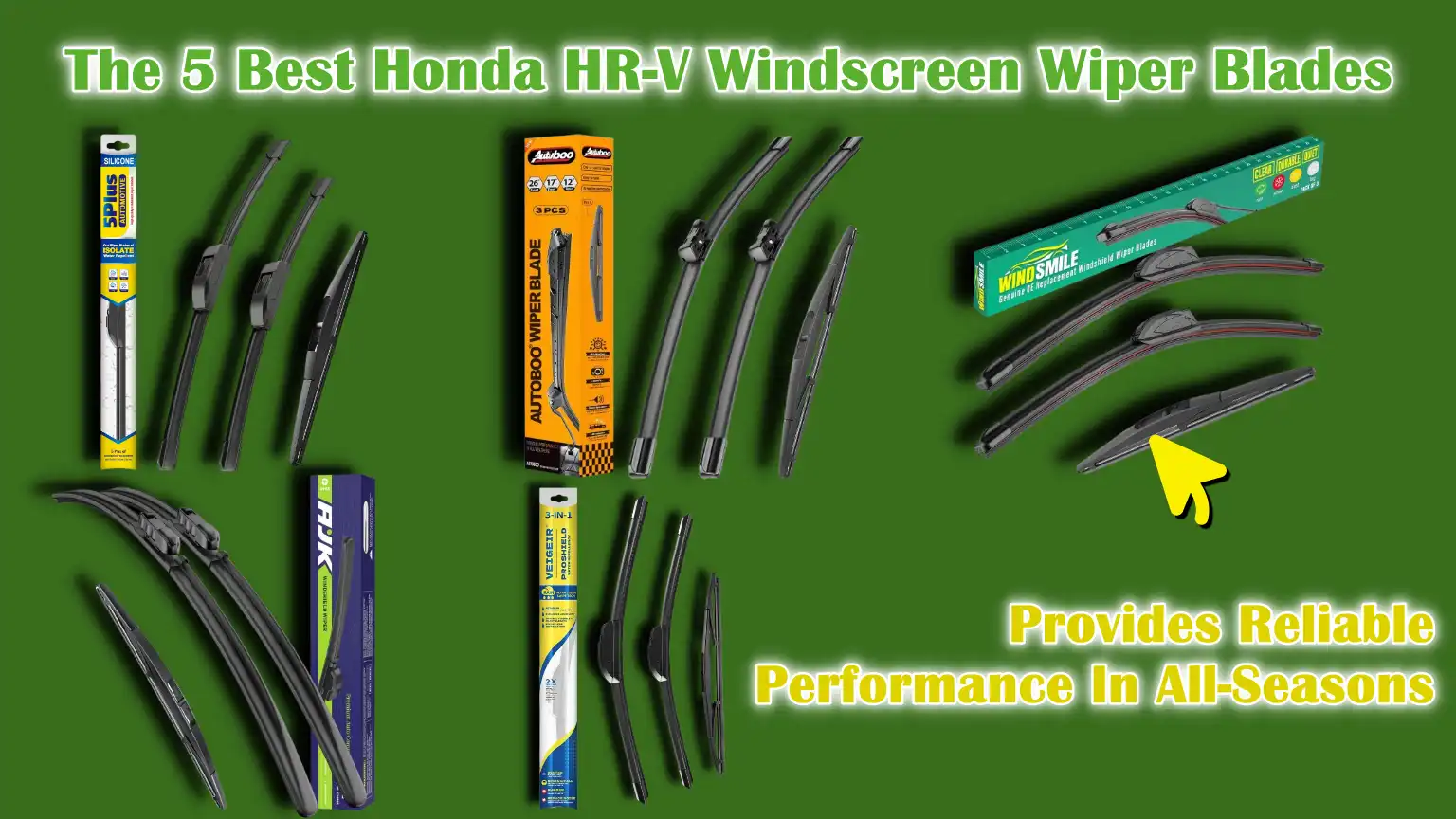
The 5 Best Honda HR-V Windscreen Wiper Blades – Highly Protective In All-Seasons
These are really efficient windscreen wiper blades for Honda HR-V, as these blades proper smooth and quiet wiper performance even in the harsh weather conditions.
#1. 5 PLUS

Blade Sizes: 26-Inch Driver’s Side + 18-Inch Passenger’s Side + 10-Inch Rear Side Blade
Material Used: Silicone
These are the highly durable windscreen wiper blades for Honda HR-V and it is designed by 5 PLUS.
Also, these wiper blades are made of silicone material, which is why it doesn’t get affected by UV rays, it has a good weather resistance and does not deform in the high temperatures as well.
Not only this, these wipers are designed with an evenly balanced pressure distribution system, that’s how it maintain consistent contact from edge to edge and which is why it remove rainwater, dust and debris efficiently.
Also, these wiper blades are specifically designed for 2016 to 2022 Honda HR-V, as these blades comes with the dimension of 26-inch, 18-inch and 10-inch.
#2. AUTOBOO
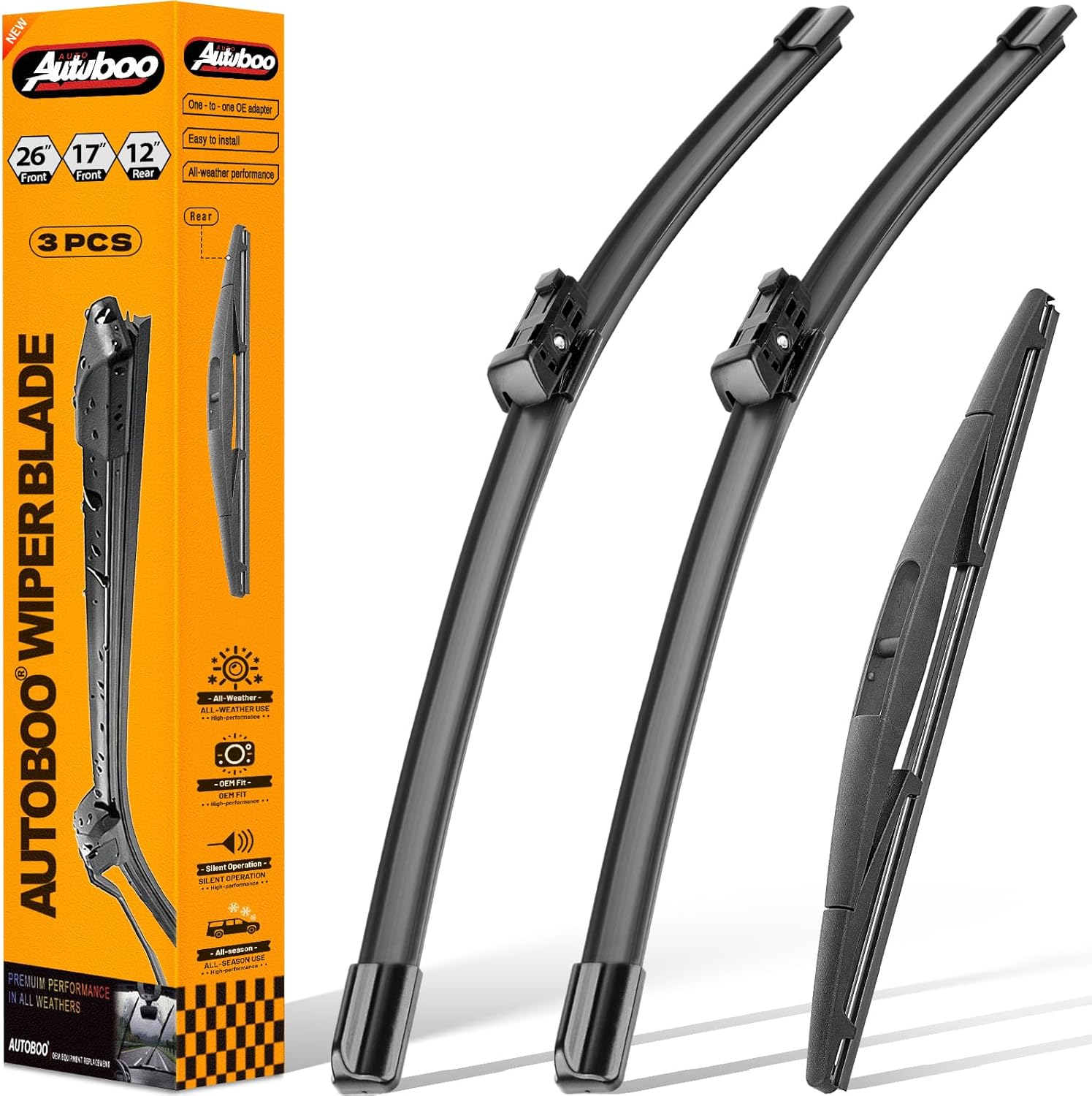
Blade Sizes: 26-Inch Driver’s Side + 17-Inch Passenger’s Side + 12-Inch Rear Side Blade
Material Used: Rubber + Stainless Steel Material
Now, AUTOBOO is the designer of this highly-durable Honda HR-V windshield wiper blades; and these are made with rubber and stainless steel material to provide it much needed durability and reliablility.
As well as, these wiper blades has aerodynamic design that helps it to reduce the wind lift at higher speeds, that allows the wiper blades to firmly stay in pressed way so that it maintain the contact with glass throughout the journey.
Additionally, it featured 1,500 pressure points on the blade that’s why it deliver the quietest performance and provides higher visibility without any kind of irritating noise during drive.
Also, these blades comes with 26-inch, 17-inch and 12-inch rear dimensions, that’s why you can comfortably install them on 2023 to 2025 Honda HR-V vehicle model.
#3. WINDSMILE

Blade Sizes: 26-Inch Driver’s Side + 18-Inch Passenger’s Side + 10-Inch Rear Side Blade
Material Used: Rubber + Stainless Steel Material
Now, these are the precisely engineered wiper blades that provides uniform pressure across the entire windshield blade of the Honda HR-V and it is made by WINDSMILE.
Not only this, these blades are made of high-quality rubber material to ensure efficient wiping without any kind of streaks.
And, these windscreen wipers are precisely shaped in a way to give it a aerodynamic shape that reduces the wind lift and noise as well, so that you can easily cleanup your windscreen and maintain the clear vision ahead in harsh-weather conditions.
Also, you can easily replace these blades with 2016 to 2022 Honda HR-V, as these blades have dimensions of 26-inch, 18-inch and 10-inch of rear wiper blades.
#4. AJK

Blade Sizes: 26-Inch Driver’s Side + 17-Inch Passenger’s Side + 12.01-Inch Rear Side Blade
Material Used: Alloy Steel + Plastic + Rubber Materials
Now, these wiper blades are made with the combination of high quality material that provides the stability and durability that is necessary to get the consistent wipes in all-seasons and it is designed by AJK.
As well as, these wipers resists cracking, splitting and tearing, which is why you can easily use them in hot and cold weather conditions, also because these blades also applies uniform pressure along the entire blade length, that’s why these provides crystal clear vision.
Plus, these blades are carefully engineered, which is why blade ensures smooth contact with the windshield, that’s why these are really effective in removing the water and debris without scratching the glass surface of your HR-V.
Also, these are perfectly comaptible with Honda HR-V from 2023, 2024 and 2025 vehicle model, as these blades comes with 26-inch, 17-inch and 12.01-inch rear wiper blade.
#5. VEIGEIR

Blade Sizes: 26-Inch Driver’s Side + 18-Inch Passenger’s Side + 10-Inch Rear Side Blade
Material Used: Alloy Steel + Natural Rubber Material
Now, this is the high-performance windscreen wiper blade for Honda HR-V, as it delivers quiet and smooth performance in different weather conditions and it is manufactured by VEIGEIR.
Also, it has aerodynamic design that helps it to maintain the consistent contact with the glass at the different speeds.
Even, the design helps it to reduce the vibration and chatter, which is why you don’t have to hear those irritating noises during light rain or consistent wiping.
As well as, these blades are made with high-quality natural rubber materials that provides them smooth wiping performance in changing weather conditions.
Plus, you can easily install them on 2016 to 2022 Honda HR-V, as these blades have dimensions of 26-inch, 18-inch and 10-inch wiper blade sizes.
How to Install & Replace the Honda HR-V Windscreen Wipers Blades -Easy Method
1. Confirming the Correct Wiper Blade Compatibility for the Honda HR-V
Before beginning the replacement process, it’s crucial to ensure that the new windscreen wiper blades are fully compatible with the Honda HR-V.
Compatibility depends on the correct blade size, the type of connector used by the wiper arm and the curvature of the windshield.
Honda HR-V models typically use a standard hook-style wiper arm, but the blade length and fitment may vary depending on the model year.
Choosing a blade specifically designed for the HR-V ensures proper alignment, correct pressure distribution and smooth operation after installation.
Checking compatibility beforehand prevents installation issues and avoids poor wiping performance.
2. Safely Positioning the Wiper Arms for Replacement
To begin the installation, the wiper arms should be gently lifted away from the windshield and held in a stable, upright position.
This provides sufficient space to remove the old blades and install the new ones without damaging the glass.
Care should be taken to prevent the metal wiper arm from snapping back against the windshield, as this could cause cracks or scratches.
Properly positioning the wiper arms makes the replacement process safer, easier and more controlled, specially for first-time users.
3. Removing the Old Windscreen Wiper Blades
Removing the old wiper blades involves detaching them from the wiper arm connector.
On the Honda HR-V, this typically requires pressing or sliding a small locking mechanism that holds the blade in place.
Once unlocked, the blade can be easily pulled off the hook or connector.
Old blades often show signs of wear, such as hardened rubber or loose joints, indicating reduced wiping performance.
Carefully removing them ensures the wiper arm remains intact and ready for new blade installation.
4. Attaching the New Wiper Blades to the Wiper Arms
Installing the new wiper blades involves properly aligning the connector with the wiper arm and sliding it into position until it securely locks.
A correct connection is usually confirmed by a slight click or a firm stop, indicating the blade is fully seated.
Proper attachment ensures the blade remains stable during operation and maintains the correct angle with the windshield.
Taking a moment to check the alignment at this stage helps prevent noise, skipping, or uneven wiping later on.
5. Lowering the Wiper Arms and Checking Blade Position
After installing the new blades, the wiper arms should be carefully lowered back onto the windshield.
The blades should sit evenly on the glass without bending or lifting at the edges.
Correct positioning ensures the blades follow the curve of the windshield and apply consistent pressure during operation.
This step is crucial to prevent excessive stress or misalignment on the blades, which could reduce their lifespan or performance.
6. Testing Wiper Operation After Installation
Once the installation is complete, the wipers should be tested using washer fluid to ensure they operate smoothly and quietly.
During testing, the blades should move evenly across the windshield without skipping, streaking, or making noise.
This confirms that the blades are compatible, properly installed and functioning as intended.
A successful test indicates improved visibility and readiness for driving in rainy or dusty conditions.
Understand, How Long Honda HR-V Windscreen Wiper Blades Last and When You Need to Go for Replacement
1. Average Lifespan of Honda HR-V Windscreen Wiper Blades
The average lifespan of windscreen wiper blades on a Honda HR-V typically ranges from a few months to about a year, depending on the quality of the material and driving conditions.
Over time, the rubber edge gradually wears down due to constant contact with the windshield, exposure to sunlight and repeated movement during rain or cleaning.
Even if the wipers appear intact, their performance can degrade gradually, reducing their ability to effectively clear water.
This wear is exacerbated by frequent use, specially in environments where dust, pollution, or road debris are common.
Understanding the expected lifespan allows drivers to plan for timely replacements and maintain clear visibility throughout the year.
2. Signs Indicating the Need for Immediate Replacement
Several clear signs indicate that Honda HR-V wiper blades need immediate replacement.
Streaks or water lines left on the windshield after wiping show that the rubber edge is no longer making proper contact.
Intermittent or jerky movement suggests uneven pressure or hardened rubber.
Unusual squeaking or rattling noises often mean the blade edge is worn unevenly or has lost its flexibility.
Reduced visibility during light rain is another warning sign, as properly functioning blades should easily clear water.
Recognizing these signs early helps prevent unsafe driving conditions and protects the windshield from potential damage.
3. How Usage Frequency and Weather Affect Lifespan
The frequency of use and the weather conditions in which the Honda HR-V is driven significantly impact the lifespan of the wiper blades.
Frequent use in heavy rain or dusty conditions increases friction and causes the blades to wear out quickly.
In hot weather, the blades are exposed to intense sunlight and high temperatures, which can cause the rubber to harden and crack over time.
In cold weather, the rubber’s flexibility can decrease, leading to stiffness and poor wiping performance.
Urban driving, with its associated pollution and debris, also contributes to accelerated wear.
Drivers who understand these factors can adjust their replacement schedule accordingly and ensure their wiper blades remain effective in all conditions.
How to Maintain Honda HR-V Windscreen Wiper Blades
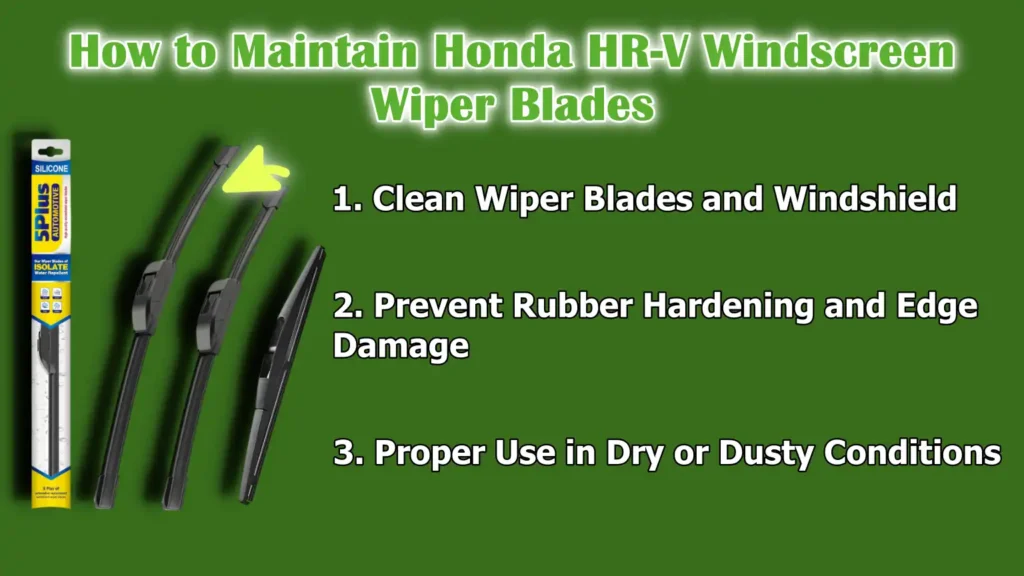
1. Clean Wiper Blades and Windshield
The most effective way to extend the life of your Honda HR-V’s wiper blades is to regularly clean both the windshield wiper blades and the windshield itself.
Dirt, dust, pollen and road debris gradually accumulate on the rubber edge and glass surface, increasing friction during wiping.
This increased friction causes the blades to wear out faster and reduces wiping quality.
Cleaning the windshield allows the blades to glide more easily, while gently wiping the blade edge removes trapped debris that can damage the rubber.
Clean surfaces allow the blades to remove water more effectively, resulting in better visibility and less noise while driving.
2. Prevent Rubber Hardening and Edge Damage
Rubber hardening is a common reason why wiper blades lose their effectiveness over time.
Constant exposure to sunlight, heat and air pollution gradually dries out the rubber, making it stiff and less flexible.
When the rubber hardens, it can no longer conform properly to the windshield’s curve, resulting in streaks and gaps.
Protecting the blades from excessive heat whenever possible and keeping them clean helps slow down this process.
Edge damage can also occur when the blades are used on a dirty or dry windshield, causing the wiping edge to wear down.
Maintaining the rubber’s flexibility and edge shape ensures smooth wiping and extends blade life.
3. Proper Use in Dry or Dusty Conditions
Using windshield wiper blades on a dry or dusty windshield causes unnecessary wear and tear and shortens their lifespan.
Wiping a dry windshield increases friction and tiny dust particles can scratch the glass, damaging both the wiper blades and the windshield surface.
In dusty conditions, it’s always best to use washer fluid to wet the glass before operating the wipers.
This reduces friction and allows the blades to glide smoothly while removing dirt.
Proper usage habits help maintain blade performance, reduce noise and ensure clear visibility whenever the wipers are needed.
Read More:
Now, Let’s Identify and Fix Common Honda HR-V Wiper Blade Problems
1. Streaking and Water Smears
Streaking and water smears on the windshield are among the most common problems experienced by Honda HR-V drivers.
These issues typically occur when the rubber edge of the wiper blade becomes worn, hardened, or uneven.
Dirt, debris and dried washer fluid can also accumulate on the blade, preventing it from making smooth contact with the glass.
When streaking occurs, visibility is reduced, specially in rain or low-light conditions, which can create unsafe driving situations.
Properly cleaning both the blades and the windshield, as well as replacing worn rubber in a timely manner, helps prevent streaking and ensures clean and consistent wiping performance.
2. Intermittent or Incomplete Wiping
Intermittent or incomplete wiping occurs when the wiper blade temporarily loses contact with the windshield.
In the Honda HR-V, this can be caused by uneven pressure distribution, a blade that doesn’t conform to the curvature of the glass, or hardened rubber that doesn’t flex properly.
Intermittent wiping is particularly noticeable at higher speeds or during light rain, where the blade may skip across the glass instead of effectively clearing the water.
Ensuring that the blades are the correct size, properly fitted and in good condition can eliminate intermittent wiping problems and guarantee full windshield coverage.
3. Wipers Not Cleaning the Edges Properly
Sometimes, the wipers on a Honda HR-V fail to clean the edges of the windshield, leaving small pockets of water, dust, or debris near the corners.
This typically occurs when the blade is too short, unevenly worn, or doesn’t conform to the curved edges of the windshield.
Small gaps at the edges can also reduce visibility and create distracting streaks while driving.
Using wiper blades specifically designed for the HR-V, with the correct length and flexibility, guarantees a complete wipe from edge to edge and maximizes visibility in all conditions.
4. Solutions and Troubleshooting Tips
Most wiper blade problems can be resolved with proper maintenance, cleaning and timely replacement.
Regularly washing the windshield and the edges of the blades prevents dirt buildup and keeps the rubber flexible.
Checking the blades for cracks, wear, or hardening ensures they are replaced before performance deteriorates.
Using the correct size and type of blades for the Honda HR-V windshield helps maintain even pressure and full contact.
Additionally, adjusting the tension of the wiper arm or replacing a faulty connector can improve performance.
Following these steps ensures the wipers function correctly, minimizing streaking and noise and providing safe and clear visibility in all weather conditions.
How to Choose the Best Wiper Blades for Honda HR-V – Easy & Smart Way
1. Confirming the Correct Size and Compatibility
The first step in choosing the best wiper blades for your Honda HR-V is confirming the correct size and compatibility with your vehicle.
Blade lengths vary between the driver-side, passenger-side and rear wipers and may also differ depending on the model year.
Using the correct size ensures full windshield coverage, proper contact with the glass and smooth wiping without streaks or gaps.
Compatibility also involves matching the blade connector type to the wiper arm.
Choosing blades specifically designed for the HR-V ensures the wipers will function efficiently and safely in all weather conditions.
2. Selecting the Blade Type Based on Driving Needs
The type of wiper blade should be selected based on the driver’s typical conditions and usage.
Traditional frame blades are suitable for mild weather and city driving, while flat or beam blades perform better at higher speeds and in heavy rain due to their aerodynamic design and ability to conform to the windshield’s curvature.
Hybrid blades offer a balance between durability and smooth operation, making them ideal for mixed driving conditions.
Understanding how each type of blade interacts with the Honda HR-V windshield helps drivers choose a blade that provides consistent performance, minimizes noise and maintains clear visibility in varying weather conditions.
3. Considering Build Quality and Durability
High-quality construction and durable materials are essential when choosing wiper blades for your Honda HR-V.
The quality of the rubber determines its flexibility and ability to effectively remove water, dirt and debris.
The blade frame should be robust and corrosion-resistant to maintain consistent pressure and prevent deformation over time.
Poor-quality materials can lead to streaking, smearing, noise and frequent replacements.
Choosing blades with proven durability ensures reliable wiping performance, extends the lifespan of both the blades and the windshield and provides a smooth and quiet driving experience.
4. Warranty and Value for Money
When choosing wiper blades, it’s crucial to consider the warranty and overall value for money.
A reputable brand that offers a warranty demonstrates confidence in the product’s quality and provides assurance against premature wear or defects.
While high-quality blades may be more expensive initially, they often last longer and perform better than cheaper alternatives, resulting in cost savings in the long run due to less frequent replacements.
Evaluating the balance between cost, performance, durability and warranty ensures that drivers invest in wiper blades that provide reliable visibility, safety and convenience for their Honda HR-V.
Conclusion – Best Honda HR-V Windscreen Wiper Blades
Without a doubt, it is the windscreen wipers that directly impacts how clearly you see the road, specifically during the heavy rain, dusty conditions and fog as well.
And, when you use the correct size, type and quality wiper blades ensures consistent contact with the curved windshield, effective water removal and reduced noise and streaking.
Also, you need to choose high-quality material wipers so that it can provide consistent performance in all weather conditions, protects the windshield from scratches and reduces driver fatigue caused by poor visibility.
So, if you pay close attention to blade compatibility, build quality and durability, Honda HR-V owners can maintain optimal safety and comfort, ensuring that every drive is as clear, smooth and stress-free as possible.
Now, it is time to have question and feedback in the comment box, if you have any.
Frequently Asked Questions
Q1. How often should I replace my Honda HR-V wiper blades?
Answer: On average, Honda HR-V wiper blades last six months to a year, depending on usage, weather conditions and quality. Streaking, skipping, or unusual noises are indicators that the blades need immediate replacement. Frequent exposure to dust, sunlight, or extreme temperatures can shorten their lifespan. Regularly replacing wiper blades ensures clear visibility, smooth operation and safer driving, specially in heavy rain or low-light conditions.
Q2. Can I install wiper blades on my Honda HR-V myself?
Answer: Yes, Honda HR-V wiper blades are designed for easy, tool-free installation. You start by lifting the wiper arms away from the windshield, releasing the locking mechanism to remove the old blades and then sliding the new blades into the connector until they lock into place. After lowering the wiper arms, it’s essential to test them with washer fluid to ensure they operate smoothly, cover the entire windshield and don’t stick or make noise. Following the correct installation steps ensures safety and optimal performance.
Q3. How do I maintain my Honda HR-V wiper blades to make them last longer?
Answer: Maintaining wiper blades involves regularly cleaning both the blades and the windshield to remove dirt, dust and road grime. Avoid using the wipers on a dry windshield, as this can increase friction and wear down the rubber edges. Protecting the blades from excessive heat and sunlight when parked prevents the rubber from hardening and cracking. Regularly inspecting the blades and replacing them when worn ensures consistent performance, smooth wiping and clear visibility in all weather conditions.
Q3. Why are my wipers leaving streaks on the windshield or not cleaning the windshield properly?
Answer: Streaking or incomplete wiping usually occurs when the wiper rubber is worn, hardened, or dirty. Skipping and chattering can occur if the blades are the wrong size, don’t conform to the windshield’s curve, or if the wiper arms aren’t applying even pressure. Cleaning the blades and windshield, checking for proper fit and replacing worn blades are the most effective ways to restore streak-free, smooth wiping. Choosing blades specifically designed for the Honda HR-V helps prevent these problems.
Q4. How do weather conditions affect wiper blade performance?
Answer: Weather significantly impacts wiper blades. Heavy rain tests their ability to clear large amounts of water quickly, while dust, pollen and road debris challenge the blade material and edge quality. Heat and sunlight can harden the rubber, reducing flexibility, while cold temperatures can stiffen the blades, leading to skipping or uneven contact. Choosing weather-resistant, flexible and durable blades ensures smooth performance and clear visibility in all conditions, keeping both the windshield and the driver safe.
References:
[1] Geometry Optimization of a Metallic Flexor for Flat Wipers
https://link.springer.com/article/10.1007/s12239-021-0075-6

Guys, I’m a car audio enthusiast and customization expert and I love clear sound and clean installation. Plus, I have spent years helping people build their dream audio setups. And whenever I’m working on cars, I probably listen to music and thinks about the next big upgrade.