
Written By: Don Dodi
Fact Checked By: Kristen Brown
Reviewed By: Diego Rosenberg
Yes, the Volkswagen Golf has slightly curved windshield, that’s why you need very specific kind of blades that can apply even pressure to the clean the glass from edge to edge.
Also, you need aerodynamically correct windscreen wiper blades that can provide the streak free and consistent performance even at the highway speeds.
Additionally, durability is the factor that plays a crucial role, as the high quality wiper blades provides really stable base to clean off the rain water, dust, fog and debris.
And, we have also listed 5 Best Volkswagen Golf Windscreen Wiper Blades, that comes with the high quality features and perfect sizes that can provide smoother operation and consistent wiping across the entire glass surface as well.
Let’s Understand About, Volkswagen Golf Windscreen Wiper Blade Sizes and Fitment
| Generation of Volkswagen Golf | Mode Year of Volkswagen Golf | Driver’s Side Blade Size | Passenger’s Side Blade Size | Rear Side Blade Size |
|---|---|---|---|---|
| Mk8 | From 2020 to 2026 Golf | 26-Inch | 18-Inch | 10-Inch |
| Mk7/Mk7.5 | From 2012 to 2020 | 26-Inch | 18-Inch | 11-Inch |
| Mk5/Mk6 | From 2004 to 2012 | 24-Inch | 19-Inch | 11-Inch |
| Mk4 | From 1998 to 2003 | 21-Inch | 19-Inch | It Varies By Model or Region |
| Mk3 | From 1992 to 1998 | 21-Inch | 19-Inch | It Varies By Model or Region |
1. Standard Front and Rear Windscreen Wiper Blade Sizes Across Different Volkswagen Golf Generations
Volkswagen Golf windscreen wiper blade sizes are not consistent across every model year or generation.
Older Golf models typically used more traditional wiper sizes, while newer generations are designed with wider, more curved windscreens, requiring different blade lengths for the driver and passenger sides.
The front wiper blades are usually longer on the driver’s side to cover a larger viewing area, while the passenger side blade is slightly shorter for balanced coverage.
Rear wiper blades, found on the hatchback versions of the Volkswagen Golf, are shorter and specifically designed for the shape of the rear window.
Using the correct size ensures that the entire windscreen is cleaned evenly, without leaving any areas that could obstruct visibility.
2. Fitment Differences Between Older and Newer Volkswagen Golf Models
Older Volkswagen Golf models typically feature simpler wiper arm designs that allow for a wider range of compatible blades.
However, newer Golf models often incorporate more advanced wiper arm connections and aerodynamic blade designs.
These newer systems are engineered to improve wiping performance at higher speeds and reduce wind lift during heavy rain.
Consequently, wiper blades designed for older Golf models may not fit or function correctly on newer versions.
Incorrect fitment can lead to loose attachment, poor pressure distribution, or incomplete wiping, resulting in reduced visibility and increased wear on both the blades and the windscreen.
3. How Correct Size Matching Improves Wiping Efficiency and Reduces Noise
Correct size matching is crucial because windshield wipers are designed to apply a specific amount of pressure to the glass.
When a blade is too long, it can hit the edges of the windshield or bend unevenly, causing skipping and noise.
When a blade is too short, it leaves portions of the glass uncleaned, specially in the driver’s primary field of vision.
Properly sized wiper blades glide smoothly across the windshield, maintaining consistent contact with the glass and effectively clearing water in a single pass.
This results in quieter operation, improved visibility and less strain on the wiper motor during regular use.
4. How to Confirm the Correct Wiper Blade Size Using Your Vehicle Manual or Model Year
The easiest and most reliable way to confirm the correct wiper blade size for a Volkswagen Golf is to consult the vehicle owner’s manual, which specifies the recommended lengths for both the front and rear blades.
If the manual is unavailable, the correct size can be determined using the Golf’s model year and generation, as wiper blade requirements vary by generation.
Many vehicles also have the size information printed on the original wiper blades or arms.
Confirming the correct size before purchasing ensures a proper fit, easy installation and reliable wiping performance in everyday driving conditions.
What are the Types of Windscreen Wiper Blades That are Fully Compatible with the Volkswagen Golf
1. Conventional Windscreen Wiper Blades and Their Basic Working Design
Conventional windscreen wiper blades are of the traditional style that were originally fitted to many older Volkswagen Golf models.
These blades utilize a metal or framed structure with multiple pressure points that press the rubber edge against the windscreen.
This design allows the blade to flex as it moves, conforming to the shape of the glass.
While this type of blade can effectively clean the windscreen in light to moderate rain, it may struggle to maintain consistent contact on newer Golf windscreens which are more curved.
Over time, dirt and moisture can accumulate in the frame, potentially reducing smooth movement and wiping consistency.
2. Beam-Style Windscreen Wiper Blades and How They Improve Pressure Distribution
Beam-style windscreen wiper blades are commonly used in newer Volkswagen Golf models as they are designed to match the shape of modern windscreens.
Unlike conventional blades, beam-style blades do not have an open metal frame.
Instead, they utilize a single, flexible structure that applies even pressure along the entire length of the blade.
This ensures that the blade maintains consistent contact with the windscreen, even at higher driving speeds or during heavy rain.
Due to their streamlined shape, beam-style blades reduce wind resistance and noise, making them particularly effective for highway driving and sudden weather changes.
3. Hybrid Windscreen Wiper Blades and Their Balance of Durability and Performance
Hybrid windscreen wiper blades combine features of both conventional and beam-style designs.
These feature a robust internal structure similar to conventional blades, along with an outer cover that enhances aerodynamics.
For Volkswagen Golf drivers, hybrid wiper blades offer reliable wiping performance with improved protection against dust, water and road debris.
The covered design helps maintain consistent pressure on the windscreen while also reducing exposure to external elements.
This balance makes hybrid blades a practical option for drivers who want consistent performance in varying weather conditions without compromising durability.
4. Comparison of Wiping Efficiency, Lifespan and Performance in Heavy Rain
When comparing these three types of windscreen wiper blades on a Volkswagen Golf, beam-style blades typically offer the most consistent wiping efficiency, specially in heavy rain and at higher speeds.
Their even pressure distribution helps clear water quickly and effectively in fewer passes.
Hybrid blades provide strong all-around performance and tend to last longer in mixed driving conditions, making them a reliable middle-ground option.
Traditional blades may perform adequately in normal conditions, but they can wear out more quickly and become noisier over time, particularly on newer Golf models.
Choosing the right type depends on the vehicle generation, driving environment and the desired level of performance in challenging weather.
What are the Useful Key Features to Look for in Volkswagen Golf Windscreen Wiper Blades
1. Even Pressure Distribution for Clean, Streak-Free Wiping
Even pressure distribution is one of the most important features in windscreen wiper blades for the Volkswagen Golf.
The Golf’s windscreen has a slight curve and the wiper blade must apply even pressure across the glass from edge to edge.
When the pressure is uneven, some parts of the windscreen remain wet, creating streaks that obstruct visibility and reflect light.
The correct pressure helps the blade remove water, dust and fine road grime in a single, smooth motion.
This results in better visibility during rain and reduces the need for frequent wiping, extending the lifespan of both the blades and the windscreen.
2. Quiet Operation at Both Low and High Driving Speeds
Quiet operation is an indicator that the wiper blades are functioning correctly on the Volkswagen Golf.
When the blades are well-designed and properly fitted, they glide smoothly across the windscreen without any rattling, squeaking, or vibration.
At low speeds, quiet wiping prevents distractions while driving in the city, while at higher speeds, it indicates that the blades are maintaining firm contact with the glass.
Excessive noise often signals poor fitment, uneven pressure, or blades that are not suitable for the shape of the Golf’s windscreen.
Smooth and quiet wiping improves driving comfort and allows the driver to focus fully on the road.
3. Robust Performance During Heavy Rain, Dust and Light Snowfall
Volkswagen Golf wiper blades should perform well in various driving conditions, including heavy rain, dusty roads and light snowfall.
In heavy rain, effective blades quickly clear water for clear visibility.
In dusty conditions, they should remove fine particles without smearing dirt across the glass.
In light snowfall or on cold mornings, the flexible blades should move smoothly without sticking or leaving icy streaks.
Reliable performance in varying weather conditions ensures consistent visibility and reduces the risk of sudden visibility impairment while driving.
4. Resistance to Heat, UV Rays and Frequent Use
Resistance to heat and sunlight is crucial for the windscreen wiper blades used on the Volkswagen Golf, specially in regions with intense sunlight.
Constant exposure to heat and ultraviolet rays can cause wiper blades to harden, crack, or lose their flexibility over time.
Blades that resist these effects maintain their shape and wiping edge for longer.
Frequent use in daily driving also puts stress on the blade material, so durability helps prevent premature wear.
Long-lasting wiper blades provide consistent performance, reduce the frequency of replacements and offer better value over time.
How to Ensure Volkswagen Golf Windscreen Wiper Blades Performance in Different Weather Conditions
1. How Wiper Blades Perform During Heavy Rain and Monsoon Driving
During heavy rain and monsoon driving, the Volkswagen Golf’s windscreen wiper blades need to clear large amounts of water quickly and efficiently.
Effective wiper blades maintain consistent contact with the windscreen, ensuring that rainwater is cleared in a single sweep rather than smearing across the glass.
In monsoon conditions, water often mixes with road oil and grime, creating a thin film that can impair visibility.
High-performance wiper blades efficiently remove this film, allowing the driver to clearly see lane markings, other vehicles and pedestrians.
Consistent wiping during heavy rain also reduces glare from headlights and streetlights, which is crucial, specially during nighttime driving and sudden downpours.
2. Effectiveness in Dusty, Dry and Urban Driving Environments
In dusty and dry driving environments, windscreen wiper blades face a different challenge.
Dust, pollen and small particles can accumulate on the windscreen, impairing visibility even without rain.
Good wiper blades remove these particles without smearing them across the glass, helping to prevent streaks and scratches.
In urban driving, frequent stopping and starting can lead to the accumulation of exhaust residue and airborne pollutants on the windscreen.
Wiper blades that perform effectively in these conditions keep the windscreen clean and clear, allowing the driver to maintain good visibility during daily commutes and short trips.
3. Performance in Cold Mornings and Light Frost Conditions
In cold mornings and light frost conditions, windscreen wiper blades must remain flexible to function properly.
When temperatures drop, lower-quality blades can stiffen, leading to skipping, noise, or incomplete wiping.
Flexible blades conform to the shape of the windscreen surface, effectively clearing moisture and light frost without damaging the glass.
Reliable performance in cold conditions ensures quick removal of morning dew, allowing drivers to begin driving safely without waiting for the windscreen to clear on its own.
This is specially useful during the winter months when visibility can change rapidly.
4. The Importance of Consistent Wiping Performance in Changing Weather Conditions
Weather conditions can change suddenly while driving, specially during long journeys or seasonal transitions.
Consistent wiping performance ensures that drivers maintain a clear view of the road, even when it faces rain, dust, fog, or temperature fluctuations.
Wiper blades that deliver consistently good performance reduce the need for frequent adjustments and repeated wiping, allowing the driver to focus on the road.
Reliable performance in varying conditions increases driving confidence and helps maintain safety in unpredictable environments.
How to Tell If Your Volkswagen Golf’s Windscreen Wiper Blades Need Replacement
1. Common Signs of Worn or Damaged Wiper Blades
The clearest sign that your Volkswagen Golf’s wiper blades need replacing is a decrease in wiping performance.
When the blades fail to clear the windscreen completely, water may remain on the glass even after multiple wipes.
Drivers might notice blurry patches in their field of vision, specially during rain or morning dew.
Another common sign is uneven wiping, where one part of the windscreen is clean while another remains dirty.
These changes indicate that the blade’s edge is no longer making proper contact with the glass and is no longer performing its function effectively.
2. Visible Signs Such as Cracks, Hardening, or Uneven Edges
A simple visual inspection can reveal whether the wiper blades are worn out.
Over time, exposure to sunlight, heat and dust can cause the wiping edge to harden or develop cracks.
Small cracks or rough edges prevent the blades from gliding smoothly across the windscreen.
In some cases, the blade may appear bent or uneven, leading to missed spots during wiping.
These visible signs indicate that the blade material has deteriorated and should be replaced to prevent further visibility issues or damage to the windscreen surface.
3. Changes in Noise Levels or Reduced Wiping Clarity
Changes in noise are another strong indicator that the wiper blades are no longer functioning correctly.
Squeaking, chattering, or scraping sounds usually mean the blades are sticking or dragging across the glass.
This not only creates a distraction but also reduces wiping clarity.
When wipers start making noise, they often leave streaks, specially at higher speeds.
Poor clarity during wiping strains the eyes and makes safe driving difficult in bad weather.
Quiet and smooth operation is a sign of healthy wiper blades, while noise indicates wear and tear.
4. Suggested Replacement Intervals for Daily and Occasional Drivers
The replacement interval depends on how often and under what conditions the Volkswagen Golf is driven.
For daily drivers, wiper blades typically wear out faster due to frequent use and constant exposure to sunlight, dust and rain.
For occasional drivers, the rate of deterioration may be slower, but their blades can still harden over time even without heavy use.
Regular checks help ensure that the blades are replaced before performance significantly degrades.
Replacing wiper blades at the right time maintains clear visibility, protects the windscreen and contributes to safe driving in all conditions.
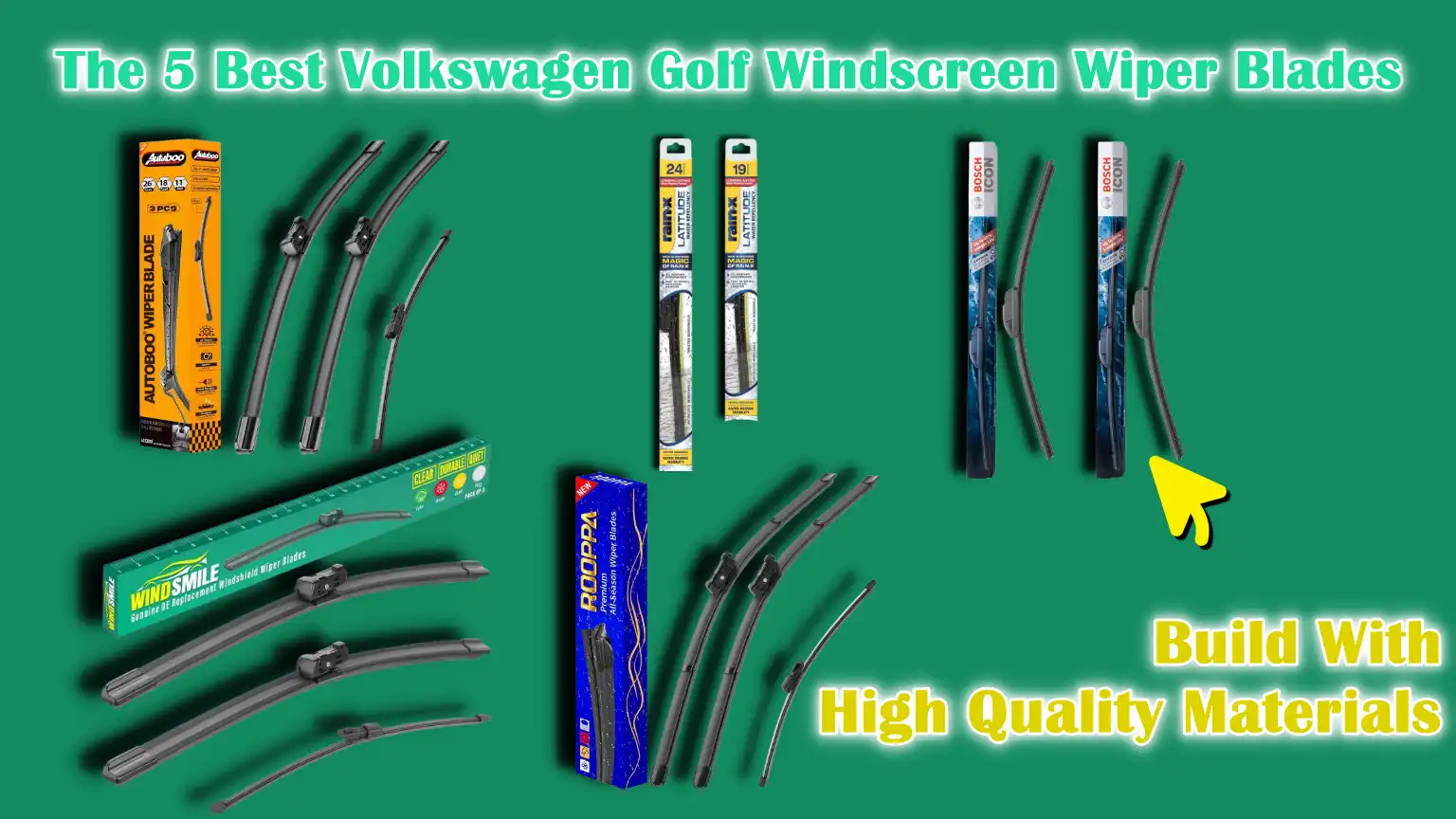
The 5 Best Volkswagen Golf Windscreen Wiper Blades – Ultra-Protective & Durable
These are aerodynamically designed windscreen wipers blades for VW Golf and these are made with high quality material that provides them much needed stability and reliability both.
#1. AUTOBOO

Blade Dimensions: 26-Inch Driver’s Side + 18-Inch Passenger’s Side + 11-Inch Rear Wiper Size
Compatible With: 2015 to 2021 Volkswagen Golf
These windscreen wiper blades are designed to deliver the precise and consistent wiping performance and it is designed by AUTOBOO.
As well as, these blades are made of rubber and stainless steel material that’s why the blades are truly flexible to adapt in changing weather conditions and there’s strong base to make them really stable.
Plus, these blades are designed in a aerodynamic way that matches the natural curve of the modern windscreens of your VW Golf; also it ensures full contact from edge to edge during every sweep.
Even, you can easily install them on Volkswagen Golf from 2015 to 2021 vehicle mode, also these blades comes with dimensions of 26-inch, 18-inch and 11-inch rear wiper blades.
#2. Rain-X

Blade Dimensions: 24-Inch Driver’s Side + 19-Inch Passenger’s Side Wiper Size
Compatible With: 2004 to 2012 (Mk5/Mk6) Volkswagen Golf
These are the advanced beam windshield wiper blades for Volkswagen Golf and the Rain-X is the manufacturer of this high quality blades.
As well as, these are designed with an aerodynamic profile that helps it to maintain the firm contact with the windscreen, even at the higher driving speeds it can provide really consistent wiping performance.
Not only this, these blades are designed to clean your windshield even in the extreme weather conditions such as: Snow, Ice and Dusty weather conditions and because of the uniform pressure points are featured along the length of the blades that allow it to hug the curvature for smooth wipe.
As well as, the blade length are: 24-Inch and 19-Inch; which is why you can easily install them on your Volkswagen Golf 2004 to 2012 (Mk5/Mk6) quiet comfortably.
#3. BOSCH

Blade Dimensions: 21-Inch Driver’s Side + 19-Inch Passenger’s Side Wiper Size
Compatible With: 1992 to 2003 (Mk3/Mk4) Volkswagen Golf
Now, these blades cleans quiet and smooth manner and these windscreen wiper blades for VW Golf are made by the BOSCH.
Because of the its in-built flexible asymmetric spoiler that literally distributes the uniform downward force along the entire length of the windscreen wiper blades, even you don’t have to worry about the lift-off and quality wipes in higher-speeds as it firmly holds it.
Not only this, it has dual rubber technology that resists the heat and ozone deterioration, plus there’s tension spring is available that creates perfect fitment to the curvature of each side of the windshield and that’s how it enhances the visibility even under the varieties of climates.
Also, it has 21-inch and 19-inch wiper blade size that is why you can comfortably install them on 1992 to 2003 Mk3/Mk4 VW Golf.
#4. WINDSMILE

Blade Dimensions: 26-Inch Driver’s Side + 18-Inch Passenger’s Side + 11-Inch Rear Wiper Size
Compatible With: 2015 to 2020 Volkswagen Golf
Now, these are the highly reliable windscreen wiper blades for Volkswagen Golf and it is designed by WINDSMILE.
And, the blade constructed in a way to resists the hardening in the heat and rubber and stainless steel material gives it ability to maintain the flexibility during the cooler conditions and that’s how it provides really effective wiping performance all-year round.
As well as, these are precisely engineered to provide the consistent contact and even it distributes the pressure, as its aerodynamic design reduces the wind lift and noise during the operation.
Plus, these blades are specifically designed for 2015 to 2020 Volkswagen Golf, as the blade dimensions are: 26-inch, 18-inch and 11-inch which is perfect as you don’t have to make any adjustments anymore.
#5. Rooppa

Blade Dimensions: 26-Inch Driver’s Side + 18-Inch Passenger’s Side + 11-Inch Rear Wiper Size
Compatible With: 2015 to 2020 VW Golf
These are the highly-efficient windscreen wiper blades for VW Golf and these are optimized to remove all kinds of dust and water from the windscreen with minimal wiping effort that’s how these Rooppa blades maintains their smooth and quiet performance.
Also, to provide the stable wiping, it has stainless steel and rubber material that ensures flexibility in changing environment and reduces wear as well.
And, it delivers consistent and clear wipes that again reduces the strain on the wiper motor and that’s how it enhances overall system performance collectively.
Plus, these are specially designed windscreen wiper blades for 2015 to 2020 Volkswagen Golf; as the blades dimensions are: 26-inch, 18-inch and 11-inch to compliment easy installation.
Now, Let’s Learn How to Replace Volkswagen Golf Windscreen Wiper Blades – Comfortable & Easy Method
1. Park the vehicle in a safe location and prepare to replace the wiper blades
Before replacing the windscreen wiper blades on a Volkswagen Golf, the vehicle should be parked on a level and stable surface.
The engine should be turned off to prevent the wipers from activating unexpectedly.
It is crucial to ensure the ignition is completely off to prevent the wipers from suddenly turning on.
This step ensures the safety of the process and prevents damage to the wiper arms or windscreen.
Having the correct replacement blades ready beforehand ensures the installation can be completed smoothly without interruption.
2. Carefully lift the wiper arms into the service position
The wiper arms should be gently lifted away from the windscreen until they stand upright.
This position provides sufficient clearance for easy removal and installation of the blades.
Caution should be exercised when lifting the arms, as they are spring-loaded and can snap back if released suddenly.
Holding the arm securely prevents it from snapping back and protects the windscreen from breakage or scratches.
This step is essential as proper access makes the replacement process easier and safer.
3. Remove the old windscreen wiper blades
To remove the old wiper blades, the connector where the blade meets the wiper arm must be unlocked or unclipped.
This usually requires gentle pressure and a simple sliding motion.
While removing the blade, the wiper arm should always be held securely.
Allowing the metal arm to fall back onto the windscreen can cause significant damage to the glass.
Once removed, the old blades should be carefully set aside so they do not come into contact with the windscreen.
4. Properly attach the new wiper blades to the wiper arms
The new windscreen wiper blades should be aligned with the wiper arm connector before installation.
The blade should be pushed or slid until it securely locks into place.
A proper connection ensures the blade does not detach during use.
The blade should sit straight and follow the natural curve of the Volkswagen Golf windscreen.
Correct attachment results in even pressure on the glass, leading to better wiping performance and reduced noise.
5. Gently Lower the Wiper Arms Back onto the Windscreen
Once the new blades are installed, the wiper arms should be gently lowered back onto the windscreen.
Dropping them suddenly can damage both the blades and the glass.
Lowering them slowly ensures the blades rest evenly on the windscreen surface.
This step helps prevent premature wear and ensures the blade edge maintains full contact with the glass.
6. Test the New Wiper Blades for Proper Alignment and Performance
After installation, the wiper system should be tested using washer fluid.
Observing the blade movement confirms proper installation.
The blades should move smoothly, clear water evenly and operate quietly without skipping or leaving streaks.
If the wiping pattern is clean and consistent, the replacement was successful.
Proper testing ensures the Volkswagen Golf is ready for safe driving in rain and various weather conditions.
How to Maintain the Performance Intact of Volkswagen Golf Windscreen Wiper Blades

Not only this, there’s study in Journal of Automobile Engineering explains that a more uniform and consistent contact force distributes across the length of a wiper blade that actually leads to the reduced vibration and improve wiping performance as well, also research shows that a balanced vertical load and controlled friction behavior results in the smoother wiping action and less chatter as well between the blade and glass, so that actually enhances the cleaning effectiveness across the entire sweep area, also that shows that why wiper stability and even pressure distribution are essential for consistent visibility in the higher speeds or in adverse weather conditions.[¹]
1. Use Simple Cleaning Methods
Regular cleaning is essential to keep Volkswagen Golf wiper blades functioning properly.
Dust, road grime and oily residue can accumulate on the blade edges and reduce their ability to effectively clean the windscreen.
Gently wiping the blades with clean water and a soft cloth removes accumulated debris, preventing streaking and noise.
Keeping the windscreen clean is equally important, as a dirty glass surface increases friction and causes the blades to wear out faster.
Simple and consistent cleaning helps maintain smooth wiping action and clear visibility during daily driving.
2. Prevent Debris Buildup and Damage from Dry Wiping
Dry wiping is one of the most common causes of premature wiper blade wear.
When wipers are used on a dry or dusty windscreen, the dirt particles act like fine sandpaper, abrading the blade edges.
Over time, this leads to uneven wiping and scratches on the glass.
Using washer fluid before operating the wipers lubricates the surface and washes away loose debris.
Preventing debris buildup and avoiding dry wiping protects both the wiper blades and the windscreen, ensuring long-lasting performance.
3. Park Vehicle in Shades and Perform Windscreen Care
Where and how a Volkswagen Golf is parked can affect the lifespan of its wiper blades.
Parking in direct sunlight for extended periods exposes the blades to heat and ultraviolet rays, which can cause them to harden and lose their flexibility.
Parking in shaded areas or covered spaces whenever possible helps mitigate heat damage.
Keeping the windscreen clean and free from sticky debris like tree sap or bird droppings also reduces stress on the blades.
Proper parking habits and windscreen care help maintain the blades’ flexibility and wiping efficiency.
4. Don’t Forget to Do Seasonal Maintenance
Changing weather conditions can put different kinds of stress on Volkswagen Golf wiper blades.
In warm weather, regular cleaning helps remove dust and prevent wear caused by heat.
In colder months, the blades should be checked for stiffness caused by low temperatures.
Removing snow or frost from the windscreen before using the wipers can prevent damage to the blade edges.
Adapting maintenance habits to seasonal conditions ensures that the wiper blades perform reliably throughout the year and reduces the need for frequent replacements.
Read More:
Conclusion – Best Volkswagen Golf Windscreen Wiper Blades
It is true that ideal windscreen wiper blades for Volkswagen Golf has the capability to maintain the crystal clear vision in rain, dust, fog and changing weather as well.
Also, the correct size and properly fitted wiper blades clean the windscreen evenly, reduce glare from lights and help the driver react quickly to road conditions.
As well as, the high-quality wiper blades also protect the windscreen from scratches, reduce noise and minimize driving fatigue, specially on long journeys or in heavy traffic.
And, by understanding the types of blades, proper fitment, performance in different weather conditions and correct maintenance, Volkswagen Golf owners can make informed decisions that improve visibility, extend blade life and enhance driving confidence.
So, if you still have the questions in mind, then you can ask them in the comment section below for more information.
Frequently Asked Questions
Q1. How Often Should I Have to Replace the Volkswagen Golf Windscreen Wiper Blades?
Answer: Wiper blades typically need replacing every 6 to 12 months, but this can vary depending on driving conditions, weather exposure and frequency of use. Heavy rain, dust, intense sunlight and pollution can accelerate wear and tear. Replace the blades as soon as you notice streaking, skipping, or noise during wiping. Timely replacement ensures clear visibility, reduces driver fatigue and protects the windscreen from damage.
Q2. Can I Use Universal Volkswagen Golf Windscreen Wiper Blades?
Answer: Universal wiper blades may sometimes fit a Volkswagen Golf, but they may not provide optimal performance. The Golf’s windscreen has a specific curvature and model-specific blades are designed to maintain even pressure and smooth wiping. Using universal blades can result in streaking, skipping, or uneven coverage, compromising visibility. For optimal safety and performance, it is recommended that you use wiper blades specifically designed for your Golf’s model year.
Q3. How Do I Maintain My Volkswagen Golf Windscreen Wiper Blades to Extend Their Lifespan & Performance?
Answer: Wiper blade maintenance involves regular cleaning and careful use. Clean the blades and windscreen with clean water or a mild detergent to remove dirt and debris that can cause streaking. Avoid using the wipers on a dry or frozen windscreen without first wetting the glass, as this can damage the rubber edge. Parking in shaded areas or garages protects the blades from heat and sunlight, preventing the rubber from hardening. Regular checks and proper storage during bad weather extend their lifespan and maintain optimal performance.
Q4. Why are Wiper Blades Important for the Safety of My Volkswagen Golf?
Answer: Wiper blades are crucial for visibility, a fundamental aspect of safe driving. A clear windscreen allows the driver to react quickly to obstacles, pedestrians and other vehicles, specially during rain, fog, or dust storms. Poor quality or worn blades reduce visibility, increase glare from lights and force the driver to strain their eyes. Using high-quality, properly fitting wiper blades on your Volkswagen Golf improves reaction time, reduces fatigue and ensures a safer driving experience in all weather conditions.
Q5. How Do I know if My Volkswagen Golf Windscreen Wiper Blades are Worn Out?
Answer: Signs of worn wiper blades include streaking, skipping, chattering, squeaking, or uneven wiping. Visually, the rubber may appear cracked, hardened, or worn down. If your wiper blades leave streaks of water on the windshield after wiping or make strange noises while operating, it’s time to replace them. Regularly checking your wiper blades ensures clear visibility and prevents sudden malfunctions during heavy rain or challenging driving conditions.
References:
[1] Investigation of the contact force distribution and dynamic behaviour of an automobile windshield wiper blade system
https://trid.trb.org/View/1255070

Guys, I’m a car audio enthusiast and customization expert and I love clear sound and clean installation. Plus, I have spent years helping people build their dream audio setups. And whenever I’m working on cars, I probably listen to music and thinks about the next big upgrade.