
Written By: Don Dodi
Fact Checked By: Kristen Brown
Reviewed By: Diego Rosenberg
When you think about the Tesla Model 3 then you must think as an super advanced vehicle with super safety and comfortable vehicle, but the windshield visibility is all depends on the wiper blades that’s why you need a well-maintained wiper blades that can prevent visibility in high rain, snow, drizzle, debris and in hot weather as well.
The wiper blades are the actual safety accessory that keeps your windshield clear and your driving safe.
Basically, these are the thin rubber strips that are first line of defense, but over the time because of the heat, sunlight and repeated use it causes the rubber to dry, crack or lose that much needed flexibility and that’s why it reduces the ability to clean the windshield properly and that’s where you want a new windshield wiper blades for your Tesla Model 3.
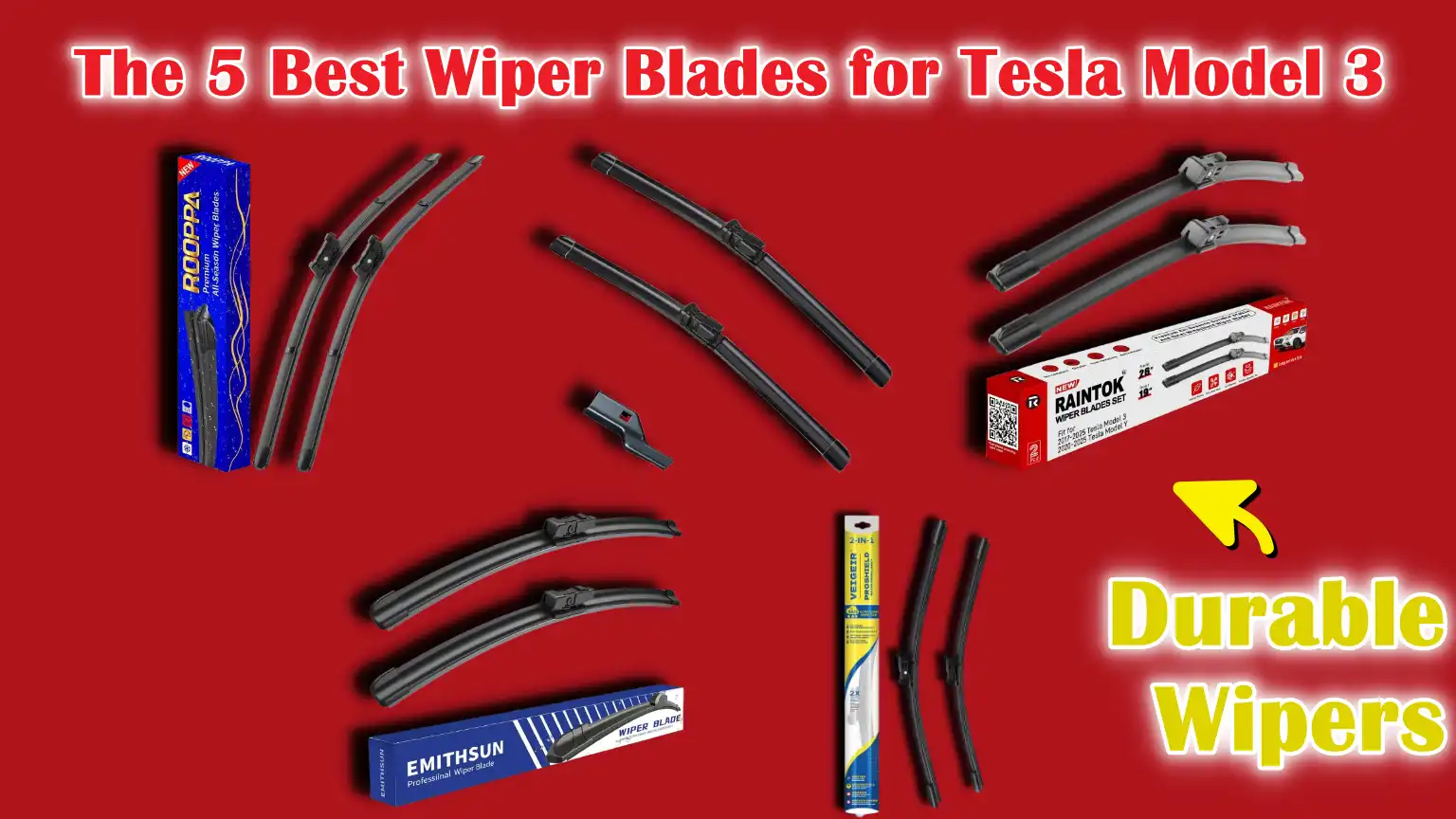
So, these are The 5 Best Wiper Blades for Tesla Model 3 that can maintain your windshield’s visibility on the regular basis.
The 5 Best Wiper Blades for Tesla Model 3 – High Quality Windshield Wipers
The features actually makes these 5 Wiper Blades that truly supports Tesla Model 3, as well as the all-weather protective ability makes them rugged and truly effective in all-seasons that matters.
#1. Rooppa

This is the specifically designed windshield wiper blades for Tesla Model 3 from 2017 to 2023 models that’s why it fits with exact precision.
It also ensures perfect alignment with the windshield curvature, wiper arm design and connector system so that you won’t have to worry during the installation and working of this.
Even, it is made with high quality rubber and stainless steel materials that provides quiet, true streak-free wiping ability and that’s why the performance is great in heavy rain, snow and all-year long.
Because it is aerodynamically efficient which is why they stay firmly in contact with the windshield even when you drive your Model 3 at the high driving speeds.
#2. ZIXMMO

Now, the ZIXMMO comes with this great Tesla Model 3 wiper blade, which is constructed in a way that distributes pressure evenly across the windshield that is why it provides reliable and high quality wipes.
As well as, this wiper blade uses premium quality rubber compound to ensure the reliability and actually provides a smooth, noiseless operation as well.
Along with this, the aerodynamic profile truly helps it to prevent wind lift even at the higher speeds, that manes it ensures clear visibility in heavy rain and highway speed as well.
#3. Raintok
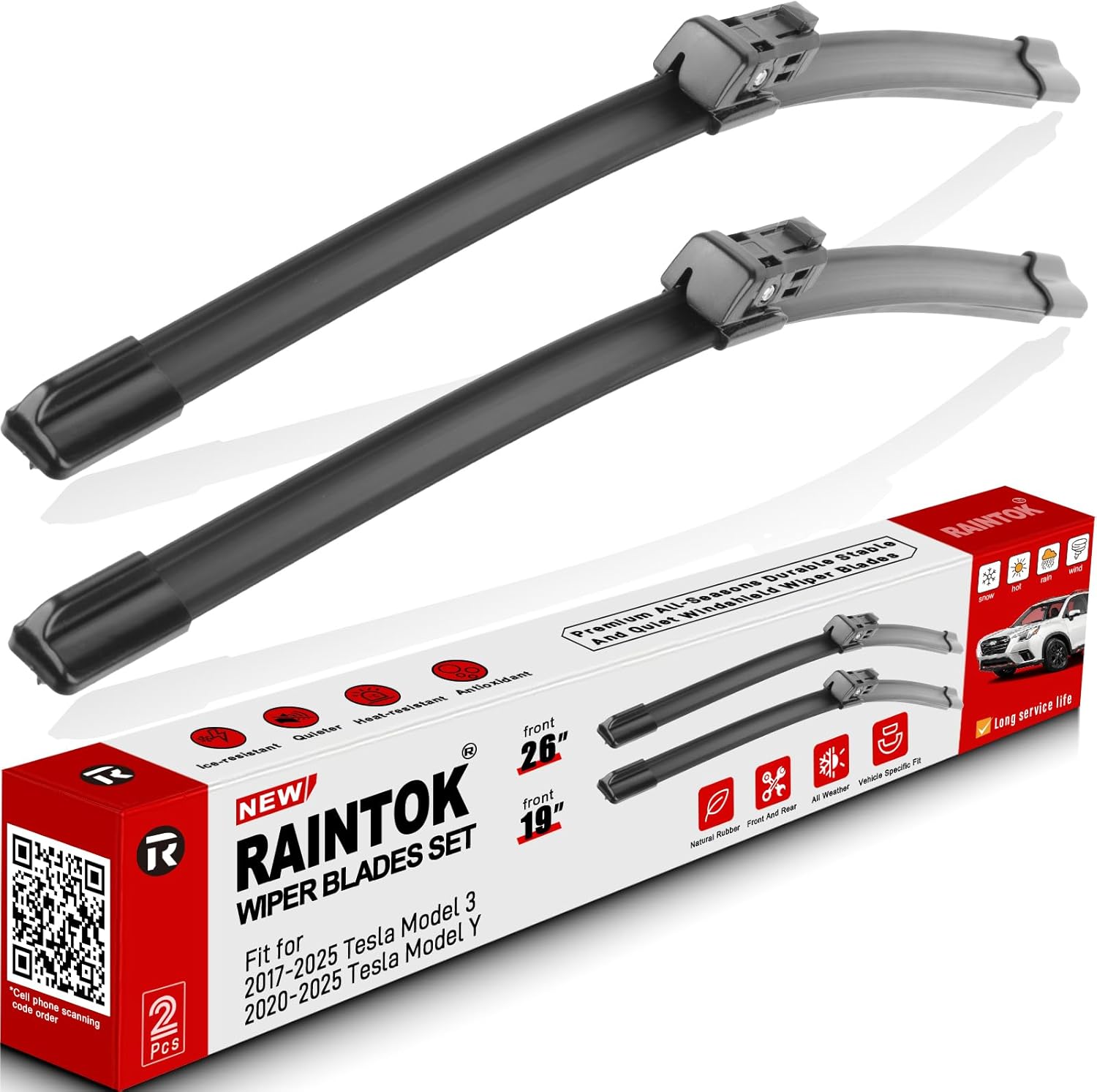
So, Raintok comes with this another reliable choice which is known for combining durability, comfort and consistent performance throughout the year.
It has aerodynamic design that benefits it and strengthens the wiping quality during the high speed that’s why it contacts with the windshield perfectly.
Not only this, it is fully compatible with wiper blades for Tesla Model 3 from 2017 to 2023 models which is good thing in terms of effortless installation and that extends the overall performance as well.
#4. EMITHSUN

EMITHSUN comes with this unique water-repelling blades which has natural rubber element with graphite coating that makes them truly durable, smooth, streak-free and reliable in all-weather conditions.
Even it comes with a dual steel frame and reinforced tension spring that actually maintains even pressure that reduces noise and aerodynamic edges ensures it sticks to the windshield evenly.
Because of the high quality construction and perfect design it performs well in changing weather conditions: from heavy rain to the light snow, they even resist cracking, splitting and UV damage as well.
#5. VEIGEIR

Now, VEIGEIR comes with this high quality wiper blades for Tesla Model 3 that supports 2017 to 2023 models perfectly.
The durability and performance also lies on the shoulders of features and construction, that why this is specifically designed for Tesla Model 3’s wiper designs that offers the best fitment and integration with the car’s system.
Even it is made with the premium materials such as: zinc alloy base that provides the much needed stability and exact fit memory steel spring actually ensures consistent pressure across the windshield for achieving clear visibility.
How to Replace Tesla Model 3 Wiper Blades
1. Activating Wiper Service Mode
Before replacing the wiper blades on your Tesla Model 3, it’s essential to activate the wiper service mode via the car’s touchscreen.
This feature moves the wipers to a position where they can be safely accessed without touching the hood or the edge of the windshield.
To do this, navigate to the car’s touchscreen, select “Controls,” then “Service,” and “Wiper Service Mode.
” This step prevents the wipers from suddenly moving while you’re working on them and ensures you have enough space to safely perform the replacement.
This is an important precaution because Tesla wipers are tightly tucked under the hood when not in use and forcing them out could damage the wiper motor or linkage.
2. Removing the Old Wiper Blade
Once the wipers are in service mode, gently lift the wiper arm slightly away from the windshield.
Do not pull too hard, as the arms are spring-loaded and can snap back if released suddenly.
Locate the small release tab or clip where the blade attaches to the arm.
Firmly press this release mechanism and slide the old wiper blade downwards to detach it from the arm.
It may require a slight wiggle to remove, specially if it’s been installed for a long time.
Always support the metal arm with one hand while removing the blade to prevent it from hitting the glass, as this could cause scratches or cracks on the windshield.
3. Installing the New Wiper Blade
Take your new wiper blade, ensuring it matches the specifications for your Tesla Model 3 and align it with the connector on the wiper arm.
Most wiper blades use a hook or click-lock mechanism for easy installation.
Slide the blade into the connector slot until you hear or feel a secure click, indicating that the blade is locked in place.
Ensure the blade is properly seated and firmly attached to prevent it from coming loose during operation.
Using blades specifically designed for the Tesla Model 3 ensures a perfect fit, proper alignment with the windshield’s curve and complete wiping coverage across the glass surface.
4. Lowering the Wiper Arm and Exiting Service Mode
Once the new blade is securely attached, gently lower the wiper arm back onto the windshield.
This step should be done slowly and with control to prevent the metal arm from hitting the glass, which could cause damage.
After replacing both blades, return to the touchscreen and deactivate the wiper service mode in the same menu.
Once this mode is disabled, the wipers will return to their normal resting position under the hood.
This step ensures the wipers are properly parked and ready for normal use.
5. Testing Wiper Functionality
To verify the installation, turn on the wipers and use the washer fluid function to check their performance.
The blades should move smoothly across the windshield without streaking, skipping, or making excessive noise.
Check that both blades maintain full contact with the glass and thoroughly cover the entire viewing area.
If you notice any issues, such as uneven wiping or a loose attachment, stop immediately and recheck the connection.
Proper testing ensures the new blades are correctly installed and that the windshield remains clear while driving, specially in rain or fog.
Read More:
Specifications of Tesla Model 3 Wiper Blade
1. Driver Side Wiper Blade Size
The Tesla Model 3 requires a 26-inch (650-millimeter) wiper blade for the driver’s side.
This size is carefully designed to cover most of the windshield in the driver’s field of vision.
Using the correct 26-inch blade ensures smooth and complete wiping across the windshield, allowing the driver to maintain maximum visibility even in rain or snow.
Using a smaller blade may leave streaks or unwiped areas, while a longer blade may extend beyond the edge of the glass and cause friction, noise, or scratching.
2. Passenger Side Wiper Blade Size
The passenger side wiper blade on the Tesla Model 3 is 19 inches (475 millimeters) long.
This smaller size perfectly complements the driver’s blade, ensuring the remaining portion of the windshield is covered without overlap or gaps.
Tesla engineers chose this measurement to ensure a balanced wiping action on both sides.
Installing the correct passenger-side blade prevents uneven wiping and maintains the smooth and quiet operation of the Tesla wiper system.
3. Importance of Using the Correct Size
For safe driving and optimal wiper performance, it is crucial to choose the correct factory-recommended sizes – 26 inches for the driver’s side and 19 inches for the passenger side.
The Model 3’s windshield has a curved, aerodynamic shape and incorrect wiper sizes can cause the blades to lift off the glass or miss sections during heavy rain.
Correct sizing also helps prevent scratching the windshield, ensures even pressure distribution and allows the wipers to operate quietly and efficiently.
4. Connector Type and Compatibility
The Tesla Model 3 uses a specific wiper arm connector designed for a secure and stable fit.
When replacing the blades, it’s crucial to choose blades that properly match this connector type.
Using an incompatible adapter can lead to poor contact between the blade and windshield, uneven wiping, or, in extreme cases, the blade detaching during operation.
Always verify that the replacement wiper blades specify compatibility with the Tesla Model 3 before installation.
This ensures a perfect fit and reliable performance in all weather conditions.
5. Applicable Model Years
These wiper blade sizes and connector specifications apply to most Tesla Model 3 production years.
The overall design of the wiper system has remained consistent as the vehicle’s launch, meaning the same 26-inch and 19-inch combination works for both older and newer versions.
It’s always a good idea to check your vehicle’s manual or Tesla’s service documentation before purchasing replacement blades to confirm compatibility.
Basic Types of Wiper Blades
1. Conventional Wiper Blades
Conventional wiper blades are the most common and traditional type found on many vehicles.
They feature a metal or plastic frame that holds the blade with multiple pressure points, ensuring the rubber edge stays in contact with the windshield.
This design works well in light to moderate weather conditions and is typically the most economical option for vehicle owners.
Their simple construction makes them easy to find and replace.
However, their open frame can accumulate dirt, ice and debris over time, potentially leading to reduced performance or uneven wiping.
In very cold or heavy rain conditions, these blades may lift slightly from the windshield surface, leaving streaks or missed areas.
While conventional blades are reliable and affordable, they are best suited for drivers who experience moderate weather and perform regular wiper maintenance.
2. Beam Wiper Blades
Beam wiper blades feature a modern, frameless design that allows them to apply even pressure across the entire windshield.
Instead of a visible frame, these blades utilize a single, curved piece of flexible rubber and steel reinforcement that conforms to the shape of the windshield.
This construction provides better contact with the glass, even at high speeds or during heavy rain, resulting in a cleaner and smoother wipe.
Beam blades are also aerodynamic, meaning they resist wind pressure and perform better in all weather conditions, including snow and heavy rain.
Because they lack external joints, they are less prone to ice buildup or debris accumulation.
The main drawback of beam blades is their higher cost compared to conventional types, but they typically last longer and offer superior performance.
Many modern vehicles, including the Tesla Model 3, come with beam-style blades because they complement the car’s sleek design and advanced engineering.
3. Hybrid Wiper Blades
Hybrid wiper blades combine the best qualities of both conventional and beam designs.
They feature a robust outer shell for stability, similar to conventional blades, but also have a sealed aerodynamic shape like beam blades.
This combination provides both durability and excellent pressure distribution across the windshield.
The protective cover helps prevent debris buildup and reduces the likelihood of ice forming inside the blade in cold weather.
Hybrid blades are designed to maintain strong contact with the glass in varying weather conditions, providing quiet and smooth operation.
They are more expensive than conventional blades, but they can be a longer-lasting and better-performing option for drivers who experience a variety of weather conditions throughout the year.
For Tesla Model 3 owners, hybrid blades can be a balanced option, offering both a clean, modern look and reliable functionality that complements the car’s advanced features.
4. Choosing the Right Type for Your Needs
The best wiper blade depends on driving conditions, weather and personal preference.
Conventional blades are practical for drivers in areas with mild weather and those on a budget.
Beam blades are ideal for areas with heavy rain or snow and for those who prefer a long-lasting, high-performance option.
Hybrid blades are a versatile middle ground, offering both durability and flexibility.
For a vehicle like the Tesla Model 3, which has an aerodynamic windshield and relies on precise visibility for its sensors and cameras, beam or hybrid blades are often the best option.
Choosing the right type ensures clear vision, safer driving and better long-term protection for both the windshield and the vehicle’s advanced driver-assist systems.
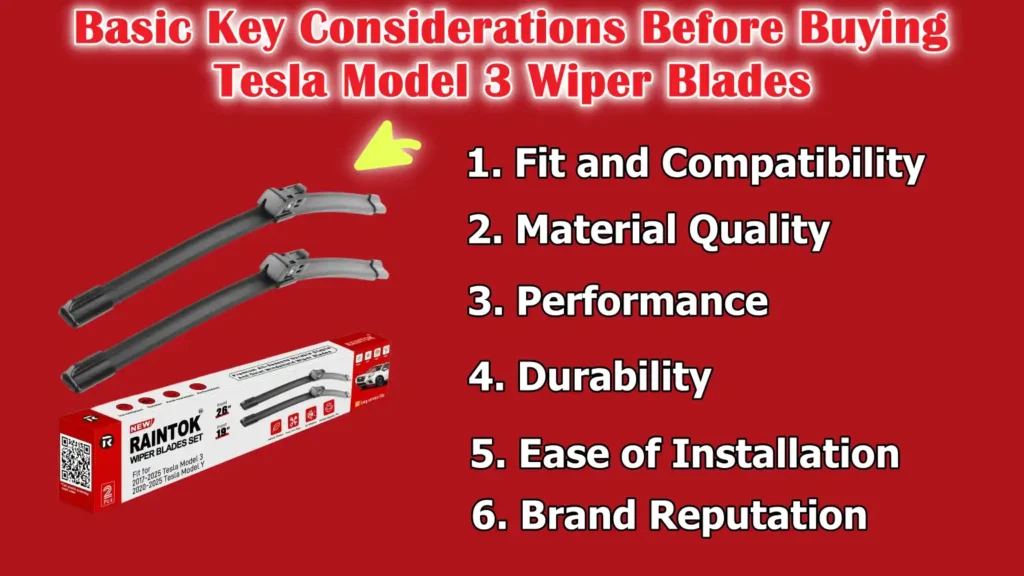
Basic Key Considerations Before Buying Tesla Model 3 Wiper Blades
1. Fit and Compatibility
The first and most crucial factor when choosing wiper blades for your Tesla Model 3 is fit and compatibility.
Each car model has a specific wiper arm design and connector type and replacement blades must perfectly match these specifications.
The Tesla Model 3 has a unique wiper arm attachment that requires a precise connector for proper installation and smooth operation.
If the connector doesn’t fit correctly, the blade may not make full contact with the windshield or could detach during use, posing a serious safety hazard.
Always check the manufacturer’s product details to confirm that the blades are specifically designed for the Tesla Model 3.
Choosing the correct fit ensures that the wipers move evenly across the windshield and provide optimal visibility in all weather conditions.
2. Material Quality
The quality of the wiper blade material directly impacts its performance and lifespan.
Most high-quality blades are made from natural rubber, synthetic rubber, or silicone.
Natural rubber offers smooth wiping and flexibility but degrades quickly when exposed to harsh sunlight or heat.
Synthetic rubber and silicone blades, on the other hand, are more resistant to UV rays, temperature changes and ozone damage, making them ideal for long-term use.
Silicone blades also leave a thin protective coating on the windshield that helps repel water, improving visibility during rain.
When choosing new wipers, it’s best to select materials that are designed for durability and can withstand daily exposure to dust, sunlight and moisture.
3. Performance
Good performance means more than just removing water; This includes quiet operation and consistent visibility.
The best wiper blades maintain even pressure across the windshield, preventing streaks and smudges that can obstruct a driver’s view.
For vehicles like the Tesla Model 3, performance is specially crucial because the car relies on its front-facing cameras for many of its driver-assist features.
Poorly performing blades can leave residue or marks that can interfere with these sensors.
Blades that provide smooth and quiet movement enhance both safety and comfort, particularly during long drives or heavy rain.
4. Durability
Durability determines how long your wiper blades will last before needing replacement.
Factors such as UV resistance, flexibility and corrosion-free construction are essential for maintaining the blade’s condition over time.
Exposure to sunlight, heat, rain and dirt can cause the rubber to harden or crack, reducing its effectiveness.
High-quality wipers often come with protective coatings to resist these effects and remain flexible for months or even years.
The blade’s frame or internal spring should also be corrosion-resistant to maintain the correct tension and pressure on the glass.
Choosing a durable blade saves money in the long run and reduces the need for frequent replacements.
5. Ease of Installation
A wiper blade that is easy to install saves both time and effort.
Many modern blades are designed with quick-lock or click-fit mechanisms that allow drivers to replace them without any tools.
The Tesla Model 3’s wiper system supports such designs, making the replacement process straightforward when the correct connector type is chosen.
Easy installation also ensures that the blades are properly seated, preventing loose fittings and uneven wiping.
Choosing a user-friendly design is specially helpful for those who prefer to perform basic maintenance tasks themselves.
6. Brand Reputation
When it comes to car components like wiper blades, brand reputation is a strong indicator of quality and reliability.
Well-known brands typically invest in superior materials, advanced designs and rigorous quality testing to ensure consistent performance.
Brands like Bosch, Michelin and Rain-X are known for producing blades that deliver long-lasting performance and quiet, streak-free wiping.
Choosing a reputable brand provides peace of mind, as you can expect tested quality and reliable after-sales support.
Established brands also offer blades specifically designed for vehicles like the Tesla Model 3, ensuring perfect fitment and high efficiency.
Basic Signs That Indicate Your Tesla Model 3 Wiper Blades Need Replacing
1. Streaks or Smudges on the Windshield
The most noticeable sign that your wiper blades need replacing is the appearance of streaks or smudges on the windshield.
When the rubber edge wears down, tears, or becomes uneven, it can no longer maintain consistent contact with the glass surface.
This prevents water from being completely wiped away, resulting in visible streaks that can obscure your vision, specially when driving in heavy rain.
Dirt, oil, or debris buildup on old blades can also cause streaking.
Replacing the blades promptly restores a clear and unobstructed view of the road, ensuring safer driving.
2. Chattering or Skipping
If your wiper blades chatter, skip, or move erratically across the windshield instead of gliding smoothly, it’s a clear indication that the rubber has lost its flexibility or the blade frame is bent.
Over time, exposure to sunlight, heat and cold weather causes the rubber to harden or warp.
When this happens, the blade cannot maintain even pressure on the glass, resulting in uneven wiping and noise.
This chattering can also leave some areas of the windshield unwiped, making it difficult to see clearly.
Smooth, consistent movement is essential for proper visibility, so chattering blades should be replaced immediately to prevent further wear and tear on the wiper arms and motor.
3. Visible Cracks, Tears, or Hardened Rubber Edges
Inspecting your wiper blades is the easiest way to determine if they are worn out.
Cracks, tears, or broken sections in the rubber edge are sure signs that the blades are nearing the end of their lifespan.
Over time, exposure to UV rays, ozone and temperature fluctuations causes the rubber to dry out, making it stiff and less effective at clearing water.
Stiff or rough rubber edges also fail to conform to the curvature of the windshield, leaving streaks and water spots.
To prevent scratching the windshield and maintain smooth, quiet performance, worn blades should be replaced before they completely fail.
4. Squeaking or Unusual Noises While in Operation
A squeaking sound when your wipers are in operation often indicates friction between the blade and the windshield surface.
This can occur when the rubber edge hardens or becomes contaminated with dirt and grime.
In some cases, squeaking can also mean that the blade is no longer moving smoothly due to uneven wear.
Using continuously noisy wipers can put excessive strain on the wiper motor and cause uneven pressure on the glass.
Cleaning the blades may temporarily reduce the noise, but if the problem persists, replacement is the best solution for smooth and quiet operation and also protects the mechanical parts of the wiper system.
5. Less Effective at Removing Water or Debris
When your wiper blades fail to properly clear rain, snow, or dust, it means they have lost their flexibility and wiping accuracy.
A good wiper should remove almost all moisture and debris in one or two passes.
If you have to wipe multiple times to see clearly or notice streaks of water, chances are the rubber edge is too worn and not functioning correctly.
In vehicles like the Tesla Model 3, where cameras and sensors rely on a clear windshield to function properly, worn-out wipers can compromise even safety features.
Regular checks and timely replacements ensure clear visibility and system reliability.
6. Reduced Visibility, specially at Night or During Rain
The most crucial indicator that your wipers need replacing is reduced visibility in inclement weather.
When oncoming headlights hit streaks or water spots on the windshield, it can cause glare, making it difficult to see the road clearly.
Poor wiper performance at night or in heavy rain increases the risk of accidents, as even a few seconds of obscured vision can be dangerous.
Replacing the blades provides a clear windshield, improved visibility and helps the driver react quickly to changing road conditions.
Keeping your wiper blades in good condition is a simple yet essential step in maintaining both safety and comfort while driving.
How to Maintain Wiper Blades for Tesla Model 3
1. Clean the blades regularly with a damp cloth
Keeping your wiper blades clean is the easiest and most effective way to extend their lifespan and maintain performance.
Over time, dust, pollen, oil residue and road grime accumulate on the rubber edges of the blades.
This buildup not only reduces wiping effectiveness but can also cause scratches on the windshield if left unchecked.
Regularly wiping the blade surface with a soft, damp cloth removes this debris and restores smooth operation.
For best results, use a mild detergent or glass cleaner when cleaning both the blades and the edge of the windshield.
Doing this every few weeks helps maintain the rubber’s flexibility and prevents streaking during use.
2. Keep the windshield clean to reduce wear on the blade edges
A clean windshield helps protect wiper blades from unnecessary friction and premature wear.
Dirt, insects and other debris stuck to the glass create small abrasive particles that can quickly degrade the rubber edge of the blade.
When wipers operate on a dirty surface, the friction causes the rubber to wear down and reduces its lifespan.
Regularly washing the windshield with water or glass cleaner provides a smooth surface for the blades to glide across.
For vehicles like the Tesla Model 3, keeping the windshield spotless also ensures that the car’s cameras and sensors function correctly, as these systems rely on a clear view of the road.
3. Avoid using wipers on a dry windshield
Using wipers on a dry windshield can put unnecessary strain on both the blades and the motor.
When operated dry, the rubber edge rubs against the glass surface, creating heat and friction that can crack or tear the rubber.
This can also cause a loud squeaking noise and even light scratches on the glass.
Always ensure the windshield is wet with washer fluid before activating the wipers.
The fluid acts as a lubricant, reducing friction and allowing the blades to glide smoothly.
For Tesla Model 3 owners, using the built-in washer system is the safest way to protect both the blades and the windshield.
4. Park away from direct sunlight to protect the rubber
Prolonged exposure to sunlight and high temperatures can cause the rubber on the wiper blades to harden, crack and lose its elasticity.
Ultraviolet rays break down the chemical structure of the rubber, making it brittle and reducing its wiping effectiveness.
Whenever possible, park your car in shaded areas, in a garage, or use a windshield cover to protect the blades from direct sunlight.
During the summer months, this simple habit can significantly extend the life of your wiper blades.
Protecting the rubber from excessive heat maintains its flexibility, ensuring it performs well even in heavy rain or cold weather.
5. Replace wiper blades annually or when performance deteriorates
Even with regular cleaning and maintenance, wiper blades deteriorate over time due to exposure to sun, rain, dust and temperature changes.
On average, blades should be replaced once a year, but if you notice a decrease in performance such as streaking, squeaking, or poor water clearing, it’s best to replace them sooner.
Seasonal changes can also affect lifespan – both hot summers and freezing winters can cause blades to wear out more quickly.
Checking them regularly every few months helps detect early signs of wear and tear.
For Tesla Model 3 owners, using high-quality, correctly sized blades ensures maximum coverage and consistent performance on the windshield throughout the year.
Replacing them promptly not only improves visibility but also maintains the safety and reliability of the vehicle’s sensor and camera systems.
Common Problems and Their Solutions
1. Skipping or Juddering
When your wiper blades skip or judder across the windshield instead of moving smoothly, it often means that either dirt has accumulated or the rubber has worn down or hardened.
Over time, sunlight, dust and temperature changes can cause the rubber edge to become less flexible, making it unable to maintain consistent contact with the glass.
Small particles of dirt or oil on the windshield can also hinder smooth movement, causing the blades to bounce or skip.
Cleaning both the windshield and the wiper blades with a mild detergent or glass cleaner usually restores smooth operation.
If the problem persists after cleaning, it may be time to replace the blades, as the rubber may be permanently damaged or misaligned.
So, study also shows that the windshield wiper blade material, contact pressure and surface contamination actually are the reason behind that squeaky noises, which is why you should choose the windshield wipers very carefully as they should not be noisy at all, that’s why you should go with the proper material, windshield wiper that contacts with your vehicle best as well.[¹]
2. Uneven Wiping
Uneven wiping, where parts of the windshield remain wet or streaky, usually indicates a problem with the fitting or installation of the wiper blades.
If the blades are not properly attached to the wiper arm, they will not be able to apply even pressure across the glass surface.
Using the wrong blade size can also result in partial contact, leaving some areas of the windshield dirty.
For the Tesla Model 3, it’s crucial to ensure the correct blade lengths—26 inches on the driver’s side and 19 inches on the passenger’s side—are used for full coverage.
Rechecking the alignment and securely tightening the connectors often resolves this issue.
If uneven wiping continues, the wiper arm itself may be slightly bent and may require adjustment or replacement.
3. Noisy Operation
Squeaking or rattling noises during wiper operation often point to a dry windshield or low washer fluid levels.
When there isn’t enough moisture, the blades rub harshly against the windshield, causing friction and noise.
Always ensure your windshield washer reservoir is filled with the appropriate fluid to lubricate the surface during use.
Another potential cause of noise is hardened or dirty rubber on the edge of the blade.
Regularly cleaning the blades with a damp cloth reduces friction and eliminates squeaking.
In some cases, worn blades with poor wiping edges can still be noisy even with sufficient moisture, in which case replacement is the best solution for quiet and efficient performance.
4. Loose Fitting
A loose wiper blade can cause problems such as vibration, poor contact with the windshield, or even detachment during operation.
This problem is usually due to incorrect installation or a mismatch between the blade connector and the wiper arm.
After installing new blades, always check that the locking tab is properly locked.
For Tesla Model 3 owners, it’s crucial to use blades with the correct connector type to match the car’s wiper arm.
If the blade feels loose or doesn’t lock properly, carefully reinstall it or consult your vehicle’s manual for the correct installation process.
Ignoring a loose blade can lead to incomplete cleaning and increase the risk of scratching the windshield with the metal arm.
5. Incomplete Coverage
If the wipers fail to clean certain areas or don’t completely clear water from the windshield, it could mean the blade size is incorrect, the installation is improper, or the wiper arm is bent.
Each wiper is designed to match the curve of the windshield and even a slight difference in size can cause poor coverage.
Ensure you use blades specifically designed for the Tesla Model 3 so they fit perfectly against the glass surface.
Incomplete coverage can also occur if the wiper arm tension is too low or uneven.
Checking the correct alignment and ensuring the arm is firmly pressed against the windshield often resolves this issue.
Replacing worn or incorrectly sized blades restores full visibility and keeps the windshield clear for safe driving in all weather conditions.
Conclusion – Best Wiper Blades for Tesla Model 3
The wiper blades also affects the precision and performance of your vehicle as worn out wiper blades won’t be able to wipe out that level of things from the windshield and won’t give you the crystal clear windshield in all-weather conditions.
These blades may seem like a small part of the car, but they directly impact the performance of the vehicle’s advanced driver-assistance features, such as Autopilot and forward-facing cameras, which rely on a clear windshield to function correctly.
Choosing the right blade size, type and material ensures that every raindrop, dust particle, or smudge is effectively removed, allowing the driver to maintain clear visibility in all conditions.
Regular inspection and timely replacement prevent issues like streaking, skipping, or noise, which not only enhance comfort but also extend the lifespan of the windshield and wiper system.
Ultimately, replacing your Tesla Model 3’s wiper blades is not just a matter of convenience—it’s a crucial aspect of responsible vehicle maintenance.
Clear visibility allows drivers to react quickly to obstacles, road signs and changes in traffic, specially in adverse weather conditions.
By investing in high-quality blades and adopting proper maintenance practices, owners ensure their vehicle remains safe, efficient and prepared for all situations.
Paying regular attention to this small but essential component safeguards the vehicle’s technology, improves driving comfort and reinforces the safety standards for which Tesla is known.
In the long run, taking care of your wiper blades means taking care of your visibility, your car and your safety on the road.
Now, you can ask the questions related to this guide in the comment section below.
Frequently Asked Questions
Q1. How often should I replace the wiper blades on my Tesla Model 3?
Answer: Tesla Model 3 wiper blades should generally be replaced once every 12 months, but this depends on your local weather conditions and how often you use them. If you live in an area with heavy rainfall, intense sunlight, or frequent dust, the rubber on the blades may deteriorate more quickly. Streaking, squeaking, or poor water clearing are early signs that it’s time for new blades. Regularly checking them every few months will help you detect wear and tear early and ensure clear visibility at all times.
Q2. What size wiper blades does a Tesla Model 3 use?
Answer: The Tesla Model 3 uses a 26-inch (650 mm) wiper blade on the driver’s side and a 19-inch (475 mm) blade on the passenger side. These sizes fit most model years of the Tesla Model 3 and cover the entire windshield without overlapping or leaving uncleared areas. Using the correct size is crucial, as incorrect blades can result in uneven wiping or even scratch the windshield if they don’t fit properly.
Q3. How do I know if my Tesla’s wiper blades need replacing?
Answer: You’ll know your wiper blades need replacing when you start seeing streaks, smears, or water marks on the windshield even after multiple wipes. Other warning signs include squeaking, chattering, or visible cracks on the rubber edge. If the blades leave small areas unwiped or skip across the glass, it means they’ve lost their flexibility. Over time, exposure to sunlight, heat and dirt causes the rubber to harden and become less effective, so replacing them promptly ensures smooth, quiet and efficient performance.
Q4. Is there a special mode for changing wiper blades on a Tesla Model 3?
Answer: Yes, the Tesla Model 3 has a wiper service mode that makes changing the blades easy and safe. This mode raises the wipers slightly above the hood so you can access them without scratching the paint or damaging the wiper motor. To activate it, go to the car’s touchscreen, open “Controls,” select “Service,” and then turn on “Wiper Service Mode.” Once the replacement is complete, you can deactivate it in the same menu to return the wipers to their normal resting position.
References:
[1] A Study on an Experimental System of Wiper–Windshield Friction Vibration and Noise
https://www.mdpi.com/2075-4442/13/7/296

Guys, I’m a car audio enthusiast and customization expert and I love clear sound and clean installation. Plus, I have spent years helping people build their dream audio setups. And whenever I’m working on cars, I probably listen to music and thinks about the next big upgrade.