
Written By: Don Dodi
Fact Checked By: Kristen Brown
Reviewed By: Diego Rosenberg
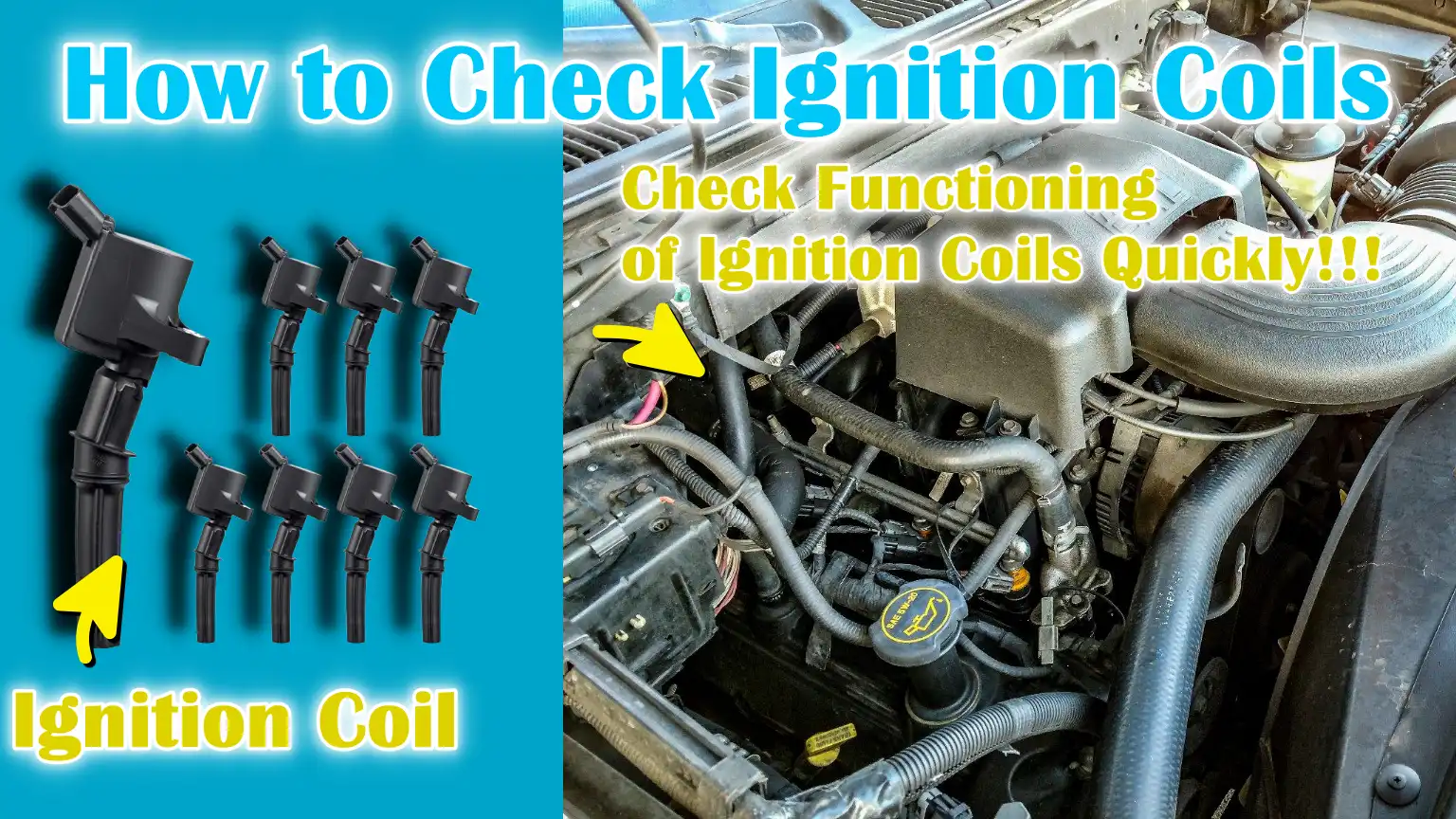
If you’re vehicle facing something: engine misfire or shaking then it is the often caused by the weak ignition coil and can reduce the engine power and even damage the expensive exhaust components if not treated soon.
Yes, it is the important components in the engine’s ignition system as it literally responsible for converting the battery’s low 12-volt power into the extremely high voltage: which is often lies between 20,000 and 45,000 volts, which is literally needed to ignite the air-fuel mixture inside the engine cylinders.
So, now you know that: why it is important to have the properly working ignition coils, otherwise without a properly working ignition coil, the spark plug just can’t create a strong spark; which actually means that the engine may misfire, run rough, lose the power or literally fail to start at the first place.
Along with this, there’s advanced systems such as: Coil-on-Plug (COP) which is designed to replace the older distributor systems to improve the fuel efficiency further; and reduces the emissions and also increase the reliability.
But, even with the improved technology, the ignition coil still can fail due to the heat, vibration, work spark plugs, oil leaks or could be because of electrical stress as well.
Which is why, you need to know How to Check Ignition Coils, so that you can successfully able to maintain engine performance and protect the expensive components as well.
What is An Ignition Coil?
The ignition coil is an electrical device in a gasoline engine that generates the high voltage needed to fire the spark plug and initiate combustion inside the cylinder.
Simply put, it acts like a small power transformer, taking low voltage from the car’s battery and converting it into a very powerful electric spark.
Most vehicle batteries provide around 12 volts, which isn’t enough to bridge the spark plug gap.
The ignition coil boosts this voltage to between 20,000 and 45,000 volts and even higher in some modern systems.
This strong voltage allows the spark plug to ignite the air and fuel mixture at precisely the right time.
Without a properly functioning ignition coil, the engine cannot ignite the fuel properly, which can lead to misfires, rough idling, power loss, poor fuel economy and increased exhaust emissions.
Because every gasoline engine relies on a strong and accurate spark, the ignition coil plays a direct role in engine performance, fuel efficiency and overall reliability.
1. Definition and Basic Function
The ignition coil’s basic function is to store electrical energy and then transmit it to the spark plug in the form of high-voltage pulses.
Inside the coil are two tightly wound sets of copper wire called windings, one called the primary winding and the other called the secondary winding.
When electrical current flows through the primary winding, it creates a magnetic field.
When the current is suddenly interrupted by the ignition control module or engine control unit, the magnetic field rapidly decreases.
This rapid decrease causes a high-voltage surge in the secondary winding.
This high voltage is then sent to the spark plug, creating a spark that ignites the compressed air-fuel mixture inside the engine cylinder.
This process occurs thousands of times per minute while the engine is running.
Timing must be very precise, as even a slight delay can reduce engine power and efficiency.
2. How it converts low battery voltage to high voltage
The ignition coil works on a principle similar to a transformer.
It uses electromagnetic induction to increase voltage.
The battery supplies approximately 12 volts to the primary winding, which has fewer turns of wire.
The secondary winding has many more turns of wire, often hundreds of times more than the primary.
Due to this difference in the number of turns, when the magnetic field is low, the voltage in the secondary winding increases significantly.
For example, if the secondary winding has 100 times more turns than the primary winding, the output voltage can be approximately 100 times greater than the input voltage.
Thus, a small 12-volt battery can produce the thousands of volts needed to activate the spark plug.
This high voltage must be strong enough to penetrate the small gap at the spark plug tip, even under the high pressure inside the combustion chamber.
Modern engines with higher compression ratios require even stronger and more consistent spark energy, making ignition coil condition even more important.
3. Types of Ignition Coils
Over the years, ignition coil designs have changed to improve efficiency, reliability and emission control.
Older vehicles often had a single ignition coil connected to a distributor, while many modern engines use multiple electronically controlled coils.
The main types used in vehicles today include distributor ignition coils, coil-on-plug systems and coil packs.
Distributor Ignition Coils
Older vehicles typically used distributor ignition coils.
In this system, a single ignition coil generates high voltage, which is then sent to a mechanical distributor.
The distributor rotates and sends high voltage to each spark plug in the correct firing order.
This system uses spark plug wires to carry high voltage from the distributor to each plug.
Although this design worked well for many years, it has more moving parts and can wear out the distributor cap and rotor.
Because of this, maintenance is more frequent and spark timing can become less accurate over time.
Modern vehicles have mostly replaced this system with more advanced electronic designs.
Coil-on-Plug (COP) System
Coil-on-plug systems are widely used in modern vehicles because they increase efficiency and reduce maintenance.
In this design, each spark plug has its own ignition coil directly above it.
This eliminates the need for spark plug wires and a distributor.
Because the coil is directly above the spark plug, voltage loss is reduced and spark strength is more consistent.
The engine control unit controls each coil individually, providing highly precise ignition timing.
This saves fuel, reduces emissions and improves engine performance.
Coil-on-plug systems also make it easier to diagnose problems, as a misfire in one cylinder usually points directly to a specific coil.
Coil Packs
Coil packs are a more modern design and are often used in engines that don’t use a distributor, but don’t have separate coils for each plug.
In this system, multiple ignition coils are bundled together in a single unit.
Each coil within the pack serves one or two cylinders, depending on the engine design.
Some systems use a method called wasted spark, in which one coil fires two spark plugs simultaneously.
Coil packs are electronically controlled and provide more reliable spark timing than older distributor systems.
They have fewer moving parts, reducing mechanical wear and improving durability.
However, if one coil within the pack fails, the entire unit may need to be replaced, depending on the design.
Understand Common Symptoms of a Bad Ignition Coil
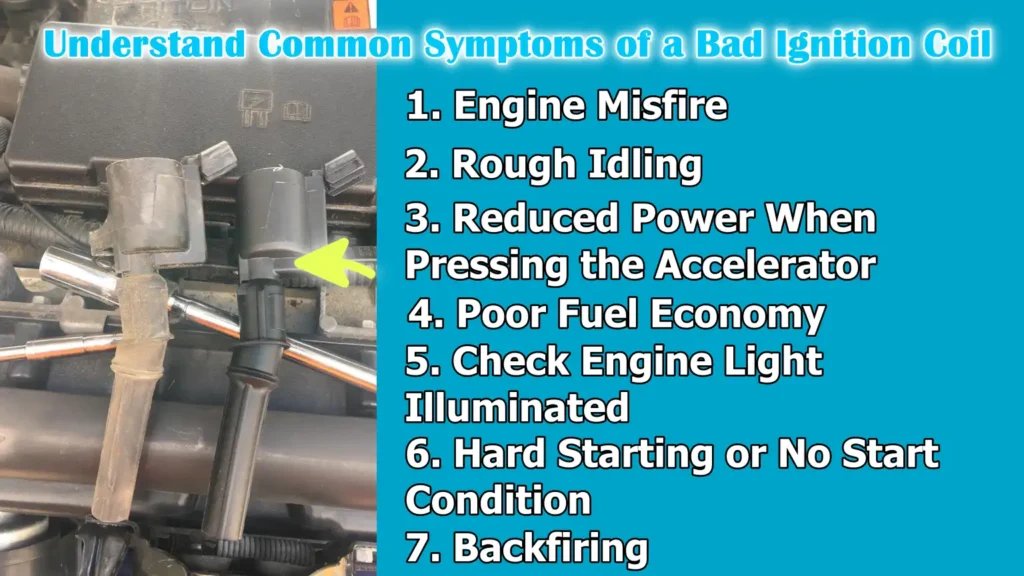
A bad ignition coil can cause numerous engine problems because it controls the spark that ignites fuel directly inside the cylinder.
When the spark is weak, irregular, or missing altogether, the engine cannot burn fuel properly.
This leads to performance issues, higher fuel consumption, increased emissions and, in some cases, damage to expensive components like the catalytic converter.
Modern vehicles rely heavily on precise ignition timing controlled by the engine control unit, so even a minor ignition coil fault can immediately trigger warning lights and cause driving difficulties.
Recognizing the early symptoms of a bad ignition coil can prevent major repairs and reduce long-term engine damage.
1. Engine Misfire
Engine misfire is one of the most common symptoms of a bad ignition coil.
A misfire occurs when the air and fuel mixture inside the cylinder doesn’t ignite properly.
This can happen when the ignition coil doesn’t provide enough voltage to the spark plug.
When a cylinder misfires, the engine may jerk, stall, or malfunction while running.
You may also hear a slight popping sound.
Modern vehicles typically detect misfires with sensors that monitor changes in crankshaft speed.
When a misfire is detected, the vehicle often stores a diagnostic trouble code, such as P0300 for random misfires or P0301 to P030X for a specific cylinder.
Persistent misfires can cause unburned fuel to flow into the exhaust system, which can overheat and damage the catalytic converter.
2. Rough Idling
Rough idling occurs when the engine doesn’t run smoothly even when the vehicle is stopped but is running.
If the ignition coil is weak, the spark may not be strong enough to maintain stable combustion at low engine speeds.
Because idling requires precise and stable ignition, even a minor spark problem can cause the engine to vibrate significantly.
The engine may feel unstable and the RPM gauge may fluctuate slightly.
Rough idling caused by a bad ignition coil often becomes more noticeable when the engine is warm, as heat can worsen electrical faults within the coil.
3. Reduced Power When Pressing the Accelerator
When you press the accelerator, the engine requires more fuel and a stronger spark to generate more power.
If the ignition coil is failing, it may not generate enough voltage under high load conditions.
This can cause hesitation, slow acceleration, or a significant drop in engine performance.
The vehicle may feel sluggish or unresponsive, specially when climbing hills or overtaking other vehicles.
In some cases, the engine may falter or jerk during acceleration.
This symptom is often more pronounced during high throttle because the combustion pressure inside the cylinder is higher, requiring a stronger spark for proper combustion.
4. Poor Fuel Economy
A weak or uneven spark can lead to incomplete combustion, meaning that not all the fuel in the cylinder burns properly.
When fuel doesn’t burn properly, the engine control system may try to compensate by injecting more fuel, increasing fuel consumption.
Because of this, you may notice that you’re refueling more frequently than normal.
Fuel consumption due to a bad ignition coil often occurs gradually, so drivers may not immediately associate it with an ignition problem.
Over time, poor combustion can also increase exhaust emissions and cause the vehicle to fail an emissions test.
5. Check Engine Light Illuminated
Modern vehicles are equipped with onboard diagnostics that continuously monitor engine performance.
If the ignition coil fails or repeatedly misfires, the engine control unit will detect the irregular combustion pattern and trigger the Check Engine light.
The warning light may remain steady or flash.
A flashing Check Engine light usually indicates an active misfire, which, if not immediately corrected, could damage the catalytic converter.
Retrieving stored trouble codes with an OBD-II scanner can help identify which cylinder is affected.
In many cases, ignition coil failure is one of the most common causes of misfire-related warning codes.
6. Hard Starting or No Start Condition
A bad ignition coil can make it difficult to start the engine because the spark may be too weak to ignite the air and fuel mixture during cranking.
You may need to crank the engine longer than normal before it starts.
In more severe cases, if the ignition coil fails completely, the engine may not start at all.
This is because without high voltage from the coil, the spark plugs cannot fire.
Hard starting problems associated with ignition coils are often worse in cold weather, as cold temperatures require more ignition energy to ignite properly.
7. Backfiring
Backfiring can occur when unburned fuel enters the exhaust system and burns there instead of going into the engine cylinders.
This can be caused by a faulty ignition coil, which fails to ignite the mixture at the right time.
When unburned fuel reaches hot exhaust components, it can ignite suddenly, causing a popping or banging sound from the exhaust.
Backfiring not only indicates improper combustion but can also increase pressure on the exhaust components.
Repeated backfiring should never be ignored, as it can indicate serious problems with the ignition or fuel system.
Tools
| Tool Name | What It Is Used For | Simple 3-Line Explanation |
|---|---|---|
| OBD-II Scanner | Reads engine fault codes | This small device plugs into your car’s diagnostic port under the dashboard. It reads trouble codes, such as misfire codes, to help you identify which cylinder is causing the problem. It saves you time by pointing directly to a faulty ignition coil. |
| Digital Multimeter | Measures voltage and resistance | This tool checks the electrical health of the ignition coil. It measures the resistance in the coil windings to see if they are within the normal range. If the reading is too high or too low, the coil may be faulty. |
| Spark Plug Socket | Removes spark plugs safely | This special socket is designed to remove and reinsert spark plugs without damaging them. It usually has a rubber insert to hold the plug firmly. This helps you inspect the spark plug and access the ignition coil in some vehicles. |
| Insulated Gloves | Protects from electric shock | Ignition coils generate very high voltages, which can cause injury. Insulated gloves protect your hands when working near electrical parts. They also increase safety when checking the spark. |
| Basic Hand Tools – Ratchet and Screwdrivers | Removes covers and bolts | A ratchet helps loosen and tighten the bolts holding the ignition coil in place. Screwdrivers remove engine covers or connectors. These tools are simple but essential for safe removal and installation. |
| Spark Tester – Optional but Highly Recommended | Checks spark strength | This tool connects between the coil and the spark plug to check the quality of the spark. It shows whether a bright blue spark is emitted from the coil. This is safer and more accurate than performing a spark test directly on the engine. |
How to Keep In the Safe Side While Before Testing the Ignition Coil
Testing an ignition coil involves working with electrical parts that can generate very high voltages, often exceeding 20,000 volts.
Even though the vehicle’s battery only provides 12 volts, the ignition coil increases that voltage enough to generate a spark inside the engine cylinder.
Therefore, safety should always come first before beginning any inspection or testing.
Simple precautions can prevent electric shock, burns, short circuits and sudden engine movements.
Taking proper safety precautions can also prevent damage to sensitive electronic parts such as the engine control unit, sensors and wiring connectors.
Understanding and implementing these precautions helps ensure that the testing process is safe, correct and free from unnecessary hazards.
1. Turn off the engine and remove the key
Before touching any ignition parts, the engine must be completely turned off and the key removed from the ignition.
This prevents the engine from accidentally starting when your hands are near moving parts like belts, fans, or pulleys.
Cranking the engine suddenly can also cause serious injury.
Removing the key also ensures that the electrical systems are not active.
For vehicles with push-button start systems, make sure the ignition is completely off and the key fob is away from the vehicle to prevent accidental activation.
Allow the engine to cool before working, as ignition coils are often near hot engine parts and can cause burns if touched immediately after driving.
2. Disconnect the battery – If You Find It Necessary
In some testing procedures, specially when removing ignition coils or measuring electrical resistance, it is recommended to disconnect the negative battery terminal.
This reduces the risk of a short circuit and protects the vehicle’s electronic control systems from voltage spikes.
Disconnecting the battery also prevents accidental sparks when unplugging connectors.
Always disconnect the negative terminal first, as this reduces the risk of a short circuit and ground current.
However, when performing some live voltage tests, the battery may need to remain connected.
In such cases, extreme caution should be exercised and tools should never touch two metal points at the same time.
When to disconnect the battery depends on the type of test being performed.
3. Avoid Touching High-Voltage Terminals
When the engine is running or cranking, ignition coils generate very high voltages.
Touching high-voltage terminals, spark plug wires, or coil outputs during operation can cause a painful electric shock.
Although this shock is usually not fatal to healthy individuals, it can still cause injury, muscle reactions, or accidental falls.
Always use insulated tools and avoid direct contact with metal terminals.
If checking for sparks, use a proper spark tester instead of placing the spark plug wire near metal parts.
Never attempt a spark test with bare hands.
Keeping your hands and body away from the ignition output is one of the most important safety rules when diagnosing ignition problems.
4. Work in a Dry, Well-Ventilated Area
Electrical testing should always be done in a dry area, as water increases the risk of electric shock and can distort test results.
Moisture can also damage electrical connectors and cause them to rust over time.
Furthermore, if testing requires starting the engine, proper ventilation is crucial.
Running the engine in a closed garage can lead to dangerous accumulations of exhaust gases, including carbon monoxide, which is colorless and odorless but very harmful.
Always keep the work area clean, dry and well-ventilated.
Good lighting is also helpful for clear visibility of wires, connectors and small parts.
How to Check an Ignition Coil – Quick & Simple Methods
Ignition coil testing should always follow a clear and organized process, as ignition problems can sometimes be caused by fuel injector failure, spark plug wear, or sensor issues.
The purpose of testing is to confirm that the coil is producing a strong and consistent high voltage at the correct time.
Because modern engines rely on electronic control systems to monitor combustion, combining electronic scanning with physical testing provides the most accurate diagnosis.
The methods below are arranged in a logical order, starting with the simplest and safest method and progressing to more detailed electrical testing.
How to Check Ignition Coil By Diagnostic Trouble Codes – OBD-II Scan
Using an OBD-II scanner is the fastest and most reliable first step, as modern vehicles continuously monitor engine performance.
When a cylinder misfires due to a weak spark, the engine control unit detects small variations in crankshaft speed and stores a trouble code.
These stored codes help accurately identify the affected cylinder, saving time and avoiding guesswork.
1. Plug in an OBD-II scanner
Find the diagnostic port under the dashboard, usually near the steering column.
With the engine off, firmly insert the scanner connector into the port.
Turn the ignition key to the “On” position or start the engine, depending on the scanner’s instructions.
The scanner will communicate with the engine control unit and retrieve the stored fault codes.
This process takes just a few minutes and provides essential diagnostic information without removing any engine parts.
2. Check for misfire codes – P0300–P030X
After scanning, check for misfire-related trouble codes.
Code P0300 indicates random or multiple cylinder misfires.
Codes like P0301, P0302, P0303, etc.
, indicate a misfire in a specific cylinder, with the last number indicating the cylinder number.
These codes are important because modern engines often have separate ignition coils for each cylinder.
If a specific cylinder code recurs, it indicates an ignition problem in that location.
3. Identify the Bad Cylinder
When you receive a specific cylinder code, identify its location in the engine.
You can consult the vehicle’s manual or engine diagram to find the cylinder number.
Knowing the correct cylinder helps you focus your inspection on the correct ignition coil, spark plug and connector.
This can prevent unnecessary removal of functional parts and reduce diagnostic time.
Correct identification is crucial because replacing the wrong coil will not fix the misfire.
4. Clear the Codes and Retest If Necessary
After recording the codes, clear them using a scanner.
Then drive the vehicle or let the engine run for a few minutes.
If the same misfire code returns, it confirms that the problem is still active.
If the code doesn’t return, the problem may be temporary, perhaps caused by moisture or a loose connector.
Retesting before replacing parts ensures the fault is real.
How to Visually Check Ignition Coil
Visual inspection is simple but essential because many ignition coil failures show physical signs.
Heat, vibration and oil leaks can damage the coil housing or connector over time.
A close examination of the coil can sometimes reveal the problem without using advanced tools.
1. Check for Cracks in the Coil Housing
If necessary, remove the engine cover and carefully examine the ignition coil body.
Cracks, melted spots, or swelling in the plastic housing may indicate internal damage.
High voltage can escape through cracks, causing a weak spark or misfire.
Even minor damage can cause spark leakage under engine load.
2. Check for Oil Contamination
Oil inside the spark plug well is a common problem caused by a leaking valve cover gasket.
Oil can damage the coil boot and reduce insulation strength.
When oil accumulates around the coil, it can cause a short circuit or weak spark.
If oil is present, the leak must be repaired and the damaged coil replaced if necessary.
3. Check the Wiring Harness and Connector
Check the electrical connector connected to the ignition coil.
Make sure it is securely connected and free of loose wires.
Look for broken wires, bent pins, or worn insulation.
A loose or damaged connector can disrupt the voltage supply to the coil, causing intermittent misfires.
4. Look for corrosion or burn marks
Corrosion on the metal terminals can reduce electrical flow and weaken spark output.
Burn marks or carbon tracking on the coil boot indicate a high voltage leak.
Carbon tracking appears as thin black lines and indicates that electricity has found an easier path to the ground instead of reaching the spark plug.
How to Check Ignition Coil By Doing Swap Test – For Coil-on-Plug Systems
The swap test is very effective for engines with individual coil-on-plug systems.
This method helps confirm whether the ignition coil itself is at fault.
1. Replace the suspected coil with another cylinder.
Remove the ignition coil from the cylinder showing the misfire code.
Then replace it with a coil from another cylinder that is functioning properly.
Securely reinstall both coils.
This physical exchange helps determine whether the problem is with the coil.
2. Clear the Codes
After the swap, clear the stored trouble codes using an OBD-II scanner.
This resets the system and prepares it to accurately detect new faults.
3. Run the Engine and Scan Again
Start the engine and let it run for a few minutes.
If possible, drive the vehicle under normal conditions.
Then scan again for trouble codes.
4. Check if the misfire is related to the coil
If a misfire code appears in the cylinder where the suspected coil was reinstalled, it confirms that the coil is faulty.
If the misfire persists in the original cylinder, the problem may be related to the spark plug, fuel injector, or compression issues.
How to Check Ignition Coil By Multimeter Resistance Test
A multimeter test checks the internal electrical condition of the ignition coil winding.
This test measures resistance and helps identify an open circuit or short circuit within the coil.
1. Remove the ignition coil
Turn off the engine and, if necessary, disconnect the battery.
Carefully remove the ignition coil from the engine.
Store it in a clean and dry place before testing.
2. Measure the primary resistance – low-voltage terminal
Set the multimeter to the resistance setting.
Touch the probe to the primary terminal of the coil.
Primary resistance is usually very low, often between 0.4 and 2 ohms, depending on the vehicle.
If the reading shows zero or infinite resistance, the coil may be internally damaged.
3. Measure the secondary resistance – high-voltage terminal
Next, measure the resistance between the high-voltage output terminal and one of the primary terminals.
Secondary resistance is very high and can range from several thousand to tens of thousands of ohms.
Readings significantly higher or lower than specifications indicate internal winding damage.
4. Compare readings to manufacturer specifications
Always compare your readings to the vehicle manufacturer’s specifications provided in the service manual.
Because resistance values vary from model to model, using the correct specification ensures a correct diagnosis.
If the reading falls outside the stated range, replacement is usually necessary.
How to Check Ignition Coil by Performing Spark Test
A spark test confirms whether the ignition coil produces a strong and visible spark under cranking conditions.
1. Use a Spark Tester
Connect a suitable spark tester between the ignition coil and the spark plug, or directly to the coil output.
This tool safely checks for spark without exposing you to high voltage.
Avoid touching the spark plug wire during testing.
2. Crank the Engine
Have someone crank the engine while you observe the spark tester.
The engine does not need to be fully started; simply cranking is sufficient to test spark production.
3. Check the strength and color of the spark
A healthy ignition coil produces a strong, bright blue spark.
A weak orange or yellow spark may indicate low voltage output.
No spark at all usually means the coil is completely damaged or not receiving power.
4. Detect the weak or no spark condition
If the spark is weak or absent, the power supply, ground connections and control signals may need further inspection.
If the voltage supply is correct but the spark remains weak, the ignition coil is likely faulty and should be replaced.
How to Check an Ignition Coil Without Removing It
In many modern vehicles, ignition coils are mounted directly above the spark plugs and are electronically controlled by the engine control unit.
Because of this design, it’s often possible to check the condition of the ignition coil without removing it from the engine.
This method saves time and reduces the risk of damaging the connector or mounting bolts.
Non-removal testing is specially useful when detecting intermittent misfires that occur only under certain driving conditions.
By using electronic data, careful observation and safe testing tools, you can identify a weak or failing ignition coil while it is in its normal operating position.
1. Using Scan Tool Live Data
A professional or advanced OBD-II scan tool can display live engine data in real time while the engine is running.
Instead of just reading stored trouble codes, live data allows you to monitor misfire counts for each cylinder, ignition timing, engine speed and fuel trim value.
When an ignition coil is weak, the scan tool may show an increased number of misfires in a particular cylinder, specially during acceleration or when the engine is under load.
Some vehicles also allow you to view the ignition coil command signal and dwell time, which is the time the coil charges before firing.
If one cylinder shows more misfire activity than others, it clearly indicates a spark problem in that cylinder.
Live data testing is very helpful because it shows what is happening inside the engine at that moment, rather than relying solely on stored history codes.
2. Listening for Engine Misfire Patterns
Careful listening can also help identify ignition coil problems without removing any parts.
When a coil fails, the engine may vibrate at idle or produce an uneven sound.
A healthy engine runs smoothly and consistently, but a misfiring cylinder causes frequent drops in engine speed.
You may hear a slight popping sound from the exhaust or feel vibrations from the steering wheel or seat.
During acceleration, the engine may hesitate or falter briefly before picking up speed.
These patterns are often more noticeable when the engine is warm, as heat can increase the electrical resistance within the failing coil.
Observing when the misfire occurs, such as only during a cold start or only under heavy load, provides important clues about the coil’s performance.
3. Using an Inline Spark Tester
An inline spark tester allows you to safely test the spark strength even when the ignition coil is engaged.
This tool connects between the ignition coil output and the spark plug.
When the engine is cranked or running, the tester displays the spark through a small window.
A strong ignition coil produces a bright blue spark that is steady and consistent.
A weak coil may produce a faint orange spark or an irregular spark pattern.
If no spark is observed, the coil may be lacking power or internally damaged.
Using an inline spark tester is safer than removing the spark plug and grounding it manually because it reduces the risk of electric shock and prevents damage to engine electronics.
This method provides clear visual confirmation of spark quality without removing the ignition coil from its mounting position.
Know, Ignition Coil Resistance Specifications – Easily
Understanding ignition coil resistance specifications is crucial when testing a coil with a digital multimeter.
Resistance values help determine whether the copper windings inside the coil are in good condition.
Because the ignition coil functions like a transformer, it has two sets of windings, called the primary winding and the secondary winding.
If there is a short circuit or open circuit in either winding, the coil will not be able to produce the proper high voltage for the spark plug.
Measuring resistance can help detect internal electrical damage that may not be visible from the outside.
However, resistance values should always be compared to the correct manufacturer specifications, as normal readings can vary greatly depending on the vehicle model and ignition system design.
1. Common Primary Resistance Ranges
Primary resistance refers to the resistance of the low-voltage winding inside the ignition coil.
This is the side that receives approximately 12 volts from the vehicle’s battery.
Most modern ignition coils have a very low primary resistance, typically between 0.3 ohms and 2.0 ohms.
Some high-performance or advanced coils may have slightly different values.
Because the resistance is so low, even a small change can affect performance.
If the primary resistance is much higher than stated, it may indicate internal corrosion or a slightly broken winding.
If the reading is zero or very close to zero, it could mean a short circuit within the coil.
If the meter shows infinite resistance, it usually means the winding is completely open and the coil cannot operate.
Accurate measurements are essential and the multimeter leads must be in good condition, as poor probe contacts can cause inaccurate readings.
2. Common Secondary Resistance Ranges
Secondary resistance refers to the high-voltage winding inside the coil, which generates the strong voltage needed to ignite the spark plug.
This winding has many more turns of copper wire than the primary winding, so its resistance is much higher.
In most vehicles, secondary resistance typically ranges from approximately 5,000 ohms to 20,000 ohms, depending on the design.
Some coils may show values outside this range, but these may be normal for that particular model.
If the reading is significantly higher than the manufacturer’s limit, it may indicate internal damage or excessive resistance that weakens spark output.
If the reading is very low or shows no continuity, it may mean the secondary winding is damaged.
A bad secondary winding often causes a weak spark, engine misfires, or hard starting problems.
3. Why Specifications Vary by Vehicle
Ignition coil resistance values are not the same for every vehicle because ignition systems are designed differently based on engine size, compression ratio, fuel system and emission standards.
Older distributor-based systems often have different resistance values than modern coil-on-plug systems.
High-performance engines may use coils designed to produce stronger spark energy, which can affect resistance readings.
Additionally, some modern coils have built-in electronic components that affect resistance measurements.
Due to these design differences, comparing readings from one vehicle to another can lead to an inaccurate diagnosis.
Therefore, it’s important to use the correct specifications for your specific make and model for accurate testing.
4. The Importance of Service Manual Reference
The vehicle’s service manual is the most reliable source for accurate information about ignition coil resistance.
This indicates the correct primary and secondary resistance ranges for a specific engine and ignition system.
The manual may also describe the correct testing procedure, including temperature conditions and correct terminal locations for measurement.
Some coils should be tested at room temperature because heat can slightly alter the resistance.
Without consulting the service manual, there’s a risk of misidentifying a good coil or missing a bad one.
Using the correct information can provide accurate results, avoid unnecessary replacement costs and maintain optimal engine performance.
What Actually Causes Ignition Coil Failure?
Ignition coils are designed to last for many years, but they operate in a very harsh environment inside the engine bay.
They are exposed to extreme heat, constant vibration, high voltage stress and sometimes oil or moisture.
Because the ignition coil must generate thousands of volts every time a cylinder fires, even minor damage inside can reduce spark strength and cause a misfire.
When the coil begins to fail, the engine may run poorly, lose power, or the check engine light may come on.
Understanding the main causes of ignition coil failure helps vehicle owners prevent damage and extend the life of the ignition system.
1. Heat and Vibration
Heat is one of the biggest causes of ignition coil failure.
The coil is typically mounted directly on the engine or cylinder head, where temperatures can be extremely high, specially during long drives or in hot weather.
Constant heating and cooling causes the internal material to expand and contract, which can weaken insulation and solder connections over time.
In addition to heat, engines generate constant vibrations while running.
This vibration can loosen the internal windings or create small cracks in the coil housing.
Over thousands of miles of operation, this stress can cause a short circuit or break the windings.
Once internal damage begins, the coil may operate intermittently before failing completely.
2. Worn Spark Plugs
Worn or improperly gapped spark plugs are a common but often overlooked cause of ignition coil failure.
As a spark plug wears, the gap between its electrodes becomes larger.
A larger gap requires more voltage to generate a spark.
When the ignition coil is repeatedly forced to produce higher voltages, it works harder than designed.
This excessive stress increases heat inside the coil and can damage the insulation.
Over time, this overload reduces the life of the coil.
Replacing spark plugs at the recommended service intervals helps reduce stress on the ignition coil and keeps the ignition system balanced.
3. Oil Leaks in the Spark Plug Well
Oil leaks from a bad valve cover gasket can cause engine oil to enter the spark plug well.
In a coil-on-plug system, the ignition coil is directly above the spark plug, so oil debris can clog the coil boot.
Oil weakens the rubber insulation and can cause electrical leakage or short circuits.
Misfires occur when high voltage escapes through the damaged insulation instead of reaching the spark plug.
Oil also traps heat, further stressing the coil.
Repairing oil leaks promptly and keeping the spark plugs thoroughly clean helps prevent premature coil failure.
4. Electrical Overload
Electrical overload occurs when the ignition coil is forced to operate outside its normal range.
This can be caused by faulty wiring, a faulty ignition control module, incorrect battery voltage, or poor grounding.
If the coil receives unstable voltage, it can overheat internally.
Incorrectly jump-starting a vehicle or using the wrong aftermarket electrical components can also cause voltage spikes.
This sudden increase in voltage can damage the delicate internal windings.
Once the insulation between the windings breaks down, the coil can short out internally and lose its ability to produce a strong spark.
5. Aging and Internal Insulation Deterioration
Like all electrical parts, ignition coils deteriorate over time.
Inside the coil, the copper windings are wrapped in insulating material to protect them from short circuits.
After years of exposure to heat and electrical stress, this insulation can break or weaken.
When the insulation deteriorates, electricity can leak between the windings instead of flowing properly through the circuit.
This reduces spark strength and causes engine misfires.
Old coils may initially show symptoms only under heavy load or high temperatures.
Eventually, the damage becomes permanent and the coil must be replaced.
When You Should Replace an Ignition Coil
Plus, there’s engineering study that demonstrated how changes in the electrical setup of an ignition coil can alter the voltage which is delivered to the spark plug, that actually found out that even small differences in coil performance literally affects the efficiency of the combustion, as this research shows that the checking the coil voltage and continuity is not just a routine task but it is actually the key factor to be ensure about getting optimal engine performance and fuel efficiency as well.[¹]
Ignition coil replacement should be based on clear testing results and confirmed symptoms, not mere guesswork.
Ignition coils are strong and durable components, but once they begin to deteriorate, engine performance can be rapidly impacted.
A weak coil can cause misfires, reduce fuel efficiency, increase exhaust emissions and even damage expensive components like the catalytic converter.
Because modern engines rely on precise spark timing, driving with a bad coil for a long time can lead to major mechanical problems.
Knowing when to replace an ignition coil correctly helps prevent unnecessary expense and further engine damage.
1. Confirmed Misfire in a Specific Cylinder
The strongest indication that an ignition coil needs to be replaced is a confirmed misfire in a specific cylinder.
When a diagnostic scan shows a cylinder-specific misfire code, such as P0301, P0302, or another cylinder number and testing confirms that the coil misfired during the swap test, the coil is clearly faulty.
A cylinder misfire means that fuel isn’t burning properly, causing engine power loss and vibration.
If the coil isn’t generating enough voltage for a strong spark, the cylinder may be malfunctioning.
Once it’s proven that the coil is the direct cause of the misfire, replacing it is the best course of action.
2. Recurring Trouble Codes
If the Check Engine light repeatedly displays the same misfire code even after repairs, this is another clear sign that it may need to be replaced.
Occasionally, temporary issues like moisture or loose connectors can cause a short-term misfire, but if the problem recurs even under normal driving conditions, it’s a sign of a deeper electrical problem.
Recurring trouble codes indicate that the engine control unit continues to detect irregular combustion in the same cylinder.
Ignoring these repeated warnings can put long-term stress on the engine and increase repair costs.
3. Visible Damage
Physical damage to the ignition coil is a major reason for replacement.
Cracks in the plastic housing, melted parts, swelling, oil leaks, burn marks, or carbon tracking lines all indicate internal problems.
Even if the coil works occasionally, visible damage often indicates a high-voltage leak or insulation failure.
Electrical parts rarely repair themselves and visible damage usually worsens over time.
Promptly replacing a visibly defective coil can prevent sudden engine failure or breakdown while driving.
4. Failed Resistance or Spark Test
If a multimeter test reveals resistance values outside the manufacturer’s recommended range, the internal windings may be faulty.
Excessive resistance, zero resistance, or no continuity often indicate a broken or shorted winding.
Similarly, if a spark test reveals a weak, uneven, or no spark, even if proper voltage supply is confirmed, the coil is defective.
A healthy ignition coil should produce a consistent, bright blue spark.
Failed electrical tests clearly indicate that the coil cannot produce the high voltage required for proper ignition.
In such cases, it must be replaced to ensure reliable engine operation.
Read More:
How Much Ignition Coil Replacement Costs
The cost of replacing an ignition coil can vary depending on the vehicle type, engine design, the brand of the replacement part and local labor rates.
Ignition coils are typically not the most expensive engine component, but if a misfire damages other parts, such as the catalytic converter, delaying replacement can increase repair costs.
Modern vehicles often use a coil-on-plug system, meaning each cylinder has its own coil.
If multiple coils fail at the same time, this design can increase the total replacement cost.
Understanding the different cost factors can help vehicle owners plan repairs wisely and avoid unnecessary expenses.
1. Average Cost of Each Coil
The average cost of an ignition coil typically ranges from reasonable to affordable, depending on the make and model of vehicle.
For many standard passenger cars, ignition coil prices can range from fairly low prices for basic aftermarket parts to high prices for original equipment manufacturer parts.
Luxury vehicles, turbocharged engines, or performance cars may use more advanced coils, which are more expensive due to their higher voltage output and better heat resistance.
Material quality, the design of the internal windings and the electronics inside can also affect the price.
It’s important to choose a reliable brand, as very cheap coils can wear out quickly and require frequent repairs.
2. Labor Cost
Labor costs depend primarily on how easy it is to access the ignition coils.
In many modern vehicles with coil-on-plug systems, the coils are located on top of the engine and can be replaced quickly, sometimes in less than an hour.
In such cases, labor charges are usually reasonable.
However, in some vehicles where the coils are located under the intake manifold or other engine parts, labor time increases, increasing the overall cost.
Labor rates vary by region and type of repair shop.
Dealership service centers often charge more per hour than independent repair shops.
Although labor costs may be higher in some cases, professional installation ensures proper torque, secure connectors and accurate diagnosis.
3. DIY vs Professional Repair Comparison
Replacing an engine coil can be a simple task for anyone with basic mechanical knowledge, specially in vehicles where coils are easily accessible.
Do-it-yourself repairs save labor costs and usually require only basic tools.
However, proper diagnosis before replacing parts is crucial.
If the wrong coil is replaced or the actual problem is related to the spark plugs, wiring, or fuel injectors, the problem may persist.
Professional repair services offer accurate diagnostic equipment, such as advanced scan tools and testing devices, reducing the risk of misdiagnosis.
Additionally, professional mechanics can also inspect related parts, such as spark plugs and connectors, at the same time.
For beginners or those unsure about electrical testing, professional repair may offer better value in the long run, even with the additional labor costs involved.
Can You Actually Drive With a Bad Ignition Coil?
In some situations, driving with a bad ignition coil is possible, but it’s not recommended.
The ignition coil is responsible for generating the high voltage needed to ignite the air and fuel mixture inside each engine cylinder.
When a coil fails, that cylinder may misfire, meaning the fuel doesn’t burn properly.
Even if the car runs, it won’t run smoothly or without interruptions.
Modern engines are designed to operate with precise timing and balanced combustion, so even one weak cylinder can impair the engine’s overall performance.
Continuing to drive without fixing the problem can increase repair costs and lead to further mechanical problems.
1. Short-Term Risks
In the short term, a bad ignition coil can cause significant driving difficulties.
The engine may shake or vibrate, specially at idle.
Acceleration may feel weak or uneven and the car may hesitate when you press the accelerator.
In some cases, the check engine light may come on, which usually indicates an active misfire.
A flashing warning light is a serious signal because it means unburned fuel is leaking into the exhaust system.
Short trips at low speeds may seem manageable, but performance will be unstable.
Sudden power loss during overtaking or highway driving can also create unsafe driving conditions.
2. Long-Term Engine Damage
If cylinder misfiring occurs for a long time, it can cause stress within the engine.
When fuel doesn’t burn properly, it can flow down the cylinder walls, reducing lubrication and increasing wear on internal parts like piston rings.
Over time, this can reduce engine compression and shorten the engine’s overall life.
The constant vibration caused by misfires can also put stress on engine mounts and other connected parts.
The longer the problem persists, the greater the chance of internal damage, which could require expensive repairs.
3. Damage to the Catalytic Converter
The most costly risk of driving with a faulty ignition coil is damage to the catalytic converter.
When fuel doesn’t burn inside the cylinder, it escapes into the exhaust system as unburned fuel.
The catalytic converter is designed to reduce harmful emissions, but it isn’t designed to burn large amounts of raw fuel.
Excess fuel can overheat the converter and melt it from the inside.
Replacing the catalytic converter is much more expensive than replacing the ignition coil.
Therefore, a flashing Check Engine light should never be ignored, as it often warns of potential catalytic converter damage.
4. Impact on Fuel Economy
A faulty ignition coil directly impacts fuel efficiency.
When combustion is incomplete or uneven, the engine control unit may try to compensate by putting more fuel into the engine.
This results in higher fuel consumption and more frequent visits to the fuel station.
Additionally, poor combustion increases exhaust emissions and can cause the vehicle to fail emissions tests.
Poor fuel economy not only increases operating costs but also indicates that the engine is not operating at its optimum performance level.
How to Maintain Ignition Coil
Ignition coils are designed to last for many years, but their lifespan depends heavily on how well the entire engine is maintained.
Because ignition coils repeatedly generate high voltages when exposed to heat and vibration, minor problems in related parts can increase stress and shorten their life.
Preventive maintenance focuses on reducing excessive load on the ignition system and keeping the engine environment clean and stable.
Simple routine care can prevent misfires, improve fuel efficiency and avoid costly repairs.
Understanding and following these preventive steps helps maintain strong spark performance and reliable engine operation.
1. Replace Spark Plugs on Schedule
Spark plugs and ignition coils work together.
As spark plugs wear, the gap between the electrodes increases over time.
A larger gap requires more voltage to create a spark.
This forces the ignition coil to work harder and generate higher voltages repeatedly.
The increased electrical stress increases heat within the coil and can damage its insulation.
Replacing spark plugs at the recommended intervals maintains a proper spark gap and reduces strain on the coil.
Always use spark plugs that meet the vehicle manufacturer’s specifications, as incorrect heat ranges or designs can affect ignition performance.
Regular spark plug replacement is one of the most effective ways to extend ignition coil life.
2. Fix Oil Leaks Immediately
Oil leaks from the valve cover gasket can cause engine oil to accumulate inside the spark plug well.
In coil-on-plug systems, the ignition coils are located directly above the spark plugs, so oil debris can jam the coil boot.
Oil weakens the rubber insulation and can cause high voltage to leak before reaching the spark plug.
This causes misfires and increases electrical stress within the coil.
Oil also traps heat, further increasing internal temperatures.
Promptly repairing oil leaks keeps the ignition system clean and dry, prevents insulation damage and maintains proper spark delivery.
3. Use Quality Ignition Parts
Using quality ignition coils and spark plugs is essential for long-term reliability.
Poor-quality parts may use poor insulation material or poorly wound inner coils, which can quickly deteriorate under heat and voltage stress.
High-quality parts are designed to meet manufacturer standards for resistance, voltage output and durability.
Properly designed coils deliver consistent spark energy, improving combustion efficiency and reducing emissions.
Investing in reliable parts reduces the risk of frequent failures and avoids unnecessary labor costs from frequent replacements.
4. Avoid Engine Overheating
Engine overheating is one of the main causes of reduced ignition coil life.
When the cooling system isn’t functioning properly, engine temperatures can exceed their normal operating range.
Excessive heat accelerates the breakdown of electrical insulation inside the coil and can cause cracks in the outer housing.
Maintaining the cooling system by checking coolant levels, replacing worn hoses and ensuring the radiator and thermostat are working properly helps maintain stable engine temperatures.
Preventing overheating protects not only the ignition coil but also many other engine parts.
Conclusion – How to Check Ignition Coils
Now, you understand that if the spark energy is strong and consistent only then your engine performs at its best, that’s how it is important to to have properly working ignition coil.
Without the properly working ignition coils, the engine can misfires, rough idling, hesitation, poor fuel economy and warning lights are often the direct result of ignition problems.
At first, you need to understand how to properly check an ignition coil gives you control over diagnosing engine problems instead of guessing.
By performing an OBD-II scan, close inspection, swap test, measuring resistance with a multimeter and verifying spark strength with a spark tester, you can accurately determine if the coil is functioning properly.
Also, these methods reduce unnecessary part replacements and help you pinpoint the root cause of the problem.
As well as, proper testing not only saves money but also prevents damage to other engine parts.
Now, that’s it from this guide and you can ask related questions in comment box.
Frequently Asked Questions
Q1. What exactly does an ignition coil do in a car?
Answer: The ignition coil is an electrical component that converts the low 12-volt power from your car’s battery to a much higher voltage, typically between 20,000 and 45,000 volts. This high voltage is needed to create a strong spark at the spark plug. That spark ignites the air and fuel mixture inside the engine cylinder, creating a small explosion that moves the piston and produces power. Without a properly functioning ignition coil, the spark will be weak or missing and the engine will not run smoothly or may not start at all.
Q2. How do I know if my ignition coil is bad?
Answer: Common symptoms of a bad ignition coil include engine misfires, rough idling, poor acceleration, reduced fuel economy and a check engine light. The engine may shake or vibrate while running, specially when stopped at a turn signal. You may also experience hesitation when pressing the accelerator. In more severe cases, the vehicle may be difficult to start or may suddenly stall. The best way to confirm the problem is to perform a trouble code scan and proper testing.
Q3. Can I drive with a bad ignition coil?
Answer: Yes, in some cases, a car can run with a bad ignition coil, but it’s unsafe to drive for long periods of time. A bad coil causes misfires, which means the fuel inside the engine doesn’t burn properly. This can lead to reduced power, wasted fuel and increased harmful emissions. If you continue driving for long periods, unburned fuel can damage the catalytic converter, which can be very expensive to replace. It’s always best to fix this problem as soon as possible.
Q4. How long do ignition coils typically last?
Answer: Ignition coils are designed to last for many years and often function properly for 60,000 to 100,000 miles or more. However, their lifespan depends on driving conditions, engine heat and maintenance habits. If spark plugs aren’t replaced on time, the extra stress can shorten the coil’s life. Oil leaks and overheating can also cause premature failure. Regular maintenance helps ignition coils last longer.
Q5. Should I replace all the ignition coils at once?
Answer: This depends on the age and condition of the vehicle. If only one coil is faulty and the others are still working properly, you can replace just the faulty coil. However, if the vehicle has high mileage and several coils are old, replacing them all at once can prevent future failures. Many drivers prefer to replace coils in pairs or simultaneously for peace of mind, specially if labor is difficult to obtain.
Q6. Can bad spark plugs damage the ignition coil?
Answer: Yes, worn or defective spark plugs can put more stress on the ignition coil. When the spark plug gap is too large, the coil has to generate more voltage to create a spark. This increased effort increases heat and electrical load within the coil, which can lead to early failure. Replacing spark plugs at the recommended intervals protects the ignition coil and keeps the ignition system balanced.
References:
[1] Analysis of primary coil voltage on spark ignition engine using flash cable
https://www.researchgate.net/publication/393669518_Analysis_of_primary_coil_voltage_on_spark_ignition_engine_using_flash_cable

Guys, I’m a car audio enthusiast and customization expert and I love clear sound and clean installation. Plus, I have spent years helping people build their dream audio setups. And whenever I’m working on cars, I probably listen to music and thinks about the next big upgrade.