 Skip to content
Written By: Don Dodi
Fact Checked By: Kristen Brown
Reviewed By: Diego Rosenberg
Just remember this simple thing: a steering wheel should respond instantly, as if there’s any delay then it is clearly warning sign that you should never ignore.
Because the steering rack directly controls how your steering wheel moves and it turns the front wheels.
And, if you feel any looseness then it is commonly known as steering rack play, which basically means that the steering wheel can move without the wheels responding right away.
So, the delay literally reduces driver control and increases the stopping distance during the sudden maneuvers.
Not only this, there’s a automotive safety research and manufacturer service guidelines that shows that: even small amounts of steering play can lead to the poor vehicle stability, even it leads to the uneven tire wear and faster failure of related parts such as: tie roads and rack bushings as well.
Also, steering rack play usually develops from the normal wear, lack of lubrication, damaged seals or repeated impacts from the potholes and rough roads.
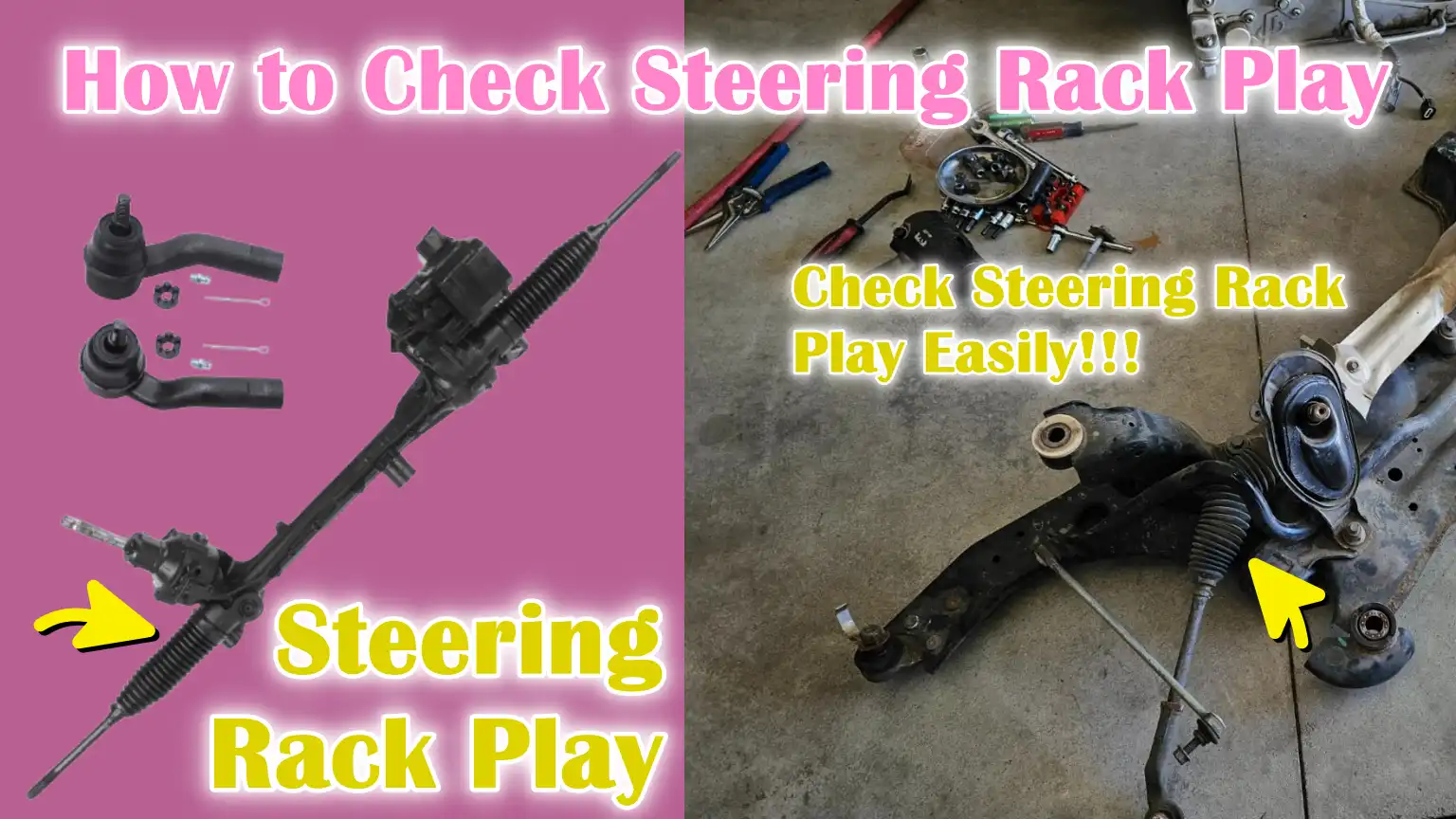
Now, this is the guide that specifically focuses on How to Check Steering Rack Play, so that you can identify early warning signs, prevent costly repairs and most importantly ensure the vehicle remains safe to drive.
Common Signs and Symptoms of Steering Rack Play
Steering rack play occurs when there is excessive movement in the steering system, making it difficult for the driver to control the vehicle properly.
Recognizing the signs early can prevent accidents and costly repairs.
There are several clear symptoms that indicate steering rack play and understanding them is crucial for maintaining vehicle safety and performance.
1. Loose or Vague Steering Feel
A loose or vague steering feel occurs when the steering wheel turns excessively before the wheels respond.
This is often caused by worn steering rack components, tie rods, or bushings.
When this happens, the driver may experience a delay or looseness in the steering, making it difficult to maintain control during turns or sudden maneuvers.
Studies in automotive engineering show that even a slight delay in steering response can increase stopping distances and reduce vehicle stability, specially at higher speeds.
2. Knocking or Rattling Noises When Turning
Knocking or rattling noises when turning the steering wheel typically indicate worn or loose components within the steering rack or inner tie rods.
These noises occur because metal parts are colliding with each other without proper support or lubrication.
According to vehicle maintenance research, persistent knocking noises are not only an indication of wear but can also lead to sudden steering system failure if ignored.
Drivers should pay attention to these noises, specially if they occur during slow turns or on uneven roads.
3. Uneven or Rapid Tire Wear
Uneven or rapid tire wear is another strong indicator of steering rack play.
When the rack or tie rods are loose, the wheels are not properly aligned, causing the tires to wear unevenly on the road.
Automotive studies show that misalignment caused by steering rack problems increases tire wear, reduces traction and increases the risk of accidents.
Regular tire inspections can help identify this problem before it becomes dangerous or costly.
4. Steering Wheel Not Returning to Center Properly
After turning, the steering wheel should naturally return to its center position.
When the wheel fails to do so, it often indicates internal play in the steering rack or worn bushings.
Research on steering system dynamics shows that this problem reduces vehicle stability when changing lanes and increases driver fatigue, specially on long drives.
Addressing steering rack play restores proper centering and ensures the car tracks straight and safely.
Tools
| Tool/Equipment | Purpose | Notes / Tips |
|---|---|---|
| Vehicle Jack | The car will need to be safely lifted off the ground to access the steering components. | Make sure the jack is large enough for the weight of your car. Always use it on level ground. |
| Jack Stands | To support the vehicle after it has been lifted. | Never rely solely on a jack. Place jack stands under sturdy frame points. |
| Wheel Chocks | To prevent the vehicle from rolling while it is being lifted. | Place chocks behind or in front of the wheels that are not being lifted. |
| Flashlight or Inspection Light | To see clearly under the vehicle and inspect small parts. | Bright and focused light helps identify cracks, leaks or worn components. |
| Helper – Optional but Recommended | To help you turn the steering wheel or control your speed safely. | Having another person present can make the test more accurate and safer. |
What are The Safety Precautions Before Inspecting Steering Rack Play
Safety is paramount when inspecting the steering rack.
Because you will be working under the vehicle or around moving parts, taking the correct precautions is crucial to prevent accidents.
Following proper safety measures ensures both your safety and the accuracy of the inspection.
1. Parking the Vehicle on Level Ground
Before beginning any inspection, it’s essential to park the vehicle on a flat, stable surface.
Level ground prevents the vehicle from rolling unexpectedly and reduces the risk of it tipping over when lifted.
Automotive safety studies consistently recommend choosing a firm, level surface for maintenance checks and avoiding slopes, gravel, or uneven ground.
This simple step significantly reduces the likelihood of serious accidents.
2. Securing the Wheels to Prevent Movement
Even when parked, wheels can shift due to gravity or sudden jolts.
Using wheel chocks or similar devices to lock the wheels ensures the vehicle remains completely stationary during the inspection.
According to vehicle maintenance research, securing the wheels is one of the most effective ways to prevent injuries from rolling vehicles while performing undercarriage inspections.
3. Properly Lifting and Supporting the Vehicle
If you need to lift the front of the car, using a reliable vehicle jack and supporting the car with jack stands is crucial.
Never rely solely on the jack, as it can fail or slip, causing the car to fall.
Automotive repair studies emphasize that proper lifting and support not only protect the mechanic from injury but also prevent damage to the vehicle’s frame and suspension components.
Always place the jack stands under strong points on the car frame and double-check their stability before working underneath.
4. The Importance of Turning Off the Engine During Inspection
Turning off the engine before inspecting the steering system is crucial for safety.
A running engine can cause sudden movements in the steering components or wheels, increasing the risk of injury.
Mechanics and safety manuals recommend turning off the engine and removing the keys to prevent any accidental movement during the inspection.
This step also prevents changes in hydraulic pressure within the power steering system, which could affect the accuracy of the steering rack inspection.
How to Check Steering Rack Play When the Vehicle is Stationary
Checking the steering rack for any excessive movement while the vehicle is stationary is a safe and effective first step.
This method allows you to detect wear or manufacturing defects in the steering components without putting stress on the car, making it easier to pinpoint the root cause of the problem.
How the steering responds when the vehicle is stationary provides a clear indication of the condition of the steering rack, tie rods and related components.
1. Gently Turn the Steering Wheel Left and Right
To begin, gently turn the steering wheel while the vehicle is stationary.
Pay attention to how the steering wheel feels.
In a properly functioning steering system, there should be very little free play and the wheels should respond almost immediately.
Excessive play during this test indicates wear or looseness in the inner tie rods or other steering components.
An automotive expert can quickly identify this and prevent potential failures on the road.
2. Observe Free Play Before the Wheels Respond
While turning the steering wheel, carefully observe how much the steering wheel turns before the front wheels actually begin to move.
This is called free play and a small amount is normal, usually specified by the vehicle manufacturer.
However, if the steering wheel turns considerably without the wheels responding, it indicates excessive play in the steering rack.
Research and service manuals emphasize that measuring free play is one of the most reliable ways to detect early wear in the steering rack before it affects safety or tire alignment.
3. Listen for unusual noises coming from the steering area
While turning the steering wheel, listen carefully for any unusual noises coming from the steering area, such as knocking, clicking, or grinding sounds.
These noises often occur when worn components, loose connections, or faulty bushings vibrate under stress.
Automotive maintenance studies show that addressing unusual car noises promptly can prevent costly repairs, reduce overall expenses and ensure the smooth and safe operation of the vehicle.
Paying attention to these noises is a crucial aspect of vehicle safety.
How to Check Steering Rack Play by Lifting the Front Wheels
Checking the steering rack with the front wheels lifted provides a more accurate assessment of the steering system’s condition.
This method allows you to directly observe the components that control wheel movement and detect looseness or wear that might not be apparent when the vehicle is on the ground.
Automotive experts recommend this step as it helps identify problems in the inner tie rods, bushings and rack housing before they escalate into serious safety issues.
1. Safely Lifting the Front of the Vehicle
Before beginning, it’s crucial to safely lift the front of the vehicle using a properly rated vehicle jack and secure it with jack stands.
Lifting on a stable, level surface ensures the vehicle won’t shift or fall during the inspection.
Vehicle safety studies emphasize that improper lifting is a common cause of injuries and undercarriage damage.
Always ensure the jack stands are placed under the manufacturer-specified lifting points and double-check for stability before proceeding.
2. Manually Rotating the Wheels Side-to-Side
With the vehicle safely lifted, grasp each front wheel and gently rotate it from side to side.
Note any unusual looseness or irregular movement.
A properly functioning steering system should have minimal play and the wheels should feel firm when rotated.
Excessive movement often indicates worn inner tie rods, loose steering rack components, or worn bushings.
Automotive repair research shows that early detection of this movement can prevent uneven tire wear, steering instability and costly component failures.
3. Observing Movement in the Inner Tie Rod and Rack Housing
While turning the wheels, carefully observe the inner tie rod and rack housing.
Any visible movement or play in these components indicates steering rack play.
Worn tie rods or loose connections in the rack can compromise steering accuracy and safety.
Studies and service manuals emphasize that even a small amount of looseness in these parts can worsen over time, leading to dangerous handling issues.
Carefully monitoring these components helps detect problems early and ensures that corrective measures can be taken before accidents or significant wear occur.
Read More:
How to Inspect Inner Tie Rods and Mounting Bushings
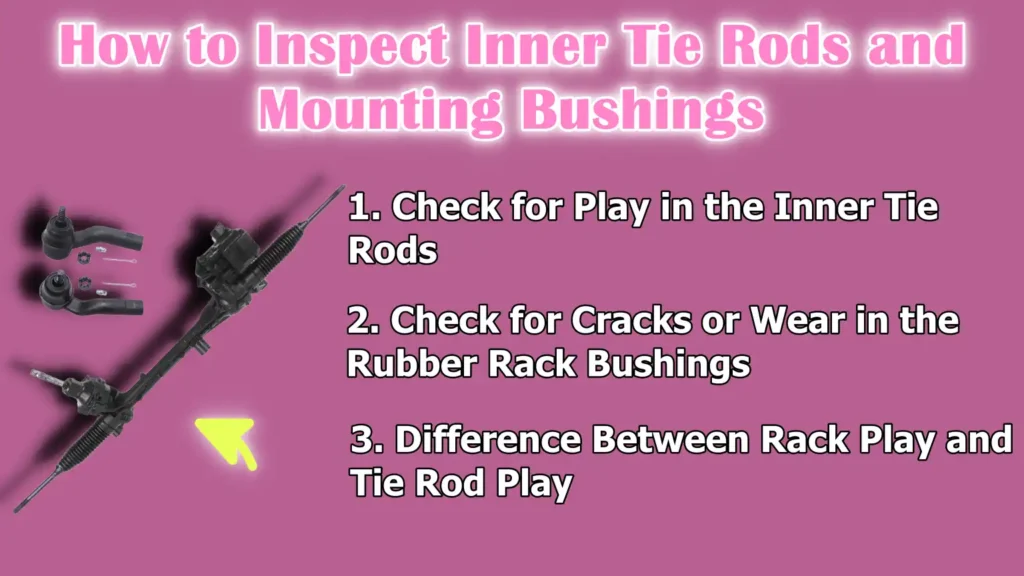
For a thorough inspection of the steering system, checking the inner tie rods and mounting bushings is crucial, as these parts play a vital role in connecting the steering rack to the wheels.
Over time, wear and tear or damage to these parts can lead to looseness in the steering rack, a loose steering feel and uneven tire wear.
Understanding how to inspect them helps prevent accidents and ensures smoother, more precise steering control.
Automotive maintenance research emphasizes that identifying and addressing these issues early can save both time and repair costs.
1. Check for Play in the Inner Tie Rods
The inner tie rods connect the steering rack to the outer tie rods, allowing the wheels to turn correctly with steering input.
To check for play, grasp the inner tie rod near the rack and attempt to move it back and forth.
In a properly functioning system, there should be very little movement.
Any noticeable looseness indicates wear or damage, which can cause steering play, rattling noises, or uneven tire wear.
Vehicle repair manuals emphasize that loose inner tie rods are a common cause of steering instability and should be addressed promptly.
2. Check for Cracks or Wear in the Rubber Rack Bushings
The rubber rack bushings support the steering rack and absorb road vibrations, maintaining proper alignment and steering feel.
Over time, these bushings can crack, harden, or deteriorate due to heat, exposure to oil, or general wear and tear.
Inspecting and touching the components helps detect early signs of wear.
Worn bushings can allow the steering rack to move within its mounting, leading to excessive play, uneven steering response and abnormal tire wear.
Studies in automotive maintenance emphasize that regular inspection of rubber bushings is crucial for both vehicle safety and comfort.
3. Difference Between Rack Play and Tie Rod Play
It’s important to differentiate between play in the steering rack and play in the tie rods.
Play in the steering rack is typically caused by worn internal components or loose mountings, while play in the tie rods is due to worn inner or outer tie rod ends.
Careful observation while moving the steering wheel or the raised wheels is necessary to pinpoint the source.
Automotive service guides indicate that identifying the correct cause ensures that the right part is repaired or replaced, preventing unnecessary expenses and improving steering accuracy.
How to Measure Steering Wheel Free Play
Measuring steering wheel free play is one of the most effective ways to assess the condition of the steering system.
Free play refers to the slight movement in the steering wheel before the wheels begin to turn.
A small amount of free play is normal, but excessive movement indicates potential wear in the steering rack, tie rods, or related components.
Measuring and understanding steering wheel free play helps drivers maintain vehicle safety, prevent uneven tire wear and avoid sudden steering problems on the road.
1. Measuring Steering Wheel Movement Before Resistance
To measure free play, gently turn the steering wheel left and right while keeping the front wheels stationary.
Note how much the wheel moves before resistance is felt or the wheels respond.
This measurement provides a direct indication of the amount of play in the steering system.
Vehicle maintenance research shows that early detection of abnormal steering movement allows drivers to address minor issues before they escalate into serious steering failures.
2. Acceptable Steering Free Play Limits
Manufacturers specify acceptable limits for steering wheel free play, typically ranging up to a few degrees of rotation depending on the vehicle model.
Staying within these limits ensures that the steering is precise, responsive and safe.
Automotive experts emphasize consulting the owner’s manual or service guide to confirm the correct specifications.
Free play within the recommended limits guarantees that steering remains predictable, vehicle handling remains stable and tires wear evenly.
3. What Does Excessive Steering Wheel Play Indicate?
Excessive steering wheel play occurs when the steering wheel rotates too much before the wheels respond, indicating potential wear or damage in the steering rack, tie rods, or mounting bushings.
This can lead to delayed steering response, rattling noises and uneven tire wear, all of which compromise vehicle safety.
Studies in automotive maintenance show that ignoring excessive steering wheel play increases the risk of accidents and accelerates wear on steering and suspension components.
Early detection allows for timely repairs and helps maintain smooth, safe and reliable steering control.
How to Distinguish Steering Rack Play from Other Components
Accurately identifying the source of steering problems is crucial for proper diagnosis and effective repair.
Steering issues can stem from various components, including the steering rack, tie rods, ball joints and suspension parts.
Mistaking one type of play for another can lead to unnecessary repairs or persistent safety hazards.
Understanding the differences between these issues helps drivers and mechanics pinpoint the root cause and maintain safe, precise control over the vehicle.
1. Ball Joint Play vs Steering Rack Play
Ball joints connect the suspension to the steering knuckle, allowing the wheels to pivot under control.
When ball joints become loose, they create rattling noises and irregular movement in the suspension, which can sometimes be mistaken for steering rack play.
Unlike steering rack play, which directly affects steering responsiveness and wheel alignment, worn ball joints typically exhibit more movement in the vertical plane of the wheel.
Automotive safety research indicates that if worn ball joints are not addressed promptly, they can lead to uneven tire wear and even wheel separation, making accurate identification essential.
2. Tie Rod End Play vs Rack Internal Wear
Tie rod ends connect the steering rack to the wheels and accurately transmit steering inputs.
Worn tie rod ends introduce play into the steering system that is felt at the wheel, often resulting in rattling noises or vague steering.
Rack internal wear, on the other hand, occurs within the steering rack itself, causing free movement in the steering wheel before the wheels respond.
Vehicle maintenance guides emphasize that carefully inspecting both the inner and outer tie rods while observing wheel movement is crucial to differentiate tie rod end play from rack internal wear, ensuring that the correct repairs are performed.
3. Suspension-Related Looseness vs Steering Problems
Suspension components such as control arms, bushings and struts can also develop looseness that affects vehicle handling.
Unlike steering rack problems, suspension-related looseness may manifest as uneven tire contact, body roll, or a vague feeling in the ride rather than a delay in steering response.
Automotive studies stress that suspension problems can mimic steering problems, making a systematic test of the system essential.
Properly differentiating these issues prevents misdiagnosis and ensures that both the suspension and steering systems function correctly for safe, stable driving.
Understand, When Steering Rack Play Becomes a Safety Risk
Steering rack play may initially be minimal and go unnoticed, but over time, it can develop into a serious safety hazard.
Understanding when play becomes unsafe is crucial for preventing accidents and maintaining control of the vehicle.
Automotive research and manufacturer guidelines emphasize the importance of early detection and repair of steering rack issues for safe driving, as even slight delays in wheel response can increase stopping distances and reduce handling precision.
1. How Much Play is Considered Unsafe?
Steering wheel play is measured by the degree of rotation before the wheels respond.
Most manufacturers recommend a maximum of approximately 10 to 20 millimeters of free movement at the steering wheel rim, although specifications may vary depending on the vehicle.
Any movement exceeding this range is generally considered unsafe as it indicates worn internal components, loose tie rods, or worn bushings.
Studies on vehicle safety show that exceeding these limits can compromise steering accuracy, making sudden maneuvers more difficult and increasing the risk of accidents.
2. Driving Risks of Ignoring Rack Play
Ignoring steering rack play can lead to delayed steering response, unpredictable vehicle behavior and difficulty maintaining lane control.
Drivers may experience oversteering or understeering, specially at higher speeds or during emergency maneuvers.
Research on automotive safety indicates that vehicles with excessive rack play are more likely to lose directional control during sudden turns or evasive actions.
In addition, steering rack problems can lead to accelerated wear on tires and suspension parts, resulting in costly repairs and a reduced vehicle lifespan.
3. Warning Signs That Require Immediate Attention
Several symptoms indicate that steering rack play has reached a dangerous level and requires immediate inspection or repair.
These include a steering wheel that turns excessively before the car responds, loud knocking or rattling noises from the steering system, uneven tire wear and a steering wheel that does not return to the center position after turning.
Safety studies and service manuals consistently advise that these warning signs should be addressed promptly to prevent accidents, maintain control and ensure the vehicle remains roadworthy.
What to Do If There Is Play in the Steering Rack
If play is detected in the steering rack, it’s crucial to address the issue promptly to maintain vehicle safety and prevent further damage.
Addressing the problem immediately ensures the steering system functions correctly and prevents excessive wear on the tires, suspension components and the steering rack itself.
Taking the right steps allows drivers to manage minor issues temporarily and identify when professional repair or replacement is necessary.
1. Temporary Inspection and Adjustment – If Applicable
In some cases, minor play in the steering system can be temporarily managed by inspecting and tightening easily accessible connections such as outer tie rods or mounting bolts.
Lubricating worn bushings or ensuring the power steering fluid level is correct may provide a slight improvement in steering response.
Automotive maintenance guides emphasize that these temporary measures are not permanent solutions but can mitigate risks while awaiting proper repairs.
Regular monitoring during this time is essential to ensure the steering doesn’t fail unexpectedly.
2. When Replacement is the Only Solution
If the steering rack or its internal components are significantly worn or damaged, replacement is the only safe and effective solution.
A worn rack cannot provide precise steering control and simple repairs or adjustments will not restore proper function.
Vehicle safety research indicates that replacing a faulty steering rack restores precise steering response, improves vehicle handling and prevents further damage to related components such as tie rods and bushings.
Professional installation ensures the new rack functions correctly and safely.
3. The Importance of Wheel Alignment After Repairs
After repairing or replacing steering components, a complete wheel alignment is crucial.
Misalignment can occur during the replacement process or due to worn steering parts, leading to uneven tire wear, poor handling and increased fuel consumption.
Automotive service manuals recommend a precise alignment check to ensure the vehicle tracks straight, the steering wheel is properly centered and the tires wear evenly.
Proper alignment after repairs maximizes the safety, performance and lifespan of both the steering system and the tires.
Difference Between Professional Inspection vs DIY Check
While a DIY check of the steering rack can reveal obvious looseness or malfunctions, professional inspections provide a more thorough and accurate assessment.
Understanding the difference between what a driver can check at home and what a mechanic can diagnose is crucial for ensuring complete safety and preventing long-term damage.
Professional inspections utilize specialized tools, experience and knowledge to identify problems that are not typically detectable through visual or manual checks.
1. What Mechanics Check Beyond Visual Inspection
Mechanics inspect the steering system in ways that are not possible with a DIY check.
They use precision instruments to measure steering wheel free play, assess the condition of the rack and pinion, check for wear on the inner and outer tie rods and test hydraulic or electric power steering components.
They also evaluate the alignment, suspension and mounting bushings under controlled conditions to uncover hidden problems.
According to automotive service research, these professional assessments detect early-stage wear that would otherwise go unnoticed, preventing sudden steering failure or unsafe driving conditions.
2. Benefits of Professional Diagnosis
Professional diagnosis ensures that all components of the steering system are functioning correctly and safely.
Mechanics can pinpoint the exact cause of steering rack play, differentiating between rack wear, tie rod issues, or suspension-related looseness.
They can recommend the correct repairs or replacements, avoiding unnecessary costs or incorrect fixes.
Studies in vehicle maintenance show that professional assessments reduce the likelihood of recurring problems, improve vehicle handling and enhance overall road safety.
3. Cost Implications of Early Detection
Early detection of steering rack or related problems through professional inspection can lead to significant cost savings over time.
Identifying problems early prevents serious damage to the steering system, tires and suspension components, which would otherwise require expensive replacements if left unattended.
Reports from the automotive industry indicate that the cost of timely repairs following a professional diagnosis is often a fraction of the cost of later replacements and associated damage.
Investing in professional checks not only ensures safety but also maintains the vehicle’s longevity and reliability.
How to Prevent Steering Rack Play in the Future
Preventing steering rack play is far easier and less expensive than repairing or replacing damaged parts.
By adopting regular maintenance habits and practicing safe driving, vehicle owners can significantly extend the lifespan of their steering system.
Understanding preventative measures helps maintain precise steering, ensures vehicle stability and reduces the risk of sudden accidents caused by loose or worn steering components.
1. Regular Steering and Suspension Inspections
Regular inspections of the steering and suspension systems are one of the most effective ways to prevent steering rack play.
Routine checks allow drivers or mechanics to identify early signs of wear in the tie rods, bushings, ball joints and the steering rack itself.
Automotive maintenance research emphasizes that preventative inspections catch minor issues before they escalate into major problems, improving both vehicle safety and longevity.
Ideally, these inspections should be performed at least once a year, or more frequently if the vehicle is driven on rough roads.
2. Avoiding Potholes and Hard Curb Impacts
Driving over potholes, hitting curbs, or driving on rough road surfaces puts excessive stress on the steering system, leading to accelerated wear on the steering rack, tie rods and suspension components.
Studies on vehicle dynamics show that repeated impacts can loosen mounts, damage bushings and quickly introduce play into the steering.
Avoiding these hazards or driving slowly on rough roads reduces unnecessary stress and helps maintain precise steering control.
3. Maintaining Correct Tire Pressure and Alignment
Proper tire maintenance is crucial for preventing steering rack problems.
Underinflated, overinflated, or misaligned tires increase the load on the steering and suspension systems, leading to uneven wear on the rack, bushings and tie rods.
Automotive service manuals emphasize that maintaining the manufacturer-recommended tire pressure and having regular wheel alignments ensures smooth steering, reduces stress on components and prevents premature play in the steering rack.
Consistent tire care also improves fuel efficiency, extends tire life and enhances overall driving safety.
What are The Essential Tips for Safety and Maintenance
A safe and reliable steering system is crucial for everyday driving and the long-term performance of your vehicle.
Adopting simple safety and maintenance practices ensures that the steering remains precise, responsive and free from premature wear and tear.
Following these tips can prevent accidents, reduce repair costs and extend the lifespan of critical steering components.
As well as, you should examine the tie rods, as these components directly transmit steering rack movement to the wheels, so in the research they found out that fatigue in the tie rods which is caused by repeated loads and impacts actually contributes to the early wear, so that makes the regular checks a key aspect of preventing steering play and maintaining the safe vehicle control as well.[¹]
1. The Importance of Timely Steering System Repairs
Addressing steering problems promptly is essential to prevent them from escalating into more serious issues.
Delays in repairs can lead to increased wear and tear on the steering rack, tie rods, bushings and suspension components, compromising vehicle control and safety.
Automotive research consistently emphasizes that proactive maintenance of the steering system not only improves driving safety but also reduces repair costs in the long run.
Timely repairs ensure that the vehicle remains predictable and responsive in all driving conditions.
2. How Regular Inspections Improve Vehicle Control
Regular inspections of the steering and suspension systems maintain smooth and precise steering response.
Checking for excessive play, unusual noises, or uneven tire wear allows drivers to identify minor problems before they develop into major safety hazards.
Studies on vehicle safety demonstrate that vehicles with well-maintained steering systems exhibit better handling, a reduced risk of accidents and improved stability, specially during emergency maneuvers or challenging road conditions.
3. Maintaining Steering Components in Good Condition
Proper care of steering components, such as tie rods, rack bushings and the steering rack itself, extends their lifespan and improves driving comfort.
Lubrication, proper alignment and avoiding impacts with potholes or curbs are key factors in maintaining the integrity of these components.
Automotive maintenance manuals recommend regular inspections and preventative care as the most effective way to keep the steering system functioning optimally.
Consistent maintenance of these parts results in precise steering, safer driving and an overall more reliable vehicle.
Conclusion – How to Check Steering Rack Play
You should always address and check if there’s any free movement in the steering wheel or if it sounds like tiny click, as it ensures your safety and literally maintains a healthy steering system for longer period of time.
If steering rack play is left unaddressed, it can gradually reduce steering responsiveness, cause uneven tire wear and increase the risk of accidents.
By recognizing the signs of wear, conducting regular inspections and addressing problems promptly, drivers can ensure precise steering control and smooth handling.
Preventive measures, such as avoiding potholes, maintaining proper tire pressure and monitoring tie rods and bushings, not only extend the life of steering components but also protect the entire suspension system.
Whether through self-inspection or consulting a professional mechanic, addressing steering rack play in a timely manner is a small effort that yields significant safety benefits, cost savings and driving confidence.
Ultimately, a well-maintained steering system provides peace of mind, knowing that the vehicle will respond accurately and reliably in every driving situation.
Even, you can also ask questions in the comment section.
Frequently Asked Questions
Q1. What is steering rack play and why is it important?
Answer: Steering rack play refers to the movement or looseness in the steering system that occurs before the wheels actually respond. This is important because even a small amount of play can reduce steering precision, affect vehicle control and increase the risk of accidents. The steering rack connects the steering wheel to the wheels, so any looseness here directly impacts how the car responds to your input. Identifying and addressing steering rack play ensures safe and smooth driving.
Q2. How do I know if my steering rack has play?
Answer: Several signs indicate steering rack play. The steering wheel may feel loose or vague, meaning it turns more than expected before the wheels respond. You might hear knocking or rattling noises when turning the steering wheel. Tires may wear unevenly or prematurely and the steering wheel may not return to the center properly after a turn. Recognizing these signs early can help prevent serious steering problems and improve vehicle safety.
Q3. Can I check for steering rack play myself?
Answer: Yes, you can perform a basic check for steering rack play at home. With the vehicle on the ground, gently turn the steering wheel left and right and observe how the wheels respond. You can also listen for any unusual noises coming from the rack area. For a more thorough inspection, lifting the front of the vehicle allows you to manually move the wheels side to side and inspect the inner tie rods and rack bushings. Although DIY checks can reveal obvious problems, professional inspection is recommended for an accurate diagnosis.
Q4. What tools will I need to check for steering rack play?
Answer: To safely check for steering rack play, you will need a vehicle jack and jack stands to lift and support the vehicle, wheel chocks to prevent rolling and a flashlight or inspection light to clearly see the steering components. Having an assistant can also make the inspection easier and safer, specially when turning the steering wheel or observing movement in the lifted wheels. Proper use of these tools ensures a safe and effective inspection.
Q5. Is steering rack play dangerous?
Answer: Yes, excessive steering rack play can be dangerous. It reduces steering precision, causes delayed response in the wheels and can make the car feel unpredictable during turns or emergency maneuvers. Ignoring steering rack play can lead to uneven tire wear, accelerated wear of suspension parts and an increased risk of accidents. Early detection and repair of steering rack play are crucial for safe driving.
Q6. Can steering rack play be repaired, or does it always require replacement?
Answer: The solution depends on the cause and severity of the play. Minor looseness in tie rods or bushings can sometimes be temporarily adjusted or tightened. However, if the steering rack or internal components are significantly worn or damaged, replacement is the only safe solution. After any repair or replacement, a wheel alignment is necessary to ensure proper steering response and tire wear.
Q7. How often should I have my steering system inspected?
Answer: It is recommended that you have your steering and suspension systems inspected at least once a year, or more frequently if you regularly drive your vehicle on rough roads, over potholes, or on uneven surfaces. Regular inspections can catch minor problems before they become major safety hazards and ensure that the steering remains precise and responsive.
Q8. What can I do to prevent steering rack play in the future?
Answer: Preventing steering rack play requires regular maintenance and careful driving. Avoid hitting potholes and curbs, maintain proper tire pressure and ensure that wheel alignment is checked regularly. Lubricating bushings and tie rods as recommended and having the steering system inspected regularly can help extend the life of the parts. Preventive care not only maintains safe steering but also protects tires and suspension parts from excessive wear.
Q9. When should I see a professional mechanic?
Answer: You should see a professional mechanic if you notice problems such as excessive free play in the steering wheel, knocking noises, uneven tire wear, or the steering wheel not returning properly to the center position. A professional mechanic can perform a thorough inspection using specialized tools to determine if the play is in the steering rack, tie rods, or suspension components. Timely professional assistance ensures safety, prevents further damage and reduces repair costs in the long run.
References:
[1] Failure Analysis and Fatigue Life Improvement of Steering Mechanism of Heavy Commercial Vehicles Using FEA
https://www.ijtsrd.com/papers/ijtsrd46441.pdf

Guys, I’m a car audio enthusiast and customization expert and I love clear sound and clean installation. Plus, I have spent years helping people build their dream audio setups. And whenever I’m working on cars, I probably listen to music and thinks about the next big upgrade.
