
Written By: Don Dodi
Fact Checked By: Kristen Brown
Reviewed By: Diego Rosenberg
When you clean your car with a pressure washer, then it doesn’t mean that you need to just throw the water with high force and your vehicle will be cleaned flawlessly, but you need a smart way of cleaning so that you can safely and quickly remove all kinds of dirt.
Without a doubt, when you use pressure washer then it saves lot of time on cleaning, even it protects its paint over the long term as well.
So, modern pressure washers are actually designed for the home use to deliver controlled water pressure that safely removes loose dirt, mud, insect residue, oily grime and road salt as well, which can’t be done by the ordinary hoses.
And, whenever you use it correctly, then a pressure washer actually reduces the risk of paint scratches, as it literally lifts dirt off the surface before you touch the car with a hand washing gloves.
Even, automotive experts and detailing professionals widely agree that the pre-rinsing with the pressurized water is actually a key step that prevents the swirl marks, which is commonly caused by the rubbing dry or gritty dirt across the paint of your vehicle.
Moreover, pressure washing actually uses very less water overall than leaving a hose running continuously for cleaning, that makes it more efficient and eco-friendly option as well.
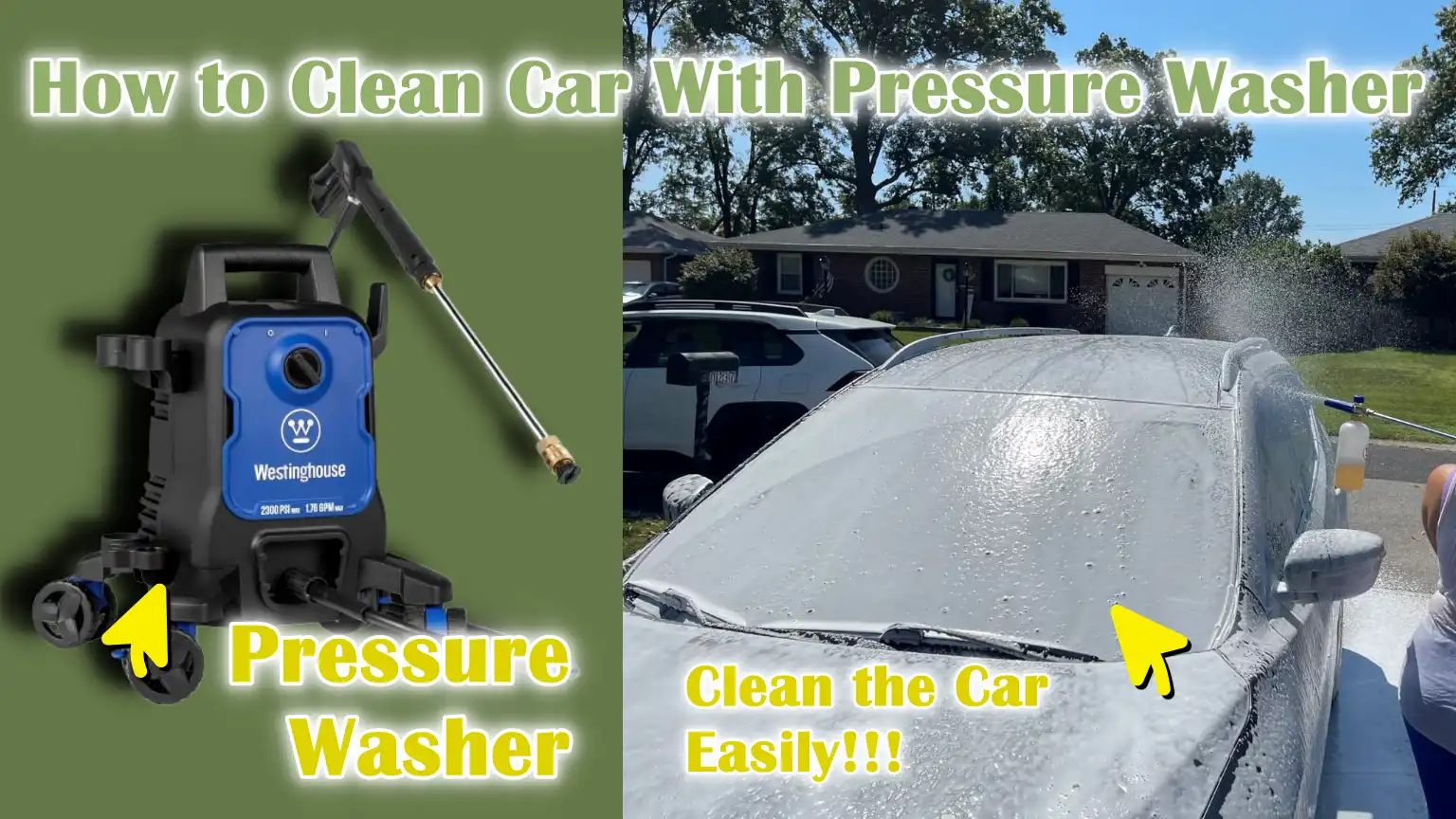
So, to make sure the flawless cleaning and in the quick way, you need to learn How to Clean Car With Pressure Washer so that you can learn lots of things like: right nozzle, safe pressure range and what kind of car-specific shampoo we have to use.
What are The Benefits of Using a Pressure Washer for Car Cleaning
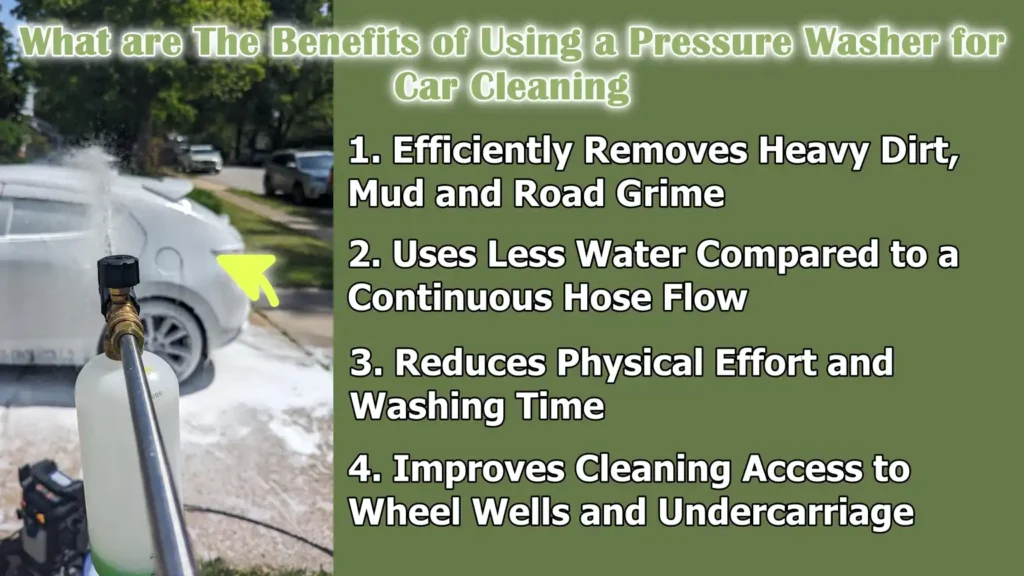
1. Efficiently Removes Heavy Dirt, Mud and Road Grime
A pressure washer is highly effective at removing thick dirt, dried mud, road salt, bird droppings and oily grime that accumulates on a car over time.
The controlled force of the pressurized water breaks the bond between dirt particles and the paint surface, allowing the dirt to be washed away without excessive scrubbing.
This is crucial because manually scrubbing stubborn dirt can cause abrasive particles to rub against the paint, leading to fine scratches.
Pressure washing helps remove dirt safely, making the cleaning process more efficient and gentler when done correctly.
2. Uses Less Water Compared to a Continuous Hose Flow
Many people believe that pressure washers waste water, but in reality, they often use less water than a regular garden hose.
A pressure washer cleans more efficiently with a focused spray, meaning less water is needed to achieve better results.
A typical hose can release a large volume of water per minute, while a pressure washer uses a controlled flow to quickly remove dirt.
This makes pressure washing a more water-efficient option, specially in areas where water conservation is important.
3. Reduces Physical Effort and Washing Time
Cleaning a car without a pressure washer often involves repetitive scrubbing, bending and reaching, which can be tiring and time-consuming.
A pressure washer allows the water pressure to do most of the hard work, reducing physical strain.
Large areas such as doors, roofs and bumpers can be cleaned quickly, significantly reducing the overall washing time.
This makes pressure washing particularly beneficial for those who wash their cars regularly or who own larger vehicles like SUVs and trucks.
4. Improves Cleaning Access to Wheel Wells and Undercarriage
Some of the dirtiest parts of a car are also the hardest to reach, including the wheel wells, suspension area and undercarriage.
Mud, road salt, sand and moisture accumulate in these areas and if left unchecked, can lead to rust and corrosion.
A pressure washer can deliver water to these tight and hidden spaces that are difficult to reach with hands and sponges.
Regularly cleaning these areas helps maintain the car’s structural components and extends its lifespan.
What are The Types of Pressure Washers Suitable for Cars
1. Electric vs Gas Pressure Washers for Car Use
Electric pressure washers are generally the best option for car washing because they provide consistent, controlled pressure that is safe for vehicle paint and trim.
They are lightweight, quiet and easy to use, making them suitable for home users and beginners.
Gas pressure washers are more powerful and primarily designed for heavy-duty outdoor cleaning tasks such as driveways and concrete surfaces.
While gas models can be used on cars, they require more caution as their higher pressure can damage paint, rubber seals and plastic components if not properly controlled.
For regular car washing, electric pressure washers offer a better balance of power, safety and ease of use.
2. Recommended PSI and GPM Ranges for Safe Car Washing
Safe car washing depends on using the right pressure and water flow.
Most automotive detailing professionals recommend a pressure range that is strong enough to remove dirt but gentle enough to protect the paint.
A low to medium power range pressure washer works well for cars, specially when used with the correct nozzle.
Water flow, measured in gallons per minute (GPM), is also important as higher flow helps rinse away dirt more effectively without relying solely on pressure.
Using the right balance of pressure and water flow minimizes the risk of surface damage and ensures a thorough cleaning.
3. The Importance of Adjustable Pressure Settings
Adjustable pressure settings are crucial because different parts of a car require varying levels of cleaning force.
Painted surfaces, clear coats and decals require lower pressure, while wheels, tires and undercarriage areas can withstand a stronger stream of water.
A pressure washer with adjustable settings or interchangeable nozzles allows users to easily control the intensity of the spray.
This flexibility makes cleaning safer and more efficient, specially for beginners who are still learning how much pressure is safe for each part of the vehicle.
4. Why High-Powered Industrial Washers Are Not Suitable
High-powered industrial pressure washers are designed for tough jobs like removing grease, paint, or concrete stains, not for delicate automotive surfaces.
These machines generate extremely high pressure that can strip wax, damage the clear coat, chip paint edges and force water into seals and electrical components.
Using such equipment on a car increases the risk of long-term damage, even if the washer is held at a distance.
For car care, controlled, medium pressure is far more effective and safer than excessive power.
Tools
| Equipment or Supply | What It Is | Why It Is Important |
|---|---|---|
| Pressure Washer Unit and Compatible Hose | A machine that sprays water with controlled pressure through a special hose. | It quickly removes loose dirt, mud, dust and road dust without much scrubbing. |
| Foam Cannon or Foam Gun Attachment | A device that mixes shampoo with water to form a thick lather. | The foam loosens dirt and removes it from the paint, reducing scratches during washing. |
| Car-Specific Shampoo (pH-Neutral and Wax-Safe) | A gentle cleaning fluid specially formulated for car paint. | It cleans safely without damaging paint, clear coat, or wax layers. |
| Microfiber Wash Mitts and Drying Towels | Soft fabric tools made of fine fibers. | These clean and dry the car without scratching its paint surface. |
| Wheel Cleaner, Tire Brush and Detailing Brushes | Special cleaners and brushes for wheels, tires and tight spaces. | Wheels accumulate a lot of dust and brake dust, which should not be allowed to come into contact with car paint tools. |
What are The Safety Precautions You Need to Take Before Pressure Washing
1. Maintain a Safe Distance Between the Nozzle and Paint
When using a pressure washer on a car, it’s crucial to maintain a safe distance between the nozzle and the painted surface.
Holding the nozzle too close can cause paint chipping, scratches, or even dents in softer plastic parts.
Experts generally recommend maintaining a distance of at least one to two feet for most car surfaces.
This distance allows the water pressure to effectively remove dirt without damaging the paint or decals.
Starting at a distance and gradually moving closer if needed helps prevent accidents and ensures a safe, controlled wash.
2. Areas to Avoid Direct Spraying – Engine Bay, Sensors & Seals
Certain parts of a vehicle are sensitive to water and high pressure.
The engine bay, exposed sensors, rubber seals and electrical components should never be directly sprayed.
Water ingress in these areas can lead to malfunctions, short circuits, or long-term corrosion.
Focusing the spray on the body, wheels and undercarriage while avoiding sensitive areas protects the car and prevents damage to expensive components.
3. The Importance of Wearing Safety Shoes and Goggles
Pressure washers emit a powerful stream of water that can ricochet or dislodge debris.
Wearing sturdy shoes prevents slips and protects feet from injury, while safety goggles shield the eyes from dirt, small stones and chemical spray.
Safety gear is specially important for beginners or when working on uneven or wet surfaces.
Using simple safety precautions prevents accidents and makes the cleaning process more comfortable.
4. Checking the Car’s Paint Condition Before Washing
Before beginning any pressure washing session, it’s essential to inspect the car’s paint condition.
Look for chips, cracks, rust spots, or areas with a weakened clear coat.
Washing damaged paint with high-pressure water can worsen existing problems.
Identifying sensitive areas beforehand allows you to adjust the pressure or use gentler cleaning methods.
Regular inspections also help maintain the car’s overall finish and extend the life of the paint.
How to Choose the Right Nozzle and Settings
1. Understanding Nozzle Colors and Spray Angles
Pressure washer nozzles come in different colors, each indicating a specific spray angle and intensity.
Each color is designed for particular tasks and using the wrong nozzle can damage your car’s paint.
Narrow angles create a powerful, concentrated stream for tough cleaning, while wider angles provide gentler coverage for delicate surfaces.
Understanding these colors helps you select the appropriate nozzle for each part of your car, ensuring effective cleaning without scratches or paint damage.
2. Best Nozzle Types for Washing, Foaming and Wheels
Different cleaning tasks require different nozzles.
A wide-angle nozzle is best for rinsing soap and dirt from the body without damaging the paint.
Foam cannons or attachments work best for evenly applying soap, loosening dirt and grime before washing.
Medium or narrow-angle nozzles can be used for wheel wells, tires and other areas with stubborn dirt that require higher water pressure, but where the surface is more durable.
Choosing the right nozzle for each task ensures thorough cleaning while protecting delicate areas.
3. Recommended Pressure Levels for Car Paint
Using the correct pressure level is crucial to prevent damage to your car’s paint.
Most automotive experts recommend using medium water pressure, which is strong enough to remove dirt but gentle enough to preserve the clear coat and finish.
Excessive pressure can strip wax, cause scratches, or even chip paint on delicate areas.
Adjusting the pressure according to the surface being cleaned maintains the car’s appearance and protects it from long-term damage.
4. First, test the pressure washer on a hidden area.
Before using the pressure washer on the entire car, it’s crucial to test it on a hidden or inconspicuous area.
This allows you to see how the paint reacts to the pressure and ensures that the chosen nozzle and settings are safe.
Testing beforehand prevents accidental damage to the main surfaces and provides confidence that the cleaning process will be both effective and safe.
Minor adjustments can be made before proceeding to the rest of the car, resulting in a controlled and damage-free wash.
How to Remove Loose Dirt and Debris – Pre-Rinse
1. The Importance of Pre-Rinsing to Prevent Swirl Marks
Pre-rinsing your car with a pressure washer before using soap or a wash mitt is a crucial step in removing loose dirt and debris.
Dirt particles left on the paint can cause scratches or swirl marks when rubbed during the washing process.
By pre-rinsing, most of the loose contaminants are safely washed away by the water, significantly reducing the risk of damage to the surface.
Professional detailers emphasize pre-rinsing to maintain the car’s clear coat and overall finish – it’s a simple yet highly effective step.
2. Starting from the Roof and Working Downwards
When pre-rinsing, it’s best to start from the roof and gradually work your way down to the doors, hood and lower panels.
Dirt naturally flows downwards with the water, so cleaning from top to bottom ensures that previously cleaned areas don’t get re-contaminated by debris falling from the upper surfaces.
This method also helps maintain a consistent, streak-free clean across the entire vehicle.
Adopting a systematic top-down approach makes the process more efficient and minimizes unnecessary splashing of water onto already cleaned areas.
3. Cleaning Wheel Arches and Underbody First
The wheel arches, tires and undercarriage accumulate the most dirt, including mud, road salt and brake dust.
These areas should be rinsed at the beginning of the process, preferably before washing the body panels, to prevent dirt from spreading to already cleaned surfaces.
A pressure washer can reach these tight spaces, effectively removing grime that would be difficult to remove by hand.
Regular cleaning of the underbody also protects metal components from rust and corrosion over time.
4. Avoid spraying directly into vents and grilles
When pre-rinsing, it’s crucial to avoid spraying directly onto sensitive areas such as air vents, grilles and the engine compartment.
Applying high-pressure water to these areas can damage electrical components, sensors, or rubber seals.
Focusing the spray on open body panels and less sensitive areas ensures effective cleaning while protecting delicate parts.
Controlling the nozzle and spray direction is essential for safe and efficient pre-rinsing.
How to Apply Foam and Cleaning Solution
1. How Foam Cannons Help Loosen Dirt
Using a foam cannon or foam gun attachment helps apply a thick layer of foam evenly across the car’s surface.
The foam clings to dirt, dust and road grime, softening it and making it easier to remove without scrubbing.
This reduces the risk of scratches or swirl marks that can occur from rubbing dirt into the paint with a wash mitt.
Professional detailers often rely on foam to lift stubborn dirt, making the washing process cleaner and safer.
2. The Correct Dilution Ratio for Car Shampoo
It’s crucial to dilute car shampoo with water according to the manufacturer’s instructions.
Using too much soap can leave residue or streaks, while using too little reduces cleaning effectiveness.
Properly diluted shampoo creates a smooth, foamy layer that lifts dirt from the paint without damaging waxes or protective coatings.
Following the correct dilution ratio ensures optimal cleaning while preserving the car’s finish and shine.
3. Even Coverage of Foam from Top to Bottom
When applying foam, always start from the roof and work your way down to the lower panels.
This top-down approach allows the foam to carry dirt downwards, preventing dirt from redepositing on already cleaned areas.
Ensuring even coverage across all surfaces, including door jambs and edges, guarantees that every part of the car is properly cleaned.
This systematic method improves efficiency and minimizes the chances of missing spots.
4. Allowing the Foam to Dwell Briefly Without Drying
After applying the foam, it should be allowed to dwell on the car’s surface for a short period to loosen dirt and grime.
Typically, a few minutes are sufficient, but it’s crucial to prevent the foam from drying.
Dried foam can leave marks or be difficult to rinse off.
Keeping an eye on the foam and rinsing it off while it’s still wet ensures maximum cleaning while keeping your car’s paint safe and spotless.
How to Perform Hand Washing Method After Foaming
1. Using Microfiber Mitts Instead of Sponges
After pre-rinsing and applying foam, the safest way to clean your car’s surface is by using a microfiber wash mitt.
Microfiber mitts are soft and have fine fibers that trap dirt, lifting it away rather than rubbing it into the paint surface.
Unlike traditional sponges, which can trap abrasive particles, microfiber minimizes the risk of scratches and swirl marks.
This makes the hand washing process much gentler on the paint while still being highly effective at removing remaining dirt.
2. The Two-Bucket Method to Minimize Paint Scratches
The two-bucket method is a professional washing technique designed to protect the paint from damage.
One bucket contains soapy water for washing and the other contains clean water for rinsing the mitt.
After each use on the car, the mitt is rinsed in the clean water bucket to release trapped dirt, then dipped back into the soapy water.
This prevents dirt from being reapplied to the paint, significantly reducing the risk of scratches and swirl marks and ensuring a safer wash for your vehicle.
3. Washing in Straight Lines, Not Circles
When washing your car, it’s crucial to move the mitt in straight lines rather than circular motions.
Circular motions can trap dirt in the fibers and create visible swirl marks on the paint.
Moving in straight lines efficiently lifts dirt from the surface and maintains a smooth, even finish.
This technique is widely recommended by detailing experts as one of the most effective ways to protect the clear coat during hand washing.
4. Cleaning One Section at a Time
Cleaning the car one panel at a time ensures that each section receives proper attention and prevents soap or dirt from drying on the surface.
Focusing on smaller sections also allows for better control over water flow, pressure and hand movements.
Working from the top panel downwards ensures that dirt and water from the upper sections don’t contaminate the lower areas that have already been cleaned.
This systematic approach helps achieve a streak-free and swirl-free finish and makes the washing process much easier.
Read More:
How to Clean Wheels, Tires and Underbody
1. The Importance of Cleaning Wheels Separately
Wheels and tires are among the dirtiest parts of a car, accumulating brake dust, mud and road grime.
Cleaning them separately from the body prevents dirt and abrasive particles from transferring to painted surfaces, thus avoiding scratches during the washing process.
Detailing experts recommend starting with the wheels to remove heavy grime first, ensuring the rest of the car remains clean and protected throughout the entire washing process.
Regular cleaning of the wheels also maintains the finish and prevents corrosion over time.
2. Using Dedicated Brushes for Rims and Tires
Using dedicated brushes for rims and tires is crucial for thorough cleaning and protecting other parts of the car.
Tire and wheel brushes are designed to reach tight spaces and remove stubborn dirt without scratching the surfaces.
These brushes help dislodge brake dust, grime and road debris in a controlled manner, which cannot be removed with water pressure alone.
Using separate brushes for wheels and tires prevents cross-contamination with paint, making the cleaning process safer and more effective.
3. Safe Pressure Levels for Brake Components
When pressure washing near the wheels, it’s essential to use safe pressure levels around brake components such as calipers, discs and sensors.
High-pressure water can damage sensitive parts or force moisture into areas that should remain dry, leading to problems in the long run.
Maintaining a medium pressure while focusing on visible dirt ensures effective cleaning without risking mechanical or electrical damage to the braking system.
4. Washing the Underbody to Remove Salt and Grime
The underbody is susceptible to the accumulation of dirt, salt and moisture, specially in areas with winter roads or heavy rainfall.
Washing the undercarriage with a pressure washer removes dirt and grime, which helps prevent rust, corrosion and structural damage over time.
Regular cleaning of the underbody not only extends the life of the vehicle but also improves overall safety by keeping the suspension and mechanical parts free from harmful debris.
How to Finally Rinse With Proper Technique
1. Thorough Rinsing to Avoid Soap Residue
The final rinse is a crucial step in removing all remaining soap and cleaning solutions from the car’s surface.
Leftover soap on the paint can lead to streaks, water spots and fading of the finish over time.
Using ample water to rinse each section ensures that no cleaning chemicals are left behind, protecting the car’s clear coat and wax layers.
A thorough rinse also results in a shiny and smooth surface that feels clean to the touch.
2. Rinsing from Top to Bottom for Efficient Water Flow
Rinsing the car from top to bottom allows dirt, suds and water to flow naturally with gravity.
This top-down approach ensures that dirty water from higher panels doesn’t contaminate areas that have already been rinsed.
Following a systematic method improves efficiency and prevents missed spots or uneven rinsing, resulting in a uniformly clean and polished vehicle.
3. Using a Wide Spray Angle to Protect the Paint
When performing the final rinse, using a wide spray angle reduces the intensity of the water on the paint.
A wide-angle spray disperses the water gently across the surface, preventing damage to the clear coat and minimizing the risk of streaks or dents.
This technique is specially important for delicate surfaces such as polished panels, decals, or areas with thin trim.
4. Spot-Checking for Missed Areas
After rinsing, it’s essential to check the car for any missed areas, such as behind mirrors, door edges and lower panels.
Spot-checking ensures that all soap, dirt, or suds residue is completely removed, resulting in a perfectly clean and professional finish.
Addressing these areas promptly prevents streaks, water spots and potential paint damage over time.
How to Dry Your Car After Pressure Washing
1. Why Air Drying Causes Water Spots
Allowing your car to air dry after washing can lead to water spots on the paint.
These spots occur because minerals and contaminants in the water are left behind on the surface as the water evaporates.
Over time, these water spots can etch into the clear coat and damage the car’s finish.
Air drying is convenient, but it’s not ideal for maintaining a shiny, spotless paint surface, specially in areas with hard water.
2. Using Microfiber Drying Towels or Blowers
The most effective way to safely remove water after washing is by using microfiber towels or a car dryer/blower.
Microfiber towels are soft and highly absorbent, allowing you to gently remove water without scratching the paint.
Blow dryers or air dryers remove water from the surface without contact, minimizing the risk of scratches from wiping.
Both methods help maintain a spotless, gleaming finish while protecting the car’s paint and clear coat.
3. Drying Door Jambs and Mirrors
It’s crucial to pay attention to areas like door jambs, side mirrors and trim parts where water can accumulate.
Residual moisture in these areas can lead to rust, corrosion, or water spots over time.
Carefully drying these areas ensures that every part of the car, including hidden surfaces, remains clean, dry and protected.
Regular attention to these details extends the lifespan of both the paint and the car’s metal components.
4. Preventing Stains and Mineral Deposits
To prevent stains and mineral deposits, always use a clean, high-quality microfiber towel or a continuous airflow blower.
Instead of wiping in circular motions, wiping in straight lines reduces the likelihood of leaving swirl marks on the paint.
Thorough drying after washing preserves the shine, protects the clear coat and gives the car a professional detailing look.
Proper drying is the final step that ensures all the effort put into pressure washing results in a flawless and long-lasting finish.
What are The Common Mistakes That You Should Avoid
1. Using Too Much Pressure on Paint and Decals
Applying excessive pressure while cleaning a car can damage the paint, clear coat and decals.
High-pressure water can strip away protective wax layers, create micro-scratches, or even lift weakened paint over time.
It’s crucial to use medium pressure that is strong enough to remove dirt but gentle enough to protect the surface.
Following the manufacturer’s guidelines for pressure levels ensures effective cleaning without causing long-term damage to the vehicle’s finish.
2. Holding the Nozzle Too Close to the Surface
Holding the pressure washer nozzle too close to the car’s surface concentrates the water force on a small area, increasing the risk of scratches, dents, or paint damage.
Maintaining a safe distance, typically one to two feet, allows the water to disperse pressure evenly across the surface, resulting in effective cleaning.
Gradually adjusting the distance during washing ensures safe and controlled cleaning across all panels.
3. Washing in Direct Sunlight
Washing a car in direct sunlight can cause soap and water to dry too quickly, leaving streaks and water spots on the paint.
High temperatures can also reduce the effectiveness of cleaning solutions and foam, making it difficult to safely remove dirt.
Choosing a shaded area or washing during cooler times of the day ensures a proper wash and minimizes the risk of streaks and surface damage.
4. Skipping the Pre-Rinse or Proper Drying
Skipping the pre-rinse step or not drying properly can lead to scratches, swirl marks and water spots.
The pre-rinse removes loose dirt and debris that could otherwise be rubbed against the paint during washing.
Proper drying ensures that minerals and contaminants in the water don’t remain on the surface, preserving the car’s shine and protecting the clear coat.
Following both of these steps is essential for a clean, protected and long-lasting finish.
How Often Should You Pressure Wash Your Car?
1. Recommended Washing Frequency for Daily Drivers
For cars driven daily, it’s generally recommended to pressure wash at least once every two weeks.
Regular cleaning removes accumulated dirt, dust and road grime that can damage the paint over time.
If the car is driven in heavy traffic, construction dust, or muddy areas, more frequent washing may be necessary.
Consistent maintenance helps preserve the car’s appearance and prevents long-term damage to the paint and clear coat.
2. Seasonal Considerations – Monsoon, Winter and Dust
Weather conditions significantly impact how often a car should be cleaned.
During the monsoon or rainy season, water mixes with mud and grime, increasing the risk of rust and corrosion if not cleaned promptly.
In winter, road salt and sand can accelerate corrosion on metal parts and the undercarriage, making regular cleaning essential.
Dusty or dry environments also necessitate more frequent washing to prevent scratches on the paintwork.
Adjusting the washing schedule to suit seasonal challenges protects the car’s body and mechanical components.
3. Impact of Pressure Washing on Waxes and Sealants
While pressure washing is effective at removing dirt, excessive pressure and frequent use can gradually strip away wax layers or paint sealants.
Using the correct nozzle, moderate pressure and a pH-neutral car shampoo helps preserve these protective layers.
Regular waxing or sealant reapplication after cleaning ensures the car remains protected from environmental contaminants and UV damage throughout the year.
4. Balancing Cleaning and Paint Protection
Maintaining a balance between cleaning and paint protection is crucial for long-term car care.
Washing too frequently or using incorrect methods can damage the paintwork, while washing too infrequently allows dirt and grime to build up.
Adopting a controlled, safe pressure washing routine, along with protective coatings and proper drying techniques, ensures your car stays clean, shiny and well-protected all year round.
How to Maintain Pressure Washer
1. Cleaning the Nozzle and Hose After Use
After every car washing session, it’s crucial to thoroughly clean the pressure washer’s nozzle and hose.
Dirt, soap residue and mineral deposits can clog the nozzle or reduce water flow over time.
Flushing water through the hose and removing any buildup from the nozzle ensures a consistent spray pattern and prevents damage to the washer.
Regular cleaning keeps the equipment working efficiently and extends its lifespan.
2. Properly Storing the Pressure Washer
Proper storage is essential to protect the pressure washer from damage and maintain its functionality.
Store the unit in a dry, shaded area, away from direct sunlight, freezing temperatures, or excessive moisture.
Neatly coiling the hose and storing the nozzle separately prevents kinks, cracks, or deformation.
Proper storage also reduces the risk of rust or mildew, ensuring the pressure washer is safe and ready for use when needed.
3. Checking for Leaks and Damaged Seals
Regularly checking the pressure washer for leaks, damaged seals, or loose connections is crucial for safe operation.
Leaks can reduce water pressure, decrease cleaning efficiency and increase the risk of water damage or electrical hazards.
Periodically inspecting the seals and connections ensures the unit is operating at optimal performance and prevents unexpected malfunctions during washing.
4. Maintaining Consistent Pressure Output
Maintaining consistent pressure output is vital for both cleaning effectiveness and vehicle safety.
Fluctuations in pressure can damage paintwork or fail to remove dirt properly.
Regular maintenance, including cleaning filters, checking hoses and inspecting the pump, helps maintain a consistent water flow.
A well-maintained pressure washer delivers reliable performance and protects both the equipment and the car during every wash.
Conclusion – How to Clean Car With Pressure Washer
When you wash your vehicle at the regular time interval, then it actually provides you the shiny, totally spotless and protected; and pressure washing actually makes this process easy and quick to follow.
So, if you done this in proper way, then this method, unlike traditional washing techniques, removes dirt, mud, road grime and contaminants without causing scratches or swirl marks.
Using the right pressure, nozzle and cleaning solution, along with proper pre-washing, foaming and hand washing, ensures that every part of the car—from the wheels and tires to the undercarriage—is thoroughly cleaned.
Regular pressure washing, combined with safe drying and routine maintenance of the washer, extends the life of your paint, prevents rust and corrosion and keeps your car looking shiny and well-maintained all year round.
By carefully following these steps, anyone can achieve a professional-quality wash at home, saving time, water and effort, while also preserving the long-term value of their vehicle.
Even, there’s study that shows that the total CO₂ emissions per wash can vary significantly by pressure washers, as you can use it with water-conserving techniques, that actually makes it eco-friendly, so it is true that with the efficient equipment and water-saving techniques the environmental impact can be lowered compared with the less efficient systems.[¹]
Now, it is time to ask questions in the comment box.
Frequently Asked Questions
Q1. What is a pressure washer and how does it help in cleaning cars?
Answer: A pressure washer is a machine that sprays water at high speed and controlled pressure. It helps clean cars by quickly loosening and removing dirt, mud, dust and grime. Unlike a regular hose, it blasts the dirt away from the paint rather than just pushing it around, reducing the risk of scratches and swirl marks. Using a pressure washer saves both time and water and helps reach areas that are difficult to clean by hand, such as wheel wells and undercarriage.
Q2. Is it safe to use a pressure washer on my car’s paint?
Answer: Yes, it is safe if used correctly. The key is to maintain a medium pressure, use the correct nozzle and maintain a safe distance from the paint surface. Using a high-powered washer or holding the nozzle too close can damage the paint, clear coat, or decals. Using a pH-neutral car shampoo, soft microfiber mitts and proper washing techniques ensures the car is cleaned without scratches or swirl marks.
Q3. How often should I pressure wash my car?
Answer: For daily drivers, it’s generally recommended to pressure wash your car every two weeks. Seasonal conditions such as rain, monsoons, salty winter roads, or dusty environments may necessitate more frequent washing. Regular washing prevents dirt buildup, rust and deterioration and helps maintain the car’s shine and finish for longer. Adjust the frequency based on weather conditions and driving environment.
Q4. Can I use any soap or detergent with a pressure washer?
Answer: It’s best to use a car-specific shampoo that is pH-neutral and wax-safe. Regular detergents, dish soap, or harsh chemicals can strip away the protective wax layer, fade the paint color, or damage the clear coat. Car shampoo, when mixed with water in the correct ratio, creates a foam that safely loosens dirt, allowing you to effectively clean the car without damaging the paint.
Q5. Should I dry my car after pressure washing?
Answer: Yes, drying is crucial. Air drying can leave water spots and mineral deposits on the paint. Using a clean microfiber towel or a car dryer safely removes water and prevents streaking. Pay special attention to areas like door jambs, mirrors and trim where water can accumulate and cause rust over time. Proper drying ensures a spotless, gleaming finish and protects the car’s paint.
Q6. What common mistakes should I avoid when pressure washing my car?
Answer: Common mistakes include applying too much pressure to the paint or decals, holding the nozzle too close to the surface, washing in direct sunlight and skipping the pre-rinse or proper drying. These mistakes can lead to scratches, swirl marks, water spots and damage to delicate parts. Following the correct technique, maintaining the proper distance and using safe pressure levels will prevent these problems.
Q7. Can I clean the wheels, tires and undercarriage with a pressure washer?
Answer: Yes, pressure washers are very effective for cleaning wheels, tires and undercarriage components. Wheels and tires accumulate a lot of dirt, brake dust and road grime, which should be cleaned separately to avoid damaging the car’s paint. The undercarriage should be washed regularly to remove salt and debris that can cause rust. Using specialized brushes and safe pressure levels ensures thorough cleaning without damaging sensitive parts like brakes or sensors.
Q8. Do pressure washers damage car wax or sealant?
Answer: If used frequently at high pressure, pressure washers can gradually degrade wax or paint sealant. Using lower pressure, the correct nozzle and a pH-neutral shampoo minimizes this effect. After washing, reapplying wax or sealant protects the paint and keeps the car looking shiny, providing a durable protective barrier against dirt, water and UV damage.
Q9. How do I maintain my pressure washer for long-term use?
Answer: After each use, rinse the hose and nozzle to remove soap and debris, store the washer in a dry, shaded area, check for leaks or damaged seals and inspect the pump and pressure output. Regular maintenance ensures consistent performance, prevents equipment damage and allows you to safely and efficiently wash your car every time.
Q10. What is the best way to avoid scratches when washing with a pressure washer?
Answer: The safest method is to pre-rinse the car to remove loose dirt, use foam to loosen remaining grime, wash in straight lines using a microfiber mitt and clean one panel at a time. Avoid circular scrubbing motions, applying excessive pressure, or using sponges that trap dirt. Dry the car thoroughly with a microfiber towel or blower. Following this process reduces the risk of scratches and swirl marks, keeping your car clean and well-protected.
References:
[1] Evaluating the Impacts of Different Car Washing Systems on Carbon Footprint: Insights from Poland
https://www.mdpi.com/2071-1050/17/4/1384

Guys, I’m a car audio enthusiast and customization expert and I love clear sound and clean installation. Plus, I have spent years helping people build their dream audio setups. And whenever I’m working on cars, I probably listen to music and thinks about the next big upgrade.