
Written By: Don Dodi
Fact Checked By: Kristen Brown
Reviewed By: Diego Rosenberg
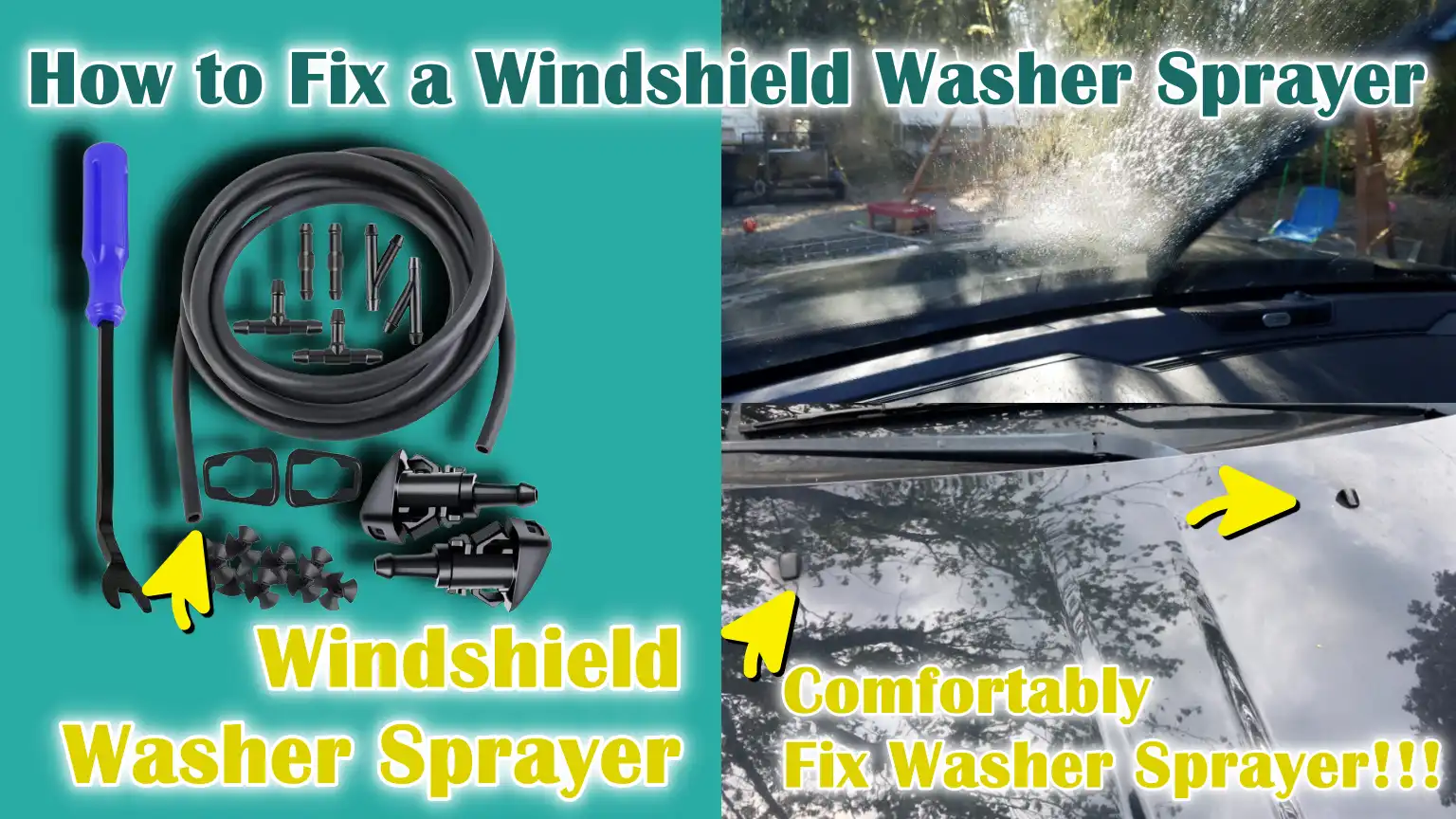
It is really important to fix a windshield washer sprayer, otherwise it can literally affect the safety during the drive by reducing the visibility during the dangerous highways paths, rain, snow and other bad weather conditions.
So, it if not just a small inconvenience you can avoid successfully, as it reduces the visibility which is a major contributing factor in thousands of vehicle crashes each year specially it becomes more deadly during rain, snow, dust storms and highway driving.
Basically, your windshield washer system is actually designed to spray cleaning fluid at the high pressure onto the glass to remove the dirt, bug residue, salt, mud and road grime that wipers alone just cannot clear it.
And, the system includes a fluid reservoir, electric pump, hoses, spray nozzles, fuse and there’s control switch as well, so even one small clog or loose hose can stop it from working in the prime way.
Plus, in the colder climates, the problem with washer fluid is that: it can even freeze if the wrong type is used, that may block the lines or damage the pump as well.
That’s why, we have come up with this quick and easy to follow guide about How to Fix a Windshield Washer Sprayer, so that you can make sure your windshield stays clear and have safety driving no matter the season.
How the Windshield Washer System Works?
The windshield washer system is a simple yet carefully designed setup that helps keep your view of the road clear.
It works by storing cleaning fluid, passing it through small tubes under pressure and spraying it directly onto the windshield when you press the washer control.
This system is connected to your vehicle’s electrical circuit, allowing the pump to operate only when activated.
Although its parts are smaller and cheaper than larger engine parts, each one plays an important role.
Failure of even one part, such as a clogged nozzle or a blown fuse, can damage the entire system.
Understanding how each part works makes it much easier to diagnose the problem and fix it without replacing unnecessary parts.
1. Washer Fluid Reservoir
The washer fluid reservoir is the plastic tank that stores the cleaning fluid used to wash the windshield.
It’s usually located under the hood, near the engine bay wall, or near the front fender.
The tank is designed to hold several liters of washer fluid and is made of durable plastic that can handle heat and vibration.
The cap with the washer symbol prevents dirt from entering the tank.
If the fluid level is low, the pump can’t pump fluid into the system, which is one of the most common reasons for sprayers to stop working.
In cold weather, using plain water instead of the correct washer fluid can cause the water to freeze, cracking the tank or blocking the lines.
Regularly checking the tank and refilling it with the correct washer fluid helps prevent many common problems.
2. Washer Pump Operation
The washer pump is a small electric motor mounted on the bottom or side of the tank.
When you press the washer switch inside the car, electricity is sent to the pump, causing it to spin and create pressure.
This pressure washer pumps fluid from the tank into the hose.
The pump is sealed to prevent leaks and is designed to work quickly, typically spraying fluid within a second of activation.
If you hear a humming sound but no fluid sprays, the pump may be working but the fluid is blocked somewhere.
If there is no sound, the pump may be faulty or not receiving power.
Because it is an electrical component, the pump relies on proper wiring and fuse protection to function properly.
3. Washer Hoses and Connections
Washer hoses are thin rubber or plastic tubes that carry fluid from the pump to the spray nozzle.
These hoses are mounted under the hood and clipped to prevent movement and damage.
Over time, engine heat, vibration and age can cause hoses to weaken, break, or separate.
Even a small crack in a hose can cause fluid to leak under the hood instead of reaching the windshield.
Loose connections are also common, specially after engine repairs or battery replacements.
Checking for cracks, bends, or disconnections along the entire length of the hose is an essential step when diagnosing washer problems.
A properly sealed hose system ensures strong and consistent fluid pressure.
4. Spray Nozzles – Sprayers
Spray nozzles, also called sprayers, are small fittings typically located on the hood or near the base of the windshield.
Their function is to direct washer fluid onto the glass in a controlled spray pattern.
Each nozzle has a small hole inside that can easily become clogged with dirt, dried washer fluid, or mineral deposits.
Because the holes are so small, even a small amount of dirt can reduce the spray force or change its direction.
Most nozzles can be carefully cleaned with a fine needle or compressed air.
Some nozzles are adjustable and can be gently adjusted to achieve the right spray.
If a nozzle is broken or permanently clogged, replacing it is usually easy and inexpensive.
5. Electrical Switch and Fuse System
The electrical switch is located inside the vehicle, often connected to the windshield wiper control lever.
When you activate the washer function, the switch sends an electrical signal through the wiring to power the pump.
This circuit is protected by a fuse, which prevents damage from an electrical short or overload.
If the fuse blows, the pump will be deprived of power and the washer system will stop working completely.
Fuses are usually located in a fuse box under the dashboard or in the engine compartment and are clearly labeled.
Replacing a blown fuse is often quick and inexpensive, but if the fuse repeatedly blows, there may be a deeper wiring problem.
A properly functioning electrical system ensures that the washer pump starts safely and reliably every time you need it.
Know Common Symptoms of a Bad Windshield Washer Sprayer
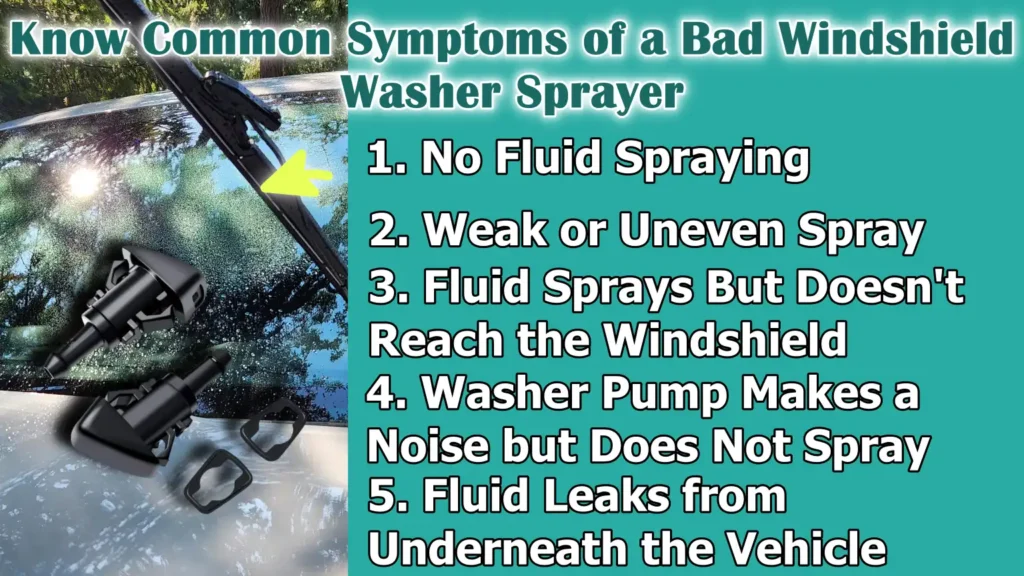
A bad windshield washer sprayer usually shows clear warning signs before it stops working completely.
Because the washer system relies on fluid, pressure, small hoses and electricity, even a small problem in one area can alter the appearance or performance of the spray.
Recognizing the correct symptoms helps you quickly identify the cause, whether it’s low fluid, a clogged nozzle, a worn hose, a weak pump, or an electrical problem.
Paying attention to these signs not only saves time but also prevents unnecessary part replacement.
Understanding these common symptoms will help you diagnose the problem and restore safe visibility on the windshield as quickly as possible.
1. No Fluid Spraying
When no fluid sprays after pressing the washer switch, the problem is often simple but very important.
The most common cause is an empty washer fluid reservoir, preventing the pump from drawing fluid into the system.
Another possible cause could be a blown fuse, cutting off power to the washer pump.
If the pump makes no noise when running, it may be lacking power or completely damaged.
In cold weather, frozen washer fluid can also cause the system to become completely blocked.
This symptom should be investigated immediately, as driving without cleaning the windshield can reduce visibility, specially in rain, snow, or dusty conditions.
2. Weak or Uneven Spray
Weak or uneven spray usually means the system is slightly blocked or not producing enough pressure.
Dirt, dried washer fluid, or mineral deposits can clog small spaces in the spray nozzle, reducing flow.
A slightly blocked hose can also restrict fluid movement and reduce pressure.
In some cases, the washer pump may be faulty and not generating enough force to push the fluid.
Low fluid levels can also cause air to enter the lines, causing an irregular spray.
Cleaning the nozzles and checking the hose connections often fixes this problem, preventing the need for expensive replacement parts.
3. Fluid Sprays But Doesn’t Reach the Windshield
If fluid sprays but doesn’t reach the windshield, the problem is usually improper nozzle alignment.
Over time, vibrations from driving, closing the hood tightly, or minor impacts can change the direction of the spray.
When this happens, fluid can hit the roof, hood, or even fly over the windshield.
This reduces cleaning efficiency and wastes washer fluid.
Most spray nozzles can be gently adjusted using a small pin or needle to achieve the correct stream.
Proper alignment ensures that fluid is distributed evenly across the glass, allowing the wipers to clean thoroughly.
4. Washer Pump Makes a Noise but Does Not Spray
When you hear the washer pump running but no fluid reaches the windshield, it means the pump is working but something is blocking the flow.
A disconnected hose under the hood can cause fluid to spray into the engine compartment instead of onto the glass.
A cracked hose can also cause fluid to leak before reaching the nozzle.
Excessive blockage in the nozzle can prevent spraying completely, even if pressure is building.
In some cases, debris inside the reservoir can block the pump intake.
Inspecting the hose, connections and nozzle opening is the best way to determine the exact cause of this symptom.
5. Fluid Leaks from Underneath the Vehicle
If you notice washer fluid leaking from underneath the vehicle, specially near the front wheels or under the engine area, it could be a broken reservoir or a faulty hose.
Washer reservoirs are made of plastic and can crack due to age, heat, or extreme cold.
Engine heat can cause hoses to burst or loosen at connection points.
Leaks reduce available fluid and prevent proper spray pressure.
Although washer fluid leaks are generally not as dangerous as fuel or brake fluid leaks, they should be repaired immediately to keep the system functioning properly and avoid frequent refilling.
Tools
| Tool / Material | Usage |
|---|---|
| Safety Gloves | Protects your hands from dirt, sharp edges and washer fluid. Helps prevent skin irritation from chemicals in the fluid. Provides better grip when handling small parts and hoses. |
| Safety Glasses | Protects your eyes from fluid spray and dust. This is important when using compressed air or cleaning clogged nozzles. Prevents injury from flying small debris. |
| Small Needle or Pin | Used to gently clean clogged spray nozzles. Helps remove dirt trapped in small spray holes. Use with caution to avoid damaging the nozzle. |
| Compressed Air – It is Optional | Removes dirt and dried fluid from the nozzle and hose. Helps maintain strong and consistent spray pressure. Useful for basic cleaning, but not always necessary. |
| Multimeter | Checks whether power is reaching the washer pump. Helps test fuses and wiring connections. Useful for diagnosing pump or electrical faults. |
| Replacement Washer Nozzle | This is essential if the old nozzle is broken or permanently clogged. Easy to install on most vehicles. Adjusts spray direction and coverage. |
| Replacement Washer Hose | This is essential if the hose is broken, leaking, or disconnected. This ensures that liquid flows smoothly to the nozzle. Prevents pressure loss and liquid leaks. |
| Washer Fluid | Special cleaning liquid formulated for windshields. Safely removes dirt, insects, salt and road grime. Contains anti-freeze agents to prevent freezing in cold weather. |
How to Fix a Windshield Washer Sprayer – Repairing Guide
Repairing a windshield washer sprayer is usually easy if you follow a clear order and understand what each part does.
The washer system works using stored fluid, an electric pump, small hoses, spray nozzles and a secure electrical circuit.
If one part fails, the spray may stop completely or become weak and uneven.
By checking the system step-by-step, you avoid guesswork and replacing parts that are still working.
Most problems are caused by low fluid, clogs, frozen lines, loose hoses, or blown fuses.
The detailed guide below explains each step in simple and practical terms so that even novices can diagnose the problem and fix it safely and correctly.
How to Check the Washer Fluid Level
1. Locate the Reservoir
The washer fluid reservoir is a plastic tank typically found under the hood, near the engine bay wall, or near one of the front fenders.
It usually has a cap marked with a windshield.
Carefully open the hood and inspect this cap.
The tank may be white or light-colored so you can see the fluid level from the outside.
Finding this tank is always the first step because without fluid, the system cannot function at all.
2. Check the Fluid Level
After locating the tank, check the fluid level by looking at the side of the tank or by opening the cap and looking inside.
If the fluid is too low or empty, the pump will only draw air, resulting in no spray.
One of the most common causes of washer failure is low fluid.
Also, check that the fluid does not appear dirty or have debris inside, as dirt can block the pump or nozzles.
3. Refill with the correct washer fluid
If the level is low, refill the tank with the correct windshield washer fluid, not plain water.
Washer fluid contains cleaning agents that remove dirt, insects and road salt.
Many washer fluids also contain anti-freeze ingredients to prevent freezing in cold weather.
Fill the tank carefully; do not overfill.
Close the cap tightly and test the system again to see if the spray has returned.
How to Check for Washer Fluid Freezing
1. Signs of Fluid Freezing
Washer fluid freezing is common in cold weather if the wrong type of fluid is used.
Signs include no spray at all, a slow pump noise, or a humming sound from the pump and no fluid coming out.
The tank or hose may feel very hard or icy.
If water is used instead of the correct washer fluid, it can easily freeze and block the system.
2. How to Thaw Safely
If you suspect your vehicle has frozen, take it to a heated garage or a location where the temperature is above freezing.
Allow the fluid plenty of time to thaw on its own.
Do not pour hot water directly onto plastic parts, as the sudden heat could rupture the tank or hoses.
After thawing, drain the old fluid if necessary and check for leaks caused by freezing expansion.
3. Use Winter-Grade Washer Fluid
To prevent further freezing, always use winter-grade washer fluid designed for low temperatures.
These fluids are specifically formulated to resist freezing below zero degrees Celsius.
Using the correct fluid can prevent damage to the reservoir, pump and hoses and ensure reliable spray performance during the winter months.
How to Clear a Clogged Washer Nozzle
1. Identify a Clogged Nozzle
If the fluid sprays weakly, unevenly, or only from one side, the nozzle may be clogged.
Dirt, dried washer fluid and small particles can block the small spray holes.
Observe the spray pattern.
If a nozzle sprays poorly or not at all, that nozzle may be blocked.
2. Use a Needle to Clear Debris
Take a small needle or pin and gently insert it into the small nozzle hole.
Rotate it carefully to loosen any dirt or dried debris.
Do not press too hard, as this may damage the nozzle hole.
Cleaning the hole often restores normal flow immediately.
3. Blow Compressed Air Through the Nozzle
If possible, blow compressed air through the nozzle to remove deeper clogs.
This helps remove fine particles that the needle cannot reach.
Be sure to wear safety glasses to protect your eyes from dirt.
4. Test the Spray Pattern
After cleaning, turn on the washer system and observe the spray pattern.
The liquid should flow evenly and cover the main part of the windshield.
If the spray is still weak, check for a blockage in the hose.
How to Adjust misaligned spray nozzles
1. Locate the nozzle openings
Spray nozzles are typically installed on the hood or near the base of the windshield.
Each nozzle has a small opening that directs liquid toward the glass.
Over time, vibration, or sudden contact can cause this direction to change.
2. Use a pin to gently change the spray direction
Insert a small pin into the nozzle opening and gently move it to adjust the angle.
Move slowly and test repeatedly to avoid over-adjusting.
Even small movements can make a big difference in the direction of the spray.
3. Test the alignment on the windshield
After adjusting, turn on the washer system and observe where the liquid falls.
It should fall in the center and top of the windshield where the wipers can spread it evenly.
Proper alignment ensures thorough cleaning and prevents liquid waste.
How to Check for Leaks or Connections in Washer Hoses
1. Check for loose hoses under the hood
Open the hood and inspect the small hoses leading from the reservoir to the nozzles.
Make sure each hose is properly connected.
A loose hose can spray into the engine compartment instead of the windshield.
2. Look for cracks or tears
Carefully check for cracks, tears, or weak spots in the hoses.
Engine heat and age can weaken the material.
Even a small crack can reduce pressure and cause a leak.
3. Reconnect or replace damaged hoses
If a hose is loose, reconnect it properly.
If it is damaged, replace it with a new washer hose of the same size.
Good hose condition ensures strong and consistent spray pressure.
How to Check the washer pump
1. Listen to the pump when you turn it on.
Sit inside the vehicle and turn on the washer.
Listen for a humming sound coming from the engine area.
This sound indicates the pump motor is running.
If you don’t hear anything, the pump may be out of power or defective.
2. Check the fuses connected to the washer system.
Find the fuse box and find the fuse labeled for the washer system.
Remove the fuse and test it.
If the metal strip inside is broken, replace it with a fuse of the same rating.
A blown fuse prevents power from reaching the pump.
3. Test the pump with a multimeter.
If the fuse is fine but the pump isn’t running, use a multimeter to check if power is reaching the pump connector.
If there’s power but the pump isn’t working, the pump motor may be internally damaged.
4. Replace the defective pump if necessary.
If testing reveals a defective pump, remove the old pump from the tank and install a new pump designed for your vehicle model.
A working pump is essential because it creates the necessary pressure to spray fluid.
How to Check Electrical Parts
1. Check the Washer Fuse
The washer fuse protects the system from electrical overload.
Always install a fuse with the correct amperage rating.
Using the wrong fuse can cause further damage.
2. Check that the relay is working.
Some vehicles use a relay to control power to the washer pump.
If the relay is faulty, the pump may not receive power even if the fuse is working.
Replacing the relay with a similarly functioning relay can help confirm whether it is faulty.
3. Test Switch Function
The washer switch inside the vehicle sends a signal to start the pump.
If nothing happens when you press the switch, but all other parts are working, the switch may be faulty.
Testing the switch ensures that the electrical signal is being sent correctly.
When to Replace the Washer Sprayer Nozzle
The washer sprayer nozzle is a small but essential part of the windshield washer system.
Its job is to spray washer fluid in a controlled pattern to clean the windshield quickly and evenly.
Because the nozzle hole is so small, it can easily become blocked, worn, or damaged over time.
Engine heat, constant sun exposure, road grime and vibration from driving can gradually affect its performance.
Although many nozzle problems can be fixed by cleaning or adjusting them, in some cases, replacing them is the best and safest approach.
Knowing when to replace a nozzle helps restore proper spray pressure, improve cleaning performance and prevent unnecessary strain on the washer pump.
1. Persistently Clogged Nozzle
If a nozzle remains clogged even after careful cleaning, it may be necessary to replace it.
Over time, dried washer fluid, mineral deposits from hard water and tiny particles of dirt can build up inside the small spray holes.
When this buildup hardens and thickens, cleaning with a needle or compressed air may only provide a temporary solution.
A frequently clogged nozzle can weaken the spray, provide poor coverage, or even block it completely.
This forces the washer pump to work harder, shortening its life.
If you notice that the spray works for a while after cleaning but quickly becomes blocked again, the nozzle’s internal passage may be permanently clogged.
Replacing it will ensure proper and reliable fluid flow.
2. Broken or Damaged Nozzles
Cracked or physically damaged nozzles should always be replaced.
Nozzles are typically made of plastic and are exposed to heat, cold and direct sunlight every day.
In freezing temperatures, if the washer fluid wasn’t winter-grade, expanding ice can cause small cracks in the nozzle body.
Even a small crack can cause a pressure leak, reducing spray power and changing the direction of the fluid.
Damage can also occur if the hood is closed too tightly or if someone accidentally hits the nozzle while cleaning.
A broken nozzle may not produce the correct pressure or spray pattern.
Replacing a faulty nozzle can restore its function and prevent fluid wastage.
3. Change in Spray Pattern
Another sure sign that a nozzle needs to be replaced is a poor spray pattern.
If the fluid sprays in different directions, doesn’t produce a consistent stream, or forms a mist instead of a continuous spray, the nozzle hole may be worn.
With prolonged use, a small spray hole may widen or become damaged, specially if sharp tools are used frequently.
When the shape changes, the spray may not spread evenly across the windshield.
This reduces cleaning efficiency and can leave dirty spots on the glass.
If adjusting the angle doesn’t fix the problem and improve cleaning performance, installing a new nozzle is often the easiest and most effective solution.
4. Steps to Remove and Install a New Nozzle
Replacing a washer sprayer nozzle is usually easy and doesn’t require advanced tools.
First, open the hood and locate the nozzle on the hood panel or near the base of the windshield.
Gently remove the small washer hose located below the nozzle.
Be careful not to pull too hard, as friction may tear the hose.
Most nozzles are held in place by a small plastic clip.
Carefully depress the clip from the bottom and push the nozzle upward to remove it from the hood.
Take a new nozzle and insert it into the same hole until it clicks firmly into place.
Reinstall the washer hose securely to ensure there are no leaks.
After installation, turn on the washer system and check the spray pattern.
If necessary, make minor adjustments to properly align the spray so it covers the main portion of the windshield.
Repositioning the nozzle as needed keeps the spray strong and consistent, ensuring clear and safe visibility during all-weather driving.
Read More:
How to Maintain & Preventive Malfunction of Windshield Washer Sprayer
Following simple preventative measures will keep your windshield washer sprayer working properly for many years.
The washer system may seem small and simple, but it relies on clean fluid, clean nozzles, flexible hoses and proper temperature protection.
Regular maintenance reduces the risk of unexpected failures, specially in rain, snow, or dusty driving conditions when visibility is crucial.
Most washer system problems can be prevented if you inspect the system periodically and use the right materials.
Preventive care not only saves repair costs but also prevents damage to other parts like the washer pump and reservoir.
Also, Wikipedia explains that windscreen wipers works in the close coordination with the windshield washer systems that to maintain the clear driver visibility in the adverse weather condition, as wipers are powered mechanisms that sweeps the water, snow and washer fluid off the windshield, while the washer jets dispenses the fluid to loosen if there’s any stubborn dirt and grime, so this whole combination of mechanical clearing and fluid cleaning is actually important to ensure a driver’s line of sight remains unobstructed during journey.[¹]
1. Use good quality washer fluid
Using good quality windshield washer fluid is one of the most important maintenance steps.
The right washer fluid is specifically formulated to remove dirt, insect residue, road salt, oil and grime from the windshield.
It contains cleaning agents that quickly break down the dirt so the wipers can easily wipe it away.
Many washer fluids also contain ingredients that prevent freezing in cold temperatures, reducing streaks on the glass.
Poor-quality or diluted fluid may not clean properly and may leave residue inside nozzles and hoses.
Over time, poor-quality fluid can build up and clog the spray holes.
Choosing a reliable washer fluid ensures better cleaning performance and longer system life.
2. Don’t Use Plain Water
Except in emergencies, plain water should not be used in the washer system.
Water does not contain cleaning chemicals, so it cannot properly remove oily dirt, road grime, or insect residue.
In cold weather, water freezes at zero degrees Celsius, which can block hoses, crack the tank and damage the washer pump.
Frozen water expands and this expansion can cause plastic parts to crack.
Water can also contain minerals that can build up inside the nozzles, causing blockages over time.
Using the correct washer fluid instead of water protects the system and ensures reliable spray performance year-round.
3. Clean the nozzles periodically
Spray nozzles have very small holes that can easily accumulate dust, dried fluid and road debris.
Cleaning the nozzles periodically can prevent blockages before they become serious.
A small needle can be used to gently clean the holes and compressed air can help remove fine particles.
Regular cleaning keeps the spray pressure strong and consistent.
It also prevents the washer pump from overworking due to low flow.
By keeping the nozzles clean, you ensure the spray pattern remains accurate and covers the windshield properly.
4. Check the hoses during regular maintenance
Washer hoses are exposed to engine heat, vibration and age, which can weaken or crack over time.
During a regular vehicle checkup, it’s helpful to quickly check the hoses under the hood.
Look for loose connections, small leaks, soft spots, or visible splits.
Even a small crack can cause a loss of pressure and fluid leaks into the engine compartment.
Reconnecting loose hoses or replacing damaged hoses early can prevent major problems later.
Healthy hoses allow fluid to flow smoothly and maintain strong spray pressure.
5. Winter Preparation Tips
Cold weather poses special challenges for washer systems.
Before winter arrives, make sure the tank is filled with winter-grade washer fluid, which is designed to prevent freezing.
If there’s still summer fluid in the tank, it should be drained and replaced.
Check that the spray nozzles are clean and hoses are in good condition, as freezing can rupture delicate parts.
Parking the vehicle in a garage whenever possible can help avoid extreme cold.
Preparing the washer system before winter can prevent frozen lines, damaged pumps and unexpected spray failures during snowy or icy driving.
Proper winter preparation ensures clear visibility and safe driving in cold weather.
What Could Be the Cost of Repair of Windshield Washer Sprayer
Understanding the potential repair cost for a windshield washer sprayer problem helps you make a smart and confident decision.
The washer system is one of the most affordable vehicle repair systems because it uses small plastic parts, a simple hose and a compact electric pump.
In most cases, the problem is minor and doesn’t require significant labor or expensive parts.
The cost depends on your vehicle model, location and whether you want to repair it yourself or go to a professional mechanic.
Knowing the typical price range for common fixes can help you avoid overpaying and decide whether a simple repair or complete replacement is the better option.
1. DIY Cost Range
Repairing a windshield washer sprayer at home is usually very inexpensive.
If the problem is simply low washer fluid, the cost can be limited to purchasing a bottle of good-quality washer fluid, which is usually inexpensive.
If you already have a small needle or pin, clearing a clogged nozzle costs almost nothing.
Replacing a washer nozzle is also inexpensive because the part itself is small and simple in design.
Replacing a washer hose is also generally inexpensive.
If the washer pump needs to be replaced, the cost increases slightly, but it is still considered a low-cost automotive repair compared to engine or brake work.
As most of these jobs require basic tools and little time, doing it yourself saves labor and keeps the total cost low.
2. Professional Repair Cost Estimate
If you go to a professional mechanic or service center, the total cost will include both parts and labor.
Labor charges depend on the repair time and hourly rates in your area.
Simple tasks like replacing nozzles or hoses may take a little time, but you’ll have to pay for the mechanic’s time and inspection.
Replacing the washer pump can cost more because it requires removing parts around the reservoir and ensuring proper electrical connections.
In most cases, windshield washer system repair is one of the lowest automotive service costs.
However, prices can vary depending on the vehicle’s design, specially if the pump or hose is more difficult to access.
3. Cost Comparison: Repair vs Replacement
In many cases, repairing a specific faulty part is much cheaper than replacing the entire system.
For example, cleaning or replacing a clogged nozzle is much cheaper than replacing the washer pump.
Reconnecting a loose hose costs almost nothing compared to installing a new reservoir.
Replacing the entire system is rarely necessary unless there is significant damage, such as a crack in the reservoir and failure of the pump.
Choosing the right repair based on an accurate diagnosis can help avoid unnecessary costs.
In most cases, repairing the correct part provides the same performance as replacing the entire system, making repair the smarter and more cost-effective option.
Conclusion – How to Fix a Windshield Washer Sprayer
This is not just another small system, but it maintain the clarity of your vision that directly responsible for safety during the drive.
Clear visibility helps drivers react quickly to sudden stops, pedestrians, road signs and changing weather.
Even minor issues like clogged nozzles or low washer fluid can reduce cleaning power and leave dirt or salt on the windshield, which can blur light and cause glare, specially at night.
The good news is that most washer sprayer problems are simple, inexpensive and can be easily fixed with basic tools and careful inspection.
By understanding how the reservoir, pump, hose, nozzle and electrical components work together, you can quickly identify the cause of the problem instead of guessing and replacing unnecessary parts.
Regular maintenance, such as using the correct washer fluid, checking hoses for leaks, cleaning nozzles and preparing for winter, can prevent most common breakdowns.
Small preventative measures protect the washer pump from overpressure and extend the life of the entire system.
Whether you make repairs yourself or hire professional service, taking early action saves time, money and hassle.
Ultimately, maintaining your windshield washer sprayer keeps your windshield clean, increases driving confidence and ensures safe travel in all weather conditions.
A few minutes of attention today can prevent serious visibility problems tomorrow.
Now, that’s it from this guide and you can ask questions in the comment section below.
Frequently Asked Questions
Q1. What causes a windshield washer sprayer to stop working?
Answer: Windshield washer sprayers often malfunction due to minor issues. The most common cause is low or empty washer fluid in the reservoir. If there is no fluid, the pump cannot spray anything onto the windshield. Another common cause is a clogged spray nozzle. Dirt, dried washer fluid and small debris can block the small openings where the fluid exits. In cold weather, if winter-grade fluid is not used, frozen washer fluid can clog the lines. Electrical problems such as a blown fuse, a faulty switch, or bad wiring can also prevent the pump from receiving power. In some cases, the washer pump itself may be malfunctioning due to age or internal wear and tear.
Q2. Why do I hear the washer pump but no fluid is spraying?
Answer: If you hear a humming sound when you press the washer switch but no fluid sprays, it means the pump is working but fluid isn’t reaching the nozzle. This could happen if the washer hose is disconnected, broken, or leaking from under the hood. Liquid may spray inside the engine compartment instead of onto the windshield. Another possible cause could be a clogged spray nozzle, completely blocking the flow. In some cases, the pump may be running but not generating enough pressure due to internal damage. Checking the hose and cleaning the nozzle often fixes this problem.
Q3. How do I know if my washer pump is bad?
Answer: A bad washer pump often shows obvious signs. If you press the washer switch and there’s no sound, the pump may be lacking power or completely damaged. First, check the fuse connected to the washer system, as a blown fuse can cause the pump to stop working. If the fuse is fine but the pump is quiet, the motor inside the pump may be damaged. Another sign of a weak pump is very low spray pressure, even if the reservoir is full and the nozzles are clean. Testing the pump with a multimeter can confirm that it is receiving power and functioning properly.
Q4. Can I drive with a broken windshield washer sprayer?
Answer: Technically, you can drive with a broken washer sprayer, but it’s not safe, specially in bad weather. The washer system helps remove dirt, grime, road salt and insect residue that wipers alone can’t properly clean. Without fluid, dirt can spread across the windshield and reduce visibility. Poor visibility increases the risk of accidents because it’s difficult to see road signs, other vehicles and pedestrians. In some areas, vehicle safety regulations require a working washer system. It’s always better to fix problems quickly to ensure safe driving.
Q5. How much does it cost to repair a windshield washer sprayer?
Answer: The cost depends on the actual problem. If the problem is simply low washer fluid, the expense is minimal and limited to purchasing the correct washer fluid bottle. If you already have basic tools, clearing a clogged nozzle is usually inexpensive. Replacing the spray nozzle or hose is usually inexpensive because these parts are small and simple. If the washer pump needs to be replaced, the cost will be higher, but it’s much less than most engine or brake repairs. Professional repairs incur labor charges, which can increase the overall cost depending on the service center and vehicle model.
Q6. Why is my washer spraying weakly or unevenly?
Answer: A weak or uneven spray is usually caused by a slightly clogged nozzle or a clogged hose. Dirt and dried washer fluid can reduce the size of the spray holes, reducing pressure and altering the spray pattern. Low fluid levels in the tank can also reduce flow as air enters the lines. In some cases, the washer pump may be faulty and not generating adequate pressure. Cleaning the nozzle, checking for leaks in the hose and ensuring the tank is full are the first steps to fixing this problem.
Q7. What type of washer fluid should I use?
Answer: You should always use windshield washer fluid specifically designed for vehicles. This fluid contains cleaning agents that remove dirt, oil deposits, insects and road salt more effectively than plain water. Many washer fluids also contain anti-freeze protection to prevent freezing in cold temperatures. Using plain water is not recommended as it can freeze, form mineral deposits and damage system components. Choosing the right seasonal washer fluid helps protect the reservoir, pump and hoses, while also keeping your windshield clean and clear.
References:
[1] Windscreen wiper
https://en.wikipedia.org/wiki/Windscreen_wiper

Guys, I’m a car audio enthusiast and customization expert and I love clear sound and clean installation. Plus, I have spent years helping people build their dream audio setups. And whenever I’m working on cars, I probably listen to music and thinks about the next big upgrade.