
Written By: Don Dodi
Fact Checked By: Kristen Brown
Reviewed By: Diego Rosenberg
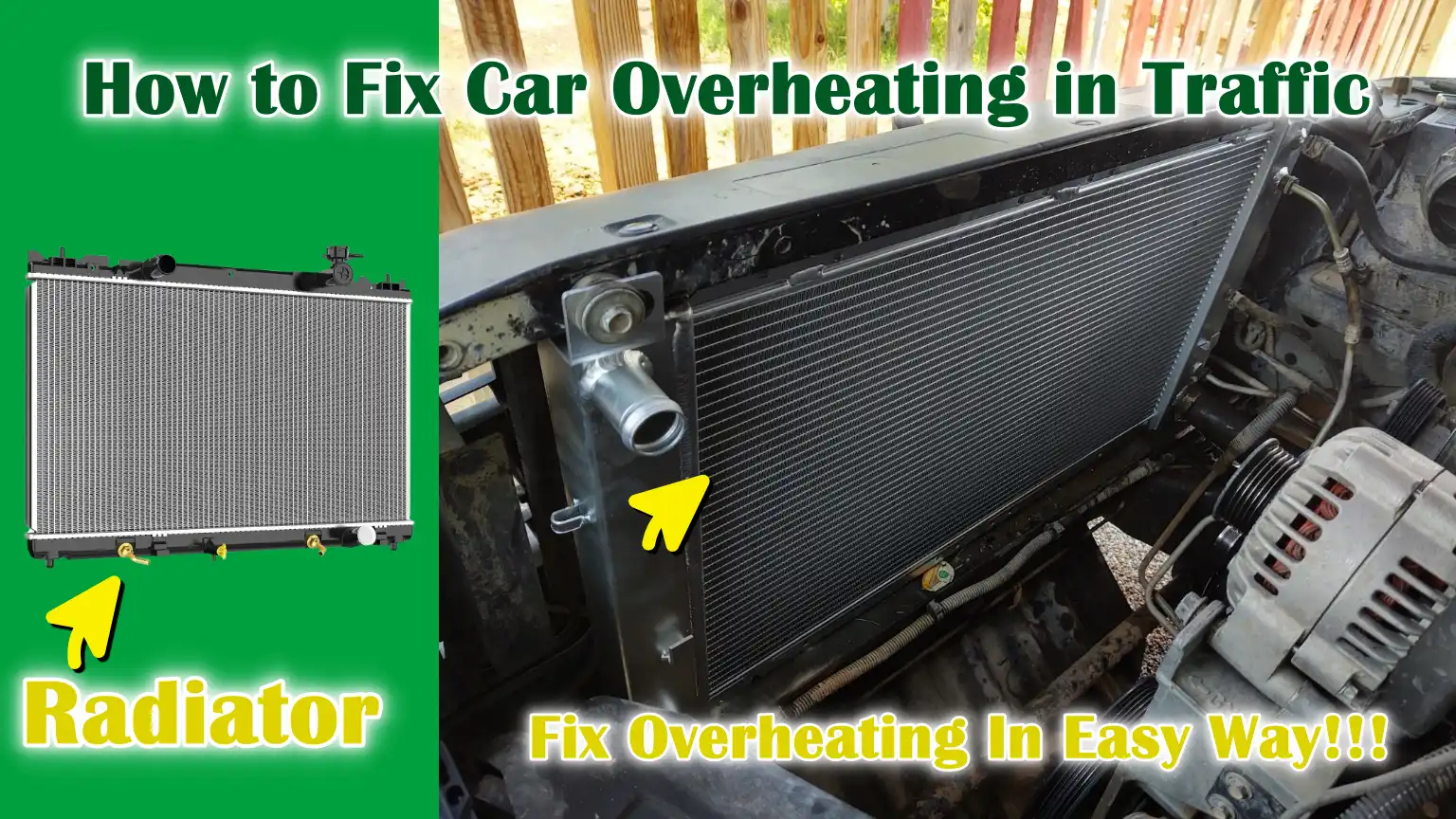
The car overheating in the traffic is literally common problem that most of the car owners has to face, specifically in hot weather and crowded city conditions, where vehicles actually spend long periods idling or moving slowly.
It is true that whenever a car is in motion at the higher speeds, then there’s natural flow of air that passes through the radiator and helps it to coll the engine in efficiency way, but the thing is worse in traffic, as this very airflow is badly reduced and as a result, the cooling system literally has to rely on the components such as: radiator fan, coolant circulation and thermostat to manage the heat.
So, if these parts are not working properly and having issues with the vehicle such as: low coolant levels, faulty fan or a blocked radiator: then the engine temperature can rise up in quick way.
As, modern engines are designed to operate within a safe temperature range around 90°C to 105°C, but even with a small imbalance in the cooling system can push the temperatures beyond the safe limits.
That’s why, in this guide you’ll learn How to Fix Car Overheating in Traffic, so that you can avoid complete engine failure and have cooling effect with simple maintenance steps that you’ll learn ahead in this guide.
Now, Let’s Understand About Car Overheating
A car overheats when the engine generates more heat than its cooling system can handle, causing the temperature to rise above a safe limit.
Every engine naturally generates heat during the combustion process; however, it is designed to operate within a controlled temperature range to ensure that all components function smoothly and efficiently.
When this balance is disrupted, even for a short period, the engine’s internal components can expand, wear out rapidly, or sustain damage.
Understanding the mechanics of overheating is crucial, as it helps drivers recognize early warning signs, take immediate corrective action and avoid severe mechanical failures that can be costly to repair.
1. What Does “Overheating” Mean?
Overheating signifies that the engine’s temperature has risen above its normal operating level and is no longer being effectively regulated by the cooling system.
In most cars, the normal engine operating temperature typically falls between 90°C and 105°C, a range that promotes efficient fuel combustion and ensures the smooth operation of engine components.
When the temperature exceeds this range, particularly above 110°C, it becomes dangerous; engine components such as pistons, gaskets and cylinder heads begin to overheat and lose their structural integrity.
This can lead to serious issues, including engine knocking, boiling coolant, or even complete engine failure.
Overheating does not always occur suddenly; sometimes it develops gradually, stemming from minor issues such as low coolant levels or improper coolant circulation.
Therefore, it is crucial to keep an eye on the temperature gauge and pay attention to warning signs before the problem becomes severe.
2. How the Engine Cooling System Works
The engine cooling system is designed to regulate heat by continuously extracting excess thermal energy from the engine and dissipating it into the air.
Coolant, a specialized fluid mixture, circulates within the engine and absorbs the heat generated during the combustion process.
This heated coolant then flows into the radiator, where it passes through a series of thin tubes; as air flows over these tubes, the coolant releases its heat into the surrounding environment.
The radiator fan plays a critical role, particularly at low speeds; when the natural airflow is insufficient, the fan actively draws air through the radiator.
The thermostat acts as a valve that regulates the flow of coolant, ensuring that the engine warms up quickly but does not overheat.
Together, all these components form a continuous cycle that maintains a stable engine temperature.
If any part of this system malfunctions such as: a blockage in the coolant flow or a fan failure, heat cannot be dissipated effectively, causing the engine temperature to rise rapidly.
3. Why Do Overheating Issues Become More Severe in Traffic?
The likelihood of engine overheating increases significantly in traffic conditions because the cooling system becomes less effective, while the engine continues to generate heat continuously.
At higher speeds, the natural airflow passing through the radiator aids in dissipating heat; however, in slow-moving or stationary traffic, this airflow is drastically reduced.
Consequently, the radiator fan must handle the majority of the cooling workload; if the fan is weak or defective, the engine temperature can rise rapidly.
Frequent stopping and starting places immense strain on the engine, as it continues to run continuously without significant cooling assistance.
Furthermore, keeping the vehicle running in a stationary position for extended periods, a practice known as ‘idling’, means that fuel is still being consumed and heat is still being generated, yet there is no vehicle movement to aid the cooling system.
This combination of continuous heat generation and reduced cooling efficiency makes traffic one of the most common scenarios where overheating issues arise, particularly when the cooling system is not operating at peak efficiency.
Know, Common Causes of Car Overheating in Traffic
Car overheating in traffic typically occurs because one or more components of the cooling system are not functioning correctly, while the engine continues to generate heat continuously.
Traffic creates a challenging scenario where cooling efficiency is already compromised; consequently, even a minor malfunction can quickly escalate into a major problem.
Understanding the most common causes helps drivers identify the issue early and take appropriate measures before significant damage is inflicted upon the engine.
1. Low Coolant Levels or Leaks
Coolant is the primary fluid responsible for absorbing heat from the engine and dissipating it; therefore, when its level drops, the cooling system is unable to perform its function effectively.
Coolant loss can result from leaks in hoses, a faulty radiator, a loose cap, or worn-out seals.
In some instances, if there is an internal engine issue such as: a blown gasket, the coolant may evaporate or burn off.
If you pay close attention, signs of a coolant leak are often easily identifiable such as: a puddle of colored fluid beneath the car, a sweet scent emanating from the engine compartment, or the illumination of the low-coolant warning light on the dashboard.
When coolant levels drop too low, heat accumulates rapidly, particularly in traffic, and the engine temperature can skyrocket within just a few minutes.
2. Radiator Fan Malfunction
The radiator fan plays a crucial role in traffic, as it compensates for the lack of natural airflow that typically cools the radiator when the car is traveling at higher speeds.
In slow-moving traffic or when the vehicle is stationary, the fan draws air through the radiator to facilitate the efficient extraction of heat from the coolant.
If the cooling fan is not functioning correctly due to electrical issues, a faulty motor, or a defective sensor, the cooling system loses its primary source of airflow.
Common symptoms of a malfunctioning fan include: the engine overheating only at low speeds or while the vehicle is stationary, the fan failing to activate when the engine heats up, or strange noises emanating from the fan assembly.
Without a properly functioning fan, the engine can overheat rapidly in traffic, even if all other components are working perfectly.
3. Clogged or Dirty Radiator
The radiator must remain clean, both internally and externally, to facilitate efficient heat exchange; however, over time, it can become clogged externally with dirt, dust, insects, or debris and internally with rust or sludge.
External obstructions prevent air from passing through the radiator fins, thereby reducing its ability to dissipate heat into the surrounding air.
Internal obstructions impede the flow of coolant, meaning that hot coolant cannot circulate freely or cool down effectively.
This dual issue renders the radiator less efficient, particularly in traffic, where cooling relies heavily on proper airflow and circulation.
Consequently, even a slightly clogged radiator can cause a significant spike in engine temperature during stop-and-go traffic.
4. Faulty Thermostat
The thermostat is a small yet critical component that regulates the flow of coolant between the engine and the radiator.
It remains closed when the engine is cold to allow the engine to warm up quickly; once the engine reaches its normal operating temperature, the thermostat opens to facilitate coolant circulation.
If the thermostat becomes stuck in the closed position, coolant cannot reach the radiator and heat remains trapped within the engine.
This causes the engine to overheat very rapidly, particularly in traffic situations where cooling efficiency is already compromised.
Symptoms of a faulty thermostat include a sudden spike in temperature, fluctuations in temperature readings, or the engine overheating almost immediately after starting.
As the thermostat regulates the entire flow of coolant, even a minor malfunction within it can have a significant impact on the engine’s temperature.
5. Faulty Water Pump
The water pump is responsible for continuously circulating coolant between the engine and the radiator, making it a critical component of the cooling system.
If the water pump fails, coolant circulation slows down or ceases entirely, leading to a rapid buildup of heat within the engine.
A water pump can fail due to worn bearings, leaks, or a broken impeller.
Common warning signs include strange grinding or whistling noises emanating from the front of the engine, visible coolant leaks around the pump, or the engine consistently overheating despite the coolant level being adequate.
In traffic, where continuous cooling is essential, a weak or faulty water pump can cause temperatures to rise rapidly, potentially leading to severe engine damage if left unaddressed.
6. Engine Oil-Related Issues
Engine oil not only lubricates moving parts but also helps reduce heat by minimizing friction within the engine.
When the oil level drops or the oil becomes old and dirty, friction between engine components increases, generating excessive heat.
This additional heat places greater strain on the cooling system, particularly in traffic, where the engine is already under stress.
Dirty oil also loses its ability to flow freely and dissipate heat effectively.
Over time, this can cause the engine to run hotter than normal, thereby increasing the risk of overheating.
Keeping the engine oil clean and at the proper level is a simple yet crucial step in maintaining the engine’s correct operating temperature.
7. The Burden of Air Conditioning
Using the air conditioning system places an additional load on the engine, as extra power is required to drive the compressor.
In traffic, where the engine is already working harder due to idling and frequent stopping, this additional load can significantly increase the amount of heat generated.
Furthermore, reduced airflow means the cooling system must work even harder to dissipate this excess heat.
In some instances, engaging the air conditioner can cause the engine temperature to rise significantly, specially if the cooling system is not in optimal condition.
Although modern vehicles are designed to withstand the demands of AC usage, a compromised cooling system may still struggle under this added pressure, increasing the likelihood of overheating in slow-moving traffic.
Know, Warning Signs of Car Overheating
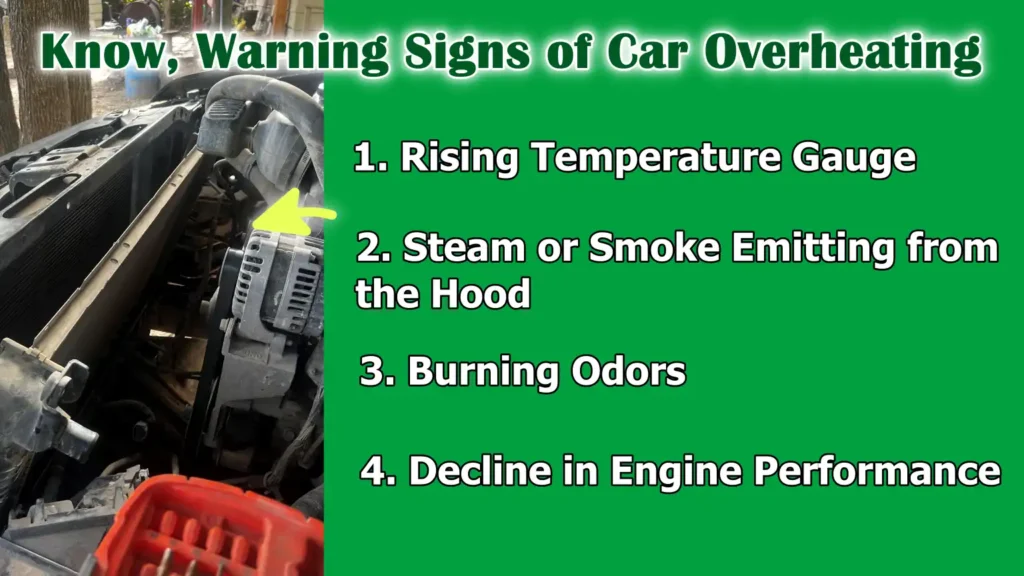
Car overheating rarely occurs without warning; recognizing these signs in a timely manner can prevent serious damage to the engine.
Engines are designed to operate within a specific temperature range and when they begin to exceed that limit, the vehicle typically provides clear indications through gauges, odors, sounds, or visible changes.
By recognizing these signs while driving, specially in traffic, you can take immediate action before the problem escalates.
Ignoring early warnings can lead to increased repair costs, whereas paying attention to them can save both time and money.
1. Rising Temperature Gauge
The temperature gauge located on your dashboard is one of the most critical indicators of your engine’s health, directly reflecting how hot the engine is running.
Under normal operating conditions, the needle typically rests in the middle of the gauge, generally indicating a temperature between approximately 90°C and 105°C.
When the needle begins to rise above this normal range and approaches the red zone, or “danger zone”, it signifies that the engine is overheating and the cooling system is struggling to regulate the temperature.
A gradual, steady rise may indicate an emerging issue such as: low coolant levels or reduced airflow, while a sudden, rapid spike could point to a more serious problem, such as a stuck thermostat or a blockage in the coolant flow.
By regularly monitoring the gauge while driving, particularly in heavy traffic, you can detect potential overheating issues early on and take the necessary steps to prevent damage before it occurs.
2. Steam or Smoke Emitting from the Hood
Observing steam or smoke rising from beneath the hood is a strong and clear indication that the engine is overheating.
In most cases, what appears to be smoke is actually steam; this steam forms when excessive heat causes the coolant to boil and escape from the cooling system.
This typically occurs when coolant leaks onto hot engine components, or when the radiator or hoses are unable to withstand the increased pressure.
The appearance of steam signals that the engine temperature has already reached a critical level and immediate action is required to prevent further damage.
Continuing to drive in this situation can lead to severe engine problems; therefore, it is essential that you pull over to a safe location, shut off the engine and allow it to cool down before attempting to inspect anything.
3. Burning Odors
Detecting a burning odor while driving is another crucial warning sign indicating a malfunction within the engine or one of its components.
Different types of odors may point to different specific issues, but generally, they are all associated with excessive heat or overheating.
A sweet-smelling odor often signals a coolant leak, while a sharp or oily smell may result from burning engine oil, typically caused by a leak or an overheating component.
In some instances, a smell resembling burning rubber may arise if belts or hoses are overheating or slipping.
These odors occur because fluids or materials become excessively hot and begin to degrade under high temperatures.
Promptly identifying unusual odors and locating their source can help prevent the problem from escalating and avoid more serious damage.
4. Decline in Engine Performance
When an engine overheats, its performance often deteriorates because the elevated temperature adversely affects its operational efficiency.
You may notice issues such as a loss of power, sluggish acceleration, or a lack of proper responsiveness when pressing the accelerator.
In some instances, the engine may emit unusual noises such as: knocking, ticking, or buzzing sounds, which could indicate that a specific component is overheating or suffering from a lack of lubrication.
In modern vehicles, excessive heat can even cause the engine to enter a “protective mode,” thereby reducing its power output to prevent damage.
These changes in performance serve as clear indicators that the engine is under strain and is not functioning normally.
Paying attention to these warning signs and taking immediate action can help safeguard the engine against long-term damage and ensure the safe operation of the vehicle.
What to Do Immediately When Your Car Overheats in Traffic
When your car begins to overheat in traffic, taking the right steps immediately can prevent severe engine damage and ensure your safety.
Overheating indicates that the engine is under excessive thermal stress; continuing to drive without taking action can cause engine components to warp or lead to total engine failure.
The primary objective is to dissipate heat, reduce the load on the engine and allow the cooling system an opportunity to recover.
Whatever steps you take, their goal should be to safely bring the temperature under control while avoiding hazards such as burns or sudden mechanical breakdowns.
Knowing exactly what to do in such situations allows you to remain calm and handle the situation effectively.
1. Turn Off the AC and Turn On the Heater
Immediately turning off the AC reduces the additional load on the engine, as the AC compressor requires a significant amount of power to operate.
Taking just this single step can help slightly reduce the heat being generated within the engine.
Turning on the heater might go against common sense, specially in hot weather, but it works by drawing heat away from the engine and transferring it into the car’s cabin, thereby helping the engine cool down.
The heater system utilizes the hot coolant circulating through the engine; therefore, by turning it on, you are effectively extracting heat from the engine and releasing it into the vehicle’s interior.
This can help gradually lower the engine temperature and provide some relief to the cooling system.
2. Shift the Gear to Neutral or Park
Shifting the car into Neutral or Park mode reduces the mechanical load on the engine while it is running.
In traffic, when the car is engaged in gear, the engine has to work harder to propel the vehicle forward, even if the car is moving at a very slow speed.
Shifting into Neutral or Park mode allows the engine to continue running without driving the vehicle forward; this reduces the load on the engine and generates less heat.
This simple step can help stabilize the temperature slightly and prevent it from rising too rapidly while you prepare to pull the vehicle over to a safe location.
3. Pull Over to a Safe Location
If the temperature continues to rise or reaches a dangerously high level, the safest course of action is to pull the vehicle over to a safe spot on the side of the road as soon as possible.
Choose a safe location away from traffic such as: a road shoulder or a parking area, and avoid stopping in any spot that could pose a hazard to you or other drivers.
Gradually reducing your speed and avoiding sudden braking helps prevent placing excessive strain on the engine.
Once you have safely come to a stop, you can focus on allowing the engine to cool down and diagnosing the problem, without the risk of driving in an unsafe condition.
4. Turn Off the Engine
After stopping the vehicle, turning off the engine is one of the most crucial steps to prevent further heat accumulation.
When the engine is running, it continuously generates heat, even if the vehicle is stationary.
Shutting it off halts the combustion process, allowing the temperature to begin gradually decreasing.
In some cases, allowing the engine to idle for a short period before turning it off can help stabilize the temperature; however, if it is already overheating severely, shutting it off immediately is the safer option.
This measure protects the engine’s internal components from potential damage caused by excessive heat.
5. Wait Before Opening the Hood
It is crucial to wait before opening the hood, as the engine and cooling system may be extremely hot and under high pressure.
Opening the hood too soon exposes you to the risk of contact with hot steam or boiling coolant, which could result in severe burns.
Allowing sufficient time for the engine to cool down safely reduces the pressure within the cooling system.
Once the temperature has dropped and conditions are safe, you can carefully open the hood to inspect the situation.
Exercising patience at this stage is vital for your safety.
6. Check the Coolant Level – After Cooling
Once the engine has completely cooled down, checking the coolant level can help you identify one of the most common causes of overheating.
The coolant reservoir typically features markings indicating the correct level, making it easy to determine whether the coolant is low.
If the level drops below the minimum mark, it may indicate a leak in the system or a shortage of coolant.
Never open the radiator cap while the engine is hot, as pressurized coolant can spray out dangerously.
If necessary, you may carefully top up the coolant after the engine has cooled down; however, it is also essential to determine why the coolant level dropped in the first place to prevent the problem from recurring.
How to Fix Car Overheating in Traffic – Efficient Measures for Overheating in Traffic
Addressing the issue of a car overheating in traffic requires a clear and practical approach, as this problem often stems from malfunctions within the cooling system or the engine’s support systems.
The objective of each measure should be to effectively manage heat, enhance coolant circulation and alleviate unnecessary strain on the engine.
Once these issues are properly resolved, the engine can return to its normal operating temperature and function safely, even in slow-moving traffic.
Understanding these measures step-by-step not only helps drivers resolve the immediate problem but also enables them to prevent its recurrence.
1. Refill or Top Up the Coolant
Coolant is essential for absorbing and dissipating heat from the engine; therefore, maintaining the correct coolant level is one of the most critical steps in resolving overheating issues.
It is imperative to use the specific type of coolant recommended by the manufacturer, as different engines require specific formulations to ensure optimal performance and protection.
Coolant typically consists of a mixture of antifreeze and water, designed to withstand high temperatures without boiling.
Before refilling the coolant, it is crucial to allow the engine to cool down completely to eliminate the risk of burns caused by hot fluids or system pressure.
The coolant reservoir should be inspected and the fluid level brought up to the recommended mark.
Properly refilling the coolant ensures that the cooling system can effectively circulate the fluid and maintain a stable engine temperature.
2. Repair Coolant Leaks
Coolant leakage is a common cause of overheating, as it reduces the volume of fluid available to dissipate heat from the engine.
Identifying the source of the leak, whether it is a cracked hose, a loose connection, or a faulty radiator, is crucial.
In heavy traffic, where the engine relies entirely on its cooling system to properly regulate its temperature, even a minor leak can lead to a major overheating problem.
Temporary Measures
In emergency situations, when immediate repairs are not feasible, temporary measures can prove helpful.
Sealants can be added to the cooling system to plug small leaks and in some cases, fluid loss can be minimized by tightening or patching damaged hoses.
These solutions are not permanent fixes; however, they can help you reach a safe location or a repair shop without causing further damage to the engine.
Permanent Repairs
Permanent repairs involve replacing defective components, such as worn-out hoses, faulty clamps, or a leaking radiator.
A properly repaired cooling system ensures that coolant does not leak and circulates without interruption.
It is essential to permanently fix any leaks, as recurring coolant loss will cause the engine to overheat repeatedly, potentially leading to severe engine damage in the long run.
3. Repair or Replace the Radiator Fan
The radiator fan plays a critical role in traffic situations, as it generates airflow when the vehicle is not moving fast enough to benefit from natural cooling.
To verify whether the fan is functioning correctly, it is essential to observe whether it activates as soon as the engine temperature rises.
If the fan fails to turn on, the issue may be electrical such as: a blown fuse, a faulty relay, or a defective sensor, or it could stem from a mechanical malfunction within the fan motor itself.
Repairing or replacing the defective component restores airflow through the radiator, thereby facilitating efficient heat dissipation and preventing sudden temperature spikes when the vehicle is stationary or traveling at low speeds.
4. Cleaning or Replacing the Radiator
A clean radiator is crucial for effectively dissipating heat; if it becomes clogged, its performance can deteriorate significantly.
External cleaning involves removing dirt, dust and debris from the radiator fins to ensure unobstructed airflow.
Internal cleaning (flushing) eliminates rust, scale and sludge that accumulate over time and impede the flow of coolant.
If the radiator is severely clogged or damaged, replacement may be necessary to fully restore its cooling capacity.
Keeping the radiator clean ensures proper heat dissipation, particularly in traffic, where effective cooling is most critical.
5. Replacing a Faulty Thermostat
A defective thermostat can restrict coolant flow and cause the engine to overheat rapidly; therefore, replacing it is a critical repair.
This procedure involves locating the thermostat housing, removing the old thermostat and installing a new one that opens and closes at the correct temperature.
The thermostat must be installed correctly to ensure proper coolant circulation.
Once replaced, the cooling system can effectively regulate temperature, ensuring that the coolant flows at the appropriate time and that heat does not accumulate.
6. Water Pump Inspection and Replacement
The function of the water pump is to circulate coolant throughout the entire engine and radiator; any malfunction in this component can completely halt the cooling process.
Inspecting the water pump involves checking for symptoms such as coolant leaks near the pump, unusual noises, or improper coolant circulation.
If the pump is worn out or defective, replacing it is essential to restore proper flow.
A properly functioning water pump ensures the continuous dissipation of heat from the engine; this becomes even more critical when you are stuck in traffic, where constant cooling is required.
7. Engine Oil Replacement
Engine oil plays a vital role in reducing friction and regulating internal engine temperatures.
When the oil becomes dirty or its level drops, friction between moving parts increases, generating excessive heat.
Regularly changing the engine oil and maintaining the correct oil level facilitates smooth movement of engine components and prevents the accumulation of unnecessary heat.
Proper lubrication assists the cooling system by preventing undue strain on the engine, thereby reducing the likelihood of the engine overheating in traffic conditions.
How to Prevent & Maintain Car Overheating In Traffic
Preventing a car from overheating is far easier and less expensive than repairing it after overheating has occurred, specially in traffic, where the engine is already under significant strain.
A well-maintained cooling system can effectively regulate heat and keep the engine within a safe temperature range, even when the car is idling for extended periods or moving through slow-moving traffic.
Simple habits of regular inspection and maintenance help ensure that all components function correctly.
By adopting preventive measures, drivers can avoid sudden breakdowns, extend the lifespan of the engine and maintain consistent performance across all driving conditions.
1. Regular Coolant Checks
Regularly checking the coolant level is one of the simplest and most effective ways to prevent overheating.
To ensure that the coolant level is sufficient, it should be checked at least once every few weeks, or prior to embarking on a long journey.
The coolant reservoir typically features clear markings indicating whether the level is low or adequate.
If the level drops frequently, it may signal a hidden leak that requires immediate attention.
Maintaining the correct coolant level ensures that heat is properly absorbed from the engine and dissipated, a critical factor, particularly in traffic, where cooling demands are heightened.
2. Regular Servicing of the Cooling System
The cooling system requires periodic servicing to remove accumulated debris and to preserve its operational efficiency over time.
After prolonged use, coolant can degrade and lose its effectiveness, thereby diminishing its ability to properly regulate temperature.
Flushing the cooling system at scheduled intervals, typically every one to two years, depending on the vehicle type, helps remove rust, debris and old fluid that could otherwise obstruct the flow of coolant.
Replacing old coolant with fresh fluid facilitates better heat exchange and protects internal components from corrosion.
Regular servicing keeps the entire system clean and ensures that it operates without obstruction.
3. Inspection of Hoses and Belts
Hoses and belts play a crucial role in the cooling system, as they transport coolant from one location to another and drive key components such as the water pump.
Over time, these components can deteriorate due to heat, pressure and constant use.
Regular inspections help identify early signs of damage such as: cracks, swelling, leaks, or loose connections, before they escalate into major problems.
Belts can also wear out, loosen, or begin to squeal, which can negatively impact the performance of the water pump.
Replacing worn-out hoses and belts before they fail helps prevent sudden coolant leaks or circulation issues that could lead to engine overheating.
4. Keep the Radiator Clean
A clean radiator is essential for proper heat exchange, as it allows air to pass through and dissipate heat from the coolant.
Over time, dirt, dust and debris can accumulate on the radiator’s surface, particularly if the vehicle is driven in dusty or polluted environments.
Regular cleaning maintains airflow and enhances cooling efficiency.
Gently washing the radiator section and removing any visible obstructions ensures that heat can be dissipated effectively.
Keeping the radiator clean is particularly crucial in traffic situations, where airflow is naturally reduced.
5. Monitor the Temperature Gauge
Regularly monitoring the temperature gauge while driving is a simple habit that can prevent major problems from developing.
This gauge provides immediate information regarding the engine’s temperature and helps in quickly detecting any abnormal fluctuations.
If the gauge needle begins to rise above its normal position, it signals a potential malfunction within the cooling system.
Early detection allows drivers to take necessary measures before the engine completely overheats.
Keeping an eye on the gauge, specially in heavy traffic or hot weather, helps safeguard the engine and prevents sudden breakdowns.
Read More:
- How to Fix Engine Overheating
- How to Fix Exhaust Leak
- How to Fix Steering Fluid Leak
- How to Replace Coolant Reservoir Cap
Efficient Driving Tips to Prevent Overheating in Traffic
Driving habits play a crucial role in preventing a vehicle from overheating, specially in heavy traffic, where the engine is already under significant strain.
Even if the cooling system is functioning correctly, improper driving techniques can exacerbate heat buildup and compromise cooling efficiency.
By adopting simple and smart driving practices, drivers can reduce the load on the engine, enhance airflow wherever possible and assist the cooling system in maintaining a safe operating temperature.
These habits are easy to adopt and can make a significant difference in keeping the engine cool during prolonged periods of being stuck in traffic.
As well as, there’s research clearly shows that engine cooling literally depends heavily on both coolant flow and airflow through the radiator, as in this traffic conditions: where airflow is actually reduced then the cooling system becomes less effective, which explains why cars are more likely to overheat, as when you understand this scientific principle that helps drivers realizes the importance of maintaining both of the coolant levels and airflow-related components such as: radiator fans.[¹]
1. Avoid Prolonged Idling
Prolonged idling refers to keeping the engine running for an extended period while the vehicle is stationary; this generates continuous heat without providing an effective means for its dissipation.
In traffic, this can cause the engine temperature to rise rapidly, as there is insufficient airflow to carry the heat away.
If you anticipate being stopped for more than a minute or two such as: at a long traffic light or in a severe traffic jam, shutting off the engine can prevent unnecessary heat accumulation.
When traffic begins to move again, it is better to restart the engine rather than letting it idle continuously; this allows the cooling system to recover and helps prevent the temperature from reaching dangerous levels.
2. Use the AC Wisely
Operating the air conditioning system places additional strain on the engine, as the compressor requires extra power to run.
In traffic, where the engine is already working harder and cooling efficiency is reduced, this added strain can become a contributing factor to overheating.
Using the AC judiciously means adjusting its usage according to the prevailing driving conditions.
For instance, if the temperature gauge begins to rise, reducing the AC’s intensity or switching it off for a short while can help alleviate the strain placed on the engine.
Striking the right balance between comfort and engine performance is crucial; by making minor adjustments, you can keep engine temperatures in check without having to fully compromise on your comfort.
3. Use the Correct Gear
Using the appropriate gear helps regulate the engine’s workload, which has a direct impact on heat generation.
In manual cars, selecting the right gear based on speed and traffic conditions prevents the engine from being subjected to unnecessary strain or operating at excessively high RPMs (revolutions per minute).
Driving in lower gears for extended periods can increase the engine load and generate excessive heat; conversely, utilizing higher gears whenever possible reduces the stress placed on the engine.
In automatic cars, accelerating gradually, rather than abruptly flooring the accelerator (throttle), facilitates smoother gear shifts within the transmission and minimizes unnecessary strain on the engine.
Using the correct gear ensures that the engine runs smoothly and avoids overheating, particularly in heavy traffic situations.
4. Maintain a Safe Distance
Maintaining a safe distance from the vehicle ahead makes for a smoother driving experience, thereby reducing the need for frequent stop-and-go maneuvers.
Repeated braking and acceleration increase the engine’s workload and generate additional heat, a phenomenon particularly evident in congested traffic, where such actions occur frequently.
Maintaining a consistent distance allows the driver to proceed smoothly, minimizes sudden fluctuations in speed and ensures a continuous flow of air through the radiator while the vehicle is in motion.
Smooth driving not only conserves fuel but also enables the cooling system to operate more effectively, thereby reducing the risk of engine overheating in slow-moving traffic.
When to Consult a Professional Mechanic?
While some overheating issues can be resolved through simple inspections and basic troubleshooting, there are situations where professional assessment becomes essential to prevent severe damage to the engine.
Modern engines are highly complex systems and overheating can sometimes stem from internal issues that are difficult to identify without the right tools and expertise.
If warning signs persist even after taking basic remedial measures, it is crucial to consult a qualified mechanic who can accurately diagnose the root cause of the problem and repair it.
Ignoring these situations can allow a minor issue to escalate into a major, costly repair.
1. Recurrent Overheating Issues
If your car continues to overheat repeatedly, even after you have topped up the coolant or inspected basic components, it is a clear indication of a deeper underlying issue within the cooling system or the engine itself.
Persistent overheating can be caused by internal blockages, failing sensors, or issues affecting coolant circulation, problems that are often overlooked during routine inspections.
Such issues frequently manifest in heavy traffic, where the engine is under sustained stress.
A mechanic can conduct a comprehensive inspection, including pressure testing and system diagnostics, to pinpoint and resolve the root cause of the problem before any permanent damage is inflicted upon the engine.
2. Coolant Depletion Without Visible Leaks
When coolant levels consistently drop, yet there are no visible signs of leakage beneath the vehicle or around the engine, it may signal an internal issue.
In some instances, a faulty gasket or a damaged component may be allowing coolant to leak internally into the engine, a condition that is difficult to detect without a professional inspection.
Such hidden leaks compromise the cooling system’s ability to regulate temperature, potentially leading to overheating issues without any obvious warning.
A mechanic can detect internal leaks using specialized tools and diagnostic procedures, ensuring that the problem is resolved before it escalates into something more serious.
3. Symptoms of Engine Damage
Certain specific symptoms clearly indicate that the engine has already sustained damage due to overheating; these warning signs should never be ignored.
When engine components expand excessively due to high temperatures or suffer from a lack of lubrication, the engine may emit a distinct ‘knocking’ sound.
White smoke billowing from the exhaust is often a sign that coolant has entered the combustion chamber and is burning along with the fuel, a serious mechanical issue.
Oil contamination, identified by engine oil appearing milky or discolored, occurs when coolant mixes with the engine oil; this diminishes the oil’s ability to lubricate and protect the engine’s internal components.
These signs point to severe internal engine damage and it is imperative that a mechanic addresses these issues immediately to prevent total engine failure and avoid costly repair expenses.
Estimated Cost of Fixing Overheating Problems
The cost of repairing a car’s overheating issues depends on how early the problem is detected and which components of the system have been affected.
Fixing minor issues within the cooling system is typically inexpensive; however, if overheating is ignored, it can cause severe damage to the engine, resulting in significantly higher repair costs.
Understanding the different tiers of repair expenses helps drivers take timely action and avoid unnecessary financial burdens.
Addressing problems promptly not only saves money but also safeguards the engine and extends the vehicle’s lifespan.
1. Cost of Minor Repairs
Minor overheating issues are typically linked to basic maintenance and are the least expensive to resolve.
These include topping up coolant levels, replacing small sections of worn-out hoses, or tightening loose connections.
Coolant itself is quite affordable and simple hose repairs do not require extensive labor.
These minor repairs are often completed quickly and restore the cooling system to normal operating condition.
It is crucial to address these issues immediately, as ignoring them can easily lead to major complications, particularly in heavy traffic situations, where the engine is under constant thermal stress.
2. Moderate-Level Repairs
Moderate-level repairs involve replacing or servicing key components of the cooling system that are directly responsible for regulating temperature.
If the thermostat is malfunctioning and obstructing the proper flow of coolant, it may need to be replaced; this is a common cause of overheating.
Cleaning or flushing the radiator is also a common repair procedure; This process removes accumulated internal debris and improves the system’s heat dissipation capacity.
These repairs are time-consuming and involve some technical work; however, compared to major engine repairs, their cost remains largely manageable.
Addressing these issues ensures that the cooling system functions correctly and significantly reduces the likelihood of recurring overheating problems.
3. Major Repairs
Major repairs become necessary when the engine has sustained significant damage due to overheating, or when a critical component has failed completely.
This may involve replacing the water pump, installing a new radiator, or repairing internal engine components such as: a blown gasket or warped parts.
These repairs are more expensive, as they require not only costly parts but also substantial labor.
In severe cases, prolonged overheating can inflict such extensive damage upon the engine that it may require a complete overhaul or even total replacement.
Timely repair of minor to moderate issues is the most effective way to avoid these costly repair procedures and ensure the continuous and reliable operation of the vehicle.
Conclusion – How to Fix Car Overheating in Traffic
So, the truth is: most of the time overheating problems starts with the small but becomes serious on if you ignore this.
In traffic conditions, airflow diminishes and heat begins to accumulate, meaning that minor issues such as: low coolant levels, a weak radiator fan, or stuck components, as it can quickly escalate into major problems.
The key to effectively resolving overheating issues lies in understanding how the cooling system operates and recognizing early warning signs before the situation becomes critical.
When drivers take immediate action such as: reducing the load on the engine, checking coolant levels and allowing the engine to cool down, they can prevent extensive damage and avoid costly repair bills.
Furthermore, long-term care is just as crucial as taking immediate action.
Regular maintenance such as: checking coolant levels, cleaning the radiator, inspecting hoses and monitoring the temperature gauge, ensures that the cooling system remains robust and reliable.
Simple driving habits such as: avoiding unnecessary idling and using the air conditioner judiciously, as it can make a significant difference in keeping engine temperatures under control.
Collectively, these small efforts reduce strain on the engine and enhance its overall performance, particularly in heavy traffic situations.
Ignoring an overheating engine can be one of the most costly mistakes a driver makes, as engine damage can occur far more rapidly than anticipated.
Issues such as warped engine components, blown gaskets, or degraded engine oil are often the direct result of prolonged exposure to excessive heat.
However, with the right information and timely action, the problem of engine overheating can be effectively managed, and even completely prevented.
Now, that’s it from this guide and you can comment for more info.
Frequently Asked Questions
Q1. If my car is overheating in traffic, can I continue driving it?
Answer: No, when your car is overheating specially in traffic, as it is not safe to continue driving it. When the engine temperature rises excessively, critical internal components can expand and deteriorate very rapidly. Driving for even a few more minutes can lead to severe issues, such as a blown gasket or complete engine failure. If you notice the temperature gauge rising, the best course of action is to slow down, find a safe spot and pull over immediately. Taking timely action can help you avoid very expensive repairs.
Q2. How long should I wait before restarting an overheated engine?
Answer: You should wait at least 20 to 30 minutes before restarting the engine, although the exact duration depends on how severely the engine overheated. The engine requires sufficient time to cool down completely so that the pressure within the cooling system can dissipate. Attempting to restart the engine too soon can generate even more heat and exacerbate the problem. Before attempting to restart the engine, it is always best to ensure that the temperature has dropped and that the engine feels cool to the touch.
Q3. Why does my car overheat only in traffic, but not on the highway?
Answer: This typically happens because your car relies on airflow to keep the engine cool. On the highway, air flows rapidly through the radiator, which helps dissipate heat. However, in traffic, the car moves slowly or remains stationary, significantly reducing airflow. In such situations, the radiator fan must handle the majority of the cooling workload. If the cooling fan is weak or not functioning correctly, the engine temperature will rise particularly when the vehicle is stuck in traffic, although it may remain at a normal level while driving at high speeds.
Q4. Does turning on the heater actually help cool down the engine?
Answer: Yes, turning on the heater can indeed help lower the engine temperature. The heater draws hot coolant from the engine and transfers that heat into the car’s cabin. This dissipates some of the engine’s heat, thereby helping to reduce its temperature slightly. While this might go against common sense specially in hot weather, as it proves to be a practical, effective and viable workaround when the engine begins to overheat.
Q5. Can a low engine oil level cause a car to overheat?
Answer: Yes, a low engine oil level or dirty oil can cause a car to overheat. Engine oil reduces friction between the engine’s moving parts; when the oil level is low, friction increases. This generates excessive heat within the engine. Furthermore, dirty oil loses its ability to effectively cool and lubricate engine components. Although a low oil level is not always the sole cause of overheating, it contributes to the overall heat buildup and can significantly exacerbate the problem particularly in heavy traffic conditions.
Q6. What are the most common causes of overheating in traffic?
Answer: The most common causes include low coolant levels, coolant leaks, a malfunctioning radiator fan, a clogged radiator, or a faulty thermostat. These issues become particularly apparent in traffic, where the engine runs continuously but lacks the necessary airflow to cool down effectively. Even minor issues such as: a clogged radiator or a weak cooling fan, as it can cause the vehicle to overheat rapidly while idling or driving at low speeds.
Q7. How can I tell if my radiator fan isn’t working?
Answer: If your car primarily overheats while idling or driving in slow-moving traffic, but runs fine at higher speeds, it is a sign that there is a fault with the radiator fan. You may also observe that the fan fails to switch on when the engine gets hot. In some cases, strange noises may emanate from the fan assembly, or there may be no sound at all. A mechanic can confirm this issue, but these signs are generally easy to recognize.
Q8. Is it safe to open the radiator cap when the engine is hot?
Answer: No, it is not safe to open the radiator cap when the engine is hot. The cooling system operates under extremely high pressure and opening the cap can cause hot coolant or steam to erupt violently, posing a risk of severe burns. Always wait until the engine has completely cooled down before attempting to open the radiator cap. Safety is paramount in such situations.
Q9. How often should I check my coolant level?
Answer: It is a good practice to check your coolant level at least once every two to three weeks, or before embarking on a long journey. Regular checks allow you to promptly detect any drop in the coolant level, which could indicate a leak or another internal issue. Maintaining the coolant at the correct level ensures that the engine remains within a safe operating temperature range.
References:
[1] A review on air flow and coolant flow circuit in vehicles’ cooling system
https://www.sciencedirect.com/science/article/abs/pii/S0017931012005297

Guys, I’m a car audio enthusiast and customization expert and I love clear sound and clean installation. Plus, I have spent years helping people build their dream audio setups. And whenever I’m working on cars, I probably listen to music and thinks about the next big upgrade.