 Skip to content
Written By: Don Dodi
Fact Checked By: Kristen Brown
Reviewed By: Diego Rosenberg
Whenever you hear something squeaky noises that comes from the suspension, then you should know that this is often a sign that your car’s most hardworking parts are wearing down and you need to do something to fix that.
And the suspension system is what actually connects your car’s body to its wheels: as it literally absorbs shocks, it keeps your tires firmly on the road and actually ensures that your every drive feels truly stable and controlled.
But over the period of time, the suspension components such as: Rubber Bushings, Ball Joints, Control Arms and Strut Mounts constantly move, flex and carry those heavy loads, that’s why because of the age, the rubber dries out, lubrication wears off and metallic parts start to rub together, which actually causes the squeaky or creaky noises you hear.
Even, studies from automotive maintenance experts show that the over 60% to 70% of the squeaky noises in vehicles actually comes because of worn or dry suspension bushings, while around 20% are caused by the loose bolts or corroded joints as well.
As well as, there are even environmental factors such as: rain, dirt, road salt and temperature changes that can accelerate the wear, breaks rubber and increases friction between parts.
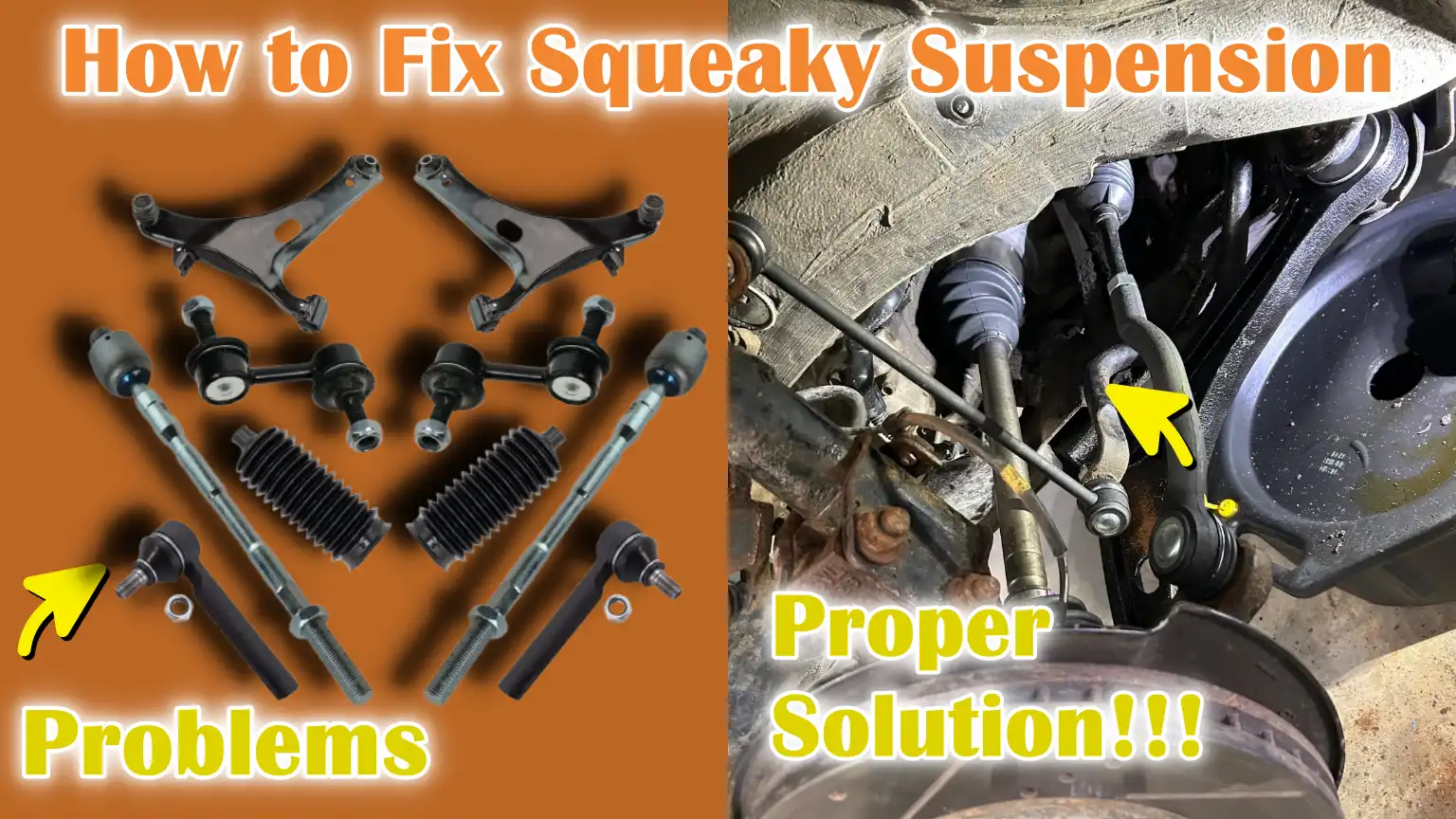
Which is why, you should know How to Fix Squeaky Suspension, so that you can easily fix them by cleaning, lubricating, tightening or replace the few small components if it is needed.
Let’s Understand Basic Causes of Suspension Noise

Suspension noise doesn’t just appear out of nowhere—it’s the result of friction, movement and wear and tear on the parts that constantly work together to keep your vehicle stable.
Every bump, turn and brake puts stress on dozens of suspension components made of rubber, metal and grease fittings.
Over time, these parts wear down, lose lubrication, or become loose, often resulting in creaking or rattling noises that drivers hear.
Understanding the exact causes of these noises is the first and most crucial step in fixing them and preventing more expensive damage in the future.
1. Normal Wear and Tear
As your car ages and accumulates mileage, suspension components naturally wear down.
Rubber bushings, joints and mounts gradually harden and crack due to heat, movement and age.
When this happens, they lose their ability to cushion metal parts, causing them to rub or bang against each other, resulting in creaking or rattling noises.
The constant flexing of control arms and sway bars also contributes to this wear and tear, specially in vehicles driven on rough or poorly maintained roads.
Regular inspection and timely replacement of worn parts can keep your suspension quiet and efficient.
2. Lack of Lubrication
One of the most common causes of creaking is dry metal-on-metal contact.
Suspension parts such as ball joints, control arm bushings and sway bar links rely on proper lubrication to function correctly.
When the grease inside these joints dries out or leaks, friction increases and metal surfaces begin to rub against each other, producing creaking or squeaking noises.
Using the correct type of lubricant—such as silicone or lithium-based grease—restores smooth movement and eliminates noise.
It’s crucial to avoid using petroleum-based oils on rubber parts, as they can cause damage or swelling.
3. Environmental Factors
The environment plays a significant role in the health of your suspension.
Dust, dirt, moisture and specially road salt can get into joints and bushings, degrading lubrication and accelerating the rusting process.
In cold weather, temperature fluctuations can cause rubber components to stiffen and crack, while in hot weather, heat can cause them to dry out more quickly.
Over time, these conditions create small gaps and friction points that result in creaking noises.
Keeping your undercarriage clean and applying a protective coating or lubricant can significantly mitigate the effects of these harsh environmental factors.
4. Worn Parts
Certain parts can wear out and cause creaking noises.
Ball joints, control arm bushings, sway bar links and shock absorber mounts are all common culprits.
Each of these parts serves a specific function: ball joints allow your wheels to pivot, bushings absorb vibrations, sway bar links maintain stability in corners and shock absorbers keep your ride smooth.
When any of these parts become worn, loose, or lose their protective grease, creaking noises can occur.
Replacing worn parts promptly not only eliminates the noise but also improves ride comfort and steering stability.
5. Loose Bolts or Mounts
Sometimes, the problem isn’t worn-out parts, but rather parts that aren’t properly tightened.
Suspension bolts, brackets and mounts should be securely fastened to prevent movement and noise.
Over time, driving vibrations can cause these fasteners to loosen slightly, creating gaps and allowing components to rub against each other, resulting in a creaking sound.
This problem is common after suspension repairs or upgrades when bolts aren’t torqued to the manufacturer’s specifications.
Checking and tightening all mounting points with a torque wrench will often quickly and safely resolve the creaking noise.
Tools
| Tool / Material | Purpose | Why It’s Important |
|---|---|---|
| Jack and Jack Stands | It is used to safely lift the car off the ground and keep it stable while working underneath. | The jack raises the vehicle and the jack stands secure it so it doesn’t fall – ensuring safety when inspecting or repairing the suspension. |
| Socket and Wrench Set | Helps you loosen and tighten nuts and bolts on suspension parts. | Suspension components are held together with bolts, which require the correct tools for safe removal and installation. |
| Lubricating Spray (Silicone or Lithium Grease) | Reduces friction and noise by allowing parts to move smoothly. | Silicone or white lithium grease prevents squeaking by coating rubber and metal parts without damaging them. |
| Torque Wrench | Tightens bolts to the correct pressure as determined by the manufacturer. | Prevents under-tightening (which causes creaking and movement) and over-tightening (which can damage parts). |
| Rubber-Safe Cleaner or Degreaser | Cleaning dirt, grease and old lubricant from suspension parts before applying new grease. | A clean surface allows the new lubrication to work effectively and prevents dirt from causing further wear or squeaking. |
| Replacement Bushings or Components (if necessary) | Used to replace worn or damaged suspension parts such as bushings, mounts or joints. | Old rubber or metal parts that are broken, rusted, or loose should be replaced to eliminate creaking and restore functionality. |
| Mechanic’s Stethoscope or Spray Bottle | Helps locate the exact source of the squeak by isolating the sound. | A stethoscope allows you to “hear” parts as they move and a spray bottle can be used to test areas by spraying water or lubricant. |
| Safety Gloves and Goggles | Protect your hands and eyes from dirt, grease and debris while you work. | Working under a vehicle can expose you to rust, dust and sharp edges – proper safety equipment prevents injury. |
How to Locate the Source of a Squeaking Noise – Easy Method
Identifying the exact source of a squeaking noise coming from the suspension is the first and most crucial step before attempting any repairs.
Because many parts move together, a noise originating in one area can sound like it’s coming from another.
A careful, step-by-step inspection will help you pinpoint the true cause, saving you time, effort and the expense of replacing unnecessary parts.
How to Listen and Identify
1. Driving Slowly Over Uneven Surfaces or Speed Bumps
Begin by driving your car slowly over small bumps, uneven roads, or speed bumps.
Keep your windows slightly open so you can clearly hear the suspension noises.
This will allow you to notice the tone, rhythm and consistency of the creaking sound.
If the sound occurs when the suspension compresses or rebounds, it indicates a moving part is involved, such as a shock mount, strut, or control arm bushing.
Paying attention to these moments will help you pinpoint the area that needs attention.
2. Locating the Source of the Sound
Note whether the creaking sound is coming from the front or rear of the car, or from a specific side.
Noises that occur during steering often point to a faulty ball joint, tie rod, or upper strut mount, while noises that occur during straight driving are often due to shocks, bushings, or sway bar links.
If the creaking occurs during braking, it may be related to suspension movement caused by weight transfer, particularly in the front-end components.
3. Noting When the Sound Occurs
Pay attention to when the creaking occurs – during braking, turning, or accelerating.
Each driving condition places different stresses on different suspension parts.
Creaking during acceleration might come from rear suspension mounts or bushings that flex due to torque, while creaking during braking might indicate flexing front control arm bushings or strut mounts.
By carefully noting both the timing and location of the sound, you can more accurately identify which suspension components might be the cause before performing a hands-on inspection.
How to Perform a Visual Inspection
1. Safely Lifting the Vehicle on Jack Stands
Before inspecting any suspension parts, it’s crucial to safely lift and properly support the car.
Use a reliable hydraulic jack to lift the vehicle and place sturdy jack stands under the manufacturer-specified lift points, which are typically near the edges of the frame or under the control arms.
Never rely solely on the jack to support the vehicle, as it can fail unexpectedly.
A stable lift provides ample space to comfortably and safely inspect the underside of your car.
With the suspension hanging freely, it’s often easier to spot worn or loose parts or to manipulate them by hand, helping to pinpoint the source of creaking noises.
2. Checking for Damaged, Dried, or Cracked Rubber Bushings
Once the vehicle is safely lifted, begin by inspecting all visible rubber components, such as control arm bushings, sway bar bushings, strut mounts and spring isolators.
These rubber parts are designed to absorb vibrations and prevent metal-to-metal contact, but over time, exposure to heat, friction and the elements can cause them to dry out, crack, or harden.
When bushings lose their flexibility, they can no longer effectively cushion movement, resulting in creaking and light knocking noises.
Gently pressing or twisting these parts can reveal hidden cracks or stiffness that may not be visible at first glance.
Any bushing showing signs of cracking, tearing, or shiny metal contact nearby may need replacement.
3. Inspecting for Rust or Corrosion Around Suspension Joints
After inspecting the rubber parts, carefully examine all metal joints and mounting points for signs of rust, corrosion, or wear.
Moisture, road salt and dirt can cause corrosion or seizing in metal components such as ball joints, control arm bolts and sway bar links.
When rust forms, it hinders smooth movement and increases friction, leading to creaking noises while driving.
Rust can also damage the protective coating on these parts, weakening them over time.
Look for orange-brown discoloration, flaky metal, or grease leaking from sealed joints.
Cleaning off surface rust and applying a rust inhibitor or lubricant may help, but severely corroded parts should be replaced to maintain both safety and ride comfort.
How to Perform Bounce Test
1. Pressing Down on Each Corner of the Car
The bounce test is a simple yet effective way to check how well your suspension is working and to pinpoint the source of any noises.
Park the car on a flat, level surface, firmly press down on one corner of the vehicle and quickly release.
The car should bounce once or twice and then return to its normal height.
If it continues to bounce multiple times, it means the shock absorber or strut at that corner is worn out and no longer properly controlling the movement.
Perform this test on all four corners of the car.
This helps you compare how each suspension unit reacts.
A stiff or creaky bounce in one area often indicates worn bushings, dried-out mounts, or friction between metal parts.
2. Listening for Creaking Noises to Pinpoint the Affected Suspension Area
While performing the bounce test, listen carefully for any creaking, squeaking, or rubbing noises as the suspension moves.
Try to determine where the sound is coming from – front, back, left, or right.
Creaking from the front often originates from the strut mounts, control arm bushings, or sway bar links, while noises from the rear may be due to coil spring seats, shock mounts, or trailing arm bushings.
The noises produced during the bounce test provide crucial clues about which part of the suspension needs attention.
If you only hear creaking on one side, it’s likely a localized problem such as a dry bushing or a loose bolt.
However, if there is creaking on both sides, it could indicate that multiple components are worn or lacking lubrication.
Listening carefully during this test helps you identify the problem before performing a more detailed inspection or repair.
How to Check for Loose Components
1. Tighten any loose nuts, bolts, or brackets.
Loose suspension components are one of the most common causes of squeaks and rattles.
Over time, constant vibrations from driving, bumps and potholes can cause bolts, nuts and mounting brackets to loosen slightly.
Even a small amount of looseness can allow metal parts to shift or rub against each other, resulting in a loud squeak or a subtle creaking sound.
To fix this, use a socket and wrench set to check all visible fasteners connecting the control arms, sway bar, shocks and struts.
It’s crucial to tighten them according to the manufacturer’s torque specifications, ensuring they are secure without being overtightened.
Overtightening can damage bushings or strip threads, while undertightening can lead to movement and further wear and tear.
A properly tightened suspension system not only eliminates squeaks but also restores stability, handling and overall safety.
2. Checking for looseness in strut mounts, sway bar links and control arms
After tightening the bolts, check all the main moving parts of the suspension for any looseness or excessive play.
Start with the strut mounts, which connect the suspension to the car’s body.
Worn or damaged mounts can produce creaking or knocking sounds over bumps or when turning.
Next, check the sway bar links, which stabilize the car during cornering.
If these links are loose or their internal ball joints are worn, they will often creak when the vehicle shifts from side to side.
Finally, inspect the control arms, which keep the wheels aligned and absorb most of the forces from the road.
You can check for looseness by gently wiggling these parts by hand or using a pry bar for light pressure.
Any noticeable movement, creaking noises, or visible wear and tear on the bushings and joints means that the part may need to be replaced.
Identifying and addressing looseness in these components helps eliminate squeaks and prevents long-term damage to the suspension.
Read More:
How to Fix Suspension Squeaks – Common Solutions
Addressing suspension squeaks begins with understanding that every noise is caused by friction, movement, or wear and tear in one or more components of the system.
Once the source of the squeak is identified, the next step is to apply the correct solution to restore quiet and smooth operation.
In most cases, suspension squeaks are caused by dry joints, worn bushings, or loose fittings—all of which can be remedied with simple maintenance or parts replacement.
The right fix not only eliminates the noise but also improves your vehicle’s overall handling, comfort and safety.
Addressing squeaks promptly can prevent further damage to major components such as shocks, struts and control arms, which can be costly if neglected.
The following section details the most effective methods used by professionals and car owners to eliminate suspension squeaks for good.
How to Lubricate Suspension Components
1. Applying silicone or lithium grease to bushings, control arms, or sway bar links
Lubrication is the easiest and most effective way to prevent suspension noise and extend the life of moving parts.
Suspension components such as bushings, control arms and sway bar links are constantly in motion, twisting and flexing every time the car turns, brakes, or goes over a bump.
Over time, the original factory grease inside these parts can dry out or wash away due to heat, friction, water, or road salt.
When this happens, the surfaces begin to rub directly against each other, causing squeaking or creaking noises.
Applying a high-quality silicone or white lithium grease creates a thin layer between the metal and rubber parts, reducing friction and wear and allowing for smooth movement.
Silicone grease is specially useful for rubber components as it does not cause the rubber to swell, crack, or soften.
White lithium grease, on the other hand, is more suitable for metal-to-metal areas, such as control arm pivots or sway bar link joints, where a more robust protection is needed.
For best results, the parts should first be cleaned to remove any old, dirty grease or debris and then a fresh layer of grease should be applied.
Proper lubrication not only eliminates noise but also creates a water-resistant barrier that prevents rust, corrosion and further deterioration.
2. Avoid using petroleum-based lubricants on rubber components
While lubrication is essential, using the wrong type of grease can do more harm than good.
Petroleum-based lubricants, such as motor oil or standard multi-purpose grease, should never be used on rubber suspension parts.
These products can chemically react with the rubber, causing it to swell, soften, or deteriorate over time.
Damaged bushings lose their flexibility and can even crack, leading to increased squeaking and poor suspension performance.
Instead, always use lubricants specifically labeled as rubber-safe or silicone-based.
They protect the rubber and keep it flexible and resistant to high temperatures.
Using the correct lubricant not only ensures quieter operation for longer but also helps maintain the integrity and functionality of the entire suspension system.
How to Replace Worn Bushings
1. Replacing cracked, dried out, or deteriorated rubber bushings
Rubber bushings are one of the most crucial components of your suspension system as they absorb vibrations, dampen shocks and prevent metal parts from coming into direct contact with each other.
Over time, these bushings endure constant stress from potholes, cornering forces and road heat, causing them to dry out, crack, or lose their elasticity.
Once the rubber hardens or breaks down, it can no longer properly dampen movement, allowing metal parts like control arms, sway bars, or strut mounts to rub against their mounts, resulting in squeaking, rattling and even knocking noises.
Replacing these worn bushings restores the proper gap and flexibility between components, reducing noise and improving ride comfort.
When inspecting your suspension, look for visible cracks, gaps, or shiny spots where metal-to-metal contact has occurred – these are clear indicators of bushing failure.
Proper installation of new rubber bushings, ideally with a small amount of rubber-safe lubricant, ensures a tight fit and long-lasting performance.
Regularly replacing old or worn bushings not only eliminates squeaking noises but also improves steering response and overall stability on the road.
2. Considering Polyurethane Bushings for Long-Lasting Performance
While standard rubber bushings are designed for comfort and quiet operation, polyurethane bushings offer a more durable option for those seeking longer-lasting performance.
Polyurethane is a much stronger material that withstands heat, oil and road chemicals better than rubber, making it ideal for vehicles driven in harsh conditions or for performance applications.
Unlike rubber, polyurethane bushings do not easily dry out or crack and they maintain their shape under pressure for many years.
However, because polyurethane is harder than rubber, it can sometimes transmit slightly more vibration into the cabin, although this is often minimal when properly installed with the correct lubrication.
The main advantage is longevity – polyurethane bushings can last many times longer than rubber bushings and improve suspension accuracy by reducing unwanted flex in the system.
For best results, use a special silicone-based grease during installation, as polyurethane bushings can squeak if installed dry.
Choosing polyurethane not only provides a long-lasting solution to squeaky suspension problems but also helps maintain consistent handling and control throughout the vehicle’s lifespan.
How to Inspect and Replace Ball Joints or Tie Rod Ends
1. Checking for Looseness or Wear in Ball Joints and Tie Rod Ends
Ball joints and tie rod ends are crucial components of a car’s suspension and steering system.
They allow the wheels to move freely up and down, as well as enabling them to turn left and right.
Over time, these joints are subjected to constant stress from potholes, rough roads and steering movements, which can cause the internal bearings or sockets to wear out.
When this happens, you may hear creaking, grinding, or knocking noises, specially when turning or driving over uneven surfaces.
An easy way to check for wear is to safely lift the car and wiggle the wheel from side to side or up and down – if there is any looseness or play, it often indicates worn ball joints or tie rod ends.
You may also experience vibrations in the steering wheel or uneven tire wear if these parts are no longer holding the wheels securely.
Maintaining these parts in good condition is essential as they directly impact handling, braking and overall safety.
Detecting and replacing worn joints early can prevent more serious damage to the suspension and provide smoother, more precise steering control.
2. Replacing Faulty Ball Joints or Tie Rod Ends
When a ball joint or tie rod end becomes worn or noisy, replacing it is the safest and most effective solution.
Continuing to drive with a faulty joint can lead to the wheel becoming dislodged or even separating from its mount, posing a serious safety hazard.
Replacing these parts involves removing the old joint from its mounting point, cleaning the area and securely fitting the new joint with the correct torque specifications.
If the new joints have grease fittings, it’s also essential to grease them, as proper lubrication prevents friction and extends their lifespan.
After replacement, a wheel alignment should always be performed to ensure the suspension geometry is correctly set.
Using high-quality or OEM-grade parts is recommended, as cheaper joints tend to wear out or loosen quickly.
Replacing worn ball joints and tie rod ends not only eliminates creaking and grinding noises but also restores precise steering feel, improves driving stability and ensures the suspension will function safely for years to come.
How to Inspect and Replace Shocks or Struts
1. Identifying the Squeaking Noise Coming from Faulty Shocks or Struts
Shocks and struts are crucial components of a car’s suspension system, controlling how the vehicle absorbs bumps, maintains traction and provides a stable ride.
When these parts begin to fail, one of the first signs drivers may notice is a squeaking or creaking noise—specially when driving over rough roads or speed bumps.
This noise often originates from the upper mounting points or piston shaft of the shock absorber.
Over time, the internal seals can dry out or break, leading to hydraulic fluid leaks, reduced damping capacity and metal parts rubbing against each other, causing the squeaking sound.
A worn upper strut mount or rubber bushing can also produce a similar noise when the suspension compresses.
Another common symptom is the car feeling bouncy, unstable, or dipping forward when braking.
A visual inspection may reveal fluid leaks around the shock body, confirming the need for replacement.
Recognizing these signs early can prevent uneven tire wear, poor handling and increased stress on other suspension components.
2. Replacing Shocks or Struts in Pairs for Balanced Handling
When replacing shocks or struts, it’s essential to replace them in pairs—either both front or both rear—rather than individually.
This ensures that both sides of the vehicle respond similarly to bumps, turns and braking forces.
Installing only one new shock can create an imbalance, leading to uneven ride height, unstable handling and increased stress on other suspension components.
The replacement process involves safely lifting the vehicle, removing the old unit from its mounting bolts and installing the new unit according to the manufacturer’s torque specifications.
It’s also a good idea to replace the upper mount and rubber bushings at the same time, as these parts often wear out along with the shock absorber.
After installation, a wheel alignment is recommended to ensure proper suspension geometry and tire wear.
Quality replacement parts, whether gas-charged or hydraulic, should match the vehicle’s specifications for damping rate and ride comfort.
Properly functioning shocks or struts not only eliminate rattling noises but also improve overall ride quality, safety and tire life.
How to Tighten the Mounting Bolts
1. The Importance of Properly Tightening Suspension Bolts
Loose suspension bolts are one of the most overlooked causes of squeaking and rattling noises in a vehicle.
From control arms and sway bar links to strut mounts and shock absorbers, every suspension component relies on securely tightened bolts to maintain proper alignment and minimize unwanted movement.
When these bolts become even slightly loose due to vibration, road shocks, or improper installation, metal parts can rub against each other or shift, resulting in squeaking, rattling, or knocking sounds.
This not only creates noise but can also lead to premature wear of bushings and mounts and in severe cases, it can affect the vehicle’s steering control and handling safety.
Regularly checking these fasteners ensures the suspension remains robust and noise-free.
A simple visual inspection may reveal shiny spots around the bolt heads, often indicating movement or looseness.
Catching and addressing these issues early can prevent more significant problems down the line.
2. Using a Torque Wrench for Precise Tightening
When tightening suspension bolts, it is crucial to use a torque wrench to achieve the correct tightness specified by the vehicle manufacturer.
Each suspension component has a specific torque specification that ensures it is secure enough to handle the stresses but not so tight as to damage the threads or surrounding parts.
Overtightening can compress rubber bushings, causing them to crack or lose their flexibility, while undertightening leads to vibration and movement, resulting in squeaking and instability.
By setting your torque wrench to the correct value specified in the repair manual, you ensure that each bolt is tightened evenly and securely.
It’s also best to tighten the suspension bolts when the weight of the car is on its wheels – this ensures that the bushings aren’t twisted when the car is back on the ground.
Taking this extra step allows the suspension to work smoothly, eliminates noise and extends the life of both the metal and rubber components, giving you a quieter and more controlled ride.
Basic Preventive Maintenance Tips
Even, most of the people think that fixing squeaks has to be really expensive things and they just avoid them as they are, but you can fix that squeaky things by cleaning mounts, using the right grease or you can replace a worn out bushing or spring seat that can remove most of the noises as small parts actually plays a huge role in how vibration becomes audible inside the cabin of your vehicle.[¹]
1. Regularly Cleaning the Undercarriage to Remove Dirt and Salt Buildup
Keeping your vehicle’s undercarriage clean is one of the easiest and most effective ways to prevent suspension squeaks and long-term damage.
Over time, road grime, mud, dust and salt can accumulate on suspension components, leading to corrosion and wear.
Salt, in particular, accelerates the rusting process on metal parts such as control arms, sway bars and bolts.
This corrosion can damage protective coatings, leading to friction, stiffness and noise.
Washing the underside of your car, specially after driving in winter conditions or off-road excursions, helps remove these harmful residues.
Using a high-pressure hose or an undercarriage washer ensures you reach areas around joints, mounts and springs.
Keeping these parts clean prevents the buildup of debris that can dry out lubricated areas and cause squeaking over time.
2. Applying Protective Lubricants Every Few Months
Lubrication is essential for maintaining smooth, quiet suspension operation.
Many suspension components, such as bushings, joints and mounts, rely on a thin layer of grease or lubricant to prevent metal-on-metal contact.
Over time, rain, heat and dirt can wash away this lubricant, leading to dryness and squeaking.
Applying a silicone or lithium-based grease every few months helps protect these moving parts from friction and wear.
Silicone sprays are ideal for rubber components as they do not cause the rubber to swell or deteriorate.
Consistent lubrication not only eliminates noise but also extends the lifespan of the entire suspension system by keeping parts flexible and corrosion-free.
3. Avoid Overloading Your Vehicle
Putting more weight on your car than its recommended load limit can put unnecessary stress on the suspension system.
When a vehicle is overloaded, components like springs, shocks and bushings have to bear more weight than they were designed for, leading to accelerated wear and tear.
This added stress can also cause permanent damage to shock absorbers, weaken coil springs and alter the vehicle’s alignment.
To avoid this, always check your vehicle’s Gross Vehicle Weight Rating (GVWR) listed in the owner’s manual and distribute cargo evenly.
Avoiding overloading keeps your suspension geometry balanced, improves ride comfort and prevents premature failure of key components.
4. Getting a Suspension Inspection During Tire Rotation or Oil Change
Regular inspections are one of the best habits for maintaining a healthy and quiet suspension system.
During routine services like tire rotations or oil changes, it’s a good idea to have the suspension parts checked for any signs of damage, cracks, rust, or looseness.
Mechanics often use this opportunity to inspect ball joints, bushings, sway bar links and mounts to ensure everything is tight and in good condition.
Catching minor issues early – such as a loose bolt or slight wear on a bushing – can save you from costly repairs down the road.
Consistent inspections help ensure all parts are functioning correctly, resulting in a smoother, safer and quieter ride over time.
When to Seek Professional Help for Your Vehicle’s Squeaky Suspension
1. Persistent Squeaking After Lubrication or Tightening
If your suspension continues to squeak even after applying lubricant and tightening all visible bolts, it’s a clear indication that the problem may be deeper than just surface wear or dryness.
Persistent noise often points to internal damage within the shocks, struts, or ball joints that cannot be fixed with simple maintenance.
Sometimes, the issue may lie within a sealed component – such as a worn strut bearing or an internal valve in a shock absorber – where regular tools cannot reach.
A professional mechanic has the specialized diagnostic equipment and experience to accurately pinpoint these hidden problems.
Driving with persistent squeaking can exacerbate the damage, turning what could have been a minor repair into a more costly one later on.
2. Uneven Tire Wear or Misalignment
Uneven tire wear or steering alignment issues are strong indicators that something is wrong with your suspension geometry.
When suspension parts like control arms, bushings, or tie rod ends become worn or loose, they alter the angles at which the wheels contact the road.
This can cause tires to wear down faster on one side, leading to your vehicle pulling to the left or right while driving.
A professional mechanic can use alignment machines to accurately measure and correct these angles, which is difficult to do at home.
Addressing alignment problems promptly not only eliminates squeaking but also prevents further damage to tires and suspension components, helping you maintain safety and fuel efficiency.
3. Noticeable Vibrations, Pulling, or Instability While Driving
If your vehicle experiences vibrations, pulls to one side, or feels unstable while driving, it indicates that the suspension is no longer functioning correctly.
These symptoms can be caused by worn struts, faulty ball joints, bent control arms, or broken springs.
In such cases, the problem can affect both the suspension and steering systems.
Professional technicians can perform a thorough inspection of structural damage using lift equipment and advanced tools, which may not be readily apparent during a basic inspection at home.
Ignoring these warning signs can lead to unsafe driving conditions, reduced braking efficiency and a risk of losing control, specially at higher speeds or on rough roads.
4. Cracked or Broken Suspension Arms
A cracked or broken suspension arm is a serious issue that requires immediate professional attention.
These components bear much of the car’s weight and control the movement of the wheels during turns and over bumps.
When they fail, the entire suspension geometry is compromised, leading to loud noises, jarring impacts and unsafe handling.
Driving with a broken arm can result in sudden steering failure or a complete loss of control.
Professionals use precise tools to inspect, replace these parts and apply the correct torque according to manufacturer specifications.
They can also check for any damage to surrounding components such as bushings, bolts, or mounts.
Having this repair performed by a certified mechanic ensures that the suspension system is properly realigned, secure and ready to provide smooth and quiet performance once again.
Conclusion – How to Fix Squeaky Suspension
When you go for fixing a squeaky suspension then it is not just you have to silent it, but when you fix it then you’ll actually restore its balance, safety and gives you confidence as well.
Plus, Suspension components like bushings, ball joints, struts and shocks work together every time you turn, brake, or go over a bump, absorbing energy and keeping your tires firmly planted on the road.
When any of these parts become dry, loose, or worn, it can cause friction, vibration and noise—all early warning signs of mechanical stress.
Addressing these noises promptly not only restores peace and comfort to your drive but also prevents costly repairs down the line by reducing unnecessary strain on surrounding parts.
Consistent cleaning, proper lubrication and regular inspections during routine service can significantly extend the life of your suspension.
Even small steps like tightening bolts to the correct torque or washing away salt buildup make a big difference in your suspension’s performance over time.
While many minor noises can be fixed with simple tools and basic maintenance, persistent or loud noises often require a professional mechanic to ensure that underlying issues such as damaged bushings, leaking shocks, or worn joints are properly addressed.
Now, you can ask questions in the comment section for more information.
Frequently Asked Questions
Q1. Why does my car’s suspension make noises when I drive on rough roads?
Answer: Noises from the suspension when driving on rough roads are usually caused by worn or dry parts like bushings, ball joints, control arms, or strut mounts. Over time, these parts lose their lubrication or break down due to heat, moisture and constant movement. When rubber or metal parts rub against each other without adequate grease, they produce squeaking noises. In some cases, dirt, rust, or loose bolts can also cause this problem. Cleaning and lubricating the suspension or replacing worn parts usually resolves this problem.
Q2. Is it safe to drive with a squeaky suspension?
Answer: If the noise is mild, driving with a squeaky suspension isn’t immediately dangerous, but it’s a sign that something needs attention. Squeaking often means that parts are worn or dry and ignoring it can lead to more serious damage over time. If you continue driving without addressing the cause, your bushings could wear out, your shocks could become damaged, or your alignment could become out of alignment, affecting handling and braking. It’s best to identify and fix the source of the noise quickly, before it becomes a safety issue.
Q3. How can I determine where the creaking is coming from?
Answer: Locating the exact source of suspension creaking requires patience. First, perform a bounce test – press down on each corner of your car and listen for the sound. Then, safely raise the vehicle on jack stands and check for cracks, corrosion, or dryness in each suspension component. You can also use a water spray bottle or a mechanic’s stethoscope to listen more closely to specific areas. If the sound changes or disappears after spraying lubricant on a specific area, you’ve probably found the source.
Q4. What type of lubricant should I use to stop my suspension from squeaking?
Answer: Silicone or lithium-based lubricants are the best options for quieting squeaky suspension parts. These lubricants are safe for rubber bushings and metal joints because they protect the surfaces without swelling or damaging them. Avoid using petroleum-based products like WD-40 on rubber components, as these can soften the material and cause it to deteriorate faster. Silicone spray is great for rubber mounts, while lithium grease works well on metal-to-metal connections.
Q5. Can cold or rainy weather cause my suspension to creak?
Answer: Yes, weather can cause temporary noise in the suspension. In cold weather, rubber bushings and mounts can harden, reducing flexibility and causing noise until the car warms up. Rain or moisture can wash away lubricants or rust surfaces, causing metal parts to rub against each other and causing noise. Regular cleaning, proper lubrication and using moisture-resistant grease can help prevent weather-related suspension noise.
References:
[1] Small Changes in Vehicle Suspension Layouts Could Reduce Interior Road Noise
https://www.mdpi.com/2624-8921/2/1/2

Guys, I’m a car audio enthusiast and customization expert and I love clear sound and clean installation. Plus, I have spent years helping people build their dream audio setups. And whenever I’m working on cars, I probably listen to music and thinks about the next big upgrade.
