 Skip to content
Written By: Don Dodi
Fact Checked By: Kristen Brown
Reviewed By: Diego Rosenberg
Yes, steering problems rarely appears suddenly, as they often comes with small fuel leaks and noises here and there.
So, it is more than a maintenance issue: as it directly affects how safely and smoothly your vehicle responds on the road.
As, modern vehicles actually relies on hydraulic pressure or in some of the cases electro-hydraulic systems to make the steering effortless, specifically at the low speeds and this pressure actually depends entirely on having the right amount of clean fluid that circulates through the system.
And, when a leak develops, then it literally reduces that pressure it doesn’t matter even if it is slow one; then it forces the steering pump to work harder and causes symptoms such as: having stiff steering, unusual whining noises and delayed response while turning which is very dangerous by all means.
As well as, according to the automotive service data and repair trends: the leaks are commonly caused by the worn out seals, cracked hoses or aging components that is exposed to the constant heat and pressure over the period of time.
So, if you ignore this, then even a simple leak can quickly escalate into the major failures such as: total pump burnout or steering rack damage, both of which are significantly more expensive to repair as well.
That’s why, we have included everything in this guide about How to Fix Steering Fluid Leak, so that you can easily identify them early and fix them in proper way.
Now, Let’s Understand About The Power Steering System
The power steering system is designed to reduce the physical effort required to turn the steering wheel by utilizing fluid pressure, thereby making driving, turning and controlling your vehicle easier, smoother and more efficient.
In most vehicles, this system operates through hydraulic force, wherein a specialized fluid transmits energy from an engine-driven pump to the steering mechanism.
This allows the driver to turn the wheel with minimal effort, particularly at low speeds or while parking.
Without this system, steering would feel very heavy and difficult, specially in larger or heavier vehicles.
It is crucial to understand how this system functions, as even minor issues such as: a fluid leak, as it can compromise pressure levels and directly impact your car’s safety and responsiveness.
Over time, components may deteriorate due to heat, pressure and general wear and tear; therefore, regular inspections and timely repairs are essential to ensure the system continues to function correctly and to prevent sudden steering failures.
1. Key Components
The power steering system comprises several essential components that work in unison to ensure smooth steering operation.
The power steering pump is the central component; it generates hydraulic pressure by circulating fluid throughout the system and typically draws power from the engine via a drive belt.
The steering rack (or gearbox) is the component that translates the rotational motion of the steering wheel into the actual turning motion of the wheels; it relies on pressurized fluid to make this movement smoother and more precise.
Hoses, which include both high-pressure and return lines, transport fluid between the various components of the system and must be robust enough to withstand high pressure and heat.
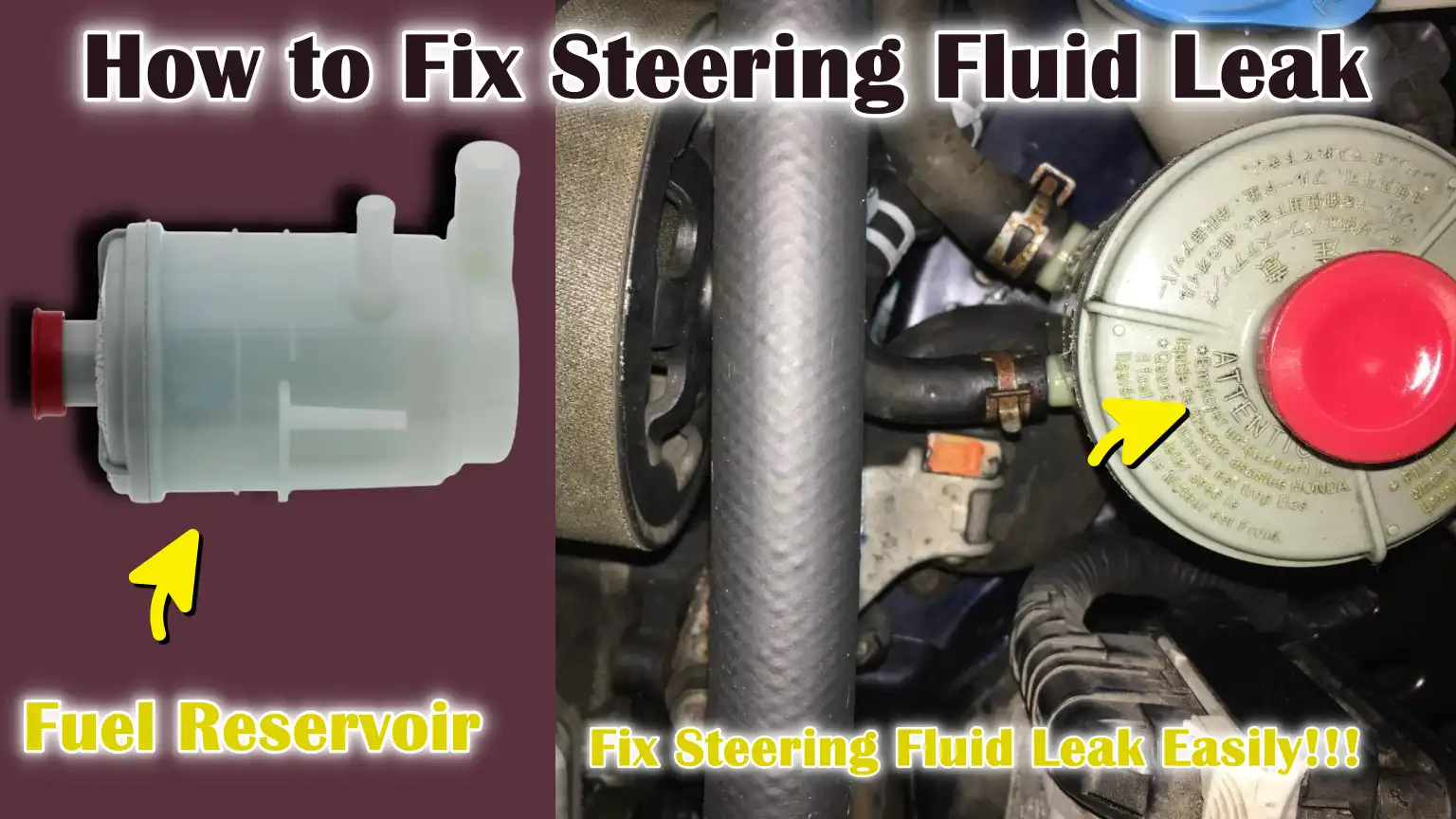
The fluid reservoir stores the power steering fluid, ensuring that a sufficient quantity is always available for the system to function correctly.
If any of these components fail or develop a leak, the system’s overall operational efficiency can be severely compromised, potentially resulting in heavy steering and creating safety hazards.
2. How the System Works
The power steering system utilizes hydraulic pressure to assist the driver in turning the wheels with minimal physical effort.
When you turn the steering wheel, the power steering pump pumps fluid through the hoses into the steering rack or gearbox; this generates pressure, making it easier to turn the wheels in the desired direction.
This process is known as the ‘hydraulic pressure mechanism,’ wherein the fluid acts as a medium to transmit force rapidly and efficiently.
The role of the fluid in this process is critical, as it not only transmits force but also lubricates internal components and helps dissipate the heat generated by friction.
If the fluid level drops due to a leak, the system becomes unable to generate the necessary pressure, causing the steering to feel stiff and less responsive.
In severe cases, a lack of fluid can lead to excessive friction and overheating, potentially damaging internal components; therefore, maintaining the correct fluid level is absolutely essential for safe and comfortable driving.
What are The Common Causes of Steering Fluid Leaks
Steering fluid leaks typically do not occur suddenly; rather, they develop gradually over time.
This happens due to the wear and tear, heat, pressure and aging of various internal components within the system.
A power steering system operates under immense pressure, meaning that even a minor weakness in any of its parts such as: seals, hoses, or connections, as it can gradually evolve into a visible leak.
Under actual driving conditions, constant exposure to engine heat, road vibrations and temperature fluctuations causes materials like rubber and metal to expand, contract and deteriorate.
This is why leaks are a common issue in older vehicles or in those that have not undergone regular maintenance.
Understanding the root cause of a leak is crucial, as attempting to repair the wrong component can result in a waste of both time and money, while the actual problem continues to worsen.
Identifying the true cause early on helps prevent major damage, reduces repair costs and ensures that the steering system continues to function safely and smoothly.
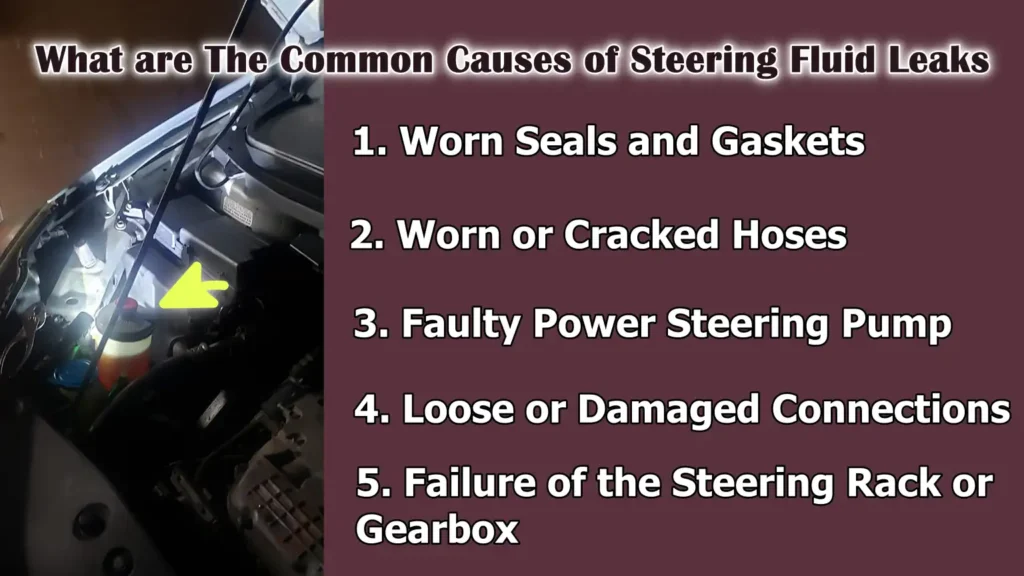
1. Worn Seals and Gaskets
In a power steering system, seals and gaskets are typically made from rubber or similar flexible materials; their primary function is to contain the fluid within the system while it operates under pressure.
Over time, these materials naturally age, becoming stiff, brittle, or prone to cracking, particularly when subjected to the constant heat generated by the engine.
As the rubber loses its elasticity, it is no longer able to form a tight seal, allowing fluid to gradually leak out.
Heat and pressure also play a significant role in this process, as they subject the components to repeated cycles of expansion and contraction, thereby accelerating the rate of wear and deterioration.
Such leaks are often minute and may not be immediately apparent; however, if left unaddressed, they can rapidly escalate, leading to a drop in fluid levels and adversely affecting steering performance.
2. Worn or Cracked Hoses
In a power steering system, hoses serve to transport fluid between the pump, the steering rack and the reservoir, operating under extremely high pressure.
Over time, constant exposure to high pressure, heat and engine vibrations can cause these hoses to deteriorate, resulting in the formation of tiny cracks or weak spots.
Wear caused by excessive pressure is one of the most common reasons for hose failure, particularly in older vehicles.
Hoses may also sustain external damage if they rub against other engine components or are struck by road debris.
In some instances, corrosion can weaken the metal fittings attached to the hoses, leading to leaks at the connection points.
Even a minor crack in a hose can rapidly escalate into a major leak due to the internal pressure of the system; therefore, regular inspection of the hoses is crucial.
3. Faulty Power Steering Pump
The power steering pump is a critical component responsible for generating the pressure required to operate the system; it contains internal seals and rotating parts that are subject to wear and tear over time.
When the pump’s internal seals fail, fluid may begin to leak from the pump housing, a leak that is often visible near the front section of the engine.
Worn-out bearings are another common issue associated with a failing pump; this occurs when internal components begin to deteriorate due to a lack of lubrication or prolonged use.
This not only increases the risk of leaks but can also result in strange noises such as: whistling or grinding sounds.
A deteriorating pump may continue to function for some time, but its efficiency will gradually diminish, eventually leading to complete failure.
The consequence of this is that the steering becomes extremely heavy; furthermore, if left unaddressed immediately, the cost of repairs can be substantial.
4. Loose or Damaged Connections
In a power steering system, connections such as: fittings, clamps and joints, are designed to securely hold hoses in place and prevent fluid leakage.
However, over time, these connections may loosen due to constant engine vibrations and vehicle movement.
Connections can also fail if they were not properly installed during previous repairs or maintenance, thereby increasing the likelihood of leaks.
When clamps become loose, even slightly, they can allow fluid to seep out gradually; such leaks may not be immediately apparent.
Broken or damaged connections can result in rapid and more obvious leaks, particularly when the system is under pressure.
Regularly inspecting these connections and ensuring they are properly tightened are simple yet effective measures for preventing fluid leaks and maintaining the system’s operational efficiency.
5. Failure of the Steering Rack or Gearbox
The steering rack, or gearbox, is one of the most complex and critical components of a power steering system.
As it translates steering inputs into wheel movement, this unit relies heavily on its internal seals to retain the fluid contained within.
Over time, these internal seals can wear out due to constant use, exposure to high pressure and contact with degraded or aged fluid.
When these seals fail, fluid may leak from the ends of the rack or from within the housing itself; detecting such internal leaks is often more difficult than identifying external ones.
Gradual mechanical wear can also damage internal components, thereby increasing the likelihood of leaks and diminishing the system’s overall efficiency.
Repairing a steering rack or gearbox is typically a complex and costly undertaking; for this reason, timely detection and proper maintenance are essential to prevent major issues.
Tools
| Item | Details |
|---|---|
| Wrenches and socket set | These tools enable you to safely loosen and tighten nuts and bolts without causing damage to any components. They are essential for removing hoses, pump bolts and other fittings located within the steering system. Using the correct tool size simplifies the task and eliminates the risk of the bolt slipping or becoming damaged. |
| Screwdrivers | During repairs, screwdrivers are used to open clamps, remove covers and adjust small components. Both flat-head and star-head screwdrivers are useful for loosening the various types of screws found in a vehicle. A screwdriver with a good grip allows you to work more quickly and with greater control. |
| Jack and jack stands | A jack is used to lift the vehicle, providing easy access to underbody components such as hoses and the steering rack. Jack stands are crucial, as they securely stabilize the vehicle while you are working. Never rely solely on the jack, as it may slip and result in injury. |
| Replacement hoses or seals | These parts are required when old hoses or seals show signs of cracks, wear, or leakage. New components help maintain proper pressure and prevent fluid leaks. For optimal results, always select the correct size and type of part specifically suited to your vehicle. |
| Power steering fluid – Vehicle-Specific | This is the primary fluid that facilitates the smooth operation of the steering system. Different vehicles require different types of fluid; therefore, always consult the owner’s manual before use. Clean and appropriate fluid helps prevent damage and enhances steering performance. |
| Leak stop additives – Optional | These are specialized fluids added to the system to repair minor leaks by softening aged seals. While they can serve as a practical and beneficial stopgap measure, they may not be effective in repairing severe damage. It is best to use them only as a temporary solution until proper repairs can be carried out. |
How to Fix Steering Fluid Leak – Easily Eliminate the Leak
When repairing a steering fluid leak, it is essential to adopt a clean and meticulous approach to ensure that the root cause of the problem is resolved without causing any further damage.
As the power steering system operates under high pressure, even a minor oversight such as: leaving a connection loose or using the wrong type of fluid, as it can lead to significant issues down the road.
Before you begin, ensure that the vehicle is parked on level ground and that the engine has cooled down to eliminate any risk of burns or injury.
Each step of this process focuses on accurately locating the leak, repairing it correctly and restoring the system to full, trouble-free operation.
By taking your time and executing each step precisely, you can avoid costly repairs and ensure that your steering remains safe and easy to operate.
1. Locate the Leak
The first and most critical step is to pinpoint exactly where the fluid is leaking, as attempting to repair the wrong component will not resolve the issue.
Begin by looking for fresh fluid spots underneath the vehicle; these are typically oily in texture and may appear red or light brown, depending on the type of fluid used.
Next, carefully inspect the key components such as: the hoses, power steering pump and steering rack, for any signs of moisture, cracks, or accumulated grime caused by fluid leakage.
Leaks often occur at system joints or weak points; therefore, a thorough inspection to identify the precise location of the leak is crucial before proceeding to the next step.
2. Clean the Area
Cleaning the area surrounding the suspected leak is vital, as accumulated dirt and old fluid can obscure the true source of the problem.
Use a clean cloth or rag to wipe away surface dirt and excess fluid from the hoses, connections and surrounding components.
Subsequently, applying a degreaser helps remove stubborn oil stains, leaving the surface clean and dry, which allows you to clearly identify the precise location of any new fluid leaks.
A clean workspace not only aids in accurate diagnosis but also makes the repair process easier and more efficient.
3. Tighten Loose Connections
Many instances of steering fluid leaks are caused by loose connections; therefore, this step is as crucial as it is simple.
Inspect all clamps, fittings and joints where the hoses connect to the pump or steering rack; if they appear loose, gently tighten them.
It is essential to avoid overtightening, as excessive force can strip the threads or fracture the fittings, potentially worsening the leak.
Properly tightened connections help maintain system pressure and often resolve minor leaks without the need to replace any components.
4. Replace Damaged Hoses
If a hose is cracked, worn, or leaking, it must be replaced immediately, as damaged hoses cannot safely withstand the system’s operating pressure.
First, carefully remove the old hose, taking care to catch any leaking fluid in a container or with a cloth.
Then, install the new hose in its place, ensuring that it fits securely and connects properly to the fittings.
A correctly installed hose maintains proper fluid flow and prevents future leaks, a critical factor for the proper functioning of the steering system.
5. Repair or Replace Seals
Leaking seals are a common issue, particularly in older vehicles where rubber components tend to harden or deteriorate over time.
First, identify the specific seal responsible for the leak; this seal may be located at the pump, the steering rack, or a connection point.
Once the faulty seal has been identified, carefully remove the old seal and replace it with a new one of the correct size and type.
Proper installation of the seal is paramount, as even a minor error can lead to a recurrence of fluid leakage; therefore, paying close attention to every detail is essential to ensure a durable and long-lasting repair.
6. Repair or Replace the Power Steering Pump
If the leak originates from the power steering pump, the cause may be an internal malfunction within the pump or wear and tear on the unit’s internal seals.
In some cases, minor issues can be repaired; however, if the pump is heavily worn or leaking excessively, replacing the entire unit is often the more reliable solution.
To remove a faulty pump, you must disconnect its hoses and mounting bolts; subsequently, a new or remanufactured pump can be installed in its place.
A properly functioning pump is critical, as it generates the necessary hydraulic pressure required for smooth and effortless steering.
7. Refill and Bleed the System
Once all repairs are complete, it is crucial to refill the system with the correct type of power steering fluid to ensure it functions properly.
It is essential that you use only the specific fluid recommended for your particular vehicle, as using the wrong type of fluid can cause damage or compromise performance.
After adding the fluid, it is necessary to bleed the system to expel any trapped air; this trapped air can generate noise and interfere with the proper operation of the steering mechanism.
This process is typically performed by slowly turning the steering wheel from side to side while the engine is running, allowing the fluid to circulate fully and ensuring that the steering response remains smooth and consistent.
Understand, Temporary Solutions vs Permanent Repairs
When a steering fluid leak occurs, understanding the distinction between temporary solutions and permanent repairs is crucial for making the right decision regarding both safety and cost.
Temporary solutions are generally quick, low-cost measures designed to mitigate or slow down a leak for a limited time; however, they do not address the root cause of the problem.
Permanent repairs, on the other hand, involve actually repairing or replacing the damaged component, thereby restoring the system to proper working order.
Many drivers initially opt for temporary solutions to save money, but if the leak persists, potentially damaging other components such as the pump or steering rack, it can lead to far more serious complications.
A well-informed decision depends on the severity of the leak, the age of the vehicle and how long you plan to keep the vehicle.
Understanding both options helps you avoid repetitive repairs, unnecessary expenses and unsafe driving conditions.
1. The Use of Leak-Stopping Additives
Leak-stopping additives are specialized fluids designed to be mixed with power steering fluid to help mitigate minor leaks; they primarily achieve this by softening aged rubber seals and causing them to swell slightly.
These products can be effective when the leak is minor and caused by dried-out or slightly worn seals that have lost their elasticity over time.
In such situations, the additive helps rejuvenate the seals and reduce fluid loss without the need for immediate mechanical repairs.
However, these products also have distinct limitations, as they cannot repair cracks in hoses, broken components, or severely deteriorated seals.
Furthermore, they do not address internal mechanical wear occurring within components such as pumps or steering racks.
In some instances, the excessive use of additives can degrade fluid quality or lead to the formation of deposits within the system.
For this reason, leak-stopping additives are best utilized as a short-term solution, serving to manage minor leaks until proper repairs can be carried out.
2. DIY Repair vs Professional Repair
The choice between performing repairs yourself and hiring a professional depends on the complexity of the issue, your personal skill level and the tools at your disposal.
Minor issues such as: tightening loose connections or replacing easily accessible hoses, as it can often be resolved at home using basic tools, thereby saving on labor costs.
Do-It-Yourself (DIY) repair is generally more economical, as you only have to pay for parts and fluids; however, it requires meticulous attention to detail to avoid making mistakes.
Conversely, for complex problems such as: a faulty pump, leaking internal seals, or a defective steering rack, professional repair is recommended, as such situations necessitate specialized tools and technical expertise.
Although professional services entail higher costs due to labor fees, they often yield more reliable and long-lasting results.
In terms of cost, DIY repair is initially cheaper, but incorrect repairs can lead to increased expenses down the line; conversely, while professional repair involves higher upfront costs, it significantly reduces the risk of recurring problems.
Understanding the complexities and associated risks involved in repairs helps you make the best choice, ensuring both your safety and long-term financial savings.
How to Prevent Steering Fluid Leak
Preventive maintenance is the most effective way to avoid steering fluid leaks and ensure that the power steering system functions correctly over the long term.
Many steering-related issues develop gradually, often stemming from a lack of regular inspections, contaminated fluid, or a failure to address wear and tear on hoses and seals.
The power steering system relies on clean fluid and robust, leak-free components to maintain proper pressure; if minor issues are left unaddressed, they can escalate into major problems.
Regular inspections and timely maintenance not only enhance steering performance but also significantly reduce the risk of sudden mechanical failure while driving.
A few simple habits such as: consistently monitoring fluid levels, visually inspecting visible components and replacing old fluid at appropriate intervals, as it can save a considerable amount of money and avert the need for major repairs.
Keeping the system in good condition ensures safe, smooth and reliable steering in all driving conditions.
As well as, there’s study that shows that how important the fluid pressure is in a steering system and how leaks directly reduces that pressure, that literally leads to the unsafe driving conditions, that’s why it is not about small fluid leak and minor issue but that can escalate to the serious steering system failures as well that’s why maintaining correct fluid steering wheel fluid pressure and prevention of fluid leak is important.[¹]
1. Regular Fluid Checks
Regularly checking the power steering fluid is one of the simplest, yet most crucial, maintenance steps for preventing leaks and protecting the system from damage.
It is generally recommended to check the fluid level at least once a month, or prior to embarking on a long journey, particularly in older vehicles, where leaks tend to be more common.
The inspection process is straightforward: it involves opening the fluid reservoir to verify the fluid level against the markings indicated on it, as well as observing the fluid’s color and overall condition.
In good condition, the fluid is typically clear or light-colored, whereas dark, cloudy, or burnt fluid indicates that it has become contaminated or degraded.
A low fluid level may signal a leak; if you simply top up the fluid without identifying the root cause of the leak, the leakage problem is likely to recur.
Regular inspections help you detect issues early and maintain the correct pressure necessary for smooth steering operation.
2. Inspection of Hoses and Seals
Hoses and seals are critical components of the power steering system and regular inspections allow you to prevent serious leaks before they occur.
Over time, exposure to heat, pressure and constant vibration can cause these parts to wear down, leading to cracks, material hardening, or the formation of pinhole leaks.
Signs of wear include visible cracks on hoses, wet or oily surfaces and fluid accumulation around joints or seals.
Initial damage does not always result in an immediate leak, but it weakens the system and increases the risk of failure under pressure.
Regular visual inspections, particularly within the engine bay and underneath the vehicle, help in detecting these issues early.
Replacing worn hoses or seals in a timely manner is far more cost-effective and safer than waiting for a major leak to develop.
3. Power Steering Fluid Flushing
Power steering fluid flushing involves draining the old, contaminated fluid and replacing it with fresh fluid to ensure that the system remains clean and functions properly.
Over time, dust, metal particles and moisture accumulate in the fluid, which can diminish its ability to provide lubrication and effectively transmit hydraulic pressure.
Most experts recommend flushing the fluid every 40,000 to 80,000 kilometers, although this interval may vary depending on driving conditions and the specific type of vehicle.
Clean fluid helps reduce friction, prevent overheating and extend the lifespan of critical components such as the pump and steering rack.
It also improves steering responsiveness and minimizes noise while driving.
Regular flushing is a simple yet highly effective method for maintaining the system in good condition and avoiding costly repairs caused by dirty or contaminated fluid.
Read More:
- How to Fix a Stiff Steering Wheel
- How to Clean Car Steering Wheel
- How to Check Steering Rack Play
- How to Replace a Steering Rack Boot
- How to Repair a Power Steering Hose Leak
- How to Bleed Power Steering Fluid
- How to Replace Power Steering Pump
- How to Change a Car Steering Wheel
- How to Check Power Steering Fluid
What are The Common Mistakes to Avoid During Fixing Steering Fluid Leak
When performing repairs or maintenance on a power steering system, various issues often arise, not because the repair work itself is inherently difficult, but rather because minor errors are frequently overlooked.
These mistakes can compromise the effectiveness of the repair, induce new leaks, or even damage critical components such as the pump and steering rack.
As a power steering system relies on correct fluid levels, proper pressure and unobstructed internal flow, even a minor error can significantly impact how smoothly and safely the vehicle steers.
Understanding these common mistakes helps you avoid repetitive repairs, unnecessary expenses and unsafe driving conditions.
By paying attention to small details and adhering to proper procedures, you can ensure that the system functions correctly and enjoys a long service life.
Plus, there’s research that introduces a modern AI-based system to detection of internal steering fluid leaks with an accuracy of 98.06% would you believe it?, as it literally shows that how important it is to detect the leak in the modern vehicles, so this study shows that the internal leaks are really dangerous as they are literally not visible but still reduce the pressure and system performance and it also confirms that hydraulic steering systems in heavy vehicles are highly complex and even small leaks can affects multiple components at once, this is why early detection and accurate diagnosis is necessary to prevent any safety risks during journey.[²]
1. Ignoring Minor Leaks
Ignoring minor steering fluid leaks is one of the most common and risky mistakes, as what begins as a small drip can quickly escalate into a major problem.
A minor leak gradually depletes the fluid level, thereby reducing the pressure necessary for effortless steering and forcing the pump to work harder than usual.
Over time, this can generate excessive heat, accelerate wear and tear and even lead to the complete failure of the pump or other components.
Many drivers delay repairs because the leak appears insignificant to them; however, the result is often a substantial increase in repair costs down the road.
Repairing a leak immediately is always easier, more cost-effective and safer than dealing with the extensive damage that can result from operating the system with low fluid levels.
2. Using the Wrong Type of Fluid
Using the incorrect type of power steering fluid can lead to serious problems, as different vehicles are designed to operate with fluids possessing specific properties.
Various fluids differ in their viscosity (thickness), additives and chemical composition; using the wrong fluid can compromise lubrication and affect the way pressure builds within the system.
This can result in poor steering performance, increased noise and accelerated wear and tear of internal components.
In some cases, the wrong fluid can even damage seals and cause leaks.
Always consulting the vehicle’s owner’s manual and using the recommended fluid ensures optimal performance and protects the system from preventable damage.
3. Overfilling the Reservoir
Overfilling the power steering fluid reservoir may seem harmless, but in reality, it can create pressure-related issues within the system.
When there is an excess of fluid, it can expand due to heat, causing it to spill or leak around the reservoir cap and seals.
Excess fluid can also lead to foaming, where air mixes with the fluid, thereby reducing its ability to effectively transmit hydraulic pressure.
This can result in system noise and inconsistent steering response.
To ensure the system operates in a balanced and proper manner, it is crucial to maintain the fluid level at the specific mark indicated on the reservoir.
4. Improper System ‘Bleeding’
After repairing a leak or replacing components, it is essential to purge any trapped air from the power steering system; this process is known as ‘bleeding.’
If air remains trapped inside, it can cause the fluid to foam and compromise the system’s ability to maintain consistent pressure.
This often leads to issues such as jerky steering, unusual noises and fluctuations in performance.
To perform the bleeding procedure correctly, the steering wheel is typically turned fully from one side to the other, while the engine is running, to allow the fluid to circulate and expel the trapped air.
Skipping this step can render the repair work ineffective, even if all components have been installed correctly; therefore, this step is vital to ensure that the steering remains smooth and reliable.
Cost Estimation for Fixing Steering Fluid Leak
Understanding the cost of repairing a steering fluid leak helps you plan better and avoid unexpected expenses.
The total cost depends on the severity of the leak, which components have been damaged and whether you choose to fix it yourself or consult a professional.
Minor leaks such as: loose connections or slight damage to a hose, typically cost very little to repair, whereas major issues, such as a faulty pump or steering rack, can incur significantly higher costs.
Another crucial factor is how quickly the problem is addressed, as delaying repairs often leads to further damage and increased costs.
Distinguishing between simple and complex repairs enables you to make more informed decisions and avoid unnecessary expenses while keeping your vehicle safe and reliable.
1. Cost of DIY Repair
If the issue is simple and you possess basic tools and knowledge, repairing a steering fluid leak yourself is usually the most cost-effective option.
The primary expenses involved in DIY repair are the cost of parts and fluids such as: replacement hoses, seals, or clamps, along with the correct type of power steering fluid for your vehicle.
In many cases, minor repairs such as: tightening connections or replacing a hose, as it can be performed at a fraction of the cost of professional services.
However, if multiple components require replacement or if an error occurs during the repair process, the total cost can increase.
While DIY repair saves on labor costs, it requires careful execution and proper diagnosis to prevent further damage that could result in higher expenses down the road.
2. Cost of Professional Repair
The cost of professional repair is typically higher, as it encompasses both labor charges and the cost of replacing damaged components.
Labor charges for repairs depend on the complexity of the work, the time required and the technician’s experience; more difficult tasks such as: replacing a pump or a steering rack, incur significantly higher costs.
The cost of replacement parts can also vary considerably depending on the specific component; replacing a simple hose is quite inexpensive, whereas replacing major components like a steering rack can be very costly.
The advantage of professional repair is that it is often more precise and reliable, thereby reducing the likelihood of recurring problems.
Although the initial cost may be higher, it can save money in the long run by ensuring that the issue is fully resolved and that no further damage is inflicted upon the steering system.
When You Should Go for Mechanic
While many minor steering fluid leaks can be fixed using common tools and a little caution, there are situations where professional assistance becomes essential to ensure safety and proper repair.
The power steering system is a high-pressure system comprising numerous interconnected components; if mishandled, it can lead to further damage or even total system failure.
If a problem is complex, difficult to diagnose, or recurs even after repairs, it typically indicates an underlying issue that requires expert knowledge and specialized equipment.
Professional mechanics possess the necessary tools and experience to detect hidden faults, test system pressure and correctly replace defective components.
Knowing when to discontinue DIY attempts and seek professional help can save you from costly mistakes, minimize long-term expenses and, most importantly, ensure that your vehicle remains safe to drive.
1. Severe or Hidden Leaks
Severe or hidden leaks are definitive signs that a professional inspection is required, as they are often difficult to detect and repair without the proper tools.
Severe leaks typically result in a rapid depletion of fluid, visible puddles forming beneath the vehicle and extremely stiff steering, conditions that can be hazardous while driving.
Conversely, hidden leaks may occur within components such as the steering rack or behind engine parts, where they are not easily visible.
These leaks can cause the fluid level to drop gradually, often without any external signs, until the system eventually ceases to function correctly.
Professionals utilize specialized techniques such as: pressure testing and detailed inspections, to pinpoint the exact source of internal leaks.
Attempting to repair such issues without proper diagnostic investigation can lead to recurring problems and increased repair costs.
2. The Need for Steering Rack Replacement
The steering rack is one of the most critical and complex components of the power steering system and replacing it is no simple task.
When internal seals fail or components become excessively worn, the rack may begin to leak fluid, thereby diminishing its ability to effectively assist with steering.
This type of repair necessitates the removal of major components, precise component alignment and ensuring that the system is properly sealed and tested following installation.
Given its complexity and the precision required, it is generally advisable to entrust this task to a professional.
Improper installation can compromise steering alignment and safety, making the vehicle difficult to control.
Professional repair ensures that the work is executed correctly and that the system functions exactly as intended.
3. Persistent Noises or Steering Issues
If you continue to hear persistent humming or groaning noises, or experience stiffness in the steering, even after having a leak repaired or the fluid refilled, it is a clear indication that there may be a deeper internal issue within the system.
These lingering problems could stem from trapped air within the system, internal wear within the pump, or a defect within the steering rack itself.
Diagnosing these issues is not always easy without the proper testing tools and expertise.
Ignoring these warning signs can lead to further damage over time and result in increased repair costs.
A professional can conduct a thorough inspection, identify the root cause of the problem and provide a reliable solution.
In such instances, seeking the assistance of an expert ensures that the steering system is fully restored and remains safe for daily driving.
Conclusion – How to Fix Steering Fluid Leak
So, it seems easy to ignore that small steering fluid leak, but now you have clearly understood the dangerous of neglecting that fact about something is wrong with this and needs your attention otherwise can escalate to the steering wheel loss as well.
The power steering system functions by maintaining precise pressure through the circulation of a specific volume of clean fluid; even a minor leak can disrupt this delicate balance, leading to difficult steering, strange noises and, over time, potential damage.
As this comprehensive guide demonstrates, the root causes of most leaks are often quite minor such as: worn seals, deteriorated hoses, or loose connections, yet, if left unaddressed, these issues can escalate into major, costly problems, such as pump failure or damage to the steering rack.
Taking timely action, employing proper repair techniques and utilizing the correct tools and fluids can prevent these issues and keep the system running smoothly.
Regular maintenance, including checking fluid levels, inspecting hoses and flushing out old fluid, plays a pivotal role in preventing leaks.
It is also essential to recognize your limitations, as certain repair tasks require professional assistance to ensure both safety and proper functionality.
So, that’s it from this guide and if you still got questions, just write them down below.
Frequently Asked Questions
Q1: What are the main signs of a steering fluid leak?
Answer: The most common signs of a steering fluid leak are difficulty turning the steering wheel specially at low speeds and strange noises occurring while turning the wheel, such as a buzzing or whistling sound. You may also notice fluid spots underneath your vehicle, which are typically red or light brown in color. Another clear indication is a drop in the fluid level within the reservoir. If these symptoms appear in combination, it is a definitive sign of a leak that requires immediate attention.
Q2: Can I drive my car if the steering fluid is leaking?
Answer: It is possible to drive for a short distance with a minor leak, but driving for an extended period is not safe. As the fluid level drops, the steering becomes stiffer and less responsive, which can increase the risk of accidents. Driving with a low fluid level can also damage the power steering pump and other components, potentially leading to higher repair costs later on. It is always best to have the leak repaired as soon as possible.
Q3: How serious can a power steering fluid leak be?
Answer: If a power steering fluid leak is ignored, it can become very serious. Initially, it may cause only minor issues such as: strange noises or slightly stiff steering, but over time, it can lead to a complete failure of the steering system. This system relies on maintaining proper fluid pressure; without it, steering becomes difficult and unsafe. In severe cases, this can even damage major components such as the pump or steering rack repairs for which can be expensive.
Q4: What causes a power steering fluid leak?
Answer: Power steering fluid leaks are typically caused by worn-out seals, cracked hoses, loose connections, or defective components such as the pump or steering rack. Over time, heat, pressure and daily use can cause rubber components to harden and crack, leading to leaks. External factors such as: dust, vibration and corrosion, as it can also weaken hoses and fittings, thereby increasing the likelihood of a leak.
Q5: How much does it cost to fix a steering fluid leak?
Answer: The cost of repairing a steering fluid leak depends on the root cause of the problem. Minor repairs such as: tightening connections or replacing a hose, that are generally inexpensive, especially if you perform the work yourself. However, if major components such as: the power steering pump or steering rack, that require replacement, the cost can be significantly higher, particularly if you hire a professional mechanic. Addressing the issue as soon as possible generally helps keep repair costs down.
Q6: Do leak-stopping additives actually work?
Answer: Leak-stopping additives can be helpful in certain situations, particularly when the leak is caused by slightly worn or dried-out seals. These additives work by softening the seals and helping them expand, thereby reducing the leak. However, they are merely a temporary fix and cannot repair serious issues such as cracked hoses or defective components. For long-term reliability, proper repairs or component replacements are always recommended.
Q7: How often should I check my power steering fluid?
Answer: It is a good practice to check your power steering fluid at least once a month, or before embarking on a long journey. Regular checks allow you to detect low fluid levels early on, which could be an indication of a leak. You should also observe the color and condition of the fluid, as dirty or dark-colored fluid may signal that it needs to be replaced. Regular checks help prevent major problems and ensure that the system continues to function properly.
Q8: What happens if I do not get a steering fluid leak repaired?
Answer: If you do not have the steering fluid leak repaired, the problem will gradually worsen. The fluid level will continue to drop, causing the steering to become increasingly stiff and less responsive. Over time, the lack of lubrication and increased friction can damage the power steering pump and other components. In the worst-case scenario, the steering could fail completely, making it unsafe to drive the vehicle.
References:
[1] Reliable ships: A fuzzy FMEA based risk analysis on four-ram type hydraulic steering system
https://www.sciencedirect.com/science/article/abs/pii/S0029801824030968
[2] Fault diagnosis of hydraulic internal leaks in steering systems of multi-axle heavy vehicle via BO-transformer-LSTM technique
https://www.sciencedirect.com/science/article/abs/pii/S0263224126002496

Guys, I’m a car audio enthusiast and customization expert and I love clear sound and clean installation. Plus, I have spent years helping people build their dream audio setups. And whenever I’m working on cars, I probably listen to music and thinks about the next big upgrade.
