
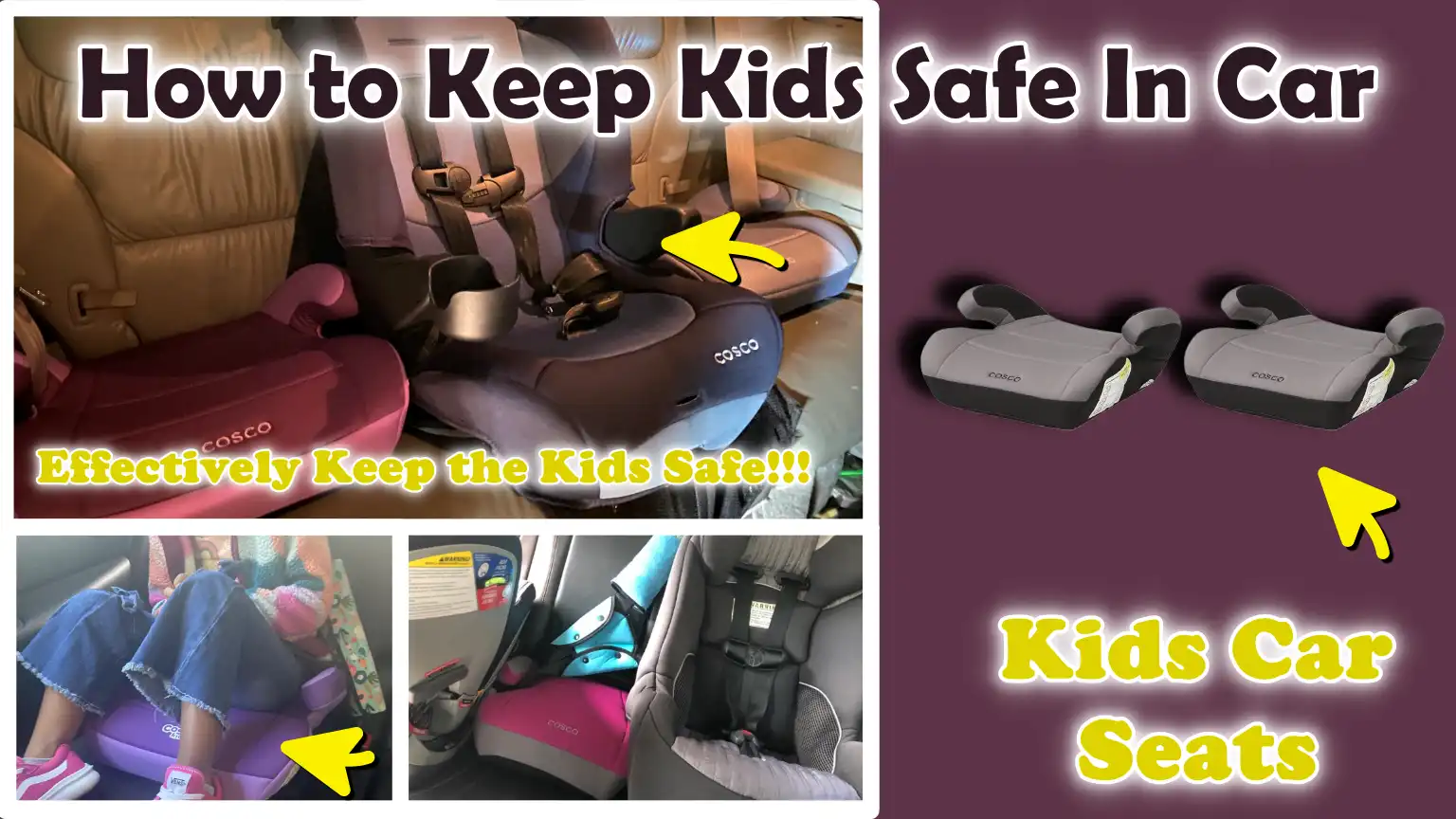
Written By: Don Dodi
Fact Checked By: Kristen Brown
Reviewed By: Diego Rosenberg
Just understand that: when you spend a few seconds more and having the proper preparation that actually protects a child from life-changing injuries during a car accidents.
Because, having a child inside the car then it is your responsibility to keep it safe and safety literally depends on far more than just simply fastening a seat belt, as children’s bodies are smaller, more fragile and more vulnerable to crash forces than adults does.
Plus, according to the child passenger safety research: when you uses the car seats properly, booster seats and seat belts then it can dramatically reduces the risk of having some serious injury and death during the vehicle accidents as well.
Not only this, experts also explains that common mistakes such as: loose harness straps, incorrect car seat installation literally allows the children to sit in the front seat too early or leaves the heavy objects unsecured inside the vehicle that can increase the injury risks during the sudden braking or collisions.
That’s why, we have come up with this guide that shows you How to Keep Kids Safe In Car effectively.
Now, Let’s Understand About the Risks of Child Car Safety
Child car safety is one of the most critical responsibilities for parents and caregivers, as children face specific risks while traveling in vehicles, risks that many people do not fully comprehend.
Car accidents can occur in an instant and even minor errors inside the vehicle can significantly increase the likelihood of a child sustaining serious injuries.
Young passengers rely entirely on adults to make safe decisions regarding car seats, seat belts, seating positions and driving behaviors.
Many injuries result not only from high-speed collisions but also from the misuse of safety restraints, distracted driving, sudden braking, unsafe seating arrangements and unsecured objects within the vehicle.
Safety experts point out that children’s bodies are still developing; this means that, compared to adults, their heads, necks, spines and internal organs are more vulnerable to the forces generated during an accident.
Ensuring proper passenger safety for children involves more than just complying with the law; it also entails understanding how to mitigate risks during daily commutes, school pickups, family road trips and short local errands.
Being aware of common hazards, understanding why children are physically more vulnerable and staying informed about the latest safety research can help families make better decisions that significantly enhance safety during every journey.
1. The Most Common Hazards for Children in Cars
Many injuries sustained by children inside vehicles are caused by preventable safety errors, mistakes that often go unnoticed by adults.
One of the greatest hazards is the improper installation of a car seat, as a loosely installed seat cannot adequately protect a child during an accident.
Safety studies have revealed that a significant number of car seats are either installed incorrectly or are used with loose harness straps, twisted belts, or an improper recline angle.
Another major risk involves placing children in booster seats, or using standard seat belts, before their bodies have sufficiently developed to ensure proper safety.
A seat belt that rests across a child’s abdomen or neck, rather than across their chest and hips, as it can cause severe injury in the event of a sudden collision.
Distracted driving is also a major safety concern; drivers who use mobile phones, frequently turn around to check the back seat, eat while driving, or pay excessive attention to children inside the vehicle may react too slowly in an emergency.
Loose objects inside the vehicle also pose hidden dangers; items such as bags, water bottles, toys and electronic devices can transform into dangerous projectiles during sudden braking or a collision.
Children seated in the front seat face heightened risks from airbags, which are designed for adult bodies, as these safety devices can inflict severe injuries upon smaller passengers.
Hot car incidents constitute another life-threatening hazard, as the temperature inside a vehicle can rise rapidly, even in mild weather, putting children at risk of heatstroke within just a few minutes.
Unsafe behaviors such as: standing up inside a moving vehicle, unbuckling seat belts, leaning out of windows, or leaving children unattended in a car, as it can also significantly increase the likelihood of serious injuries and accidents.
2. Why Are Children More Vulnerable in Accidents?
Children are naturally more vulnerable during vehicle accidents because their bodies are still growing and developing.
A child’s head is proportionally larger and heavier than the rest of their body, placing additional strain on the neck and spine during sudden jolts.
Young children also possess weaker neck muscles and softer bones, making them more susceptible to head, neck and spinal injuries during a collision.
Unlike adults, children are unable to brace themselves effectively during sudden braking or accidents; this means they rely heavily on safety restraints such as: seat belts, for their protection.
Their internal organs are also more delicate and less shielded by robust bones, thereby increasing the risk of internal injuries during a collision.
Seat belts designed for adults do not fit children properly without the use of a booster seat; consequently, dangerous pressure may be exerted on a young passenger’s abdomen or throat during an accident.
Safety experts strongly recommend “rear-facing” car seats for infants and young children, as these provide superior support for the head, neck and spine and distribute the force of a collision across the body’s strongest areas.
Children are also emotionally more vulnerable during accidents, as sudden collisions can trigger fear, panic and psychological trauma, which may subsequently impact their confidence and comfort during future travels.
Due to these physical and emotional vulnerabilities, the selection of safety restraints for children must be undertaken with great care, a choice that should not be based merely on convenience or age, but specifically tailored to the child’s age, height, weight and developmental stage.
3. Data and Research Related to Child Passenger Safety
Research conducted by leading organizations in the fields of road safety and pediatrics consistently demonstrates that the use of appropriate safety restraints for children (such as car seats) significantly reduces the risk of serious injury and fatality during vehicle accidents.
Studies supported by the National Highway Traffic Safety Administration (NHTSA) and the Centers for Disease Control and Prevention (CDC) have found that properly used car seats can substantially lower the risk of life-threatening injuries for infants and young children during passenger vehicle collisions.
Researchers also point out that many children injured in accidents were either unrestrained, improperly secured, or seated in a safety seat that was unsuitable for their size and age.
Scientific studies have repeatedly shown that “rear-facing” seats provide superior protection to a child’s head, neck and spine compared to transitioning them to “forward-facing” seats too early.
Safety experts also emphasize that booster seats optimize seat belt positioning and help mitigate abdominal and chest injuries in older children.
Research further indicates that children traveling in the back seat are generally safer than those seated in the front, particularly in vehicles equipped with front-seat airbags.
Another key finding emerging from child safety studies is that many accidents involving children occur not during long-distance journeys, but rather during routine, everyday trips close to home.
This underscores the critical importance of observing safety precautions during every trip, regardless of the distance traveled.
Researchers are continuously studying factors such as distracted driving, speeding, driver fatigue and improvements in vehicle design, as these elements have a profound impact on child safety.
These statistics and scientific findings clearly demonstrate that the proper use of seat belts, responsible driving habits and appropriate safety measures can save lives and significantly reduce injuries sustained by young passengers.
How to Choose the Right Car Seat for Your Child
Selecting the right car seat is one of the most critical decisions parents make regarding their child’s safety, as the appropriate seat can significantly reduce the risk of serious injury during sudden braking, sharp turns, or vehicle collisions.
Children grow rapidly and their safety needs evolve at different developmental stages; this means that a single type of car seat cannot provide complete protection indefinitely.
Safety experts from organizations such as the American Academy of Pediatrics and the National Highway Traffic Safety Administration emphasize that car seat selection should not be based solely on a child’s age, but rather on their height, weight and developmental stage.
A correctly chosen car seat distributes the impact forces generated during a collision across the child’s stronger body parts, while simultaneously protecting vulnerable areas such as the head, neck, chest and spine.
Parents must also understand that even the most expensive car seat cannot guarantee complete safety if it is used incorrectly, installed improperly, or selected without regard for the child’s specific physical measurements.
Modern car seats are meticulously designed, incorporating safety testing, energy-absorbing systems, adjustable harnesses and side-impact protection, to enhance child safety; nevertheless, making the right choice and ensuring proper usage remain absolutely essential.
Understanding the different types of car seats, and knowing when to transition from one type to another, as it can help families create a safe travel environment for their children at every stage of their development.
1. Information on Different Types of Child Car Seats
Different types of child car seats are designed to ensure safety during specific stages of a child’s physical development, as newborns, toddlers and older children face distinct safety risks while traveling in a vehicle.
Each type of car seat is engineered to support the body in a specific manner during sudden stops or collisions; therefore, transitioning prematurely to the next stage of seating can compromise safety levels.
Safety experts recommend adhering to both the car seat manufacturer’s instructions and general child safety guidelines to ensure that children remain in the safest possible seating system for as long as advised.
Parents must understand that the appropriate time to transition between rear-facing seats, forward-facing seats, booster seats and adult seat belts should be based primarily on the child’s height and weight limits, rather than on parental convenience or the child’s desire to appear “grown up”.
Rear-Facing Car Seats
Rear-facing car seats are considered the safest option for newborns and very young children, as they provide superior support to the head, neck and spine in the event of a collision.
During a head-on collision, one of the most common and dangerous types of accidents, a rear-facing seat distributes the force of the impact evenly across the child’s entire back, rather than concentrating the full pressure on the neck and head.
This is critically important because infants and toddlers have relatively large heads, underdeveloped neck muscles and spines that are still developing, all factors that make them highly vulnerable to sudden injury.
Safety organizations strongly advise that children should be seated in a rear-facing position for as long as possible, specifically, until they reach the maximum height or weight limits specified by the car seat manufacturer.
Many modern rear-facing seats are now suitable even for larger children (toddlers), as research consistently demonstrates that traveling in a rear-facing position offers greater safety benefits compared to switching to a forward-facing position too early.
Parents must also ensure that the seat is reclined at the correct angle, as an improper position can cause breathing difficulties for infants and compromise their safety.
Forward-Facing Car Seats
Forward-facing car seats are designed for children whose height or weight has exceeded the limits of rear-facing seats, but who are still too small to safely use booster seats or adult seat belts on their own.
These seats feature a built-in harness system that secures the child at multiple points, at the shoulders, chest and hips, to minimize the child’s movement during a collision.
Safety experts emphasize that parents should not rush to transition to forward-facing seats, as rear-facing seats provide superior protection for young children.
When a child sits in a forward-facing seat, the harness becomes critical, as loose or improperly fastened straps can compromise the seat’s ability to protect the child during an accident.
The chest clip should be positioned at armpit level (just below the ears) and the harness straps should fit snugly against the body, with no slack whatsoever.
Many forward-facing seats also feature tether straps that attach to the vehicle; these help prevent the head from jerking forward during a collision, thereby providing enhanced protection for the neck and spine.
Parents should continue using the harness system until the child reaches the maximum height or weight limit specified by the manufacturer; at that point, they can transition to a booster seat.
Booster Seats
Booster seats are designed for older children who have outgrown forward-facing harness seats but are still too small for adult seat belts to fit properly across their bodies.
The primary purpose of a booster seat is to elevate a child to the correct seating position, ensuring that the vehicle’s seat belt fits securely across the strongest parts of their body.
Without a booster seat, the lap belt may rest across the abdomen rather than the hips, while the shoulder belt may cut across the neck or face, thereby increasing the risk of serious injury during an accident.
Booster seats help position the seat belt correctly across the chest and upper thighs, the parts of the body best equipped to withstand the force of a collision.
Safety experts recommend using booster seats until the child is tall enough for an adult seat belt to fit their body properly without any assistance; this milestone often occurs later than parents might expect.
A proper seat belt fit is a more critical factor than age alone, as every child grows at a different pace.
Children using a booster seat should always sit upright; slouching or leaning to one side can alter the position of the seat belt and compromise safety.
Seat Belts for Older Children
Children should begin using a vehicle’s standard seat belt without a booster seat only when the belt fits them correctly in all seating positions.
A proper seat belt fit ensures that the lap belt rests across the upper thighs and lower hips, rather than the abdomen, while the shoulder belt rests comfortably across the chest and shoulder without touching the neck or face.
Children should sit fully back against the vehicle’s seat so that their knees bend naturally at the edge of the seat, eliminating the need for them to slouch.
Many children stop using booster seats too early, which increases the risk of injuries to their abdomen, spine and neck in the event of an accident.
Older children should always sit in the back seat whenever possible, as it generally offers greater protection than the front seat, specially in vehicles equipped with airbags.
Parents should also educate children on the importance of wearing the shoulder belt correctly; routing it behind the back or under the arm compromises the vital upper-body protection provided during an accident.
2. How to Choose the Safest Car Seat
Choosing the safest car seat involves more than simply selecting a popular brand or an attractive design, as the combination of every child and vehicle is unique.
Parents must first ensure that the car seat meets the safety standards and certifications established by road safety authorities.
These certifications confirm that the seat has successfully passed crash testing and complies with essential safety regulations.
It is also crucial to understand the specific height and weight limits prescribed for each car seat, as using a seat beyond these limits can compromise safety in the event of an accident.
Some children grow in height faster than they gain weight, while others gain weight faster than they grow in height; therefore, it is essential to pay close attention to both of these metrics.
Compatibility with the vehicle is another critical aspect, as not every car seat fits correctly in every vehicle.
Parents must ensure that the seat can be installed firmly and securely using the vehicle’s existing seatbelt system or its lower anchor system.
The safest car seat is not necessarily the most expensive one; rather, it is the seat that fits the child correctly, integrates properly with the vehicle and can be used consistently and correctly on a daily basis.
Features such as side-impact protection, adjustable harness heights, easy-to-understand installation indicators and removable padding can enhance both convenience and overall safety, provided they are utilized correctly.
3. Common Mistakes Parents Make When Buying a Car Seat
Many parents make common mistakes when selecting or using a car seat, thereby inadvertently compromising their child’s safety.
A major mistake is selecting a car seat solely based on a child’s age, rather than carefully considering their specific height and weight requirements.
Every child grows differently and the premature use of an incorrectly sized seat can compromise safety in the event of an accident.
Another common error is purchasing a used (second-hand) car seat without obtaining complete background information.
A previously used seat may harbor hidden structural defects resulting from past accidents and older seats may no longer meet current safety standards.
Parents should also pay close attention to the seat’s expiration date, as the materials used in car seats such as: plastics, foam and webbing, as it can degrade over time due to heat, sunlight and daily wear and tear.
Improper installation of the seat in the vehicle constitutes another serious issue, as some car seats do not fit correctly in certain vehicles, particularly in smaller cars or those with uniquely contoured seats.
A loose seat remains one of the most frequently cited concerns regarding child safety.
Some parents also place thick blankets or heavy winter jackets underneath the harness straps; this can cause the straps to loosen during an accident, thereby increasing the risk of injury.
Furthermore, some parents transition their children to booster seats or standard adult seat belts prematurely, often because the children demand greater freedom or comfort.
By understanding these common mistakes, parents can make safer choices and enhance child safety during every car journey.
How to Properly Install a Car Seat
Properly installing a car seat is a critical aspect of child safety; for no matter how high-quality a car seat may be, if it is installed incorrectly, it will fail to adequately protect the child.
Safety experts have repeatedly observed that many parents inadvertently make mistakes during installation such as: leaving the seat too loose, failing to properly fasten the harness, tilting the seat at an incorrect angle, or failing to properly secure the seatbelt.
In the event of a vehicle accident, an improperly installed car seat may shift excessively from its position, fail to adequately restrain the child, or even increase the risk of injury.
Children are entirely dependent on adults to ensure that their car seats are installed and utilized safely; therefore, it is essential for every parent and caregiver to learn the correct installation procedures.
Proper installation ensures that the forces generated during an accident are distributed across the child’s body in the safest possible manner and that dangerous movement resulting from sudden braking or collisions is minimized.
Modern car seats are equipped with various advanced safety systems; however, these systems function effectively only when the seat is securely anchored and correctly adjusted.
Parents must also understand that installation procedures may vary depending on the specific vehicle and car seat model; therefore, rather than relying on guesswork or intuition, they should always carefully follow the provided instructions.
Taking a little extra time to properly install a car seat can significantly enhance safety and provide peace of mind during every journey.
1. Preparation for Proper Installation
Before installing any car seat, parents should carefully read both the car seat manual and the vehicle owner’s manual, as installation instructions and safety requirements may vary across different vehicles and seat models.
Installation errors often occur because people overlook the instructions or assume that all car seats function in the same manner.
The vehicle manual specifies where car seats can be safely positioned, how the anchoring systems operate and whether there are any restrictions regarding specific seating locations.
The car seat manual provides specific details regarding harness adjustment, seat recline angles, weight limits and installation methods.
Parents must also understand the distinction between installation methods utilizing the lower anchoring system (often referred to as LATCH) and those utilizing the vehicle’s seatbelt.
The lower anchoring system utilizes built-in anchors attached to the vehicle’s seat, whereas the seatbelt method secures the car seat using the vehicle’s own seatbelt.
Both methods can be safe if utilized correctly; however, manufacturers generally recommend using only one method at a time, unless specifically authorized to use the other.
Whenever possible, it is crucial to install the car seat in the back seat, as this location is generally safer for children than the front passenger seat.
Prior to installation, parents should remove bulky seat covers, check for twisted straps and ensure that the vehicle’s seat is stable and clean, thereby facilitating a more secure and firm installation of the car seat.
2. Proper Guide to Install Rear-Facing Car Seats
Rear-facing car seats must be installed with great care, as they are designed to protect the head, neck and spine of infants and young children during accidents.
One of the most critical initial steps is setting the correct recline angle, as children require a specific posture to keep their airways open and prevent their heads from slumping forward.
Many rear-facing car seats feature angle indicators or level guides to assist parents in positioning the seat correctly.
Once the seat is in the proper position, it is essential to securely fasten its base, either by utilizing the lower anchor system or by using the vehicle’s seatbelt, in accordance with the manufacturer’s instructions.
When checked at the belt path, the seat should not move more than one inch from side to side or from front to back.
Excessive movement may indicate that the seat has not been installed correctly and requires adjustment.
After securing the seat base, parents should place the child in the seat and position the harness straps at or slightly below shoulder level to ensure proper support in the event of an accident.
The harness should fit snugly against the body, with no slack remaining between the fingers.
The chest clip should be positioned at armpit level, as incorrect placement can compromise the effectiveness of the harness during sudden stops or accidents.
Parents should also avoid placing thick blankets or bulky jackets underneath the harness straps, as these items can compress during an accident and create dangerous slack.
3. Now, Install a Forward-Facing Car Seat
Forward-facing car seats are designed for children who have outgrown rear-facing seats but still require a full harness system for complete safety.
When installing the seat, it must first be positioned upright and flush against the vehicle’s seat backrest, as specified in the manufacturer’s instructions.
Next, the lower anchor system or the vehicle’s seat belt must be routed through the correct belt path on the forward-facing seat and tightened securely to ensure the seat does not shift or move.
One of the most critical safety features of a forward-facing seat is the ‘top tether strap,’ which connects to a tether anchor located within the vehicle.
This tether helps prevent the child’s head from moving forward during a collision and provides greater stability to the seat.
Safety experts strongly recommend using this tether whenever possible, as it can significantly enhance the level of protection provided during an accident.
Once the seat is securely fastened, parents should adjust the harness straps so that they rest at or slightly above the child’s shoulders.
The harness must be snug, with absolutely no slack, and for proper positioning, the chest clip should be placed at the level of the child’s armpits.
Children should sit upright; they should neither lean forward nor tuck the straps behind their backs, as improper positioning can compromise the effectiveness of the safety system during sudden impacts.
4. Booster Seat Installation and Positioning
Booster seats function differently than harnessed car seats, as they rely on the vehicle’s standard seat belt system to provide adequate protection for the child.
The primary purpose of a booster seat is to position a child at a height where the seatbelt rests across the strongest parts of their body, rather than across fragile areas such as the abdomen or neck.
When using a booster seat, the “lap belt” (the belt that spans the lower body) should sit low across the child’s upper thighs and hips, not across the abdomen, as pressure exerted on the abdomen during an accident can result in severe internal injuries.
The “shoulder belt” should pass across the center of the child’s chest and rest comfortably against the shoulder; it should not make contact with the child’s face or neck.
Many children tuck the shoulder belt behind their back or under their arm because they find it more comfortable; however, doing so eliminates the essential protection provided to the upper body during an accident.
The booster seat must be positioned squarely and securely on the vehicle seat and children should sit upright throughout the entire journey to ensure the seatbelt remains in its correct position.
Parents should continue using a booster seat until the child is able to sit correctly using only an adult seatbelt, without slouching or facing issues with the belt fitting too loosely.
5. Signs That Your Car Seat Is Installed Incorrectly
Many parents believe their car seat is securely installed, yet it may still harbor critical errors; for this reason, regular safety checks are essential.
The clearest indication of an incorrect installation is excessive movement of the seat.
If the car seat shifts by more than one inch when tested near the belt path, it may fail to provide adequate protection in the event of an accident.
Loose harness straps also pose a serious safety risk, as they allow for excessive body movement during a sudden impact.
The harness should be tightened to the point where no excess webbing can be easily pinched between one’s fingers.
A misplaced chest clip is another common issue that can compromise the effectiveness of the harness during a collision.
The chest clip should always be positioned at the level of the child’s armpits, as placing it too low or too high alters the distribution of impact forces exerted on the body during an accident.
Twisted straps, an incorrect seat recline angle, improper seatbelt routing and the simultaneous use of both the lower anchor system and the seatbelt, without manufacturer approval, are additional indicators that the seat has not been installed securely.
Parents should also observe whether the child’s head is slumping too far forward, if the seat appears to be tilted at an awkward angle, or if the child complains of any discomfort resulting from a misplaced harness.
Regularly checking the seat installation, reviewing updated instructions and seeking assistance from a certified Child Passenger Safety Technician are measures that can significantly enhance safety and minimize installation errors.
How to Ensure Proper Harness and Seat Belt Safety
Using the correct harness and seat belt is one of the most critical ways to keep children safe inside a vehicle; even the safest car seat cannot fully protect a child unless the straps or seat belts are utilized correctly.
In the event of a sudden stop or collision, the harness and seat belt system is designed to restrain body movement and distribute the impact forces across the body’s strongest parts, specifically the shoulders, chest and hips.
If the straps are loose, twisted, or improperly positioned, the child may lurch forward excessively during a collision, significantly increasing the risk of severe injury to the head, neck, chest, or spine.
Safety experts point out that many parents inadvertently make minor errors regarding harness tightness, chest clip placement, or seat belt routing, which can compromise safety during accidents.
Children may also attempt to loosen the straps, tuck the belt behind their backs, or shift into unsafe positions because they feel uncomfortable or restrained; for this reason, regular supervision and proper adjustment are essential.
The correct use of harnesses and seat belts not only enhances safety during collisions but also helps keep children stable and secure during sudden braking, sharp turns and travel over bumpy roads.
Learning how to properly adjust straps, securely fasten seat belts and avoid common safety issues related to clothing can significantly improve child safety during daily commutes.
1. How Tight Should the Harness Be?
A child’s harness should always fit snugly against the body, as loose straps can result in dangerous movement during a collision.
Safety experts recommend using the “Pinch Test” to verify the tightness of the harness.
After fastening and tightening the harness, parents should check its snugness by attempting to pinch the harness strap near the child’s shoulders between their fingers.
If any excess fabric (strap material) can still be pinched between the fingers, the harness is too loose and requires further tightening.
A properly tightened harness should fit snugly against the child’s body without any gaps, while still allowing the child the freedom to breathe and move comfortably.
Loose straps are extremely dangerous, as they may allow the child to slip partially out of the harness or lurch too far forward during a collision, thereby increasing the risk of injury.
The harness straps must not be twisted, as twisted fabric compromises the harness’s ability to distribute the force of a collision evenly across the entire body.
Parents should carefully check the harness fit before every journey, as the child’s clothing, body position and movements can all affect the tightness of the straps.
Placing thick blankets, bulky clothing, or winter jackets underneath the harness can introduce slack into the straps, a situation that proves dangerous during a collision, because these items compress under the pressure of the impact.
Properly adjusting the harness ensures that the child remains in the safest possible position, while also minimizing the impact force exerted on vulnerable body parts such as: the neck and abdomen, during sudden stops or collisions.
2. Correct Positioning of the Chest Clip
During travel, and particularly in the event of a collision, the chest clip plays a crucial role in keeping the harness straps correctly positioned over the child’s shoulders.
Safety experts strongly recommend positioning the chest clip at armpit level, as this placement ensures the harness remains securely anchored to the strongest parts of the upper body.
If the chest clip is positioned too low, near the abdomen, the harness straps may splay apart during a collision; this increases the risk of the child partially slipping out of the harness or sustaining dangerous bodily injuries.
Conversely, if the chest clip is positioned too high, near the neck, a sudden jolt could cause discomfort, breathing difficulties, or neck injuries.
Correct positioning at chest level ensures that the forces generated during a collision are distributed more safely across the chest and shoulders, while also guaranteeing that the harness remains securely in place throughout the entire journey.
Parents should also periodically verify that the chest clip remains perfectly upright and centered, as children may sometimes shift its position or play with it while traveling.
Although the chest clip may appear to be a minor component, it is a critical safety element that works in conjunction with the harness system to significantly enhance the child’s overall safety during a collision.
3. How to Securely Fasten the Seatbelt
For older children who use a booster seat or the vehicle’s standard seatbelt, fastening the seatbelt correctly is crucial, as improper placement can lead to severe injuries during an accident.
The lap belt (waist belt) should always rest across the lower thighs and hips, never across the abdomen.
The hips and pelvic bones are stronger and better equipped to withstand the forces generated during an accident, whereas pressure exerted on the abdomen during a sudden collision can cause severe internal organ injuries.
The shoulder belt should cross the center of the chest and rest comfortably against the shoulder; it should neither touch the neck nor slip off the arm.
Many children tuck the shoulder belt behind their back or under their arm because they find it more comfortable; however, doing so eliminates the essential protection provided to the upper body and significantly increases the risk of injury during a collision.
Children should sit upright against the vehicle seat back, as slouching alters the position of the belt and reduces its effectiveness.
Seatbelts are specifically designed to function optimally when the body is in the correct position; sitting incorrectly can result in dangerous pressure being applied to the wrong parts of the body during an accident.
Parents should regularly check the fit of the seatbelt, as children grow rapidly; children may feel they are ready to use a standard seatbelt, yet they may still require a booster seat.
4. Winter Clothing and Car Seat Safety
Many parents are unaware that heavy jackets and bulky clothing can pose serious safety risks regarding car seats when traveling during the winter months.
While bulky coats, padded snowsuits and multiple layers of clothing may feel warm and secure, they can prevent the harness (seatbelt) from fitting snugly against a child’s body.
During an accident, the soft material inside thick clothing compresses under pressure, creating excessive space between the harness and the child.
This sudden slackness allows for increased movement, heightens the risk of injury, or could even result in the child partially slipping out of the harness.
Safety experts recommend dressing children in several thin, warm layers such as: wool jackets or thermal wear, when using a car seat during the winter.
Once the harness has been properly tightened against the child’s body, a blanket or coat can be draped over the harness to provide additional warmth without compromising safety.
Parents should warm up the vehicle as much as possible before beginning a journey to minimize the need for children to wear excessively bulky clothing inside the car.
In cold weather, harness straps may stiffen or become difficult to adjust; therefore, it is crucial to inspect them regularly to ensure they remain straight, snug and correctly positioned.
Understanding the hidden dangers associated with heavy winter clothing can help parents maximize the effectiveness of the harness and provide enhanced safety for their children while traveling in cold weather.
How to Keep Children Safe During Daily Car Journeys
Ensuring children’s safety during daily car journeys requires far more than simply installing a car seat, as daily driving habits have a profound impact on a child’s overall safety.
Many accidents and injuries occur during short trips close to home, situations where parents may feel more relaxed or their attention may be more easily distracted.
Children often spend time in cars commuting to school, running errands, visiting family and engaging in other daily activities; this means that safety protocols must be consistently observed whenever the vehicle is in motion.
Sudden braking, distracted driving, unsafe behavior inside the vehicle and unsecured objects, all these factors can combine to quickly transform a routine trip into a dangerous situation.
Safety experts emphasize that children learn by observing adults; therefore, parents who consistently practice safe driving habits help instill a lifelong sense of safety awareness in their children.
Cultivating good habits such as: always wearing a seatbelt, remaining seated properly, entering and exiting the vehicle safely and keeping the car organized, as it can significantly reduce the risk of injury.
A child’s daily safety depends on both the safety systems present within the vehicle and the behavior of everyone traveling inside it.
Small, daily safety habits can make a monumental difference in a child’s safety, whether in the event of a minor incident or a serious accident.
1. Cultivating Safe Habits in the Car
Establishing safe habits in the car should become second nature for both adults and children, as the most effective way to enhance children’s safety is through the consistent observance of safety protocols.
Every journey should begin with a check to ensure that all passengers have properly fastened their seatbelts before the vehicle starts moving, no matter how short the trip may be.
Many injuries occur because people assume that short, local trips are less dangerous; however, regardless of the distance or speed involved, an accident can happen at any moment.
Children should be taught from an early age that seatbelts and harnesses are an essential and mandatory part of traveling in a car.
Parents should also instruct children to remain seated properly throughout the entire journey; leaning forward, turning sideways, kneeling on the seat, or attempting to unbuckle a seatbelt can significantly compromise safety in the event of sudden braking or a collision.
It is also crucial to keep your hands, arms and head inside the vehicle at all times, as extending any part of the body out the window exposes you to the risk of serious injury from passing vehicles, roadside objects, or sudden movements.
Children must learn to behave calmly and safely inside the vehicle so that the driver’s attention remains fully focused on the road, without being distracted by any unnecessary interruptions.
2. Preventing Driver Distraction
Driver distraction is one of the greatest hazards when traveling with family, as even a momentary lapse in attention, lasting just a few seconds, as it can lead to a serious accident.
Inside the car, children often make noise, move around and talk; however, the driver must keep their full attention fixed on the road at all times.
While driving, parents should avoid frequently turning around to check on the children, as taking one’s eyes off the road, even for a brief moment, significantly increases the risk of an accident.
Resolving issues related to noise and children’s behavior in a calm and safe manner, before they escalate, as it can help reduce stress during a journey and prevent driver distraction.
The use of mobile phones while driving is also a major safety concern, as activities such as texting, talking on the phone, browsing the internet, or checking notifications slow down reaction times and divert the driver’s attention.
Safety experts emphasize keeping your phone out of reach or, if absolutely necessary, using a hands-free system.
Having snacks, drinks, toys, music and other forms of entertainment ready before the journey begins can also help prevent driver distraction while on the road.
If children require immediate attention during the trip, the safest approach is to pull the vehicle over to a safe spot on the roadside, rather than attempting to resolve issues while the vehicle is in motion.
When transporting children in a vehicle, drivers should avoid eating or drinking, adjusting complex vehicle controls, or multitasking, as maintaining full attention on the road is the most effective way to prevent accidents and ensure the safety of young passengers.
3. Safe Ways to Enter and Exit Vehicles
Safely entering and exiting vehicles is a crucial, yet often overlooked, aspect of child safety.
This is because many injuries do not occur during vehicle collisions, but rather in parking lots, driveways and roadside areas.
Children should be taught to enter and exit vehicles from the curbside (sidewalk side) whenever possible, ensuring they maintain a safe distance from moving traffic.
Opening a door toward a lane with moving vehicles immediately exposes children to the risk of being struck by a passing car or bicycle.
Before opening doors, parents should always carefully check for nearby vehicles and hold the hands of young children in crowded parking areas or near roadways.
Adult supervision is essential, as children may become excited, distracted, or unaware of surrounding hazards while entering or exiting a vehicle.
Drivers should also instruct children to wait for specific directions before exiting the vehicle, as stepping suddenly into the path of moving traffic can happen in an instant.
In larger vehicles, such as SUVs and trucks, parents should carefully check the “blind spots” (areas not directly visible) surrounding the vehicle, as small children may not always be visible.
Establishing safe habits for entering and exiting fosters greater awareness of road hazards in children and reduces the risk of preventable injuries occurring outside the vehicle.
4. Preventing Injuries Caused by Loose Objects
Loose objects inside a vehicle can become extremely dangerous during sudden braking, sharp turns, or collisions, as unsecured items can fly violently around the cabin.
Everyday items such as: water bottles, bags, toys, laptops, groceries, umbrellas and sports equipment, may appear harmless during routine driving; however, in the event of a collision, they can strike passengers and inflict serious injuries.
Heavy objects pose an even greater threat, as their potential to cause harm multiplies manifold during high-speed crashes.
Parents should cultivate the habit of securely stowing loose items, whenever possible, by placing them in the trunk, cargo area, seat pockets, or designated storage compartments.
Large or heavy objects should never be left unsecured on the rear shelf, empty seats, or elevated surfaces, as they can easily dislodge during sudden braking.
Sharp objects and glass containers must also be stowed with care to minimize the risk of injury during accidents.
Keeping the vehicle properly organized not only enhances safety but also reduces issues related to driver distraction and clutter during travel.
Children should also be taught not to toss toys or other items around inside the vehicle, as their sudden movement can distract the driver and create unsafe situations.
Maintaining a clean, organized and secure environment within the vehicle ultimately improves overall safety and makes the travel experience more peaceful and comfortable for everyone on board.
Know, How to Ensure Child Safety in Different Driving Conditions
Children face distinct safety risks depending on weather conditions, travel duration, road visibility and temperature fluctuations; for this reason, parents must adapt their driving habits and safety preparations to suit these changing circumstances.
A vehicle that feels safe under normal weather conditions can quickly become hazardous during periods of extreme heat, bitter cold, heavy rain, fog, or long-distance travel.
Young children are particularly susceptible to temperature changes, dehydration, motion sickness and fatigue, as their bodies are unable to regulate heat and cold as effectively as those of adults.
Road conditions also become more unpredictable during bad weather, increasing the risk of sudden braking, skidding, reduced visibility and collisions.
Parents must understand that ensuring children’s safety during travel requires a two-pronged strategy: adhering to safe driving behaviors and maintaining a secure environment within the vehicle.
Proper planning, close attention to weather conditions, regular safety checks and the adoption of responsible driving habits can significantly mitigate these risks and make travel safer and more comfortable for children in all types of driving situations.
1. Keeping Children Safe in Hot Weather
Hot weather poses serious threats to children seated inside a vehicle, as the interior temperature can rise at an alarming rate, even if the outside weather does not feel dangerously hot.
Studies have shown that the temperature inside a stationary vehicle can reach life-threatening levels within just a few minutes, as heat becomes trapped inside the cabin and continues to build rapidly.
Children are particularly susceptible to heatstroke because their bodies heat up faster than those of adults and they naturally struggle to regulate their body temperature and cool themselves down effectively.
Even a brief stay inside a hot vehicle can lead to dehydration, breathing difficulties, organ damage, or even death.
Safety experts issue a stern warning to parents and caregivers: never leave children alone inside a vehicle for any reason, even if the windows are slightly open or they are stepping out only for a quick errand.
Forgetting a child sleeping in the back seat poses another tragic risk, having resulted in numerous preventable deaths; for this reason, experts recommend adopting certain habits such as: checking the back seat before locking the vehicle, placing personal belongings near the child’s seat, or utilizing a “rear-seat reminder system” if available.
When traveling in hot weather, parents should keep children hydrated by offering them water; window shades or screens should be used judiciously to ensure that the view outside remains clearly visible; and it must be ensured that the vehicle’s air conditioning system maintains a comfortable cabin temperature.
Vehicle seat surfaces, metal buckles and seat belt components can also become dangerously hot when exposed to direct sunlight; therefore, to prevent burns or discomfort, parents should check these surfaces before seating children.
2. Child Safety in Cold Weather
Traveling in cold weather also requires special attention, as low temperatures can impact both a child’s comfort and the safety of their car seat.
Children lose body heat more rapidly than adults, making them more vulnerable to the cold when traveling during the winter months.
Parents should maintain a comfortable temperature inside the vehicle, ensuring that children remain warm without overheating.
The most critical safety rule in cold weather is to avoid dressing children in bulky winter coats, heavy jackets, or padded snowsuits underneath the car seat harness.
Although these garments may appear warm and protective, they create a dangerously excessive amount of space between the harness and the child’s body.
In the event of a collision, the bulky fabric compresses under pressure, causing the harness to suddenly loosen and compromising safety.
Safety experts recommend dressing children in thin, warm layers such as: fleece clothing, and placing a blanket or coat over the harness once the child is securely fastened in the seat.
Parents should also watch for signs of discomfort, cold hands, or overheating in children, as young children are not always able to clearly articulate temperature-related issues.
Snow, frost and freezing rain can make roads slippery and increase stopping distances; this means that drivers must exercise extra caution when children are in the vehicle and should avoid sudden braking or abrupt steering maneuvers.
3. Safety During Long Road Trips
Long road trips can be physically and emotionally exhausting for children; therefore, careful planning is essential to ensure safety and comfort throughout the entire journey.
Sitting in the same position for many hours can lead to restlessness, muscle stiffness and irritability, specially in young children.
Parents should plan for regular rest breaks so that children can stretch, move around safely, use the restroom and expend some energy before getting back into the car.
Taking frequent breaks also helps drivers stay alert and reduces fatigue, a critical factor in preventing accidents during long-distance driving.
Keeping children hydrated is crucial, as dehydration during travel can lead to headaches, irritability, fatigue and discomfort.
Healthy snacks, comfortable clothing and proper ventilation inside the vehicle can also significantly enhance the overall travel experience.
Before the journey begins, parents should have entertainment options such as: books, music, games, or quiet activities, ready at hand to prevent driver distraction and avoid behavioral issues caused by boredom.
Long road trips can also disrupt sleep schedules, leaving children overtired and drivers stressed; consequently, planning the trip with rest periods in mind can be highly beneficial for optimizing both safety and comfort.
Drivers should never force themselves to continue driving when they are tired, as fatigue slows down reaction times and significantly increases the risk of serious accidents.
4. Safe Driving with Children in Rain, Snow and Fog
Adverse weather conditions such as: rain, snow and fog, create additional hazards on the road, making careful driving (defensive driving) even more critical when children are passengers.
Wet or icy roads reduce tire traction and increase stopping distances, meaning vehicles require more space and time to brake safely.
Drivers should maintain a reduced speed during rain or snowfall, as sudden braking or sharp turns can cause the vehicle to skid or lose control.
Hydroplaning, which occurs when accumulated water causes tires to lose contact with the road surface, poses another significant risk during heavy rain.
Fog impairs visibility, making it difficult to identify road signs, traffic lights, pedestrians and other vehicles, thereby increasing the risk of collisions.
When visibility is poor, drivers should make proper use of their headlights and maintain a safe distance from other vehicles to ensure they have sufficient time to react.
Exercising extra caution at intersections, curves and near highways is particularly important, as visibility and road conditions can change rapidly in these areas.
Children may also become frightened during storms or difficult driving conditions; therefore, driving calmly and offering them reassurance can help alleviate their fear and anxiety inside the vehicle.
Before driving in adverse weather, parents should also inspect their tires, windshield wipers, lights, brakes and fluid levels, as proper vehicle maintenance plays a crucial role in keeping children safe amidst challenging road conditions.
What are the Advanced Tips for Child Car Safety
Advanced approaches to child car safety involve more than just the use of seat belts and car seats; numerous other factors can also influence the level of safety children experience during daily commutes and emergency situations.
Modern vehicles now feature advanced safety technologies, superior crash protection systems, child-specific safety features and monitoring devices; when utilized correctly, these elements can significantly enhance child safety.
Parents who understand these advanced safety strategies are often better equipped to prevent injuries, minimize distractions, handle emergencies and create a secure travel environment for children of all ages.
Even seemingly minor details such as: seating arrangements, window controls, emergency planning and vehicle alerts, as it can make a profound difference during sudden accidents or hazardous situations.
Children are naturally curious and active; this implies that safety systems must be designed to protect them not only during accidents but also during routine travel, when unexpected situations can arise without warning.
Learning advanced child safety strategies helps families mitigate risks that are often overlooked, thereby ensuring more robust protection for children during both daily driving and emergency scenarios.
1. Why Is the Back Seat the Safest Place?
Safety experts unanimously agree that the back seat is the safest location for children, as it keeps them at a safe distance, during an accident, from various common impact zones, as well as from potentially hazardous safety systems such as airbags; these systems are primarily designed for adults seated in the front seats.
During head-on collisions, which constitute one of the most severe and common types of accidents, children seated in the back seat generally face a lower risk of direct injury compared to passengers seated in the front.
Front-seat airbags pose one of the greatest threats to children seated too close to the dashboard, as these airbags deploy with immense force designed to protect adults.
For small children, this force can inflict severe injuries to the head, neck, chest, or face, particularly for infants seated in rear-facing car seats.
Because rear-facing seats position the child close to the seatback, the deployment of a front-seat airbag can prove specially dangerous, and potentially even fatal.
Safety organizations strongly recommend that infants and small children always travel in the back seat whenever possible.
Depending on the vehicle’s design, different seating positions may offer varying levels of safety; however, provided the seat is installed correctly, the center position of the back seat is often considered one of the safest spots.
Older children, who use booster seats or standard seat belts, should also remain in the back seat until they are large and mature enough to sit safely in the front seat; this should be done in accordance with local safety recommendations and vehicle guidelines.
2. Child Locks and Window Safety
Child locks and window safety systems are crucial, as many injuries sustained by children occur not during accidents, but during routine daily travel.
Small children may inadvertently open doors, lean against door handles, or play with window controls without fully comprehending the potential hazards involved.
Child safety locks prevent the rear doors from being opened from inside the vehicle, thereby safeguarding children from accidentally opening the doors while the car is in motion or stopped in traffic.
Parents should regularly verify that the child locks are functioning correctly, particularly when transporting young children.
Window safety is equally crucial, as children face a risk of serious injury from power windows if they place their hands, fingers, arms, or heads near the window while it is closing.
Modern vehicles often feature automatic reversal systems that halt the windows upon detecting an obstruction; however, parents should never rely solely on technology.
Children must be strictly instructed never to extend any part of their body outside the window, as passing vehicles, roadside objects, sudden turns, or abrupt braking can result in severe injuries.
Parents should never leave children unattended inside the vehicle, where they might tamper with door handles, window controls, or other vehicle systems.
Diligent supervision and the proper utilization of child safety features help minimize the risk of preventable injuries during both short and long journeys.
3. Using Technology to Enhance Child Safety
Modern vehicle technology has introduced several helpful tools that can enhance child safety and assist parents in avoiding dangerous errors.
Rear-seat reminder systems represent a significant advancement, as they alert the driver to check the back seat before exiting the vehicle.
This reduces the risk of accidentally leaving children behind in a hot car.
Some vehicles utilize door sensors, dashboard warnings, or smartphone alerts to remind the driver that a passenger may still be present in the back seat.
Child-view mirrors and monitoring devices can also assist parents, allowing them to keep an eye on young children and infants without having to repeatedly turn around while driving.
These devices enable drivers to check on their children while maintaining full focus on the road.
Vehicle safety alerts such as: blind-spot monitoring, lane-departure warnings, automatic emergency braking, rear cross-traffic alerts and parking sensors, also contribute to ensuring safe travel for the entire family.
These alerts help drivers react quickly to road hazards and surrounding traffic.
However, safety experts emphasize that technology should be used to reinforce safe driving habits, rather than to replace vigilance and responsible behavior.
Parents should still conduct regular safety checks, keep a close watch on their children and avoid relying entirely on electronic systems.
This is because no technology can fully compensate for careful driving and proper supervision of children.
4. Emergency Preparedness for Families
Emergency preparedness is a crucial component of child safety.
This is because sudden situations such as: accidents, vehicle breakdowns, adverse weather, or traffic-related emergencies, as it can arise at any moment.
Families who prepare in advance are often better equipped to ensure their children’s safety and to take appropriate action while remaining calm, even in difficult circumstances.
Keeping emergency supplies in the vehicle can help families cope more safely with delays, injuries, weather-related difficulties, or roadside emergencies.
Essential emergency items may include water, non-perishable snacks, a flashlight, a phone charger, a first-aid kit, blankets, a change of clothes, medications and some basic tools.
During hot weather or long journeys, extra water and cooling items can be particularly important for children.
Parents should also teach children simple actions to take during an emergency such as: staying calm, remaining inside the vehicle if necessary, memorizing family contact numbers and understanding how to ask a trusted adult for help when needed.
Older children can also learn how to identify emergency vehicles, how to properly use seatbelts during sudden stops and how to follow instructions given during a roadside emergency.
Drivers should perform regular maintenance on their vehicles.
They should routinely check their tires, brakes, lights, fuel levels and emergency supplies, as vehicle-related issues can prove far more dangerous when children are on board.
Being prepared for emergencies helps families face unexpected situations with greater safety and confidence, while also reducing panic and enhancing the overall safety of children during travel.
Know, Some Car Safety Guidelines for Different Age Groups
As children grow, their safety needs inside a vehicle change significantly, as their bodies develop through various stages and require different types of protection within the car environment.
A safety system that may be effective for an infant might not provide adequate protection for a toddler, a school-aged child, or an adolescent.
Safety experts emphasize that children should transition gradually through the different stages of passenger safety, not solely based on age, but rather on their height, weight, physical development and level of maturity.
Adhering to the appropriate safety guidelines for each age group reduces the risk of injury during sudden braking, sharp turns, or vehicle collisions, while also fostering safe travel habits that last a lifetime.
Parents must understand that transitioning children to the next safety stage too early is one of the most common mistakes regarding passenger safety, as many children, despite appearing physically large, still require additional support and protection.
Following age-appropriate safety guidelines protects vulnerable body parts such as: the head, neck, chest, spine and hips, while also ensuring that children remain in the correct position throughout the entire journey.
At every stage of childhood and adolescence, consistent supervision, the proper use of seat belts and the establishment of clear safety rules are absolutely essential.
1. Car Safety Guidelines for Infants
Infants require the highest level of protection inside vehicles, as their bodies are extremely fragile and are developing rapidly during the early years of life.
Rear-facing car seats are strongly recommended for infants, as they provide essential support to the head, neck and spine in the event of a vehicle collision.
Infants’ heads are significantly larger and heavier relative to the rest of their bodies, while their neck muscles and spines remain weak and fragile.
In the event of a frontal collision, a rear-facing car seat distributes the impact force across the child’s entire back, rather than concentrating the force solely on the neck and head.
Safety experts recommend keeping infants in a rear-facing position for as long as possible, provided they remain within the height and weight limits specified by the car seat manufacturer, as research consistently demonstrates that traveling in a rear-facing position offers superior protection for young children.
Proper support for the head and neck is crucial, as infants are unable to fully control their head movements during sudden stops or sharp turns.
Parents must ensure that the harness straps fit snugly against the child’s body, positioned at or below shoulder level, and that the chest clip is positioned at armpit level.
Loose blankets, toys and bulky clothing should be kept to a minimum inside the car seat, as they can interfere with the effectiveness of the harness straps or pose a choking hazard.
Infants should never be left unattended inside a parked vehicle, as extreme temperatures, whether hot or cold, as it can become life-threatening very quickly.
2. Car Safety Guidelines for Toddlers
As children grow into toddlers, they become more active, curious and independent, creating additional safety challenges during car travel.
Many toddlers begin to move around more within their car seats, attempt to loosen the straps, try to climb out of their seats, or attempt to unbuckle themselves; therefore, the correct use of the harness system and constant supervision become absolutely critical.
As long as the car seat’s height and weight limits permit, young children should be seated in a rear-facing position, as rear-facing seating provides superior protection for the head, neck and spine during accidents.
Once children transition to forward-facing seats, the harness system becomes the primary source of safety; therefore, it must be kept tightly and correctly adjusted during every trip.
Parents should regularly check for twisted straps, loose harnesses and misplaced chest clips, as active children often shift around during travel.
It is also crucial to prevent children from climbing out of their seats or unbuckling their seatbelts, as even a brief moment without proper restraint can be dangerous during sudden braking or an accident.
Calmly teaching young children that the harness and seatbelt are a normal part of their travel routine helps foster lifelong safety habits.
Parents should also avoid giving young children hard or heavy toys, which can become dangerous projectiles during an accident.
Safe items such as: soft toys, books, or music, as it can help alleviate children’s restlessness and assist the driver in keeping their attention focused on the road.
3. Safety Rules for School-Aged Children
School-aged children often begin to feel a sense of greater independence when traveling; however, to remain safe inside a vehicle, many of these children still require a booster seat and close supervision.
One of the most common mistakes parents make is removing the booster seat too soon, before the adult seat belt fits the child’s body properly.
A booster seat helps position the lap belt low across the hips and upper thighs, while keeping the shoulder belt centered across the chest and shoulder.
Without a booster seat, the seat belt can ride up dangerously over the abdomen or neck, thereby increasing the risk of injury during an accident.
School-aged children must also learn proper seat belt habits, such as sitting upright, keeping the shoulder belt in the correct position and remaining buckled up throughout the entire journey.
Many children tuck the shoulder belt behind their back or under their arm because they find it uncomfortable; however, doing so eliminates the vital protection that the upper body requires during a collision.
Parents should regularly remind children about safe seating practices and explain why keeping the seat belt in the correct position is so important.
Whenever possible, children should sit in the back seat, as this location generally offers greater protection than the front seat.
Teaching school-aged children the basics of road safety, parking lot safety and safe habits for entering and exiting a vehicle can also help reduce the risk of injury outside the car.
4. Safety for Teen Passengers
Teenagers face a distinct set of risks regarding vehicle safety, as they often begin traveling with greater independence, potentially riding with inexperienced drivers or eventually becoming drivers themselves.
During adolescence, the responsibility of wearing a seat belt becomes paramount, as older children sometimes forgo using them due to peer pressure, overconfidence, or discomfort.
Safety experts consistently emphasize that seat belts are among the most effective measures, for both teenagers and adults, in helping to mitigate serious injuries and fatalities during accidents.
Teenage passengers must understand that every occupant inside a vehicle should properly fasten their seat belt during every journey, regardless of the distance traveled or the specific seat they occupy.
For new drivers, avoiding distractions is particularly crucial, as inexperienced drivers face a heightened risk of accidents due to their limited driving experience and the longer time it takes them to identify potential hazards.
Using mobile phones, engaging in loud conversations, eating or drinking while driving, adjusting music and carrying an excessive number of passengers, all of these activities can increase the risk of distraction and slow down reaction times.
Parents should encourage teenagers to remain fully focused on the road, adhere to speed limits, maintain a safe distance from the vehicle ahead and avoid dangerous driving behaviors such as: aggressive driving or street racing.
Teenage drivers should also learn how factors such as weather conditions, fatigue, night driving and peer pressure can impact driving safety.
Cultivating good driving habits from the very beginning can significantly reduce the risk of accidents, thereby enabling teenagers to become safer and more responsible drivers in the future.
Read More:
- How to Drive Safely Around Trucks
- How to Deal with Aggressive Drivers
- How to Prevent Drowsy Driving
- How to Avoid Distracted Driving
- How to Hold Steering Wheel Correctly
Common Mistakes Regarding Child Safety in Cars
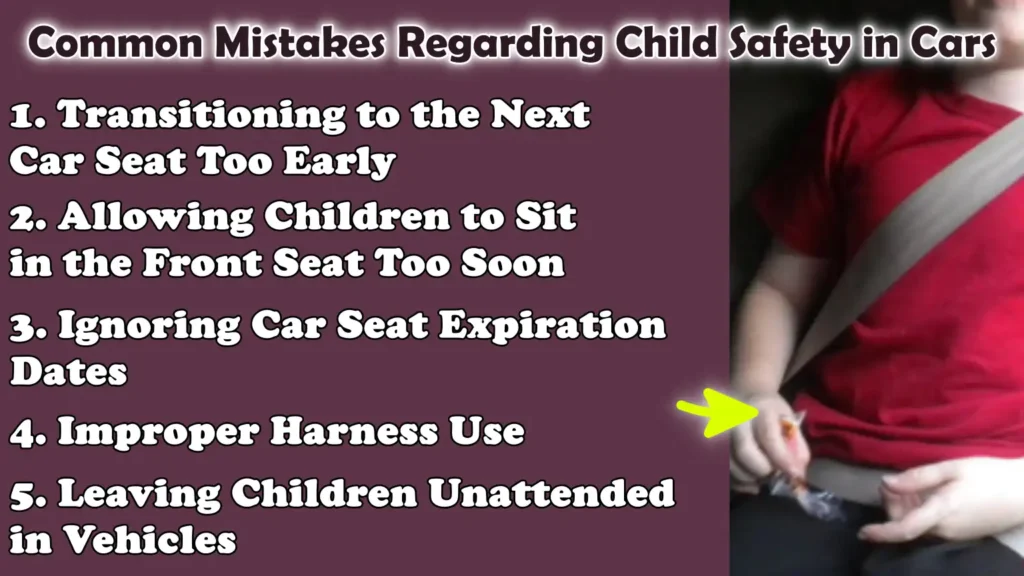
Often, children are injured not because parents completely disregard safety, but because small, unintentional errors can prove extremely dangerous during an accident or emergency situation.
Even cautious and responsible parents may inadvertently use the wrong type of car seat, leave harness straps too loose, transition their children to the next stage of safety too early, or overlook crucial details regarding vehicle safety.
Safety experts point out that many common mistakes related to child safety in cars can be entirely prevented through proper knowledge and consistent good habits.
A child’s body is still growing and developing; therefore, improper safety practices can significantly increase the risk of serious injuries, particularly to the head, neck, spine, chest and internal organs, in the event of a sudden stop or collision.
Modern vehicles and child safety devices are designed to protect children as effectively as possible; however, their safety systems function correctly only when used properly.
Understanding the most common mistakes enables parents to make better decisions, enhance safety during daily commutes and reduce the likelihood of preventable injuries in everyday driving situations.
1. Transitioning to the Next Car Seat Too Early
One of the most common mistakes regarding child safety is moving a child to a different type of car seat before they have fully exceeded the height or weight limits of their current seat.
Many parents make this transition, moving a child from a rear-facing seat to a forward-facing seat, or from a harnessed seat to a booster seat, simply because the child appears “big enough,” demands greater freedom, or seems uncomfortable.
However, making this switch prematurely can significantly jeopardize a child’s safety during an accident.
Rear-facing seats provide the best support for an infant’s or toddler’s head, neck and spine, as they distribute the force of a collision across the entire back of the body, rather than concentrating the pressure on the delicate structures of the neck.
Placing a child in a forward-facing seat too soon can increase the risk of severe neck and spinal injuries in the event of a head-on collision.
Similarly, booster seats should not replace harnessed forward-facing seats until the child is physically large and mature enough to use a booster seat correctly.
Children who begin using adult seat belts prematurely are at risk of abdominal or chest injuries, as standard seat belts are designed to fit adult body dimensions.
Safety experts strongly recommend keeping children in each stage of safety restraint, within the height and weight limits specified by the manufacturer, for as long as possible; this is because utilizing more protective restraint systems for a longer duration generally provides superior protection in the event of an accident.
2. Allowing Children to Sit in the Front Seat Too Soon
Allowing children to sit in the front seat prematurely is another major safety error that increases the risk of injury during an accident.
The back seat is generally considered safer for children, as it keeps them away from the primary impact zones and the powerful front-mounted airbags during a collision.
Front airbags are designed to protect adult passengers during severe collisions and they deploy at very high speeds within just a few milliseconds.
For young children, particularly those using rear-facing car seats or booster seats, the rapid deployment of an airbag can cause severe injuries to the head, neck, face and chest.
Rear-facing seats placed in front of an active airbag are specially dangerous, as the back of the child seat sits very close to the dashboard, from where the airbag deploys.
Even older children, who may appear tall enough to sit in the front seat, may be at a heightened risk of injury, as their bodies have not yet fully developed to the same extent as those of adults.
In accordance with vehicle safety guidelines and recommendations regarding child travel, safety experts advise that children should be seated in the back seat whenever possible.
Parents should also ensure that children are seated properly and that their seatbelts are positioned correctly; leaning forward, slouching, or resting one’s feet on the dashboard can increase the risk of injury during an accident.
3. Ignoring Car Seat Expiration Dates
Many parents do not realize that car seats have expiration dates and that older seats can no longer provide the same level of safety during accidents.
The materials used to manufacture car seats such as: plastic shells, foam padding, harness straps and buckles, gradually degrade over time due to heat, sunlight, temperature fluctuations, humidity and daily use.
As these components age, they may become more brittle or less capable of effectively absorbing the impact forces generated during a crash.
Safety standards and crash-testing requirements also evolve and improve over the years, meaning that older car seats may not meet current safety recommendations.
Most manufacturers place an expiration label or the date of manufacture directly on the seat itself, allowing parents to determine when the seat needs to be replaced.
Using an expired car seat can increase the risk of injury, as degraded or weakened components may fail during a collision.
Parents should also avoid using used (second-hand) car seats unless they have full knowledge of the seat’s complete history, including whether it has ever been involved in an accident.
A car seat damaged in an accident may harbor internal structural weaknesses, even if no external damage is visible.
Replacing expired or damaged car seats is a crucial aspect of ensuring a child’s safety.
4. Improper Harness Use
Improper harness use is one of the most common issues related to child car safety and it can significantly compromise the effectiveness of a car seat during an accident.
If the harness straps are too loose, a sudden jolt could cause excessive movement of the child’s body, or the child could even partially slip out of the seat.
Safety experts recommend performing a “pinch test” to verify the tightness of the harness; this ensures that no excess strap material can be easily pinched between your fingers near the child’s shoulders.
Twisted straps are another common issue, as a twisted strap cannot distribute the impact forces of an accident evenly across the entire body, potentially subjecting a small area of the body to excessive pressure during a collision.
Parents should also verify that the harness straps are positioned at the correct shoulder level, the proper positioning depends on whether the child is seated in a rear-facing or forward-facing position.
The chest clip must always be positioned at the level of the child’s armpits; if it is not in the correct location, the harness could shift out of place during an accident.
Heavy winter jackets and bulky clothing can also create hidden slack in the harness tension; this occurs because the soft fabric compresses upon impact, creating a gap between the harness and the child’s body.
It is crucial to regularly check the harness fit before every trip, as children often shift their positions, loosen the straps, or change their seating posture while the vehicle is in motion.
5. Leaving Children Unattended in Vehicles
Leaving children unattended in vehicles is one of the most dangerous mistakes regarding child safety, as situations that appear harmless on the surface can escalate into critical emergencies within just a few minutes.
The risk of heatstroke is particularly high, as the temperature inside a vehicle rises very rapidly in warm weather, even if the windows have been left slightly open.
Children’s bodies heat up much faster than those of adults, significantly increasing their risk of dehydration, organ failure and life-threatening heat-related illnesses.
Many tragic incidents occur because caregivers assume they will return shortly, or because they inadvertently forget a child sleeping in the back seat.
Safety experts strongly advise always checking the back seat before locking a vehicle and cultivating habits that help prevent errors caused by forgetfulness.
Children left unattended may accidentally start the vehicle, get trapped in power windows, access hazardous objects, or sustain injuries while playing inside the car.
Cold weather also poses additional risks, as the temperature inside a parked vehicle can plummet to dangerously low levels, even for a brief period, endangering the lives of young children.
Parents should never leave children alone in a vehicle, whether to run a quick errand, make a brief stop, or even while the engine is running, as unexpected situations can arise very rapidly.
To prevent these entirely avoidable tragedies, vigilant supervision and the consistent practice of safety habits are absolutely essential.
So, What to Do After a Car Accident
A car accident can be a frightening and stressful experience for both children and adults; however, knowing exactly what steps to take immediately after an accident can help protect children from further harm and mitigate long-lasting physical and emotional effects.
Even minor collisions can result in injuries that are not immediately apparent, as children’s bodies are still developing and may react differently to sudden physical trauma.
Following an accident, parents and caregivers should remain as calm as possible, as children often look to adults for comfort and emotional stability during emergency situations.
Appropriate actions to take after an accident include checking for injuries, seeking medical advice, assessing the condition of car seats and ensuring that children feel emotionally secure before resuming their normal travel routines.
Safety experts point out that symptoms of certain injuries may not manifest immediately; therefore, careful monitoring and a professional medical examination are crucial, even if the child initially appears to be fine.
Understanding how to react after an accident can help families protect their children more effectively and prevent additional safety-related risks in the future.
1. Checking for Injuries in Children
After a car accident, parents should carefully check children for both visible and hidden injuries, as some serious issues may not become apparent immediately following the crash.
Children may feel frightened, in shock, or confused and they are not always able to articulate their pain clearly, particularly young children, who may be unable to fully describe their symptoms.
Parents should keep a close watch for symptoms of injury, such as scrapes, swelling, bleeding, difficulty moving, unusual drowsiness, dizziness, vomiting, headaches, difficulty breathing, neck pain, or changes in behavior.
Even if no obvious external injuries are visible, hidden issues such as: a concussion, internal injuries, whiplash, or soft tissue damage, may still be present, as the physical trauma sustained during an accident can affect the body in ways that are not immediately apparent.
Infants and young children require particularly close monitoring, as their neck muscles, spines and internal organs are more vulnerable during a collision.
Safety experts strongly recommend seeking a medical examination after an accident, specially if the child experienced a sudden, forceful jolt, if an airbag deployed, or if significant pressure was exerted on the body by a seatbelt.
Through a professional examination, doctors can detect injuries that parents might otherwise fail to identify at home.
Following an accident, parents should continue to monitor their children for several hours, and even several days, as symptoms of injury can sometimes manifest with a delay.
Emotional reactions such as: fear, crying, clinging to parents, difficulty sleeping, or becoming unusually withdrawn, may also indicate that the child is experiencing psychological distress following the accident and may require additional emotional support.
2. Replacing Car Seats After an Accident
Many parents do not realize that a car seat involved in an accident, even if it appears to be in good condition visually, may no longer be capable of providing adequate protection to the child.
During a collision, the car seat absorbs the full force of the impact in order to protect the child; This stress can compromise the structural integrity of the seat, the harness system, the foam padding, or the attachment points.
Minor cracks, hidden internal damage, or weakened components may not be visible to the naked eye; nevertheless, they can significantly diminish the seat’s protective capabilities in future accidents.
Safety experts and manufacturers often recommend replacing car seats following moderate to severe collisions, as a post-collision seat may no longer meet established safety standards.
Some companies recommend replacing a seat after any accident, regardless of its severity; conversely, other companies may permit the continued use of a seat following minor incidents, provided that specific safety criteria are met.
Parents should carefully review the instructions provided by the car seat manufacturer and adhere to the advice outlined in the owner’s manuals for both the vehicle and the car seat.
Insurance companies may also assist with the cost of replacing car seats damaged in accidents; therefore, many safety experts advise retaining purchase receipts and accident-related documentation for insurance purposes.
Continuing to use a compromised or damaged car seat can heighten the risk to children in future accidents; for this reason, when deciding whether to replace a seat, safety should always take precedence over convenience or cost savings.
3. Helping Children Feel Safe Again
A car accident can impact children both emotionally and physically.
Many children may continue to feel nervous, anxious, or frightened about riding in a car for a considerable time after the accident has occurred.
Some children may cry excessively, display fear during travel, experience difficulty sleeping, or repeatedly ask questions about the accident, this happens because they are attempting to make sense of what actually took place.
Parents play a crucial role in helping children feel safe again; to achieve this, they should adopt a calm, patient and reassuring demeanor during conversations and throughout future car journeys.
Children should be encouraged to express their emotions openly, without fear of pressure or criticism, so that they feel fully supported rather than overlooked.
Explaining the accident in simple, age-appropriate language can also help children better comprehend the experience and alleviate any confusion or fears.
Gradually returning to a normal travel routine can also be helpful in reducing anxiety, particularly when parents demonstrate a calm and confident attitude while driving.
Parents can also remind children about the safety measures being utilized for their protection such as: seat belts, car seats and safe driving habits, as understanding these safety protocols can enhance a child’s sense of security.
In some instances, children may continue to exhibit significant emotional distress or fear for an extended period; in such cases, seeking professional assistance from pediatricians or mental health specialists can prove beneficial.
Emotional recovery following an accident is just as vital as physical recovery, as children who feel emotionally secure are more likely to regain their confidence and comfort during future travels.
Know, The Expert Advice and Safety Guidelines
Advice regarding child safety is grounded in years of medical research, crash testing, injury analysis and investigations into real-world accidents.
The objective of these guidelines is to provide children with the utmost protection while traveling in vehicles.
Safety experts, pediatricians, government agencies and certified technicians continuously study the impact of accidents on children’s bodies and how safety systems can mitigate the risk of injury.
These recommendations are of paramount importance because children differ physically from adults and require specific safety measures tailored to each stage of their growth and development.
When families adhere to expert advice such as: using car seats, ensuring proper seat belt positioning, installing seats correctly, selecting safe seating locations and conducting regular safety checks, many serious injuries can be prevented.
Parents must understand that child safety guidelines may evolve over time, as new research, advanced technology and updated crash testing provide greater insight into the safest methods for transporting children.
Staying informed about expert recommendations empowers families to make safer decisions and enhances safety during daily commutes, long road trips and emergency situations.
As well as, there’s government safety research that actually shows that properly installed car seats and booster seats literally improves the child protection during the crashes, also experts from NHTSA shows that moving children to the next seat stage too early can increase the risk of serious injuries.[¹]
1. Advice from Pediatricians
Pediatricians emphasize that prioritizing appropriate child safety measures is the most effective way to protect children from serious injuries and fatalities during vehicular accidents.
Medical experts advise that the selection of a car seat should not be based solely on a child’s age, but rather on their height, weight and developmental stage.
Pediatricians consistently recommend that infants and young children be seated in rear-facing car seats for as long as possible, specifically until they reach the maximum limits specified by the manufacturer.
This is because rear-facing seats provide better support to the head, neck and spine during accidents.
Once children outgrow rear-facing seats, they should continue to use forward-facing seats equipped with a harness system.
They should not transition to booster seats until they have reached the specified height and weight limits.
Pediatricians also emphasize the importance of booster seats, as seat belts designed for adults do not fit properly on a young child’s body.
Seat belts that cross over the abdomen or neck can cause severe injuries in the event of a sudden jolt.
Another crucial piece of advice from child health experts is to conduct regular safety checks.
This ensures that the harness straps are properly tightened, the straps are not twisted, the chest clip is positioned correctly and the car seat is securely installed.
Pediatricians also advise parents to avoid distractions while driving, to always seat children in the back seat and never to leave them unattended inside the vehicle.
By seeking regular medical advice from health experts and staying informed about the latest safety guidelines, families can remain knowledgeable about the safest ways for children to travel.
2. Guidelines from Government and Safety Organizations
Government agencies and road safety organizations provide comprehensive guidelines for child safety based on research into accidents, studies on injury prevention and national traffic safety statistics.
Organizations such as the National Highway Traffic Safety Administration (NHTSA) and the Centers for Disease Control and Prevention (CDC) strongly recommend the correct use of age-appropriate car seats, booster seats and seat belts during every trip, regardless of the distance traveled.
National highway safety recommendations often include keeping children in rear-facing seats for as long as possible, correctly using forward-facing harnesses, continuing to use a booster seat until an adult seat belt fits properly and seating children in the back seat for enhanced safety.
Government safety organizations also emphasize the importance of reading both the car seat manual and the vehicle owner’s manual, as installation procedures and safety features can vary between different vehicles and seat models.
Laws and regulations regarding child safety vary across different regions; however, in most places, specific safety restraint systems are mandated based on age, height, or weight.
These laws are designed to minimize injuries and promote consistent safety practices.
Parents should remember that minimum legal requirements are not always the safest option; for this reason, many safety experts encourage families to follow safety-related best practices and recommendations, even after meeting the minimum legal standards.
New safety campaigns, educational programs and public awareness initiatives continuously help families better understand how to ensure the safety of children during vehicle travel.
3. Professional Car Seat Inspection Services
Professional car seat inspection services provide invaluable assistance to parents who wish to ensure that their child’s car seat is installed correctly and being used properly.
Certified “Child Passenger Safety Technicians” undergo specialized training to identify installation errors, improper harness adjustments, unsafe seating positions and other issues that many parents might otherwise overlook.
Studies have shown that incorrect car seat installation is surprisingly common, even among careful and experienced caregivers, which is why a professional inspection can significantly enhance safety.
During an inspection, technicians can check for seat movement, harness tightness, chest clip positioning, recline angle, proper use of lower anchors, tether attachments and overall compatibility between the car seat and the vehicle.
They can also explain what adjustments need to be made to the seat as the child grows and when the appropriate time is to transition to the next stage of safety.
A variety of inspection services are available through hospitals, fire departments, police departments, community safety organizations, pediatric clinics and programs dedicated to child passenger safety.
In some areas, special safety check events are also organized, where parents can receive hands-on guidance and information regarding the correct use of car seats.
With professional assistance, parents gain confidence and peace of mind; furthermore, it helps reduce preventable injuries to children caused by common errors in car seat installation.
Conclusion – How to Keep Kids Safe In Car
Keeping children safe in the car is one of the most critical responsibilities of parents and caregivers, as children rely entirely on adults for their safety during every journey.
Car accidents are one of the leading causes of serious injury and death among children worldwide; however, many of these tragic incidents can be prevented through proper safety habits, the correct use of car seats, responsible driving and regular safety checks.
Child safety involves more than just complying with laws or purchasing expensive safety equipment; it also entails understanding how children’s developing bodies react differently during accidents and implementing appropriate safety measures for each stage of development.
From newborns seated in rear-facing car seats to teenagers learning safe passenger behaviors, every age group requires careful attention and distinct levels of protection.
The most important point for parents to remember is that, during an accident, even minor errors can pose serious risks.
Loose harness straps, improperly fastened seat belts, moving children to the front seat too soon, permitting unsafe behavior inside the vehicle, or leaving children unattended in the car, all of these actions can lead to preventable injuries.
Conversely, small safety habits practiced consistently on a daily basis can significantly enhance safety.
Now, you can ask more questions in the comment below.
Frequently Asked Questions
FAQ 1: What is the safest way to keep children safe in a car?
Answer: The safest way to keep children safe in a car is to use the correct car seat or booster seat appropriate for the child’s age, height and weight and to ensure that it is installed correctly every time. Children should always sit in the back seat, as they receive greater protection there in the event of an accident. Parents must also ensure that the harness straps are fastened snugly, the seatbelt is positioned correctly and the child remains seated properly throughout the entire journey. Safe driving habits such as: avoiding distractions, adhering to speed limits and maintaining a safe distance from other vehicles, also play a crucial role in keeping children safe during travel.
FAQ 2: Why is the back seat safer for children?
Answer: The back seat is considered safer because it keeps children away from the areas where the risk of injury is highest during an accident and it also keeps them away from potentially dangerous front airbags. Front airbags deploy at very high speeds to protect adults; however, deploying at such high speeds can cause severe injuries to small children, particularly infants and toddlers. In head-on collisions, which are among the most common types of accidents, children seated in the back seat face a lower risk of injury compared to those seated in the front seat. Safety experts recommend that, whenever possible, children should be seated in the back seat.
FAQ 3: How long should a child remain in a rear-facing car seat?
Answer: Children should remain in a rear-facing car seat until they reach the maximum height or weight limits specified by the car seat manufacturer. Rear-facing seats offer the best protection for a child’s head, neck and spine because, during a collision, they distribute the force of the impact across the child’s entire back. In many modern rear-facing seats, children can remain in a rear-facing position for a significant portion of their early childhood; this is considered safer than transitioning them to a forward-facing seat too early.
FAQ 4: When can a child sit in a forward-facing car seat?
Answer: A child can sit in a forward-facing car seat only after they have outgrown the height or weight limits specified for their rear-facing seat. Parents should not rush to make this transition simply because the child is growing older or desires more freedom. Forward-facing seats should always be used in conjunction with a properly tightened harness system, as the harness helps restrain body movement during an accident and reduces the risk of injury.
FAQ 5: Why are booster seats important for children?
Answer: Booster seats are crucial because they help position the vehicle’s seat belt correctly across the strongest parts of a child’s body. Without a booster seat, the seat belt may rest dangerously across the child’s abdomen or neck, thereby increasing the risk of serious injury in the event of an accident. Booster seats elevate children to a safer seating position, ensuring that the lap belt fits securely across their hips and the shoulder belt fits properly across their chest and shoulders.
FAQ 6: At what age can children use a standard seat belt?
Answer: Children can safely use a standard seat belt only when it fits them correctly without the aid of a booster seat. This typically occurs when a child becomes tall enough to sit fully upright with their back resting against the vehicle seat’s backrest and their knees can bend naturally at the edge of the seat. The lap belt should rest low across the child’s hips and upper thighs, while the shoulder belt should pass across their chest and shoulders without touching their neck. Many children require a booster seat for a longer period than their parents might expect, as the proper fit of a seat belt depends not solely on age, but also on the child’s body size.
References:
[1] Car Seats and Booster Seats
https://www.nhtsa.gov/vehicle-safety/car-seats-and-booster-seats

Guys, I’m a car audio enthusiast and customization expert and I love clear sound and clean installation. Plus, I have spent years helping people build their dream audio setups. And whenever I’m working on cars, I probably listen to music and thinks about the next big upgrade.