
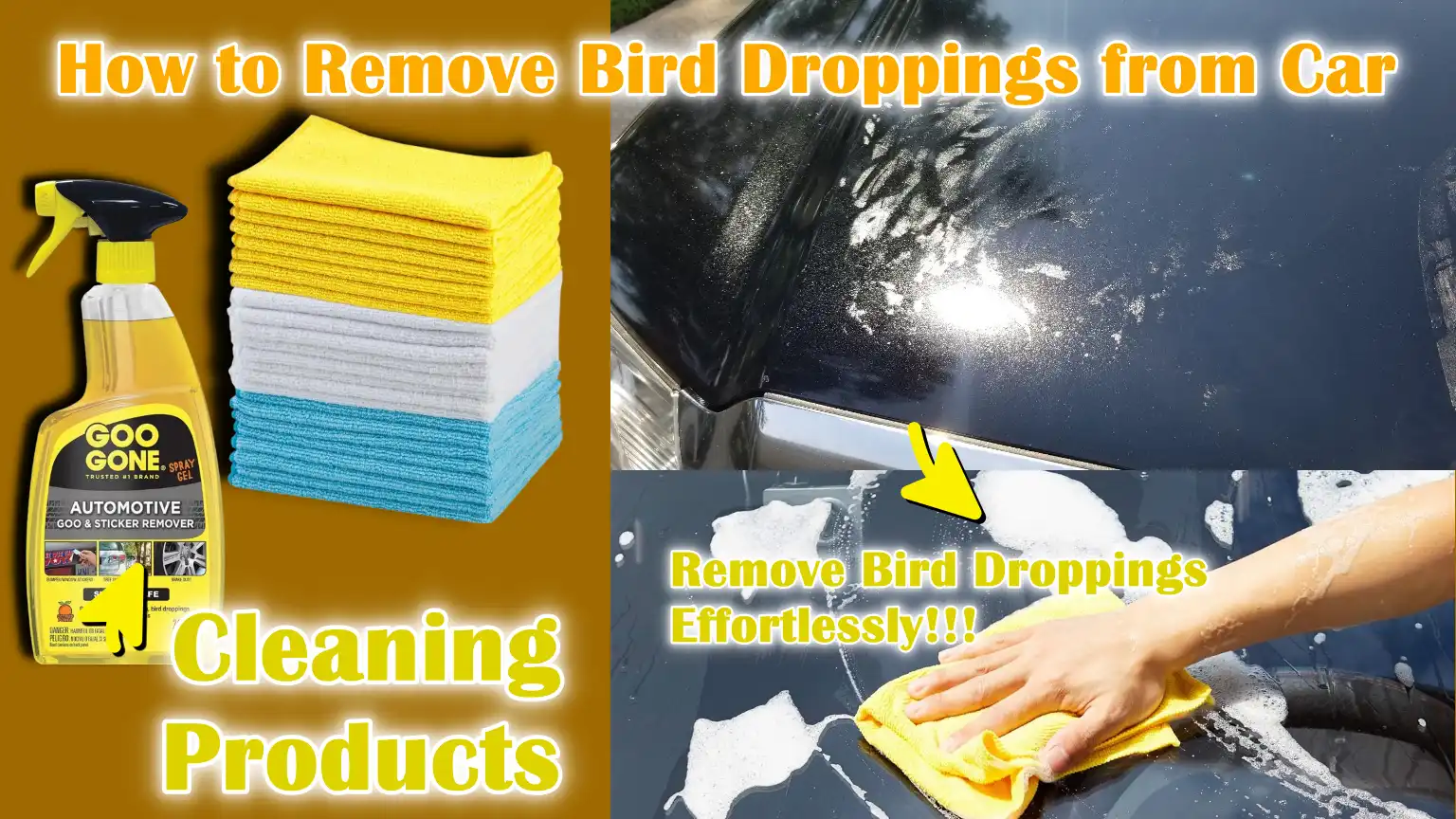
Written By: Don Dodi
Fact Checked By: Kristen Brown
Reviewed By: Diego Rosenberg
Yes, most of the car owners don’t realize about the fact that bird waste can literally start damaging the paint within the matter of hours, not in days.
Because the bird droppings contains uric acid, digestive enzymes and partially digested food particles as well: so together all these things creates a highly acidic and abrasive mixture that can seriously damage your car’s paint in a surprisingly short time.
Plus, when bird droppings sits on your car’s clear coat: and specially under the direct sunlight, it can actually start breaking down the protective layer and could leave permanent marks as well.
Additionally, now-a-days modern automotive paint systems typically comes with 3-layers: primer, color coat and clear coat: so the clear coat is designed to provide the protection underneath the color, but it is still vulnerable to chemical etching.
And, if you lives in the hot region of united states, then the problem will become worse as it accelerates the chemical reactions and cause the paint surface to expand, that literally allows the acidic residue to penetrate in more easily.
Moreover, over the period of time this thing leads to the dull spots, staining, rough textures or even the clear coat can be failed as well, that’s why we have specifically focuses on How to Remove Bird Droppings from Car, so that you can apply right method and quick action to save your paint from possible scratches and prevent ugly and costly repairs as well.
Why Bird Droppings Are Dangerous for Car Paint
Bird droppings aren’t just dirt on your car.
They’re a mixture of uric acid, digestive waste, bacteria and tiny dust particles released from bird feeding.
Modern car paint consists of three main layers: a primer, a color coat and a clear coat.
The clear coat protects the color and gives the car a shine, but it’s still sensitive to harsh chemicals.
Bird droppings are naturally acidic and when they settle on a surface, they react with the clear coat.
This reaction can weaken the paint and leave stains or rough spots.
If the droppings dry, the problem worsens because they harden and shrink, pulling harder on the paint surface.
This pressure, combined with the acid, increases the risk of permanent marks.
That’s why bird droppings are considered one of the most harmful common contaminants for car paint.
1. Why is bird droppings so acidic?
Birds excrete both solid and liquid waste simultaneously.
Unlike humans, birds don’t produce separate liquid urine.
Instead, they excrete uric acid, a highly acidic compound.
Uric acid is very strong and doesn’t dissolve easily in water, which is why bird droppings often leave stubborn white stains.
Additionally, bird food may contain seeds, insects, berries and small stones, which add enzymes and irritating particles to the waste.
The combination of acid and irritating particles causes both chemical and physical damage.
This mixture can begin to react with car paint almost immediately, specially if it’s not cleaned up quickly.
2. How uric acid damages clear coats
The clear coat on your car is designed to protect the colored paint underneath, but it isn’t completely resistant to acids.
When uric acid accumulates on a surface, it begins to break down the outer layer at a microscopic level.
The acid softens and weakens the clear coat, making it more susceptible to stains or scratches.
As the droppings dry, they can adhere to the surface.
When the surface cools at night and warms up again during the day, the clear coat expands and contracts.
This movement allows the acid to penetrate deeper.
Over time, it can leave a visible mark that appears pale, blurry, or slightly raised.
If the damage penetrates the clear coat, the colored paint underneath may also be affected.
3. How quickly can bird droppings damage paint?
Many people believe that bird droppings take days or weeks to damage paint, but this is not true.
In warm weather, paint damage can begin within a few hours.
The exact time depends on temperature, sunlight and how fresh the droppings are.
On hot days, the car’s surface can reach very high temperatures, accelerating chemical reactions.
This means the acid works faster and penetrates deeper.
Even in mild weather, droppings left overnight can sometimes cause light stains.
The longer the droppings remain on the paint, the greater the chance of permanent etching, which may require polishing to remove.
4. Effects of Heat and Sunlight
Heat plays a major role in the extent of deterioration.
When a car is parked in direct sunlight, the paint surface heats up rapidly.
Heat accelerates the chemical reaction, making the acids in bird droppings more effective.
Furthermore, droppings dry and harden quickly.
As they dry, they shrink and create a strain on the paint surface.
This strong bond makes them difficult to remove and increases the risk of scratches during cleaning.
Sunlight also slightly expands the clear coat, allowing the acid to penetrate deeper into the surface.
This is why damage is often more severe during the summer months or in hot weather.
5. Long-Term Damage If Left Untreated
If bird droppings aren’t removed promptly and properly, the damage can be permanent.
Initially, you may notice a small, faded spot or stain.
Over time, repeated exposure can lead to deep etching, rough texture and, in severe cases, clearcoat failure.
Once the clearcoat is damaged, the colored paint underneath is exposed to sunlight, moisture and air, causing it to fade and peel.
Repairing this type of damage often requires machine polishing or repainting, which can be expensive.
Regular inspection and prompt cleaning are simple steps that can protect your car’s appearance, resale value and long-term durability.
What You Should Do Immediately After Spotting Bird Droppings
As soon as you notice bird droppings on your car, it’s important to act quickly and carefully.
Bird droppings contain acidic compounds that react with your car’s clear coat as soon as they land on the surface.
The longer they remain, the greater the damage.
Modern car paint systems are built in layers and the top clear coat is designed to protect the paint underneath, but it isn’t completely resistant to strong acids.
Immediate attention can prevent surface damage before it becomes permanent.
The goal is to safely remove the dirt without spreading or rubbing it into the paint.
Working calmly and using the right method can prevent stains, faded spots and costly paint corrections later.
1. Take Immediate Action to Prevent Etching
Time is precious when dealing with bird droppings.
In hot or sunny weather, the surface temperature of a parked car can increase significantly, accelerating chemical reactions.
This heat helps the acid break down the clear coat more quickly.
Even a few hours in direct sunlight can increase the risk of visible marks.
Removing the droppings as soon as possible greatly reduces the risk of marks forming.
If you’re away, gently rinsing the area with clean water can slow the chemical reaction until you’ve thoroughly rinsed it off.
The quicker you respond, the less risk you have of permanent damage.
2. Avoid Scratching or Rubbing Dry Droppings
It’s very important not to scratch, scrape, or rub the bird droppings when they’re dry.
Dry droppings harden and may contain small particles like sand or seeds.
If you rub them hard, these particles can act like sandpaper and scratch the clear coat.
Scratching with nails, cards, or other hard objects can leave deep marks that are difficult to repair.
Instead, the safest approach is to first soften the dirt with water or a mild car-safe cleaning solution.
Allowing the moisture to soak in loosens the material so it can be safely removed without damaging the paint.
3. Move the Car to the Shade
If your car is parked in direct sunlight, if possible, move it to a shaded area before cleaning.
Heat accelerates chemical damage and also causes cleaning products or water to dry faster.
When the surface is cool, the paint is less stressed and less likely to react violently with residual acids.
Cleaning in the shade gives you more time to safely soften and remove the dirt without leaving water spots.
A cool surface makes the entire cleaning process safer and more effective.
4. Assess the depth of the stain
After removing the dirt, examine the area carefully in good light.
When you gently run a clean microfiber cloth over it, see if the surface feels smooth or slightly rough.
A smooth surface usually means the clear coat is still in good condition.
If you notice hazy spots, slight discoloration, or a small outline on the dirty area, it could be due to light etching.
In that case, a light polishing may be necessary to restore the shine.
If the area appears extremely worn or rough, the clear coat may be more severely damaged.
Carefully examining the condition can help you determine whether cleaning alone is sufficient or if the paint needs further repair.
Tools
| Item | Usefulness of These Items |
|---|---|
| Microfiber Towels | They absorb bird droppings and wipe them away safely without leaving marks or fine scratches. Always use a clean towel to prevent stains from adhering to the paint. |
| Spray Bottle with Clean Water | Spraying water on the area slowly dissolves the droppings, making them easier and safer to remove. This also reduces the risk of scratches. |
| Car Wash Shampoo – pH Neutral | When mixed with water, they safely remove remaining dirt and clean the surface without removing any protection. They are safer than household cleaners. |
| Quick Detailer Spray | Spraying them before wiping allows the towel to glide easily, which helps remove light stains and maintain shine. |
| Bird Dropping Remover Products | They dissolve dirt faster than water alone and, when used correctly, reduce the risk of permanent etching. |
| Warm Water | Soaking or soaking in warm water gradually removes stains, making wiping safer and more effective. |
| Soft Sponge or Applicator Pad | This helps to gently apply the shampoo or cleaner to the area, without applying too much pressure which may scratch the paint. |
How to Remove Fresh Bird Droppings – Easy Method
Fresh bird droppings are much easier to remove than dried droppings, but if handled incorrectly, they can damage your car’s paint.
Although droppings may appear soft, they contain acidic waste and small particles that can scratch the clear coat.
The clear coat is the top protective layer of your paint system and once damaged, polishing or professional repair may be required.
The safest approach is to reduce friction, increase lubrication and avoid pressure.
The goal is not to scrub the surface, but to safely remove the dirt while maintaining the paint’s smooth finish and shine.
1. Pre-Soak the Area
The first and most important step is to soak the area with clean water or a car-safe spray.
The moisture softens the droppings and begins to dilute the acid.
The edges of fresh beets may also be slightly rough, specially if they’ve been exposed to sunlight for some time.
Overspraying can cause liquid waste to soak in and loosen its grip on the surface.
Let the water sit for a minute or two to fully soften the material.
This step reduces the need for scrubbing, thereby reducing the risk of scratching the paint.
2. Gently Loosen Dirt
After soaking, use a clean microfiber towel or a very soft sponge to gently touch the area.
Don’t apply pressure.
The idea is to allow the softened dirt to come off on its own.
If the dirt doesn’t come off easily, add more water or cleaning solution and let it soak for longer.
Removing it too quickly can embed small particles into the clearcoat, causing swirl marks or fine scratches.
Gentle contact with proper lubrication is the safest way to protect painted surfaces.
3. Wipe using a blotting motion
Instead of wiping back and forth, use a blotting or lifting motion.
Gently press a wet microfiber towel onto the area and lift it straight up.
This method reduces sideways movement, which can cause dirt to settle on the paint.
If any stains remain, turn the towel over to a clean side before touching the surface again.
Using a new, clean side of the towel each time prevents spreading the dirt.
This careful approach helps remove spills and keeps the clear coat smooth and undamaged.
4. Rinse thoroughly
After removing spills, rinse the area with clean water to remove any remaining acid or cleaning product.
Even small traces of stains can react with the paint.
Rinsing ensures that the surface is completely clean of any harmful substances.
If possible, rinse a large area around the stain to remove small particles.
Proper rinsing also prepares the surface for drying without leaving streaks or water marks.
5. Dry the area properly
After rinsing, dry the area with a clean, soft microfiber towel.
Gently pat the surface dry instead of vigorously rubbing it.
Drying is important because allowing water to air dry can create mineral spots, specially if the water is hard.
These spots can leave light stains on the paint.
Proper drying smooths the finish and allows you to see any remaining marks on the area.
If the surface appears smooth and shiny, you have successfully removed fresh bird droppings without damaging your car’s paint.
How to Remove Dried or Hardened Bird Droppings – Effective Method
Dried or hardened bird droppings are more dangerous than fresh ones because they have time to react with the paint.
When bird droppings dry, they shrink and harden on the surface.
This puts pressure on the clear coat and increases the risk of etching.
The dried layer can also trap small particles like sand or pebbles, which, when rubbed, can scratch the paint.
The key to safe removal is patience.
You must completely soften the material before attempting to lift it.
Rushing the process or applying force can cause more damage than the droppings themselves.
Working slowly and gently protects the clear coat and reduces the risk of permanent marks.
1. Soften the droppings with warm water
Hot water is very effective because heat helps break down the hardened residue faster than cold water.
Pour or spray warm water onto the affected area and let it sit for a few minutes.
The moisture slowly penetrates the dried dirt and loosens its bond with the paint.
This step reduces friction and makes the next step safer.
If the weather is hot, try to work in the shade so the water doesn’t dry too quickly.
It’s important to keep the surface wet, as dry rubbing can cause scratches.
2. Use the Wet Microfiber Towel Method
After applying warm water, place a clean microfiber towel soaked in warm water directly onto the dirt.
Leave the towel on the area for a few minutes.
Apply gentle pressure to keep the area moist and break down the hardened layer.
The longer it stays wet, the easier it will be to remove safely.
This method avoids direct rubbing and allows any remaining dirt to loosen on its own.
Microfiber is essential because it is soft and designed to remove dirt without damaging the paint surface.
3. Apply a Car Shampoo Solution
When the dirt begins to soften, apply a pH-neutral car shampoo mixed with water.
This type of shampoo is specifically formulated for automotive paint and won’t strip wax or damage the clear coat.
The shampoo provides lubrication, reducing friction during cleaning.
It also helps dissolve any remaining residue that water alone can’t remove.
Using the right car care products is safer than household cleaners, which can be too harsh and further damage the paint.
4. Lift Gently Without Scrubbing
After soaking and shampooing, gently wipe the area with very light pressure.
The goal is to lift the softened material, not rub it into the paint.
Use a lifting or gentle rolling motion instead of vigorous back-and-forth scrubbing.
If the remaining area doesn’t come off easily, repeat the soaking process instead of increasing the pressure.
Scrubbing can cause marks and fine scratches that may require polishing to repair.
Patience and gentle movements are more effective than force.
5. Inspect the Remaining Area
When the area appears clean, rinse it with fresh water and dry it with a soft microfiber towel.
After drying, examine the surface carefully in good light.
Gently rub the area to feel for rough spots.
If the paint feels smooth and appears shiny, the removal was successful.
If you see faint spots or faint outlines, a light polishing may be needed to restore the finish.
Careful inspection ensures that there are no remaining traces of acid and helps you identify initial etching marks before they become damaged.
How to Remove Bird Drop Stains or Marks – Easy Steps
Sometimes, even after removing bird droppings, a faint outline, light patch, or rough mark remains.
This is because the acid leaves a slight mark on the clear coat.
Marks indicate that the surface has been chemically damaged and is no longer perfectly smooth.
Modern car paint is made up of three main layers and most bird dropping damage occurs only on the top clear coat.
In many cases, this type of damage can be repaired because the clear coat has a fixed thickness, allowing for light polishing.
The most important thing is to accurately determine the depth of the mark and then choose the least impactful method that will safely restore the shine.
Using the correct method will prevent removing excess clear coat and maintain the paint’s long-lasting durability.
1. Check if the damage is superficial
Before attempting any repair method, carefully examine the affected area under a bright light.
If the mark appears as a light spot or small patch and feels smooth when you gently run a clean hand or microfiber towel over it, the damage is likely minimal.
If the surface feels slightly rough, it could be a minor etching.
However, if you see a deeper outline or a small mark, the clearcoat may be more affected.
Surface stains are usually easily repaired with light methods, while deeper etching may require polishing.
Proper inspection can help you avoid unnecessary, major repairs.
2. Use a Clay Bar Treatment
Clay bars are designed to remove surface dirt that doesn’t come off with regular washing.
They work by gently sliding over the paint with lubrication and lifting small particles stuck to the surface.
If bird droppings remain on the clearcoat, clay can safely remove them.
However, it’s important to understand that clay doesn’t repair deep etching; it only removes surface dirt.
Always use the proper lubricant when using clay to avoid scratches.
If the surface becomes smooth after applying the clay, the damage was probably minor and superficial.
3. Apply a Mild Polishing Compound
If a slight mark remains after applying the clay, a mild polishing compound can help remove the mark.
Polishing involves gently smoothing the clear coat around the etched area.
This removes a very thin layer of clear coat to repair the surface.
This process reduces blemishes and restores shine.
It’s important to use a mild polish first, as harsh compounds remove more material and should only be used when necessary.
Apply the polish with a soft applicator pad and light pressure.
Work slowly and check your progress frequently to avoid over-polishing.
4. When to Use Machine Polishing
If the etching is too visible and doesn’t respond to hand polishing, machine polishing may be necessary.
Dual-action polishers distribute pressure evenly and can repair light etching more effectively than hand polishing.
However, machine polishing removes more clear coat, so it should be used with caution.
If used incorrectly, it can cause swirl marks or remove too much of the protective layer.
This method is best for those who understand paint correction or are comfortable using the right equipment.
It should always be done gradually, starting with the least effective pad and polish combination.
5. When to Seek Professional Detailing
If the mark is deep, appears raised, or persists even after careful polishing, professional detailing may be the safest option.
Detailers have paint thickness gauges and advanced polishing tools that can help them measure how much clear coat remains.
In severe cases where the clear coat has failed or the color layer has been affected, repainting may be necessary.
Seeking professional help can prevent further damage and ensure the repair is done correctly.
Taking action quickly, even if the damage seems minor, often prevents the need for expensive paint restoration later.
How & When to Use DIY Home Remedies to Remove Bird Droppings from Car
Sometimes, when you notice bird droppings on your car, you don’t have car care products on hand.
In such cases, some home remedies can help if used carefully and correctly.
It’s important to understand that car paint has a clear coat layer that protects the paint underneath.
This clear coat is strong, but can still be damaged by harsh chemicals or rough scrubbing.
Home remedies should only be used for light cleaning or when proper automotive products are unavailable.
They should always be applied gently and rinsed thoroughly.
The main goal is to soften and remove the droppings without causing scratches or chemical damage.
1. Baking Soda Solution
Baking soda is slightly alkaline and can help neutralize acidic bird droppings.
When mixed with water, it creates a mild cleaning solution that can reduce the effects of the acid.
To use it safely, mix a little baking soda with warm water and gently apply it to the affected area.
Let it sit for a few minutes to soften any remaining dirt.
Baking soda can help break down dried dirt, but it should never be used directly on the paint as a dry powder, as it can rub off.
Always wash the area thoroughly afterward to remove any remaining particles.
This method is best for light dirt and should not replace proper car cleaning products for regular maintenance.
2. Vinegar Solution – Diluted Only
White vinegar is slightly acidic, but when properly diluted with water, it can help dissolve mineral deposits and stubborn residue.
The key word is diluted.
Strong vinegar can damage the clear coat if used directly.
A safe mixture usually contains much more water than vinegar.
Apply it lightly with a soft cloth and leave it on for a few minutes, then gently wipe it away.
Vinegar can help loosen dried stains, specially if they leave behind light stains.
However, because vinegar is still an acid, it should be used only occasionally and then rinsed thoroughly with a gentle hand.
Repeated use on car paint is not recommended.
3. Club Soda Method
Club soda contains carbonated water and small amounts of minerals.
The carbonation can help remove dirt and soften remaining stains.
This method is easy and often used for quick, short-term use.
Pour a little club soda onto the affected area and let it sit for a few minutes.
The moisture and bubbles help loosen the dirt, making it easier to wipe away with a microfiber towel.
This method is generally safe because it doesn’t contain harsh chemicals.
However, it’s more effective on fresh dirt rather than stubborn stains.
After using club soda, rinse and dry the surface thoroughly.
4. Why toothpaste isn’t always recommended
Many people recommend toothpaste for quick stain removal because it contains mild abrasives that can leave surfaces shiny.
While toothpaste can sometimes remove light stains, it isn’t designed for automotive paint.
The abrasive particles in toothpaste can cause fine scratches if used too often.
Some formulas also contain whitening agents or chemicals that may not be safe for clear coats.
If toothpaste is used, it should be a plain white, non-gel type and applied very gently.
However, this isn’t a professional method.
For deeper stains or etching, proper polishing compounds specifically formulated for car paint are safer and more effective.
What Not to Do When Removing Bird Droppings
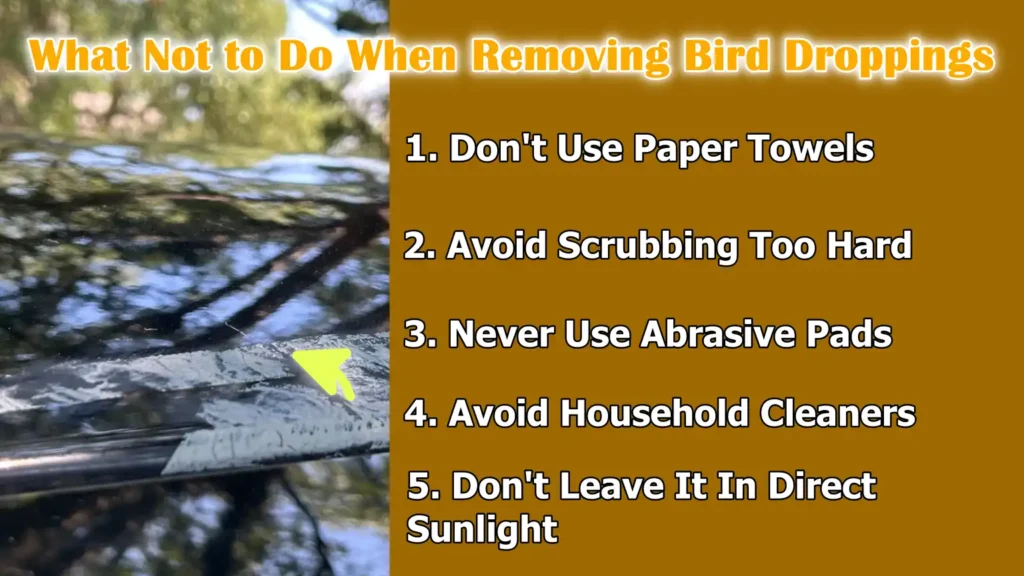
Removing bird droppings improperly can cause more damage than the droppings themselves.
Car paint may appear hard and shiny, but the clear coat layer beneath it is merely a thin protective film.
Once it’s scratched or damaged by chemicals, it can’t repair itself.
Many common mistakes are made because people try to quickly clean the area without considering the friction, heat, or chemical reactions involved.
Understanding what not to do is just as important as knowing the right way.
Avoiding these mistakes protects the paint surface, keeps the finish smooth and can prevent costly polishing or repainting later.
1. Don’t Use Paper Towels
Paper towels may feel soft in your hands, but they’re made of wood fibers that can be rough on car paint.
When you wipe bird droppings with a dry or wet paper towel, the fibers can create fine scratches called swirl marks.
These scratches may not be immediately visible, but appear as faint lines on the surface in sunlight.
Paper towels don’t trap dirt well, which means they can drag tiny dust particles onto the paint.
It’s always safer to use a clean microfiber towel, as it’s designed to lift dirt into its fibers rather than pushing it onto the clear coat.
2. Avoid Scrubbing Too Hard
Rubbing too hard is one of the most damaging mistakes.
Bird droppings often contain small particles like sand, seeds, or dust.
When you rub too hard, these particles act like sandpaper and scratch the clear coat.
Even though the droppings may feel soft, rubbing too hard can embed dirt into the surface.
The correct approach is to soften the area first and apply very light pressure.
Polishing may be required to repair paint damage caused by rubbing and repeated, vigorous cleaning over time can permanently thin the clear coat.
3. Never Use Abrasive Pads
Abrasive pads, rough sponges, or scrubbing tools are designed for hard surfaces like kitchen sinks, not car paint.
These tools may remove stains quickly, but they also remove the clear coat just as quickly.
Even a single use can leave deep scratches that cannot be repaired without machine polishing.
The clear coat layer is thin and once it is significantly removed, repainting may be the only solution.
Always choose soft materials specifically designed for vehicle surfaces.
4. Avoid Household Cleaners
Many household cleaners contain harsh chemicals like ammonia, bleach, or degreasers.
These products are not designed for vehicle finishes and can strip wax, weaken the clear coat, or cause discoloration.
Some cleaners can also react with the paint, causing hazy spots.
Car paint is designed to work with pH-balanced products that clean without damaging the protective layer.
Using the wrong chemicals can cause long-term discoloration and loss of shine.
It’s always safer to use products specifically formulated for car care.
5. Don’t Leave It In Direct Sunlight
Leaving bird droppings on your car in direct sunlight increases the risk of permanent damage.
Heat accelerates the chemical reaction, making the acids in the droppings more potent.
Sunlight can heat the paint surface and when the droplets dry and shrink, they pull tightly against the clear coat.
This pressure increases the risk of etching.
Cleaning in direct sunlight can also cause water and cleaning solutions to dry too quickly, which can lead to water spots or streaks.
Whenever possible, move the car to a shaded area before cleaning to reduce heat and protect the paint.
Read More:
How to Protect Your Car from Future Bird Damage
Preventing bird droppings is much easier and cheaper than repairing the paint later.
Bird droppings contain acidic compounds that react with the clear coat, specially in hot weather.
The best way to minimize damage is to create a protective layer between the paint and external dirt.
Modern car paint systems are durable, but they rely on the clear coat for protection and shine.
When this layer is covered with protective products and smart habits, the risk of permanent stains is significantly reduced.
Regular maintenance, protective coatings and careful parking practices all combine to keep your car’s finish smooth and shiny for years.
1. Apply Regular Wax
Car wax applies a thin protective layer over the clear coat.
This layer protects against dirt, water, sunlight and acidic contaminants like bird droppings.
When droppings fall on a waxed surface, they settle on the wax instead of sticking directly to the paint.
This makes them easier to remove and reduces the risk of scratches.
Most wax products last from a few weeks to a few months, depending on weather and washing habits.
Regular wax applications keep the protective layer fresh.
While wax doesn’t make paint damage-proof, it provides an important first line of defense.
2. Use a Paint Sealant
Paint sealants are synthetic products designed to last longer than traditional waxes.
They bond more strongly to the clear coat and provide longer-lasting protection, often lasting several months.
Sealants protect against heat and chemical exposure, making them useful in areas with intense sunlight.
Because they form a strong protective layer, bird droppings are less likely to adhere strongly to the paint.
This reduces the time acids remain in contact with the surface.
Sealants also enhance shine and make cleaning easier because dirt and grime are more easily removed.
3. Consider Ceramic Coatings
Ceramic coatings offer a more advanced level of protection than wax or sealant.
These coatings create a semi-permanent layer that chemically bonds with the clear coat.
This layer is stronger and more resistant to chemical, heat and environmental damage.
Although ceramic coatings don’t completely protect your car from bird droppings, they significantly slow down the chemical reaction and make cleaning much easier.
Water and dirt are absorbed from the surface, reducing the amount of dirt that comes into contact with the paint.
With proper care, professional ceramic coatings can last for years, providing long-lasting protection and a superior shine.
4. Use a Car Cover
A good-quality car cover prevents bird droppings, tree sap, dust and other environmental contaminants from touching the paint.
This is specially useful if you park outside for long periods of time.
The cover also protects against direct sunlight, reducing heat buildup on the paint surface.
However, it’s important to ensure the car is clean before installing the cover.
Dirt trapped under the cover can cause scratches when the fabric moves.
When used correctly, car covers are a simple and effective way to reduce bird damage.
Also, you can have a look on some great BMW X3 car covers, that provide the ultimate protection from bird droppings and other kinds of harsh elements.
5. Smart Parking Tips
Being selective about where you park can significantly reduce the risk of bird droppings falling on your car.
Avoid parking directly under trees, near light poles, or power lines, where birds often congregate.
Parking in a garage provides the greatest protection from environmental hazards.
If indoor parking is not available, try to choose an open space away from common bird roosting areas.
Paying attention to your surroundings can help prevent frequent littering.
A little knowledge about protective products can keep your car’s paint in good condition and reduce the risk of damage in the long run.
Understand, What are the Special Considerations for Different Surfaces of Cars
Bird droppings don’t just land on painted panels.
They can also land on glass, plastic trim, chrome parts, matte finishes and ceramic-coated surfaces.
Each of these materials reacts differently to acids and cleaning methods.
The main concern for painted panels is clear coat damage, but other surfaces can also stain, fade, or have their finish damaged if cleaned incorrectly.
Understanding the material you’re working with helps you choose the safest method.
Using the wrong product or tool can cause scratches, discoloration, or loss of shine.
The goal is always to soften the droppings first, reduce friction and use the right cleaning product for the surface.
1. Removing Droppings from Glass
Glass is much harder than automotive paint, so it’s less likely to scratch or mark easily.
However, bird droppings can leave mineral stains if left for too long.
Start by wetting the area with water to soften the residue.
Use a soft microfiber towel or glass-safe sponge to gently wipe away the droppings.
If any stains remain, a suitable automotive glass cleaner can help remove them.
If you’re inexperienced, avoid using metal blades or sharp tools, as improper use can scratch the glass.
Thoroughly cleaning the area prevents stains and improves visibility while driving.
2. Removing from Plastic Trim
Plastic trim can be more sensitive than painted metal panels.
Some plastics are textured and can trap stains in small grooves.
If bird droppings are left untreated, they can stain plastic, specially light-colored trim.
Always soften the area with water first.
Use a mild car shampoo solution and a soft brush or microfiber cloth to gently clean textured surfaces.
Avoid harsh chemicals as they can discolor the plastic or remove the protective coating.
After cleaning, applying a plastic protectant can restore the color and help prevent future stains.
3. Removal from Chrome
Chrome surfaces are smooth and shiny, but acidic substances can stain if left on them for too long.
Bird droppings, if not removed promptly, can dull the shine.
Rinse the area with water and gently wipe with a soft microfiber towel.
Chrome is more durable than paint, but it can be scratched if abrasive tools are used.
After cleaning, it’s important to dry the surface to avoid water spots.
Sometimes, applying a light metal polish can restore shine and remove minor stains, but heavy polishing should only be done when necessary to avoid thinning the chrome finish.
4. Removal from Matte Paint
Matte paint requires special care because it doesn’t have a shiny clear coat finish like traditional paint.
Matte surfaces are designed to look flat and polishing them can alter their texture and shine.
Never use wax, polish, or abrasive cleaners on matte paint as they can create shiny stains that cannot be easily removed.
To remove bird droppings, lightly dampen the area with water and, if available, use a matte-safe cleaner.
Pat the area dry instead of rubbing.
Cleaning the surface quickly is specially important because stains are difficult to hide on a matte finish.
5. Removal from Ceramic-Coated Vehicles
Ceramic coating provides an extra protective layer over the clear coat, making it more resistant to chemicals and heat.
While this layer helps reduce damage from bird droppings, it doesn’t completely protect the car.
Nevertheless, droppings should be removed as soon as possible.
The advantage of ceramic coating is that dirt usually settles on top of the coating rather than firmly adhering to the paint.
Soften the finish with water or a pH-neutral cleaner and wipe gently with a microfiber towel.
Avoid harsh chemicals that can weaken the coating.
Regular maintenance ensures that the ceramic coating provides long-lasting protection.
How to Repair Serious Paint Damage from Bird Droppings
Not only this, there’s scientific research that confirms that the bird droppngs do more than just stains: as they chemically interacts with an automotive clear coat, that’s how it weakens its protective properties. As 2011 Progress in Organic Coatings study used FT-IR and electrochemical tests and observe how natural bird waste degrades the clear coat materials over the period of time, this work literally shows that the bird droppings not only leaves the visible marks but can also change the physical and chemical behavior of the paint layers that leads to the weakening of the protective clear coat if left untreated for long.[¹]
When bird droppings remain on paint for too long, specially in intense sunlight, the acid can penetrate beyond minor surface stains and cause more extensive damage.
At this stage, simply washing or lightly polishing may not fully repair the finish.
Serious damage typically affects the clear coat layer and, in some cases, may even penetrate the underlying color coat.
Modern car paint systems are built in layers and once the protective clear coat is removed or damaged, it cannot grow back.
Repairing severe damage requires careful examination and the correct method to prevent the problem from worsening.
Taking immediate action increases the chances of recovery without repainting.
1. Identifying Clear Coat Failure
Clear coat failure occurs when the upper protective layer is permanently damaged or worn away.
Signs include dark faded spots, visible edges of the paint, roughness, or areas that appear dull and cannot be corrected by polishing.
You may also feel a slight pitting or roughness when you gently touch the area.
If the damage has reached the clear coat, the underlying color layer may appear dull or a different shade.
The clear coat is designed to protect against UV rays and chemical exposure, so once damaged, the paint becomes more vulnerable to sunlight damage and oxidation.
It is important to correctly identify this level of damage because polishing alone may not be sufficient.
2. Spot Polishing vs Full Panel Correction
If the damage is limited to a small area, spot polishing may be sufficient.
This involves carefully polishing only the affected area to level the clear coat and restore its shine.
However, if etching or dullness is visible in multiple areas on the same panel, a full panel repair may produce a more uniform result.
Full panel repair ensures a uniform finish and prevents visible differences between polished and unpolished areas.
The choice depends on the extent of the damage.
Always start with the least aggressive method to maintain the maximum thickness of the clear coat.
3. Wet Sanding – For Advanced Users Only
Wet sanding is a more aggressive repair method used to repair deep etching or texture irregularities.
It involves using very fine sandpaper with water to carefully smooth the surface.
This process removes a small layer of clear coat to remove deep marks.
However, wet sanding requires skill, the right tools and an understanding of the paint’s thickness.
Removing too much material can expose the underlying color coat, potentially causing permanent damage.
This method is not recommended for beginners as mistakes can be costly.
It should only be considered when mild polishing methods have failed and when a significant amount of clear coat remains.
4. When Repainting is Necessary
In more serious cases, where the clear coat has completely chipped or the color coat has deteriorated, repainting may be the only surefire solution.
Repainting restores the panel’s protective layers and original appearance.
This process involves sanding the damaged area, applying primer if necessary, repainting with color and sealing it with a new clear coat.
Although repainting is more expensive, it ensures long-term durability and protection.
A professional assessment can help determine whether repair is still possible or whether repainting is the safest and most effective repair option.
Conclusion – How to Remove Bird Droppings from Car
Basically, you need to understand that time, heat and friction are the true enemies, as they literally cause of the paint damage and reducing them leads to the scratch free bird dropping removal.
Because they contain strong acidic compounds, they can react with the clear coat quickly, specially in hot weather.
Also, the clear coat is a thin protective layer that gives your car its shine and protects the paint underneath.
So. once this layer is damaged or worn away, repairs become more difficult and expensive.
But, the key lesson is simple: act quickly, be gentle and avoid anything that could cause abrasion or chemical damage.
As well as, when you softens the pot before use, by using a clean microfiber towel and working in the shade can make a huge difference in protecting your vehicle’s finish.
So, that’s it from this guide and you can ask related queries in the comment section below this guide.
Frequently Asked Questions
Q1. What happens if you leave bird droppings on your car?
Answer: If bird droppings are left on your car, the acid in them can gradually damage the clear coat, which is the top protective layer of the paint. This acid reacts faster when the car is warm, specially in direct sunlight. Initially, you may notice a small, light spot or stain. If left for too long, the acid can corrode the clear coat and create a mark that cannot be removed simply by washing. Over time, repeated exposure can weaken the paint and reduce its shine. In severe cases, repainting may be required. Therefore, prompt removal is crucial.
Q2. How long does it take for bird droppings to damage car paint?
Answer: Damage can begin within a few hours, specially on a hot day. When the car’s surface becomes very hot, the chemical reactions occur more rapidly. In colder weather, it may take longer, but leaving droppings overnight is still unsafe. The longer they remain on the surface, the deeper the acid can penetrate the clear coat. Taking immediate action greatly reduces the risk of permanent etching.
Q3. Can rain safely wash away bird droppings?
Answer: Rain can soften bird droppings, but it doesn’t always remove them completely. In many cases, rainwater spreads them over a larger area instead of wiping them away completely. Furthermore, rainwater may contain minerals and dirt, which can cause water spots. It’s always better to thoroughly clean the area using water and a microfiber towel rather than relying on rain.
Q4. Are bird droppings more harmful in the summer?
Answer: Yes, bird droppings are more harmful in the summer because heat increases chemical activity. When the paint surface is warm, the acids in beets react more quickly with the clear coat. Beetroot also dries and hardens quickly, increasing the risk of marks and making it more difficult to remove. Therefore, increased attention and prompt cleaning are required during the summer months.
Q5. Will car wax protect against bird droppings?
Answer: Car wax forms a thin protective layer over the clear coat. This layer acts as a barrier and reduces direct contact between the acid and the paint. While wax doesn’t completely make your car damage-proof, it slows down the reaction and makes cleaning easier. Regular waxing helps reduce the risk of deep stains and keeps the paint shiny.
Q6. Does ceramic coating prevent bird dropping damage?
Answer: Ceramic coating provides stronger protection than wax because it chemically bonds with the paint surface. It forms a strong protective layer that resists chemicals and heat better than traditional wax. However, it doesn’t completely protect the car. Bird droppings should still be removed quickly. The advantage of a ceramic coating is that it gives you more time before serious damage occurs and makes cleaning much easier.
Q7. Can I use household cleaners to remove bird droppings?
Answer: Household cleaners are not recommended for car paint. Many contain harsh chemicals like ammonia or bleach, which can strip the wax and damage the clear coat. Even if they remove the droppings, they can weaken the paint protection. It’s always safer to use products specifically designed for automotive surfaces or plain warm water and a microfiber towel.
Q8. Can bird droppings cause permanent damage?
Answer: Yes, if left untreated for a long time, bird droppings can leave permanent marks on the clear coat. In mild cases, polishing can repair the surface. In severe cases where the clear coat is severely damaged or peeling, repainting may be necessary. The way to avoid permanent damage is to remove them quickly and carefully.
References:
[1] On the electrochemical and structural behavior of biologically degraded automotive coatings; Part 1: Effect of natural and simulated bird droppings
https://www.sciencedirect.com/science/article/abs/pii/S0300944010003528

Guys, I’m a car audio enthusiast and customization expert and I love clear sound and clean installation. Plus, I have spent years helping people build their dream audio setups. And whenever I’m working on cars, I probably listen to music and thinks about the next big upgrade.