
Written By: Don Dodi
Fact Checked By: Kristen Brown
Reviewed By: Diego Rosenberg
Let’s Understand this simple thing first: The smoke smell which is bothering your breathing is not just a odor, but it is made of the tiny chemical particles that settles into the seats, carpets and even in the roof as well.
Because, the smoke can settle in anywhere as its smoke can go through the fabric and kept there until you wake up to throw them out, they becomes one of the hardest odors to remove.
Even, there’s scientific studies on indoor air pollution that shows that smoke contains thousands of microscopic particles and chemicals including: nicotine and tar, which can easily stick to the soft and porous surface.
Also, you can find the smoke smell soaked in materials like: fabric seats, carpets, roof liners and even seat belts act like the sponges and absorb the smoke over the time.
That’s the real reason, that even if you kept open the window for long time or using any air fresheners very rarely solves this headache.
That’s why, we have come up with this proper guide, which is specially talk about How to Remove Smoke Smell from Car, so that you can easily restore that fresh and breathable condition again in your vehicle.
What are The Immediate Steps to Reduce Smoke Odor
1. Properly Ventilating the Car to Remove Trapped Smoke
Proper ventilation is the first and most crucial step in reducing smoke odor in a car because smoke particles linger in the enclosed cabin air long after smoking has stopped.
When windows and doors are closed, these particles have nowhere to escape and settle on the seats, carpets and headliner.
Opening all doors and windows simultaneously allows fresh air to enter and stale, contaminated air to escape, reducing the concentration of smoke chemicals inside the vehicle.
Parking the car in an open, well-ventilated area rather than a closed garage further improves results, as moving air helps carry away remaining odor molecules.
Running the car’s fan or air system on fresh air mode instead of recirculation mode also helps expel trapped smoky air from the vents and ducts.
While ventilation alone won’t completely eliminate deeply embedded smoke odors, studies on indoor air quality show that increased airflow immediately reduces odor intensity and makes subsequent cleaning more effective.
2. Removing Ashtrays, Cigarette Butts and Smoke-Related Debris
Smoke odor often persists because the source is still present inside the car.
Ashtrays, cigarette butts, burnt matches, lighters and even empty cigarette packs continuously release odor-causing chemicals into the air.
These items contain residual nicotine and tar, which are known to emit strong odors even after the cigarette has been extinguished.
Removing all smoke-related debris eliminates this continuous release of odor and prevents newly cleaned surfaces from becoming re-contaminated.
Even tiny particles of ash trapped in cup holders, door pockets, or seat crevices can perpetuate the smell of smoke in a car.
Thoroughly cleaning these areas eliminates the most direct and active sources of the odor, significantly reducing the overall smell in a short time.
3. Wiping Down Hard Surfaces to Remove Fresh Smoke Residue
Smoke doesn’t just settle on fabric; it also leaves an invisible, sticky layer of nicotine and tar on hard surfaces.
This residue is commonly found on the dashboard, steering wheel, door panels, center console, seat belt buckles and glass surfaces.
When left uncleaned, this layer continuously releases odors, specially when the car heats up.
Wiping these surfaces with a suitable interior cleaner or a mild cleaning solution helps remove the fresh layer of smoke residue before it hardens or spreads further.
Research on surface contamination shows that smooth materials like plastic and glass trap smoke particles on the surface rather than absorbing them, making immediate cleaning highly effective.
Thoroughly cleaning these areas not only reduces the odor but also improves the overall cleanliness and freshness of the car’s interior.
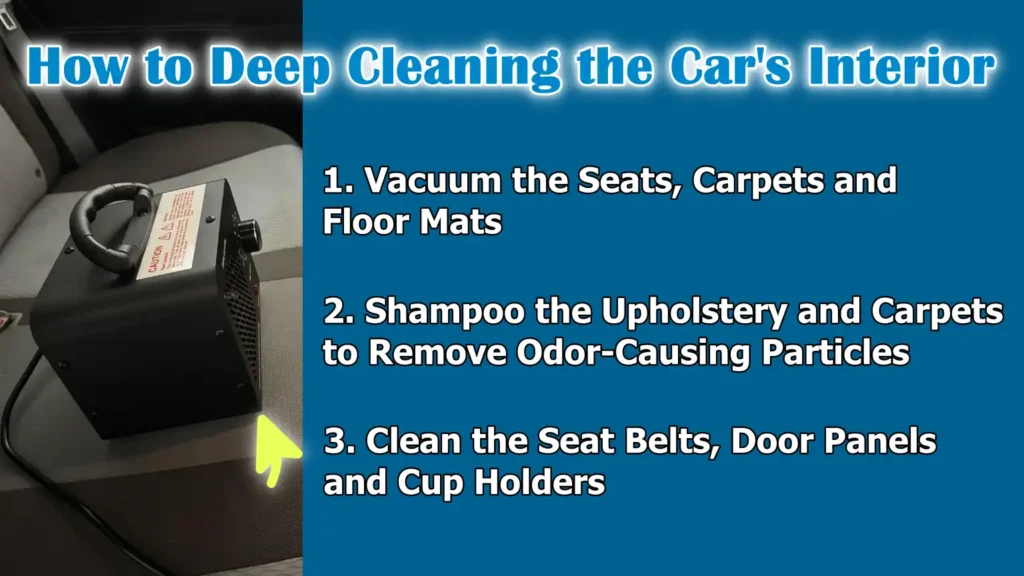
How to Deep Cleaning the Car’s Interior
1. Vacuum the Seats, Carpets and Floor Mats
Deep cleaning begins with careful vacuuming because smoke particles don’t just float in the air; they settle deep into fabric fibers and carpet layers.
Research on household dust and air pollution shows that soft surfaces trap more fine particles than hard surfaces and a car’s interior is full of such materials.
The seats, carpets and floor mats accumulate ash dust, nicotine residue and tiny smoke particles every time someone smokes in the car.
Using a powerful vacuum removes these particles from the surface and deeper layers where odors often hide.
Special attention should be paid to the seat seams, under the seats and the edges of the carpets, as these areas tend to accumulate the most dirt.
Thorough vacuuming reduces the overall amount of odor-causing substances, making each subsequent cleaning step more effective.
2. Shampoo the Upholstery and Carpets to Remove Odor-Causing Particles
Shampooing is essential because vacuuming alone doesn’t remove the sticky smoke residue that clings to fabric fibers.
Smoke contains tar and nicotine, which are oily substances that adhere tightly to upholstery and carpet materials.
When a shampoo or fabric cleaner is applied to these surfaces, it breaks down and lifts these odor-causing compounds so they can be removed, rather than remaining trapped.
Studies on fabric cleaning show that moisture and cleaning agents work together to extract deeply embedded dirt that dry methods cannot reach.
Proper shampooing refreshes the fibers, prevents discoloration and prevents odors from returning, specially in warm weather.
After shampooing, it’s crucial to allow the interior to dry completely, as trapped moisture can lead to mildew odors that, when combined with the smoke smell, can worsen the problem.
3. Clean the Seat Belts, Door Panels and Cup Holders
Seat belts, door panels and cup holders are often overlooked, yet they are frequently touched surfaces that accumulate smoke residue over time.
Seat belts are made of woven fabric that easily traps smoke particles and releases odors when pulled out or heated by the sun.
Door panels and cup holders accumulate layers of smoke residue, spilled ash and airborne particles that settle on their surfaces.
Cleaning these areas removes hidden sources of odor that can undermine the results of cleaning the seats and carpets.
Automotive interior studies confirm that these areas contribute significantly to persistent odors in the cabin if left uncleaned.
Properly cleaning these components improves air quality and ensures that the smoke odor is removed from every part of the interior, not just the visible surfaces.
How to Remove Smoke Odor from Car Seats
1. Methods for Treating Fabric Seats to Absorb Odor
Fabric car seats absorb smoke odors more readily than other interior surfaces because they are made of tightly woven fibers with microscopic air pockets.
These pockets trap smoke particles, nicotine and tar deep within the seat’s interior.
Studies on fabric absorption show that fabrics retain odors longer than smooth surfaces, specially in enclosed environments like cars.
Cleaning fabric seats with the right cleaning and odor-absorbing methods removes these particles rather than simply masking the odor.
Deep fabric cleaners loosen trapped smoke residue, while odor-absorbing treatments absorb remaining odor-causing molecules.
Gently rubbing the cleaner into the seat surface allows it to reach the deeper layers where smoke odors often hide.
This process not only reduces the odor but also restores freshness and improves the overall feel of the seat.
2. Cleaning and Conditioning Leather Seats to Remove Smoke Buildup
Leather seats may appear smooth, but they also absorb smoke odors through tiny pores on the leather surface.
Smoke residue settles in these pores and gradually releases unpleasant odors over time, specially when the car’s interior heats up.
Research on leather shows that dirt accumulates if not cleaned regularly.
Proper leather cleaning removes the thin layer of smoke residue that builds up from exposure to air and hands.
Conditioning after cleaning is essential as it keeps the leather supple and prevents cracking, which can trap odor-causing particles in the future.
Conditioning also creates a light protective layer that makes it more difficult for smoke residue to accumulate again.
Regular care not only eliminates smoke odors but also extends the life and appearance of leather seats.
3. Why Thorough Drying of Seats is Essential to Prevent Odors
Thoroughly drying the seats after cleaning is a crucial step that many people overlook.
Moisture left in the seat foam or fabric creates the perfect environment for odors to return.
Scientific studies on odor formation show that bacteria and mold thrive in damp environments, producing unpleasant smells that can combine with and intensify any lingering smoke odor.
Wet seats retain smoke particles for longer periods because the moisture slows down the rate at which the odor dissipates.
Allowing the seats to dry completely with air, sunlight, or proper ventilation eliminates residual odors and prevents new ones from forming.
Fully dried seats feel cleaner, smell fresher and the efforts to remove smoke odors remain effective for longer, instead of fading within a few days.
How to Remove Smoke Odor from a Car’s Headliner
1. Why Headliners Absorb Smoke Odor More Than Other Surfaces
A car’s headliner absorbs smoke odor more readily than most other interior surfaces because it’s made of a soft fabric glued to a layer of foam.
This foam acts like a sponge, easily trapping smoke particles, nicotine and tar.
Studies on material absorption show that foam-backed fabrics retain odors longer than seats and carpets because warm air rises, carrying the smoke directly to the car’s ceiling.
Every time someone smokes, the smoke naturally rises and settles into the headliner, where it gradually accumulates over time.
This is why smoke odor can persist even after cleaning the seats and carpets.
The heat inside the car exacerbates this problem, as warm temperatures cause the trapped smoke residue in the headliner to release odors again, specially on sunny days.
2. Safe Cleaning Methods to Prevent Fabric Damage
Cleaning a headliner requires extra care because it’s glued on and susceptible to damage from excessive moisture.
Unlike seats and carpets, the headliner fabric is thin and lightly adhered, so soaking it with water or cleaners can weaken the adhesive and cause it to sag.
Automotive interior care research recommends using low-moisture and gentle cleaning methods for headliners.
Gentle surface cleaning helps break down smoke residue without allowing liquid to penetrate the foam layer.
Light wiping or blotting removes odor-causing particles while maintaining the integrity of the headliner.
Proper air circulation during and after cleaning is also crucial, as faster drying reduces the risk of damage and helps safely remove any lingering smoke odors.
3. When is professional cleaning recommended?
Professional cleaning is recommended when a strong smoke odor persists even after thorough cleaning at home, or when heavy smoke residue is visible on the headliner.
Vehicles where smoking has occurred for years often have deeply embedded residue that is difficult to remove without specialized equipment.
Professional detailers use controlled cleaning methods and advanced odor removal systems specifically designed for delicate headliner materials.
Studies in automotive detailing show that professional treatments can eliminate odors at a deep level without damaging the fabric.
Choosing professional cleaning is specially beneficial for older vehicles, used cars, or cars that have been heavily exposed to smoke, as it increases the likelihood of complete odor removal without causing loosening or staining.
How to Clean the Car’s Air Conditioning System
1. Replacing the Cabin Air Filter to Remove Trapped Smoke Residue
The cabin air filter plays a crucial role in the smell of smoke inside a car, as it traps dust, smoke particles and airborne contaminants before the air enters the cabin.
Over time, smoke residue accumulates in the filter material, causing an odor every time the air conditioning or heater is turned on.
Automotive air quality studies show that dirty cabin filters are one of the most common hidden sources of persistent interior odors.
Replacing the cabin air filter removes a significant portion of the trapped smoke residue in one easy step.
A new filter improves airflow, reduces odors and helps prevent new smoke or pollutants from accumulating in the air system.
This single step often makes a noticeable difference in the car’s odor within minutes of turning on the AC.
2. Running the AC System to Clear Smoke from the Vents
Even after replacing the cabin air filter, smoke odors can linger in the air ducts and vents.
Smoke particles cling to the interior surfaces of the ventilation system and are pushed back into the cabin when the fan is running.
Properly running the AC system helps to expel this trapped residue.
Research on automotive HVAC systems shows that using the fresh-air mode instead of recirculation allows outside air to push stale, smoky air out of the system.
Running the fan at different speeds ensures that air flows through all the ducts, further reducing odors.
This process helps to clear any remaining smoke odor and prevents it from being released every time the system is used.
3. Using an HVAC-Safe Cleaner to Eliminate Odors
In cases where smoke odors are particularly strong or persistent, HVAC-safe cleaners can help eliminate odors from within the air system.
These cleaners are designed to break down odor-causing compounds without damaging delicate components such as vents, ducts and evaporator coils.
Studies on air system cleaning confirm that proper cleaning reduces microbial growth and removes odor sources that cannot be eliminated by airflow alone.
It is crucial to use cleaners specifically designed for automotive HVAC systems, as household chemicals can damage internal components or leave harmful residues.
When used correctly, HVAC-safe cleaners remove smoke residue, improve air quality and help keep the cabin smelling fresh for longer.
Read More:
What are The Natural and Home Remedies for Odor Removal
1. Using Baking Soda to Absorb Smoke Odors
Baking soda is known for its odor-absorbing properties because it reacts with odor-causing molecules, rather than simply masking them.
Scientific studies on odor removal in homes show that baking soda neutralizes both acidic and basic odor compounds, making it particularly effective against smoke odors.
In a car, smoke particles settle deep into the seats, carpets and floor mats and baking soda helps draw these odors out of the fabric fibers.
When left for several hours or overnight, the baking soda gradually absorbs trapped smoke residue from the surrounding air and surfaces.
This method is safe, inexpensive and easy to use, making it ideal for reducing smoke odors without adding strong fragrances that simply mix with existing smells.
2. Activated Charcoal as a Long-Term Odor Absorber
Activated charcoal works differently than air fresheners because it traps odors within its porous structure rather than releasing fragrances.
Research on air purification shows that activated charcoal contains millions of tiny pores that capture smoke particles and volatile odor compounds.
This makes it highly effective for long-term odor control in enclosed spaces like cars.
Placing activated charcoal inside a vehicle allows it to continuously absorb smoke odors from the air over time.
Unlike sprays or perfumes, charcoal doesn’t mask odors and its effect doesn’t wear off quickly.
It’s a reliable solution for maintaining freshness after deep cleaning and preventing smoke odors from returning.
3. White Vinegar and Coffee Grounds to Neutralize Odors
White vinegar is effective against smoke odors because it breaks down the odor-causing chemicals at a molecular level.
Studies on odor neutralization show that vinegar alters the structure of odor-causing compounds, making them less noticeable.
When placed in an open container inside a car, the vinegar absorbs the smoke odor from the air and leaves no lingering scent after removal.
Coffee grounds work similarly, absorbing and trapping odor particles while also releasing a mild, natural fragrance.
Both vinegar and coffee grounds are useful household remedies for reducing residual smoke odors, specially after cleaning and they provide a simple and natural way to improve air freshness inside a car.
Now, Understand About Commercial Odor Removers and Their Treatments
1. Odor Neutralizing Sprays vs Fragrance Products
Commercial odor products work in two very different ways and understanding this difference can save you from wasted effort.
Odor neutralizing sprays are designed to chemically break down or bind to odor-causing particles, eliminating the odor rather than simply masking it.
Research on odor control shows that neutralizers target smoke molecules, such as nicotine and tar residue, making them less likely to release odors into the air.
Fragrance products, on the other hand, simply release a strong scent that temporarily covers up the smoke odor.
Once the fragrance dissipates, the smoke odor typically returns, specially in warm weather.
For long-lasting results, odor neutralizing products are more effective because they treat the source of the odor rather than just masking it.
2. Interior Foggers and Smoke Odor Bombs
Interior foggers, often referred to as smoke odor bombs, release a fine mist that permeates the entire cabin, reaching even hard-to-reach areas like air vents, under seats and small crevices.
Automotive detailing studies show that foggers allow odor-neutralizing chemicals to reach surfaces that cannot be accessed by normal wiping or spraying.
This makes them useful for cars with heavy smoke damage.
Foggers are most effective after a thorough cleaning because they neutralize remaining odor particles rather than trapping dirt and residue.
Proper ventilation after use is essential to allow excess product to dissipate and ensure fresh air circulation.
When used correctly, interior foggers can significantly reduce smoke odors in a short amount of time.
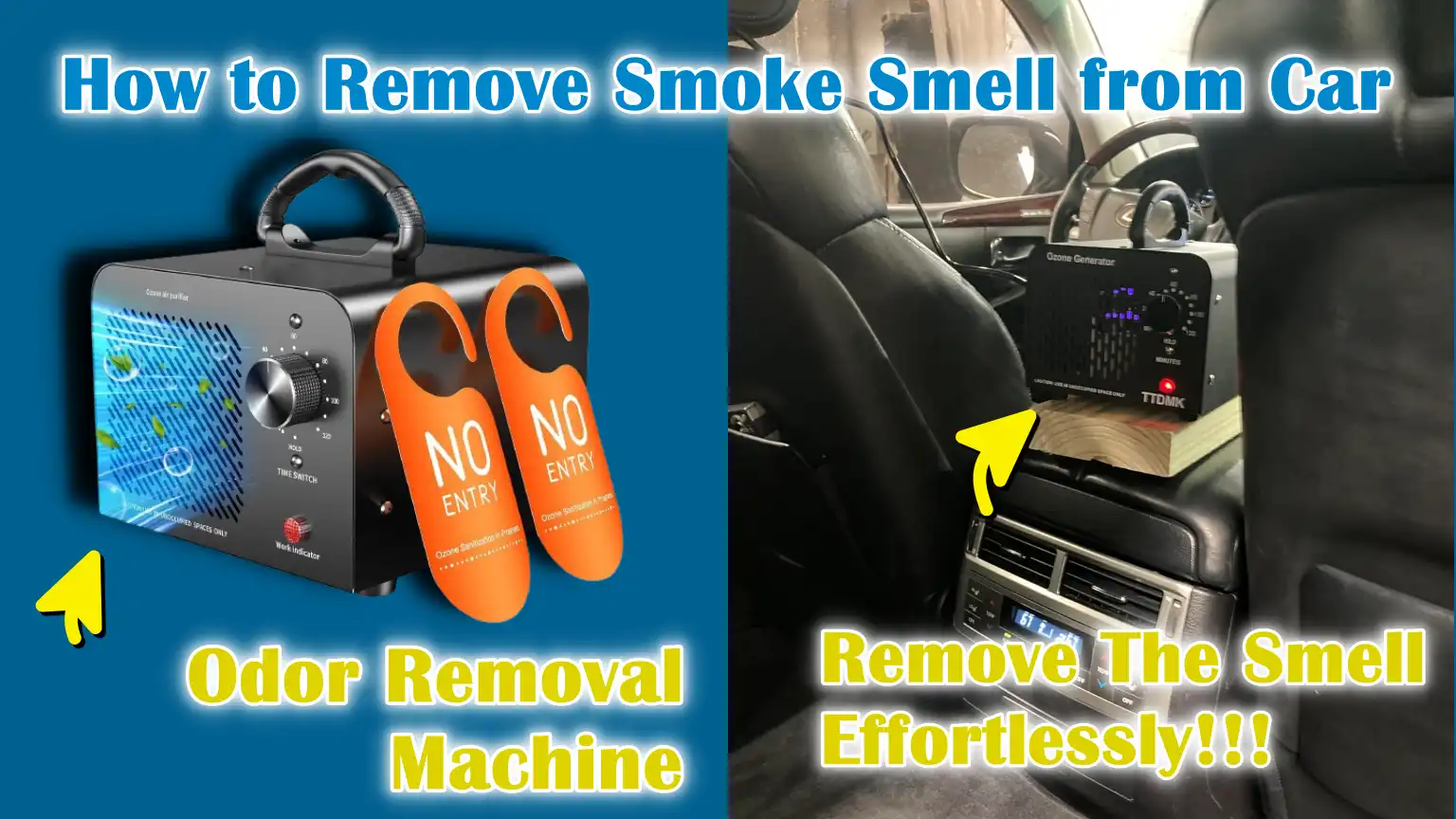
3. Professional Ozone Treatment: Benefits and Precautions
Ozone treatment is one of the most effective professional methods for removing smoke odors from a car.
Ozone works by breaking down odor-causing molecules at the chemical level, eliminating the odor permanently rather than simply masking it.
Scientific research on ozone oxidation confirms its effectiveness in eliminating strong odors like smoke.
Professional detailers use controlled ozone generators to safely treat the car’s interior.
However, ozone must be used with caution as it can be harmful if inhaled in high concentrations.
This is why the treatment is performed in unoccupied vehicles and followed by thorough ventilation.
Ozone treatment is best suited for cars with severe smoke odors or those heavily contaminated with smoke and when performed correctly, it delivers long-lasting results that other methods cannot achieve.
How to Prevent Smoke Odor from Returning
Yes, there’s scientific studies of thirdhand smoke that shows that the fabrics inside the vehicles such as: seats and carpets, actually absorbs nicotine and related smoke chemicals at the different levels that depends on the material, so basically these residues are deeply bound and influenced by the heat and humidity, which is why the smoke odors persists even after surface cleaning and that’s why you need special kind of cleaning strategies to remove them effectively.[¹]
1. Establishing a No-Smoking Rule in the Car
Preventing smoke odor from returning begins with completely eliminating its source.
Even occasional smoking in a car releases thousands of smoke particles that quickly settle into the seats, carpets and headliner.
Research on indoor smoke exposure shows that repeated exposure to even small amounts of smoke can cause the odor to return just as quickly as frequent smoking over time.
Establishing a strict no-smoking rule in the car prevents new nicotine and tar residue from entering the interior.
This rule is specially important after a deep cleaning, as fresh surfaces absorb smoke more readily than previously soiled surfaces.
Completely refraining from smoking in the vehicle is the most effective way to prevent future odor buildup.
2. Regular Interior Cleaning and Ventilation Habits
Regular cleaning and ventilation help prevent the gradual return of smoke odor caused by the accumulation of residual particles.
Even after thorough odor removal, tiny smoke particles can remain hidden in fabrics and the air system.
Studies on indoor air quality show that regular airflow and surface cleaning reduce odor-causing pollutants over time.
Regularly opening the windows, specially after driving, helps expel stale air and moisture.
Light interior cleaning removes surface residue before it can deeply penetrate the materials.
Consistent habits prevent odors from reactivating in warm weather and keep the interior air clean and fresh for longer.
3. Using Odor Absorbers for Continuous Freshness
Odor absorbers play a crucial role in maintaining long-lasting freshness by continuously trapping odor-causing particles in the air.
Activated charcoal or similar absorbent materials work by trapping odor molecules rather than simply masking them with fragrance.
Scientific research on adsorption shows that these materials attract odor-causing compounds from the air and hold them within their porous structure.
Placing an odor absorber inside your car provides continuous protection against persistent or recurring odors.
This is specially useful in enclosed spaces like car interiors where air circulation is limited.
Regular replacement or reactivation ensures consistent performance and helps keep the interior smelling fresh.
When You Should Go With The Professional Detailing Services
1. Signs That DIY Methods Are Insufficient
There are clear indicators that home cleaning methods are no longer sufficient to remove smoke odors from a car.
If the odor persists after cleaning, intensifies on warm days, or returns every time the air conditioning is turned on, it means that smoke particles have become deeply embedded in the foam, insulation, or ventilation system.
Research on persistent odors shows that prolonged exposure to smoke causes nicotine and tar to bond strongly with interior materials, rendering surface cleaning ineffective.
Vehicles that have been smoked in for years, older cars with unknown histories, or those where smoking was a daily occurrence often fall into this category.
When basic cleaning, natural odor absorbers and ventilation fail to provide lasting results, professional detailing becomes the most reliable solution.
2. What Professional Smoke Odor Removal Entails
Professional smoke odor removal is far more comprehensive than regular interior cleaning.
Detailers utilize specialized equipment and products that penetrate deep into fabrics, foam layers and air systems.
Studies on automotive detailing confirm that professional-grade cleaners and extraction tools remove contaminants that household products cannot reach.
Services often include deep upholstery extraction, headliner-safe cleaning, air system treatments and advanced odor neutralization techniques.
In severe cases, professional ozone or similar treatments are used to break down odor-causing molecules at a chemical level.
This comprehensive approach addresses the root cause of the smoke odor rather than simply masking it, resulting in a more complete and long-lasting solution.
3. Expected Results and Cost Considerations
Professional detailing can significantly improve or completely eliminate smoke odors, even in severely affected vehicles.
Research on professional odor treatments shows that, when performed correctly, these methods provide long-lasting odor elimination rather than just temporary relief.
The results depend on how long the smoking occurred and how deeply the odor has penetrated the interior materials.
While professional services are more expensive than DIY solutions, they often save time and prevent repeated spending on ineffective products.
For many car owners, specially those preparing a vehicle for resale or long-term use, professional smoke odor removal is a cost-effective investment that improves comfort, air quality and the overall value of the vehicle.
Conclusion – How to Remove Smoke Smell from Car
So, now you have understood that the smoke smell in a car is not permanent, as you just have to use the working method and treat the real source carefully that’s all to have healthier air again.
But, you have to do the hard work, as removal of smoke odor from a car is no easy task, as smoke doesn’t simply dissipate into the air.
Also, It permeates the seats, carpets, headliner and even the air conditioning system.
Basically, the true smoke odor is only eliminated when the source of the odor is cleaned, neutralized and prevented from returning.
Ultimately, a clean-smelling car is not only more comfortable but also healthier and more valuable.
Without a doubt, fresh interior air improves driving comfort, reduces exposure to harmful smoke residue and creates a better experience for both drivers and passengers.
So, at the end you just need a right methods and proper care, even a heavily smoke-damaged car can be restored to a clean, fresh and breathable condition.
Now, if you still have confusion related to this guide, just let us know by comment section below.
Frequently Asked Questions
Q1. Why is it so difficult to remove cigarette smoke odor from a car?
Answer: Removing smoke odor is difficult because it doesn’t just stay in the air. Smoke contains tiny particles of nicotine and tar that settle deep into the car’s seats, carpets, headliner and even the air conditioning system. These materials act like sponges, absorbing the smoke and slowly releasing the odor back into the air, specially when the car is warm. This is why the odor can return even after basic cleaning or using air fresheners.
Q2. Does opening the windows really get rid of smoke odor in a car?
Answer: Opening the windows reduces smoke odor, but it doesn’t eliminate it completely. Ventilation allows some of the contaminated air to escape and fresh air to enter, reducing the intensity of the odor. However, the smoke particles already embedded in the fabric and foam remain. Ventilation works best as a first step and should always be followed by thorough cleaning for optimal results.
Q3. Can air fresheners permanently remove smoke odor?
Answer: Air fresheners cannot permanently remove smoke odor because they only mask the odor by adding fragrance to the air. They do not break down or remove the odor-causing smoke particles. Once the fragrance dissipates, the smoke odor usually returns. For permanent removal, the odor-causing residue needs to be cleaned or neutralized at the source, rather than simply masked.
Q4. Which parts of a car retain the most smoke odor?
Answer: The parts of a car that retain the most smoke odor are the fabric seats, carpets, floor mats, headliner and seat belts. The air conditioning system vents and filters also accumulate smoke particles. These parts are made of soft or porous materials that deeply absorb smoke, making them a primary source of persistent odors.
Q5. How important is cleaning the car’s air conditioning system?
Answer: Cleaning the air conditioning system is crucial because it can continuously spread smoke odors throughout the car. When smoke particles get trapped in the cabin air filter and air ducts, the odor is released every time the AC or heater is used. Replacing the cabin air filter and cleaning the vents breaks this cycle and significantly improves the freshness of the interior air.
Q6. Do home remedies like baking soda actually work?
Answer: Home remedies like baking soda can work well for mild to moderate smoke odors. Baking soda absorbs odor-causing molecules rather than simply masking the smell. When left on seats or carpets for an extended period, it helps draw out smoke odors from the fabric fibers. While natural methods are helpful, they may not completely eliminate heavy or long-standing smoke odors on their own.
Q7. How long does it take to completely remove smoke odor from a car?
Answer: The time it takes depends on how long and how frequently smoking occurred inside the car. Mild smoke odors can be addressed within a few days with cleaning and ventilation. Heavier exposure may take several weeks and might require professional treatment. Completely eliminating the odor is often a gradual process as deep cleaning and odor removal treatments break down the trapped residue.
Q8. Why does the smoke odor return on hot days?
Answer: The smoke odor returns on hot days because the heat reactivates the trapped smoke residue, causing it to release odors again. Research into chemical behavior shows that heat activates odor molecules trapped in fabrics, foam and headliners. This is why a car might smell clean in cool weather but emit a strong smoky odor when parked in the sun.
Q9. Is professional detailing really necessary to remove smoke odor?
Answer: Professional detailing becomes necessary when home remedies fail or when the smoke exposure has been extensive and prolonged. Professionals use specialized equipment and treatments that reach areas where smoke residue is hidden. For older cars or vehicles that have been smoked in for years, professional odor removal often provides the most reliable and long-lasting results.
Q10. Can smoke odor damage a car’s interior over time?
Answer: Yes, smoke odor can damage a car’s interior over time. Nicotine and tar residue can stain fabrics, weaken materials and leave a sticky film on surfaces. Prolonged exposure to smoke can degrade the interior’s quality and reduce its resale value. Removing smoke odor helps preserve the car’s condition and improves air quality.
Q11. How can I prevent smoke odor from returning after cleaning?
Answer: To prevent smoke odor from returning, keep the car smoke-free and well-ventilated. Regular interior cleaning removes residue before it can build up again. Using odor-absorbing products helps capture airborne particles. Consistent maintenance prevents old smoke residue from reactivating and keeps the interior smelling fresh for longer.
References:
[1] Adhesion and Removal of Thirdhand Smoke from Indoor Fabrics: A Method for Rapid Assessment and Identification of Chemical Repositories
https://pubmed.ncbi.nlm.nih.gov/33808392/

Guys, I’m a car audio enthusiast and customization expert and I love clear sound and clean installation. Plus, I have spent years helping people build their dream audio setups. And whenever I’m working on cars, I probably listen to music and thinks about the next big upgrade.