
Written By: Don Dodi
Fact Checked By: Kristen Brown
Reviewed By: Diego Rosenberg
Literally, back then in the 1950s: the whitewall tires became a luxury status symbol, but it often coasting extra as they builds with unique kinds of rubber.
Also, it looks real classic as they have bright white band, that is made from a separate layer of rubber that contains fewer carbon-black additives than standard black tire rubber; that’s why it appears white in color.
And, because this section lacks the heavy carbon protection which is found in the black rubber, which is more vulnerable to staining, oxidation and browning.
As well as, because of the exposure to the UV rays, road grime, brake dust, tire blooming: which is which is the natural process where protective oils rise to the surface and of course environmental pollutants that can quickly turn a bright whitewall yellow or brown as well.
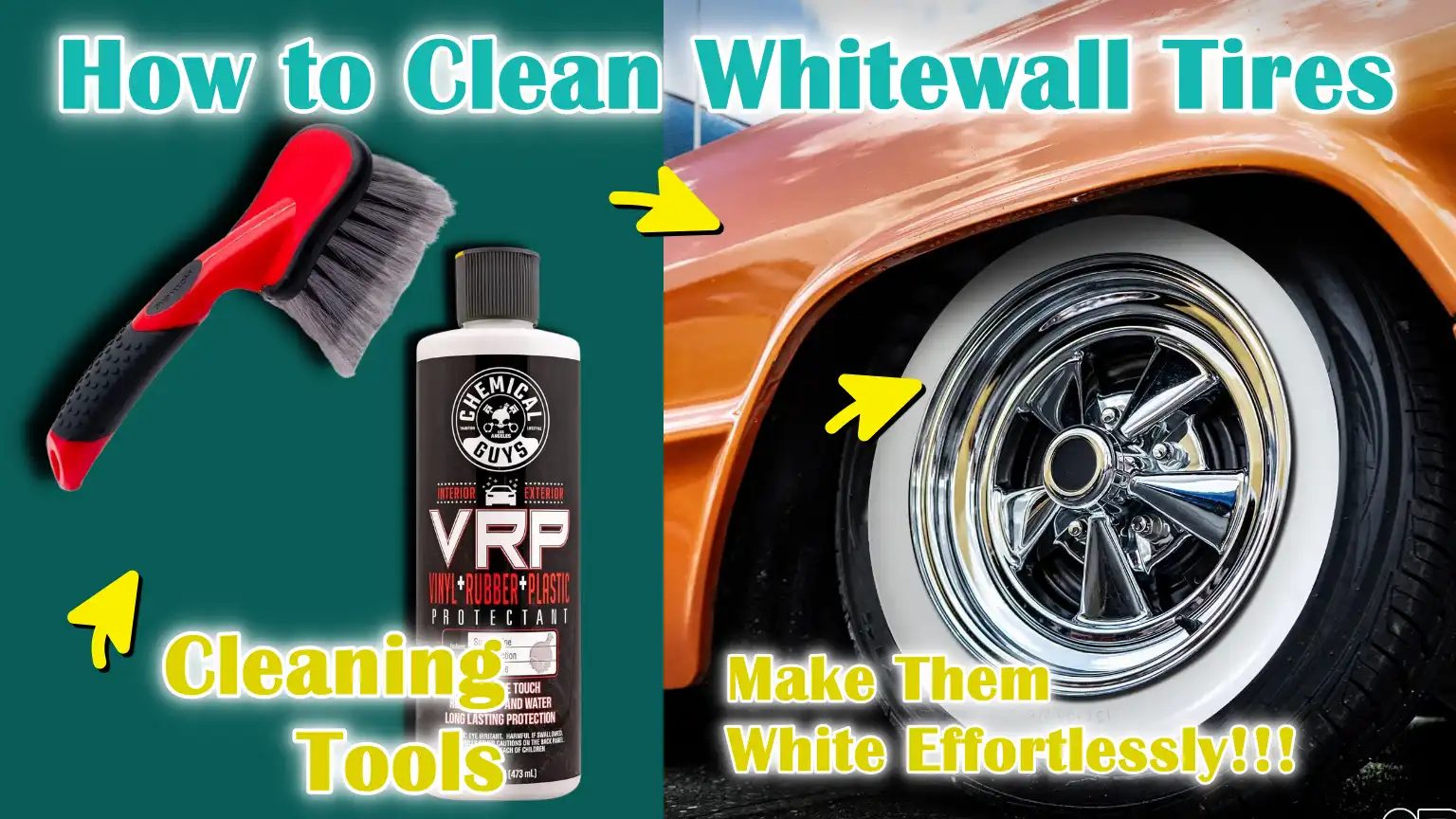
Now, this is the guide you’ll learn How to Clean Whitewall Tires, so that you can make them white without causing damage with the right method mentioned in this guide.
Tools
| Tool / Supply | Why You Need It |
|---|---|
| Bucket with Warm Water | Hot water helps loosen dust and road grime faster than cold water. It softens trapped mud and brake dust. It also prepares the tire surface before applying the cleaner. |
| Dedicated Whitewall Tire Cleaner or All-Purpose Cleaner – APC | These cleaners safely break down grease, browning and oxidation. They’re designed to clean rubber without damaging it. They help restore its bright white color. |
| Soft-Bristle Brush or Whitewall Tire Brush | A soft brush removes stains without scratching the rubber. It also helps clean deep into the tiny pores of the tire, preventing damage caused by hard or metal brushes. |
| Microfiber Towels | Microfiber towels absorb water quickly and leave no lint. They help dry tires without streaks. They are safe for delicate white rubber surfaces. |
| Baking Soda – DIY Option | Baking soda is a mild cleaner that helps remove light stains. It’s safe and readily available at home. It works well for small cleaning tasks. |
| Magic Eraser – For Tough Stains Only | It helps remove dark, yellow and stubborn stains. It gently scrubs away the top layer. Use with caution to avoid abrasion. |
| Hose – Low Pressure | Water safely rinses away dirt and cleaner. Low pressure prevents damage to the rubber. This ensures no chemicals remain. |
| Water-Based Tire Dressing – Non-Greasy | This prevents black rubber from drying out and cracking. Water-based formulas are safer for white walls. It leaves a clean, natural finish without any shine. |
How to Ensure Safe & Prepare the Vehicle Before Cleaning
1. Park the vehicle in a shady cool place
Before cleaning whitewall tires, always park the vehicle in a shady and cool place.
Direct sunlight quickly heats the rubber surface and hot rubber reacts faster with cleaning chemicals.
When tires are hot, cleaners can dry too quickly, leaving streaks, stains, or rough patches.
Heat also causes water to dry faster, reducing the cleaning effect and forcing dirt back to the surface.
According to general vehicle care guidelines from major tire manufacturers like Michelin and Goodyear, tires should be serviced when they are cool to prevent chemical stress and surface damage.
Cleaning in the shade allows the cleaner to work properly and gives you plenty of time to scrub safely and without haste.
This simple step significantly reduces the risk of discoloration and prevents unnecessary wear on the white rubber.
2. Allow tires to cool completely
Tires heat up naturally during driving due to friction with the road and the rubber’s inherent elasticity.
Even a short drive can significantly increase tire temperature.
Cleaning hot tires prevents cleaning products from reacting properly and sudden exposure to cold water can cause slight stress on the rubber surface.
The whitewall area is particularly sensitive because it lacks the carbon-black additives that typically protect black rubber from UV rays and heat.
Allowing tires to cool for at least 30 minutes after driving helps stabilize the rubber surface.
This ensures the cleaning effect lasts and reduces the risk of browning caused by chemical reactions.
A cool tire surface allows dirt and brake dust to be more effectively loosened during washing.
3. Wash tires thoroughly to remove loose dirt and debris
Washing tires before applying any cleaner is one of the most important preparation steps.
Road dust, sand, brake grit and small stones accumulate on the tire surface and in the tiny pores of the rubber.
If you start scrubbing without rinsing first, these particles can act like sandpaper and scratch the white rubber.
A steady stream of low-pressure water helps safely remove loose dirt and prepares the surface for a deeper cleaning.
Studies on car surface care consistently show that pre-rinsing reduces friction compared to handwashing.
Thorough rinsing prevents dirt and dust from mixing with the cleaner, which can spread stains instead of removing them.
Taking a few more minutes to thoroughly rinse helps maintain the shine and smooth texture of the whitewall.
4. Protect painted rims if necessary
Many vehicles have painted, polished, or chrome rims that can be sensitive to harsh cleaning chemicals.
Some whitewall cleaners are specifically designed for rubber and may not be safe for painted metal surfaces.
If the cleaner accidentally gets on the rim and remains there, it can cause stains or light spots over time.
Covering delicate rims with a damp cloth or carefully spraying only the white rubber helps prevent damage.
This step is specially important for classic cars and custom wheels, where finish repairs can be expensive.
Protecting the rim ensures you can improve the look of the tires without creating any new cosmetic problems.
Proper preparation keeps both the whitewalls and wheels in good condition.
How to Clean Whitewall Tires – Easy Method
Cleaning whitewall tires requires patience, proper technique and an understanding of how white rubber reacts to dirt, heat and chemicals.
The white part of the tire is made of a different rubber compound than the black part.
It contains less carbon black, which typically protects the rubber from UV rays and surface damage.
Because of this, stains are easily visible on whitewall tires and must be cleaned carefully to avoid thinning or scratching the surface.
Following the correct steps yields better results and a longer-lasting shine.
How to Initially Wash It
1. Spray water on the tire to loosen surface dirt
The first and most important step is to rinse the tire with clean water.
Water helps loosen dried mud, road salt and brake dust that may be stuck to the surface.
When dirt remains on rubber for extended periods, it bonds with the tire’s naturally occurring oils, a process called blooming.
Spraying water breaks this weakened bond, making the surface ready for cleaning.
Use steady, low-pressure water to gently remove dirt without penetrating the rubber’s pores.
Proper rinsing reduces the risk of scratches and allows cleaning products to work more effectively.
2. Focus on Removing Dirt, Dust and Loose Dirt
Pay special attention to the dirt and dust visible along the white band.
Road grime often accumulates where the white rubber meets the black tire and this is where discoloration typically begins.
Removing loose dirt first prevents these particles from acting as sand when brushing.
Studies on automotive surface care show that rinsing first significantly reduces surface wear.
Taking time at this stage helps maintain a smooth whitewall texture and improves the final result.
How to Apply the Cleaner
1. Spray a whitewall-specific cleaner evenly on the white surface.
After washing, apply a cleaner that is safe for rubber.
Whitewall-specific cleaners or mild all-purpose cleaners are designed to remove grease, oxidation and brown stains without harming rubber compounds.
Spray the product evenly only on white surfaces.
Avoid overspraying on painted rims or other delicate surfaces.
The cleaner works by dissolving dirt, oil and oxidation, which causes yellowing.
Even coverage ensures no stains remain and the shine remains even after washing.
2. Let the cleaner sit for 30–60 seconds
Let the cleaner sit on the surface for about half a minute to a minute.
This waiting time is called dwell time.
During this time, the cleaning agents penetrate the pores of the rubber and loosen any accumulated dirt.
However, it is important that the cleaner does not dry on the tire.
If it dries, it can leave marks or rough patches.
Keeping the surface slightly damp allows the chemicals to work safely and effectively.
Proper dwell time reduces the need for vigorous scrubbing later.
How to Scrub in Gentle Way
1. Use a Soft or Medium Bristled Brush
Choose a soft or medium bristle brush to protect white rubber.
Hard or metal brushes can scratch the surface and remove too much material.
Because whitewalls are more delicate than black rubber, using the right brush can prevent permanent damage.
The goal is to remove dirt, not rub it into the tire.
A proper brush reaches the small pores where stains often accumulate.
2. Use Circular Motions
Small circular motions distribute pressure evenly across the surface, preventing streaks and ensuring consistent cleaning.
Circular motions also help remove dirt from multiple angles, making stain removal easier.
Apply consistent but light pressure.
Too much pressure can thin the white rubber over time, specially if used repeatedly.
3. Pay special attention to stains or yellow spots
Yellowing often occurs where oxidation is most prevalent or where road grime accumulates.
These areas may require a little more attention, but always increase pressure slowly and carefully.
Brown stains are often caused by antioxidants being released from the tire surface.
This process is natural and gentle scrubbing usually removes them.
If stains remain after normal scrubbing, it’s better to repeat the cleaning process rather than applying more force.
Patience protects the tire’s structure and keeps the white band smooth and shiny.
Now, Rinse Thoroughly
1. Rinse off any remaining cleaner
After scrubbing, rinse the tire thoroughly with clean water.
It’s important to remove all cleaner, as any remaining chemicals can react with the rubber.
Even mild cleaners can discolor the tire if not rinsed properly.
Wash from top to bottom so that suds and dirt flow downward and out of the tire.
Thorough rinsing ensures that no soapy film remains on the surface.
2. Ensure that there are no chemical residues on the rubber.
Inspect the tire carefully after washing.
Look for any slippery or sticky areas, which could indicate product residue.
Chemical residue can quickly attract dirt and discolor over time.
Thorough rinsing helps both whitewall and black rubber withstand chemical stress longer.
Proper rinsing is as important as scrubbing to maintain tire quality.
Now, You Can Repeat This Process If Necessary
1. Do a second round for heavily stained tires
Some whitewall tires, specially older tires, may require a second cleaning cycle.
Deep stains caused by prolonged neglect or excessive oxidation may not go away even after one wash.
Rather than trying to remove everything at once, it’s safer to repeat this process gradually.
Consistent but careful cleaning gradually restores the shine without damaging the rubber.
2. Avoid Excessive Scrubbing
Excessive scrubbing can wear down the white rubber layer and shorten its life.
The white stripe is a separate layer of rubber and once worn, it cannot be repaired.
Applying too much force can also create rough patches that can easily trap dirt in the future.
Cleaning should focus on controlled pressure and repeated, gentle scrubbing.
This method keeps the whitewall shiny, ensuring the tire’s strength and smoothness for years to come.
How to Clean It By Yourself – DIY Cleaning Method: Budget-Friendly Option
Cleaning whitewall tires doesn’t always require expensive specialty products.
Many common household ingredients can remove light stains, road grime and quick browning if used correctly.
Whitewall rubber is more porous than black tire rubber because it contains less carbon black, the same material that gives standard tires their dark color and greater UV protection.
This porous surface allows dirt and oil to accumulate more easily, so gentle but effective cleaning methods are essential.
DIY cleaning works best for regular maintenance and minor discoloration.
For severe oxidation or extreme yellowing, a professional tire cleaner may be needed.
Careful use of safe household ingredients can help maintain the shine without damaging the rubber coating.
How to Clean Whitewall Tires By Baking Soda Paste Method
1. Mix baking soda and water to form a thick paste.
Baking soda, also known as sodium bicarbonate, is a mildly alkaline substance that helps break down grease and remove surface stains.
It’s commonly used for cleaning because it’s slightly rough, but not as aggressive as harsh chemical cleaners.
To clean whitewalls, mix baking soda with a little water until it forms a thick paste.
The paste shouldn’t be watery, as a thicker paste will stay on the tire’s surface longer and work more effectively.
Its slightly rougher texture helps remove dirt from small holes in the white rubber without causing deep scratches.
2. Apply directly to whitewalls
Spread the paste evenly over the whitewalls.
Pay attention to areas where yellow or brown marks are visible.
The alkaline nature of baking soda helps neutralize acidic dirt from road salt and environmental pollutants.
Let the paste sit on the surface for a few minutes to loosen dirt particles.
Don’t let it dry completely, as any dry residue can create a powdery layer that requires more frequent rinsing.
Careful application ensures even cleaning and reduces shine.
3. Scrub and Rinse Gently
Use a soft or medium-bristled brush to gently scrub the paste area in circular motions.
Gentle scrubbing helps remove dirt without thinning the rubber layer.
Avoid applying too much force, as excessive force can gradually wear away the white strip.
After scrubbing, rinse thoroughly with clean water to remove any remaining baking soda.
If any remains, it can dull the finish.
Proper rinsing restores the clean white look and keeps the surface smooth.
How to Clean Whitewall Tires By Dish Soap and Water Method
1. Use Grease-Cutting Dish Soap
Grease-cutting dish soap is designed to break down oils and fats, making it effective in removing tire bloom and light road grime.
Blooming is a natural process in which protective oils within the tire migrate to the surface and react with oxygen, sometimes causing brown stains.
Mixing a small amount of dish soap with warm water creates a mild cleaning solution.
Warm water improves the soap’s ability to dissolve grease and dirt.
To avoid damaging the rubber, choose a mild formula without bleach or harsh chemicals.
2. Scrub Gently
Dip a soft brush or cloth into the soap solution and gently scrub the white wall.
The goal is to remove dirt, not to rub it into the surface.
Light and even pressure prevents scratches and protects the outer layer of rubber.
Because dish soap is less concentrated than regular cleaners, it may take a little more time and repeated scrubbing to remove stains.
Consistent and careful scrubbing helps maintain the shine of the white strip without damaging the surface.
3. Rinse thoroughly
After scrubbing, rinse the tire thoroughly with clean water.
Residual soap can attract dirt and cause streaks.
Make sure to run the water evenly over the entire white area until the suds are gone.
After rinsing, check the surface for any dull or slippery spots.
A thorough rinse completes the cleaning process and leaves the white surface looking clean and natural.
How to Remove Stubborn Yellowing and Oxidation
Stubborn yellowing on whitewall tires isn’t usually caused solely by surface dirt.
It’s often caused by natural chemical changes within the rubber.
The white part of the tire is made of a lightweight rubber compound with fewer carbon black particles.
Carbon black typically protects the rubber from sunlight and slows aging.
Because whitewall tires have less of this protective material, they are more exposed to air, heat and ultraviolet rays.
Over time, these elements cause oxidation, a slow reaction between rubber and oxygen.
This reaction changes the surface color and can turn bright white rubber yellow or brown.
Understanding the root cause of the discoloration helps you treat the problem promptly, rather than allowing it to accumulate and damage the tire.
1. Causes of Yellowing
Yellowing is usually caused by two main causes: oxidation and chemical browning.
Oxidation occurs when oxygen in the air reacts with the rubber surface, specially in sunlight and heat.
This process is similar to rusting in metal, but in rubber, it causes discoloration and color change rather than corrosion.
Chemical browning, sometimes called blooming, occurs when protective chemicals within the tire are released onto the surface.
Tire manufacturers add antioxidants to prevent the rubber from cracking.
When these antioxidants are released and combine with air and moisture, they can create a brown or yellow color.
Road salt, brake dust, oil and environmental contaminants can also cause discoloration.
Because these reactions are natural, they cannot be completely prevented, but proper cleaning can minimize their visible effects.
2. Use a specialized whitewall cleaner or Magic Eraser with caution.
For severe yellowing, a specialized whitewall cleaner is often more effective than household soap.
These cleaners are designed to break down oxidation and remove chemical deposits without causing significant damage to the rubber.
Always apply the cleaner evenly and allow time for the stain to loosen.
In some cases, a Magic Eraser can help remove stubborn surface marks.
The Magic Eraser also works with a very fine grit, which means it gently removes a thin layer of the surface.
For this reason, it should be used gently and only when necessary.
Over-abrasive or excessive use can thin the white rubber layer over time.
Controlled pressure and patience are safer than vigorous scrubbing.
3. Avoid harsh solvents that can damage rubber
Harsh chemicals like bleach, gasoline, acetone, or heavy-duty degreasers may seem effective, but they can permanently damage whitewall tires.
Harsh solvents can dry out the rubber, weaken its structure and cause cracks.
Rubber relies on elasticity to function safely on the road.
When harsh chemicals remove natural oils, the surface can weaken.
Some solvents can strip away too much of the white coating, leaving the color uneven and the texture rough.
Using products specifically labeled as safe for rubber is the best way to maintain both appearance and safety.
Cleaning should improve tires, not shorten their lifespan.
4. When Professional Detailing May Be Necessary
If yellowing persists even after careful cleaning, professional detailing may be the best option.
Detailers have commercial-grade cleaners and control tools that can safely treat deep oxidation.
In some cases, prolonged neglect or severe UV damage can permanently discolor a tire beyond repair.
A professional can determine whether the whitewall can be repaired or whether replacement is the safest course of action.
Seeking expert help is specially important for classic cars, where maintaining the tires’ original look and condition increases their value.
A proper inspection ensures that attempts to restore shine don’t inadvertently damage the tire’s structure or safety.
How to Dry & Give It Finishing Touch
Proper drying and finishing are just as important as washing.
Many people focus only on cleaning, but these final steps help protect the tire and keep the whitewall shiny for longer.
Rubber is a flexible material that can retain moisture in small pores on the surface.
If water remains on the tire, it can quickly attract dust and cause water spots.
Proper finishing prevents streaks, maintains a consistent shine and prevents future discoloration.
Taking a few extra minutes during this time improves both appearance and long-term durability.
1. Dry with a Clean Microfiber Towel
After washing, use a clean microfiber towel to thoroughly dry the tire.
Microfiber fabric is designed with very small fibers that absorb water quickly and trap fine dirt without scratching the surface.
This is important because whitewall rubber can easily scratch.
Gently wipe the white area first, then the black rubber.
Avoid using old or dirty cloths, as trapped dirt can leave light scratches.
Drying the tire removes any remaining moisture, which may contain dissolved minerals that can leave light stains when dry.
A completely dry surface also prepares the rubber for any protective products that may be applied later.
2. Check for Missed Spots
After the tire is dry, examine the whitewall carefully in good light.
Natural daylight is best because it reveals yellow areas, streaks, or remaining dirt that may not be visible when the tire is wet.
Sometimes dirt hides near the edge where the white band meets the black rubber.
Lightly running a clean finger over the surface can help identify rough or sticky spots that indicate leftover marks.
If an area appears uneven, it’s better to re-clean the area immediately rather than letting the stain set.
Regular inspection helps maintain a consistent glossy finish and prevents small stains from becoming permanent discolorations.
3. Apply Water-Based Tire Dressing Only to Black Rubber
If you want to apply tire dressing, always use a water-based formula and apply it only to the black rubber area.
Water-based dressings are safer because they protect the rubber without attracting excessive deposits or dirt.
Solvent-based or high-gloss silicone dressings can be sticky, which means the product may get on white walls while driving and cause new stains.
White walls should be kept away from the dressing because shine products can discolor them over time.
Apply a small amount of dressing to the applicator pad and spread it evenly only on the black rubber.
Allow it to dry completely before driving.
This step protects the black rubber from drying, cracking and UV damage and keeps the white wall clean and shiny.
How to Maintain Whitewall Tires Shining
Not only this, there’s scientific research that shows that rubber oxidation actually alters physical properties and literally accelerates aging, as this chemical reaction shows that whitewall tires turn yellow or brown over time: as it gets exposure to the oxygen and heat changes the rubber’s structure, which is why gentle cleaning delays the visible effects of the oxidation process.[¹]
A one-time deep cleaning isn’t enough to keep whitewall tires shiny.
It all depends on regular care and smart habits.
Whitewall rubber is more sensitive than black rubber because it contains less carbon black, which typically protects tires from ultraviolet rays and slows the aging process.
If left unattended, dirt, brake dust, road salt and air pollution can gradually stain the surface.
Simple and regular maintenance prevents yellowing, reduces oxidation and maintains the vehicle’s appearance.
Good habits also reduce the need for vigorous scrubbing, which can thin the white rubber layer over time.
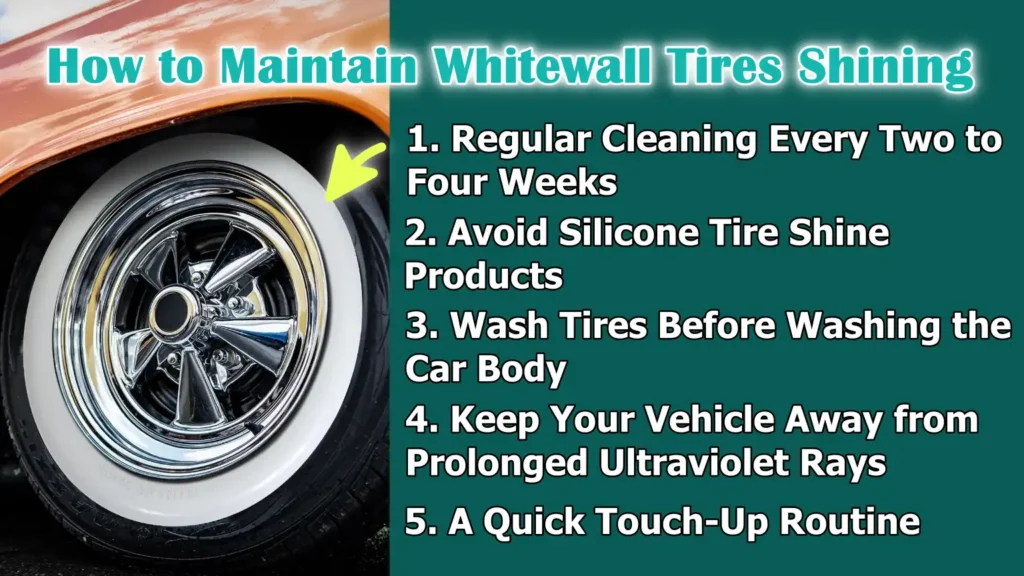
1. Regular Cleaning Every Two to Four Weeks
Cleaning whitewall tires every two to four weeks can help prevent stains before they become permanent.
Road grime and tire blooming can appear within weeks, specially in hot or humid weather.
When dirt remains on rubber for a long time, it adheres more strongly to the surface and becomes difficult to remove.
Regular cleaning keeps the rubber pores clean and prevents buildup.
Gentle and frequent washing is safer than waiting months and vigorous scrubbing.
Regular care preserves the color and extends the life of the white strip.
2. Avoid Silicone Tire Shine Products
Many tire shine products contain excessive silicone oil.
These products can make black rubber appear shiny, but they can also attract dust and dirt.
During driving, excess shine product can settle on the white surface, creating black streaks that are difficult to remove.
Some heavy silicone formulas can also trap heat and reduce the natural breathing of the rubber surface.
Using a water-based tire dressing instead of a thick, solvent-based shine prevents stains on the white parts of the black rubber.
Choosing the right product keeps tires clean and reduces further maintenance.
3. Wash Tires Before Washing the Car Body
Washing tires before cleaning the body is an important but often overlooked step.
Tires are typically the dirtiest part of a car because they directly touch the road.
Brake dust contains fine metal particles that can stain paint if splashed onto clean panels.
Cleaning the tires first prevents dirty water from spreading onto freshly washed paint.
This allows you to focus solely on the whitewalls, without worrying about cleaner dripping onto clean surfaces.
This simple washing method increases car efficiency and improves the car’s overall appearance.
4. Keep Your Vehicle Away from Prolonged Ultraviolet Rays
Ultraviolet rays from the sun are one of the main causes of rubber aging and discoloration.
Prolonged exposure to sunlight accelerates oxidation, causing white rubber to yellow over time.
Parking in a garage, under a covered area, or using a ventilated car cover reduces exposure to direct UV rays.
Reducing exposure to heat and sunlight slows down chemical reactions within the rubber.
Storing in a cool area also reduces tire blooming and surface dryness.
Keeping your vehicle out of constant sunlight maintains both the look and texture of your tires.
5. A Quick Touch-Up Routine
A quick touch-up routine between full washes can make a huge difference.
Lightly wiping down whitewalls with a damp microfiber towel once a week removes fresh dust before it can set deep into the rubber.
Small stains are easier to remove when they’re fresh.
A mild soap solution can also be used for quick maintenance without excessive scrubbing.
Regular, gentle cleaning reduces the need for harsh cleaners and protects the smooth surface of white walls.
Simple, consistent care keeps white walls looking bright, clean and attractive for a long time.
Read More:
Understand, About Common Mistakes So That You Can Avoid Them
Cleaning whitewall tires improperly can cause more harm than good.
The white part of the tire is made of a different rubber compound that is softer and more sensitive than the black part.
Because it contains less carbon black, it lacks the same natural protection against sunlight, chemicals and surface damage.
Many people try to remove stains quickly by using harsh products or sharp tools, but this can permanently damage the rubber.
Understanding common mistakes helps preserve both the appearance and safety of the tire.
Careful cleaning always works better than harsh methods.
1. Using harsh chemicals like bleach or strong degreasers
Harsh chemicals like bleach, heavy-duty degreasers, gasoline, or solvent-based cleaners can damage rubber on a chemical level.
These products may remove stains quickly, but they also remove the natural oils that keep the rubber flexible.
When rubber loses these protective oils, it can dry out, weaken and develop small cracks over time.
Bleach can also cause the white finish to become uneven and appear dull or chalky.
Harsh degreasers can weaken the outer layer of the white strip, reducing its thickness.
Over time, repeated exposure to harsh chemicals can shorten tire life.
Using products specifically designed for rubber is always safer and more effective in the long run.
2. Using a Wire Brush or a Brush with Very Stiff Bristles
Wire brushes or brushes with very stiff bristles can create scratches and marks on the white rubber surface.
Unlike black rubber, which easily hides marks, scratches and rough spots are clearly visible on white rubber.
Scratches create small grooves where dirt can quickly accumulate.
Harsh brushing can also gradually remove materials from the white strip, thinning it over time.
Once the white layer becomes too thin, it’s irreparable.
A soft or medium-bristled brush will clean thoroughly without damaging the surface.
Gentle pressure and the right cleaner are much more effective than force.
3. Letting the cleaner dry on the tire surface
Another common mistake is letting the cleaning product dry on the tire surface.
When the cleaner dries, it can leave chemical residue, causing streaks or uneven color.
The dried product can also react with the rubber surface, specially in hot weather, causing faded spots.
In some cases, the residue can attract even more dirt after driving.
Cleaning should always be done in a shaded area and the surface should be wet when scrubbing.
To protect the rubber and ensure an even finish, rinse thoroughly before the cleaner dries.
4. Applying Tire Shine to the Whitewall Section
Tire shine products are primarily designed for black rubber.
Applying these to whitewall sections can cause stains, yellowing, or dark streaks.
Many shine products contain silicone oils that create a shiny appearance but can trap dust and road grime.
While driving, excess product can get on white areas, re-staining them.
White areas should be kept clean and free of dressings.
If a protective product is used, it should be water-based and applied only to black rubber.
Keeping shine products away from white areas helps maintain a shiny, clean look.
Conclusion – How to Clean Whitewall Tires
Basically, these Whitewall Tires are classic style element that actually reflects careful ownership and attention to the details as well.
Because whitewalls are made from a softer rubber compound with less carbon black, they are naturally more sensitive to sunlight, wind, road salt, brake dust and chemical exposure.
That’s why whitewalls fade faster than standard black tires.
As well as, most yellowing is caused by a natural process called oxidation and blooming, in which protective oils rise to the surface and react with oxygen.
So, these reactions are normal, but their visible effects can be significantly reduced with regular cleaning and proper maintenance.
Now, that’s it from this guide and if you wanted more details about this, just let us know by commenting down below.
Frequently Asked Questions
Q1. How often should you clean whitewall tires?
Answer: Whitewall tires should be cleaned every two to four weeks, depending on how often you drive and the type of roads you use. If you drive daily or travel on dusty, muddy, or salt-coated roads, more frequent cleaning may be necessary. White rubber is more porous than black rubber, which means it absorbs dirt and road grime more quickly. Regular cleaning prevents stains from becoming deeply embedded in the surface. When you clean them frequently, you don’t need to scrub as hard, which protects the white rubber layer and keeps it looking shiny for longer.
Q2. Why do whitewall tires turn yellow or brown?
Answer: Whitewall tires turn yellow or brown primarily due to a natural process called oxidation and blooming. Oxidation occurs when oxygen in the air reacts with the rubber surface, specially when exposed to heat and sunlight. Blooming occurs when protective chemicals inside the tire come to the surface and react with air. These chemicals are added by tire manufacturers to prevent cracking and aging, but when they reach the surface, they can cause discoloration. Dirt, brake dust, road salt and pollution can also cause discoloration. This is a normal chemical reaction, but regular cleaning can help reduce visible stains.
Q3. Can I use household products to clean whitewall tires?
Answer: Yes, some mild household products can be safely used if applied correctly. Baking soda mixed with water can help remove light stains as it is mildly abrasive and helps loosen dirt. Grease-cutting dish soap mixed with warm water can also remove surface dirt and oil. However, never use harsh household chemicals like bleach, heavy degreasers, gasoline, or acetone. These products can dry out the rubber, cause cracks and permanently damage the white layer. Always apply light pressure and rinse thoroughly after using any cleaning solution.
Q4. Is it safe to use a pressure washer on whitewall tires?
Answer: A pressure washer can be used, but it should be set to a low pressure. Too much pressure can force water and dirt into small cracks or damage the rubber surface. Keeping a safe distance between the nozzle and the tire helps prevent damage. The purpose of washing is to remove loose dirt before it wears down, not to rapidly tear the tire. A light stream of water is usually enough to loosen mud and dust without damaging the white rubber.
References:
[1] Tread Rubber Material Oxidation Experiment and Influence on Tire Performance
https://www.scientific.net/AMM.364.696

Guys, I’m a car audio enthusiast and customization expert and I love clear sound and clean installation. Plus, I have spent years helping people build their dream audio setups. And whenever I’m working on cars, I probably listen to music and thinks about the next big upgrade.