
Written By: Don Dodi
Fact Checked By: Kristen Brown
Reviewed By: Diego Rosenberg
Braking the vehicle in the stable way is actually a ability which is again most important driving skills on the steep roads.
So, whenever a vehicle moves downhill, then the gravity itself naturally pulls it more forward, that result into increased in speed even without pressing the accelerator.
Also, it clearly means that your brakes have to work much harder than they do on the flat roads.
As well as, there’s studies and road safety reports that shows that brake overheating: which is also known as brake fade is actually the major cause of accidents on the long descents, specially when the drivers keep their fot on the brake pedal continuously.
Additionally, modern vehicles are designed with the advanced braking systems: but even the best brakes can lose their effectiveness if they are used in incorrect way.
That’s why, in this guide you’ll learn How to Brake Safely on Steep Roads that includes techniques such as: engine braking, controlled speed management and proper following distance as well.
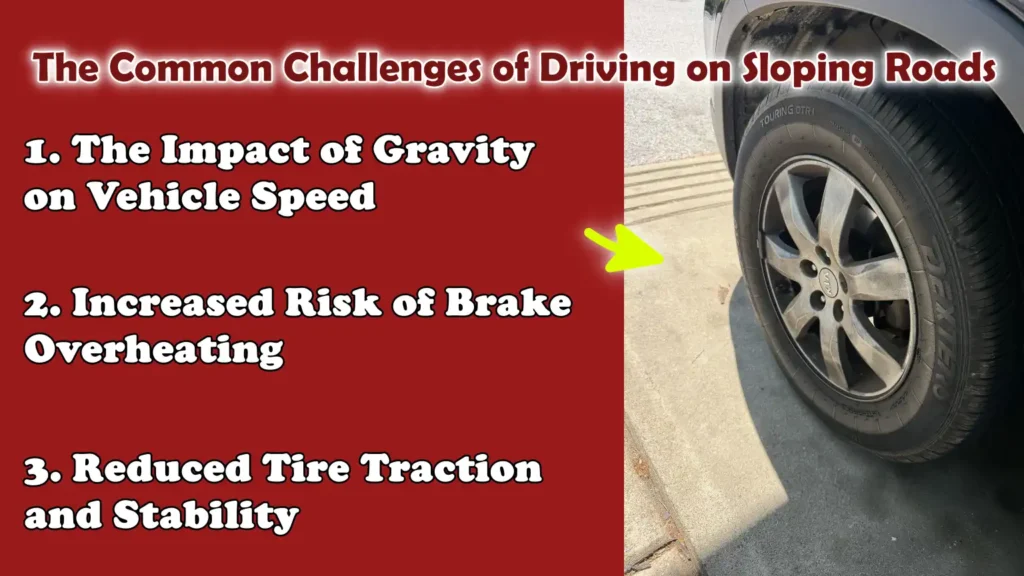
The Common Challenges of Driving on Sloping Roads
Driving on sloping roads differs significantly from driving on level ground, as multiple physical forces act upon your vehicle simultaneously.
The incline of the road places increased strain on your braking system, compromises vehicle stability and makes it difficult to control your speed.
Many drivers fail to anticipate how rapidly a vehicle can accelerate while descending a slope; consequently, they overuse their brakes, thereby increasing the risk of accidents.
Road safety research indicates that instances of brake failure occur more frequently on sloping roads, particularly on long descents where drivers rely entirely on the brake pedal.
Understanding these challenges is crucial, as it enables you to mentally and physically prepare yourself before you even begin driving in hilly terrain.
When you possess a clear understanding of how your vehicle will behave in such situations, you are better equipped to make sound decisions, employ appropriate driving techniques and significantly minimize the likelihood of losing control of your vehicle.
1. The Impact of Gravity on Vehicle Speed
Gravity plays a pivotal role when driving on sloping roads, particularly during descents.
As your vehicle travels down a slope, gravity pulls it downward, causing the vehicle to accelerate naturally, even if you are not pressing the accelerator.
This inherent increase in speed means that your brakes must work harder to decelerate the vehicle.
Many drivers attempt to regulate their speed by continuously depressing the brake pedal; however, doing so subjects the braking system to constant and sustained pressure.
Over time, braking efficiency diminishes, as braking systems are not designed to withstand prolonged, continuous pressure.
Simply put, the more you rely on the brake pedal, the greater the strain placed on your vehicle; consequently, when you truly need to bring the vehicle to a halt, doing so may prove difficult.
Understanding this concept helps you realize why judging and controlling your vehicle’s speed, and employing the correct techniques, is so crucial when driving on hilly roads.
2. Increased Risk of Brake Overheating
One of the most significant hazards of driving in hilly terrain is brake overheating.
When you depress the brake pedal, friction is generated between the brake pads and the discs, causing the vehicle to slow down.
However, this friction also generates heat.
When descending a slope, if you apply the brakes continuously, heat accumulates rapidly within the system without allowing sufficient time for it to cool down.
As the temperature rises, the efficiency of the braking system begins to diminish; this phenomenon is known as ‘Brake Fade.’
This means that even though you are pressing the brake pedal, the car does not decelerate as quickly as expected.
In severe cases, the brakes may temporarily cease to function almost entirely, a situation that can be extremely dangerous.
For this very reason, experts consistently advise using the brakes in short, intermittent intervals, and supplementing this with ‘engine braking’, to minimize heat generation and ensure the braking system continues to operate effectively.
3. Reduced Tire Traction and Stability
Steep slopes also impact how effectively your tires maintain traction with the road surface and how stable your vehicle feels.
When driving downhill on a slope, the vehicle’s weight shifts predominantly toward the front wheels, which can compromise the car’s overall balance.
This uneven weight distribution can, to some extent, weaken tire grip, particularly when the road surface is wet, dusty, or covered in loose gravel.
Reduced traction means that the tires cannot firmly grip the road, thereby increasing the likelihood of the vehicle sliding or skidding during sudden braking.
Stability also becomes a matter of concern, as even a minor error in steering or braking on a slope can lead to serious consequences.
Therefore, it is crucial to apply the brakes gradually and in a controlled manner, as this helps maintain tire traction and keeps the vehicle stable.
Understanding the changes in tire grip and balance that occur on steep slopes enables you to drive with greater caution and avoid sudden maneuvers that could pose a risk of losing control over the vehicle.
How to Prepare Your Vehicle Before Driving on Sloping Roads
Preparing your vehicle before driving on sloping roads is one of the most critical safety measures, yet many drivers overlook it.
On sloping roads, your car’s braking system, tires and overall stability are subjected to increased stress; consequently, even minor issues can escalate into major problems.
Road safety studies indicate that improper vehicle maintenance is a common cause of accidents in hilly or mountainous terrain.
A well-prepared vehicle provides you with better control, shorter stopping distances and greater confidence while driving.
A few simple checks such as: inspecting the brakes, tires and weight distribution, as it can make a significant difference in your car’s performance under stressful conditions.
When your vehicle is in good condition, it responds in a more predictable manner, a crucial factor when driving on sloping roads, where split-second reactions and precise control are paramount.
1. Checking the Condition of the Brakes
When driving on sloping roads, your brakes are your most critical safety component; therefore, checking their condition is absolutely essential.
Brake pads and discs wear down over time due to friction; if they become excessively thin or develop defects, they may fail to generate the necessary force to bring the vehicle to a halt.
Experts recommend regular inspections, as worn brake pads can increase stopping distances and potentially damage other components, such as the discs.
Checking the brake fluid level is also vital, as this fluid serves to transmit the pressure applied by your foot on the pedal to the braking system.
If the fluid level is low or the fluid has become contaminated, the brakes may feel weak or become ineffective.
Simply put, robust and well-maintained brakes ensure that your car can decelerate safely, regardless of the immense pressure exerted upon it while descending a slope.
2. Tire Maintenance
Tires play a pivotal role in maintaining a vehicle’s grip and control, particularly on hilly roads, where traction is naturally reduced.
Maintaining the correct tire pressure is crucial; underinflated tires can overheat and wear out prematurely, whereas overinflated tires reduce contact with the road surface, thereby compromising traction.
In either scenario, braking efficiency is diminished and the risk of skidding increases.
Tire tread depth is another critical factor, as the grooves in the tread help displace water and enhance traction on wet or uneven surfaces.
Tires with severely worn treads fail to establish adequate grip on the road, thereby increasing the likelihood of skidding during braking.
Keeping your tires in good condition improves vehicle stability on hilly terrain, enhances braking performance and makes driving significantly safer.
3. Load Management
The manner in which the load is distributed within your vehicle can have a profound impact on how it handles on steep roads.
Excessive weight places additional strain on the brakes and tires, making it more difficult to decelerate and maintain control of the vehicle.
Overloading also heightens the risk of brake overheating, as the braking system is forced to work harder to bring the heavy vehicle to a halt.
Beyond the total weight, the specific distribution of the load is equally important.
Uneven weight distribution can impact balance and stability, particularly when descending a slope, where the weight naturally shifts forward.
This can cause the vehicle to feel unstable and make it difficult to control while braking.
Keeping the load within specified limits and distributing it evenly helps maintain proper balance, improves braking performance and reduces the risk of accidents on steep roads.
Know, The Proper Braking Techniques on Steep Slopes
Braking on steep slopes requires proper technique, not merely quick reflexes.
Many drivers make the mistake of relying solely on the brake pedal, which increases the risk of brake overheating, loss of vehicle control and extended stopping distances.
On a slope, gravity constantly pushes the vehicle forward; therefore, your objective should be to control the vehicle’s speed before it becomes excessive, rather than attempting to reduce it abruptly.
Road safety experts emphasize that applying brakes gently and judiciously is far more effective than applying them forcefully or continuously.
Adopting the right combination of gear control, proper braking methods and maintaining a safe distance from the vehicle ahead ensures vehicle stability and reduces the strain on the braking system.
When utilized correctly, these techniques not only enhance safety but also protect your vehicle from unnecessary wear and tear.
1. Utilize Engine Braking
Engine braking is the most effective and safe method for controlling speed on steep slopes.
This technique involves shifting the vehicle into a lower gear, allowing the engine itself to assist in slowing the vehicle down.
When you change gears (downshift), the engine creates a form of resistance, thereby reducing the vehicle’s speed without requiring excessive reliance on the brake pedal.
This is particularly beneficial on long slopes, where continuous braking can lead to brake overheating.
Simply put, engine braking shares the workload of your braking system, making it easier to maintain vehicle control and prevent brake failure.
It also results in a smoother and more stable driving experience, as speed is controlled gradually rather than being reduced abruptly.
Mastering the proper use of lower gears is an essential skill that every driver must master to navigate steep slopes safely.
2. Apply Brakes Gradually and Intermittently
Applying the brakes at the right moment is just as crucial as applying them correctly.
Keeping the brake pedal continuously depressed, also known as “riding the brakes”, as it can rapidly generate heat within the braking system and diminish its effectiveness.
Instead, it is preferable to apply the brakes gradually and at brief intervals.
This technique allows the brakes to cool down during the intervals between applications, thereby preserving their operational efficiency.
Applying the brakes firmly, but for short durations, effectively reduces the vehicle’s speed without subjecting the braking system to continuous and sustained stress.
This method also affords you greater control over the vehicle, as its response becomes more predictable and manageable with each brake application.
By avoiding constant pressure on the brakes and applying them in a controlled manner, you mitigate the risk of “brake fade” (a reduction in braking power) and ensure that your brakes remain reliable while descending a slope.
3. Maintain a Safe and Controlled Speed
Maintaining a safe speed is one of the most critical aspects of driving on hilly or sloping roads.
Keeping your speed low from the very outset is always easier and safer than attempting to reduce it later on.
Once a vehicle gains excessive momentum while descending a slope, it becomes difficult to control and requires significantly greater braking force to slow down.
This increases the risk of engine overheating and loss of vehicle control.
By beginning your descent at a lower speed, you can handle the vehicle more easily and minimize the need for frequent braking.
Maintaining control over your speed should always be your top priority, as it directly impacts your ability to react to obstacles, curves, or changes in road conditions.
A steady and controlled speed keeps the vehicle stable and makes the entire driving process significantly safer.
4. Maintain a Safe Distance
Maintaining a safe distance from the vehicle ahead, specially on sloping roads, is crucial.
As stopping on a slope requires a greater distance, you need extra space to react and safely reduce your speed.
If you follow too closely, you may be forced to brake suddenly, which could lead to skidding or a loss of vehicle control.
This extra distance provides you with ample time to observe traffic conditions and gradually adjust your speed.
It also minimizes the need for sudden and forceful braking, thereby helping to protect your braking system from excessive wear and overheating.
Simply put, maintaining a safe distance acts as a safety buffer, allowing you to drive with greater ease and confidence, even in challenging situations such as driving on slopes.
Know, Proper Braking Techniques for Uphill Roads
Driving uphill may seem easier than driving downhill; nevertheless, it requires precise braking control and coordination.
On an incline, gravity works against your vehicle, attempting to pull it backward; this presents a distinct challenge compared to driving on a descent.
Many drivers struggle to maneuver their vehicles smoothly, particularly in traffic or when restarting from a standstill on a slope.
Poor control on uphill roads can result in the vehicle rolling backward, the engine stalling, or placing undue strain on the clutch and brakes.
Road safety guidelines frequently emphasize that achieving the right coordination between braking, acceleration and gear control is crucial for maintaining vehicle stability on an incline.
By understanding how your vehicle behaves on a slope and employing the correct techniques, you can drive with greater confidence, minimize wear and tear on your car and avoid common errors that could lead to accidents or mechanical issues.
1. Preventing Rollback
Preventing your vehicle from rolling backward is one of the most essential skills when driving uphill, specially in stop-and-go traffic.
When you release the brake pedal on an incline, gravity immediately begins to pull the vehicle backward; this can be hazardous if another vehicle is positioned directly behind you.
Using the handbrake is a simple and effective method to prevent this.
With the vehicle at a standstill, engaging the handbrake allows you to hold the vehicle in place, thereby enabling you to gradually release the handbrake while simultaneously applying the accelerator.
In cars equipped with a manual transmission, achieving the correct coordination between the clutch and the accelerator is also absolutely vital.
By gradually releasing the clutch while applying the accelerator as needed, the vehicle can move forward smoothly without rolling backward or stalling.
This technique not only enhances safety but also minimizes strain on the clutch and prevents sudden jerks that could compromise your control over the vehicle.
2. Controlled Braking on Inclines
When driving uphill, brakes should be used with extreme caution and only when absolutely necessary.
Unlike driving downhill, where brakes are frequently applied to regulate speed, driving uphill requires a greater focus on maintaining a consistent, steady pace.
Unnecessary braking can disrupt the vehicle’s momentum, making it difficult to regain speed, particularly on steep inclines.
Furthermore, this can place excessive strain on the braking system and reduce fuel efficiency.
By applying the accelerator in a smooth and controlled manner, the vehicle can ascend effortlessly without frequent interruptions or deceleration.
When braking becomes necessary, it should be done very gently to avoid an abrupt drop in speed.
Driving smoothly not only keeps the vehicle stable but also ensures better overall control; this reduces mechanical stress on the vehicle’s components, making the uphill driving experience safer and more efficient.
How to Utilize Various Braking Systems
Modern vehicles are equipped with a variety of braking systems and driving mechanisms, which significantly influence how safely you can control your vehicle on sloped roads.
Understanding how these systems function enables you to utilize them correctly, particularly in challenging situations, such as sudden stops or on slippery inclines.
Many accidents occur not because the braking system failed, but because the driver failed to use it correctly.
Advanced systems are designed to assist the driver; nevertheless, they require proper input from the driver and an understanding of the prevailing conditions.
Distinguishing between different braking technologies, as well as understanding the operational differences between manual and automatic vehicles, helps you make better decisions, reduce stopping distances and maintain control even under pressure.
This knowledge is specially critical on sloped roads, where even a minor error can quickly escalate into a major hazard.
1. Anti-lock Braking System – ABS
The Anti-lock Braking System, commonly referred to as ABS, is an essential safety feature designed to prevent the wheels from locking up during hard braking.
When a driver suddenly and forcefully depresses the brake pedal, particularly on slippery or sloped surfaces, the wheels may stop rotating while the vehicle is still in motion.
This causes the vehicle to skid, making it nearly impossible to maintain steering control.
ABS resolves this issue by automatically modulating the brake pressure several times per second, thereby ensuring that the wheels continue to rotate even as the vehicle decelerates.
This allows the driver to maintain steering control during emergency braking situations and maneuver the vehicle to avoid obstacles.
When utilizing ABS, it is crucial to press the brake pedal firmly and continuously rather than pumping it repeatedly, as the system is designed to automatically modulate the braking force itself.
When the system activates, you may feel a slight vibration in the brake pedal; this is normal and indicates that the system is functioning correctly.
Understanding how ABS operates can help you place your trust in the system and react appropriately during emergency situations.
2. Manual vs Automatic Vehicles
Manual and automatic vehicles function differently regarding braking and speed control, particularly in hilly terrain.
In manual vehicles, the driver has direct control over gear selection, making it easier to utilize engine braking effectively.
By driving in a lower gear, the engine assists in slowing the vehicle down, thereby reducing the need for frequent application of the friction brakes.
This provides superior control during both ascents and descents.
In automatic vehicles, the system selects gears automatically; however, most modern vehicles still offer specific options such as: a “Low Gear” mode or a manual shifting feature, that can be utilized to achieve better control on slopes.
Without utilizing these options, automatic vehicles rely primarily on the conventional braking system, which increases the risk of brake overheating on long descents.
Understanding these distinctions is vital, as it enables drivers to properly utilize their vehicle’s features, maintain a safe speed and minimize the strain placed on the brakes.
The correct use of gears, whether in a manual or automatic vehicle, plays a pivotal role in ensuring safe and controlled driving on hilly roads.
Know, Common Mistakes to Avoid When Braking on Sloped Roads
Driving on sloped roads requires careful control and proper technique; however, many drivers make minor errors that can quickly escalate into dangerous situations.
These mistakes often stem from a lack of proper understanding regarding vehicle dynamics on inclines, or an over-reliance on driving habits formed on flat terrain.
Road safety statistics indicate that improper braking is a leading cause of accidents on sloped sections, particularly in hilly or mountainous regions.
Seemingly minor errors such as: excessive braking, abrupt reactions, or failing to use the correct gear, as it can compromise vehicle control and significantly increase stopping distances.
Understanding these common mistakes is crucial, as avoiding them can significantly enhance your safety, protect your vehicle from damage and instill greater confidence when navigating sloped roads.
1. Continuous Braking
One of the most common and dangerous mistakes drivers make on sloped roads is continuous braking.
This involves maintaining constant and prolonged pressure on the brake pedal while descending a slope.
Although this method may appear to be the safest way to control speed, it actually poses a serious hazard.
Continuous braking generates excessive heat due to the constant friction between the brake pads and the discs.
As the heat builds up, the efficiency of the braking system begins to degrade, a condition known as ‘brake fade.’
In severe cases, the brakes may temporarily cease to function effectively, potentially resulting in a complete loss of vehicle control.
For this reason, to prevent heat accumulation and ensure the braking system continues to operate efficiently, it is always advisable to apply the brakes in short intervals, while also utilizing ‘engine braking.’
2. Sudden and Hard Braking
Sudden and hard braking is another mistake that can prove extremely dangerous on sloping roads.
When a driver slams the brake pedal forcefully within a very short span of time, it can cause the vehicle’s wheels to ‘lock up’, specially when the road surface is wet, dusty, or uneven.
This can lead to ‘skidding,’ meaning that instead of coming to a controlled stop, the vehicle begins to slide forward uncontrollably.
Sudden braking also causes the vehicle’s weight to shift rapidly toward the front, which can upset the vehicle’s balance and make it difficult to ‘steer’ or control.
Despite the presence of modern systems like ABS, improper braking techniques, particularly hard braking, carry a significant risk of completely losing control over the vehicle.
It is always safer to apply brakes gradually and gently, as this maintains tire ‘grip’ and ensures the vehicle remains stable while decelerating.
3. Neglecting Engine Braking
Neglecting engine braking is a common mistake that places unnecessary strain on the braking system.
Many drivers rely solely on the foot brakes to control their speed and fail to utilize lower gears.
Relying exclusively on the brakes in this manner increases their workload, particularly when driving on long, sloping roads, which can cause the brakes to overheat and negatively impact their performance.
Engine braking utilizes the internal resistance of the engine to slow the vehicle down, thereby reducing the need for frequent application of the conventional brakes.
When this technique is not employed, the brakes are forced to bear the entire workload, increasing the risk of excessive wear and damage.
Properly understanding and utilizing engine braking helps distribute the workload, improves vehicle control and makes driving in hilly terrain significantly safer.
4. Driving Too Fast on Slopes
Driving at excessive speeds while descending a slope is one of the most common errors committed by drivers, frequently leading to accidents.
As the vehicle’s speed increases under the influence of gravity, maintaining control becomes increasingly difficult and greater pressure must be applied to the brakes to slow it down.
Furthermore, high speeds reduce your reaction time, making it difficult to respond instantly to sudden obstacles, sharp turns, or changes in road conditions.
When speed becomes excessive, even a minor error can have severe consequences, as the vehicle requires a greater distance to come to a complete stop and the likelihood of losing control increases significantly.
The safest approach when descending a slope is to always drive at a moderate speed while maintaining full control over the vehicle.
Maintaining a consistent speed not only minimizes the need for heavy braking but also ensures that the entire vehicle remains stable and under control throughout the descent.
Understand, What to Do If Brakes Fail on a Downhill Road
Brake failure on a downhill road is one of the most dangerous situations a driver can face; however, knowing exactly what to do in such a scenario can help you regain control of the vehicle or prevent it from spiraling completely out of control.
When brakes fail, the vehicle can accelerate rapidly as gravity continuously pulls it downward, thereby reducing the time available to react.
In such situations, panic is often the greatest danger, as sudden or uncontrolled movements can destabilize the vehicle and make it extremely difficult to handle.
Safety experts emphasize that the key to handling a brake failure situation is to remain calm, utilize alternative methods to slow the vehicle down and identify safe ways to bring it to a halt.
Understanding these emergency procedures before facing such a situation helps drivers react quickly and correctly, thereby minimizing the risk of a serious accident.
A calm and informed response gives you the best chance of bringing the vehicle to a safe stop, even when the primary braking system is not functioning properly.
1. Stay Calm and Do Not Panic
If your brakes fail while driving on a downhill road, the first and most crucial step is to remain calm.
Panic often leads to sudden, impulsive actions such as: jerking the steering wheel or slamming on the brake pedal, which can exacerbate the situation.
A controlled response allows you to think clearly and utilize the remaining available options to safely reduce the vehicle’s speed.
When drivers panic, they often divert their attention from the road ahead and make hasty decisions that increase the risk of the vehicle skidding or crashing.
Staying calm helps you maintain control of the steering wheel, assess the road ahead and react according to a well-thought-out plan.
Although brake failure can be frightening, maintaining your composure gives you the best chance of safely slowing down and avoiding an accident.
2. Immediately Utilize Engine Braking
If your brakes fail, immediately utilizing engine braking is one of the most effective methods for slowing the vehicle down.
This involves shifting the vehicle into a lower gear so that the engine can assist in reducing speed through resistance.
In vehicles with manual transmissions, the driver should downshift one gear at a time; in automatic vehicles, the “Low Gear” mode should be selected as quickly as possible.
Lower gears force the engine to work harder, which slows the rotation of the wheels and reduces the vehicle’s speed without the use of the primary brakes.
This technique is particularly useful on inclines, as it allows you to regain a significant degree of control over the vehicle.
When driving at high speeds, you should avoid abruptly shifting into a very low gear, as this can cause a violent jolt to the vehicle; therefore, downshifting gradually remains the safest approach.
Engine braking can significantly reduce the vehicle’s speed and buy you precious time to locate a safe spot to bring the vehicle to a complete stop.
3. Use the Emergency Brake with Caution
In the event of brake failure, the emergency brake can prove to be a lifesaver, but it must be used with extreme caution.
Unlike the primary braking system, the emergency brake typically operates only on the rear wheels.
If applied too forcefully or abruptly, the rear wheels may lock up, causing the vehicle to skid or spin out of control.
The safest approach is to apply the emergency brake gradually while maintaining a firm grip on the steering wheel.
This allows the vehicle’s speed to be reduced in a controlled manner without compromising its stability.
Although the emergency brake is not as powerful as the regular brakes, it can still generate sufficient braking force to effectively slow the vehicle down.
In the event of a main brake failure, this system can be utilized with caution to manage the emergency situation.
4. Identify Safe Escape Options
When attempting to slow down a vehicle, it is crucial to look ahead for safe escape routes.
On many steep roads, particularly in hilly terrain, special emergency escape lanes, gravel beds, uphill ramps, or barriers are constructed to assist in bringing a vehicle to a halt should it go out of control.
Steering the vehicle onto an uphill ramp can naturally reduce its speed, as gravity works against the vehicle’s momentum rather than accelerating it.
Gravel beds or soft surfaces situated along the roadside can also create resistance against the vehicle’s wheels, thereby aiding in the reduction of its speed.
In certain situations, a glancing collision with a roadside barrier may prove to be a safer alternative than allowing the vehicle to roll uncontrollably downhill.
Identifying these options in advance provides you with additional time to select the safest path and potentially avoid a collision.
When brakes fail, rapidly assessing the situation and making the right decisions becomes paramount to bringing the vehicle to a safe stop.
Know, The Safety Tips for Different Road Conditions
Driving on steep roads becomes even more challenging when weather or road conditions are poor.
Factors such as water, loose materials, or reduced visibility can compromise your control and increase stopping distances, even if your vehicle is in good mechanical condition.
Road safety studies indicate that accidents are more likely to occur when drivers fail to adjust their braking and speed to suit the surrounding environment.
Every type of road condition affects how well your tires grip the surface and how your brakes respond.
Understanding these differences is crucial, as no single braking technique works equally well in every situation.
By adapting your driving style to the specific road conditions, you can enhance safety, maintain better control and minimize the risk of skidding or losing control on steep slopes.
1. Wet or Rainy Roads
Wet or rainy roads significantly reduce the traction, or grip, between your tires and the road surface.
A thin layer of water forms, making it difficult for the tires to establish a proper grip; this increases stopping distances and diminishes braking effectiveness.
In heavy rain, there is also a risk of hydroplaning, a phenomenon in which the tires completely lose contact with the road and begin to slide across the water.
This renders braking almost entirely ineffective for a brief period.
Therefore, when driving on wet and steep roads, it is essential to drive slowly and begin braking earlier than usual.
Sudden braking can cause the vehicle to skid due to reduced traction.
Maintaining a lower speed and applying the brakes gradually and in a controlled manner helps keep the vehicle stable.
Tire treads also play a vital role in displacing water and improving traction; This is precisely why it is absolutely essential to ensure that your tires are in good condition when driving during the rainy season.
2. Gravel or Loose Surfaces
Gravel or loose surfaces present a completely different type of challenge, as the tires do not find a solid surface to grip.
Small stones or loose soil can shift beneath the tires, reducing friction and making it easier for the vehicle to slide.
When braking on such surfaces, the wheels may lock up or slide more easily, particularly on steep slopes, where gravity is already pulling the vehicle forward.
This increases the risk of skidding and losing control.
Braking too hard on gravel terrain can cause the tires to dig unevenly into the ground or slide across the surface, making it difficult to control the vehicle.
The safest approach is to drive slowly, brake gently and avoid making any sudden movements.
Maintaining proper control over both speed and direction keeps the vehicle stable and minimizes the likelihood of skidding on loose ground.
3. Fog or Low Visibility
Driving on hilly roads becomes significantly more hazardous in conditions of fog or low visibility, as you cannot clearly see what lies ahead.
This reduces your reaction time and increases the risk of having to brake suddenly.
When visibility is poor, drivers may fail to spot sharp turns, obstacles, or other vehicles until it is too late.
Therefore, it is crucial to drive at a reduced speed and to begin braking slightly earlier than usual.
Braking gradually provides you with more time to react and helps you avoid sudden stops, thereby reducing the risk of the vehicle skidding.
Using appropriate lighting and maintaining full attention on the road also enhances safety.
Maintaining a safe distance from other vehicles becomes even more critical, as it provides you with additional time to react.
By adjusting your speed and braking technique in low-visibility conditions, you can maintain better control over your vehicle and reduce the risk of accidents on hilly roads.
The Importance of Driver Awareness and Practice
Safe driving on steep roads involves far more than just the vehicle itself or its braking system; it also depends heavily on the driver’s level of awareness and practice.
If a driver is inattentive or lacks the understanding of how to react in various situations, even the finest vehicle cannot prevent accidents.
Studies on road safety consistently demonstrate that human error is one of the primary causes of accidents, particularly in challenging environments such as steep or winding roads.
Awareness enables drivers to identify risks quickly, while practice instills the necessary confidence to execute the correct responses.
When a driver gains a thorough understanding of how their vehicle handles, how road conditions fluctuate and how to apply braking techniques correctly, their ability to maintain control over the vehicle increases significantly.
Developing these skills takes time, but it leads to substantial improvements in safety, reduces stress and helps prevent hazardous situations before they even arise.
And, there’s even research about it that clearly shows that why proper braking techniques actually matters on the steep roads, so whenever the drivers keep pressing the brakes continuously, then the heat actually builds up inside the braking system, that even reduces its ability to stop the vehicle in effective way, that’s why you need to learn techniques such as: intermittent braking and engine braking so that you can easily prevent overheating problem and maintain the safe stopping power as well.[¹]
1. Anticipating Road Conditions
Anticipating road conditions refers to the ability to “read” the road ahead and be prepared for what lies in store.
This is particularly crucial on steep roads, as sudden changes such as: sharp curves, uneven surfaces, or steep gradients, as it can significantly impact how your vehicle handles and responds.
Road signs provide vital information regarding slopes, curves and potential hazards; paying close attention to them allows you to adjust your speed and braking well in advance.
The terrain itself also offers clues such as: changes in the road’s color, the presence of water, or loose material on the surface, which may signal a reduction in tire traction.
When drivers anticipate these conditions ahead of time, they can avoid sudden braking and make smoother, safer decisions.
This forward-thinking approach helps maintain control over the vehicle and minimizes the risk of facing unexpected problems.
2. Practicing Braking Techniques
Practicing braking techniques is crucial for building confidence and improving driving skills on steep roads.
Many drivers understand the principles of safe braking but find it difficult to apply them in real-world situations due to a lack of experience.
Regular practice helps drivers learn how their vehicle responds to braking, how much pressure is required and how to effectively coordinate braking with gear control.
Over time, this develops “muscle memory”, a physical habit, that enables the driver to react quickly and accurately without hesitation.
Practicing in a safe and controlled environment such as: on less-congested roads, as it can help drivers become comfortable with techniques like engine braking and gradual deceleration.
The more experience a driver gains, the better prepared they become to handle difficult situations, making their driving smoother and safer.
3. Maintaining Focus and Alertness
Maintaining focus and alertness is one of the most critical aspects of safe driving, particularly on steep roads where conditions can change rapidly.
Distractions such as: mobile phones, loud conversations, or fatigue, as it can slow down reaction times and increase the likelihood of making mistakes.
When driving on an incline or a decline, where speed can build up quickly, even a slight delay in reacting can prove dangerous.
Staying alert means constantly keeping your eyes on the road, monitoring your speed and being prepared to react to changes in traffic or road conditions.
It also involves being mentally prepared for unexpected situations, such as sudden obstacles or changes in weather.
When a driver remains fully focused, they are better able to make quick and accurate decisions, maintain control over the vehicle and ensure a safe driving experience for themselves and others.
Read More:
- How to Drive Uphill Safely
- How to Drive Safely in Strong Winds
- How to Prevent Aquaplaning
- How to Drive Safely on Ice
- How to Drive Safely in Fog
- How to Drive Safely at Night
- How to Clean Car Headlights
- How to Replace a Headlight Bulb
- How to Fix Headlight System Malfunction
Conclusion – How to Brake Safely on Steep Roads
So, steep roads actually tests your vehicle, your driving habits and even your decision-making capability.
As this comprehensive guide clarifies, the interplay of gravity, road conditions and vehicle dynamics collectively makes driving on steep inclines more challenging than driving on level ground.
Many accidents on slopes do not result from sudden mechanical failures, but rather from minor errors such as: continuous braking, excessive speed, or neglecting proper techniques like engine braking.
Understanding how your vehicle responds under pressure, maintaining your brakes and tires in good condition and braking in a controlled and smooth manner can significantly mitigate risks.
It is also crucial to remember that safe driving on steep roads begins even before your journey starts.
Preparing your vehicle, selecting the appropriate speed and remaining alert to road conditions, all play a pivotal role in maintaining control over the vehicle.
Techniques such as downshifting, intermittent braking and maintaining a safe following distance are not merely helpful tips; they are essential practices that ensure the safety of both the driver and the vehicle.
So, that’s it from this guide about How to Brake Safely on Steep Roads, now you can also comment your questions for more information.
Frequently Asked Questions
Q1: What is the safest way to brake on hilly roads?
Answer: The safest way to brake on hilly roads is to control your speed before it accelerates excessively, rather than relying solely on the brake pedal. You should shift the vehicle into a lower gear to utilize “engine braking,” which causes the vehicle to slow down automatically. Furthermore, instead of keeping the brakes continuously depressed, you should apply them gently and intermittently. This technique prevents the brakes from overheating and ensures that the braking system continues to function effectively. Maintaining a safe speed from the outset and keeping an adequate distance from other vehicles also makes the braking process safer and more controlled.
Q2: Why is continuous braking dangerous on hilly roads?
Answer: Continuous braking is dangerous because the constant friction between the brake pads and discs generates excessive heat. When this heat builds up significantly, the braking capacity diminishes; this condition is known as “brake fade.” In such a situation, no matter how hard you press the brake pedal, the vehicle will not slow down effectively. This creates a risk of losing control over the vehicle, particularly on long, steep downhill roads. Therefore, it is always advisable to apply the brakes intermittently and to utilize engine braking in conjunction with them.
Q3: How does engine braking help on hilly roads?
Answer: Engine braking helps reduce the vehicle’s speed by utilizing the engine’s resistance, rather than relying solely on the brakes. When you shift the vehicle into a lower gear, the engine has to work harder, which causes the vehicle to slow down automatically. This reduces the strain on the braking system and prevents the brakes from overheating. Additionally, it helps maintain smoother and more stable control over the vehicle, specially on long descents. Engine braking is one of the most effective methods for maintaining a safe speed on hilly roads.
Q4: What should I do if my brakes fail on a downhill road?
Answer: If your brakes fail on a downhill road, the most important thing is to remain calm and not panic. You should immediately shift the vehicle into a lower gear to utilize engine braking to reduce its speed. Additionally, you can slowly and carefully engage the ’emergency brake’ (handbrake) to avoid locking the wheels. Look ahead and identify safe escape routes such as: uphill ramps, gravel areas, or emergency lanes, all of which can help slow the vehicle down. In such a situation, maintaining control over the steering and making sound decisions is crucial.
Q5: Is the technique for braking on uphill roads different from that on downhill roads?
Answer: Yes, braking on uphill roads is different because gravity acts in the opposite direction. Instead of the vehicle’s speed increasing, it begins to slow down or roll backward. The primary challenge on uphill roads is preventing the vehicle from rolling backward while starting or stopping. This can be achieved by using the handbrake and coordinating the clutch and accelerator effectively. Unlike driving on downhill roads, there is less need for frequent braking while driving uphill; instead, the emphasis is on maintaining a steady speed.
Q6: How do weather conditions affect braking techniques on steep roads?
Answer: Weather conditions such as: rain, fog, or loose gravel, as it can significantly impact braking performance. On wet roads, water reduces tire grip, requiring a greater distance to bring the vehicle to a complete stop and increasing the risk of skidding. In foggy conditions, reduced visibility shortens reaction time; therefore, drivers should apply their brakes earlier and drive at a reduced speed. On gravel or loose surfaces, tires struggle to establish proper traction with the road, significantly increasing the risk of the vehicle skidding. In all such situations, it is crucial to apply the brakes gently and smoothly to maintain control over the vehicle.
Q7: What role do tires play in braking safely on steep roads?
Answer: Tires play a pivotal role, as they are the only components of the vehicle that come into direct contact with the road surface. Tires in good condition maintain excellent traction with the road, a prerequisite for effective braking. Correct tire pressure helps maintain the vehicle’s balance, while adequate tire tread depth further enhances grip, particularly on wet or uneven surfaces. Worn-out tires, or those with incorrect air pressure, compromise braking efficiency and increase the risk of the vehicle skidding or rolling over. To drive safely on steep roads, it is essential to always keep your tires in good condition.
References:
[1] Braking Pattern Impact on Brake Fade in an Automobile Brake System
https://www.researchgate.net/publication/332321220_Braking_Pattern_Impact_on_Brake_Fade_in_an_Automobile_Brake_System

Guys, I’m a car audio enthusiast and customization expert and I love clear sound and clean installation. Plus, I have spent years helping people build their dream audio setups. And whenever I’m working on cars, I probably listen to music and thinks about the next big upgrade.