
Written By: Don Dodi
Fact Checked By: Kristen Brown
Reviewed By: Diego Rosenberg
Yes, most of the car seat fabrics are literally designed to grip tiny fibers, which is why your pet hair can hide deep inside them as well; and dogs naturally shed more during the seasonal changes as well.
Even, there’s static electricity is also responsible for stickiness behavior of the pet hair, also it sticks to the seats and carpets because of friction and upholstery fabrics; as these are designed to trap the tiny fibers in them.
So, whenever your dog moves around on the seat, then it literally creates friction; and friction later builds static charge that makes the lightweight hair cling tightly to the cloth surfaces.
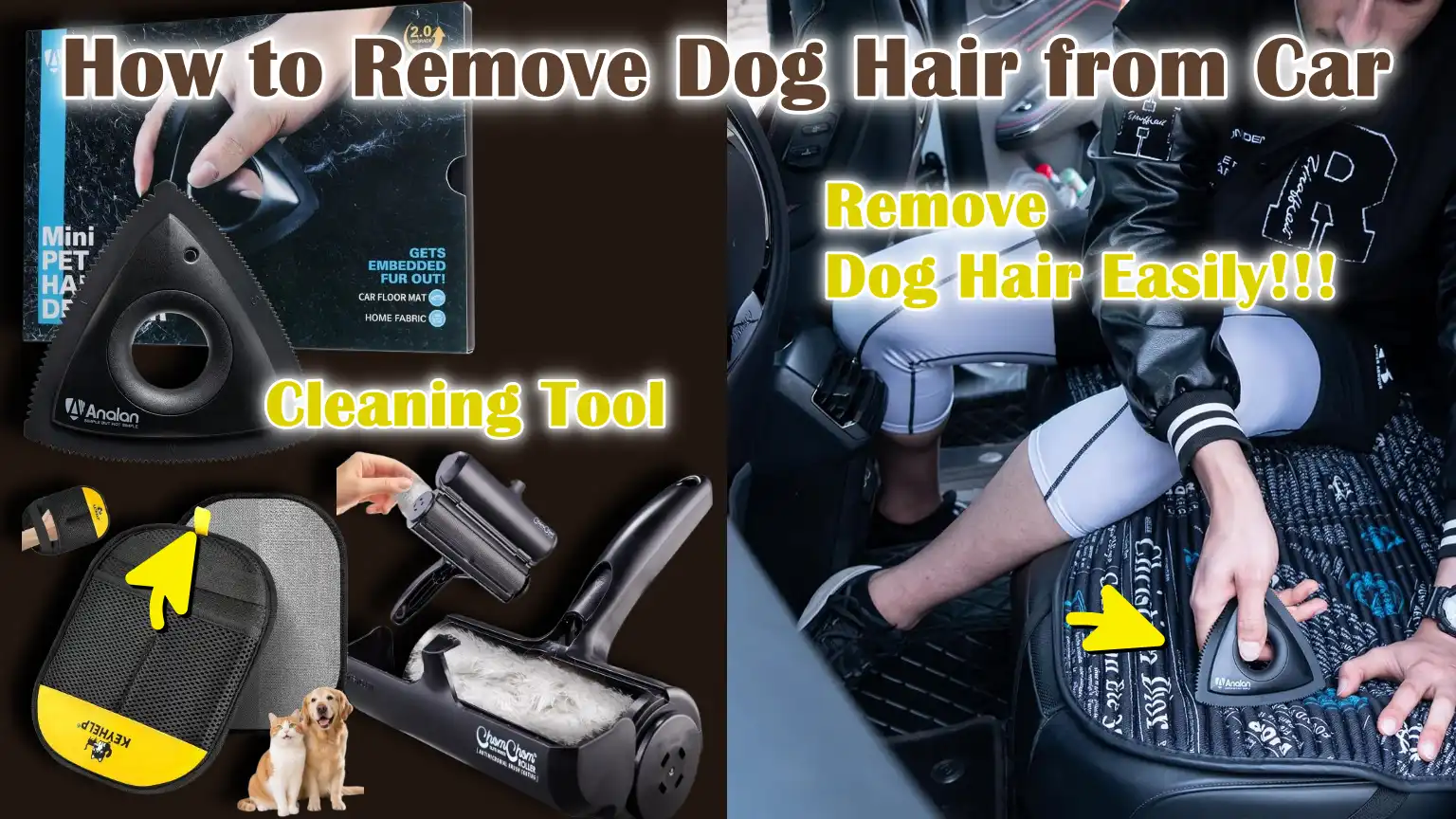
Which is why, we have come up with this guide on How to Remove Dog Hair from Car, so that you can easily clean up the dog hair effortlessly.
Not only this, in the closed car interior, the airflow is actually limited; which is why the hair settles into the seams, carpets and other tight corners as well instead of blowing away.
Understand, Why Dog Hair Sticks to Car Interiors
Dog hair doesn’t stick to your car by accident.
It sticks because of a simple science that involves static electricity, the structure of fabric, air conditioning and the way car seats are made.
Understanding these things makes cleaning much easier because you’ll know exactly why hair is difficult to remove and what works best.
1. Static Electricity and Fabric Fibers
Static electricity is one of the biggest reasons dog hair sticks to car seats.
When your dog moves around on the seat, friction occurs between the fur and the fabric.
The friction creates a small electric charge and this charge pulls the light hair toward the seat surface, almost like a magnet.
Dog hair is very light and dry, so it easily reacts to static.
Car seat fabrics like polyester and nylon are synthetic materials and synthetic fabrics are known to accumulate static more easily than natural materials like cotton.
Once hair becomes electrically charged, it clings tightly to the fabric rather than remaining on top of it.
That’s why even hand-wiping often doesn’t remove it.
The tiny fibers in the seat fabric also create tiny loops and spaces where hair can become trapped.
Over time, hair not only remains on top but also becomes tangled in the fabric, making it difficult to remove.
2. Differences Between Cloth Seats and Leather Seats
Cloth seats and leather seats behave very differently when it comes to dog hair.
Cloth seats are made of woven fibers.
These fibers create texture and tiny holes through which hair can become trapped.
The rougher the fabric, the more it will trap hair.
That’s why pet hair often appears deeply embedded in fabric upholstery and carpet.
Leather seats, on the other hand, have a smoother surface.
Because leather fibers aren’t exposed, hair usually stays on top rather than getting trapped inside.
However, static can build up on leather, specially in dry weather, causing hair to stick to the surface.
Hair can also accumulate in stitching lines, seat edges and small spaces between the seat and plastic trim.
So, leather is generally easier to clean with a cloth, but it’s not completely free from this problem.
3. Effect of Humidity and Temperature
Humidity and temperature play a major role in how strongly dog hair sticks.
Dry air increases static electricity.
When the air inside your car is dry, specially in winter or in air-conditioned conditions, static charges build up faster and hold hair more tightly.
Conversely, higher humidity reduces static buildup because moisture in the air helps discharge electrical charges.
Therefore, removing dog hair may seem easier on humid days than on dry days.
Temperature also affects hair loss.
Many dogs shed more during changing seasons, when daylight hours and temperatures change.
Warm weather can increase hair loss in some breeds, while cold weather can cause coat changes in others.
This means you may notice more hair in your car during certain times of the year, even if your cleaning routine hasn’t changed.
4. Why Regular Vacuuming Often Fails
Regular vacuuming often fails because most household or basic car vacuums only remove loose hair from the surface.
They don’t always provide enough suction or brushing action to remove hair from woven fabric fibers.
Dog hair can curl and wrap around the fabric threads, making it resistant to simple suction.
In many cases, the vacuum nozzle simply slips off, leaving the trapped hair behind.
Another reason for vacuuming failure is lack of friction.
Loosening hair stuck in static or woven fabric requires something that creates resistance, such as a rubber or stiff brush.
Without loosening the hair, suction alone cannot remove it completely.
This is why many people are frustrated to find hair stuck in the seat even after vacuuming.
Tools
Not only this, there’s laboratory investigation that found out that textiles with many embossed fibers retain the transferred fibers at a very high rate such as: between 90% to 100% under the static conditions, that clearly means that pet hair embedded in a car upholstery will remain unless there’s specific friction or agitation happens or using that kind of methods, also this scientific observation supports the need for tools such as: rubber gloves or squeegees that physically agitates fibers to lift embedded hair.[¹]
| Tool or Supply | What It Does | Why It Is Useful |
|---|---|---|
| Rubber Gloves | This creates friction on the fabric surfaces. | The rubber pulls out loose hair and gathers it into clumps. |
| Pet Hair Removal Brush | Loosens hair trapped deep in fabric. | Strong bristles pull hair from seat fibers and carpet. |
| Vacuum Cleaner with Upholstery Attachment | Absorbs loose hair and dirt. | The small brush head reaches seams and tight spaces. |
| Lint Roller | Removes hair from smooth surfaces. | Sticky sheets capture fine hairs left behind. |
| Fabric Softener Spray Solution | Reduces static electricity. | Reduces the chance of hair sticking tightly to clothing. |
| Squeegee | Pulls hair from cloth seats and carpets. | Rubber edge collects hair into an easily removable pile. |
| Microfiber Cloths | Wipes and collects loose hair. | The soft material traps hair without scratching the surface. |
| Seat Covers – Preventive Use | Protects the seat from direct contact with hair. | Prevents hair from becoming trapped in the original upholstery. |
How to Remove Dog Hair from a Car Seat – Easy Steps
Removing dog hair from a car seat requires more than a quick wipe or basic vacuuming, as pet hair can become embedded deep into the seat fibers due to static electricity, friction and the woven structure of the upholstery material.
Car seats, specially cloth ones, are made of tightly woven synthetic fibers like polyester and nylon, which naturally attract light fibers like dog hair.
When a dog moves around inside the car, friction creates a static charge, causing the hair to adhere tightly to the seat surface and become embedded in tiny loops of fabric.
Therefore, effective removal requires a step-by-step process that first loosens the surface hair, then uses friction to pull out the trapped fibers and finally removes the fine particles left behind.
Following the correct order improves results and reduces time and effort.
How to Loosens Up the Surface Hair By Vacuuming
Vacuuming should always be the first step as it removes loose hair, dust and dirt from the seat surface.
Vacuuming alone usually doesn’t remove deeply embedded hair, but it significantly reduces the total amount of hair to be removed later.
Surface hair can spread to other areas during cleaning, so cleaning the surface layer first makes the rest of the process easier and more effective.
With the right technique, a strong vacuum can remove a large portion of lightly adhered hair and prepare the surface for deeper cleaning methods.
1. Use the Brush Attachment
Using the brush attachment is important because it creates a slight movement while applying suction.
The short bristles agitate the fabric fibers and help loosen slightly trapped hair beneath the surface.
Without a brush attachment, the vacuum nozzle may simply slide over the fabric and leave hair behind because there isn’t enough friction to lift it.
The brush works by slightly separating the woven fibers, allowing the vacuum to pull up slightly embedded hair.
This method is specially useful on fabric seats where hair tends to get wrapped around the fabric threads.
2. Work in short strokes
Working in short, slow strokes improves suction effectiveness because the vacuum focuses on a small area for a longer period of time.
Moving too quickly reduces contact time, reducing the vacuum’s ability to remove stubborn hair.
By dividing the seat into small sections and cleaning each section carefully, you increase the chances of removing even the most stubborn hair on the surface.
Slow, overlapping strokes avoid missed spots and provide even coverage.
3. Pay Attention to Seams and Crevices
Seams, stitching lines and tight crevices are areas where dog hair accumulates the most because natural movement pushes hair into these narrow spaces.
Over time, these areas can accumulate large amounts of trapped hair that regular surface cleaning misses.
Using a fine-tipped tool, you can reach the seams and stitched edges of the seat cushion where hair can hide.
Paying close attention to these areas prevents buildup that can later spread back onto the seat surface.
How to Use Rubber Gloves
The rubber glove method is one of the most effective and inexpensive ways to remove dog hair, as rubber naturally creates a lot of friction on fabric surfaces.
This friction helps pull hair out of the tiny loops and fibers in upholstery material.
This technique works specially well on fabric seats and carpets because the rubber surface grips hair more tightly than smooth materials like plastic or bare hands.
The combination of friction and slight moisture reduces static electricity, making it easier to remove hair from fabric.
1. Slightly Wet the Gloves
Slightly wetting rubber gloves improves their effectiveness because moisture reduces static buildup.
Dry weather increases static electricity, causing hair to cling tightly to surfaces.
A little water helps neutralize the static charge, making it easier to pick up hair.
It’s important not to over-wet the gloves, as excess water can dampen the seat fabric and cause odors or mildew.
A slightly damp surface is enough to improve grip and reduce stickiness.
2. Rub in a Single Direction
Rubbing in a single direction gathers hair into a single pile instead of scattering it across the seat.
When hair moves around, it spreads out and becomes difficult to collect.
By rubbing consistently in a single direction, you encourage loose hair to roll together.
This rolling action creates small clumps that can be easily removed by hand or a vacuum.
3. Gather hair into clumps for easy removal
As friction continues, individual hairs begin to stick to each other and form clumps.
This happens because the rubber friction pulls multiple hairs upward at the same time, causing them to gather together.
These clumps can then be easily removed, reducing the need for frequent cleaning.
The glove method is specially helpful in medium to heavy shedding situations where the hair is deeply embedded.
How to Try a Rubber Squeegee
A rubber squeegee is very effective for removing dog hair from fabric seats and carpets because its strong rubber edge provides stronger resistance than a glove alone.
This resistance removes hair deeply embedded in the woven fabric structure.
The squeegee works by pulling on the seat surface and lifting the hair wrapped around the fibers.
It is specially useful for large, flat areas where constant pressure can be applied.
1. Great for Fabric Seats and Carpets
Fabric upholstery and carpeted floor areas have a textured surface that tightly traps hair.
The rubber edge of the squeegee presses into the fabric and pushes the hair upwards with friction.
Unlike a smooth tool that glides across the surface, the squeegee grips the fabric slightly, helping to remove stubborn fibers.
This is more effective for thick or coarse dog hair that resists vacuum suction.
2. Pull the hair towards one spot
Pulling the squeegee in a straight line in one direction gathers the hair into a pile in the center.
This systematic movement prevents the hair from spreading and helps you collect it quickly.
Once collected, the hair can be removed by hand or with a vacuum.
Applying consistent pressure with continuous strokes maintains maximum contact between the rubber edge and the fabric surface.
How to Use a Pet Hair Removal Brush
A pet hair removal brush is specifically designed to remove trapped hair from upholstery and carpet.
These brushes typically have strong rubber or silicone bristles that create strong friction without damaging the fabric.
They are specially effective when hair has become deeply embedded in the seat due to repeated sitting or movement.
1. Best for Deeply Embedded Hair
When hair is tightly embedded in the seat fibers, suction alone cannot remove it.
The stiff bristles of a pet hair brush dig into the fabric and lift the hair upward.
This mechanical action loosens the hair that is wrapped around individual threads.
This is specially helpful for vehicles that regularly transport dogs that shed hair.
2. Short back-and-forth strokes
Using short back-and-forth strokes creates repeated friction in the same area.
This repetitive movement helps break up static hold and remove hair.
Longer strokes may not require as much pressure to remove deeply embedded hair.
Focusing on smaller sections increases efficiency and yields better results.
3. Works Well on Carpets
Car floor carpets tend to trap more hair than seats because their fibers are coarser.
Pet hair brushes are very effective on carpeted surfaces because they penetrate deeper than vacuum attachments.
After brushing, vacuuming again removes all loose hair.
How to Use Fabric Softener Spray Technique
The fabric softener spray technique works by reducing static electricity, which is a major cause of dog hair sticking to seats.
Fabric softener contains compounds that reduce the static charge between fibers.
When static is reduced, hair is more easily removed from upholstery material.
1. Mix water and a little fabric softener
A safe mixture consists mostly of water and a very small amount of liquid fabric softener.
A diluted solution helps control static without leaving a large residue.
Using too much softener can create a sticky layer, so proper dilution is essential.
2. Spray lightly, don’t soak
Spray lightly rather than soaking the seat surface.
Excessive moisture can damage the upholstery padding or cause odor problems.
A light mist is enough to reduce static and slightly dampen the fibers, making it easier to wipe away hair.
3. Wait a few minutes before wiping
Letting the solution sit for a few minutes gives the static charge in the fabric time to dissipate.
After waiting, wiping or brushing the area becomes more effective because the hair is no longer tightly stuck.
This method works well as a preparation before using gloves or a brush.
How to Use Lint Roller for Final Cleaning
A lint roller is best used as a final step because it captures fine fibers left after a deep cleaning.
It is specially effective on smooth surfaces like leather seats, where hair remains on the surface rather than being embedded deep.
1. Best for Finishing Touches
After brushing and vacuuming, small remaining hairs may still be visible.
The sticky surface of a lint roller quickly captures these fine fibers, giving the seat surface a clean and polished finish.
2. Great for Leather Seats
Leather seats don’t have woven fibers, so hair often remains on the surface.
A lint roller easily removes these loose fibers without much rubbing.
This makes it one of the easiest tools for leather interiors.
3. Change Sheets Frequently
Adhesive sheets lose their effectiveness when they become covered in hair.
Regularly changing them provides a stronger grip and better results.
Newer adhesive sheets hold the fine fibers more tightly and prevent hair from spreading across the surface.
How to Remove Dog Hair from Car Carpets and Floor Mats
Car carpets and floor mats tend to accumulate more dog hair than seats because their fibers are thicker and deeper.
When dogs enter or exit the car, gravity causes loose hair to fall and settle into the carpet.
Movement inside the car further embeds hair into the fibers, specially in high-traffic areas near doors and under seats.
Carpets are designed to keep dirt and debris out of the car, but this very design makes pet hair difficult to remove.
Dog hair can become wrapped around carpet fibers and become tightly trapped, which is why even vacuuming alone often leaves hair behind.
Following the correct cleaning sequence is crucial, as each step helps loosen, lift and completely remove trapped hair without damaging the carpet material.
1. Remove Mats First
Always remove the floor mats from the car before cleaning.
This step prevents loose hair from spreading to other parts of the car while you work.
Taking the mats outside also gives you more space and better lighting so you can see where hair is trapped.
When the mats remain inside the car during cleaning, loose hair can fall back onto the carpet or blow into corners.
Removing them allows you to clean more thoroughly and reach all the edges and less crowded areas where hair often accumulates.
This also makes vacuuming the main carpet area easier because nothing blocks access.
2. Beat and Shake the Mat Outside
Beating and shaking the mat outside is one of the simplest yet most effective ways to remove loose hair.
When you shake the mat vigorously, gravity pulls the loose hair downward and the friction between the fibers removes the loose hair.
Beating the mat against a hard surface creates vibrations that help loosen hair trapped between carpet fibers.
This method removes a lot of debris before brushing or vacuuming.
This reduces the overall amount of hair deep-cleaning tools have to handle, making subsequent steps more effective.
3. Use a Stiff Brush
After shaking the mat, using a stiff brush helps remove hair trapped in the fibers.
Dog hair often gets wrapped around carpet threads, specially if it’s long or thick.
A stiff brush creates intense friction, lifting these trapped hairs.
Brushing in short, firm strokes works best, as brushing the same area repeatedly dislodges trapped hair.
This mechanical action breaks the bonds between hair and carpet fibers.
It’s important to apply consistent pressure, but not too much force, as too much force can damage the delicate carpet material.
Proper brushing prepares the surface for thorough vacuuming by loosening deeply embedded hair.
4. Vacuum thoroughly
Vacuuming should be done after brushing, as brushing brings hidden hair to the surface.
For carpets, a vacuum with high suction and a brush head attachment works best.
Moving slowly over the surface gives the vacuum enough time to pick up hair.
Fast movements reduce suction and leave hair behind.
Overlapping strokes helps ensure no areas are missed.
Pay special attention to corners, edges and under seats, as hair tends to accumulate where airflow is poor.
Vacuuming thoroughly after brushing removes both loose hair and fine particles that cannot be removed simply by shaking.
5. Pressure wash rubber mats if necessary
Rubber floor mats are easy to clean because they don’t have woven fibers.
Dog hair usually sticks to mats because of static electricity or surface moisture, not because it’s deeply embedded.
If hair remains stuck after shaking and brushing, rinsing with a strong stream of water can remove it completely.
Water reduces static electricity and washes hair from the smooth rubber surface.
Pressure washing is specially helpful when mud, dust and hair are mixed together, as water removes dirt from grooves and textured patterns.
After washing, let the mat dry completely and then return it to the car to prevent moisture and odor.
Proper cleaning of rubber mats not only removes hair but also maintains hygiene and prevents dirt from returning to the clean carpet.
How to Remove Dog Hair from a Car Trunk
The trunk is one of the most overlooked areas when removing dog hair, yet it often accumulates a lot of hair, specially if your dog rides in the back seat or if you carry pet beds, crates, or blankets.
Trunk spaces are typically lined with thick carpeting designed to reduce noise and prevent slipping.
This carpeting has deep fibers that easily trap light dog hair.
Because the trunk is a closed space with limited ventilation, loose hair can accumulate in corners, along side panels and under floor linings.
Over time, trapped hair can mix with dust and dirt, causing odors and making cleaning more difficult.
Proper trunk cleaning requires good access, good ventilation and careful brushing to remove hair from tight and hidden spaces.
1. Fold the seats down for access
Folding the rear seats down gives you full access to the trunk and improves visibility.
Many vehicles are designed to fold the rear seats to increase cargo space and using this feature makes cleaning much easier.
When the seats are upright, hair can get stuck in the narrow space between the seat backs and the trunk floor.
By lowering the seats, you can reach these hidden areas and prevent buildup.
Improved access allows you to move around easily while vacuuming or brushing, ensuring you don’t miss any spots.
Opening up the space increases light and airflow, allowing you to see trapped hair more clearly and clean more thoroughly.
2. Use compressed air in tight spaces
Compressed air is very useful for loosening dog hair from tight corners and small crevices, where brushes and vacuum nozzles can’t reach.
Hair often accumulates in small spaces like side pockets, under plastic trim and around trunk hinges.
Blowing compressed air into these spaces dislodges trapped hair with the intense air pressure.
This method works specially well because hair is very light and can be easily carried away by the airflow.
Once the hair is blown into the open space, it can be vacuumed or swept away.
Compressed air also helps remove hair from fabric-covered side panels without damaging them.
Using small bursts of air prevents debris from spreading too far and keeps the cleaning process under control.
3. Use a Detailing Brush for Corners
A detailing brush is designed for precision cleaning and works well on the edges and corners of the trunk.
These brushes have thin but strong bristles that can reach narrow spaces and remove hair trapped in carpet fibers.
Hair often accumulates where the trunk floor meets the side panels because movement pushes it onto these edges.
Brushing these areas in short, controlled strokes creates friction that loosens the hair from the fabric.
Once loosened, the hair can be easily removed with a vacuum.
Detailing brushes are also useful around latch mechanisms and along trim lines where hair can accumulate over time.
Regular brushing helps prevent excess hair buildup and keeps the trunk area cleaner and more hygienic, specially if your dog frequently travels in the back of the vehicle.
How to Prevent Dog Hair in Your Car
Preventing dog hair from spreading in your car is much easier than removing it once it’s gone.
Dogs shed naturally as part of their growth cycle and most dogs shed loose or dead hair daily.
Shedding increases with changing seasons, daylight hours and temperatures, specially in breeds with thick, double coats.
Inside a car, poor ventilation and static electricity can cause loose hair to accumulate on seats and carpets.
By taking preventative measures before and during trips, you can significantly reduce the amount of hair that gets into and sticks to your car.
The best prevention method is a combination of physical barriers, regular grooming and simple habits that reduce static buildup and loose hair.
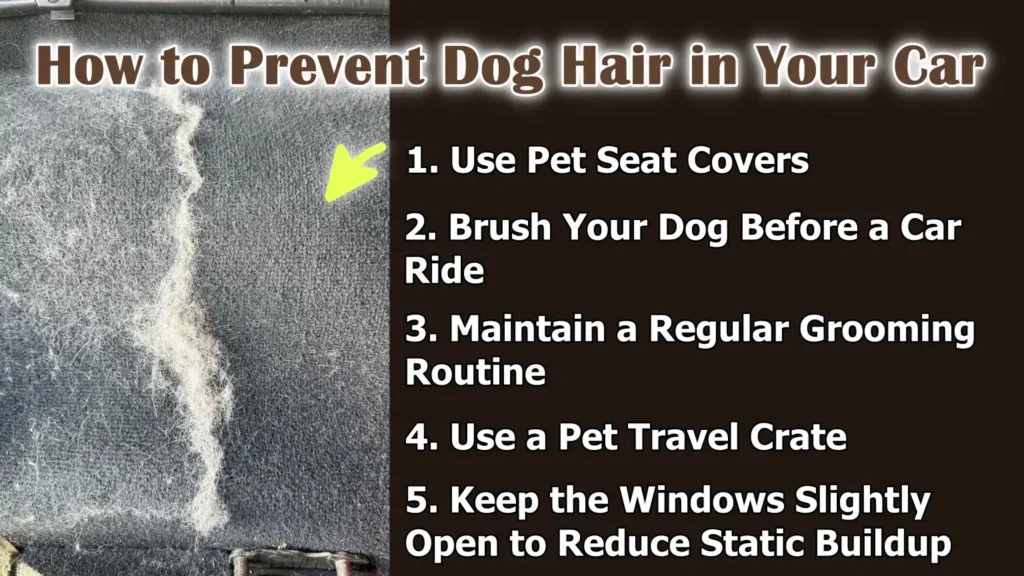
1. Use Pet Seat Covers
Pet seat covers create a protective barrier between your dog and the car’s original upholstery.
Most car seats are made of woven synthetic fibers that easily trap hair, while seat covers are often made of tightly woven or waterproof materials that prevent hair from becoming deeply embedded.
Because many pet seat covers have a smoother surface, hair typically remains on top and can be quickly removed by shaking or vacuuming.
Seat covers prevent hair from reaching seams, stitch lines and deeper layers of fabric, which are difficult to clean.
In addition to controlling hair, seat covers also protect against dirt, moisture and scratches.
Removing and washing covers is much easier than deep cleaning car seats, making them one of the most effective preventative measures.
2. Brush Your Dog Before a Car Ride
Brushing your dog before a car ride removes loose and dead hair before it can fall into the vehicle.
Dogs shed naturally, but most loose hair remains attached to the coat until it is removed by shaking.
Brushing helps remove this loose coat in a controlled environment, rather than inside your car.
Regular brushing reduces the overall amount of hair on seats and carpets.
It also distributes natural oils in the coat, keeping it healthy and reducing excessive shedding caused by dry skin.
Brushing even a few minutes before a trip can significantly reduce shedding during the trip.
3. Maintain a Regular Grooming Routine
Maintaining a consistent grooming schedule is one of the most important and long-term ways to reduce car hair problems.
Dogs that are bathed and brushed regularly have more controllable hair.
Grooming removes dead undercoat hair that sheds during walks.
Some breeds shed continuously, while others shed more frequently with changing seasons.
Understanding your dog’s shedding patterns helps you prepare in advance.
Regular grooming also keeps the skin healthy and healthy skin reduces unwanted hair loss caused by dryness or irritation.
By controlling hair loss at the root, you reduce the amount of hair that ends up in your car.
4. Use a Pet Travel Crate
Using a pet travel crate reduces stray hairs.
When dogs roam freely in the car, hair can get stuck on seats, floors and even air vents.
A crate contains most of the loose hair in a small space, making cleaning much easier.
Crates also reduce friction between your dog and the seat fabric, reducing static buildup and causing less hair to cling.
In addition to controlling hair, travel crates improve safety by preventing sudden movements during braking or sharp turns.
A closed space not only protects your pet but also keeps your car interior cleaner and more organized.
5. Keep the Windows Slightly Open to Reduce Static Buildup
When the air inside a car is dry, static electricity increases, which often happens when the air conditioning or heating system is running.
Dry air allows an electric charge to accumulate on synthetic seat fabric, causing light dog hair to stick tightly.
Keeping the windows slightly open while traveling improves airflow and balances humidity levels, which can reduce static buildup.
The increased humidity in the air helps discharge static electricity naturally.
Even a slight increase in airflow can prevent hair from sticking tightly to surfaces.
While this step alone won’t prevent hair from sticking, it can reduce the amount of hair stuck tightly to the seats, making cleaning much easier later.
Read More:
How Often Should You Remove Dog Hair?
How often you remove dog hair from your car depends on how often your dog walks with you, its breed and the season of the year.
Dog hair doesn’t just stay where it falls.
When you drive, air movement inside the car loosens hair and traps it in seams, carpets and small corners.
Over time, hair combines with dust, dirt and skin flakes to form dander.
Dander can affect the air quality inside a car, specially in enclosed spaces with poor ventilation.
Regular removal prevents hair buildup, reduces odors and makes each cleaning session much easier.
Leaving it too late can cause hair to become embedded deeper into the seat fibers and carpet, increasing removal time and requiring stronger tools.
1. Weekly Maintenance Suggestion
For most dog owners, light weekly maintenance is a practical and effective routine.
A quick vacuuming of seats, carpets and floor mats once a week prevents hair buildup.
Longer-lasting hair can become embedded deeper into the fabric due to friction from passengers sitting below.
Vacuuming weekly removes hair from surfaces before it can accumulate.
Regular cleaning usually takes less time because less hair accumulates.
Even if your dog is in the car only once or twice a week, wind gusts during driving can spread hair quickly.
Regular weekly care keeps the interior looking clean and prevents the need for frequent cleaning.
2. Deep Clean Schedule
In addition to weekly maintenance, deep cleaning should be done every one to three months, depending on usage.
Deep cleaning involves brushing cloth seats, using rubber tools to remove accumulated hair, carefully cleaning seams and thoroughly vacuuming all areas, including the trunk.
Deep cleaning is essential because even with regular care, some hair remains hidden beneath the surface.
Over time, this hidden buildup can trap dust and moisture, leading to unpleasant odors.
Thoroughly cleaning the interior every few months maintains your car’s condition and prevents long-term wear and tear on the upholstery.
If your dog travels in the car daily, you may need to perform deep cleaning more frequently.
3. Considerations for Seasonal Shedding
Many breeds experience increased seasonal shedding, specially in spring and autumn.
Dogs with double coats naturally shed more undercoats when temperatures change.
During these times, hair may accumulate more rapidly than normal.
You may find that your daily or weekly cleaning routine is no longer sufficient.
Increasing the frequency of cleaning during shedding season helps manage the sudden increase in loose hair.
Regularly brushing your dog during this time also reduces the amount of hair that gets into your car.
Understanding your dog’s shedding cycle allows you to adjust your cleaning routine before buildup becomes too severe.
By combining weekly maintenance with seasonal information, you can keep your car interior consistently clean and easy to manage all year long.
Know Common Mistakes to Avoid
Removing dog hair from a car can be easy if done correctly, but many people unintentionally make mistakes that either diminish the cleaning results or damage the interior.
Car seats and carpets are made of materials that offer durability, comfort and appearance, but they are not designed to withstand excessive moisture, harsh chemicals, or intense pressure.
Dog hair itself is not harmful, but improper cleaning can fade fabric, damage clothing, cause odors, or even lead to mold.
Understanding these common mistakes helps you clean more thoroughly and preserve your car interior for the long term.
1. Using Too Much Water
Using too much water is one of the most common mistakes when trying to remove dog hair.
Many car seats and carpets have foam padding beneath the fabric layer.
When too much water soaks through the surface, it can reach this padding and become trapped inside.
Because car interiors are enclosed spaces, trapped moisture doesn’t dry quickly.
This can lead to odors, mold and, in extreme cases, mildew.
Mold thrives in damp, dark places and once it forms inside the seat padding, it becomes difficult and expensive to remove.
Mild moisture can help reduce static electricity and loosen hair, but wetting the seat is unnecessary and risky.
A light mist or a slightly damp tool is enough to control static without damaging the upholstery.
2. Too Much Scrubbing
Too much rubbing can weaken or damage upholstery fibers.
Cloth seats are made of woven threads and excessive force can stretch, pull, or damage these fibers.
Over time, repeated vigorous scrubbing can cause wear, thinning, or rough patches.
In carpets, vigorous scrubbing can damage the fiber structure, resulting in a rough surface.
The goal of cleaning dog hair is to use controlled friction, not force.
Gentle but firm brushing is effective because it loosens the hair without damaging the material.
Excessive pressure doesn’t necessarily remove more hair; in fact, it increases the risk of long-term damage.
Cleaning should always focus on consistent, even movements rather than force.
3. Ignoring Crevices
Ignoring seams, stitch lines and tight crevices can lead to dog hair accumulation over time.
Hair often accumulates in small gaps where seat cushions meet, along edges and under plastic trim.
Hair gets trapped in these areas because airflow thins the hair and forces it into the thin spaces.
If these areas aren’t cleaned regularly, hair builds up, making it difficult to remove later.
Hair accumulated in hidden areas can mix with dust and moisture, causing odors.
Cleaning only the visible flat surfaces may make the seat appear clean at first glance, but overlooked crevices often harbor a significant amount of hair.
Taking the time to clean these hidden areas prevents hair buildup and keeps the interior completely hygienic.
4. Using harsh chemicals on upholstery
Using harsh chemicals is another mistake that can damage a car’s interior.
Some harsh cleaners contain ingredients that can damage fabric coatings, fade colors, or dry out leather surfaces.
Leather seats, in particular, have a protective finish that can crack when exposed to harsh solvents.
Fabric seats can lose their softness or change color if the wrong products are used.
Harsh chemicals can also leave a strong odor inside your car that can last for days.
When removing dog hair, chemical cleaners are usually not necessary because the main problem is static and fiber adhesion, not stains.
Mild cleaning solutions specifically designed for automotive upholstery are safer and more effective.
Choosing the right products can preserve both the look and life of your car’s interior.
Conclusion – How to Remove Dog Hair from Car
Now, you have understand that achieving clean interiors is not just about using force, but you need to understand how friction, airflow and tools works together for easy dog hair removal.
Plus, dog hair sticks to seats and carpets due to static electricity, friction and the weave of upholstery fabrics.
Yes, there are synthetic materials like polyester and nylon naturally build up a static charge, specially in dry air, causing light hair to cling tightly to surfaces.
Sp, whenever hair gets stuck to seats from movement and sitting, it gets stuck in the tiny fibers of the fabric and becomes difficult to remove over time.
That’s why a quick surface cleaning often doesn’t completely solve the problem.
So, that’s all from this guide and let us know any left questions in the comment box below.
Frequently Asked Questions
Q1. What’s the easiest way to remove dog hair from a car seat?
Answer: The easiest way to remove dog hair from a car seat is to use a combination of friction and suction. Start by vacuuming the seat with a brush attachment to remove loose surface hair. Then, use slightly damp rubber gloves or a rubber brush to scrub the seat in one direction. Friction helps lift the hair out of the fabric fibers and gather it into clumps. When the hair forms small piles, vacuum again to remove it completely. This two-step method works best because vacuuming alone usually doesn’t remove the hair wrapped around the woven seat fibers. For leather seats, a lint roller often works faster because the hair usually remains on the surface, not embedded deep inside.
Q2. Why does dog hair stick so strongly to car upholstery?
Answer: Dog hair sticks strongly to car upholstery primarily due to static electricity and the fabric structure. Most car seats are made of synthetic materials like polyester or nylon. These materials easily build up static charge, specially in dry air. When your dog moves around on the seat, the friction creates static electricity that pulls loose hair toward the surface. Meanwhile, cloth seats contain tiny woven fibers that trap hair in tiny loops. Hair doesn’t just settle on top; it curls around these fibers. Therefore, simply wiping isn’t effective. Understanding this helps you use a friction-inducing tool to loosen hair before vacuuming.
Q3. Is it safe to use water or fabric softener on car seats?
Answer: Using a very small amount of diluted water or fabric softener solution is safe, but you should avoid wetting the seats. Mild moisture helps reduce static electricity, making hair removal easier. However, car seats have foam padding beneath the fabric. If the padding absorbs too much water, it can become trapped and cause odors or mold. A light mist is enough to control static without damaging the interior. Always let the seats dry completely after cleaning to avoid moisture problems.
Q4. How often should I remove dog hair from my car?
Answer: For most people, a light cleaning once a week is sufficient to prevent excessive hair buildup. Vacuuming once a week removes the top hair before it becomes deeply embedded in the fabric. If your dog roams the car frequently, specially during high shedding seasons, you may need to clean more frequently. Deep cleaning every one to three months helps remove hair from seams, carpets and hidden areas. Regular maintenance is easier and faster than waiting until the hair becomes thick and tightly adhered.
Q5. Can a regular vacuum cleaner completely remove dog hair?
Answer: Regular vacuum cleaners can remove loose hair, but they often struggle with deeply embedded hair. Dog hair can become wrapped around fabric fibers, making suction alone less effective. Vacuums with high suction and brush attachments work better than vacuums with a simple nozzle. For best results, use rubber gloves, a brush, or a squeegee to loosen the hair first. Then vacuum the area slowly and carefully. Combining friction and suction instead of just vacuuming produces better results.
References:
[1] Fibre persistence on static textiles under outdoor conditions
https://www.sciencedirect.com/science/article/pii/S0379073820304552

Guys, I’m a car audio enthusiast and customization expert and I love clear sound and clean installation. Plus, I have spent years helping people build their dream audio setups. And whenever I’m working on cars, I probably listen to music and thinks about the next big upgrade.