
Written By: Don Dodi
Fact Checked By: Kristen Brown
Reviewed By: Diego Rosenberg
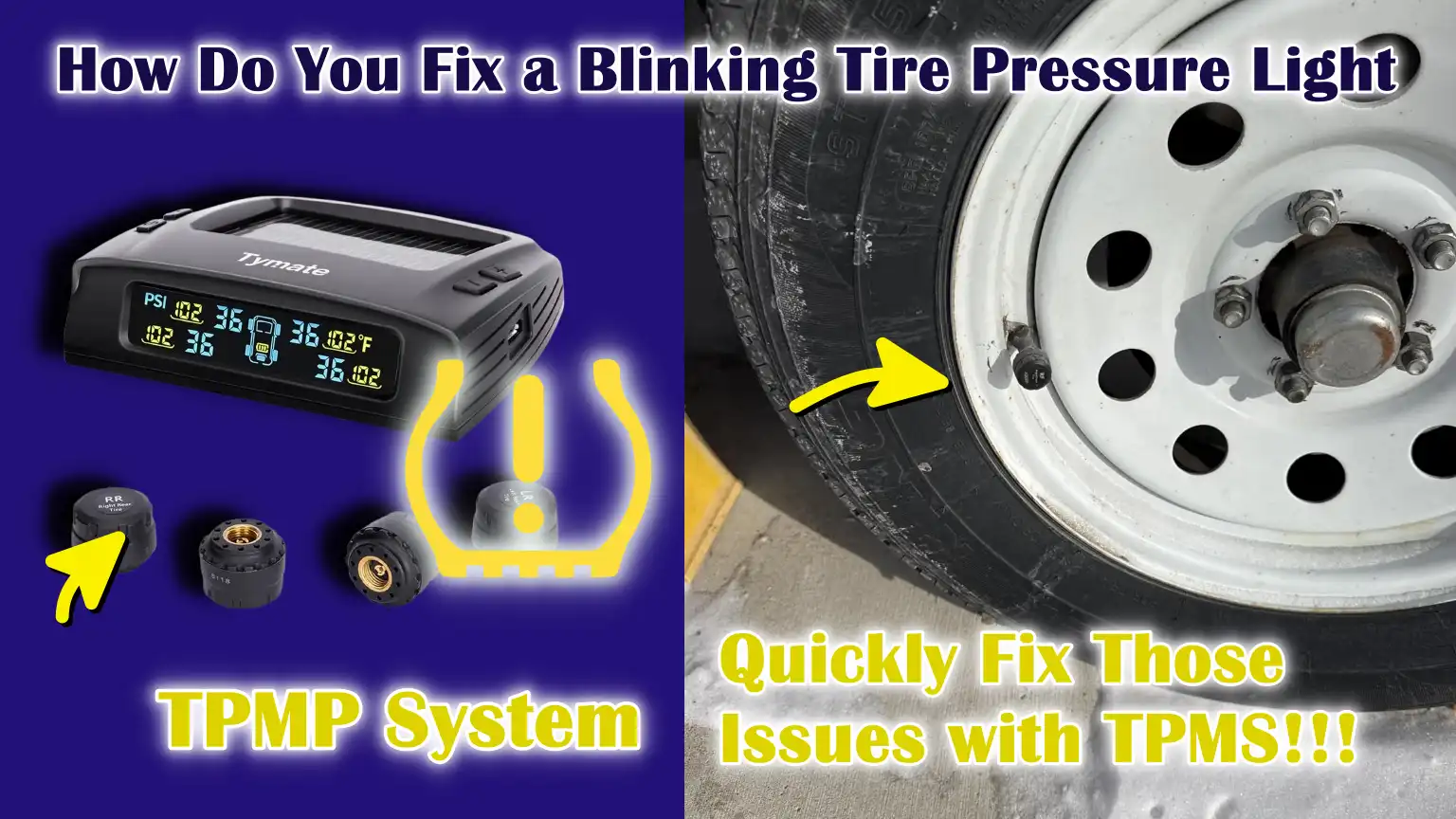
The TPMS sensors are responsible and monitors tire pressure constantly, so even a small malfunction can trigger a blinking warning or it wanted to inform you that your vehicle running on low or uneven tire pressure.
It is not like, the steady tire pressure light, as that was simply indicates you about low tire pressure, but a linking tire pressure light literally signals you for having any potential malfunction in the TPMS itself such as: faulty sensor, dead sensor battery or any wiring issue as well.
And yes, this warning should never be ignore as improperly functioning TPMS sensors can prevent you from knowing about the unsafe tire pressure, that can literally lead to the blowouts, reduced fuel efficiency and uneven tire wear as well.
Also, there’s are studies that shows that the underinflated tires can actually increase the stopping distance by up to 12% and reduces the fuel efficiency by up to 3% per 1 PSI drop, so it becomes really important in that perspective as well.
Now, this is the guide that shows you How Do You Fix a Blinking Tire Pressure Light, so that you can fix that compromised thing on your vehicle and make it safe ride.
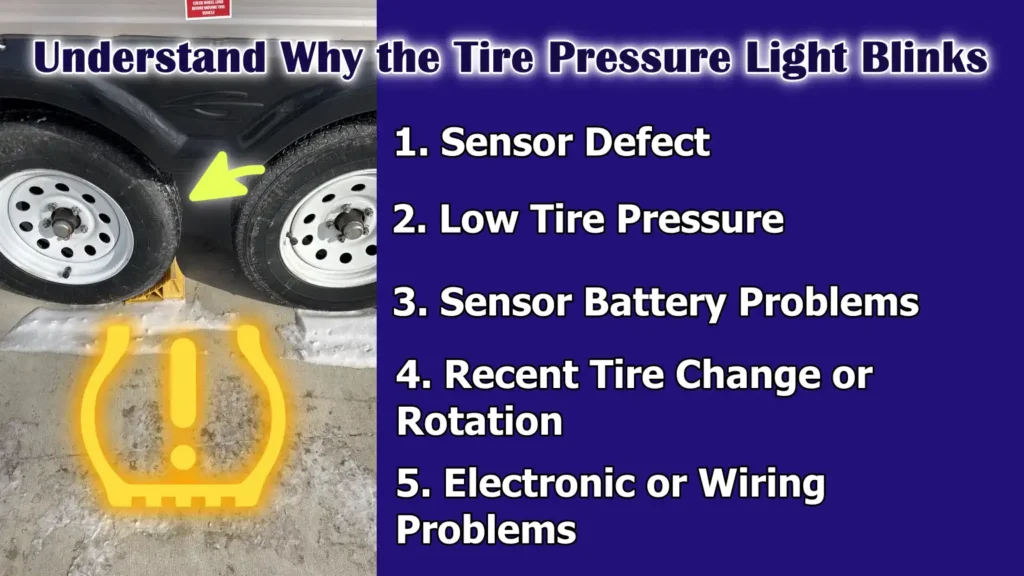
Understand Why the Tire Pressure Light Blinks
Plus, there’s NHTSA that has final rule publishing and mandating TPMS in many modern vehicles, as it has established tire pressure monitoring as a legal safety requirement rather than just an optional feature, as this official rule shows that the actual importance of maintaining a fully operational TPMS and addressing the system malfunctions such as: blinking lights so that you can comply with the safety standards and that’s how it protect the drivers on the road by informing them about something is fishy.[¹]
1. Sensor Defect
The most common reason for a tire pressure light to blink is a malfunctioning TPMS sensor.
Each tire has a small sensor that monitors air pressure and sends information to your car’s computer.
If one of these sensors fails due to damage, corrosion, or a manufacturing defect, the system cannot accurately read tire pressure.
When the computer detects this malfunction, the light blinks to alert the driver that the TPMS is malfunctioning.
It is important to repair sensor malfunctions quickly because a faulty sensor can mask real tire pressure problems, making driving unsafe.
2. Low Tire Pressure
A blinking tire pressure light can also indicate that one or more tires have abnormally low pressure.
Tires naturally lose air over time and temperature changes can cause pressure to drop.
Even a slight drop in PSI can trigger a TPMS warning.
Driving on under-inflated tires is dangerous because it increases the risk of tire blowouts, reduces traction and causes uneven tire wear.
Properly inflated tires improve fuel efficiency, provide better braking performance and extend tire life.
Manually checking tire pressure with a reliable gauge is a crucial first step whenever the light blinks.
3. Sensor Battery Problems
TPMS sensors are powered by small batteries that typically last 5 to 10 years.
When the sensor battery weakens or is completely drained, the sensor cannot send accurate information to the vehicle’s computer.
This malfunction often causes the tire pressure light to blink.
With some modern sensors, replacing the sensor battery isn’t always possible, which means the entire sensor will need to be replaced.
Regular maintenance and checking the life of your sensors can help prevent unexpected blinking lights and ensure the TPMS continues to function properly.
4. Recent Tire Change or Rotation
After a tire change or rotation, the TPMS system may need recalibration.
The sensors may be out of alignment with the vehicle’s computer and the car may interpret this as a malfunction.
A blinking light after a tire change often reminds you to reset or reprogram the TPMS system.
Most vehicles have a simple reset process through the infotainment system or a dedicated button, but some models require professional calibration.
Properly resetting the system after a tire change prevents false warnings and keeps the TPMS reliable.
5. Electronic or Wiring Problems
Sometimes, tire pressure light blinking is caused by problems unrelated to the tires or sensors.
Electrical wiring problems, bad connectors, or a faulty TPMS control module can interfere with communication between the sensor and the vehicle’s computer.
These problems are less common but can be serious because they can prevent the system from accurately monitoring tire pressure.
In such cases, a professional inspection is recommended to identify and repair faulty wiring or electronic components.
How to Diagnose Why TPMS Light Is On – Before Repair
1. Manually Check Tire Pressure
When the tire pressure light is blinking, the first and most important step is to manually check the tire pressure.
Although TPMS sensors automatically monitor tires, they can sometimes give inaccurate readings due to sensor malfunction or minor system errors.
To do this, you’ll need a reliable tire pressure gauge, which can be digital or analog.
Remove the valve cap from each tire, press the gauge firmly onto the valve stem and note the PSI reading.
Compare the measured pressure to the manufacturer’s recommended tire pressure, which is usually found on a sticker inside the driver’s door or in the owner’s manual.
Over- or under-inflated tires can trigger the TPMS light and even if the tire pressure deviates significantly from the recommended pressure, the system may blink.
Adjusting tires to the correct PSI is crucial not only to prevent blinking lights but also to ensure optimal tire performance, handling, fuel efficiency and safety.
Read More:
2. Check for Tire Damage
After checking tire pressure, the next step is to carefully inspect each tire for signs of damage.
Look for punctures, embedded objects like nails or screws, cracks in the sidewall, cuts, bulges, or areas where the rubber appears to be worn unevenly.
Even small leaks can cause pressure loss over time, which isn’t always immediately apparent.
Irregular wear can indicate alignment issues or suspension problems that affect tire pressure readings.
If damage is found, it’s important to repair or replace the affected tire immediately, as driving on damaged tires can be dangerous and may worsen the blinking light problem.
Regular tire inspections help prevent sudden tire failure and ensure your TPMS can safely and reliably monitor tire pressure.
3. Check if a TPMS Reset is Required
After the tire pressure has been adjusted and the tires inspected, it’s important to verify whether your vehicle needs a TPMS reset.
Many vehicles require TPMS recalibration after any tire adjustment, rotation, replacement, or seasonal change.
This process ensures that the system correctly recognizes the current tire pressure and sensor locations.
The reset method depends on the make and model of the vehicle; some cars have a dedicated TPMS reset button, while others require a specific ignition sequence or infotainment system menu.
It’s crucial to properly reset the tire pressure after adjusting it, as failure to do so may cause the light to remain on even after all tires are properly inflated.
Consulting the owner’s manual for the correct reset method ensures the system is fully in sync with the tires, preventing false warnings and maintaining accurate monitoring.
4. Consider Recent Modifications to the Vehicle
Finally, it’s important to consider whether any recent modifications to the vehicle are causing the light to come on.
New tires, wheels, or TPMS sensors can affect the system if they aren’t installed or programmed correctly.
For example, aftermarket wheel sensors may not communicate properly with the vehicle’s TPMS module, or tire rotation may have moved the sensors to different positions, requiring recalibration.
If you’ve recently had your tires or wheels repaired, double-check that everything is installed as directed by the manufacturer and then reset the TPMS.
Identifying recent changes can save time and help pinpoint the cause of a blinking light, ensuring you’re fixing the actual problem, not just guessing or replacing parts unnecessarily.
Read More:
How Do You Fix a Blinking Tire Pressure Light – 4 Ways to Solve This Issue
1. How to Inflate or Adjust Tire Pressure
How to Inflate Tires to the Correct Level
The first and easiest way to fix a blinking tire pressure light is to ensure that each tire is inflated to the manufacturer’s recommended pressure.
This is usually printed on a sticker inside the driver’s door or in the vehicle’s owner’s manual.
Use a reliable tire pressure gauge to check each tire.
Remove the valve cap and press the gauge firmly onto the valve stem.
If the pressure is below the stated level, slowly add air using an air compressor and recheck until it matches the correct PSI.
Overinflation can be just as harmful as underinflation, causing poor tire wear, poor handling and reduced traction.
Properly inflated tires improve braking performance, fuel efficiency and overall safety, which is why this step is crucial when fixing a blinking TPMS light.
Tips for Checking Tire Pressure Regularly to Stop the Light from Blinking
Regular tire maintenance can help prevent blinking lights.
Tire pressure should be checked at least once a month and before long drives, as even a slight drop in pressure can trigger the TPMS.
Changes in temperature also affect air pressure: PSI decreases in cold weather, while it increases slightly in warm weather.
Maintaining a routine of checking and adjusting tire pressure keeps the TPMS system functioning properly and prevents unnecessary blinking alerts.
Additionally, checking for minor damage or leaks during these checks can save time, money and improve safety.
Read More:
2. How to Reset the TPMS System
Reset Methods Depending on the Vehicle
Even after adjusting the tire pressure, some vehicles require a reset of the TPMS system to recognize the changes.
The reset method varies from vehicle to vehicle.
Some cars have a dedicated TPMS reset button on the steering column or under the dashboard, while others require a specific method to turn the ignition on and off.
Modern vehicles can be reset through the infotainment system, accessing the TPMS menu to recalibrate the sensors.
Following the correct method in the owner’s manual ensures that the system accurately records the current tire pressure and sensor locations.
How to Confirm if the Light Has Stopped Illuminating After the Reset
After resetting, drive the vehicle at speeds above 20 mph for several minutes to allow the TPMS sensors to communicate with the vehicle’s computer.
When the system detects that all tires are at the correct pressure, the light should turn off.
If the light remains on, it could indicate a faulty sensor or other system issues that require further investigation.
Confirming that the light has stopped blinking ensures that the TPMS is fully functional and reliable for tire safety monitoring.
3. How to Replace or Repair a TPMS Sensor
Identifying a Faulty Sensor Using a TPMS Tool or Scan Tool
Sometimes, the light is triggered by a faulty TPMS sensor rather than a tire pressure sensor.
Specialized TPMS tools or scan tools can identify which sensor is faulty by reading the signal strength and battery status of each sensor.
This diagnostic step is essential because if a sensor is faulty, simply replacing the tire won’t fix the light.
DIY vs Professional Replacement Guidance
Replacing a TPMS sensor can sometimes be done as a DIY project for those familiar with tire work, but most modern vehicles require special programming or calibration that only a certified mechanic can perform.
If the sensor can be easily installed in the vehicle without reprogramming, a DIY replacement is possible, but professional replacement ensures that the sensor communicates properly with the car’s computer.
TPMS Sensor Cost and Life
TPMS sensors typically last five to ten years, depending on driving conditions, battery life and weather.
Replacement sensors typically cost between $50 and $100 per sensor, plus labor if professionally installed.
Understanding their lifespan and cost helps vehicle owners plan maintenance and avoid unexpected blinking lights caused by faulty sensors.
4. How to Check for Electrical or Wiring Problems
Signs of a TPMS Module or Wiring Fault
If the tire pressure is correct, the sensors are working and the system has been reset, the blinking light may be due to an electrical problem.
Problems with the TPMS module, faulty wiring, or a bad connector can prevent proper communication between the sensor and the car’s computer.
Common signs include intermittent blinking, multiple warning lights, or discrepancies in sensor readings.
When to Call a Certified Mechanic
Electrical or wiring problems are often complex and require diagnostic tools and expertise.
A certified mechanic can inspect the wiring harness, repair faulty connections and test the TPMS module to ensure it is functioning properly.
Attempting to repair TPMS wiring yourself can lead to more serious problems, such as system failure or inaccurate tire pressure readings, so it’s recommended to seek professional help whenever an electrical fault is suspected.
What are the Ways to Prevent Tire Blinking In Future
1. Regular Tire Pressure Checks
The most effective way to prevent your tire pressure light from blinking is to check your tire pressure regularly, at least once a month.
Even small changes in tire pressure can trigger the TPMS, so staying ahead of these changes ensures your vehicle’s safety and efficiency.
Use a reliable tire pressure gauge to measure each tire and compare it to the recommended PSI listed in the owner’s manual or on the driver’s side door sticker.
Regular checks also help detect leaks, uneven wear, or minor damage early, allowing you to fix problems before they become serious.
Regular tire pressure maintenance improves fuel efficiency, improves handling and extends the life of your tires.
2. Avoid Sudden Pressure Drops Due to Weather Changes or Underinflation
Tire pressure automatically changes with temperature, decreasing in cold weather and increasing slightly in warm weather.
Underinflation can also occur if tires aren’t checked regularly or if they slowly leak.
A sudden drop in pressure can cause the TPMS light to blink and impact vehicle performance, including braking distance, traction and fuel economy.
Being aware of weather changes and adjusting tire pressure accordingly prevents unexpected warnings and helps maintain consistent tire performance throughout the year.
Drivers should also avoid overloading their vehicles, as excess weight can rapidly decrease tire pressure.
3. Periodically Check TPMS Sensors and Replace Batteries
TPMS sensors are powered by small batteries that typically last five to ten years.
Over time, batteries weaken and the sensors can malfunction or send inaccurate readings, causing the light to blink.
Regularly checking the TPMS sensor, specially if the vehicle is older or has recently undergone tire work, can help identify weak or faulty sensors early.
Some sensors allow for battery replacement, while others require the entire sensor to be replaced.
Periodic sensor maintenance ensures that the TPMS system remains reliable and doesn’t generate false alerts, contributing to long-term tire safety and system accuracy.
4. Proper Recalibration After Tire Replacement or Rotation
The TPMS system often requires recalibration whenever tires are replaced, rotated, or replaced.
Without a proper reset or calibration, the system may misread the sensor location or pressure, causing the light to illuminate even when the tires are properly inflated.
Following the reset procedure provided by your vehicle manufacturer ensures that the sensors are in sync with the car’s computer.
Proper recalibration not only prevents false warnings, but also ensures the TPMS continues to monitor tire pressure accurately, keeping your vehicle safe and reliable.
When You Should Go for Professional Help
1. Continuous Blinking Even After Trying Basic Solutions
If the tire pressure light continues to blink even after checking and inflating all tires to the correct pressure, resetting the TPMS and testing the sensors, it’s a clear sign that the problem may be more serious.
Continuous blinking can indicate problems that aren’t easily detected without specialized tools, such as a faulty sensor communication system, a malfunctioning TPMS module, or hidden tire damage.
Driving with a blinking light without a professional inspection can be a safety hazard because the system can’t accurately detect unsafe tire pressure.
Consulting a certified mechanic ensures that the cause of the blinking light is properly identified and corrected before it causes further damage or a safety hazard to the vehicle.
2. TPMS Module Failure Warning
A blinking tire pressure light can sometimes indicate a malfunction in the TPMS control module, the electronic component responsible for processing signals from all tire sensors.
Module failures are less common but can prevent the system from accurately reading tire pressure.
Signs of module failure include irregular blinking, simultaneous alerts on multiple tires, or the light failing to turn off even after multiple resets.
Professional diagnosis is required to test the module, repair wiring, or replace the unit.
Ignoring a potential module failure can result in continued false warnings and the vehicle failing to detect actual tire pressure problems, posing a danger to both the driver and passengers.
3. Vehicle-Specific TPMS Calibration Requirements
Some vehicles have specific calibration requirements for the TPMS system that cannot be met without professional equipment.
After a sensor replacement, wheel replacement, or rotation, some vehicles require special programming tools to synchronize the sensor with the vehicle’s computer.
For these models, manually resetting or recalibrating the system may not work, resulting in continuously blinking lights or inaccurate sensor readings.
Seeking professional help ensures the system is properly calibrated according to manufacturer specifications, guaranteeing accurate tire pressure monitoring and maintaining overall vehicle safety and performance.
Read More:
Conclusion – How Do You Fix a Blinking Tire Pressure Light
Now, it becomes clear to you, that while it may seem minor thing; but you should not have to ignore that blinking TPMS light as it can quietly compromise your vehicle’s safety, handling and even fuel efficiency can drop as well.
So, if the light is on, it means the TPMS system isn’t working properly.
This could be due to a faulty sensor, low tire pressure, a dead battery, an electrical problem, or incorrect calibration.
And, by performing proper diagnostics, regularly checking tire pressure, performing timely resets and maintaining the TPMS sensor, drivers can prevent most problems before they become serious.
However, persistent or serious problems may require professional intervention to completely repair the system.
Yes, you should take care of tire maintenance and TPMS care in advance not only prevents the light from coming on, but also ensures a safe, smooth and reliable driving experience.
As well as, you can comment down below for more information related to this guide.
Frequently Asked Questions
Q1. What does the tire pressure light mean?
Answer: The tire pressure light usually indicates a problem with your vehicle’s TPMS system, which monitors the air pressure in your tires. Unlike a standard light that simply warns of low tire pressure, a flashing light often indicates a faulty sensor, a dead sensor, a battery, or an electrical problem in the system. This is a warning that the TPMS may not be providing accurate readings, so checking your tires and fixing any problems as soon as possible is crucial for safe driving.
Q2. How can I prevent the tire pressure light from coming on?
Answer: To prevent the tire pressure light from coming on, first check all tires with a reliable tire pressure gauge and inflate them to the level indicated in your owner’s manual or on the driver’s door sticker. If the pressure is correct, you may need to reset the TPMS system using the vehicle’s reset button, ignition sequence, or infotainment system, depending on your car model. If the light remains on after these steps, the problem may be a sensor or system malfunction, which may require a professional inspection.
Q3. Can I drive with a lit tire pressure light?
Answer: Driving with a lit tire pressure light is generally not a good idea, as it indicates a malfunction in the TPMS system. This means you won’t be able to tell whether your tires are underinflated or overinflated, increasing the risk of a tire blowout, poor handling and reduced fuel efficiency. If you must drive, slow down and check your tire pressure immediately. Fixing the problem as soon as possible ensures safe and reliable driving.
Q4. Why does the tire pressure light come on after a tire rotation?
Answer: After rotating or replacing tires, the TPMS system may need recalibration because sensors located in each wheel report the specific condition of the tires to the vehicle’s computer. If the system hasn’t been properly reset or calibrated, the light may illuminate to indicate that it isn’t reading the sensor correctly. Resetting the system according to your vehicle’s manual or consulting a professional to calibrate the system will usually fix the blinking problem.
Q5. How long do TPMS sensors last?
Answer: TPMS sensors typically last five to ten years, depending on driving conditions, weather and battery life. The sensor’s battery isn’t always replaceable, so when the battery runs out or the sensor malfunctions, the sensor usually needs to be replaced. Regular maintenance and checking the age of your sensor can help prevent sudden blinking lights caused by a faulty or weak sensor.
Q6. Can extreme weather cause the tire pressure light to blink?
Answer: Yes, extreme changes in weather can cause fluctuations in tire pressure, which can trigger the blinking light. In cold weather, tire pressure tends to decrease, while in warm weather it may increase slightly. A sudden drop in pressure can sometimes cause the TPMS system to interpret this change as a malfunction. Regularly checking and adjusting tire pressure, specially when the weather changes, can prevent unnecessary blinking alerts.
References:
[1] Final Rule: National Highway Traffic Safety Administration (NHTSA), Department of Transportation (DOT).
https://www.nhtsa.gov/sites/nhtsa.gov/files/tpmsfinalrule.pdf

Guys, I’m a car audio enthusiast and customization expert and I love clear sound and clean installation. Plus, I have spent years helping people build their dream audio setups. And whenever I’m working on cars, I probably listen to music and thinks about the next big upgrade.