
Written By: Don Dodi
Fact Checked By: Kristen Brown
Reviewed By: Diego Rosenberg
It is true that: Rainwater can turn even a familiar road into a really slippery and unpredictable driving surface within minutes, that reduces tire grip as well.
Water actually counts on most challenging weather conditions for drivers as it directly affects how a vehicle behaves on the road.
So, rainwater mixes with dust, oil and debris that creates a slippery surface that reduces tire grip and increases stopping distance, sometimes by a large margin as well.
Also, visibility drops due to the failing rain, foggy windows and glare from headlights that reflects off wet roads, that makes it harder to see other vehicles, road signs and pedestrians as well.
Plus, in the heavier rain, a dangerous situation known as hydroplaning that can occur where a thin layer of water builds up between the tires and road, that causes the vehicle to lose contact with the surface and that makes steering or braking less effective.
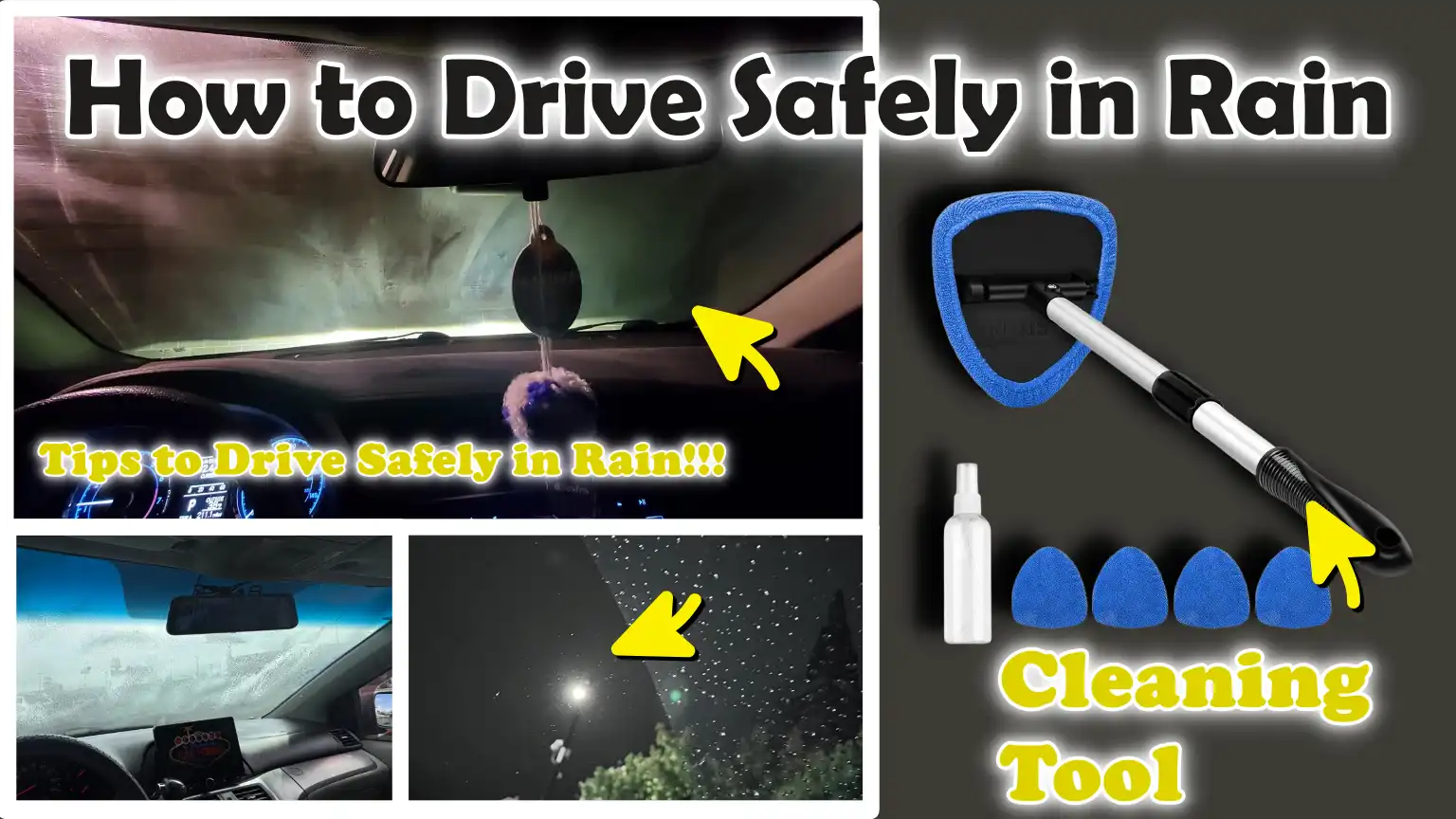
Now, you can learn How to Drive Safely in Rain, so that you can confidently control every time you drive in the wet weather conditions.
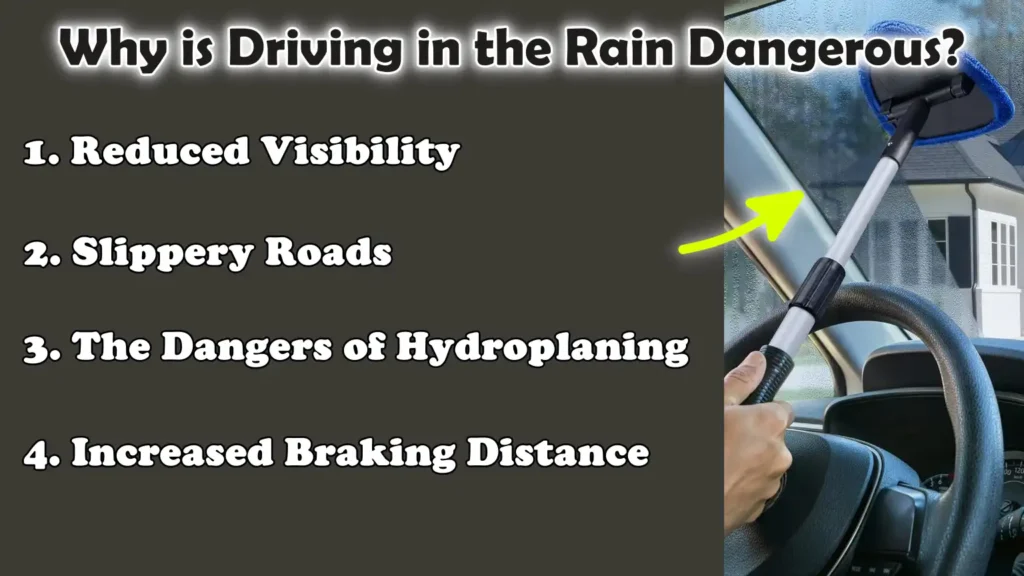
Why is Driving in the Rain Dangerous?
Driving in the rain becomes dangerous because several risk factors emerge simultaneously, affecting how your vehicle handles on the road.
The presence of water on the road reduces the contact between your tires and the road surface, directly impacting grip, braking and steering control.
Furthermore, falling rain and the moisture present in the air impair your visibility of the road, other vehicles and pedestrians.
Due to the combination of all these effects, it becomes difficult to react quickly and safely.
Many drivers underestimate the extent to which rain can alter driving conditions; however, even light rain can render the road slippery and reduce visibility within just a few minutes.
Understanding these risks is crucial, as it allows you to adjust your driving style, remain vigilant and avoid situations that could lead to an accident.
1. Reduced Visibility
Reduced visibility is one of the greatest hazards when driving in the rain, as it prevents you from clearly seeing your surroundings.
Rain falling on the windshield, along with interior humidity and condensation, as it can blur your vision and obstruct your view.
The headlights of other vehicles can reflect off wet roads, creating a glare that further hinders your ability to see clearly.
This makes it difficult to spot pedestrians, cyclists, road signs and even other vehicles from a safe distance.
When visibility is compromised, your reaction time is reduced, thereby increasing the likelihood of sudden braking or a collision.
Therefore, when driving in the rain, it is essential to ensure that your windshield is clean, your wipers are functioning properly and your vehicle’s lighting is adequate.
2. Slippery Roads
Slippery roads are a major reason why driving becomes dangerous during rainfall, as they reduce the traction, or grip, between your tires and the road surface.
When rainwater mixes with the oil, dust and grime already present on the road, it creates a thin, slippery film that acts almost like a lubricant.
This causes tires to lose their grip easily, specially when you accelerate rapidly, brake suddenly, or attempt to turn.
The first rainfall following a dry spell is often the most hazardous, as this is typically when the accumulation of oil and debris on the road is at its highest.
Due to reduced traction, your vehicle may not respond exactly as you expect, potentially leading to skidding or a loss of control.
In such situations, it becomes crucial to drive slowly and avoid making any sudden maneuvers.
3. The Dangers of Hydroplaning
Hydroplaning is a serious hazard that occurs when a layer of water builds up between your tires and the road, severing the direct contact between the tires and the road surface.
When this happens, your vehicle may begin to skid uncontrollably and you will be unable to steer or brake effectively.
Hydroplaning typically occurs when driving at high speeds or passing through standing water; however, if your tires are worn, even a small amount of water can trigger it.
You may notice that the steering feels light or unresponsive, a clear indication that your tires are failing to maintain proper traction with the road.
This situation can be extremely dangerous because the driver temporarily loses control of the vehicle; therefore, it is essential to reduce your speed and, whenever possible, avoid driving through areas with standing water.
4. Increased Braking Distance
An increased braking distance is another serious hazard when driving in the rain, as wet roads reduce the friction necessary to bring your vehicle to a rapid halt.
On dry roads, tires are able to establish a firm grip on the surface, allowing the brakes to function effectively.
However, in wet conditions, a layer of water diminishes this grip; this means that it takes more time, and covers a greater distance, for your car to come to a complete stop.
This situation can become even more perilous if you are driving too close to another vehicle or if you suddenly need to stop.
Even if your brakes are in good working order, reduced friction means that you must apply the brakes slightly earlier and more gently.
To avoid collisions in rainy conditions, maintaining a safe distance from other vehicles is absolutely essential.
How to Prepare Your Vehicle for Driving in the Rain
Preparing your vehicle before driving in the rain is the most effective way to mitigate hazards on wet roads and ensure your safety.
Rain not only impacts your driving technique, but it also puts the quality of your vehicle’s maintenance to the test.
Essential components such as: tires, brakes, wipers, lights and the defogging system, work in tandem to help you maintain control of the vehicle and ensure clear visibility.
If any of these components are not functioning correctly, the likelihood of losing control, overlooking hazards, or reacting too late increases significantly.
Many accidents that occur during rainy weather are not solely caused by driving errors, but also because vehicles are not properly prepared.
By taking a little time to inspect and maintain these critical components, you can significantly enhance your safety, reduce stress and drive with greater confidence, even during heavy downpours.
1. Check Your Tires
Tires play the most crucial role when driving in the rain, as they are the only part of the vehicle that comes into contact with the road.
It is essential to have adequate tread depth on your tires, as these grooves are designed to displace water and maintain traction on wet surfaces.
If the tire treads are worn down, water cannot be effectively displaced, thereby increasing the risk of skidding or hydroplaning.
Maintaining the correct tire pressure is equally important; under-inflated or over-inflated tires reduce the contact patch, the area of the tire that touches the road, which negatively impacts the vehicle’s stability.
When tires are in good condition, featuring adequate tread depth and correct air pressure, they provide superior grip, enhanced braking performance and overall greater control; all factors that are particularly crucial when driving in the rain.
2. Check the Brakes
Brakes must be in good working order to ensure that your vehicle can come to a safe stop, specially when roads are wet and slippery.
In rainy conditions, braking distances naturally increase; therefore, the braking system needs to respond quickly and efficiently.
Worn brake pads can compromise braking effectiveness and make it difficult to bring the vehicle to a halt in time, thereby increasing the risk of accidents.
It is essential to check for any unusual noises, vibrations, or delays when applying the brakes, as these may indicate a potential issue.
Well-maintained brakes help you decelerate smoothly and maintain control, factors that are vital when driving in the rain.
3. Maintain Windshield Wipers
Windshield wipers are indispensable for maintaining clear visibility during rainfall, as they remove water, dust and debris from the windshield.
If the wiper blades are worn out, they may leave streaks or fail to clear water effectively, making it difficult to see the road ahead.
This can be extremely hazardous, particularly during heavy downpours or when driving at night.
Promptly replacing worn-out wipers ensures that they operate smoothly and efficiently.
Properly functioning wipers enable you to clearly see traffic, road markings and obstacles, allowing you to react safely and swiftly.
4. Check Lights and Indicators
Lights and indicators are crucial during the rainy season, as they help you see the road ahead and ensure that your vehicle remains visible to other road users.
Headlights aid visibility in low-light and rainy conditions, while taillights ensure that vehicles following you can clearly see your car.
During heavy rain or fog, visibility can be significantly reduced; therefore, proper lighting is essential for safety.
If available, fog lights are designed to cut through dense rain or fog, thereby improving visibility closer to the ground.
Verifying that all lights and indicators are functioning correctly helps prevent confusion, improves communication with other drivers and reduces the risk of accidents.
5. Ensure a Proper Defogging System
A proper defogging system is essential for keeping the interior of your windows clear during the rainy season.
When there is a temperature difference between the inside and outside of the vehicle, moisture can condense on the glass and form fog, thereby obstructing your visibility.
A functional air conditioning or heating system helps eliminate this moisture and keeps the windshield and windows clear.
Without effective defogging, visibility can suddenly deteriorate, making it difficult to see the road and the surrounding environment.
Ensuring that your defogging system is working correctly helps maintain clear visibility and enables you to drive safely in all rainy conditions.
Know, The Important Safe Driving Practices in the Rain
Safe driving in the rain depends primarily on your driving behavior.
Even if your vehicle is in perfect condition, it is ultimately your ability to control your speed, maintain a safe distance and manage your driving maneuvers that determines the safety of your journey.
Rain alters road conditions, reducing tire traction, increasing stopping distances and diminishing visibility, meaning that standard driving habits are often insufficient.
You must drive with extra caution, remain fully alert and make deliberate decisions.
Small adjustments such as: reducing speed, maintaining a greater distance from the vehicle ahead and avoiding sudden movements, as it can significantly reduce the risk of accidents.
These practices are simple, yet highly effective in keeping you safe, maintaining control of your vehicle and enabling you to react appropriately to sudden situations facing on wet roads.
1. Reduce Your Speed
Reducing your speed is one of the most critical steps when driving in the rain, as wet roads diminish tire traction, making it difficult for tires to maintain a firm grip on the road surface.
When you drive at a slower pace than usual, controlling the vehicle becomes easier and you gain more time to react to sudden changes such as: vehicles ahead braking or obstacles present on the road.
It is always essential to adjust your speed according to the intensity of the rain, as heavy rainfall implies reduced visibility and greater water accumulation on the road surface.
Driving at high speeds in such conditions increases the likelihood of skidding or losing control, particularly when negotiating turns or applying the brakes.
Maintaining a lower speed enhances safety and minimizes the risk of accidents.
2. Increase the Distance from the Vehicle Ahead
In rainy conditions, increasing the distance between your vehicle and the vehicle ahead is crucial, as it provides you with additional time to react and stop safely.
Due to reduced friction on wet roads, it takes longer to bring a vehicle to a complete stop; consequently, the standard following distance typically maintained on dry roads is no longer sufficient.
Maintaining a following distance of at least 3 to 5 seconds allows you to gradually reduce your speed without having to apply sudden brakes.
Driving too close to another vehicle in the rain becomes extremely dangerous, as even a slight delay in reaction time can lead to a collision.
Maintaining a greater distance acts as a safety buffer and helps you remain calm and maintain control.
3. Use Headlights Correctly
Using your headlights correctly improves your visibility of the road ahead and also ensures that your vehicle is more clearly visible to others during rainfall.
Low-beam headlights are the best option, as they provide clear illumination without causing glare.
The use of high-beam headlights should be avoided during heavy rain; the light reflects off the raindrops, creating an intense glare that actually reduces visibility rather than enhancing it.
Proper use of headlights, specially in low-light conditions such as early morning, dusk, or heavy rain, is essential.
Good visibility allows you to spot road markings, other vehicles and pedestrians more easily, thereby enhancing overall safety.
4. Avoid Sudden Maneuvers
When driving on wet roads, it is vital to avoid sudden maneuvers, as any abrupt action significantly increases the risk of the vehicle skidding.
Sudden acceleration can cause the tires to spin, while sudden braking can cause the vehicle to slide.
Turning the steering wheel suddenly or abruptly can lead to a loss of vehicle control, particularly when the road surface is extremely slippery.
Accelerating gradually, braking gently and steering with control help maintain the vehicle’s balance and ensure that the tires maintain a firm grip on the road.
Driving calmly and maintaining control minimizes the risk of sudden skidding and enables you to handle the vehicle more safely, even in rainy conditions.
5. Keep Both Hands on the Steering Wheel
Keeping both hands on the steering wheel enhances your control over the vehicle, a factor that is crucial during rainy weather.
On wet roads, a vehicle may suddenly skid or veer slightly off course; in such situations, maintaining a firm grip on the steering wheel allows you to react quickly and accurately.
With both hands on the steering wheel, you can execute steering adjustments with greater ease and precision, thereby helping to maintain the vehicle’s balance and intended direction.
This also ensures that you are prepared to handle sudden emergencies such as: hydroplaning or unexpected obstacles appearing ahead.
Overall, maintaining proper control over the steering wheel significantly improves your ability to keep the vehicle stable and drive safely, even when it is raining.
How to Handle Hydroplaning
Hydroplaning is one of the most dangerous situations a driver may face during rainy weather, as it causes the tires to lose direct contact with the road surface.
This occurs when water accumulates beneath the tires so rapidly that it cannot be displaced; this creates a thin layer of water that lifts the tires slightly off the road.
When this happens, the vehicle’s ability to steer, brake, or accelerate effectively is compromised, causing the vehicle to feel unstable or out of control.
Many drivers panic in this situation, which can further exacerbate the problem.
The most crucial aspect of safely handling hydroplaning is understanding how to recognize it in time and how to take the correct steps while remaining calm.
If handled correctly, you can regain control of your vehicle without incurring any further risk.
1. Recognizing Hydroplaning
Recognizing hydroplaning in a timely manner is essential, as early detection prevents panic and provides an opportunity to react safely.
The most common sign is that the steering wheel begins to feel light or loose, as if it no longer has proper contact with the road.
This happens because the tires are no longer able to maintain a firm grip on the road surface.
You may also experience a sudden loss of traction, wherein the vehicle does not respond to steering or braking inputs in the way it normally would.
In some cases, the engine continues to run smoothly, yet the vehicle feels as though it is sliding or drifting slightly.
These signs typically manifest when you are driving through standing water or traveling at high speeds on wet roads.
Understanding these warning signs enables you to remain calm and take the necessary steps to regain control of your vehicle.
2. Correct Response
Responding correctly during hydroplaning is crucial, as taking sudden or incorrect actions can significantly increase the risk of completely losing control of the vehicle.
The most important rule to remember is to avoid braking suddenly, as this can cause the vehicle to skid or spin.
Instead, you should gradually lift your foot off the accelerator, allowing the vehicle to slow down naturally.
As your speed decreases, the tires will gradually regain contact with the road surface.
It is also essential to keep the steering wheel straight and avoid making sudden turns, as abrupt changes in steering can further exacerbate the situation.
Remaining calm and handling the vehicle in a smooth, controlled manner helps the tires safely re-establish contact with the road.
Once you have fully regained control of the vehicle, you may continue driving with caution and at a reduced speed to avoid facing such a situation again.
How to Drive on Flooded Roads
Driving on flooded roads can be hazardous, as water can compromise both your vehicle’s handling and the condition of critical components such as the engine, brakes and electrical systems.
When roads are submerged, it becomes difficult to accurately gauge the actual depth of the water or to determine whether the road surface remains intact or has been damaged.
Water can also reduce tire traction (grip), thereby increasing the risk of skidding or losing control of the vehicle.
In some instances, water may enter the engine or exhaust system, potentially causing the vehicle to stall abruptly or sustain severe damage.
Therefore, when traversing flooded areas, it is imperative to proceed with caution, remain vigilant and adhere to safe driving practices.
By understanding how to assess conditions, how to drive correctly through water and what steps to take afterward, you can mitigate risks and ensure the safety of both yourself and your vehicle.
1. Assess the Water Depth
Before entering a flooded area, it is crucial to assess the depth of the water, as driving through deep water can damage your vehicle and place you in danger.
If the water level is excessively high, it may enter the engine, causing it to stall and potentially resulting in costly repairs later on.
As a general rule of thumb, if the water appears to be deeper than the bottom edge of your car’s doors, or if you cannot clearly see the road surface beneath the water, it is safer to refrain from attempting to cross that route.
You can gauge the water depth by observing other vehicles; however, this should be done with caution, as different vehicles possess varying ground clearances and capabilities.
Taking a moment to assess the conditions allows you to make a safe decision and avoid unnecessary risks.
2. Drive Slowly and at a Steady Speed
Driving slowly and at a steady speed on waterlogged roads helps maintain control and reduces the risk of water entering critical vehicle components.
Maintaining a slow and consistent speed creates a small “bow wave” in front of the car, which can help keep water away from the engine compartment.
Sudden acceleration can cause water to surge into the engine, while abruptly stopping amidst the water can allow water to enter the exhaust system or cause the engine to stall.
Driving calmly and maintaining control ensures that the vehicle remains stable and avoids placing unnecessary strain on the engine and tires.
Remaining calm and avoiding sudden maneuvers is the key to driving safely in such conditions.
3. After Crossing Water
After passing through a flooded area, it is essential to verify that your vehicle is still functioning correctly, particularly its brakes.
Water can reduce braking efficiency by forming a thin film between the brake components.
Gently applying the brakes while driving slowly generates heat, which helps dry them out and thereby restores normal braking performance.
It is also advisable to check that the engine is running smoothly and to listen for any unusual noises.
Taking these simple steps after driving through water ensures that your vehicle remains safe to operate and minimizes the risk of subsequent mechanical issues.
Visibility Management
Visibility management is one of the most critical aspects of safe driving in the rain, as clear vision is directly linked to your ability to react quickly and safely.
Rain, humidity and temperature differentials can cause condensation to form on windows, while dirt and oil on the windshield can cause water to smear, creating blurry patches.
Furthermore, wet roads and the glare from oncoming headlights can make it difficult to focus on the road ahead.
When visibility is compromised, even simple tasks such as: reading road signs or spotting pedestrians, become challenging.
Proper visibility management entails keeping your windows clean, both inside and out; avoiding distractions; and ensuring that your eyes can adapt to changing lighting conditions.
By taking a few simple steps, you can enhance visibility, reduce eye strain and remain more aware of your surroundings.
1. Use the Defogger
Using the defogger during rainy weather is essential, as it helps eliminate the moisture that accumulates on the interior surfaces of the windows.
Fog forms when the warm air inside the car comes into contact with the cold surface of the glass, causing water droplets to condense and obstruct your view.
A properly functioning defogger rapidly clears this moisture by regulating airflow and temperature, thereby restoring clear visibility through the glass.
If the defogger is not utilized correctly, your visibility can deteriorate suddenly, particularly during heavy rainfall or when the vehicle is occupied by multiple passengers.
Turning on the defogger in advance, and keeping it running as needed, ensures that your windshield and windows remain clear, allowing you to view the road and traffic without any obstruction.
2. Keep the Windshield Clean
Keeping the windshield clean is crucial, as dirt, dust and oil present on the glass can mix with rainwater to create streaks that obscure your vision.
Even if your wipers are functioning correctly, a dirty windshield cannot clear water uniformly, resulting in reduced visibility.
Regular cleaning removes this grime, enabling the wipers to clear water much more effectively.
A clean windshield also minimizes glare from headlights and streetlights, making it easier to see clearly at night or during heavy rain.
Taking a few moments to clean your windshield improves visibility and helps you focus more intently on the road ahead.
3. Avoid Glare
Avoiding glare is essential, as intense light reflecting off wet roads, headlights and streetlights can make it difficult for your eyes to adjust and focus.
Glare can reduce visual contrast, making it challenging to identify objects such as road markings, other vehicles and pedestrians.
Dimming the dashboard lights inside your car helps your eyes adjust more easily to the dark conditions outside.
Focusing on road markings such as: lane lines, as it can also help you maintain your direction, particularly when visibility is compromised by glare.
By properly controlling the lighting both inside and outside the vehicle, you can reduce eye strain, improve your focus and maintain safe control while driving in rainy weather.
How to Drive in the Rain at Night
Driving in the rain at night is more difficult and hazardous than driving during the day, as both darkness and rain compromise visibility.
At night, your visual acuity is already limited and rain exacerbates this difficulty, water on the windshield, reflections of light on the road surface and a generally hazy atmosphere all combine to make the task even more arduous.
It becomes challenging to identify critical elements such as road edges, potholes, pedestrians and traffic signs.
The combination of low light and wet roads also increases the likelihood of delayed reactions to unfolding situations and the potential for making poor driving decisions.
For these reasons, drivers must exercise heightened caution, maintain their focus and employ proper techniques to retain control of their vehicle and avoid accidents.
Understanding these challenges and adhering to a few simple safety habits can make driving in the rain at night a safer and more manageable experience.
1. Heightened Challenges
Driving in the rain at night presents a unique set of challenges that can impair your ability to see clearly and react effectively.
A major issue is the intense glare emanating from wet road surfaces; here, the water acts like a mirror, reflecting the headlights of other vehicles and streetlights back toward the driver.
This reflection can make the road surface appear excessively bright and visually disorienting, making it difficult to distinguish lane markings and accurately judge distances.
Another significant challenge is the glare from the headlights of oncoming vehicles; in rainy conditions, this glare becomes even more intense as the light scatters through the raindrops and reflects off the wet road surface.
This intense glare can temporarily diminish your visibility and make it difficult to maintain your focus on the road ahead.
The combined effect of all these factors can place excessive strain on your eyes, making it difficult to quickly identify potential hazards.
2. Safety Tips
By following a few simple safety tips while driving in the rain at night, you can significantly enhance both your vehicle control and visibility.
It is crucial to drive at a speed even lower than your normal pace, as this provides you with more time to react to sudden situations and helps you maintain control of your vehicle, even on slippery roads.
Driving slowly also mitigates the effects of glare, making it easier for your eyes to adjust to the lighting conditions.
When visibility is poor, using lane markings as a guide helps you stay within your lane; these markings provide a clear path, even if the road surface itself appears blurred.
Maintaining your focus and avoiding distractions helps keep you fully aware of your immediate surroundings.
By reducing your speed and exercising extra vigilance, you can drive with greater safety and confidence, even in challenging conditions such as nighttime rain.
Know, Common Mistakes to Avoid During Driving in the Rain Time
Many accidents during the rainy season do not occur because driving is impossible, but rather because drivers make minor errors that heighten the risk.
Rain alters your vehicle’s behavior, tire traction diminishes, stopping distances increase and visibility decreases; consequently, standard driving habits often cease to be safe.
When drivers fail to adjust their speed to suit weather conditions, neglect the condition of their vehicle, or react abruptly, the likelihood of losing control of the vehicle increases significantly.
Understanding these common mistakes is crucial, as avoiding them can substantially enhance your safety.
By knowing what not to do, you can make better decisions, maintain control over your vehicle and drive with greater confidence and caution during the rainy season.
1. Driving Too Fast
Driving too fast in the rain is one of the most dangerous mistakes, as wet roads reduce tire traction, making it difficult for tires to maintain a firm grip on the road surface.
At high speeds, the risk of skidding or “hydroplaning” (a sensation akin to floating on water) increases because the tires are unable to displace the water quickly enough.
Driving at high speeds also increases stopping distances; this means it takes longer to slow down or bring the vehicle to a complete halt.
This situation can become extremely hazardous if traffic suddenly slows down or if an obstruction appears ahead.
Reducing your speed provides you with more time to react and enables you to maintain better control over your vehicle.
2. Using High Beams in the Rain
Using high-beam headlights in the rain can actually worsen visibility rather than improve it.
The intense glare from high-beam headlights reflects off raindrops and the wet road surface, creating a blinding glare that obstructs your ability to see clearly.
This glare can also disorient other drivers, making it difficult for them to see and thereby increasing the risk of accidents.
In rainy weather, low-beam headlights are more effective as they provide adequate illumination without generating excessive glare.
Using the appropriate type of lighting improves visibility and helps ensure that the roads remain safe for everyone.
3. Neglecting Tire Condition
Neglecting the condition of your tires is a serious error, as tires bear the sole responsibility for maintaining contact with the road.
Worn-out tires, particularly those with reduced tread depth (the deep grooves on the tire’s surface), are unable to displace water effectively; this significantly increases the risk of slipping and hydroplaning.
Improper tire pressure can also compromise vehicle stability, making it difficult to control the vehicle.
Many drivers overlook tire maintenance; however, during the rainy season, such negligence can lead to dangerous situations.
Keeping tires in good condition, specifically by maintaining adequate tread depth and correct air pressure, ensures superior traction, improved braking performance and safer driving on wet roads.
4. Sudden Braking or Turning
Braking or turning abruptly in the rain can be dangerous, as sudden maneuvers can cause the tires to lose their grip on the road surface.
When you brake suddenly on a wet road, the tires may lock up or slip, causing the vehicle to skid.
Taking sharp or sudden turns can also upset the vehicle’s balance, particularly when the road surface is extremely slippery.
Driving calmly and slowly is safer, as it ensures that the tires maintain their grip on the road.
Driving in a controlled manner helps maintain the vehicle’s balance and reduces the risk of losing control.
5. Driving in Deep Water
Driving through deep water can be a dangerous mistake, as it may damage your vehicle and put you at risk.
Water can enter the engine, causing it to stall and potentially resulting in heavy repair costs.
Deep water may hidden hazards such as: potholes or uneven surfaces, that can destabilize the vehicle.
Furthermore, driving through water at high speeds carries the risk of losing control or hydroplaning.
Whenever possible, it is always safer to avoid deep water and choose an alternative route.
Making cautious decisions in such situations ensures the safety of both you and your vehicle.
Read More:
Know, How to Tackle Emergency Situations in the Rain
Emergency situations can arise suddenly during rainfall and often leave very little time to react; therefore, it is crucial to understand how to handle them.
Wet roads reduce tire grip, increase stopping distances and heighten the likelihood of losing control of the vehicle, particularly during unexpected events.
In such moments, panic can exacerbate the situation, whereas remaining calm and taking the correct steps can prevent accidents and minimize damage.
Knowing what to do during common emergencies such as: skidding, brake failure, or stalling in water, ensures that you are prepared and capable of reacting safely.
These situations may seem stressful, but with the right information and simple techniques, you can handle them effectively and keep yourself and others safe on the road.
And, there’s research that clearly shows that maintain proper tire conditions and reducing speed during rain are not just recommendations but it is scientifically proven safety measures, that shows that how water reduces tire-road contact, reinforcing the importance of careful driving and vehicle maintenance in wet conditions as well.[¹]
1. Skidding
Skidding occurs when your tires lose their grip on the road surface, causing the vehicle to slide rather than move in the intended direction.
This is more common in rainy conditions because the road surface becomes slippery and tire traction is reduced.
When a vehicle begins to skid, the most important thing is to remain calm and avoid making sudden movements such as: slamming on the brakes or jerking the steering wheel.
Panicking can worsen the skid and lead to a complete loss of vehicle control.
Instead, you should gently steer in the same direction in which the vehicle is sliding; this helps the tires realign with the direction of motion and regain traction.
For example, if the rear end of the car begins to slide to one side, turning the steering wheel in that same direction can help stabilize the vehicle.
Making slow, controlled movements is the key to safely recovering from a skid.
2. Brake Failure
Brake failure in rainy conditions is a serious situation, but it can be handled effectively.
In wet conditions, braking efficiency can sometimes be reduced, particularly if water affects the brake components.
If you notice that your brakes are not functioning properly, it is crucial to remain calm and avoid panic-pumping the brake pedal repeatedly.
Instead, you can utilize “engine braking” to gradually reduce your speed, for instance, by shifting into a lower gear in a manual vehicle or by lifting your foot off the accelerator in an automatic vehicle.
This helps slow the car down without relying entirely on the brakes.
It is also essential to steer the vehicle carefully and guide it to a safe location, such as the side of the road.
Gradually reducing the vehicle’s speed while maintaining control over it can help you bring the car to a safe stop.
3. Vehicle Stalling in Water
A vehicle may stall in water if water enters critical components, particularly the engine or the exhaust system.
This can cause the engine to shut down abruptly, rendering the vehicle unable to move forward.
In such situations, you must under no circumstances attempt to restart the engine; if water has entered the engine, attempting to restart it can cause severe internal damage.
Instead, you should turn off the ignition and seek assistance from a professional.
Calling for help ensures that the vehicle is properly inspected and repaired correctly without incurring further damage.
If it is safe to do so, remaining inside the vehicle while waiting for assistance is generally the best course of action.
Understanding how to react correctly in such a situation can help you avoid costly repairs and also ensure your safety.
Know, Additional Safety Tips
During the rainy season, taking a few simple precautions can help you stay safe and reduce stress while driving.
These additional safety tips are often straightforward and simple; yet, they are grounded in real-world driving risks that people frequently overlook.
Rain affects not only the road surface but also your concentration, reaction time and vehicle performance; therefore, it is essential to be prepared in every respect.
By avoiding the use of certain features, staying informed about changing weather conditions, maintaining your alertness and keeping essential safety items in your vehicle, you can handle sudden situations with greater ease.
These habits help you maintain control over your vehicle, minimize fatigue and ensure that you are prepared for any challenges that may arise while driving in the rain.
1. Avoid Using Cruise Control in the Rain
It is crucial to avoid using cruise control during rainy weather, as it can compromise your ability to react immediately to changing road conditions.
While cruise control automatically maintains a steady speed, road conditions in the rain, due to water, traffic, or obstructions, as it can change abruptly.
If your vehicle begins to skid or hydroplane (skim over the water) while cruise control is active, the system may continue to apply power to the wheels, potentially worsening the situation.
Manual driving allows you to adjust your speed instantly and react more effectively to slippery conditions.
Maintaining full control over your vehicle’s speed ensures greater safety on wet roads.
2. Stay Informed About Weather Conditions
Staying informed about weather conditions enables you to plan your journey more effectively and avoid hazardous situations.
The intensity of rainfall can change suddenly and heavy downpours may lead to flooding, reduced visibility, or traffic disruptions.
Staying informed about weather forecasts, both before and during your journey, helps you decide whether to postpone your trip, choose a safer route, or prepare for challenging conditions.
Being aware of weather-related updates also keeps you alert and enables you to adjust your driving style to suit current conditions.
This simple step can prevent unnecessary risks and make your journey significantly safer.
3. Take Breaks During Long Journeys
Taking breaks during long journeys is crucial, as driving in the rain demands greater attention and concentration compared to normal conditions.
Driving continuously in such situations can lead to fatigue, which impairs your reaction time and decision-making ability.
Fatigued drivers are more prone to making mistakes, particularly when visibility is poor and road conditions are hazardous.
Taking short breaks allows you to rest, refreshes your mind and helps you focus better on the road ahead.
Staying mentally alert is just as important as maintaining physical control over the vehicle, specially during long journeys in the rainy season.
4. Keep an Emergency Kit in Your Car
Keeping an emergency kit in your car is a prudent safety measure, specially when driving in the rainy season, as unexpected issues can arise at any moment.
Heavy rains can lead to situations such as vehicle breakdowns, getting stranded in waterlogged areas, or delays caused by traffic jams.
An emergency kit, containing basic essentials like a flashlight, first-aid supplies, drinking water and some simple tools, as it can help you handle such situations more safely and comfortably.
Being prepared for emergencies in advance reduces panic and enables you to manage problems more effectively until help arrives.
This small habit can make a huge difference in ensuring your safety while driving in the rain.
Conclusion – How to Drive Safely in Rain
So, now you have understood that rain does not make driving impossible, but it actually demands smarter decisions and better control as well.
Rain reduces tire traction, increases stopping distances and impairs visibility, meaning that even a minor error can lead to a serious situation.
However, the most crucial point is that most rain-related hazards can be mitigated by acquiring the right knowledge and adopting a few simple driving habits.
By properly preparing your vehicle, maintaining safe speeds and distances, avoiding sudden turns or stops and keeping a keen eye on changing road conditions, you can significantly reduce the likelihood of accidents.
Knowing how to handle situations such as hydroplaning, skidding, or driving on waterlogged roads boosts confidence, enabling you to react calmly rather than panicking.
Driving safely in the rain is not difficult, but it demands awareness, patience and discipline.
When you combine proper preparation with sensible driving techniques, you transform a potentially hazardous situation into a manageable one.
Now, that’s all from this one and you can ask more questions below.
Frequently Asked Questions
Q1: Why is driving in the rain more dangerous than driving in normal weather conditions?
Answer: Driving in the rain is more dangerous because the presence of water on the road reduces the grip between the tires and the road surface. This makes it difficult to stop the vehicle quickly or to make turns safely. Furthermore, rain reduces visibility, making it harder to clearly see other vehicles, pedestrians and road signs. When all these factors combine, drivers have less control over their vehicles and less time to react, thereby increasing the likelihood of accidents.
Q2: What is the safest speed for driving in the rain?
Answer: There is no single fixed speed that is safe for all rainy conditions, as it depends on the intensity of the rain and how wet the road is. However, the safest approach is to always drive at a speed lower than your normal driving speed and to adjust your speed according to visibility and road conditions. If the rain is very heavy or if water is pooling on the road, it becomes crucial to reduce your speed even further to maintain control of the vehicle and prevent skidding.
Q3: How can I avoid ‘hydroplaning’ (skidding on water) while driving in the rain?
Answer: To avoid hydroplaning, you can drive at a reduced speed and ensure that your tires are in good condition with sufficient tread depth. As much as possible, avoid driving through standing water on the road and refrain from making sudden maneuvers such as: taking sharp turns abruptly or braking forcefully. Maintaining a steady speed and keeping the vehicle under control helps the tires maintain contact with the road surface.
Q4: What should I do if my vehicle starts to hydroplane?
Answer: If your vehicle begins to hydroplane, the most important thing is to remain calm and avoid making any sudden reactions. Do not slam on the brakes, as this could worsen the situation. Instead, slowly lift your foot off the accelerator and keep the steering wheel pointed straight ahead until the tires regain contact with the road. Once you have regained control of the vehicle, you may continue driving cautiously and at a reduced speed.
Q5: Why should I increase the distance between my vehicle and the vehicle ahead during rain?
Answer: You should increase the distance between your vehicle and the vehicle ahead during rain because it takes longer for your vehicle to come to a stop on wet roads. If you are driving too close to the vehicle in front of you, you will not have sufficient time to react if that vehicle suddenly slows down. Maintaining a greater distance from the vehicle ahead provides you with more time to brake comfortably and avoid any potential collisions.
Q6: Is it safe to use ‘cruise control’ while driving in the rain?
Answer: It is not safe to use ‘cruise control’ in rainy conditions, as it diminishes your ability to react quickly to sudden events. If the vehicle begins to skid or hydroplane, the cruise control system may continue to apply power to the wheels, thereby increasing the risk of losing control of the vehicle. Driving manually allows you to instantly adjust your speed based on the prevailing road conditions.
Q7: Why are headlights important when driving in the rain?
Answer: Headlights are essential during rain because they help you see the road more clearly and ensure that your vehicle remains visible to other drivers. Rain reduces visibility and proper lighting allows other motorists to spot your vehicle from a distance. Using low-beam headlights is the best option, as high beams can cause glare and make it difficult for others to see.
References:
[1] A review of numerical and experimental studies on hydroplaning of vehicles in motion on road surfaces
https://www.sciencedirect.com/science/article/pii/S2590123024006935

Guys, I’m a car audio enthusiast and customization expert and I love clear sound and clean installation. Plus, I have spent years helping people build their dream audio setups. And whenever I’m working on cars, I probably listen to music and thinks about the next big upgrade.