
Written By: Don Dodi
Fact Checked By: Kristen Brown
Reviewed By: Diego Rosenberg
Basically, a car’s transmission is actually really critical systems responsible, as it transfers the power from the engine to the wheels, that literally allows your vehicle to move smoothly at the different speeds.
So, whenever the transmission begins to slip, then it actually means that the gears are not engaging properly, which actually lead to poor acceleration, higher fuel consumption and increased wear on internal components as well.
Not only this, there’s studies and automotive service data that shows that low or degraded transmission fluid is one of the most common causes of slipping, as the fluid not only lubricates moving parts but it also helps maintain the proper hydraulic pressure.
But over the period of time, because of the heat, friction and lack of maintenance can break down this fluid, that reduces the effectiveness and that leads to the performance issues as well.
Along with this, in the advanced cases, the worn out clutches, damaged bands or faulty sensors can also contributes to the problem, specifically in the modern vehicles with electronically controlled transmissions.
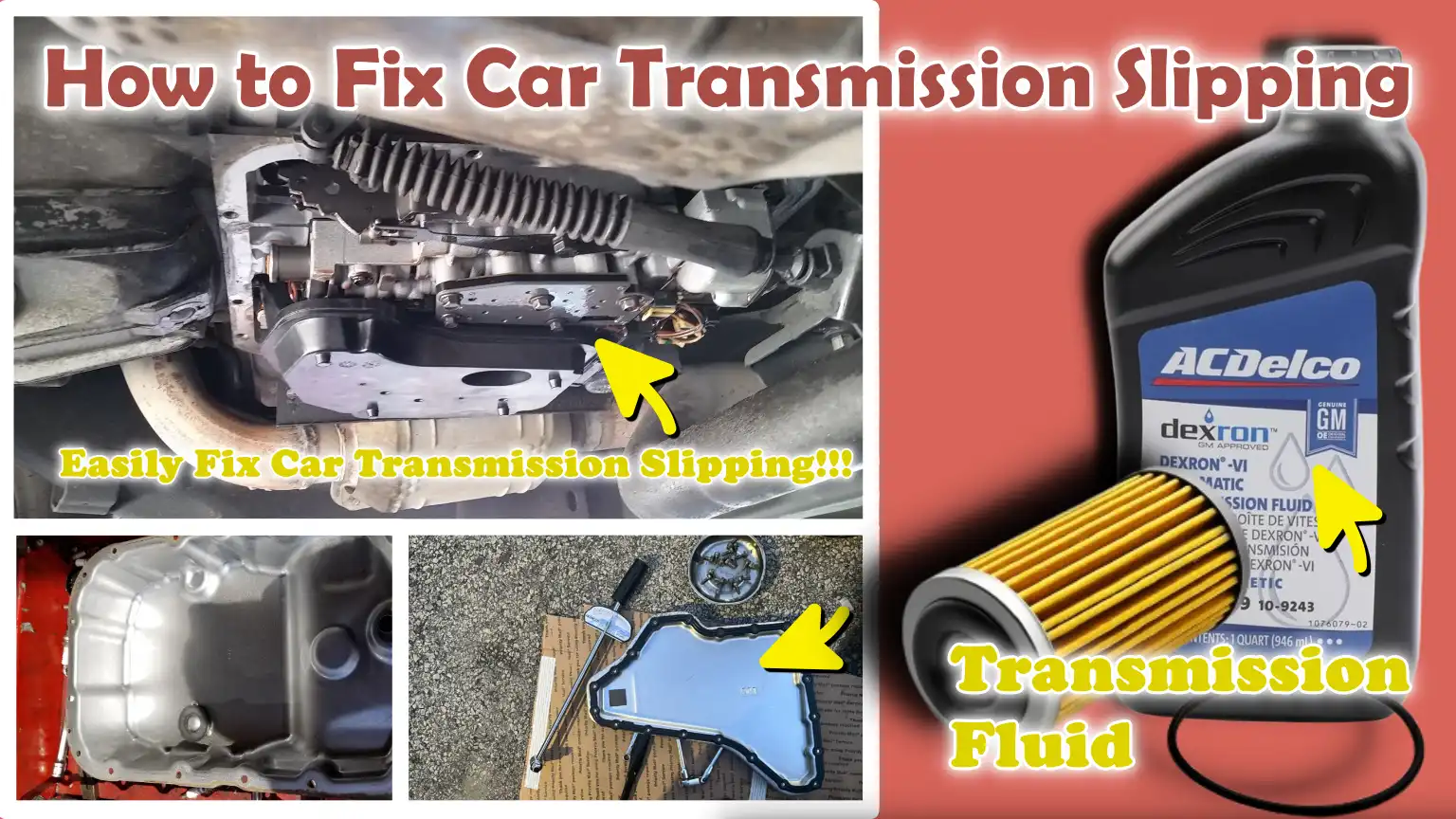
So, in this guide you’ll learn How to Fix Car Transmission Slipping, so that you can clearly understand lot of things such as: why transmission slipping happens and how you can fix it using practical and easy to follow method.
Now, Let’s Understand About The Car Transmission Slipping
Car transmission slipping is a common yet serious issue that affects the transmission of power from the engine to the wheels.
In a properly functioning vehicle, the transmission ensures that the correct amount of power is delivered at the right time, allowing the car to accelerate smoothly, maintain its speed and operate efficiently.
When slipping occurs, this process becomes unstable; this means that while the engine may be generating power, that power is not being effectively transmitted to the wheels.
This can lead to delayed acceleration, increased fuel consumption, excessive heat buildup within the transmission and accelerated wear on critical internal components.
It is essential to understand how and why this happens, as early detection can help you avoid major damage and significantly reduce repair costs.
1. What is Transmission Slipping?
Transmission slipping simply means that while the car is in motion, the internal gears of the transmission are not functioning correctly.
In simpler terms, it feels as though the car is struggling to “hold” the specific gear it is supposed to be in.
For instance, you might press the accelerator and observe the engine RPM rising, yet the car does not accelerate as rapidly as expected.
This occurs because the mechanical link between the engine and the wheels is neither firm nor consistent.
It is crucial to distinguish between normal gear shifting and transmission slipping.
During the standard gear-shifting process, the transmission smoothly transitions from one gear to another based on the car’s speed and driving conditions; this process typically feels controlled and predictable.
However, when slipping occurs, the gears may shift abruptly, hesitate to engage, or fail to mesh properly; This creates the sensation that the car has lost power or is responding sluggishly.
Unlike a normal gear change, slipping often feels unnatural and jarring and may sometimes be accompanied by strange noises or vibrations.
2. In Which Types of Transmissions Does This Problem Occur?
Transmission slipping can occur in various types of transmissions, although the underlying causes and symptoms may differ slightly depending on the specific system utilized in the vehicle.
In automatic transmissions, slipping is frequently linked to low or degraded transmission fluid, worn clutch packs, or malfunctions within the solenoids that regulate gear shifting.
As automatic systems rely heavily on hydraulic pressure and electronic signals, even minor issues can have a significant impact on the car’s performance.
In manual transmissions, slipping is typically associated with a worn clutch.
The function of the clutch is to engage and disengage the engine from the transmission; when the clutch becomes worn, it is unable to maintain a firm grip on this connection.
Consequently, the engine may rev rapidly, yet the car fails to accelerate effectively, particularly when you are accelerating hard or driving uphill.
In CVTs (Continuously Variable Transmissions), the sensation of slipping is somewhat different, as these systems do not utilize fixed gears.
Instead, the system employs belts and pulleys to deliver smooth and continuous power.
When slipping occurs in a CVT, it is often caused by a worn belt, fluid-related issues, or internal pressure irregularities; as a result, the vehicle’s acceleration is delayed, or one may experience a ‘rubber-band’-like sensation of stretching while driving.
Although the internal mechanisms may vary, the ultimate result remains the same: an improper transfer of power.
3. How a Transmission Works – A Basic Overview
To better understand the concept of “slipping,” it is helpful to know, in simple terms, how a transmission works.
The transmission acts as a bridge between the engine and the wheels.
The engine generates power, but this power needs to be controlled and adjusted according to the vehicle’s speed; this is where the role of the transmission begins.
The gears located inside the transmission help regulate the vehicle’s speed and torque.
Lower gears provide greater power to get the vehicle moving and to climb inclines, while higher gears enable the vehicle to travel at faster speeds without placing excessive strain on the engine.
A clutch, or clutch pack, is utilized to engage and disengage these gears smoothly.
In automatic systems, transmission fluid plays a crucial role; it lubricates components, dissipates heat and generates the hydraulic pressure necessary for shifting gears.
The power transfer process begins when the engine generates energy, which then flows through the transmission system.
The transmission utilizes its gears to regulate this power and transmits it to the wheels via the driveshaft, thereby propelling the vehicle forward.
When any part of this process is disrupted such as: due to low fluid pressure, a worn clutch, or a faulty gear, the transmission becomes unable to maintain a firm connection, resulting in a problem known as “slipping.”
Understanding this fundamental operating principle helps in quickly identifying issues and taking appropriate steps to resolve them effectively.
Know, Common Symptoms of Transmission Slipping
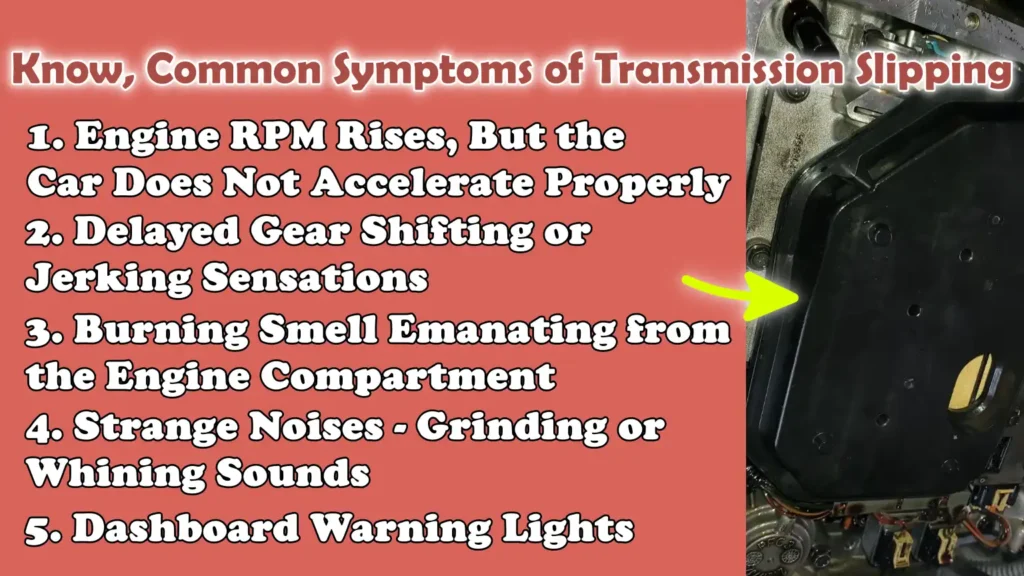
In most cases, transmission slipping does not occur suddenly; typically, there are specific warning signs that drivers can identify if they pay attention.
These symptoms manifest because the transmission is no longer capable of maintaining a strong and stable connection between the engine and the wheels.
When internal components wear out, fluid pressure drops, or heat levels rise, the system’s efficiency begins to decline.
Recognizing these signs early is crucial, as it can help prevent severe damage and minimize repair costs.
Each symptom points to a specific internal issue within the transmission and understanding them in simple terms can help you take appropriate corrective measures at the right time.
1. Engine RPM Rises, But the Car Does Not Accelerate Properly
One of the most common and easily recognizable symptoms of transmission slipping is when the engine speed increases, yet the car fails to accelerate as expected.
Simply put, you press the accelerator, causing the engine sound to intensify, yet the vehicle feels sluggish or unresponsive.
This occurs because the transmission is unable to effectively transmit the engine’s power to the wheels.
In a properly functioning system, higher engine RPM should directly translate to increased vehicle speed; however, when slipping occurs, this connection becomes compromised.
This issue is often caused by worn clutches, low transmission fluid levels, or internal damage and it should not be ignored, as the condition can deteriorate rapidly.
2. Delayed Gear Shifting or Jerking Sensations
Another clear indication is when the car takes longer than usual to shift gears, or when gear shifts are accompanied by jerking sensations and audible noises.
Generally, the gear-shifting experience should be very smooth, almost imperceptible specially in modern vehicles.
When there is a delay in shifting gears, you may feel a pause between pressing the accelerator and the car moving forward, or the gear may engage suddenly with a jarring jolt.
This occurs because the transmission is struggling to build sufficient pressure or to engage the gear properly.
Contaminated or low fluid levels, worn-out components, or faulty sensors can cause this issue; if left unaddressed, it can eventually lead to even more severe transmission failure over time.
3. Burning Smell Emanating from the Engine Compartment
A burning smell coming from the engine compartment is a serious warning sign that should never be ignored.
This odor often results from overheating transmission fluid; this happens when the fluid loses its ability to properly cool and lubricate the internal components.
When the fluid degrades due to heat and friction, it fails to protect the transmission, leading to increased wear on parts and a heightened risk of damage.
This smell is often likened to burnt oil and may become more intense during long journeys or in heavy traffic conditions.
This symptom indicates that the transmission is under strain and requires immediate attention to prevent further damage.
4. Strange Noises – Grinding or Whining Sounds
Strange noises such as: grinding or whining sounds, are another key symptom of transmission slippage.
These sounds are abnormal and typically indicate that internal components have become worn, loose, or dislodged from their proper positions.
Grinding noises often indicate that gears are not engaging properly, while whining or whistling sounds may stem from fluid-related issues or worn bearings.
Simply put, these sounds signal that the transmission components are struggling to work together smoothly.
Ignoring these noises can lead to severe internal damage; therefore, it is crucial to identify the root cause of the problem as soon as possible and take the necessary steps to rectify it.
5. Dashboard Warning Lights
Modern vehicles are equipped with sensors that monitor the transmission’s operation; if a malfunction occurs, warning lights on the dashboard may illuminate.
The ‘Check Engine Light’ is one of the most common indicators; it may light up when the system detects abnormal activity such as: slippage, overheating, or a sensor malfunction.
Some vehicles also feature a separate transmission warning indicator specifically designed to alert the driver to transmission-related issues.
These lights are triggered by the vehicle’s onboard computer and should be taken seriously, even if the vehicle appears to be driving normally.
Before the problem escalates, using a diagnostic tool to read the ‘error codes’ can help you pinpoint the root cause of the issue and proceed toward the correct solution.
Know, The Causes of Transmission Slipping
Transmission slipping occurs when the internal system fails to maintain a strong and stable connection between the engine and the wheels.
The primary causes are typically mechanical wear, fluid-related issues, overheating, or electronic malfunctions, all of which disrupt normal operation.
For a transmission to function correctly, it requires proper lubrication, adequate pressure and precise timing; even a minor issue in any of these areas can lead to slipping.
Understanding the specific causes is crucial, as each requires a distinct solution and early identification of the problem can prevent costly repairs or total transmission failure.
1. Low or Degraded Transmission Fluid
Transmission fluid plays a vital role in providing lubrication and cooling, as well as generating the necessary hydraulic pressure to facilitate smooth gear shifting.
When the fluid level is low, the system cannot generate the pressure required to properly engage and hold gears, resulting in slipping.
Low fluid levels are often caused by leaks in seals, gaskets, or transmission lines; over time, even a minor leak can significantly deplete the fluid supply.
Degraded or old fluid poses another major problem, as it loses its capacity to effectively lubricate and cool the internal components.
Over time, heat and friction cause the fluid to break down, becoming darker and thicker, thereby diminishing its operational efficiency.
A lack of regular maintenance such as: failing to change the fluid at scheduled intervals, is one of the most common causes of this issue.
2. Worn or Faulty Clutch – Manual Cars
In vehicles equipped with a manual transmission, the clutch serves to connect the engine to the transmission.
When the clutch becomes worn or faulty, it fails to maintain a firm grip, resulting in slippage.
This is particularly noticeable during acceleration, that is, when the vehicle is picking up speed; at such times, the engine RPM (revolutions per minute) increases, but the vehicle’s speed does not rise in proportion.
Clutch wear is a natural process that occurs over time due to constant friction; however, poor driving habits such as: riding the clutch (keeping one’s foot resting on it) or frequent stop-and-go driving, as it can significantly accelerate this wear.
Once the clutch material has worn beyond a certain limit, replacing it becomes essential to restore the vehicle’s performance.
3. Worn Transmission Bands
In automatic transmissions, transmission bands are utilized to hold specific gears in place during gear shifts.
It is crucial that these bands maintain the correct tension to ensure smooth gear engagement.
Over time, these bands may wear out or become loose, preventing them from gripping the gears firmly.
When this occurs, the transmission may struggle to maintain a specific gear, leading to issues such as gear slippage or delayed shifting.
This type of wear typically develops gradually and may not be immediately apparent; however, if left unaddressed, the condition can deteriorate further.
4. Faulty Torque Converter
The torque converter is a vital component of an automatic transmission that utilizes fluid pressure to transmit power from the engine to the transmission.
If a torque converter malfunctions, it can disrupt the flow of power, leading to issues such as slipping gears or sluggish vehicle acceleration.
Problems such as internal component wear, damaged fins, or obstructions in fluid circulation can compromise its operational efficiency.
As the torque converter relies heavily on transmission fluid, any contamination of the fluid or a drop in its level can adversely affect its performance, potentially manifesting as symptoms like gear slippage.
5. Faulty Solenoids
Solenoids are small electronic components that regulate the flow of transmission fluid within the system.
They play a crucial role in controlling the gear-shifting process by directing fluid pressure to the appropriate sections of the transmission.
When solenoids fail or cease to function, the fluid flow becomes erratic, potentially leading to issues such as improper gear engagement or gear slippage.
Electrical faults, worn components, or fluid contamination, all of these factors can interfere with the proper operation of the solenoids.
Given that modern transmissions rely heavily on these electronic controls, even a minor solenoid malfunction can trigger significant operational problems.
6. Transmission Overheating
Heat is the greatest enemy of any transmission system.
When a transmission overheats, the fluid inside it begins to degrade, reducing its ability to lubricate and cool the internal components.
This leads to increased friction and wear, resulting in the transmission beginning to slip prematurely.
Causes of overheating may include driving under heavy loads, towing cargo, a faulty cooling system, or low fluid levels.
Prolonged exposure to high temperatures can damage seals, clutches and other internal components, causing the problem to become even more severe over time.
7. Gear Wear and Internal Damage
Inside the transmission, gears and other mechanical parts must work together with precision.
Over time, due to constant use, friction and a lack of proper lubrication, these parts can become worn or damaged.
When gears become worn or misaligned, they cannot engage properly, resulting in the transmission slipping.
Internal damage may also include broken components, worn bearings, or damaged shafts, all of which can disrupt the smooth operation of the transmission.
These issues are typically more serious and may require professional repair or rebuilding of the transmission.
8. Software or Sensor-Related Issues – Modern Cars
Modern vehicles utilize advanced electronic systems to control transmission performance.
Sensors monitor speed, load and other parameters, while software determines when and how gear shifts should occur.
If a sensor provides incorrect data or the software malfunctions, the transmission may fail to shift gears correctly, leading to slipping or delayed responses.
These issues can sometimes be resolved by updating the software or replacing faulty sensors.
Although these problems are not mechanical, they can significantly affect the behavior of the transmission and should be diagnosed using appropriate diagnostic tools.
Tools
| Tool / Material | How to Do It |
|---|---|
| Transmission Fluid – Correct Type | This fluid keeps all components of the transmission cool and well-lubricated. It also facilitates gear shifting by maintaining the correct fluid pressure. To prevent damage, always use the specific type of fluid recommended for your vehicle. |
| Funnel | A funnel is used to pour transmission fluid without spilling. This ensures that the fluid flows directly into the dipstick tube or fill port. This makes the task clean, safe and easy for beginners. |
| Jack and Jack Stands | A jack is used to lift the vehicle, providing access to the transmission components. Once lifted, jack stands securely support the vehicle in place. For safety reasons, never work underneath a vehicle that is supported solely by a jack. |
| OBD-II Scanner | This tool reads error codes from your vehicle’s onboard computer system. It helps diagnose hidden issues, such as sensor malfunctions or gear-shifting difficulties. This makes the diagnostic process faster and more accurate before any repairs are initiated. |
| Basic Tool Kit – Wrenches, Screwdrivers | These tools are required for loosening bolts, removing covers and handling minor component adjustments. They are invaluable for tasks such as replacing filters or tightening loose parts. For most minor transmission repairs, a basic toolkit is sufficient. |
| Transmission Additive – Optional | This is a specialized fluid additive designed to enhance transmission performance. It can help reduce minor slipping and temporarily improve the smoothness of gear shifts. While not a permanent solution, it can help postpone the need for major repairs for a period of time. |
How to Fix Car Transmission Slipping – Step By Step Beginner Friendly Guide
Troubleshooting transmission slipping issues should always begin with the most basic and common causes: the condition and level of the transmission fluid.
In many vehicles, slipping occurs simply because there is insufficient fluid in the system, or because the fluid has degraded due to heat and wear.
Transmission fluid serves as far more than just a lubricant; it also generates the hydraulic pressure necessary for engaging gears.
Therefore, even a slight deficiency in its level or quality can adversely affect the vehicle’s performance.
Thoroughly checking the fluid first is crucial, as this often provides a quick, safe and, frequently, repair-free solution to the problem.
This initial step also helps you assess the overall health of your transmission before proceeding to more complex repairs.
1. How to Check the Transmission Fluid Level
Checking the transmission fluid level is the first and most critical step in diagnosing slipping issues.
A low fluid level can result in reduced internal transmission pressure, preventing gears from engaging properly.
Many drivers overlook this simple check; however, automotive service data indicates that fluid-related issues are among the leading causes of transmission failure.
By checking the fluid immediately, you can quickly determine whether the problem is a minor, easily rectifiable issue or one that requires more extensive attention.
How to Check the Fluid Correctly
To check the fluid accurately, the engine must be warm; this is because transmission fluid expands when heated and an accurate reading can only be obtained when the fluid is at its normal operating temperature.
Start the vehicle, let it run for a few minutes, then park it on level ground and shift the transmission into “Park” mode.
Next, locate the transmission dipstick; it is typically situated near the engine and features clearly marked indicators.
Remove the dipstick, wipe it clean with a cloth, fully reinsert it and then pull it out again to check the fluid level.
The fluid level should fall within the marked range indicated on the dipstick.
While checking the level, also pay attention to the color and consistency of the fluid, as these provide crucial information regarding its condition.
What Healthy Fluid Looks Like
Healthy transmission fluid is typically red or pink in color and appears clear; this indicates that it is clean and fully effective in protecting the transmission.
It should also have a slightly sweet or neutral scent.
If the fluid appears dark brown or black, it signifies that it has been exposed to excessive heat and has begun to degrade.
A burnt odor is a definitive sign that the fluid is no longer functioning properly and could lead to transmission slippage.
In some instances, you may also observe small particles or debris within the fluid, which could be an indication of internal wear.
Identifying these signs early on will help you determine whether a simple fluid change is sufficient, or if further inspection is required to prevent serious damage.
2. How to Top Up or Replace the Transmission Fluid
After checking the transmission fluid, the next step is to top it up or replace it, depending on its level and condition.
Transmission fluid is crucial because it not only lubricates moving parts but also generates the necessary hydraulic pressure for smooth gear shifting.
When the fluid level is low, the transmission cannot maintain the correct pressure, which directly leads to slipping issues.
If the fluid is dirty or burnt, it loses its ability to protect internal components, potentially causing the engine to overheat and leading to premature wear of parts.
Many transmission problems are resolved at this stage, as restoring the correct fluid level and quality often restores the vehicle’s normal performance as well.
Taking the correct steps here can prevent future damage and extend the lifespan of the transmission.
How to Safely Add Fluid
Great care must be taken when adding transmission fluid to avoid overfilling or introducing contaminants.
The vehicle should be parked on level ground; whether the engine should be running or off depends on the manufacturer’s recommendations.
Using a clean funnel, slowly pour the correct type of transmission fluid into the dipstick tube or fill port.
It is essential to add the fluid in small increments while continuously checking the level to ensure it remains within the specified range.
Overfilling the fluid can be just as damaging as underfilling, as it can create excessive pressure and cause foaming, thereby reducing the fluid’s effectiveness.
Always use clean tools and the correct type of fluid to ensure the vehicle’s performance remains optimal and to prevent any contaminants from entering the system.
When to Perform a Complete Fluid Change
A complete fluid change becomes necessary when the existing fluid appears dark or dirty, or emits a burnt odor; these are clear indications that the fluid has degraded due to heat and usage.
Most manufacturers recommend changing the transmission fluid after a specific number of kilometers, as contaminants accumulate over time and the fluid loses its protective properties.
If slipping issues persist even after topping up the fluid, a complete replacement of the old fluid often leads to significant improvements in vehicle performance.
A complete fluid change removes the contaminated fluid and replaces it with fresh fluid, which effectively performs essential functions within the transmission, such as lubrication, cooling and maintaining hydraulic pressure.
This step is particularly crucial for vehicles that have not undergone regular servicing or maintenance.
Flushing vs Draining – Pros and Cons
There are two primary methods for changing transmission fluid: flushing and draining.
Both methods have their own distinct advantages and limitations.
Draining is a simple and safe procedure that involves removing the fluid present in the transmission pan and replacing it with new fluid.
Although this method does not remove all of the old fluid, it carries lower risk and is suitable for routine maintenance.
Conversely, flushing involves using a machine to extract nearly all of the old fluid from the entire system and replace it with new fluid.
This results in a more thorough cleaning and can lead to more effective improvements in performance; However, in older transmissions, this method may entail some risk, as it can dislodge accumulated debris, potentially leading to blockages in the fluid passages.
Selecting the appropriate method depends on the condition of the transmission, its age and its maintenance history; making the right decision ensures that the transmission resumes proper functioning without any further complications.
3. How to Check for Transmission Leaks
After checking and correcting the transmission fluid level, the next essential step is to inspect the system for leaks.
Even a minor leak can gradually deplete the fluid level, thereby reducing internal transmission pressure and leading to slippage.
The transmission system is designed to be completely sealed; therefore, any loss of fluid typically signals an underlying issue that requires immediate attention.
Leaks are one of the most common, and often overlooked, causes of transmission-related problems; if left unaddressed, these issues can deteriorate significantly over time.
Regular inspections help you detect these problems early, prevent further damage and maintain the correct fluid level necessary for smooth operation.
Common Leak Locations
Transmission leaks typically occur at points where components are joined or sealed.
One such common location is the transmission pan, situated at the bottom of the transmission, which serves as a reservoir for a portion of the fluid.
If the pan is loose, damaged, or its gasket is worn out, fluid may begin to drip gradually.
Various seals and gaskets located throughout the transmission system are also common sources of leaks, as they are made of rubber or similar materials that can wear out, crack, or harden over time due to exposure to heat and pressure.
Another critical area to inspect is the cooler lines, which transport transmission fluid to the cooling system and back.
These lines can develop cracks, become loose, or corrode, particularly in older vehicles, resulting in fluid loss.
Accurately identifying the source of the leak is crucial for determining the appropriate repair method.
How to Fix Minor Leaks
If minor transmission leaks are detected early, they can often be repaired without the need for major overhauls.
In many cases, simply tightening loose bolts around the transmission pan or replacing a worn gasket is sufficient to stop the fluid leakage.
If the seals have become slightly worn, using a seal conditioner or transmission additive can help restore their elasticity and temporarily halt the leak.
Small cracks or loose connections in the cooler lines can sometimes be repaired or tightened; however, lines that are severely deteriorated should be replaced.
Cleaning the affected area both before and after the repair is essential to ensure that the leak has been completely resolved, rather than merely being concealed beneath residual fluid.
Promptly addressing minor leaks helps maintain proper fluid levels, prevents slipping and protects the transmission from sustaining more serious damage.
4. How to Replace the Transmission Filter – If Applicable
Replacing the transmission filter is a crucial step that is often overlooked, yet it plays a vital role in maintaining the smooth performance of the transmission.
Not all vehicles are equipped with a serviceable transmission filter; however, in those that are, the filter serves to trap dirt, metal particles and debris that accumulate inside the transmission over time.
As the transmission operates, a certain degree of natural wear occurs and these particles circulate along with the fluid.
The filter prevents these impurities from circulating within the system and damaging sensitive components.
If the filter becomes clogged, it restricts the flow of transmission fluid, leading to a drop in hydraulic pressure, which can result in issues such as transmission slipping, delayed gear shifting and overheating.
Keeping the filter clean ensures that the fluid flows without obstruction, allowing the transmission to operate efficiently and reliably.
The Importance of a Clean Filter
A clean transmission filter is essential for maintaining proper fluid flow and protecting internal components from damage.
When the filter is in good condition, it allows clean fluid to pass through while trapping harmful particles.
This helps maintain consistent pressure, which is necessary for smooth gear engagement.
Over time, a dirty or clogged filter can hinder transmission performance, manifesting symptoms such as transmission slipping or jerky gear shifts.
Simply put, the filter acts as a protective shield that keeps the system clean and facilitates its proper operation.
Regular maintenance of the filter can significantly extend the lifespan of the transmission and help avoid costly repair expenses.
Basic Steps for Replacement
Replacing a transmission filter requires accessing the transmission pan, which is typically located underneath the vehicle.
The process begins by safely lifting the vehicle and draining the transmission fluid from the pan.
Once the pan has been removed, the filter becomes visible and can be carefully extracted.
A new filter is then installed in its place, ensuring that it fits correctly and sits securely in position.
Subsequently, the transmission pan is cleaned, and, if necessary, a new gasket is installed, before the pan is reattached.
Finally, fresh transmission fluid is added to restore the fluid level to the proper mark.
Although this procedure is quite straightforward for those with basic mechanical knowledge, it must be performed with great care to prevent fluid leaks or contamination.
Replacing the filter correctly restores smooth operation to the transmission and reduces the likelihood of transmission slippage.
5. How to Reset or Scan the Transmission System
Modern vehicles utilize electronic control systems to govern the operation of their transmissions.
This implies that many issues associated with slipping are not solely mechanical in nature but can also stem from sensors, signals, or software.
The Transmission Control Unit (TCU) continuously monitors speed, load, temperature and gear position to ensure smooth gear shifting.
If any of these signals are received inaccurately or with a delay, the system may fail to respond correctly, potentially leading to problems such as slipping, hesitation, or harsh shifting.
Scanning and resetting the transmission system is a crucial step, as it helps identify underlying issues that may not be apparent during a physical inspection.
It also assists the system in clearing temporary glitches and resuming normal operation, provided that the problem was caused by a minor electronic malfunction.
Using an OBD-II Scanner
An OBD-II scanner is a simple diagnostic tool that connects to your car’s onboard computer via a specific port; this port is typically located beneath the dashboard.
Once connected, it reads stored error codes that indicate problems within the engine or transmission system.
These codes provide vital information regarding the nature of the malfunction such as: sensor failures, pressure-related issues, or shifting errors.
After reading the codes, the scanner can also be used to clear them and reset the system; doing so can sometimes resolve minor issues caused by temporary glitches or erroneous data.
However, if the same codes reappear after the reset, it signals a persistent underlying problem that requires proper repair.
Using an OBD-II scanner makes diagnosis more accurate and helps avoid unnecessary guesswork.
Common Error Codes Related to Slipping
Transmission slipping is often associated with specific error codes that point to issues related to pressure, gear ratios, or sensor malfunctions.
These codes are generated when the system detects that the actual performance of the gears does not match their expected behavior.
For example, if the transmission is unable to maintain the correct gear ratio, it may indicate slipping caused by worn components or low fluid pressure.
Other codes may relate to “shift solenoids”, which regulate fluid flow, or to sensors that provide incorrect speed or load data to the control unit.
Simply put, these error codes serve as warning signals that assist in identifying the root cause of the slipping.
Understanding and addressing these codes in a timely manner can help prevent further damage and ensure that the transmission operates smoothly and efficiently.
6. How to Use Transmission Additives – A Temporary Measure
Transmission additives are specialized chemical solutions designed to temporarily improve the performance of transmission fluid.
They are often used when a vehicle begins to exhibit early signs of slipping, difficulty shifting gears, or minor leaks, particularly in older transmissions where internal components have started to show signs of wear.
These additives work by enhancing the properties of the existing fluid such as: increasing lubrication, restoring the elasticity of seals and helping to maintain optimal hydraulic pressure.
Simply put, they act as a support system for the transmission, allowing it to operate more smoothly without the immediate need for major repairs.
However, it is crucial to understand that additives do not resolve the root cause of the problem; rather, when used correctly, they can sometimes alleviate symptoms and help prevent further damage.
When Additives Are Helpful
Transmission additives are most beneficial in situations where slipping issues are caused by minor wear, slightly hardened seals, or fluid that has begun to lose its effectiveness but has not yet completely degraded.
In such cases, an additive can enhance the fluid’s ability to provide lubrication and protect internal components, thereby making the gear-shifting process smoother and reducing instances of slipping.
Some additives are also formulated to rejuvenate rubber seals, restoring their elasticity and helping to seal minor leaks that might otherwise lead to a drop in fluid levels.
This can temporarily restore proper internal pressure within the transmission and, consequently, lead to an overall improvement in performance.
For older or high-mileage vehicles, additives can yield significant improvements, provided that the underlying issue has not yet become too severe.
Limitations of Additives
Although transmission additives can be useful in certain situations, they have their own specific limitations and should not be regarded as a definitive solution.
They cannot repair worn gears, faulty clutches, broken components, or severe internal damage.
If the transmission is excessively worn or has developed a mechanical fault, additives will merely mask the symptoms temporarily without addressing the root cause of the problem.
In some instances, an over-reliance on additives can delay necessary repairs, thereby increasing the likelihood of more costly damage in the future.
It is also crucial to use additives judiciously and to select products that are compatible with your specific transmission fluid, as improper usage can negatively impact performance.
Simply put, additives can assist in managing minor issues; however, to ensure the vehicle’s long-term reliability, proper inspection and repairs should always follow.
7. How to Adjust or Replace Transmission Bands – Automatic
In an automatic transmission, transmission bands are critical components that help regulate gear speeds and hold specific parts of the gear system in place while the vehicle is in motion.
When these bands become worn, loose, or damaged, they are unable to grip the gears firmly; this leads to issues such as slipping, delayed gear shifts, or a sensation that the car is struggling to stay in gear.
Over time, general wear and tear, heat and friction can diminish the effectiveness of these bands, particularly in vehicles that have not undergone regular maintenance.
Adjusting or replacing transmission bands can restore proper tension and improve the transmission’s shifting capability, making this step a vital part of resolving slipping issues in automatic vehicles.
What the Bands Do
Transmission bands are flexible metal strips coated with friction-generating material and they wrap around specific components within the transmission’s gear system.
Their primary function is to hold specific gears or drums stationary when a particular gear is engaged.
This allows the transmission to shift gears smoothly and ensures a consistent flow of power from the engine to the wheels.
When the bands are functioning correctly, they generate sufficient friction to keep everything stable during gear shifts.
Simply put, they act as a clamping mechanism that ensures the gears remain locked in place whenever necessary.
If these bands lose their grip due to wear or improper adjustment, the gears may slip, resulting in a loss of power and compromised performance.
When Is Adjustment Necessary?
Adjustment of transmission bands becomes necessary when they have become slightly loose but are not yet completely worn out.
In such instances, symptoms such as delayed gear engagement, minor slipping, or inconsistent shifting are frequently observed.
In many automatic transmissions, the bands can be adjusted externally using specific bolts or screws, which helps restore proper tension and improve performance.
However, if the bands are excessively worn or damaged, simple adjustment will not resolve the issue and replacement becomes mandatory.
It is crucial to distinguish between problems that require minor adjustment and those involving significant wear, as performing the appropriate repair in a timely manner can prevent further damage to internal components and help ensure the smooth and reliable operation of the transmission.
8. How to Clutch Inspection and Replacement – Manual Cars
In vehicles equipped with a manual transmission, the clutch is a critical component that connects the engine to the transmission and plays a direct role in transmitting power to the wheels.
When the clutch is in good condition, it facilitates smooth gear engagement and disengagement, making the driving experience feel controlled and responsive.
However, over time, the clutch naturally undergoes wear and tear, as it operates through friction every time you shift gears or start the vehicle.
Constant use, driving in heavy traffic, “riding the clutch” (resting your foot on the pedal), or aggressive acceleration can exacerbate this wear.
When the clutch becomes weak or worn out, it fails to transmit the engine’s power effectively, causing the transmission to slip.
Timely inspection and replacement of the clutch are essential; a worn-out clutch not only degrades performance but, if left unaddressed, can also cause damage to other components within the transmission system.
Signs of a Worn Clutch
A worn clutch typically presents clear warning signs that are easy to identify if you pay attention while driving.
One of the most common indicators is an increase in the engine’s RPM (Revolutions Per Minute) without a corresponding increase in the vehicle’s speed, this becomes particularly evident when driving in higher gears or ascending an incline.
Another definitive sign is a burning odor, which occurs when excessive slipping causes the clutch material to overheat significantly.
Drivers may also notice changes in the feel of the clutch pedal, it may feel unusually soft, excessively stiff, or engage at a higher point than normal.
In some instances, shifting gears may become difficult or feel less smooth than usual.
These signs indicate that the clutch’s ability to generate the necessary friction is diminishing, a function that is critical for properly transmitting power from the engine to the transmission.
The Replacement Process
Replacing a clutch is a more complex repair task compared to routine maintenance; however, when a clutch becomes completely worn out or fails, its replacement becomes absolutely essential.
This process involves removing the transmission to gain access to the clutch assembly, which comprises the clutch plate, pressure plate and release bearing.
Once these components are exposed, the worn parts are replaced with new ones, thereby restoring the vehicle’s grip and performance.
It is also common practice to inspect related components such as: the flywheel, and replace them if necessary to ensure the vehicle remains reliable over the long term.
Following installation, the system is reassembled and adjusted to ensure it functions correctly.
Although this repair requires both time and technical expertise, it is crucial for ensuring proper power transmission, eliminating issues associated with clutch slippage and restoring the vehicle to normal driving condition.
9. How to Inspect the Torque Converter
The torque converter is a critical component of an automatic transmission; rather than relying on a direct mechanical link, it transmits power from the engine to the transmission using fluid.
It allows the vehicle to come to a complete stop without stalling the engine and facilitates smooth acceleration by regulating the delivery of power.
Inside the torque converter, components such as the impeller, turbine and stator work in unison, utilizing transmission fluid, to generate rotational motion.
If any of these components become worn or damaged, or if fluid circulation is impaired, the torque converter cannot transmit power effectively, resulting in slippage.
Inspecting the torque converter is essential, as any malfunction in this component can directly impact the vehicle’s acceleration and gear-shifting performance; furthermore, ignoring these issues can lead to more extensive damage to the transmission over time.
Symptoms of Malfunction
A failing torque converter often manifests specific symptoms that negatively affect the driving experience.
One of the most common symptoms is slippage, characterized by an increase in engine RPM (revolutions per minute) that is not accompanied by a corresponding increase in vehicle speed.
While driving, particularly at a steady speed, drivers may also experience jerking or vibrations; this occurs when the fluid inside the converter is not circulating properly.
Another symptom is a delay or hesitation in acceleration when the accelerator pedal is depressed.
In some instances, the vehicle may also overheat, as the converter fails to properly regulate fluid flow, leading to excessive heat accumulation within the transmission.
Furthermore, unusual noises such as: a whistling sound, may be audible, signaling internal wear or malfunction.
These symptoms typically become more pronounced over time and should be addressed as soon as possible to prevent further damage.
Repair vs Replacement
When a torque converter fails, the decision to repair or replace it depends on the extent of the damage and the overall condition of the transmission.
Minor issues such as: contaminated fluid or slight performance irregularities, as it can sometimes be resolved by changing the transmission fluid or repairing associated components.
However, in most cases, the torque converter is a sealed unit, meaning that repairing its internal components is neither easy nor reliable.
If the internal parts are worn or damaged, replacement is generally the best option.
Replacing the torque converter ensures that the system functions correctly and that proper power transmission is restored.
Although replacement can be a costly undertaking, it is often more effective and long-lasting than temporary fixes and it helps prevent further strain on the transmission system.
10. When You Should Go for Professional to Repair the Internal Damage
When transmission slippage stems from deep-seated internal issues, simple remedies such as: changing the fluid or making minor adjustments, are insufficient and professional repair becomes essential.
A transmission consists of numerous complex components such as: gears, clutch packs, seals and valves, that must operate in perfect synchronization.
If these components are worn out, broken, or severely degraded, the system cannot function correctly, regardless of how much fluid or additives you introduce.
Internal damage often develops over time due to heat, friction, poor maintenance, or the continued operation of the vehicle despite pre-existing mechanical issues.
Ignoring these problems can lead to total transmission failure, one of the most expensive repairs a vehicle can require.
Seeking professional assistance in a timely manner ensures that the problem is accurately diagnosed using the appropriate tools and expertise, thereby helping to prevent further damage and safely restore the vehicle’s performance.
When DIY Repairs Are Insufficient
There are situations where do-it-yourself repair methods are no longer effective and a professional inspection becomes necessary.
If transmission malfunctions persist even after checking and changing the fluid, repairing leaks and addressing basic issues, it typically signals a serious mechanical failure.
Other warning signs include loud grinding noises, a complete inability to engage gears, a strong burning odor, or the vehicle failing to move forward despite the engine running.
Modern transmissions are controlled by advanced electronics and diagnosing these systems often requires specialized equipment and technical expertise.
Simply put, when a problem extends beyond the scope of basic maintenance and minor repairs, it is safer and more effective to rely on trained professionals to prevent the situation from deteriorating further.
Transmission Repair vs Replacement
Once internal damage has been confirmed, there are two primary repair options: repairing (rebuilding) the transmission or replacing it entirely.
Repairing involves disassembling the transmission, inspecting all internal components, replacing worn or damaged parts and reassembling the unit to restore its proper functionality.
This option is often more cost-effective than a complete replacement and can successfully restore the transmission to good working condition.
However, it requires skilled technicians and a significant amount of time to complete.
On the other hand, replacement involves installing a completely new or remanufactured transmission unit.
This option is generally faster and can offer more reliable long-term performance, particularly if the original transmission has sustained extensive damage.
The choice between rebuilding and replacement depends on several factors, such as the extent of the damage, the associated costs, the age of the vehicle and your expectations regarding long-term reliability.
Understanding these options enables you to make an informed decision that strikes the right balance between cost and performance, while also ensuring that your vehicle continues to run smoothly and without interruption.
Know, Estimated Cost of Fixing Transmission Slipping
The cost of repairing transmission slipping can vary significantly depending on the root cause of the problem, the type of vehicle and how early the issue was detected.
In many cases, fixing problems in their early stages is relatively inexpensive, as it involves basic maintenance tasks such as adjusting fluid levels or making minor adjustments.
However, if the problem is ignored and leads to internal damage, repair costs can escalate significantly.
Transmission systems are complex and require precise operation; therefore, even a minor malfunction can compromise overall performance.
Understanding the costs associated with different stages of repair enables vehicle owners to make informed decisions and take timely measures to avoid expensive repairs in the future.
1. DIY Repair Costs
When transmission slipping is caused by minor issues, performing repairs yourself (DIY) can be a cost-effective solution.
Topping up the transmission fluid is one of the most economical measures and if the fluid level is low, this simple step can often resolve the slipping issue.
Transmission fluid is generally inexpensive and ensuring it is at the correct level can restore proper fluid pressure and improve gear-shifting performance.
Minor repairs such as: tightening loose components, fixing small leaks, or replacing the transmission filter, also fall into this category.
Such repairs typically require only basic tools and a rudimentary understanding of mechanics, making them accessible to many car owners.
Simply put, taking timely action using DIY methods can result in significant cost savings and prevent a minor issue from escalating into a more serious problem.
2. Cost of Professional Repairs
When a problem becomes substantial, professional repair becomes necessary and the associated costs rise in proportion to the extent of the damage.
In manual-transmission vehicles, replacing the clutch is a common repair involving moderate expense, as it entails the removal and reinstallation of key components.
Rebuilding a transmission is a more complex undertaking, involving the disassembly of the unit, the replacement of worn internal parts and the reassembly of the entire system.
This process requires skilled technicians and considerable time, making it a costly option; however, in many instances, it remains more economical than replacing the entire transmission unit.
Replacing the entire transmission is generally the most expensive option, as it involves installing a new or remanufactured unit; nevertheless, when the original transmission has sustained severe damage, this approach offers a more reliable and long-lasting solution.
Simply put, as the severity of the damage increases, so does the cost; this is why early detection of problems and timely repairs always constitute the best strategy for saving money and maintaining the vehicle’s performance.
How to Prevent Transmission Slipping
Preventing transmission slipping is always easier and less expensive than repairing the damage after it has occurred.
The transmission operates under immense pressure and heat; to ensure longevity, it relies on clean fluid, proper cooling and smooth operation.
Most transmission issues develop gradually, often stemming from poor maintenance, excessive heat, or poor driving habits.
By adopting a few simple preventive measures, you can safeguard internal components, maintain optimal fluid condition and ensure smooth gear shifting for years to come.
Proper care not only enhances performance but also extends the vehicle’s overall lifespan and minimizes the risk of sudden mechanical failure.
Along with this, there’s scientific studies confirms that transmission fluid conditions actually plays a major role in preventing slipping, as fluid ages then the friction and lubrication properties changes; that literally reduces the ability of clutch components to maintain the proper grip, so this directly leads to slipping, delayed shifting and overheating. That’s why maintaining clean and fresh transmission fluid is therefore not just recommended, but the essential for long-term transmission performance and reliability as well.[¹]
1. Regular Maintenance Schedule
Adhering to a regular maintenance schedule is one of the most critical steps in preventing transmission slipping.
Manufacturers specify service intervals for fluid changes, filter replacements and system inspections; these guidelines should always be strictly followed.
Over time, transmission fluid degrades due to heat and friction and internal components naturally experience wear and tear.
Regular servicing ensures that worn parts are identified and addressed promptly and that the fluid is replaced before it loses its effectiveness.
Simply put, consistent maintenance keeps the transmission clean, ensures proper lubrication and allows it to function exactly as intended, thereby reducing the likelihood of slipping and major damage.
2. Periodic Fluid Checks
Checking the transmission fluid at regular intervals allows for the detection of potential issues before they escalate into serious problems.
The fluid level should always remain within the specified range and its color and odor must be closely monitored.
Fluid in good condition is typically clear and red in color, whereas dark-colored fluid, or fluid with a burnt odor, indicates that it needs to be replaced.
A low fluid level often signifies a leak somewhere in the system, which requires immediate repair to prevent a drop in internal pressure.
A routine check takes only a few minutes, yet it can provide vital information regarding the condition of the transmission and help avoid costly repair expenses.
3. Avoiding Overheating
Heat is one of the primary causes of transmission failure and slipping.
When the transmission overheats, the fluid loses its ability to lubricate and cool the internal components, leading to increased friction and wear.
Excessive heat can result from heavy-duty driving conditions, prolonged periods stuck in traffic, towing heavy loads, or low fluid levels.
Maintaining the cooling system in good condition, keeping the fluid level at the proper mark and avoiding excessive strain on the vehicle can all help regulate the temperature.
Simply put, keeping the transmission cool is essential for maintaining its performance and protecting it from damage.
4. Driving Habits That Protect the Transmission
Driving habits play a crucial role in the health of the transmission.
Accelerating gradually reduces the stress on internal components and allows gears to engage smoothly without sudden jolts.
Rapid acceleration or aggressive driving can increase heat and wear, potentially leading to gear-slipping issues over time.
It is also crucial to avoid overloading the vehicle, as excessive weight places additional strain on the transmission, forcing it to operate beyond its designated capacity.
Driving gently, utilizing gears correctly and refraining from subjecting the vehicle to unnecessary stress all contribute to maintaining a stable and efficient transmission system, thereby ensuring that the vehicle remains reliable and delivers optimal performance over the long term.
Read More:
- How to Replace a Transmission Mount
- How to Check Clutch Fluid Level
- How to Change Transmission Fluid
- How to Detect Transmission Problems
When to Stop Driving Immediately
When you sense slipping within the transmission, it is crucial to know exactly when to stop driving, as continuing to drive despite severe symptoms can quickly escalate a minor issue into a complete transmission failure.
Transmissions operate under immense pressure and high temperatures; when a malfunction begins, internal components can wear out very rapidly, even if the vehicle has traveled only a short distance.
Driving in such conditions not only increases repair costs but also jeopardizes your safety, particularly if the vehicle suddenly loses power or fails to accelerate properly.
Recognizing warning signs early and stopping the vehicle at the right moment helps prevent further damage.
Furthermore, it gives you a better opportunity to resolve the issue before it becomes excessively expensive or dangerous.
1. Severe Slipping
Severe slipping is the clearest indication that you must stop driving immediately.
This occurs when the transmission fails to engage gears properly, causing the engine’s RPM (revolutions per minute) to surge rapidly while the vehicle fails to move forward effectively.
Simply put, the power generated by the engine is not being transmitted efficiently to the wheels.
This situation generates excessive heat and friction within the transmission, which can lead to the rapid deterioration of clutches, gears and other internal components.
Continuing to drive in this condition can inflict irreparable damage upon the vehicle, potentially rendering it completely undrivable.
2. Burning Odor
A strong, burning odor emanating from the engine compartment is another serious warning sign that should never be ignored.
This odor typically results from the transmission fluid overheating excessively; This indicates that the entire system is operating under immense stress.
When the fluid overheats, it loses its ability to cool and lubricate effectively, causing internal components to wear out rapidly.
Simply put, a burning smell is a clear indication that the transmission is overheating and sustaining internal damage.
Continuing to drive in this condition can lead to damaged seals and broken components, significantly increasing the risk of total transmission failure.
3. Failure to Engage Gears
If your vehicle fails to move forward or backward even after shifting into ‘Drive’ or ‘Reverse’, it is a clear sign that the transmission has lost its ability to engage gears.
This is a critical situation in which the connection between the engine and the wheels is completely severed.
This can occur due to extremely low transmission fluid levels, severe internal damage, or the failure of a vital component.
In such a scenario, attempting to continue driving will likely exacerbate the damage and could negatively impact other parts of the system.
The safest course of action is to stop the vehicle immediately and seek assistance from a specialist, as this type of issue typically requires a comprehensive inspection and repair.
Conclusion – How to Fix Car Transmission Slipping
Basically, a slipping transmission is not just about the mechanical fault, as it is your car’s way of warning you before a bigger problem begins as well.
The transmission relies on clean fluid, proper pressure and properly functioning internal components to transmit power from the engine to the wheels without interruption.
When slipping begins, it typically serves as an early warning sign that something within the system is not functioning correctly.
The most important thing to remember is that many transmission problems start as minor issues such as: low fluid levels or minor wear and tear, and if addressed early on, they can often be easily rectified.
Ignoring these warning signs leads to increased heat, friction and internal damage, quickly escalating a minor repair into a costly one such as: a complete transmission rebuild or replacement.
By adopting a systematic, step-by-step approach such as: checking fluid levels, inspecting components and utilizing the correct diagnostic tools, you can pinpoint the root cause of the problem rather than relying on guesswork.
This not only saves money but also helps you avoid unnecessary repairs.
Knowing your limitations is equally important; while some repairs can be performed at home, severe internal damage requires professional expertise to prevent further complications.
Now, that’s it from this guide and you can comment for more information.
Frequently Asked Questions
Q1. What does it mean when a transmission is slipping?
Answer: Transmission slipping means that while the car is in motion, the gears inside the transmission are not engaging properly. Simply put, the engine is generating power, but that power is not being fully transmitted to the wheels. It often feels as though the engine is revving faster than usual, yet the car’s speed is not increasing in proportion to the engine’s activity. This issue is typically caused by faults within the transmission system, such as low fluid levels, worn-out components, or insufficient fluid pressure.
Q2. Can I drive a car with a slipping transmission?
Answer: Driving a car with a slipping transmission is not advisable, specially if the problem is severe. Operating the vehicle in this condition can increase heat and friction within the transmission, leading to accelerated wear and tear of internal components. In some instances, the vehicle may suddenly lose power or stop moving forward entirely, which can be dangerous. If the slipping is minor, you may be able to drive cautiously for a short distance; however, it is best to have the issue diagnosed and repaired as soon as possible.
Q3. Will changing the transmission fluid fix a slipping transmission?
Answer: If the slipping issue is caused by low fluid levels, or by dirty or degraded fluid, then changing the transmission fluid may resolve the problem. Replacing the fluid restores proper lubrication and pressure, allowing the gears to engage correctly. However, if the slipping is due to worn clutches, damaged gears, or other internal mechanical failures, simply changing the fluid will not fix the issue. Nevertheless, checking and changing the fluid is often the first and most crucial step in diagnosing the problem.
Q4. How can I tell if my transmission fluid has gone bad?
Answer: Bad transmission fluid is typically dark brown or black, rather than red or pink and may emit a burnt odor. Good fluid is clean and transparent, possessing a faintly sweet scent. If the fluid appears dirty or thick, or if it contains visible particles, it indicates that its effectiveness has diminished. These signs suggest that the fluid needs to be replaced to protect the transmission and restore its performance.
Q5. What are the most common causes of transmission slipping?
Answer: The most common causes include low or dirty transmission fluid, worn-out clutch components, damaged transmission bands, overheating and faulty sensors or solenoids. In manual cars, a worn clutch is often the primary culprit, whereas fluid-related issues are very common in automatic cars. Identifying the exact cause is crucial, as the repair method varies for each specific problem.
Q6. Is it expensive to repair a slipping transmission?
Answer: The cost depends on the severity of the problem. Simple repairs such as: topping off or changing the fluid that are quite affordable; minor repairs can also be relatively inexpensive. However, if there is an internal fault within the transmission, costs can escalate significantly specially if a rebuild or complete replacement is required. Early detection of the problem is the best way to keep costs down.
Q7. How long does a transmission last?
Answer: Depending on the vehicle, driving habits and maintenance, a transmission can last anywhere from 150,000 to 300,000 kilometers or even longer. Regular fluid changes, careful driving and avoiding overheating can all extend its lifespan. Poor maintenance and aggressive driving can shorten its life, leading to issues like transmission slipping much sooner than expected.
Q8: What are the early signs of transmission slipping?
Answer: Early signs include delayed gear shifting, slight hesitation during acceleration, unusual noises and subtle changes in the driving experience. You may also notice that the engine revs slightly higher than usual before the vehicle begins to accelerate. These early symptoms are crucial because they provide an opportunity to address the issue before it becomes severe.
Q9: Can transmission additives truly fix slipping issues?
Answer: If the problem is minor such as: slight wear and tear or a minor leak, as transmission additives can help improve the vehicle’s performance. They can enhance lubrication and restore certain fluid properties, which may temporarily alleviate transmission slipping issues. However, these are not permanent solutions and cannot repair major mechanical failures. They should be used merely as a temporary aid rather than as a substitute for proper repairs.
Q10: When should a transmission be replaced rather than repaired?
Answer: Generally, replacing a transmission is the better option when there is extensive internal damage, recurring issues, or when the cost of repairs is prohibitively high. If the cost of rebuilding the transmission is excessive, or if it has already undergone multiple repairs in the past, replacing it with a new or remanufactured unit can prove to be a more reliable and long-lasting solution. Ultimately, this decision depends on the specific nature of the transmission issue.
References:
[1] Influence of oxidation of automatic transmission fluids (ATFs) and sliding distance on friction coefficients of a wet clutch in the running-in stage
https://www.researchgate.net/publication/344467305_Influence_of_oxidation_of_automatic_transmission_fluids_ATFs_and_sliding_distance_on_friction_coefficients_of_a_wet_clutch_in_the_running-in_stage

Guys, I’m a car audio enthusiast and customization expert and I love clear sound and clean installation. Plus, I have spent years helping people build their dream audio setups. And whenever I’m working on cars, I probably listen to music and thinks about the next big upgrade.