
Written By: Don Dodi
Fact Checked By: Kristen Brown
Reviewed By: Diego Rosenberg
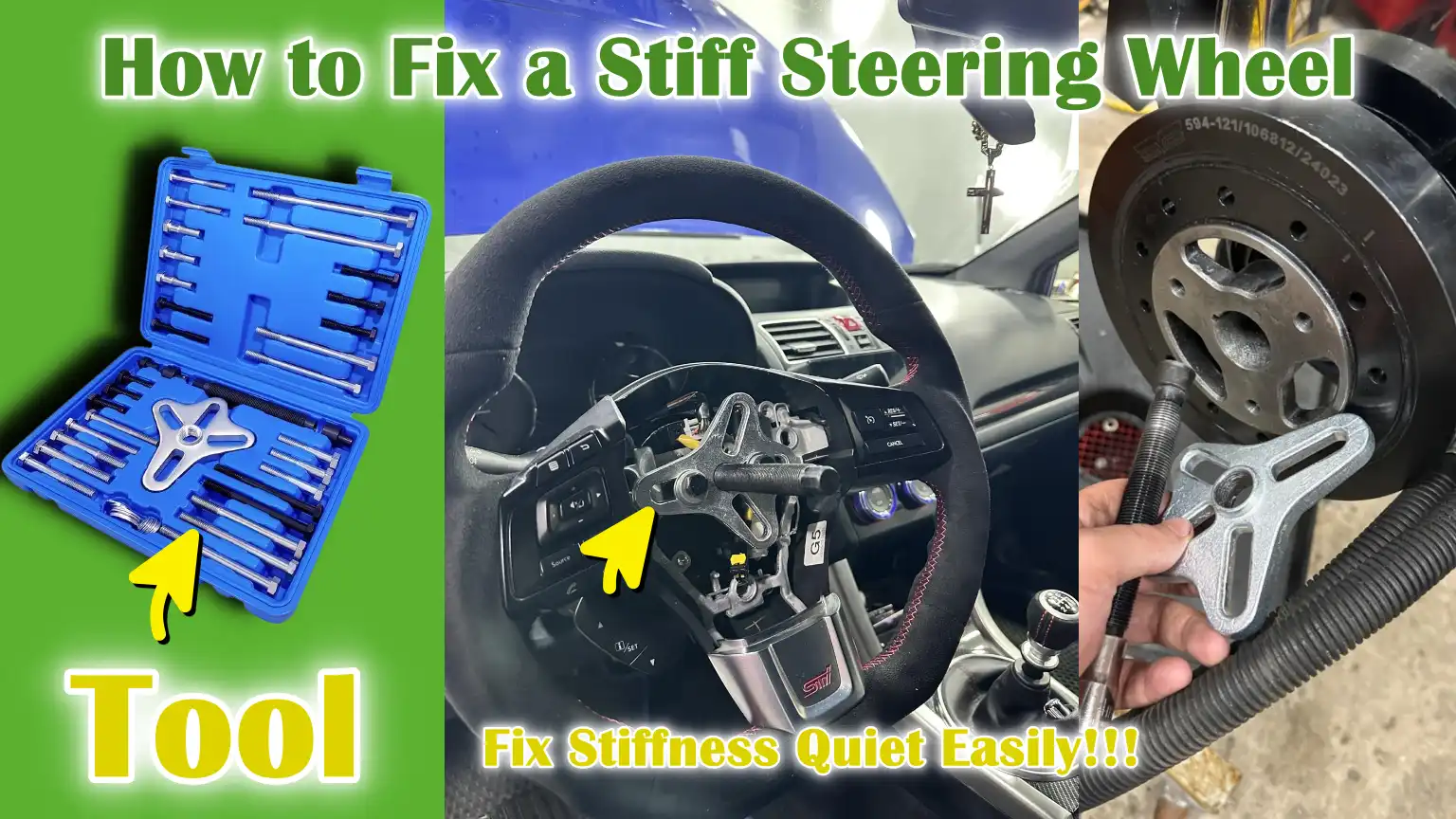
If your steering wheel is feeling stiff and heavy then it is the clear sign of something needs to be fixed from now.
Basically, modern cars relies on either hydraulic power steering or electric power steering systems to reduce the effort needed to turn the wheels, specifically at the low speeds, so whenever these systems begin to fail, it doesn’t matter even if slightly even then the steering can feel heavy, unresponsive or really difficult to control as well.
Yes, there are some common causes are available that can be responsible for this kind of stiffness on steering wheel such as: low or contaminated power steering fluid, worn out belts, failing pumps, incorrect tire pressure or if there’s issues with the suspension and alignment as well.
Also, there’s studies in automotive safety that shows that the reduced steering responsiveness can directly affects a driver’s ability to react in quick way, that literally increases the risk of accidents during the turns, parking or emergency.
But, the good news if you can easily fix it, as everything is mentioned in this guide about How to Fix a Stiff Steering Wheel, so that you can diagnose the problem early and smoothens the handling of your vehicle.
Common Symptoms of a Stiffed Steering Wheel
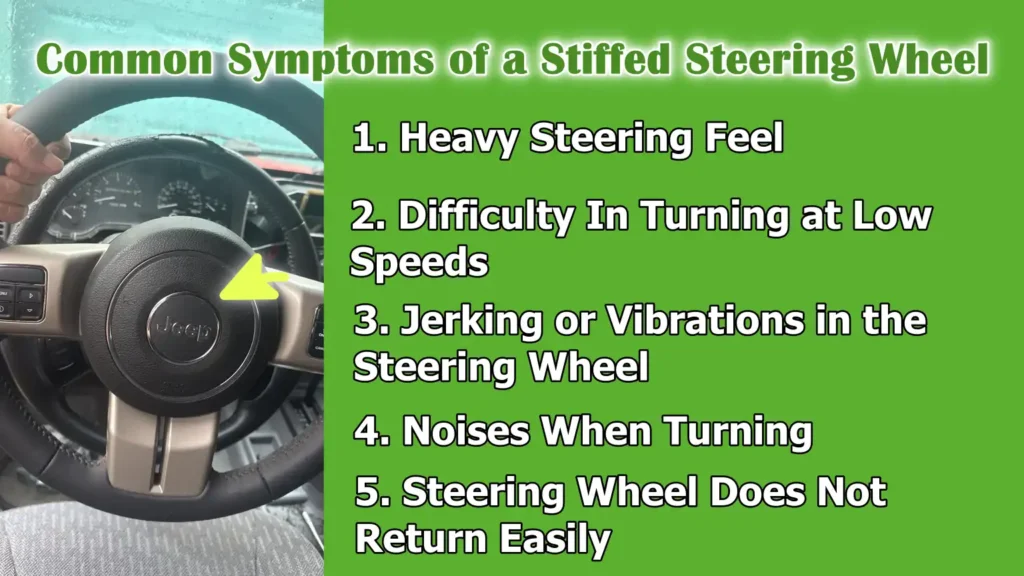
1. Heavy Steering Feel
One of the most easily recognizable symptoms of a jammed steering wheel is that it suddenly begins to feel heavy, making it more difficult to turn than usual.
Under normal circumstances, modern vehicles utilize power steering systems to minimize the physical effort required from the driver; therefore, even the slightest resistance can be an indication of a problem.
This heaviness often signals that the system is failing to provide adequate assistance, a problem that may stem from low power steering fluid levels, a faulty pump, or a mechanical defect within the steering mechanism itself.
If you feel that you are exerting more force than usual just to execute a simple turn, it is a clear indication that something is not functioning correctly and requires immediate attention.
2. Difficulty In Turning at Low Speeds
Steering-related issues typically become more apparent when driving at low speeds such as: while parking or navigating tight corners.
This is because power steering systems are specifically designed to provide maximum assistance when the vehicle is moving slowly.
If turning becomes difficult in these situations, it often points to underlying issues, such as insufficient fluid levels, belt-related problems, or a malfunction within an electric power steering system.
Maintaining precise control at low speeds is crucial for safe parking and smooth vehicle maneuverability; consequently, ignoring this symptom can increase the risk of minor accidents or potential damage to the vehicle.
3. Jerking or Vibrations in the Steering Wheel
Another common symptom is that the steering wheel does not turn smoothly; instead, it jerks or vibrates while being turned.
This uneven resistance can make the driving experience uncomfortable and unsettling.
This issue is often caused by trapped air within the power steering system, worn-out components, or problems associated with the steering rack.
Additionally, vibrations may stem from the suspension system or unbalanced tires, factors that can indirectly impact steering performance.
It is crucial to address this problem as soon as possible, as it can worsen over time and potentially lead to more severe mechanical damage.
4. Noises When Turning
Unusual noises heard while turning the steering wheel are a strong indication that something is amiss.
Sounds such as humming, squeaking, or grinding are typically caused by malfunctions in the power steering pump, belts, or internal components.
For instance, a humming sound often signals low fluid levels or a faulty pump, whereas a squealing sound may indicate a loose or worn-out belt.
Grinding noises can point to severe internal damage.
These sounds should never be ignored, as they often signal that the system is under strain and could fail if not repaired immediately.
5. Steering Wheel Does Not Return Easily
After completing a turn, the steering wheel should return to its original position without requiring excessive effort.
If it feels sluggish, sticks, or fails to return smoothly, it indicates an underlying issue within the steering or suspension system.
This problem may be caused by wheel misalignment, worn steering components, or a lack of adequate lubrication.
This diminishes driving comfort and can also compromise vehicle control, particularly when navigating multiple turns or changing lanes.
Fixing this problem restores proper steering balance and makes the driving experience safer.
What are the Main Causes of a Stiff Steering Wheel
1. Low Power Steering Fluid Level
A low power steering fluid level is one of the most common causes of a stiff steering wheel.
The power steering system relies on fluid pressure to reduce the physical effort required to turn the wheels; therefore, when the fluid level drops, the system is unable to provide the necessary assistance.
This causes the steering to feel heavy and difficult to maneuver, particularly at low speeds.
The most common cause of a low fluid level is a leak in the hoses, seals, or steering rack; however, improper maintenance and a lack of periodic inspections can also contribute to this issue.
If the fluid level continues to drop, it can lead to further damage to the pump and other components; therefore, early detection of this problem is crucial.
2. Contaminated Power Steering Fluid
Over time, power steering fluid can become contaminated due to the accumulation of dust, metal particles and debris within the system.
When this occurs, the fluid loses its lubricating properties and thickens, thereby reducing its ability to flow properly.
This increases friction within the system, causing the steering to feel stiff or erratic.
Contaminated fluid can also clog narrow passages and damage internal components such as valves and seals.
To keep the system clean and functioning correctly, regular fluid checks and timely fluid replacement are essential.
3. Power Steering Pump Malfunction
The power steering pump plays a pivotal role in generating the necessary pressure to assist in turning the steering wheel.
When the pump begins to fail, it is unable to generate the necessary pressure, making it difficult to turn the steering wheel.
A failing pump often emits a distinct whining or whistling sound, particularly when the steering wheel is turned.
This issue can arise due to wear and tear over time, inadequate lubrication, or operating the system with low fluid levels.
If left unaddressed, a failing pump can suffer complete failure, rendering the vehicle extremely difficult to drive.
4. Worn or Loose Serpentine Belt
In many vehicles, the serpentine belt is responsible for driving the power steering pump.
If this belt becomes worn, loose, or damaged, it begins to slip rather than rotating the pump effectively.
Consequently, the pump fails to generate the required pressure, resulting in stiff steering.
A loose belt can also produce a loud, high-pitched squealing sound, specially when the vehicle is started or the steering wheel is turned.
Regularly inspecting the belt for cracks, signs of wear, or reduced tension can help prevent this issue and ensure that the steering system continues to operate smoothly.
5. Steering Rack Issues
The steering rack is a critical component that translates the rotation of the steering wheel into movement of the wheels.
Over time, the internal components of the steering rack may wear out or become damaged, leading to stiffness or irregularity in the steering.
This can cause the steering to feel stiff in certain directions while appearing normal in others.
In more severe cases, this may result in fluid leaks or the emission of strange noises.
As the steering rack is a complex and critical component, issues associated with it often require inspection and repair by a specialist.
6. Tire Pressure Issues
Incorrect tire pressure, particularly low pressure, can significantly increase the physical effort required to steer the vehicle.
When tires are underinflated, they make greater contact with the road surface; this increases resistance, making it more difficult to turn the steering wheel.
This effect is most noticeable at low speeds and while parking.
Maintaining proper tire pressure not only facilitates easier steering but also improves fuel efficiency, extends tire lifespan and enhances overall vehicle safety.
7. Alignment Issues
Wheel alignment refers to positioning the wheels in the correct direction according to the manufacturer’s specifications.
When alignment is off, the wheels are not properly oriented, creating drag and resistance.
This causes the steering to feel heavy and less responsive.
Poor alignment can also cause the vehicle to pull to one side and lead to uneven tire wear.
Regular alignment checks ensure smooth steering and guarantee better control over the vehicle.
8. Suspension or Joint Issues
The suspension system and steering joints such as: ball joints and tie rods, allow the wheels to move smoothly while maintaining stability.
When these components become worn or damaged, they generate excessive friction and resistance within the steering system.
This can cause the steering wheel to feel stiff and unresponsive.
Furthermore, worn suspension components can negatively impact the vehicle’s ride comfort and handling.
Regular inspection and timely replacement of these parts are essential for maintaining smooth and safe steering.
9. Electric Power Steering (EPS) Malfunctions
In modern vehicles, electric power steering systems have replaced the older hydraulic systems.
These systems rely on sensors, motors and electronic control units to assist with steering.
If any of these components malfunction, the system may cease to provide assistance, causing the steering wheel to feel extremely heavy.
Common causes for this include faulty sensors, motor-related issues, or electrical problems (such as a blown fuse).
Unlike hydraulic systems, a malfunction in an EPS system often triggers a warning light on the dashboard.
Diagnosing these issues typically requires specialized tools; however, it is crucial to rectify these problems promptly to restore proper steering functionality.
How to Fix a Stiff Steering Wheel – Easy to Follow Method
1. Check and Refill Power Steering Fluid
The first and most crucial step is to check the power steering fluid, as it plays a direct role in ensuring the steering operates smoothly and without obstruction.
Open the bonnet and locate the power steering fluid reservoir; it is usually clearly marked.
Compare the fluid level against the ‘Minimum’ and ‘Maximum’ indicators and also observe its condition.
Healthy fluid is typically clear or light red in color, whereas dark or cloudy fluid indicates the presence of contaminants.
If the fluid level is low, refill it using only the fluid recommended by the manufacturer.
Maintaining the correct fluid level ensures proper hydraulic pressure, thereby reducing the effort required to turn the steering wheel and preventing potential damage to the system.
2. Check for Leaks
If the fluid level is low, it is essential to identify the root cause, and a leak is the most common culprit.
Carefully inspect the hoses, connections and seals surrounding the power steering system; look for any signs of moisture or fluid accumulation.
Additionally, check underneath the vehicle for any spots or puddles, which could be indicators of a leak.
Even a minor leak can gradually compromise the system’s pressure over time, resulting in a jammed or stiff steering wheel.
Promptly repairing leaks not only restores the system’s functionality but also prevents further damage to critical components such as the pump and steering rack.
3. Replace or Flush the Power Steering Fluid
Over time, power steering fluid can become contaminated and lose its effectiveness, causing the steering to gradually become stiffer.
Draining the old fluid and replacing it with fresh fluid restores the smoothness of the steering.
In many cases, it is advisable to perform a complete system flush to remove all accumulated debris and contaminants.
After refilling the fluid, it is crucial to bleed any trapped air from the system, as air bubbles can generate noise and cause the steering to feel inconsistent.
Maintaining clean fluid ensures proper system operation and minimizes internal wear and tear.
4. Inspect the Serpentine Belt
In many vehicles, the serpentine belt drives the power steering pump; therefore, its condition directly impacts steering performance.
Check the belt for any cracks, fraying edges, or looseness.
A worn or loose belt can slip, thereby reducing the pump’s ability to generate pressure.
This can cause the steering to feel heavy, particularly when turning the vehicle.
If the belt is not sufficiently taut, it should be tightened; conversely, if it shows signs of wear, it should be replaced.
Keeping the belt in good condition ensures a consistent supply of power to the steering system.
5. Inspect the Power Steering Pump
The power steering pump plays a pivotal role in generating the necessary hydraulic pressure to assist with steering.
If the pump is not functioning correctly, the steering will become stiff.
Start the engine and listen carefully to the sounds while turning the steering wheel.
A distinct whining or groaning noise is often an indication that the pump has weakened or is beginning to fail.
In some instances, the pump may be running, but it fails to generate the necessary pressure.
If it is confirmed that the pump is defective, replacing it is crucial to restore normal steering function and prevent further damage.
6. Check Tire Pressure
Tire pressure has a direct impact on how easy or difficult it is to steer the vehicle.
Use a pressure gauge to check the pressure in each tire and compare the readings against the levels recommended by the manufacturer.
When tire pressure is low, the contact area between the tire and the road surface increases, creating greater resistance and making the steering feel heavy.
Maintaining proper tire pressure improves steering responsiveness, enhances fuel efficiency and boosts the vehicle’s overall performance.
7. Get a Wheel Alignment
Improper wheel alignment can cause the wheels to angle slightly off-center, creating drag and making the steering feel stiff.
This issue often develops gradually due to driving on rough roads or simply through normal wear and tear.
Having a professional perform a wheel alignment ensures that all wheels are positioned at the correct angles.
Proper alignment not only makes the steering smoother but also improves vehicle stability and ensures even tire wear; thus, it is a crucial step in enhancing the overall driving experience.
8. Inspect Steering and Suspension Components
The steering and suspension systems work in tandem to ensure that wheel movement remains smooth and under control.
Components such as tie rods, ball joints and bushings can wear out over time, leading to increased friction and resistance within the system.
Consequently, the steering may feel stiff or unresponsive.
A thorough inspection helps identify worn or defective parts, which should be replaced immediately.
Keeping these components in good condition ensures smooth steering and improves the vehicle’s handling.
9. Inspect the Electric Power Steering System
In vehicles equipped with electric power steering, the system relies on sensors, motors and electronic controls rather than hydraulic fluid.
If the steering becomes stiff in such vehicles, the cause may be a faulty sensor, motor, or electrical connection.
Using a diagnostic scanner helps identify error codes and pinpoint the root cause of the problem.
In some instances, resetting the system may resolve the issue, while in others, replacing defective components is necessary.
Proper inspection ensures that the system is functioning correctly and that the steering operates smoothly once again.
Tools
| Tool | Simple Details |
|---|---|
| Power Steering Fluid | This fluid facilitates the smooth operation of the steering system and reduces the physical effort required to turn the steering wheel. It keeps internal components cool and prevents damage caused by friction. For optimal performance, always use the specific type of fluid recommended for your vehicle. |
| Wrench and Socket Set | These tools are used to loosen and tighten the nuts and bolts located within the steering system. They assist in safely removing components such as hoses, belts, or clamps. For most minor repairs and inspections, a basic tool set is typically sufficient. |
| Tire Pressure Gauge | This small device measures the air pressure in your tires. Maintaining the correct tire pressure makes steering easier and enhances safety on the road. It is easy to use and provides instant, accurate readings. |
| Jack and Jack Stands | A jack lifts the vehicle, allowing you to inspect its underbody components. Once the vehicle is raised, jack stands provide secure support. Using these two tools in tandem helps prevent accidents and makes it possible to work safely underneath the vehicle. |
| Diagnostic Scanner – for EPS Vehicles | This device connects to your vehicle to detect electronic malfunctions. It helps to quickly identify issues within the electric power steering system. It displays error codes, making the diagnosis of specific problems much easier and more accurate. |
How to Be On a Safe Side
1. Turn Off the Engine Before Inspection
Before inspecting or repairing any part of the steering system, it is absolutely essential to completely shut down the engine.
When the engine is running, various components such as: belts, pulleys and the power steering pump, are in motion; accidentally coming into contact with these moving parts poses a serious safety hazard.
A running engine also generates pressure within the system, which could cause fluid to eject forcefully if a component is opened.
Shutting off the engine allows the system to cool down and eliminates these risks, making the inspection process safer and more manageable.
2. Use Proper Lifting Equipment
Whenever you need to inspect components located on the underside of the vehicle, always utilize appropriate lifting equipment, specifically, a jack accompanied by sturdy jack stands.
Relying solely on a jack is unsafe, as it may lose pressure and cause the vehicle to drop suddenly.
Jack stands provide stable support and securely hold the vehicle in place while you are working.
Employing proper lifting techniques allows for a clearer view of steering and suspension components, thereby enhancing both safety and accuracy during inspection or repair procedures.
3. Avoid Touching Hot Engine Components
After the vehicle has been driven, many engine components, including the engine block, exhaust parts and surrounding hoses, become extremely hot.
Touching these components carries a significant risk of causing severe burns or injury.
It is always advisable to wait for the engine to cool down before commencing any work.
This not only ensures your personal safety but also makes it easier to handle tools and inspect components without any discomfort or hazard.
4. Wear Gloves and Safety Glasses
When working on a vehicle, wearing safety gear such as: gloves and safety glasses, is a simple yet crucial safety precaution.
Gloves protect your hands from sharp edges, dirt and harmful fluids, while safety glasses shield your eyes from dust, debris, or sudden splashes of fluid.
If proper safety measures are not observed, even tiny dust particles or droplets of fluid can cause injury.
Wearing basic safety equipment allows you to work with confidence and significantly reduces the likelihood of accidents.
Understand, When You Should Go for Professional Help
1. Persistent Steering Stiffness Even After Initial Checks
If your steering wheel continues to feel stiff even after checking fluid levels, tire pressure and basic components, it is a clear indication that the problem may lie deeper within the system.
Issues such as internal defects in the steering rack or hidden malfunctions within the power steering system are not always immediately apparent during routine inspections.
Continuing to drive with stiff steering can accelerate component wear and potentially lead to a sudden, major mechanical failure.
A trained professional possesses the specialized tools and experience necessary to accurately diagnose complex issues and resolve them before they escalate into critical problems.
2. Major Leaks or Pump Failure
Significant fluid leaks or a malfunctioning power steering pump demand immediate professional attention.
If you observe a substantial drop in fluid levels, notice a puddle of fluid beneath your vehicle, or hear a loud whining or grinding noise coming from the pump, these are clear warning signs.
Driving with a major leak can rapidly deplete the system’s fluid, causing the pump to run dry, a condition that can result in the pump failing completely and permanently.
Replacing or repairing these components often requires specialized tools and the correct procedure for purging air from the system (known as “bleeding”); it is best to entrust this task to an expert to ensure the vehicle operates safely and correctly.
3. Illumination of the EPS Warning Light on the Dashboard
In vehicles equipped with Electric Power Steering (EPS), the system is controlled by electronic sensors and modules.
When a malfunction occurs, a warning light typically illuminates on the dashboard.
This indicates that the system has detected a fault that may compromise the functionality of the steering assistance.
Unlike mechanical issues, these problems cannot be resolved merely through a visual inspection.
A professional technician utilizes a diagnostic scanner to read fault codes and pinpoint the root cause of the problem, whether it be a faulty sensor, a motor, or an electrical connection.
4. Strange Noises or Steering Seizing
Unusual noises heard while turning the steering wheel such as: grinding, knocking, or loud groaning sounds, should never be ignored.
These sounds often indicate serious malfunctions or excessive wear within the steering components.
In severe cases, the steering may become extremely stiff or even partially seize, making it difficult to control the vehicle.
This poses a serious safety hazard and necessitates immediate professional inspection.
Taking timely action can prevent accidents and help avoid costly repairs in the future.
How to Maintain Steering Wheel
Plus, there’s detailed report by the NHTSA that clearly shows that even small issues such as: stiffness or delayed response, should not be ignore, as electric power steering system are highly advanced but also complex system that’s why you should maintain them and timely repair is necessary to prevent serious driving risks in future.[¹]
1. Regularly Check Power Steering Fluid
Regularly checking the power steering fluid is the easiest and most effective way to prevent steering-related problems.
This fluid helps generate the necessary pressure to ensure smooth steering operation; if the fluid level drops or becomes contaminated, the system cannot function properly.
Over time, heat and contaminants can degrade the fluid, reducing its effectiveness.
By checking its level and condition every few weeks, or during routine servicing, you can detect issues early, prevent pump failure and ensure that the steering system continues to operate smoothly for the long term.
2. Maintain Proper Tire Pressure
Maintaining proper tire pressure is crucial for smooth and comfortable steering.
When tire pressure is too low, the tires create increased resistance against the road surface, making it difficult to turn the steering wheel.
This not only diminishes driving comfort but also reduces fuel efficiency and accelerates tire wear.
Conversely, if tires are overinflated, their grip on the road may be compromised, making it difficult to maintain control of the vehicle.
By regularly checking tire pressure with a gauge, and adjusting it according to the manufacturer’s recommendations, you can ensure balanced vehicle performance and superior handling.
3. Get Periodic Wheel Alignments
Wheel alignment plays a pivotal role in how easily your vehicle responds to steering inputs.
When wheels are not properly aligned, they may pull in different directions, creating resistance that can make the steering feel heavy or unstable.
Poor road conditions, potholes, or general wear and tear over time can compromise wheel alignment.
Having the alignment checked at regular intervals ensures smooth steering operation, extends tire life and guarantees that the vehicle tracks straight and remains stable without requiring excessive effort from the driver.
4. Proactively Replace Worn Belts and Components
Many components within the steering system such as: belts, joints and internal parts, gradually wear out with use.
If these components are not replaced in a timely manner, it can lead to increased friction, diminished performance and ultimately, a steering system failure.
For instance, a worn serpentine belt may slip, thereby reducing the power transmitted to the steering pump.
Proactively replacing worn components not only prevents sudden breakdowns but also ensures the continuous and reliable operation of the entire system.
Regular inspections and the timely replacement of parts keep the steering functioning smoothly and help avoid costly repairs in the future.
Read More:
- How to Clean Car Steering Wheel
- How to Check Steering Rack Play
- How to Replace a Steering Rack Boot
- How to Repair a Power Steering Hose Leak
- How to Bleed Power Steering Fluid
- How to Replace Power Steering Pump
- How to Change a Car Steering Wheel
- How to Check Power Steering Fluid
Know, The Repair Costs of Fixing Stiff Steering Wheel
1. Fluid Refill: Low Cost
When the steering wheel becomes stiff, refilling the power steering fluid is one of the most economical repairs available.
The fluid itself is inexpensive and in many cases, this task can be performed at home without any professional assistance.
If a low fluid level is indeed the root cause of the problem, this simple maintenance step can immediately restore the steering to proper working order.
However, it is crucial to understand that a low fluid level is often the result of a leak; therefore, simply refilling the fluid without investigating the underlying cause may prove to be merely a temporary solution.
Regular inspections can help avoid recurring expenses and prevent further damage to the system.
2. Pump Replacement: Moderate to High Cost
Replacing the power steering pump is a more costly undertaking, as it involves expenses for both parts and labor.
The pump is a critical component that generates the necessary pressure to facilitate effortless steering; when it fails, the steering becomes significantly stiff.
Costs can vary depending on the vehicle’s make and model, the quality of the replacement part and applicable labor rates.
In many instances, professional installation is required to ensure the part is fitted correctly and that the system is properly bled of air.
Although the cost exceeds that of routine repairs, replacing a faulty pump is essential for ensuring safe and reliable steering performance.
3. Steering Rack Repair: Costly
Repairing or replacing the steering rack is generally one of the most expensive repairs associated with a stiff steering wheel.
The steering rack is a complex and central component of the system that directly controls the movement of the wheels.
When it becomes worn or damaged, the steering may become stiff, steering response may become erratic, or fluid leaks may occur.
The high cost associated with this repair stems from both the price of the replacement part and the labor involved, as accessing and replacing the steering rack is a time-consuming task.
Despite the high expense, repairing the steering rack is absolutely essential; ignoring this issue can pose a serious safety hazard and lead to even more costly damage to the system.
4. Alignment Service: Moderate
The cost of a wheel alignment service falls into the moderate range; nevertheless, it offers significant benefits to both the steering system and the vehicle’s overall performance.
Proper alignment ensures that all wheels are correctly positioned, thereby reducing resistance and making the steering smoother and more responsive.
Alignment can drift over time due to road conditions or general wear and tear; correcting this helps prevent uneven tire wear while also improving fuel efficiency.
As alignment has a direct impact on a vehicle’s handling and ride comfort, it is considered an essential and cost-effective maintenance service.
Conclusion – How to Fix a Stiff Steering Wheel
Stiff Steering may seem like a just a another small issue, but literally it can be really dangerous during journey as don’t know when it gets difficult and uncomfortable enough to handle.
Steering systems are designed to make turning the vehicle easy and smooth; therefore, if you find yourself exerting excessive force while turning, it is a clear indication that something requires attention.
As outlined in this guide, several common factors such as: low power steering fluid levels, worn-out components, improper tire pressure, or alignment issues, can contribute to a stiff steering wheel.
Fortunately, many of these problems can be detected early through simple inspections and regular maintenance.
Taking prompt action not only restores smooth steering but also prevents further damage to critical and expensive components, such as the power steering pump or steering rack.
It is also essential to recognize your limitations, as certain issues, particularly those involving internal damage or electric power steering systems, require the expertise of a professional for proper diagnosis and repair.
By monitoring symptoms, adhering to proper maintenance practices and addressing issues in a timely manner, you can ensure that your vehicle remains safe, responsive and easy to handle in all driving conditions.
Now, that’s it from this guide and now you can comment down for more information.
Frequently Asked Questions
Q1. Why does the steering wheel become stiff while driving?
Answer: The primary reason for a stiff steering wheel is typically a malfunction within the power steering system or its associated components. The most common cause is a low level of power steering fluid, which diminishes the system’s ability to assist with steering. Other causes include a faulty power steering pump, a loose or worn belt, wheel misalignment, low tire pressure, or worn-out suspension components. In modern vehicles, steering stiffness can also result from a fault in the electric power steering system. Each of these issues affects how easily the wheels turn; therefore, identifying the root cause of the problem is crucial for proper repair.
Q2. Is it safe to drive with a stiff steering wheel?
Answer: Driving with a stiff steering wheel is not safe, specially if the problem is severe. When steering becomes difficult, it impairs your ability to turn the vehicle quickly a situation that can be dangerous when taking turns, parking, or reacting to an emergency. Even if the steering stiffness seems minor initially, it can worsen over time and may even lead to sudden steering failure. To avoid accidents and costly repairs, it is always best to diagnose and fix the problem as soon as possible.
Q3. How can I fix a stiff steering wheel at home?
Answer: You can resolve some common causes of a stiff steering wheel at home by performing a few basic checks and maintenance tasks. First, check the power steering fluid level and top it up if it is low. Inspect the hoses and connections for any signs of leaks. You should also check the air pressure in your tires to ensure that all of them are inflated to the correct level. If your vehicle utilizes a belt-driven system, inspect the belt for any signs of looseness or wear. These simple steps often resolve the issue; however, if the problem persists, you may need to seek professional assistance.
Q4. How can I tell if my power steering fluid has gone bad?
Answer: When in good condition, power steering fluid is typically clear or light red in color and flows freely. If the fluid appears dark, dirty, or thick, it indicates that it has deteriorated and is no longer functioning properly. You may also notice a burning smell or hear unusual noises while turning the steering wheel. Deteriorated fluid can negatively impact the system’s performance and cause the steering to feel stiff; therefore, replacing or flushing the fluid is essential to ensure the steering system operates correctly.
Q5. Why does my steering wheel feel stiff at low speeds?
Answer: Typically, steering feels heavy at low speeds because, when the vehicle is moving slowly, the system relies heavily on power assistance. If the steering suddenly becomes excessively heavy such as: while parking or making sharp turns, as it is often a sign that the power steering system is not providing adequate assistance. This could be due to low fluid levels, a weak pump, belt-related issues, or a malfunction within an electric steering system. Since maintaining control of the vehicle at low speeds is crucial, this symptom should not be ignored.
Q6. Can low tire pressure cause the steering to feel heavy?
Answer: Yes, low tire pressure can make the steering feel heavier than usual. When tires are underinflated, they make greater contact with the road surface, which increases friction (resistance). Consequently, turning the steering wheel becomes more difficult, specially at low speeds. Maintaining proper tire pressure not only improves steering performance but also saves fuel and extends the lifespan of the tires.
Q7. How much does it cost to fix a stiff steering wheel?
Answer: The cost depends on the root cause of the problem. Simply refilling the fluid is an inexpensive solution that can be done quite easily. Replacing the power steering pump or repairing a leak can be more expensive, as it involves costs for both parts and labor. Repairing the steering rack is generally the most expensive option, as it involves complex work. Wheel alignment services are reasonably priced, yet they prove to be highly beneficial. By addressing the problem early on, you can avoid significantly higher repair costs in the future.
Q8. What are the signs of a failing power steering pump?
Answer: A failing power steering pump often provides several clear warning signs. You may hear a whining or groaning sound while turning the steering wheel. The steering may feel heavy or inconsistent, specially at low speeds. In some cases, the pump may stop working entirely, making it extremely difficult to turn the steering wheel. These signs indicate that the pump is failing to generate sufficient pressure and may need to be replaced.
References:
[1] Functional Safety Assessment Of a Generic Electric Power Steering System With Active Steering and Four-Wheel Steering Features
https://www.nhtsa.gov/sites/nhtsa.gov/files/documents/13501_812575_electricpowersteeringreport.pdf

Guys, I’m a car audio enthusiast and customization expert and I love clear sound and clean installation. Plus, I have spent years helping people build their dream audio setups. And whenever I’m working on cars, I probably listen to music and thinks about the next big upgrade.