
Written By: Don Dodi
Fact Checked By: Kristen Brown
Reviewed By: Diego Rosenberg
It is true that a drivers literally can lose the solid focus in just a few seconds, but those seconds can decide the difference between a safe trip or end up with serious accident.
Without a doubt, having distracted mind is harmful for career, but it has same horrific effects in driving as well.
Because, there’s even research from the NHTSA that shows that even a few seconds of distraction such as: checking a phone or adjusting the music: can literally increases the crash risk in significant way as your eyes, hands or mind are not fully focused on driving itself.
Le’ts take an example: reading or sending a text message can take your attention off the road for about five seconds and at the highway speed: that literally means that you are travelling a really long distance without proper awareness.
Additionally, distracted driving actually divided into 3-types such as: VISUAL, MANUAL & COGNITIVE; and even one of these can reduce your ability to react in quick way to those sudden changes such as: braking traffic or obstacles.
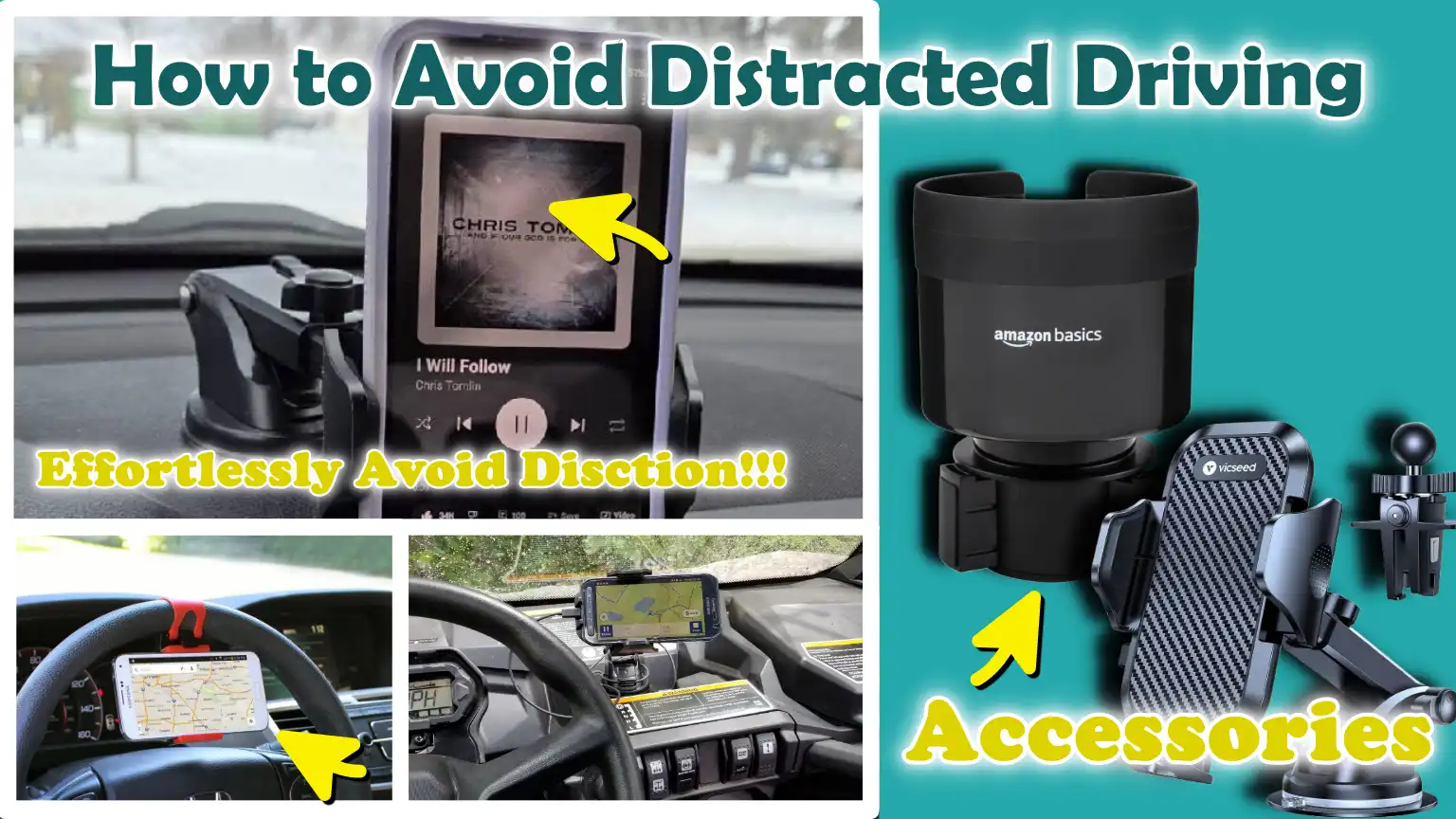
That is why, in this guide you’ll learn How to Avoid Distracted Driving so that you can avoid bad habits and instead of this learn simple habits that greatly reduce the chances of accidents during journey.
Understand, What is Distracted Driving?
Distracted driving refers to engaging in any activity that diverts your full attention away from the task of driving, even if only for a few seconds.
Safe driving requires that your eyes remain on the road, your hands remain on the steering wheel and your mind remains fully focused on your surroundings.
When any of these elements are compromised, your ability to react quickly is diminished.
Studies conducted by the National Highway Traffic Safety Administration indicate that distraction is a leading cause of many accidents, as drivers fail to notice critical cues such as: a vehicle braking, pedestrians, or traffic signals.
Even a momentary lapse in attention can be dangerous, particularly at high speeds, where a vehicle covers a significant distance in just a few seconds.
Many drivers believe they can handle minor distractions; however, research demonstrates that the human brain cannot fully concentrate on both driving and another task simultaneously.
Consequently, distracted driving poses a hidden yet serious threat on the road.
1. Types of Distractions
Visual Distractions – Taking Your Eyes Off the Road
Visual distraction occurs when you take your eyes off the road, even if only for a brief moment.
This may involve checking your phone, reading a text message, or turning your head to look at something outside the vehicle.
When your eyes are not on the road, you fail to notice sudden changes such as: a vehicle stopping, a pedestrian crossing the street, or a traffic signal changing.
Taking your eyes off the road for just two or three seconds can cause you to miss critical information, thereby increasing the risk of an accident.
Keeping your eyes focused ahead at all times is the most essential aspect of safe driving.
Manual Distraction – Removing Hands from the Steering Wheel
Manual distraction occurs when you remove one or both of your hands from the steering wheel.
This diminishes your control over the vehicle, making it difficult to react immediately in the event of a sudden, unexpected occurrence.
Simple tasks such as: holding a phone, eating, or adjusting vehicle controls, may seem harmless; however, they actually compromise your ability to operate the vehicle safely, particularly in emergency situations.
Safe driving requires that both of your hands remain ready at all times, ensuring that you can maneuver the vehicle quickly and easily whenever necessary.
Cognitive Distraction – Mental Distraction While Driving
Cognitive distraction occurs when your mind is not fully focused on driving, even if your eyes and hands are in their proper positions.
This can happen when you are thinking about personal problems, feeling stressed, daydreaming, or engaged in a deep conversation.
When your attention wanders, your reaction time slows down and you are unable to fully perceive the events unfolding around you.
This type of distraction is often the most dangerous, as it is not always outwardly visible; nevertheless, it profoundly impacts your situational awareness and decision-making abilities.
2. Examples of Distraction While Driving
Mobile Phone Usage – Calls, Messages, Apps
Using a mobile phone while driving is one of the most common and dangerous forms of distraction.
Activities such as texting, making calls, or using apps involve a combination of visual, manual and cognitive distractions occurring simultaneously.
For instance, reading or sending a text message requires you to take your eyes off the road, remove your hands from the steering wheel and divert your mental focus away from the task of driving.
This renders the situation extremely hazardous and significantly increases the likelihood of an accident.
Eating or Drinking While Driving
Eating or drinking while driving may seem like a trivial matter, but it can quickly become a source of distraction.
Often, one hand is required to hold food or a beverage, thereby reducing your control over the vehicle.
If something spills or an unexpected situation suddenly arises, you may react abruptly, diverting your attention away from the road.
Even simple tasks, such as unwrapping food packaging, can create distractions and lead to unsafe situations.
Talking to Passengers
Conversing with passengers is a common occurrence; however, if the conversation becomes overly engaging, emotional, or intense, it can lead to distraction.
When your attention shifts away from the road and onto the conversation, your awareness of traffic conditions diminishes.
This is particularly risky for novice drivers, who are already expending significant mental effort to master the nuances of driving.
Keeping conversations calm and limited helps in maintaining focus.
Adjusting Music or Navigation Systems
Changing the music, adjusting the volume, or entering directions into the navigation system, all of these tasks can divert your eyes and hands away from the act of driving.
Even glancing at a screen or pressing a button for just a few seconds can diminish your awareness of what is happening on the road.
It is always safer to set these controls before you begin your journey, or to utilize simple voice commands whenever they are available.
Watching External Events – Rubbernecking
Rubbernecking occurs when drivers slow down their vehicles or stare at accidents, roadside incidents, or any unusual situations unfolding outside the car.
While it is natural to feel curious, such behavior diverts your attention away from the task of driving.
This can lead to sudden braking and traffic slowdowns, thereby increasing the risk of rear-end collisions.
For safe driving, it is important to keep your focus centered on your lane and your immediate surroundings.
Why is Distraction While Driving Dangerous?
Distraction while driving is dangerous because it directly impairs your ability to simultaneously observe, think and react, three skills that are absolutely essential for safe driving.
When your attention is divided, even if only for a few seconds, your brain cannot fully process the events unfolding on the road, thereby increasing the likelihood of making errors.
According to research by the National Highway Traffic Safety Administration (NHTSA), distraction is a leading cause of a significant number of accidents, as drivers fail to notice sudden changes such as: slowing traffic, pedestrians crossing the road, or obstacles ahead.
Driving is a task that demands constant vigilance and even a momentary lapse in attention can trigger a chain reaction of errors.
What makes this even more concerning is that most drivers do not realize the extent to which their driving capabilities are compromised when they are distracted; this fosters a sense of overconfidence, making them more prone to engaging in risky behaviors.
1. Impact on Reaction Time
Delayed Braking and Slowed Decision-Making
When a driver is distracted while behind the wheel, the time required to react to any given situation increases.
This means that if a vehicle ahead suddenly brakes, or if a pedestrian steps onto the road, a distracted driver will take longer to perceive the event and respond to it.
Even a delay of just one or two seconds can make a critical difference in whether or not an accident is averted.
The brain requires undivided attention to instantly assess a situation and take the appropriate action such as: applying the brakes or turning the steering wheel.
When attention is divided, the decision-making process slows down and becomes less accurate, thereby increasing the risk of errors.
Increased Stopping Distance
Stopping distance refers to the total distance a vehicle travels from the moment a driver spots a hazard until the vehicle comes to a complete halt.
When a driver is distracted, the “thinking distance” increases because it takes longer to recognize the hazard.
Consequently, the vehicle travels further before the brakes are even applied.
At high speeds, this additional distance can be substantial, making it difficult, or sometimes even impossible, to stop the vehicle in time.
This is why distracted driving significantly heightens the likelihood of colliding with another vehicle or object.
2. Increases Risk of Accidents
Higher Probability of Collisions
Distracted driving diminishes awareness of the surrounding environment, thereby significantly increasing the probability of accidents.
Drivers may fail to notice critical cues such as traffic lights, road signs, or the movements of other vehicles.
This lack of awareness makes it easier to commit errors such as: drifting out of one’s lane, following the vehicle ahead too closely (tailgating), or failing to react to sudden changes in traffic flow.
Studies have consistently shown that drivers who operate a vehicle while distracted are far more likely to be involved in accidents compared to those who drive with their full attention focused on the road.
Common Types of Accidents
Distracted driving frequently leads to specific types of accidents that are common on the roads.
Among the most common of these are rear-end collisions, which occur when a driver fails to notice that the vehicle ahead has slowed down or come to a stop.
Lane-departure accidents are also common occurrences, in which a vehicle drifts out of its designated lane due to a lack of attention.
In some instances, drivers may disregard traffic signals or fail to yield the right of way to other vehicles, resulting in accidents at intersections.
Such accidents clearly illustrate the severe consequences that can arise from distracted driving, even if the distraction lasts for just a few moments.
3. Have to Face Legal and Financial Consequences
Traffic Fines and Penalties
Distracted driving is not only dangerous, but in many jurisdictions, it is also against the law.
Authorities impose fines and penalties on drivers who use mobile phones or engage in unsafe behaviors while operating a vehicle.
These penalties are designed to discourage risky habits and enhance road safety.
Receiving a fine can also result in points being added to your driving record, which may subsequently impact your driving privileges over time.
Increased Insurance Costs
Involvement in an accident caused by distracted driving can lead to increased insurance costs.
Insurance companies often classify distracted driving as “high-risk behavior,” and drivers involved in such incidents may face higher premiums for their insurance coverage.
Even a single accident can result in elevated premiums for several years, creating a long-term financial burden.
Potential for License Suspension
In serious cases, particularly those involving repeated violations or instances where distracted driving leads to a major accident, a driver’s license may be suspended.
The loss of driving privileges can have a significant impact on daily life, employment and personal responsibilities.
This underscores the fact that distracted driving not only jeopardizes safety but can also result in long-term legal and practical consequences for drivers.
Know, Common Causes of Distraction While Driving
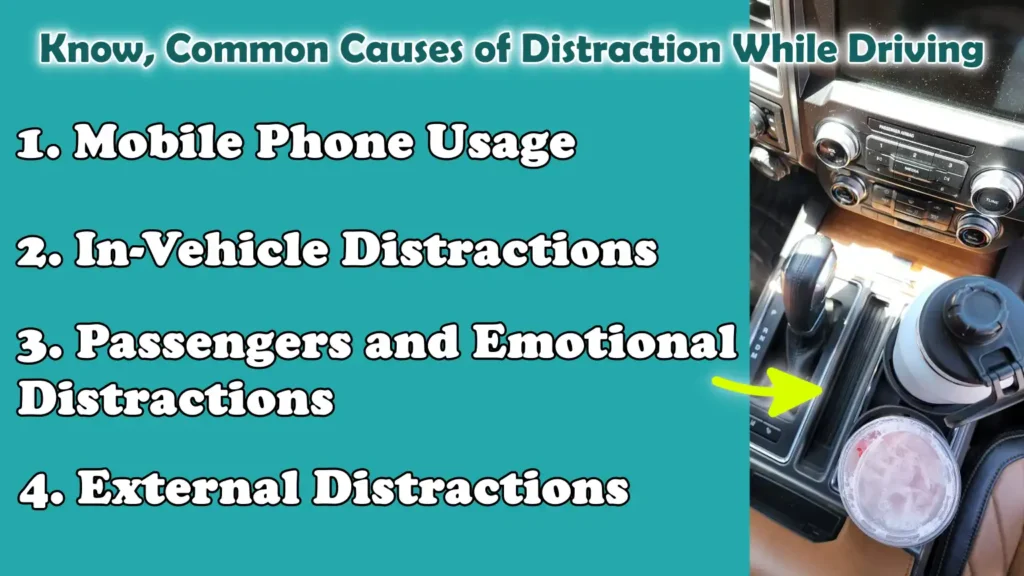
Distracted driving is typically not the result of a single major error, but rather stems from small, everyday habits that gradually divert a driver’s attention away from the road.
Many drivers believe they can multitask effectively; however, in reality, the brain cannot fully focus on driving while simultaneously engaged in other activities.
According to research by the National Highway Traffic Safety Administration (NHTSA), distractions often originate from within the vehicle, from the driver’s own behavior, or from events occurring outside on the road.
These factors impact the driver’s eyes, hands, or mind, or a combination thereof, leading to reduced situational awareness and delayed reaction times.
Understanding the most common causes helps drivers identify their own dangerous habits and avoid hazardous situations before they arise.
1. Mobile Phone Usage
Texting and Driving
Texting while driving is one of the most dangerous habits because it involves all three types of distraction simultaneously.
The driver must look at the screen, use their hands to type and mentally process the message, thereby completely diverting their attention away from the task of driving.
Even a few seconds spent reading or sending a message can prevent a driver from noticing critical changes on the road, such as another vehicle braking suddenly or a pedestrian crossing the street.
Browsing Social Media
Checking social media while driving may seem like a simple and harmless activity, but it can consume more time than anticipated and completely distract the driver.
Scrolling through posts, watching videos, or responding to notifications, all of these actions divert the driver’s visual and cognitive attention away from driving.
This reduces awareness of the surrounding environment and increases the likelihood of making errors or reacting too slowly to unfolding situations.
Misuse of Navigation Systems
Using navigation systems can be helpful; however, entering a destination or frequently checking the map while driving can become a major source of distraction.
Glancing at the screen or attempting to alter directions diverts the driver’s attention away from the road.
If a driver becomes confused or stressed regarding directions, it can also lead to mental distraction, further diminishing their ability to focus and make sound decisions.
2. In-Vehicle Distractions
Adjusting Controls – AC, Radio, Mirrors
Changing vehicle settings while driving such as: adjusting the AC, radio, or mirrors, as it can distract the driver.
These tasks require the driver to take their eyes off the road and, at times, remove their hands from the steering wheel.
Even minor adjustments can take a few seconds and during that brief interval, the driver may fail to notice critical changes in traffic conditions.
Eating, Drinking, or Grooming
Eating, drinking, or grooming while driving may seem like a way to save time, but these activities compromise your control over the vehicle.
Holding food or a beverage often requires the use of one hand and sudden incidents such as: dropping something, as it can trigger abrupt and forceful reactions from the driver.
Grooming-related activities such as: fixing one’s hair or checking the mirror, divert your gaze from the road, thereby increasing the risk of an accident.
3. Passengers and Emotional Distractions
Intense Conversations or Arguments
Passengers can also be a source of distraction, particularly when conversations become intense, emotionally charged, or highly engaging.
A driver’s attention shifts away from the road and toward conversation, thereby diminishing their awareness of traffic conditions.
This becomes even more hazardous when a driver attempts to execute maneuvers such as: turning, checking mirrors, or reacting to traffic cues, while simultaneously engrossed in conversation.
Driving Under Stress or Fatigue
An individual’s mental and emotional state plays a pivotal role in driver distraction.
Driving while under stress, fatigued, or emotionally distressed can impair concentration and delay reaction times.
A fatigued driver may easily lose focus, or even briefly doze off for a split second, while stress can cause the mind to wander.
In either scenario, maintaining vigilance and reacting swiftly to changing road conditions becomes extremely difficult.
4. External Distractions
Billboards and Advertisements
Brightly lit billboards, digital screens and advertisements are specifically designed to capture attention, which can divert a driver’s focus away from the road.
Glancing at these displays, even if only for a fleeting moment, diverts your attention from the primary task of driving.
Consequently, you may fail to notice traffic signals, react too slowly, or drift out of your lane.
Accidents or Roadside Activities
Drivers often slow down their vehicles to observe accidents, construction work, or any unusual occurrences along the roadside; this behavior is commonly referred to as ‘rubbernecking.’
While curiosity is natural, doing so diverts a driver’s attention away from the road ahead, thereby creating new hazards.
This can also lead to sudden slowdowns in traffic, increasing the likelihood of rear-end collisions and other accidents.
How to Avoid Distracted Driving – Easy Way
Avoiding distractions while driving means adopting a few simple habits to ensure that your eyes, hands and mind remain fully focused on the road at all times.
Safe driving depends not only on your skills but also on your constant vigilance and awareness in every moment.
Research by the National Highway Traffic Safety Administration reveals that many accidents occur because drivers are engaged in minor tasks that divert their attention away from driving.
The good news is that, with proper planning and self-discipline, most distractions can be avoided.
By generally eliminating distractions, preparing before you start driving and remaining mentally alert, you can significantly reduce the risk of accidents.
Adopting these habits is easy and they can make a huge difference in keeping you and others safe on the road.
1. Eliminate Mobile Phone Distractions
Use “Do Not Disturb” Mode
The most effective way to avoid phone-related distractions is to use “Do Not Disturb” mode while driving.
This feature blocks calls, messages and notifications, thereby eliminating the urge to check your phone.
By removing these interruptions, you can devote your full attention to driving without being distracted by sounds or alerts.
Keep Your Phone Out of Reach
Keeping your phone out of reach such as: in a bag or the glove compartment, reduces the habit of checking it repeatedly while driving.
When the phone is not easily accessible, it becomes much easier to ignore it and maintain your focus.
This simple step can curb the impulse to quickly check messages or notifications, an action that often leads to prolonged distraction.
Use Hands-Free Devices Only When Absolutely Necessary
Hands-free systems are generally safer than holding a phone in your hand while talking; however, if used excessively, they can still be mentally distracting.
It is best to use them only when absolutely necessary and to keep conversations brief and simple.
Even if your hands are free, if you are fully engrossed in a conversation, your mind will be less able to focus on driving.
2. Prepare Before Driving
Set Your Navigation in Advance
Entering your destination into the navigation system before beginning your journey ensures that you do not have to repeatedly glance at the screen while driving.
Once the route is set, you can follow voice prompts rather than constantly checking the map.
This keeps your eyes fixed on the road and prevents any confusion during the trip.
Adjust Mirrors, Seat and Controls
Taking a moment to adjust your seat, mirrors and vehicle controls before you start driving ensures that you won’t need to make any adjustments while on the road.
Proper adjustments enhance comfort and visibility, allowing you to maintain better focus and react more quickly to traffic conditions.
Finish Eating and Drinking
Finishing any food or beverages before you begin driving helps avoid unnecessary distractions.
These actions may seem minor, but they require attention and may necessitate removing one hand from the steering wheel.
Starting your drive free from these interruptions allows you to maintain complete focus.
3. Maintain Mental Focus
Do Not Drive When Angry or Stressed
Driving while angry, stressed, or upset can distract your attention and diminish your ability to think clearly.
Driving under the influence of anger or stress often leads to poor decision-making and delayed reaction times.
It is best to calm down before driving so that your focus remains entirely on the road.
Take Breaks When Fatigued
Fatigue is a major cause of distraction, as it reduces alertness and concentration.
Taking regular breaks during long journeys refreshes your mind and keeps your focus sharp.
A well-rested driver is more aware and better prepared to react to sudden changes.
Practice Mindfulness While Driving
Mindfulness means being fully aware of whatever you are doing in the present moment.
While driving, this means paying full attention to the road, traffic and your surroundings, without letting your mind wander.
Adopting this habit improves focus and enables you to react more quickly and safely.
4. Minimize Distractions Caused by Passengers
Set Some Basic Rules for Passengers
Informing your passengers that you need to maintain your focus can help prevent distractions.
Simple rules such as: avoiding loud conversations or sudden interruptions, as it can help create a calm atmosphere inside the vehicle.
This allows the driver to maintain better concentration.
Keep Conversations Calm and Limited
Conversing with passengers is a common practice; however, such conversations should remain calm and not become overly intense.
When a conversation becomes too serious or emotionally charged, it can divert your attention away from driving.
Keeping conversations simple helps you maintain your focus on the road.
5. Use Technology Wisely
Enable Driver-Assist Features with Caution
Modern vehicles often feature systems such as: lane assistance and collision warnings, that can aid in safe driving.
These systems can help mitigate risks by alerting you to potential hazards.
However, they should be utilized solely as assistive tools, rather than as a substitute for your own vigilance.
Do Not Over-rely on Automation
Excessive reliance on automated systems can create a false sense of security.
Drivers may become less alert, assuming that the vehicle will handle everything autonomously.
It is essential to remain actively engaged in the driving process at all times, as technology cannot fully replace human awareness and the capacity for split-second decision-making.
Learn, Safe Driving Habits You Should Adopt
Cultivating safe driving habits is the most effective way to avoid accidents and stay safe on the road.
Safe driving entails not merely knowing the rules, but consistently demonstrating the right behaviors every time you get behind the wheel.
Habits are formed over time and once they become an integral part of your routine, they help you maintain focus without requiring excessive effort.
According to the National Highway Traffic Safety Administration, the consistent practice of safe driving habits such as: proper hand placement, maintaining full attention and practicing defensive driving, as it can significantly reduce the risk of accidents.
These habits enhance your control over the vehicle, enable you to react quickly to sudden situations and heighten your awareness of your surroundings.
By incorporating these simple yet effective habits into your daily life, you can make your driving safer and more confident.
1. Keep Both Hands on the Steering Wheel
Proper Steering Control
Keeping both hands on the steering wheel provides you with superior control over the vehicle at all times.
This allows you to steer with ease and precision, particularly when navigating turns, changing lanes, or adjusting your position on the road.
Proper hand placement helps you maintain stability and balance, which is important for maintaining the vehicle’s trajectory and avoiding sudden errors.
When both hands are positioned on the steering wheel in a ready stance, you are better prepared to handle common driving situations with ease.
Better Response in Emergencies
In emergency situations such as: sudden braking or swerving to avoid an obstacle, having both hands on the steering wheel enables you to react quickly and effectively.
You can turn the steering wheel with greater precision and maintain control even under pressure.
If one of your hands is occupied with another task, your reaction time may be slower and less precise.
Keeping both hands on the steering wheel ensures that you are always ready to take immediate action whenever necessary.
2. Maintain Full Attention on the Road
Regularly scan your surroundings
Maintaining full attention means actively monitoring your surroundings at all times.
This involves looking at the road ahead, checking your mirrors and remaining aware of other vehicles, pedestrians and road conditions.
Regularly scanning your surroundings allows you to quickly identify changes such as: a vehicle slowing down or a pedestrian crossing the road.
This awareness gives you more time to react and make safe decisions while driving.
Avoid multitasking
Avoiding multitasking is important for maintaining focus while driving.
Even minor tasks such as: adjusting vehicle controls or deeply contemplating other matters, as it can distract your attention.
The human brain cannot fully concentrate on multiple critical tasks simultaneously; therefore, multitasking while driving can be dangerous.
By focusing solely on driving, you enhance your ability to react quickly and minimize the likelihood of making errors.
3. Practice Defensive Driving Techniques
Anticipate hazards in advance
Defensive driving involves anticipating potential hazards before they occur and being prepared to react.
This includes watching out for sudden stops, erratic drivers, or unexpected obstacles on the road.
Anticipating hazards in advance allows you to stay one step ahead and avoid dangerous situations.
Instead of reacting at the last moment, you can take proactive steps to ensure your safety.
Maintain a Safe Distance
Maintaining a safe distance from the vehicle ahead provides you with ample space and time to react should it suddenly slow down or come to a halt.
This distance acts as a safety buffer, thereby reducing the risk of a rear-end collision.
Driving too closely diminishes your reaction time and heightens stress levels, particularly in heavy traffic.
By maintaining the appropriate distance, you are able to drive more calmly and safely in any situation.
Read More:
- How to Hold Steering Wheel Correctly
- How to Adjust Car Seat for Proper Driving Position
- How to Use Lane Assist Features
- How to Drive with Adaptive Cruise Control
- How to Park on a Hill
- How to Reverse Park Safely
- How to Parallel Park
- How to Park Safely on Busy Streets
- How to Drive in Heavy Traffic Safely
- How to Drive on Highways Safely
- How to Merge Lanes Safely
- How to Overtake Safely
- How to Use Turn Signals Properly
- How to Fix Turn Signals on a Car
- How to Check Blind Spot While Driving
- How to Use Mirrors When Driving
- How to Use ABS Brakes Properly
- How to Brake Safely on Steep Roads
- How to Drive Uphill Safely
- How to Drive Safely in Strong Winds
- How to Prevent Aquaplaning
Understand, The Role of Technology in Preventing Distraction
Technology plays a important role in protecting drivers from distractions; however, to be effective, it must be utilized correctly.
Modern tools are designed to minimize interruptions, enhance driver awareness and provide warnings when something goes wrong.
Research by the National Highway Traffic Safety Administration indicates that safety technology can reduce the risk of accidents, provided that drivers use it attentively and appropriately.
Furthermore, these tools are beneficial only when used in conjunction with responsible driving behaviors.
While technology can offer assistance through alerts and automation, it cannot fully interpret every road situation in the same way a human driver can.
This implies that drivers must remain vigilant at all times and be prepared to take manual control of the vehicle themselves.
By understanding both the benefits and limitations of technology, drivers can utilize it wisely and avoid becoming overly reliant on it.
1. Smartphone Safety Features
Driving Modes and App Blockers
Nowadays, many smartphones feature specialized driving modes and app blockers designed to help prevent distractions while driving.
These features automatically silence incoming calls, messages and notifications, thereby eliminating the temptation for drivers to check their phones.
Some systems can even send automated replies, informing others that the user is currently driving.
By minimizing interruptions, these tools help drivers keep their eyes on the road and maintain their focus.
Consistent use of these features can curb dangerous habits such as: checking messages or browsing apps while driving, ultimately making the journey safer.
2. Advanced Driver Assistance Systems – ADAS
Lane-Keeping Assist
Lane-Keeping Assist is a system that helps the driver remain within their lane; it either provides gentle steering support or issues a warning if the vehicle begins to drift out of its lane.
This feature is highly effective in preventing accidents caused by driver inattention or fatigue.
If the driver’s attention wavers even slightly, the system can provide a warning or correct the vehicle’s trajectory, thereby reducing the risk of unintentional lane departure.
It serves as an additional layer of safety; however, the ultimate responsibility for maintaining control of the vehicle rests with the driver.
Collision Warning Systems
Collision Warning Systems are designed to detect potential accidents and alert the driver in advance.
These systems utilize sensors or cameras to monitor the distance between vehicles and can issue a warning to the driver if that distance becomes dangerously short.
Some systems even pre-charge the brakes or automatically apply them if the driver fails to react in time.
This reduces the likelihood of rear-end collisions and provides drivers with a few extra moments to react to sudden, unexpected situations.
3. Limitations of Technology
Technology Is No Substitute for Attention
While safety technologies are beneficial, they cannot replace the need for the driver’s full attention.
These systems are designed to assist, not to take complete control of the vehicle.
They may not function perfectly in all situations such as: during adverse weather conditions, when lane markings are unclear, or in complex traffic scenarios.
Drivers must remain constantly alert and ready to take action; relying solely on technology can lead to hazardous situations if the system malfunctions or reacts too slowly.
The Risk of Overconfidence
One of the most significant risks associated with the use of advanced technology is that drivers may become overconfident and allow their level of vigilance to diminish.
When people place excessive reliance on these systems, they may cease paying full attention to the road, assuming that the vehicle will handle everything.
This false sense of security can lead to delayed reactions and poor decision-making.
It is important to remember that technology serves merely as an assistive tool and safe driving still depends primarily on the driver’s awareness, concentration and responsibility.
Know, Some Tips for Different Types of Drivers
Different drivers face varying challenges on the road; nevertheless, avoiding distraction remains important for everyone.
A novice driver may struggle to master basic vehicle controls and interpret their surroundings, whereas an experienced driver might become overly complacent, leading to lapses in attention over time.
Commercial drivers often contend with long hours behind the wheel and fatigue, factors that are significant contributors to distracted driving.
According to safety data from the National Highway Traffic Safety Administration (NHTSA), distracted driving affects drivers of all experience levels, even if the underlying causes differ.
Understanding these distinctions helps drivers of every type adopt better habits and maintain focus within their specific driving environments.
By adopting appropriate strategies tailored to their experience levels and driving conditions, drivers can mitigate risks and enhance safety on every journey.
1. Novice Drivers
The Importance of Strict Discipline
Novice drivers require strict discipline, as they are still in the process of learning vehicle control and navigating traffic conditions.
At this stage, even a momentary lapse in attention can immediately lead to confusion or errors.
Adhering to simple rules such as: keeping both hands on the steering wheel, refraining from using a mobile phone and focusing exclusively on the act of driving, helps establish a solid foundation.
Maintaining discipline during these initial learning phases makes driving safer and enables novice drivers to gradually build their confidence.
Avoid Forming Bad Habits Early On
Habits formed early on often persist for the long term; therefore, it is essential for novice drivers to avoid engaging in risky behaviors right from the start.
Using a phone, multitasking, or driving without full attention may seem easy at first, but breaking these habits later on can prove to be extremely difficult.
Learning safe practices right from the start helps establish a routine of focused and responsible driving, thereby reducing the likelihood of accidents in the future.
2. Experienced Drivers
The Risks of Overconfidence
Experienced drivers often feel at ease behind the steering wheel; however, this comfort can sometimes evolve into overconfidence.
They may feel that they can safely handle distractions such as: using a phone or multitasking, without incurring any risk.
Yet, research indicates that distracted driving affects everyone, regardless of their level of experience.
Overconfidence can diminish vigilance and cause drivers to become less cautious, thereby increasing the probability of making errors.
Consistent Adherence to Safe Practices
For experienced drivers, the key to safety lies in consistency.
Even if driving feels effortless, it remains important to consistently adhere to safe habits such as: maintaining focus, keeping a safe distance and avoiding distractions.
Consistency helps maintain situational awareness and ensures that good driving behaviors do not deteriorate over time.
By maintaining discipline, experienced drivers remain prepared to handle sudden or unexpected situations.
3. Commercial Drivers
Long Working Hours
Commercial drivers often spend many hours on the road, which can lead to mental fatigue and issues with distraction.
Driving for extended periods makes it difficult to remain alert, particularly when traversing repetitive routes.
Taking regular breaks, staying hydrated and allocating sufficient time for rest are all essential steps for maintaining focus and avoiding distractions.
Avoiding Distractions Caused by Fatigue
Fatigue is a primary cause of distraction among commercial drivers, as it impacts both the body and the mind.
A fatigued driver may lose focus, experience delayed reaction times, or even overlook critical road signs and signals.
Getting adequate sleep before beginning a drive, and recognizing symptoms of fatigue, such as heavy eyelids or an inability to concentrate, as it can help prevent hazardous situations.
Maintaining alertness is essential for completing long journeys safely and responsibly.
Understand About the Laws and Regulations Regarding Distracted Driving
Laws concerning distracted driving are designed to save lives.
Their objective is to ensure that drivers remain fully attentive and act responsibly while operating a vehicle.
Governments and road safety officials establish clear regulations to curb dangerous habits such as: using mobile phones while driving, as distraction is the leading cause of traffic accidents.
According to guidelines from the National Highway Traffic Safety Administration (NHTSA), the strict enforcement of these laws has led to a reduction in accidents and a gradual improvement in driver behavior over time.
These regulations serve not merely as punitive measures, but also as a means to raise awareness and foster safe driving habits.
When drivers understand and adhere to these rules, the roads become safer for everyone.
Disregarding these laws can lead to severe consequences, including accidents, injuries and legal repercussions, making it imperative that they always be taken seriously and strictly observed.
1. Overview of Traffic Laws
Restrictions on Phone Usage
Many traffic laws explicitly prohibit the use of mobile phones while driving, as this constitutes the most common and dangerous form of distracted driving.
In many jurisdictions, drivers are forbidden from holding a phone in their hand, texting, making calls, or browsing the internet while operating a vehicle.
Some locations permit the limited use of hands-free systems; however, even in such instances, drivers are still expected to maintain their full attention on the road.
These restrictions are grounded in substantial evidence demonstrating that phone usage causes distraction and significantly heightens the risk of accidents.
Penalties and Enforcement
To ensure driver compliance, authorities employ various methods to enforce laws regarding distracted driving.
These measures include fines, penalty points and, in cases of repeated violations, more severe legal action.
Being caught using a mobile phone or engaging in other dangerous activities while driving can result in financial penalties and may also negatively impact one’s driving record.
In more serious cases, heavy fines may be imposed, or a driving license may be suspended for a certain period.
The strict enforcement of these laws serves as a reminder to drivers that reckless driving is not a minor oversight, but rather a serious safety issue.
2. The Importance of Adhering to Rules
Personal Safety
Adhering to laws regarding reckless driving directly ensures the driver’s own safety.
When drivers avoid distractions and follow the rules, they remain more aware of their surroundings and are better prepared to react to sudden changes.
This reduces the likelihood of accidents and makes for a safer driving experience.
Safe driving habits not only prevent injuries but also boost a driver’s confidence and sense of control while behind the wheel.
The Safety of Others on the Road
Road safety encompasses more than just the driver’s own safety; it also includes the safety of passengers, pedestrians and other road users.
When a driver becomes distracted, they put everyone in their vicinity at risk.
Adhering to traffic regulations helps create a safe environment where all road users can travel without fear.
Driving responsibly reduces accidents, saves lives and contributes to building a safer society for everyone.
Know, Some Benefits of Avoiding Distracted Driving
Avoiding distracted driving offers clear and compelling benefits that enhance safety, confidence and the overall driving experience.
When a driver remains fully focused, their eyes, hands and mind work in unison to react instantly to any situation on the road.
This minimizes errors and helps prevent dangerous situations before they even arise.
According to safety findings from the National Highway Traffic Safety Administration, focused driving significantly reduces the likelihood of accidents and improves overall road safety.
It fosters a greater sense of control among drivers, reduces stress and ensures they are better prepared for unexpected events.
Over time, these habits not only save lives but also mitigate financial risks, making the driving experience smoother and safer for everyone.
Not only this, there’s research and data that clearly shows that distracted driving is literally the major cause of road fatalities, as well as there’s common activities such as: texting or reaching for objects that can actually increase the crash risk that’s why you need to avoid the distractions during the drive as it is scientifically proven as well.[¹]
1. Enhanced Road Safety
When drivers avoid distractions, they become more aware of their surroundings and are able to react immediately to sudden changes such as: a vehicle braking, pedestrians, or obstacles on the road.
This reduces the number of accidents and lowers the risk of injury to both the driver and other road users.
Focused driving helps prevent common accidents, such as rear-end collisions and lane departures.
By maintaining full concentration on the road, drivers can make safer decisions and avert dangerous situations before they escalate into serious incidents.
2. Increased Driving Confidence
Maintaining focus while driving provides better vehicle control and heightens awareness of traffic conditions.
Drivers who remain fully alert are able to navigate more smoothly, maintain appropriate speeds and keep a safe distance from other vehicles.
This boosts their self-confidence, as the driver feels prepared to handle various situations.
With heightened awareness, drivers can anticipate potential problems in advance and react calmly, making the driving experience less stressful and more comfortable.
3. Financial Savings
Avoiding distracted driving also helps reduce financial expenses over time.
Drivers who adhere to traffic rules and avoid dangerous behaviors are less likely to incur fines or penalties.
Furthermore, avoiding accidents helps keep insurance costs in check, as insurance companies often raise premiums following claims or traffic violations.
By driving responsibly and staying focused, drivers can save money while simultaneously protecting themselves from costly repair bills and legal expenses.
Conclusion – How to Avoid Distracted Driving
So, now you have clearly understood that now-a-days safe driving is not just about speed or skill, but you need mastery over the focus in every moment.
Because, safe driving demands your undivided attention, as even a momentary lapse in focus can lead to delayed reactions, poor decision-making and the creation of dangerous situations.
Also, in this guide now you have clear knowledge that: the causes of distraction are manifold, ranging from mobile phones and in-vehicle activities to emotional states and even external events, yet they all share one common thread: they divert your attention away from the act of driving.
Research conducted by the National Highway Traffic Safety Administration demonstrates that maintaining full concentration while driving can significantly reduce accidents and lead to an overall improvement in road safety.
The most important point to grasp is that safe driving does not equate to multitasking; rather, it entails dedicating yourself fully and attentively to the singular task of operating a vehicle.
Simple habits such as: keeping your phone out of reach, mentally preparing yourself before starting the car, remaining mentally alert and adhering to safe driving protocols, as it can make a profound difference.
While technology can serve as a helpful tool, it can never substitute for your own personal awareness and sense of responsibility.
Every time you choose to remain fully focused while driving, you are safeguarding not only your own well-being but also that of your passengers and every other individual on the road.
Now, you can ask all the related questions and unsolved queries in comment box.
Frequently Asked Questions
Q1. In simple terms, what is distracted driving?
Answer: Distracted driving means engaging in any activity that diverts your attention away from driving. This can occur when your eyes are not on the road, your hands are not on the steering wheel, or your mind is preoccupied with other thoughts. Driving requires complete concentration because you must simultaneously keep your eyes on the road, maintain control of the vehicle and make split-second decisions. Even a slight distraction such as: glancing at your phone for just a few seconds, as it can prevent you from noticing something critical and significantly increase the risk of an accident.
Q2. Why is distracted driving so dangerous?
Answer: Distracted driving is dangerous because it impairs your ability to react quickly and safely. When you are not fully attentive, you may fail to notice a slowing vehicle, a pedestrian crossing the road, or a changing traffic signal. This delay in reaction time can lead to serious accidents. Studies by the National Highway Traffic Safety Administration (NHTSA) indicate that distraction is a leading cause of accidents, as it compromises your cognitive processing, reaction time and vehicle control.
Q3. What are the most common distractions while driving?
Answer: Distractions primarily fall into three categories. Visual distraction occurs when you take your eyes off the road, for instance, to check your phone or to look at things happening outside the vehicle. Manual distraction occurs when you take your hands off the steering wheel such as: to eat, drink, or adjust the vehicle’s controls. Cognitive distraction occurs when your mind is not focused on the task of driving, for instance, when you are thinking about personal problems or engaged in an emotional conversation. Many activities such as: using a mobile phone, create all three types of distractions simultaneously, making them extremely dangerous.
Q4. Is using a phone while driving really that dangerous?
Answer: Yes, using a phone while driving is extremely dangerous because it diverts your eyes, your hands and your mind away from the task of driving all at once. Reading or sending a text message can take several seconds and during that time, your vehicle continues to travel without your full attention. At high speeds, this means you can cover a significant distance without keeping a proper watch on the road. Hands-free calls can also be distracting, as they divert your attention away from driving.
Q5. How can I avoid using my phone while driving?
Answer: You can avoid using your phone by setting it to “Do Not Disturb” mode before you start driving. Keeping your phone out of reach such as: in a bag or the glove compartment, also helps curb the habit of checking it frequently. It is best to finish any calls or messages before you even begin your journey. If something is truly urgent, you should pull your vehicle over to a safe location before using your phone.
Q6. Does hands-free calling make driving safer?
Answer: Hands-free calling is safer than holding a phone to your ear while talking, but it is not entirely safe. It still causes distraction, as your attention remains focused on the conversation rather than on the road. If the conversation becomes serious or emotional, your focus may be diverted away from driving. It is better to keep calls brief or avoid them entirely while driving.
Q7. What are some simple habits for maintaining focus while driving?
Answer: Simple habits include keeping both hands on the steering wheel, keeping your eyes on the road at all times and avoiding multitasking. Preparing before driving such as: setting up navigation and adjusting controls, helps minimize the likelihood of distractions later on. Staying calm, getting adequate sleep and maintaining mental focus also enhance your attentiveness. When these small habits are consistently practiced, they can make a significant difference in terms of safety.
Q8. Can eating or drinking while driving be dangerous?
Answer: Yes, eating or drinking while driving can be dangerous, as it requires you to remove one hand from the steering wheel and diverts your attention. If something spills or drops, your reaction could be sudden and unsafe. Even minor tasks, such as opening food packaging, can take your focus off the road. It is safer to eat and drink either before or after driving.
References:
[1] Investigation and Prosecution of Distracted Driving Cases
https://www.nhtsa.gov/sites/nhtsa.gov/files/documents/812407-distracteddrivingreport.pdf

Guys, I’m a car audio enthusiast and customization expert and I love clear sound and clean installation. Plus, I have spent years helping people build their dream audio setups. And whenever I’m working on cars, I probably listen to music and thinks about the next big upgrade.