
Written By: Don Dodi
Fact Checked By: Kristen Brown
Reviewed By: Diego Rosenberg
Heavy Traffic is something that every driver has to deal with, as it is one of the most common yet challenging situations for drivers all around the world, specially in the growing urban areas where the number of vehicles are increasing day by day.
As well as, there’s studies from the WHO that shows that road traffic injuries are literally the leading cause of accidents globally and a large portion of minor crashes actually happens in slow-moving or congested traffic conditions due to the sudden braking, close following distances and inefficiency of driver’s attention.
Because, heavy traffic means you have to drive with stop-and-go movement with unpredictable lane changes and there’s mixed road users such as: cars, motorcycles, cyclists and pedestrians as well: which is also increases the chances of errors if drivers are not careful enough.
Now, in this guide you’ll learn How to Drive in Heavy Traffic Safely so that you can understand how traffic actually flows and easily learn to anticipate the actions of other driver.
How to Prepare Yourself and Your Vehicle
Safe driving in heavy traffic doesn’t begin on the road, it starts even before you turn the key.
Proper preparation of both your mindset and your vehicle plays a crucial role in preventing accidents, reducing stress and maintaining overall better control.
In congested traffic, drivers constantly face situations involving sudden stops, unpredictable maneuvers and limited space between vehicles; this means that even a minor error can quickly lead to a collision.
Research and road safety observations indicate that many traffic-related incidents are not caused by excessive speed, but rather by a lack of attention, impatience, or vehicle-related issues such as: faulty brakes or improperly adjusted mirrors.
When you mentally prepare yourself, check the condition of your vehicle, establish a comfortable driving position and plan your route in advance, you significantly mitigate these risks.
These simple yet effective steps help you remain calm, react quickly and make better decisions, enabling you to navigate heavy traffic in a safe, smooth and controlled manner.
1. Mental Preparation Before Entering Traffic
Mental preparation is one of the most critical factors in safe driving, particularly in heavy traffic, where patience and concentration are constantly put to the test.
When drivers enter traffic feeling stressed, angry, or rushed, their likelihood of making risky decisions such as: abruptly changing lanes, braking hard, or driving aggressively, increases.
Studies on driver behavior demonstrate that emotional stress can slow down reaction times and diminish situational awareness, thereby increasing the probability of accidents, even at lower speeds.
A calm and patient mindset helps you remain in control, think clearly and react safely to unexpected situations such as: sudden stops or the maneuvers of careless drivers.
Before venturing into traffic, it is crucial to calm your mind, accept that delays are a normal occurrence and focus on safe driving rather than simply trying to arrive quickly.
Simple habits such as: taking deep breaths, avoiding distractions and maintaining a positive attitude, as it can make a significant difference in how you handle traffic.
When your mind is calm, your driving becomes smoother, safer and more predictable for others on the road.
2. Checking the Condition of Your Vehicle
A well-maintained vehicle is absolutely essential for safe driving in heavy traffic, as you are frequently required to stop suddenly, start moving again and rapidly adjust your speed.
Brakes are the most critical component, as they enable you to react instantly in sudden-stop situations; worn-out brakes can increase stopping distances and lead to collisions.
Mirrors must be clean and properly adjusted so that you can clearly see surrounding vehicles without having to turn your head excessively; this ensures that you remain alert at all times.
Lights, including brake lights and turn signals, play a vital role in signaling your intentions to other drivers, particularly in slow-moving traffic where visibility can be challenging.
The horn must also be in proper working order, as it can be used to alert others in emergency situations.
Regularly checking these basic components ensures that your vehicle responds correctly precisely when you need it most.
Even minor issues, if overlooked, can become dangerous in congested traffic; therefore, keeping your vehicle in good condition is a simple yet effective way to stay safe.
3. Adjusting Your Driving Position
A proper driving position enhances comfort, control and reaction time, all of which are absolutely critical in heavy traffic situations.
Your seat should be adjusted in such a way that you can easily reach the pedals without feeling excessive strain and your knees should remain slightly bent to maintain control while braking.
The backrest of the seat should support your spine and allow you to sit upright; this enables you to remain alert for extended periods.
Your hands should grip the steering wheel firmly yet comfortably, ideally in a balanced position that allows you to turn the wheel quickly and easily.
The mirrors should be set to minimize ‘blind spots,’ providing you with a clear view of the road behind and on both sides without requiring you to shift your body excessively.
A proper driving position reduces fatigue, improves visibility and helps you react quickly when traffic conditions change suddenly.
When you are in a comfortable and correct position, you are able to drive with greater ease and safety.
4. Planning Your Route in Advance
Planning your route before embarking on a journey can significantly reduce stress and make driving in heavy traffic safer and easier.
Traffic congestion often follows a predictable pattern such as: during the morning and evening peak hours; by avoiding these times, you can save time and minimize the likelihood of getting stuck in long queues.
Opting for less congested roads, even if they are slightly longer, as it can make the driving experience much smoother and safer.
Knowing your route in advance also helps you avoid last-minute maneuvers such as: sudden lane changes or turns, which are common causes of accidents in busy traffic.
By utilizing navigation tools or traffic updates, you can stay informed about road conditions, construction zones, or accidents ahead.
When you have a clear plan, you can focus more on driving safely rather than worrying about directions.
This simple step helps you stay calm, make better decisions and navigate through traffic with greater confidence.
How to Maintain a Safe Distance
One of the most essential and effective methods for preventing accidents in heavy traffic is maintaining a safe distance from the vehicle traveling ahead.
On congested roads, vehicles are constantly stopping and starting and even a slight delay in reaction time can lead to a collision.
Road safety statistics consistently demonstrate that rear-end collisions are among the most common types of accidents and they typically occur because drivers follow too closely, leaving insufficient space to react.
When you maintain an appropriate distance from the vehicle ahead, you gain more time to observe what is happening, enabling you to apply the brakes calmly and deliberately, without panicking.
This also helps reduce stress, saves fuel by avoiding sudden braking and makes your driving more predictable for others.
Maintaining a safe distance is not merely about safety; it is about maintaining control, comfort and sound judgment in busy traffic situations where every second counts.
1. The Importance of Maintaining Distance
Maintaining a safe distance from the vehicle ahead is paramount, as it significantly reduces the risk of rear-end collisions, which are extremely common in heavy traffic.
When cars are positioned too close to one another, there is very little time to react if the vehicle in front stops suddenly; this often triggers “chain-reaction” collisions involving multiple vehicles.
Maintaining the correct distance provides you with ample time to spot brake lights, decelerate gradually and come to a safe stop without colliding with the vehicle ahead.
It also allows you to look further down the road, enabling you to anticipate potential hazards in advance rather than having to react at the very last moment.
Furthermore, maintaining a safe distance minimizes the need for sudden braking, making the driving experience smoother and less stressful.
This simple habit can prevent many avoidable accidents and stands as one of the easiest ways to enhance overall road safety.
2. The 2–3 Second Rule in Traffic
The 2–3 second rule is a simple and highly recommended method for maintaining a safe distance in traffic.
This rule states that there should be a gap of at least two to three seconds between your vehicle and the vehicle traveling ahead of you.
The way to measure this is to select a fixed point on the road and then count how long it takes for your car to reach that point after the vehicle ahead of you has passed it.
This time interval provides you with sufficient space to react and apply the brakes safely if necessary.
In heavy traffic or at slightly higher speeds, increasing this distance becomes even more critical, as stopping distances increase and reaction time becomes a more significant factor.
Adhering to this rule is easy and requires no special equipment, making it highly practical for daily driving.
By consistently maintaining this time-based distance, you can significantly reduce the risk of sudden collisions and drive with greater confidence in congested conditions.
3. Adjusting Distance in Stop-and-Go Traffic
In stop-and-go traffic, maintaining and adjusting your distance from the vehicle ahead becomes even more crucial, as vehicles frequently alter their speed without warning.
Many drivers make the mistake of closing in too closely on the vehicle ahead when traffic slows down; they believe this will save them time, but in reality, it increases the risk of sudden braking and minor collisions.
Maintaining an appropriate yet safe distance allows you to move forward smoothly without getting caught in a constant cycle of sudden stops and starts.
This not only reduces the likelihood of colliding with the vehicle ahead but also helps improve overall traffic flow by avoiding unnecessary sudden stops.
Maintaining an appropriate distance also provides you with the necessary space to react should a pedestrian, cyclist, or two-wheeler suddenly appear in front of you, a common occurrence in congested areas.
By adjusting your following distance according to traffic conditions, you create a safe and comfortable driving experience for both yourself and others.
4. Avoiding ‘Tailgating’
Tailgating, that is, driving too closely behind the vehicle ahead, is one of the most dangerous habits in heavy traffic and a major cause of accidents.
When you tailgate, you eliminate your safety cushion; if the vehicle in front of you brakes suddenly, you are left with almost no time to react.
This often results in rear-end collisions, which can lead to property damage, personal injury and even legal consequences.
Tailgating also heightens stress levels for both drivers, as it creates pressure and erodes confidence on the road.
In many jurisdictions, it is considered unsafe driving and may incur fines or penalties.
Maintaining a safe distance is the hallmark of responsible driving and helps ensure the smooth flow of traffic.
How to Master the Stop-and-Go Driving
Stop-and-go driving is one of the most common scenarios faced in heavy traffic and it requires a different set of skills compared to driving on open roads.
In these situations, vehicles constantly move short distances only to come to a halt again, thereby increasing the likelihood of collisions resulting from minor errors.
Research on traffic flow indicates that sudden braking and abrupt changes in speed are the primary causes of traffic jams and rear-end collisions, even when speeds are low.
Mastering this style of driving involves learning how to move your vehicle forward smoothly, maintaining control at all times and avoiding unnecessary stops.
When drivers operate their vehicles gradually rather than making sudden maneuvers, traffic flow remains more stable, fuel is conserved and wear and tear on the vehicle is reduced.
Maintaining good control in slow-moving traffic also affords you more time to monitor your surroundings, anticipate potential issues and react safely.
By learning to handle stop-and-go situations correctly, you can make driving less stressful, more efficient and significantly safer, not only for yourself but also for others on the road.
1. Smooth Acceleration and Braking
Smooth acceleration and braking are crucial for maintaining control and safety in heavy traffic.
When drivers press the accelerator or brakes too forcefully, it results in abrupt movements that can startle other drivers and heighten the risk of a collision.
Accelerating gradually allows your vehicle to move forward smoothly, while braking gently provides the vehicles following you with ample time to react.
This style of driving also minimizes wear and tear on critical vehicle components such as: brake pads and tires, which would otherwise wear out quickly in stop-and-go conditions.
Furthermore, driving smoothly also results in fuel savings, as the engine does not have to strain excessively when there are sudden changes in speed.
By applying steady and controlled pressure to the pedals, you can make the driving experience more comfortable and predictable, thereby ensuring that traffic flows safely and reducing stress for everyone on the road.
2. Effective Use of Low Gears – Manual Cars
In manual cars, the proper use of low gears is crucial for maintaining control in slow-moving traffic.
Low gears provide greater power at lower speeds, allowing the vehicle to move forward smoothly without stalling.
When drivers use high gears at very low speeds, the engine may struggle, causing the vehicle to lurch or stall abruptly, situations that can be unsafe in heavy traffic.
Keeping the vehicle in first or second gear, depending on your speed, allows you to maintain continuous forward motion and react quickly as traffic starts or stops.
This gives you better control over your speed without the need to press the accelerator too hard.
The correct use of low gears reduces the need for frequent braking and helps maintain a consistent speed.
This makes driving smoother, safer and easier to manage, specially on congested roads where rapid adjustments are often required.
3. Speed Control in Automatic Cars
In automatic cars, controlling your speed in heavy traffic depends largely on how you utilize the brake pedal and how you manage the vehicle’s natural momentum.
Automatic cars continue to creep forward slowly even without the accelerator being pressed, a feature known as ‘creeping’, and this capability can be extremely useful in stop-and-go traffic.
Rather than repeatedly pressing the accelerator and then abruptly applying the brakes, it is preferable to allow the vehicle to coast forward gradually and to control your speed by applying light, steady pressure on the brakes only when necessary.
This technique is known as ‘brake modulation’; it helps maintain a smooth driving rhythm and minimizes the need for sudden stops.
Furthermore, this approach places less strain on the braking system and ensures a more comfortable ride for passengers.
By mastering the art of controlling speed in a calm and steady manner, drivers can avoid unnecessary jolts and maintain a safe distance from the vehicle ahead, making driving in traffic feel more controlled and less stressful.
4. Avoiding Sudden Maneuvers
To avoid accidents in heavy traffic, where vehicles are in close proximity and reaction time is minimal, it is crucial to refrain from making any sudden maneuvers.
Sudden braking, rapid acceleration, or abrupt steering can trigger a chain reaction; a single sudden action on your part may force multiple drivers behind you to react hastily, thereby increasing the risk of a collision.
Driving in a relaxed and predictable manner allows other road users to anticipate your movements and react safely.
This also affords you more time to adapt to changing traffic conditions without becoming flustered.
In congested areas, even a minor, sudden movement can create confusion and hazardous situations, particularly when pedestrians, cyclists and two-wheelers are present nearby.
By keeping your movements steady and controlled, you contribute to maintaining a safe flow of traffic and minimize the likelihood of accidents.
The most effective strategy for staying safe in stop-and-go traffic is to drive consistently and calmly.
How to Stay Alert and Focused
Staying alert and focused is one of the most crucial skills for safe driving in heavy traffic, as the environment is constantly changing and requires making immediate, yet calm, decisions.
On congested roads, vehicles travel in close proximity to one another, speeds frequently fluctuate and unexpected situations such as: sudden braking, lane changes, or pedestrians crossing the road, as it can arise at any moment.
Studies on driver behavior indicate that inattention is a major cause of accidents, even at low speeds, because drivers fail to recognize unfolding changes in a timely manner.
When you remain mentally active and fully focused on the road, your reaction time improves, enabling you to respond more easily and safely.
Staying alert means utilizing your vision effectively, understanding traffic patterns and maintaining awareness of everything happening around your vehicle, not just what is directly in front of you.
This level of awareness reduces stress, prevents sudden or impulsive reactions and helps you maintain better control over your vehicle.
By cultivating good habits of focus and attentiveness, you can navigate heavy traffic situations with greater confidence and significantly reduce the risk of accidents.
1. Avoiding Distractions
Avoiding distractions is absolutely essential, as even a momentary lapse in attention amidst heavy traffic can lead to dangerous situations.
Using a mobile phone while driving, adjusting vehicle settings, eating, or attempting to multitask, all of these activities divert your attention away from the road and compromise your ability to react instantly.
Research indicates that even briefly averting your eyes from the road can significantly increase the risk of a collision, particularly in stop-and-go traffic where vehicles may come to a sudden halt.
Keeping both hands on the steering wheel and your eyes fixed on the road ensures that you are always prepared to react to any changes in conditions.
Avoiding distractions also helps you remain calm and reduces the cognitive load on your mind, making it easier to make safe decisions.
By focusing solely on the task of driving, you create a safer environment not only for yourself but for everyone around you.
2. Constantly Scanning the Road
Constantly scanning the road means keeping an eye on everything happening around your vehicle, including movements occurring in front of you, behind you and on both sides.
Rather than focusing on a single fixed point, safe drivers continuously shift their gaze to gather as much information as possible.
Regularly checking your mirrors provides you with information regarding vehicles approaching from behind or those attempting to change lanes alongside you.
Looking ahead on the road allows you to anticipate slowdowns, traffic signals, or obstructions in advance, giving you ample time to react calmly.
This habit minimizes the need for sudden braking and helps maintain a smooth, consistent driving rhythm.
In heavy traffic, where conditions change rapidly, constant scanning enhances your situational awareness and makes your driving more controlled and predictable.
3. Anticipating Other Drivers’ Actions
Anticipating the actions of other drivers is an essential component of defensive driving and it becomes even more critical in congested traffic.
Not all drivers strictly adhere to traffic laws and some may engage in sudden or unsafe maneuvers such as: changing lanes without signaling or braking abruptly.
By observing subtle cues such as: changes in a vehicle’s speed, the direction of its wheels, or gaps in traffic, you can anticipate what another driver might do next.
This allows you to prepare in advance rather than reacting at the very last moment.
Anticipating ahead of time gives you a greater opportunity to slow down, adjust your vehicle’s positioning, or maintain a safe following distance.
It also reduces the likelihood of panic-driven reactions, which are often a contributing factor in accidents.
Developing this skill enables you to stay one step ahead and navigate traffic situations with greater safety and confidence.
4. Keeping an Eye on Pedestrians and Two-Wheelers
In heavy traffic, particularly in urban and congested areas where various types of road users share the same space, it is crucial to pay special attention to pedestrians and two-wheelers.
Pedestrians may cross the road unexpectedly, while two-wheelers such as: motorcycles and bicycles, often maneuver through narrow gaps between cars, making them difficult to spot.
These road users are at a heightened risk; even a minor collision can result in serious injury.
Drivers must exercise extra caution, reduce their speed when necessary and always be prepared to come to a safe stop.
Constantly checking your vehicle’s “blind spots” (areas not directly visible) and keeping an eye on the movement around your vehicle can help prevent accidents.
Giving pedestrians and two-wheelers ample space on the road, and respecting their presence, helps create a safer environment for everyone.
By paying full attention to pedestrians and two-wheelers, you minimize risks and contribute to safe and responsible driving in heavy traffic conditions.
How to Properly Use Signals and Communication
Effective communication on the road is crucial for safe driving in heavy traffic, as drivers cannot converse verbally and must rely on signals, lights and visual cues to understand one another’s intentions.
In congested areas, where vehicles travel in close proximity, even a minor misunderstanding can lead to sudden braking or a collision.
Road safety studies indicate that many accidents do not occur due to a lack of driving skills, but rather because drivers fail to clearly communicate their next intended move.
The proper use of turn signals, brake lights and visual gestures makes it easier to anticipate what another person is about to do; this enables other drivers, pedestrians and cyclists to react safely and in a timely manner.
Good communication also minimizes confusion, improves traffic flow and reduces stress for everyone on the road.
When drivers consistently communicate their intentions in advance and with clarity, they foster a safer and more cooperative driving environment, particularly in situations where space is limited and immediate reactions are required.
1. The Importance of Turn Signals
While driving, turn signals constitute one of the most essential and highly effective forms of communication; they play a pivotal role in preventing accidents within heavy traffic.
They alert other drivers to your intention to turn, change lanes, or alter your position, thereby providing them with ample time to adjust their speed or positioning accordingly.
Without proper signaling, other drivers cannot anticipate your sudden maneuvers, which significantly heightens the risk of sudden braking or a collision.
It is imperative to activate turn signals well in advance, rather than at the very last moment, as this ensures that others have sufficient time to react safely.
The consistent use of signals also fosters trust among drivers, as predictable behavior makes the road a safer place for everyone.
In heavy traffic, where vehicles are in close proximity to one another, providing clear signals becomes even more crucial to avoid confusion and maintain a smooth flow of traffic.
2. Effective Use of Brake Lights
Brake lights serve as another vital means of communication, helping drivers following you understand when you are slowing down or coming to a halt.
In heavy traffic, where sudden stops are commonplace, it is essential to apply brakes gradually and with control; this ensures that your brake lights illuminate immediately, providing an early warning to others.
Braking hard or abruptly can startle other drivers, thereby increasing the risk of a rear-end collision.
By decelerating gradually, you give the vehicles following you the opportunity to react in time and maintain a safe following distance.
Proper use of brake lights also helps maintain a consistent flow of traffic, minimizing the stop-and-go conditions that frequently lead to traffic congestion.
It is equally important to ensure that your brake lights are functioning correctly, as faulty lights fail to alert others to your actions, making driving significantly more hazardous.
3. Establishing Eye Contact When Necessary
In certain situations, particularly in congested areas, establishing eye contact can be an effective way to communicate with pedestrians, cyclists, or other drivers.
Making eye contact ensures that the other person has seen you and understood your intentions, whether you are yielding the right of way, stopping, or proceeding forward.
This proves particularly beneficial at crossings, intersections, or in slow-moving traffic, where pedestrians may suddenly step onto the roadway.
While turn signals and lights convey general information, establishing eye contact adds a personal layer of awareness that can help prevent misunderstandings.
This fosters mutual understanding and ensures that both parties operate safely.
However, to guarantee maximum safety, establishing eye contact must always be accompanied by proper driving practices such as: reducing speed and maintaining full control over the vehicle.
4. Avoiding Confusing or Delayed Signals
Avoiding misleading or delayed signals is just as crucial as using signals correctly, as unclear communication can create hazardous situations in heavy traffic.
Signaling too late deprives other drivers of sufficient time to react, thereby increasing the likelihood of sudden braking or collisions.
Similarly, giving incorrect or inconsistent signals can confuse others, leading to hesitation or unsafe maneuvers.
Clear and timely communication entails signaling well in advance and smoothly executing your intended action.
It is also essential to cancel signals once a maneuver has been completed to prevent other drivers from being misled.
Consistent and accurate signaling maintains order and predictability on the road, making the flow of traffic safer and more efficient.
By avoiding errors in communication, drivers can mitigate risks and ensure a safe driving experience for everyone.
How to Develop Lane Discipline and Proper Vehicle Positioning
For safe driving in heavy traffic, lane discipline and proper vehicle positioning are crucial, as they foster order and predictability on the road.
When drivers remain within their designated lanes and proceed in an organized manner, traffic flows more smoothly and the risk of sudden collisions is significantly reduced.
Studies on traffic behavior indicate that unnecessary lane changes and improper vehicle positioning are primary causes of traffic congestion and minor accidents, particularly in congested areas where space is limited.
Maintaining a consistent speed within your lane helps other drivers anticipate your movements and react safely.
Good lane discipline also enhances visibility, reduces stress and enables you to make better decisions without haste.
By focusing on staying in your lane, selecting the appropriate lane and changing lanes only when necessary and safe to do so, you can significantly minimize the likelihood of accidents and transform driving in heavy traffic into a more controlled and comfortable experience.
1. Staying in Your Lane
One of the simplest yet most effective strategies for safe driving in heavy traffic is to remain within your lane.
When you stay in your lane, you minimize confusion for other drivers and establish a driving pattern that others can easily follow.
Constantly changing lanes or attempting to squeeze into tight spaces can lead to sudden braking, side-swipe collisions and unnecessary stress.
Keeping your vehicle centered within its lane also improves vehicle control and helps you maintain a safe distance from vehicles on either side.
In slow-moving traffic, staying in your lane helps maintain a consistent flow of vehicles, thereby reducing the frequency of stop-and-go situations.
This habit not only enhances safety but also makes your overall driving experience smoother and more comfortable.
2. Choosing the Right Lane
Choosing the right lane, based on the flow of traffic and your destination, as it can make a significant difference in how safely and efficiently you drive in heavy traffic.
Depending on road conditions, upcoming turns, or other vehicles merging into the lane, some lanes may move faster than others; therefore, it is essential to observe traffic patterns before selecting a lane.
Staying in a lane that aligns with the direction of your destination such as: positioning your vehicle in the correct lane for an upcoming turn, helps you avoid last-minute maneuvers that could be dangerous.
A correctly chosen lane reduces the need for sudden decisions and allows you to focus more effectively on maintaining a consistent speed and a safe following distance.
By planning ahead and selecting the appropriate lane, you can avoid confusion, reduce stress and drive more safely in congested areas.
3. Safe Lane-Changing Techniques
Careful observation and clear communication are crucial for avoiding accidents when changing lanes.
Before moving into another lane, it is essential to check your mirrors to assess the position of surrounding vehicles.
Activating your turn signal well in advance alerts other drivers to your intentions and gives them time to adjust accordingly.
Checking your blind spots (areas not visible in your mirrors) ensures that no vehicle is hidden from your view, a step that is particularly important in heavy traffic, where vehicles may be in close proximity to one another.
Once it is safe to proceed, change lanes smoothly, without making sudden changes to your steering or speed.
Proper lane-changing techniques help prevent side-impact collisions and minimize the risk of disrupting the flow of traffic.
By adopting a consistent and cautious approach, you can change lanes safely and confidently.
4. Avoiding Frequent Lane Changes
It is essential to avoid frequent lane changes, as constantly weaving between lanes increases the risk of accidents and places unnecessary strain on the driving process.
Many drivers believe that changing lanes frequently will allow them to make faster progress; however, in heavy traffic, this typically does not save time and, in fact, significantly increases the danger.
Each lane change introduces a new risk, as it requires coordinating with multiple vehicles and heightens the likelihood of making a poor judgment call.
Frequent lane changes can also disrupt the flow of traffic, forcing other drivers to brake suddenly or take evasive action to manage the situation.
By remaining in a single lane whenever possible, you can maintain a consistent speed and focus on safe driving rather than constantly reacting to new situations.
By avoiding unnecessary lane changes, you create a calmer and safer driving experience, both for yourself and for others on the road.
How to Manage Intersections and Signals
Intersections are the most challenging and hazardous locations when driving in heavy traffic, as vehicles approaching from various directions often converge at a single point where space is limited and reaction time is scarce.
Road safety studies consistently demonstrate that the majority of accidents in urban areas occur at or near intersections, often resulting from confusion, misjudgment of timing, or a failure to adhere to traffic signals and right-of-way regulations.
In heavy traffic, the risks are further compounded, as drivers may feel pressured to overtake or to drive in dangerously close proximity to other vehicles.
Navigating intersections safely requires patience, keen observation and a comprehensive understanding of traffic signals and road laws.
Drivers must be prepared to come to a smooth stop, proceed only when it is safe to do so and remain vigilant regarding the presence of pedestrians, cyclists and vehicles approaching from all directions.
Proper management of intersections not only prevents accidents but also optimizes traffic flow and minimizes unnecessary delays.
By remaining calm, alert and disciplined at intersections, drivers can navigate even the busiest junctions with safety and confidence.
1. Approaching Traffic Lights with Caution
Approaching traffic lights with caution is paramount for safe driving in heavy traffic, as these signals regulate vehicular movement and play a crucial role in preventing collisions between vehicles approaching from different directions.
As you approach a traffic light, it is essential to anticipate the signal in advance and be prepared to either come to a halt or proceed in a controlled manner.
Accelerating abruptly just before the light changes, or applying the brakes forcefully at the last moment, as it can create hazardous situations, particularly when other vehicles are following closely behind you.
Gradually reducing your speed as the traffic light changes provides you with better control and gives other drivers the opportunity to react safely.
Once the light turns green, it is essential to verify that the intersection is clear before proceeding, as some vehicles or pedestrians may still be in the process of crossing.
Exercising caution and patience at traffic lights minimizes the risk of collisions and ensures smooth passage for everyone.
2. Navigating Roundabouts in Traffic
Roundabouts require caution and sound judgment, particularly in heavy traffic where multiple vehicles are entering and exiting simultaneously.
The primary rule at a roundabout is to yield to vehicles already circulating within it, as they have the right of way.
Entering without proper observation can lead to accidents, such as side-impact collisions or sudden braking incidents.
Before entering, drivers should slow down, look for a safe gap in traffic and, when necessary, merge smoothly rather than coming to an abrupt halt.
Maintaining a consistent speed while inside the roundabout helps keep traffic flowing smoothly and reduces confusion.
Signaling when exiting is also crucial so that other drivers can anticipate your movements.
Navigating roundabouts correctly enhances safety, minimizes delays and maintains a continuous flow of traffic even in congested conditions.
3. Handling Uncontrolled Intersections
Uncontrolled intersections, those lacking traffic lights or clear signage, demand heightened caution and a thorough understanding of “right-of-way” rules.
In such situations, drivers must rely on their observation skills, judgment and basic traffic regulations to determine who should proceed first.
It is essential to approach these intersections at a reduced speed, as this provides ample time to assess the situation and react safely.
Generally, drivers should yield to vehicles approaching from the right and should always be prepared to stop if there is any doubt.
It is also essential to keep an eye out for pedestrians and cyclists, who may cross the road unexpectedly.
Giving clear signals, whether through eye contact or vehicle movement, as it can help prevent confusion.
By remaining alert and patient, drivers can navigate uncontrolled intersections safely, even without relying on traffic signals.
4. Avoiding Blocking Intersections
Refraining from blocking intersections is an essential habit that helps maintain the smooth flow of traffic and prevents unnecessary congestion.
Gridlock occurs when a driver enters an intersection without verifying whether there is sufficient space ahead to clear it; this causes their vehicle to become stranded in the middle, thereby obstructing traffic approaching from other directions.
This situation, particularly in congested areas, as it can quickly escalate into a full-blown traffic jam and heighten the risk of accidents.
Before entering an intersection, it is crucial to ensure that there is enough space ahead for you to cross it completely without stopping.
Even if the traffic signal is green, drivers should wait if the road ahead is blocked.
Keeping intersections clear allows vehicles approaching from all directions to proceed easily and safely.
This simple yet responsible behavior improves overall traffic management and minimizes inconvenience for everyone on the road.
How to Deal with Aggressive and Impatient Drivers
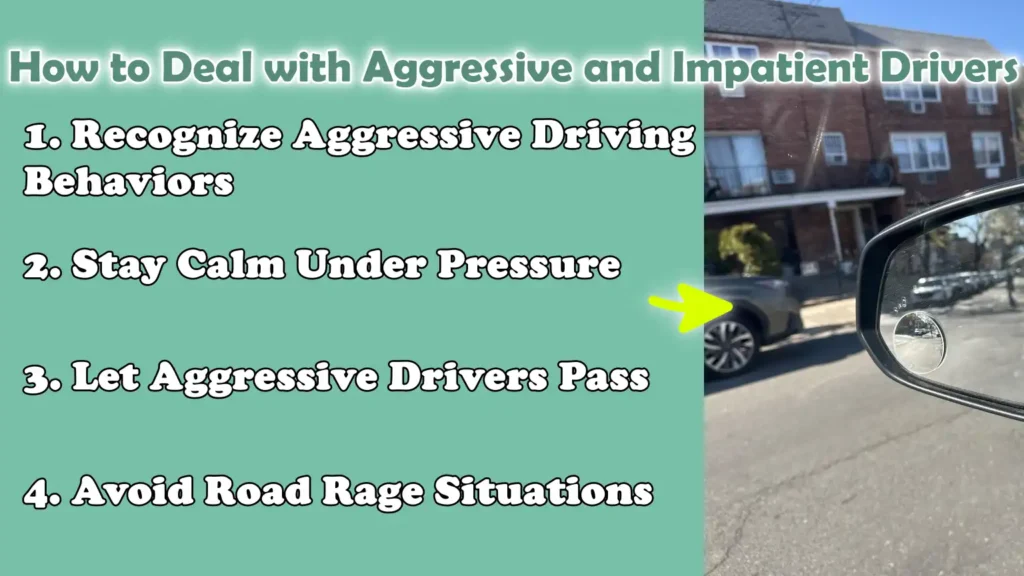
A crucial aspect of safe driving in heavy traffic is knowing how to handle aggressive and impatient drivers, as not everyone on the road remains calm or strictly adheres to traffic regulations.
In congested situations, stress levels can rise rapidly, prompting some drivers to engage in risky behaviors such as: speeding through tight spaces, honking unnecessarily, or aggressively forcing their way through traffic.
Road safety studies indicate that aggressive driving significantly increases the likelihood of sudden braking, collisions and the creation of hazardous situations for everyone nearby.
The primary strategy for dealing with such drivers is to remain calm, avoid confrontation and prioritize your own safety rather than reacting emotionally.
By maintaining a safe distance, making your driving predictable and yielding when necessary, you can minimize the risk of collisions and accidents.
Understanding how to respond to aggressive behavior helps you maintain control and ensures that your driving remains safe, even if others are not adhering to the same standards.
1. Recognize Aggressive Driving Behaviors
Identifying aggressive driving behaviors early on allows you to take defensive measures and avoid dangerous situations.
Aggressive drivers often display clear warning signs such as: excessive honking, tailgating (driving too closely behind other vehicles), making sudden lane changes without signaling, or attempting to overtake in unsafe locations.
They may accelerate abruptly and brake suddenly, making their driving style unpredictable.
These behaviors heighten the risk of accidents by reducing reaction times and creating confusion among other drivers.
By recognizing these signs quickly, you can remain alert and adjust your driving accordingly, for instance, by increasing your following distance from the vehicle ahead or by avoiding driving alongside such vehicles.
Awareness of aggressive behavior helps you stay prepared for sudden changes and maintain a safer position on the road.
2. Stay Calm Under Pressure
Staying calm under pressure is crucial when dealing with aggressive drivers, as emotional reactions can further escalate the situation.
When someone honks at you, tailgates, or behaves rudely, it is natural to feel frustrated or stressed; however, reacting in anger or attempting to compete with them can lead to unsafe decisions.
Stress can diminish concentration, slow down reaction times and increase the likelihood of making mistakes.
Maintaining a calm mindset allows you to think clearly and make safe choices such as: maintaining your speed and distance and avoiding sudden maneuvers.
Simple techniques such as: focusing on your breathing or reminding yourself that safety takes precedence over speed, as it can help you stay in control.
A calm driver is always better equipped to handle difficult situations safely.
3. Let Aggressive Drivers Pass
In heavy traffic, allowing aggressive drivers to pass is the safest and most effective way to deal with them.
Attempting to block or confront such drivers can quickly create dangerous situations, specially when space is limited.
By giving them space and the opportunity to move ahead, you immediately reduce the risk to yourself and avoid unnecessary confrontations.
This approach is not a sign of weakness, but rather a prudent decision that prioritizes safety over ego.
Allowing others to pass while maintaining your own safe speed and position helps you remain in control and keeps your focus centered on safe driving.
In most cases, yielding to aggressive drivers prevents accidents and allows traffic to flow more smoothly.
4. Avoid Road Rage Situations
Avoiding road rage is essential for maintaining safety and control in heavy traffic.
Road rage can occur when drivers react emotionally to aggressive behavior, potentially leading to situations involving shouting, making gestures, or even adopting dangerous driving practices.
Such situations can escalate rapidly and endanger everyone involved.
Adopting a defensive driving mindset helps prevent road rage, as it focuses on safety, patience and awareness rather than reacting to the mistakes of others.
Ignoring provocations, avoiding eye contact with aggressive drivers and maintaining focus on the road are effective strategies for avoiding altercations.
Understanding that traffic delays and errors are common occurrences can also help alleviate frustration.
By remaining calm and refraining from engaging in negative behavior, you can avoid dangerous situations and ensure a safe driving experience for yourself and others.
Read More:
- How to Drive on Highways Safely
- How to Merge Lanes Safely
- How to Overtake Safely
- How to Use Turn Signals Properly
- How to Fix Turn Signals on a Car
- How to Check Blind Spot While Driving
- How to Use Mirrors When Driving
- How to Use ABS Brakes Properly
- How to Brake Safely on Steep Roads
- How to Drive Uphill Safely
- How to Drive Safely in Strong Winds
- How to Prevent Aquaplaning
How to Drive in Mixed Traffic Conditions
Driving in mixed traffic conditions requires a high degree of attention and control, as the road is shared by a diverse mix of road users, including cars, motorcycles, bicycles, buses, trucks, pedestrians and sometimes even animals.
In many urban and semi-urban areas, traffic is highly heterogeneous; each type of vehicle travels at a different speed and behaves in a distinct manner.
This increases the likelihood of sudden changes in direction, unexpected road crossings and close-quarter interactions between road users.
Road safety studies indicate that in mixed-traffic environments, the risk of minor accidents is higher due to limited space and the unpredictable behavior of road users.
To stay safe, drivers must exercise patience, maintain a safe distance and constantly monitor their surroundings.
Understanding how different vehicles and road users behave helps you make better decisions and avoid hazardous situations.
By controlling your speed, giving space to others and remaining alert, you can navigate mixed traffic safely and minimize the likelihood of accidents.
1. Sharing the Road with Two-Wheeled Vehicles
Extra caution is required when sharing the road with two-wheeled vehicles, such as motorcycles and bicycles, as they are smaller, less stable and more vulnerable than cars.
Two-wheeled vehicles can maneuver quickly through tight spaces in traffic and may suddenly emerge from the roadside or from between other vehicles.
Due to their size, they can be difficult to spot, specially in heavy traffic.
Maintaining a safe distance from them is crucial to avoid collisions, as even a minor impact can result in serious injury.
Drivers should avoid driving too close to them, cutting them off abruptly, or making sudden lane changes in their vicinity.
Keeping an eye on their movements and giving them ample space helps create a safer environment for both drivers and riders.
Respecting their presence on the road is a crucial part of safe driving in mixed-traffic situations.
2. Driving with Buses and Trucks
Buses and trucks are large vehicles that require more space to turn, maneuver and stop; therefore, they play a significant role in mixed-traffic situations.
These vehicles have large “blind spots”, areas where the driver cannot see smaller vehicles, particularly along their sides and directly behind them.
Driving too close to these areas increases the risk of accidents, as the driver of the large vehicle may not even be aware of your presence.
Maintaining a safe distance, avoiding lingering in blind spots and giving these vehicles ample room to turn or change lanes is essential.
Due to their size and weight, trucks and buses take longer to stop; therefore, maintaining a greater following distance when driving behind them is crucial.
By understanding their limitations and driving cautiously around them, you can minimize hazards and stay safe.
3. Watching Out for Pedestrians and Animals
In mixed-traffic situations, specially in urban and semi-urban areas, pedestrians and animals are common and may suddenly enter the roadway.
Pedestrians may cross the street without warning and animals may move unpredictably, creating sudden hazards.
In such situations, drivers must remain alert at all times and be prepared to slow down or stop safely.
Driving at a controlled speed and keeping a close watch on your surroundings helps you quickly identify any movement and react calmly.
Granting pedestrians the right of way and maintaining a safe distance from animals reduces the likelihood of accidents.
Exercising extra caution is particularly important in areas such as markets, residential neighborhoods and rural roads.
By remaining alert and prepared, you can safely navigate these situations and protect both yourself and others from harm.
4. Driving on Narrow or Congested Roads
Driving on narrow or congested roads requires caution and control, as there is very little room for vehicles to maneuver or overtake one another.
In such situations, maintaining a slow and steady speed is crucial to avoid sudden movements and collisions.
Drivers should exercise patience and yield the right of way to others when necessary, specially when larger vehicles or oncoming traffic require more space.
Keeping your vehicle properly positioned within your lane and avoiding unnecessary acceleration or braking helps maintain balance and control.
On narrow roads, even minor errors can lead to accidents due to the limited margin for correction.
Maintaining clear visibility, steering smoothly and exercising accurate judgment are the keys to safely navigating these situations.
By driving slowly and carefully, you can pass through tight spaces with confidence and minimize the risk of accidents.
How to Maintain Fuel Efficiency and Vehicle Maintenance in Traffic
Heavy traffic not only extends travel time but also impacts fuel consumption and the overall condition of your vehicle.
In stop-and-go situations, the engine runs for longer periods while covering less distance; consequently, this naturally consumes more fuel compared to driving continuously on a highway.
Studies on vehicle performance indicate that frequent acceleration and braking, along with prolonged idling (keeping the engine running while the vehicle is stationary), are the primary reasons for reduced fuel efficiency in urban traffic.
Furthermore, constant use places excessive strain on critical components such as the brakes, clutch and engine systems.
However, by adopting a few simple yet effective habits such as: avoiding unnecessary idling, driving smoothly and monitoring your vehicle’s condition, you can conserve fuel and extend the lifespan of your vehicle.
Good driving habits not only reduce operating costs but also contribute to lowering pollution and enhancing safety.
Proper vehicle care while driving in traffic improves performance, minimizes wear and tear and makes the driving experience more comfortable.
1. Avoiding Unnecessary Idling
Excessive idling occurs when the engine is running but the vehicle is not moving forward, a very common occurrence in heavy traffic.
Although idling may seem harmless, it wastes fuel and, over time, causes increased wear and tear on engine components.
Even modern vehicles consume fuel while idling and prolonged periods of idling can result in significant fuel wastage.
In situations where you anticipate a lengthy wait such as: at railway crossings or long traffic signals, switching off the engine can help conserve fuel and reduce pollution.
This also helps prevent engine components from overheating unnecessarily.
By being mindful of when to switch off the engine, you can enhance driving efficiency and reduce overall operating costs without compromising on safety or convenience.
2. Driving Smoothly for Better Mileage
In heavy traffic, the most effective way to improve fuel economy is to drive smoothly.
Rapid acceleration consumes more fuel because the engine has to work harder to build up speed quickly; conversely, hard braking wastes the energy that was expended to propel the vehicle forward.
Accelerating gently and braking gradually helps maintain a consistent speed and reduces fuel consumption.
Even in slow-moving traffic, maintaining a steady pace allows the engine to operate more efficiently.
Smooth driving also reduces mechanical stress on vehicle components, thereby minimizing wear and tear and extending their lifespan.
By driving in a calm and composed manner, you can save fuel, lower expenses and contribute to keeping the environment clean.
3. Preventing Wear and Tear on Brakes and Clutch
In heavy traffic, the brake and clutch systems are utilized far more frequently than in normal driving conditions; consequently, improper usage can lead to their premature failure.
Resting your foot continuously on the brake pedal or applying excessive pressure can cause the brake pads to wear out quickly and may diminish braking effectiveness over time.
In vehicles equipped with manual transmissions, keeping the clutch partially depressed, a practice known as “clutch riding”, as it can cause the clutch plate to overheat and sustain damage.
Using the clutch only when necessary and fully releasing it helps preserve its condition.
Similarly, applying the brakes gently and only when required reduces unnecessary stress on the components.
Proper usage of these parts not only enhances safety but also lowers maintenance costs.
Adopting good driving habits, specifically by taking proper care of the brakes and clutch, ensures that your vehicle remains reliable and delivers excellent performance, even in heavy traffic.
4. Monitoring Engine Temperature
Monitoring the engine temperature is crucial in heavy traffic; when an engine operates continuously at low speeds with limited airflow, it tends to overheat.
If left unchecked, excessive heat can damage engine components and may even cause the vehicle to stall.
Keeping a close watch on the temperature gauge allows you to immediately detect any abnormal rise in heat.
If the temperature exceeds normal levels, immediate action is necessary such as: temporarily switching off the engine or ensuring that the cooling system is functioning correctly.
Running the air conditioning (AC) continuously in slow-moving traffic can also place an additional load on the engine, potentially exacerbating the heat issue.
Regular maintenance of coolant levels and the radiator’s condition helps keep the engine temperature under control.
By paying attention to these factors, you can prevent the engine from overheating and ensure that your vehicle operates safely and efficiently, even amidst heavy traffic.
How to Handle the Emergency Situations in Traffic
Emergency situations in heavy traffic can arise suddenly and often without warning; therefore, it is crucial for drivers to be prepared and to react calmly.
In congested conditions, vehicles travel in close proximity to one another, leaving very little room to correct errors; consequently, even a slight delay in reaction time can lead to serious problems.
Road safety studies indicate that many secondary accidents are not caused by the initial incident itself, but rather by the inability of following drivers to react appropriately.
Handling emergencies correctly requires quick thinking, controlled actions and clear communication with others on the road.
Whether it involves a sudden stop, a vehicle breakdown, or an accident occurring nearby, the primary objective is to minimize risk, ensure one’s own safety and prevent further incidents.
By remaining alert, maintaining control and utilizing safety measures such as: hazard lights, drivers can handle emergencies more effectively and help keep traffic as safe as possible.
1. Handling Sudden Stops
Safely handling sudden stops in heavy traffic is one of the most critical driving skills, as vehicles often apply their brakes without any prior warning.
When a vehicle ahead of you stops abruptly, your reaction must be swift yet controlled to ensure that you do not lose control of your vehicle or cause a collision.
Pressing the brake pedal firmly but gradually helps you decelerate without skidding or causing panic among the drivers following you.
Maintaining a safe following distance makes it easier to react to such situations, thereby eliminating the need for sudden and forceful braking.
Braking abruptly and uncontrollably can lead to a rear-end collision, particularly if the driver following you is unprepared.
By remaining alert and keeping a close watch on the flow of traffic ahead, you can anticipate stopping situations in advance and react in a safer, more controlled manner.
Controlled braking not only prevents accidents but also helps maintain a more stable flow of traffic.
2. Dealing with Vehicle Breakdowns
A vehicle breakdown in heavy traffic can create hazardous situations if not handled properly.
If your vehicle stops moving, your primary priority is to move it to a safe location such as: the side of the road, if it is possible to do so.
This helps prevent obstructions and reduces the risk of other vehicles colliding with your car.
Immediately activating your hazard lights signals to other drivers that your vehicle is not functioning normally.
Remaining inside the vehicle, specially on busy roads, is often safer than stepping out amidst the traffic.
If you absolutely must exit the vehicle, do so with extreme caution and only when it is safe to do so.
Vehicle breakdowns can occur for various reasons, such as mechanical failure or engine overheating; therefore, regular vehicle maintenance is essential.
Acting calmly and safely in the event of a breakdown helps ensure your safety as well as the safety of others on the road.
3. Reacting to Nearby Accidents
When an accident occurs nearby, it is crucial to remain alert and avoid becoming involved in a secondary collision.
Many accidents happen because drivers focus too intently on the incident itself and fail to notice changes in the flow of traffic.
Gradually reducing your speed, maintaining a safe distance from the vehicle ahead and keeping your focus on the road ahead are essential steps you should take.
Avoid sudden braking or abrupt steering maneuvers, as such actions can create additional hazards for the vehicles following behind you.
It is also crucial that you do not obstruct the path of emergency vehicles that may need to reach an accident scene quickly.
Remaining calm and composed helps maintain safety and ensures that traffic continues to flow without further disruption.
By reacting responsibly, drivers can help prevent the situation from becoming even more hazardous.
4. Proper Use of Hazard Lights
Hazard lights are a crucial safety feature that helps alert other drivers to unusual situations.
They are used when your vehicle is stationary, moving at a very slow pace, or experiencing an issue such as a breakdown or an emergency.
In heavy traffic, activating hazard lights at the appropriate moment provides a timely warning to vehicles following you, allowing them to slow down safely.
However, hazard lights must be used correctly and should not serve as a substitute for proper signaling during normal driving.
Using them unnecessarily can confuse other drivers and diminish their effectiveness during actual emergencies.
When used correctly, hazard lights enhance visibility and communication, thereby helping to prevent accidents and keep traffic safe.
Know, The Tips for New and Anxious Drivers
Driving in heavy traffic can seem daunting for new and anxious drivers, as it requires constant vigilance, split-second decision-making and driving in close proximity to other vehicles.
Many new drivers feel stressed due to the fear of making mistakes; however, research on driver training indicates that with practice and proper guidance, confidence grows gradually.
The key to becoming a safe driver is neither speed nor bravado, but rather patience, situational awareness and a commitment to continuous learning.
Heavy traffic may seem difficult at first, but as drivers gradually hone their skills, prioritizing safety over perfection, it becomes much easier.
Understanding basic driving habits, staying calm and practicing regularly in a controlled environment can significantly reduce anxiety and improve performance.
With time and experience, even the most anxious drivers can acquire the strong vehicle control, improved decision-making abilities and confidence necessary to navigate busy roads safely.
1. Starting on Less Busy Roads
Starting on less busy roads is the most effective way for new drivers to build confidence without feeling overwhelmed.
Quiet streets or areas with light traffic provide drivers with the opportunity to focus on fundamental skills such as: steering, braking and maintaining proper lane positioning, without the constant pressure of surrounding vehicles.
This gradual approach to gaining experience helps the mind learn the mechanics of driving while simultaneously developing an awareness of the road environment.
As confidence grows, drivers can gradually progress to driving on slightly busier roads and, eventually, in heavy-traffic areas.
Learning in stages minimizes anxiety and helps prevent the mistakes that can occur when one attempts to handle complex situations too soon.
A strong foundation built in a calm environment makes driving in heavy traffic much easier in the long run.
2. Practicing Defensive Driving Techniques
Practicing defensive driving techniques is crucial for building confidence and staying safe in traffic.
Defensive driving involves being aware of your surroundings, anticipating potential hazards in advance and always remaining calm and prepared to react.
Rather than relying strictly on others to follow the rules, defensive drivers anticipate sudden maneuvers and adjust their driving accordingly.
This includes maintaining a safe distance from other vehicles, checking mirrors regularly and avoiding sudden movements.
Studies show that drivers who employ defensive techniques are less likely to be involved in accidents, as they have more time to react.
For new drivers, this approach helps reduce anxiety by providing a clear strategy for handling various situations.
With regular practice, defensive driving becomes a natural habit, thereby enhancing both safety and confidence.
3. Avoiding Peak Traffic Hours Initially
Avoiding peak traffic hours during the initial stages is a practical way to minimize stress and gradually build confidence.
Busy periods such as: the morning and evening rush hours, often involve heavy congestion, impatient drivers and frequent stops; all of which can be challenging for new drivers to handle.
Driving during quieter times allows new drivers to gain experience without the pressure of congested conditions.
This helps them focus on refining their driving skills and understanding the flow of traffic at a comfortable pace.
As their confidence grows, they can gradually begin driving during peak hours as well.
This step-by-step approach simplifies the learning process and minimizes the likelihood of feeling anxious or making mistakes.
4. Learning from Experience
Learning from experience is one of the most crucial aspects of becoming a skilled and confident driver.
Every time you drive, you gain new insights into how traffic flows, how to react to various situations and how to improve your control over your vehicle.
Mistakes may occur initially, but they offer valuable lessons that help you grow as a driver.
Reflecting on what went well, and what could have been done better, enables you to make sounder decisions in the future.
Over time, actions such as braking gently, maintaining a safe distance and selecting the correct lane become second nature.
As these habits develop naturally, your confidence grows.
By remaining patient and eager to learn, new drivers can gradually transform their nervousness into skill, becoming safe and responsible drivers even amidst heavy traffic.
Know, Common Mistakes to Avoid in Heavy Traffic
In heavy traffic, the likelihood of minor errors escalating into accidents increases significantly because vehicles are in close proximity to one another, leaving very little time to react.
In congested areas, many accidents are not caused by excessive speed, but rather by poor driving habits such as: tailgating, unnecessary lane changes, or a lack of full attention to the road.
Studies on urban driving patterns indicate that driver behavior plays a pivotal role in traffic safety and risks can be substantially mitigated by avoiding common mistakes.
Simple measures such as: maintaining a safe following distance, staying in a single lane, signaling correctly and keeping one’s full focus on driving, as it can prevent the majority of minor collisions.
Understanding these common errors helps drivers become more self-aware of their actions and enables them to make safer choices.
By correcting these habits, drivers can gain better control over their vehicles, reduce stress and create safer traffic conditions for themselves and others.
And, according to the Federal Traffic Safety Programs Report, an estimated 42,939 people were killed and about 2.5 million injured in crashes in 2021, that clearly shows that driving is one of the riskiest daily activities for Americans and traffic deaths in the U.S. are significantly higher than in other developed countries, that actually shows that even in modern vehicles with advanced safety features, you need to follow safe driving techniques like: maintaining safe distance and pay attention to everything around you.[¹]
1. Tailgating
In heavy traffic, tailgating (driving too closely behind another vehicle) is one of the most common and dangerous mistakes, as it leaves insufficient time to react should the vehicle ahead stop suddenly.
When drivers fail to maintain an adequate following distance, even a slight delay in applying the brakes can result in a rear-end collision.
In stop-and-go traffic, vehicles often slow down or come to a halt without warning, making it even more critical to maintain a safe buffer zone.
Maintaining a proper distance allows you to brake smoothly and avoid abrupt, sudden reactions.
It also provides a better view of the road ahead, enabling you to anticipate changes in traffic conditions in advance.
Maintaining a safe following distance is a simple habit that significantly reduces the risk of accidents and makes the driving experience feel more controlled and comfortable.
2. Frequent Lane Changing
Frequent lane changing is a common mistake many drivers make in the belief that it will help them move forward faster; however, in reality, it rarely saves time and often increases risk.
Every lane change requires careful observation, signaling and coordination with other vehicles; doing this repeatedly increases the likelihood of misjudgment and collisions.
In heavy traffic, where space is limited, frequent lane changing can disrupt the flow of traffic and force other drivers to brake suddenly.
It also increases stress, as the driver must constantly adapt to new situations and their immediate surroundings.
As much as possible, staying in a single lane simplifies driving and helps maintain better concentration.
Avoiding unnecessary lane changes enhances safety and helps maintain a consistent flow of traffic.
3. Excessive Use of the Horn
Excessive use of the horn is another mistake that does not enhance safety; instead, it often increases stress and confusion in heavy traffic.
Although the purpose of the horn is to alert others in emergency situations, using it repeatedly without necessity can distract drivers and create unnecessary noise.
Constant honking can pressure other drivers, potentially leading them to make hasty or unsafe decisions.
It can also diminish the horn’s effectiveness, precisely at the moment when it is truly needed.
Driving calmly and with control, along with the proper use of turn signals and lane positioning, is a far more effective way to communicate on the road.
Using the horn only when absolutely necessary helps maintain a more focused and less stressful driving environment.
4. Disregarding Signs and Markings
Disregarding traffic signs and road markings is a serious error that can lead to hazardous situations, particularly in heavy traffic conditions.
Signs and markings are designed to regulate the flow of traffic and prevent collisions between vehicles, pedestrians and other road users.
Failure to adhere to them can cause confusion and heighten the risk of accidents.
For instance, failing to stop at a sign or ignoring lane markings can result in sudden collisions or disrupt the flow of traffic.
Paying attention to these directives helps drivers make safe decisions and maintain order on the road.
Consistent adherence to signs and markings is a fundamental yet essential component of safe driving in heavy traffic.
5. Distracted Driving
One of the primary causes of accidents in heavy traffic is ‘distracted driving,’ as it diminishes alertness and increases reaction time.
Sources of distraction may include using a mobile phone, adjusting vehicle settings, eating, or simply letting one’s mind wander.
On congested roads, where vehicles frequently stop and start, even a momentary lapse in attention can lead to an accident.
Maintaining complete focus on the road enables you to quickly identify changes and react safely.
For safe driving, it is essential to keep both hands on the steering wheel, your eyes on the road and your mind focused on your immediate surroundings.
The most effective way to stay safe and maintain control of your vehicle in heavy traffic is to avoid distractions.
Conclusion – How to Drive in Heavy Traffic Safely
Basically, a true skill of a driver is actually tested on the empty roads, as in the crowded traffic you need to maintain the proper distance and stay alert everytime.
In most traffic situations, vehicle speeds are relatively low; nevertheless, they demand a high degree of concentration because vehicles are in close proximity to one another and conditions change rapidly.
Research and real-world driving data indicate that the majority of minor urban accidents stem from small errors such as: following another vehicle too closely, reacting too slowly, or allowing one’s attention to wander for just a few seconds.
Fortunately, these risks can be significantly mitigated by adopting a few fundamental practices: maintaining a safe distance, driving calmly, remaining alert and communicating clearly with other road users through proper signaling.
Patience plays a crucial role here, as delays are an inherent part of traffic; attempting to rush often leads to unsafe decision-making.
By staying calm, planning ahead and showing respect for other drivers, you create a safer environment, not only for yourself but for everyone else on the road.
Over time, these safe driving habits become second nature, making the experience of navigating heavy traffic easier and less stressful.
So, that’s it from this guide about How to Drive in Heavy Traffic Safely, also you can comment down below.
Frequently Asked Questions
Q1. What is the safest way to drive in heavy traffic?
Answer: The safest way to drive in heavy traffic is to remain calm, maintain a safe distance from the vehicle ahead and avoid making any sudden maneuvers. You should drive in a relaxed manner, apply brakes and accelerate gradually and always remain alert to your surroundings. Keeping your eyes focused on the road ahead and regularly checking your mirrors helps you react quickly to changing conditions. Safe driving in traffic is less about speed and more about patience and awareness; maintaining your focus at all times significantly reduces the risk of accidents.
Q2. Why is it important to maintain a safe distance in traffic?
Answer: Maintaining a safe distance is crucial because it provides you with sufficient time to react if the vehicle ahead stops suddenly. In heavy traffic, vehicles often travel in close proximity to one another and even a slight delay in braking can lead to a collision. Maintaining an appropriate distance allows you to brake comfortably, avoid panic and prevent rear-end collisions. It also improves your visibility and reduces stress while driving.
Q3. How can I stay calm while driving in heavy traffic?
Answer: Staying calm in heavy traffic begins with accepting that delays are a normal occurrence and cannot always be avoided. You can reduce your stress by taking deep breaths, listening to soothing music and focusing solely on the act of driving rather than rushing. Avoid reacting to or engaging with aggressive drivers. A calm mind enables you to think clearly and make safe decisions on the road.
Q4. What are the most common mistakes drivers make in traffic?
Answer: Common mistakes include tailgating (following too closely), frequent lane changes, using a mobile phone while driving and reacting aggressively. Many drivers also apply sudden brakes or fail to use their turn signals correctly. These errors increase the risk of accidents, as they reduce reaction time and create confusion among other drivers. By avoiding these habits, driving safety can be significantly enhanced.
Q5. How can I save fuel in heavy traffic?
Answer: Fuel can be saved by driving calmly and avoiding sudden acceleration or braking. Minimizing unnecessary engine idling such as: turning off the engine during long stops, also helps conserve fuel. Maintaining a steady speed and keeping your vehicle in good mechanical condition can further improve mileage. Such small habits can significantly reduce fuel consumption in stop-and-go traffic.
Q6. Is it safe to change lanes frequently in traffic?
Answer: Changing lanes frequently in heavy traffic is not safe, as it increases the likelihood of accidents. Every lane change requires careful observation and coordination with other vehicles; doing this repeatedly increases the risk of misjudgment. It rarely saves any significant amount of time and can make the driving experience far more stressful. Whenever possible, staying in a single lane is generally safer and more efficient.
Q7. How should I deal with aggressive drivers on the road?
Answer: The best way to deal with aggressive drivers is to remain calm and avoid engaging with them. Do not react to honking, tailgating, or rude gestures. Instead, maintain your speed, keep a safe distance and, if necessary, let them pass. Focusing on your safety, rather than reacting emotionally, as it literally helps you avoid dangerous situations.
Q8. What should I do if traffic suddenly comes to a halt?
Answer: If traffic stops abruptly, you should apply the brakes firmly yet gently to prevent the vehicle from skidding or going out of control. Maintaining a safe following distance in advance makes it easier to handle such situations. Always remain alert and keep an eye on the movements of the vehicles ahead so that you can react in a timely manner. Avoid sudden steering maneuvers or panic braking, as these can lead to accidents.
References:
[1] Federal Traffic Safety Programs: In Brief
https://www.congress.gov/crs-product/R43026

Guys, I’m a car audio enthusiast and customization expert and I love clear sound and clean installation. Plus, I have spent years helping people build their dream audio setups. And whenever I’m working on cars, I probably listen to music and thinks about the next big upgrade.