
Written By: Don Dodi
Fact Checked By: Kristen Brown
Reviewed By: Diego Rosenberg
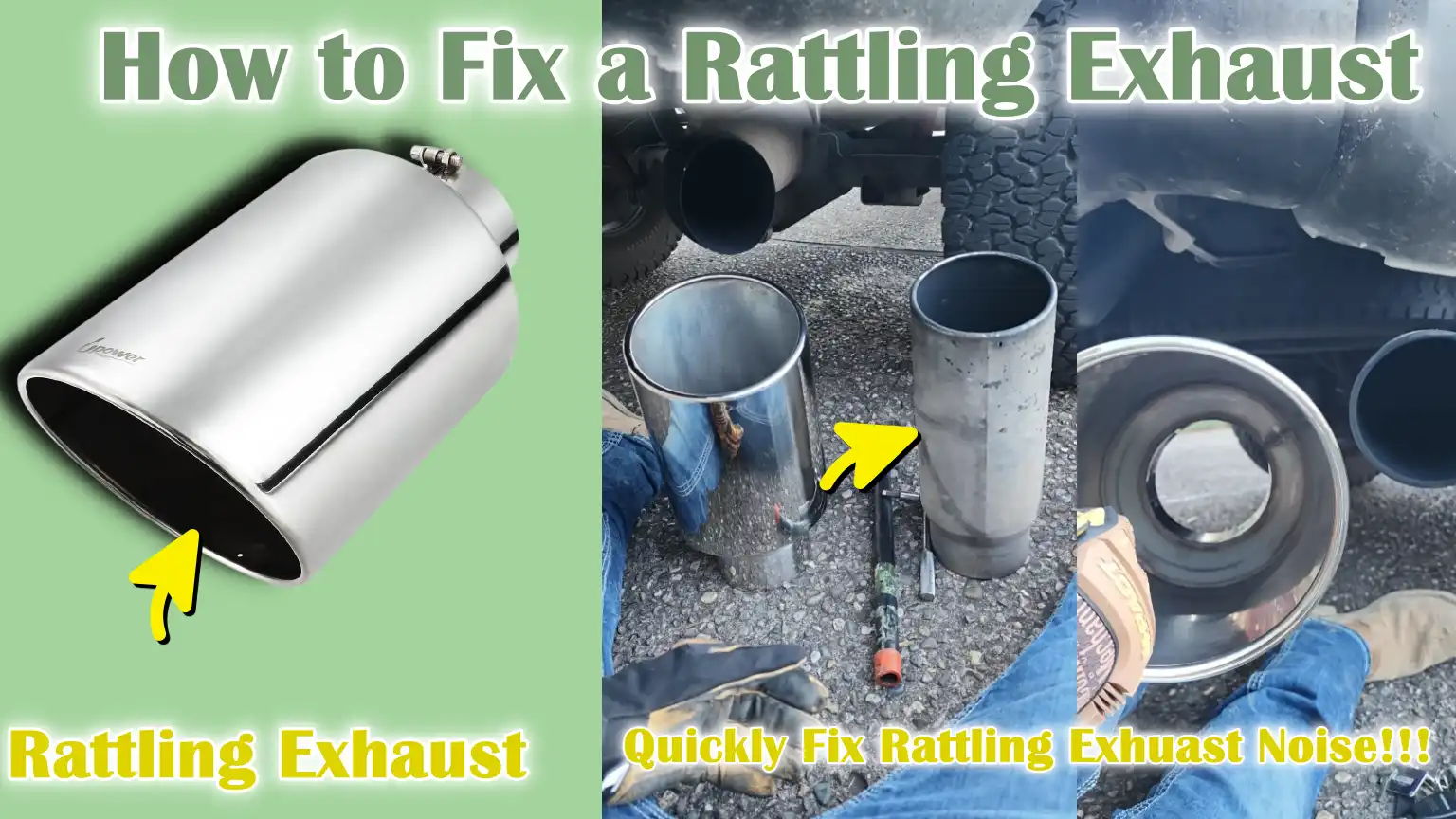
If there’s even small rattling sound from the exhaust then it is the clear warning sign and you need to diagnose it as that could possibly be an loose or damaged exhaust as well.
Because, usually it signals that something in the exhaust system is actually loose, completely worn out or damaged and because exhaust system plays a critical role that directs harmful gases away from the engine, reduces noise and improves overall vehicle performance, that’s why you don’t have to ignore this at all.
Yes, over the period of time there are factors such as: road vibrations, heat cycles, moistures and corrosion that literally weakens the components such as: heat shields, hangers, clamps and even internal parts of the muffler or catalytic converter as well.
Not only this, there’s studies and automotive maintenance data that shows that rust and loose fittings are among the leading causes of having exhaust-related issues, specially in the vehicles that are exposed to the rough roads or humid conditions as well.
This is why, we have come up with this guide on How to Fix a Rattling Exhaust, so that you can quickly identify the exact issue and repair without costing heavy.
Now, Let’s Understand About the Exhaust System?
The exhaust system is an essential component of any vehicle, responsible for safely expelling the harmful gases produced during the combustion of fuel within the engine.
As the engine runs, it generates gases such as carbon monoxide, carbon dioxide and nitrogen oxides, substances that must be kept away from both the engine itself and the vehicle’s occupants.
The exhaust system also helps to dampen engine noise and enhances vehicle performance by facilitating the smooth expulsion of gases from the engine.
It operates under conditions of extreme heat and constant vibration, meaning that its components naturally undergo wear and tear over time.
If any component becomes loose, damaged, or clogged, it can obstruct the flow of gases and generate unusual noises, such as rattling.
Understanding how each component functions, and the potential issues that may arise, enables you to identify problems early and address them before they become serious or costly.
1. Main Components of the Exhaust System
Exhaust Manifold
The exhaust manifold is the first component directly connected to the engine; its primary function is to collect exhaust gases from each of the engine’s cylinders and merge them into a single, uniform flow.
It is designed to withstand extremely high temperatures, as it handles gases immediately following the combustion process.
Over time, due to repeated expansion and contraction caused by heat, the manifold may develop hairline cracks or its joints may loosen.
When this occurs, it can produce ticking or rattling sounds; furthermore, if gases leak before reaching the rest of the exhaust system, it can negatively impact the engine’s overall efficiency.
Catalytic Converter
The catalytic converter is responsible for reducing harmful emissions by converting hazardous gases into less harmful ones through a chemical reaction.
Internally, it features a honeycomb-like structure coated with special metals that facilitate this process.
This internal structure is delicate and can break down due to aging, overheating, or physical impact.
When it breaks, the loose internal fragments can shift around, producing a distinct rattling sound, particularly when the vehicle accelerates.
A faulty catalytic converter can also diminish vehicle performance and increase pollution levels.
Muffler
The muffler is designed to dampen the loud noise emitted by the engine by regulating sound waves.
It utilizes a series of chambers and tubes to attenuate sound before it exits the exhaust system.
Over time, exposure to moisture and heat can cause corrosion inside the muffler, thereby weakening its internal structure.
When these internal components become loose, they can move freely within the unit, resulting in a rattling sound.
A defective muffler not only amplifies noise but can also obstruct the smooth flow of exhaust gases.
Exhaust Pipe
Exhaust pipes connect the various components of the system and channel gases from the engine toward the rear of the vehicle.
These pipes are constantly exposed to heat, road debris, water and dust, which increases their susceptibility to rust and physical damage.
If the pipes are loose, broken, or improperly secured, they may vibrate and strike against other components, generating a rattling sound.
Proper alignment and secure connections are essential for ensuring the vehicle operates smoothly and silently.
Heat Shields
Heat shields are thin metal covers installed around certain exhaust components to protect the vehicle from excessive heat.
They safeguard adjacent parts such as: wiring, fuel lines and the car body, from heat-related damage.
These shields are typically secured using small bolts or clips, which can loosen over time due to vibration and corrosion.
When a heat shield becomes loose, it often produces a faint, metallic rattling sound, this is one of the most common causes of rattling within the exhaust system.
2. Common Causes of Rattling
Loose Parts
One of the most common causes of rattling in an exhaust system is loose parts.
Due to the constant vibration experienced while driving, bolts, clamps and connections can gradually loosen on their own.
Even a slight gap between components can allow metal parts to shift and generate loud noises.
Tightening these parts often resolves the issue quickly and helps prevent further damage.
Rust and Corrosion
Rust and corrosion occur in the exhaust system because it is regularly exposed to moisture, heat and road salt.
Over time, this weakens the metal; components may become thin, crack, or break completely.
As the metal loses its structural integrity, it may begin to vibrate or come apart, resulting in a rattling sound.
Severe corrosion can also lead to the formation of holes, affecting both noise levels and the overall performance of the system.
Broken Hangers or Mounts
Hangers and mounts are used to securely hold the exhaust system in place beneath the vehicle.
These components are often constructed from a combination of rubber and metal to help absorb vibrations.
When these parts become worn, cracked, or broken, the exhaust system may hang lower than usual or move excessively.
This excessive movement can cause components to strike against one another or against the vehicle’s underbody, resulting in a rattling sound, particularly when driving on rough or uneven roads.
Internal Damage to the Muffler or Catalytic Converter
Internal damage occurs when the internal structure of the muffler or catalytic converter breaks down due to heat, aging, or physical impact.
These internal components are not visible from the outside; however, if they become dislodged, they can rattle around inside the unit.
This movement generates a distinct rattling sound that often intensifies when the engine is running or when the vehicle accelerates.
In most cases, repairing this type of damage requires replacing the damaged component.
Debris Trapped in the System
Debris such as: small stones, dirt, or road gravel, as it can sometimes become lodged inside or around the exhaust system.
As the vehicle moves, these objects may bounce around, creating strange rattling noises that can easily be mistaken for a mechanical malfunction.
Although this is typically a minor issue, it is essential to remove any trapped debris to restore normal operation and avoid confusion during the diagnostic process.
Know, Common Symptoms of a Rattling Exhaust?
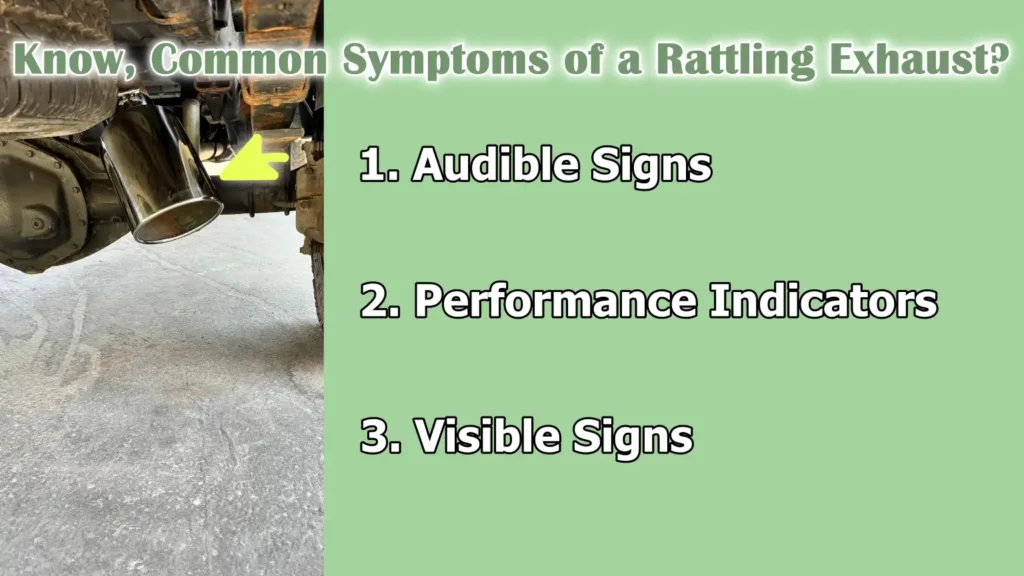
A rattling exhaust typically provides clear warning signs that something within the system has come loose, worn out, or deteriorated.
These symptoms can be heard, felt and even seen, provided you know what to look for.
The exhaust system operates under conditions of extreme heat and constant vibration; consequently, as components begin to degrade, changes often become clearly apparent during normal driving.
Paying close attention to these signs is crucial, as timely detection can prevent more serious damage, reduce repair costs and ensure that your vehicle continues to run without interruption.
Many drivers initially overlook minor noises; however, these early symptoms are often the easiest, and cheapest, to fix.
Understanding these warning signs allows you to take immediate action and maintain both the safety and performance of your vehicle.
1. Audible Signs
One of the most distinctive symptoms is a metallic rattling sound emanating from underneath the vehicle.
This noise is typically caused by loose metal components such as: heat shields, clamps, or internal parts within the muffler or catalytic converter.
The sound may initially manifest as a faint vibration, but as the underlying issue worsens, it can intensify over time.
You may also hear rattling noises during specific driving conditions, for instance, when the vehicle is accelerating or when the engine is idling.
During acceleration, the engine generates increased power and vibration, causing any loose components to rattle even more loudly.
In an idle state, when the vehicle is stationary but the engine is running, even small, loose components can generate a persistent rattling sound, as there is no road noise at that moment to drown out the noise.
2. Performance Indicators
A faulty or rattling exhaust system can compromise engine efficiency, as it obstructs the smooth flow of exhaust gases.
When gases cannot exit properly, the engine is forced to work harder, which negatively impacts the vehicle’s overall performance and responsiveness.
An increase in fuel consumption is another common indicator, as the engine may need to burn more fuel to compensate for the reduced efficiency caused by exhaust-related issues.
This means you may notice yourself refueling the vehicle more frequently than before, even if you haven’t made any changes to your driving habits.
Unusual vibrations may also be felt inside the vehicle, particularly through the floorboard or steering wheel.
These vibrations often occur when exhaust system components become loose or dislodged, causing them to vibrate excessively while the vehicle is in motion.
3. Visible Signs
A visual inspection can reveal clear signs of a problem, such as exhaust components hanging low or being out of place.
If any part of the exhaust system appears to be hanging lower than usual or is not seated correctly within its mounts, it could indicate a broken hanger or a loose connection, issues that require immediate attention.
You may also observe rust, holes, or cracks on the surface of the exhaust components.
Rusting is a very common occurrence, as the system is constantly exposed to moisture and heat; Over time, this can weaken the metal to such an extent that holes begin to form in it.
These damaged parts not only produce rattling noises but can also lead to exhaust leaks; for the sake of safety and optimal performance, they should be repaired as soon as possible.
Tools
| Item | Details |
|---|---|
| Wrench set | Used to tighten or loosen the nuts and bolts of the exhaust system. It helps stabilize loose components that cause rattling noises. Available in various sizes to suit different bolts. |
| Screwdrivers | Useful for removing screws or clips that secure heat shields and small components. Flat and star-type hangers are commonly used. Easy to handle and extremely practical for minor repair tasks. |
| Jack and jack stands | Used to safely lift the car, allowing you to inspect the underbody. The jack lifts the vehicle, while jack stands keep it stabilized. Essential for ensuring safe and easy access. |
| Exhaust clamps | Used to securely join exhaust pipes together. It prevents movement and reduces rattling noises. Easy to install and effective in securing loose joints. |
| Replacement rubber hangers | These support the exhaust system and hold it firmly in place. Over time, old hangers may break or wear out. New hangers minimize movement and keep components in their correct position. |
| Heat-resistant tape or sealant | Used to cover small holes or cracks in the exhaust system. It can withstand high temperatures without melting. Ideal for temporary repairs and preventing exhaust leaks. |
How to Always Be on a Safe Side
Working on a rattling exhaust may seem simple, but it involves genuine hazards because the exhaust system becomes extremely hot and the vehicle often needs to be raised off the ground.
After driving, the exhaust temperature can reach several hundred degrees; touching it too soon poses a risk of severe burns.
Furthermore, working underneath a vehicle without proper support can be dangerous should the vehicle shift or fall.
During routine vehicle repairs, many accidents occur not due to complex mechanical issues, but rather due to poor safety practices.
By observing a few simple precautions, you can avoid injury and make the entire repair process much easier and more organized.
Understanding and adhering to these basic safety principles ensures that you can inspect and repair the exhaust system with complete confidence and without taking any unnecessary risks.
1. Ensure the Vehicle is on a Level Surface
Before beginning any inspection or repair work, the vehicle should always be parked on a level and stable surface.
Level ground helps maintain the vehicle’s balance and prevents it from rolling or shifting while you are working underneath it.
If the vehicle is parked on an uneven or sloped surface, even the slightest movement can destabilize it, specially when it has been raised.
This simple step significantly reduces the risk of accidents and provides you with greater control throughout the entire repair process.
2. Allow the Exhaust to Cool Before Touching It
During normal vehicle operation, the exhaust system becomes extremely hot as it expels hot gases from the engine.
Touching it immediately after driving poses a significant risk of severe burns.
Before beginning any work, it is essential to wait at least 30 to 60 minutes to allow the system to cool down completely.
Even after cooling down, some parts may still feel hot; therefore, always check carefully before touching any component.
3. Use Jack Stands Instead of Relying Solely on the Jack
Car jacks are designed to lift a vehicle, but they are not intended to support it in a raised position for extended periods.
Hydraulic jacks can fail or lose pressure, causing the vehicle to drop suddenly.
Once the vehicle is lifted, jack stands provide sturdy and stable support, making it significantly safer to work underneath the car.
Using both a jack and jack stands in tandem is a standard safety practice followed by professionals.
4. Wear Essential Safety Gear
Wearing appropriate safety gear while working on the exhaust system helps prevent injuries.
Gloves protect your hands from sharp metal edges, dirt and residual heat, while also improving your grip on tools.
Safety goggles shield your eyes from dust, rust particles and debris that may fall while inspecting or repairing the underside of the vehicle.
These simple safety items make a significant difference in keeping you safe and comfortable during repairs.
How to Fix a Rattling Exhaust – Eliminate It Quickly
Fixing a rattling exhaust becomes much easier when you adopt a clear and systematic approach.
The exhaust system consists of several interconnected components; due to engine vibrations and the stresses of driving on the road, even a single loose part can generate a significant amount of noise.
Most rattling issues stem from simple causes such as: loose bolts, worn hangers, or minor internal damage, which can often be repaired without the need for specialized tools.
By carefully inspecting each component in turn, you can pinpoint the true root of the problem, rather than merely guessing, and avoid unnecessary repairs.
This process not only helps eliminate the noise but also improves your vehicle’s overall performance and safety.
By taking your time and diligently completing each step, you can ensure that the issue is resolved correctly and will not recur anytime soon.
1. Locate the Source of the Rattle
The first and most crucial step is to identify exactly where the rattling sound is originating.
Start the engine and listen carefully from a safe distance; observe where the sound is loudest, is it coming from the front, middle, or rear section of the vehicle?
Sound often travels through metal components, so try to focus on the specific area where the vibration feels most intense.
After turning off the engine and allowing the exhaust to cool down, use your hand or a soft tool to gently tap on various parts of the exhaust system.
If a component is loose, tapping on it will reproduce the same rattling sound, thereby helping you accurately identify the problematic part.
2. Check the Heat Shields
Heat shields are thin layers of metal installed around the hot components of the exhaust system to protect the vehicle from heat-related damage.
Rattling noises often originate from these shields, as they are held in place by small bolts; due to constant vibration, these bolts can loosen over time.
Carefully inspect every heat shield to detect any movement or gaps between the shield and the exhaust component.
If you discover a loose shield, properly tighten its bolts; alternatively, if the original fasteners are damaged, use clamps to securely fasten the shield in place.
Repairing loose heat shields is often the quickest and most effective method for eliminating rattling noises.
3. Check Exhaust Hangers and Mounts
The function of exhaust hangers and mounts is to securely hold the entire exhaust system, located beneath the vehicle, firmly in place.
Typically constructed from a combination of rubber and metal, these components maintain the proper positioning of the exhaust system while simultaneously absorbing vibrations.
Over time, rubber hangers can wear out, crack, or break, causing the exhaust pipe to sag or move more than usual.
This excessive movement results in rattling noises, particularly when driving on rough or uneven roads.
Carefully inspect each hanger and replace any that are damaged or stretched, as installing new hangers will stabilize the system and reduce unwanted noise.
4. Tighten Loose Components
Loose bolts, clamps and joints are common causes of rattling in the exhaust pipe, as the system is constantly subjected to vibration and thermal expansion.
Carefully inspect all visible connections within the exhaust system, including pipe joints and mounting points.
If any bolts or clamps appear loose, tighten them firmly using appropriate tools.
Securing all components firmly minimizes movement and prevents metal parts from striking against one another, a primary cause of rattling noises.
5. Check the Muffler and Catalytic Converter
The muffler and catalytic converter are large components that can sometimes sustain internal damage.
These parts contain internal structures designed to regulate sound and emissions; however, if these internal materials break down, they can move freely and generate rattling sounds.
Listen closely near these components to detect any deep or muffled rattling noises.
If internal damage is suspected, these parts typically cannot be easily repaired and may need to be replaced to fully resolve the issue.
6. Remove Debris
Occasionally, the cause of a rattle may be small particles such as: pebbles, dust, or road debris, that have become lodged inside or around the exhaust system.
As the car moves, these particles can bounce around, creating unusual noises that may sound like a mechanical malfunction.
Carefully inspect the area surrounding the exhaust pipe and heat shields to check for any trapped debris.
Removing these objects is a simple yet crucial step, as it can instantly eliminate the rattling sound without the need for any further repairs.
7. Repair Minor Leaks or Damage
Small holes, cracks, or weak spots in the exhaust system can also be a source of rattling and noise.
These minor defects often result from rust or prolonged use.
For minor issues, you can use a heat-resistant exhaust sealant or tape to temporarily seal the damaged section and reduce the noise.
While this is not a permanent solution, it can help keep the problem under control until proper repairs or replacements can be carried out.
Addressing minor defects in a timely manner can prevent them from escalating into larger and more costly problems later on.
Know, When to Replace Exhaust Parts
Knowing when to replace exhaust parts, rather than merely repairing them, is crucial for both safety and long-term cost savings.
The exhaust system operates under extreme heat and is constantly exposed to moisture, road debris and vibrations, causing the metal to gradually weaken over time.
While minor issues such as: loose bolts or superficial rust, as it can often be easily fixed, more severe damage can degrade engine performance, increase harmful emissions and even pose a safety risk if toxic gases begin to leak.
In many cases, delaying the replacement of parts can exacerbate the problem and lead to higher repair costs down the road.
Recognizing clear signs of damage and assessing the overall condition of the exhaust system helps you make a more informed decision regarding whether to repair or replace a specific component.
1. Signs That Parts Need Replacement
Severe rust or corrosion is the primary indicator that a specific component needs to be replaced rather than repaired.
When the metal becomes heavily degraded, it loses its structural integrity and becomes prone to failure, making it unsafe to continue using the part.
While superficial rust may not be a major cause for concern, deep-seated corrosion, which causes the metal to flake or become dangerously thin, typically signifies that the component has reached the end of its useful life.
Large holes or cracks in the exhaust system are another clear sign that parts require replacement.
These openings allow exhaust gases to escape before being properly filtered, which can reduce engine efficiency and increase harmful emissions.
Extensive damage cannot be fully remedied through temporary measures; furthermore, due to the extreme heat and pressure involved, the condition often deteriorates further over time.
Internal structural failure, particularly in components such as mufflers or catalytic converters, is another major factor necessitating part replacement.
When the internal structure breaks down, it cannot be repaired externally; instead, it leads to persistent rattling, diminished performance and obstructions in the exhaust flow.
In such instances, replacing the entire component remains the only reliable solution.
2. Cost Considerations
When deciding between repairing and replacing a component, it is crucial to compare the short-term versus long-term costs.
Minor repairs are typically inexpensive initially; however, if the component is already worn out or compromised, the cumulative cost of repeated repairs can escalate rapidly, potentially even exceeding the cost of replacing the entire unit at once.
While replacing a part may seem expensive upfront, it often proves to be more economical in the long run, as new components offer greater durability and enhance the vehicle’s overall operational efficiency.
A properly functioning exhaust system helps maintain good fuel economy, reduces strain on the engine and prevents damage to other vehicle components.
It is essential to consider these long-term benefits, as a robust and well-maintained exhaust system significantly reduces the likelihood of sudden breakdowns and costly emergency repairs.
Investing in a timely replacement of the exhaust system ensures consistent long-term performance, enhanced safety and a quieter driving experience.
How to Prevent and Maintain Exhaust System
Preventive maintenance is the best way to avoid a rattling exhaust and ensure that your vehicle runs smoothly for the long term.
The exhaust system is constantly exposed to heat, water, dirt and road vibrations, causing its components to gradually wear down over time.
By taking simple and regular care steps, you can minimize damage, improve performance and avoid costly repair work.
Many exhaust problems start small and escalate over time; therefore, fixing them early on can save both money and effort.
A well-maintained exhaust system also helps keep your car fuel-efficient and quiet and, by controlling harmful emissions, makes it safer for the environment as well.
Understanding and following basic maintenance habits makes a significant difference in keeping the entire system robust and reliable.
Plus, there’s studies that shows that mufflers actually plays a key role that reduces the engine noise and improves sound quality, so this also shows that mufflers designs actually affects fuel efficiency, emissions and overall engine performance as well, as the research also confirms that exhaust systems are carefully engineered to balance that noise reduction and airflow thing and if there’s any damage or modification happens then it can disturb this balance quiet badly, so that could be the result in unusual sounds such as: rattling or vibration noise as well.[¹]
1. Regular Inspections
Regular inspections of the exhaust system allow you to detect minor issues before they develop into serious problems.
Periodically checking the car’s undercarriage enables you to identify components that have become loose, are hanging down, or are showing early signs of damage.
Even a quick visual check can help you spot issues such as worn hangers or slight alignment irregularities.
Paying attention to unusual noises while driving is another simple yet effective strategy.
A healthy exhaust system should operate quietly; therefore, any new rattling, vibration, or buzzing sound could be an indication of an emerging problem.
Heeding these sounds allows you to take immediate action and prevent further damage.
2. Rust Prevention
Corrosion is one of the primary causes of exhaust system failure and it is primarily caused by moisture, road salts and the accumulation of dirt.
Regularly washing the undercarriage of your car helps remove these harmful elements and slows down the rusting process.
This is particularly important to do after driving on muddy or wet roads.
Driving habits also play a significant role in preventing rust.
Frequent short trips can lead to moisture accumulation inside the exhaust system, as it does not get hot enough to dry out completely.
Occasionally taking longer trips helps this moisture evaporate.
Whenever possible, avoiding deep water and salt-treated roads also reduces the risk of corrosion.
3. Timely Repairs
Addressing minor issues immediately is one of the most effective ways to prevent major problems with the exhaust system.
A loose clamp, a slightly worn hanger, or a small crack may seem insignificant at first; however, if these minor issues are ignored, they can quickly escalate into problems requiring extensive and costly repairs.
Timely repairs maintain the structural integrity of the exhaust system and prevent undue stress on other components.
Fixing problems as soon as they arise not only extends the lifespan of the system but also ensures a quieter, safer and more efficient driving experience over time.
Know, Common Mistakes So That You Can Avoid That During Fixing Rattling Exhaust Noise
Fixing a rattling exhaust may seem simple, but many people make mistakes that can lead to major problems, increased costs and even safety hazards.
The exhaust system operates under conditions of extreme heat and constant vibration; therefore, even minor errors made during inspection or repair can rapidly worsen the situation.
Many minor issues, if not handled correctly or if ignored for too long, as it can escalate into serious damage.
Understanding these common mistakes helps you take the right approach, keep your vehicle safe and ensure that the repair work is executed properly.
Avoiding these errors not only saves money but also ensures that your car remains safe, efficient and quiet over time.
1. Ignoring Early Warning Signs
One of the most common mistakes is ignoring minor rattles or unusual vibrations right from the start.
These early signs often point to loose components, minor wear and tear, or slight malfunctions that can be easily rectified.
If left unaddressed, these minor issues can evolve into major problems such as: broken parts, exhaust leaks, or the complete failure of a component.
Taking timely action can prevent more severe damage and significantly reduce repair costs.
2. Using the Wrong Tools
Using incorrect tools can damage exhaust components and make the repair process even more difficult.
The exhaust system utilizes specific types of bolts, clamps and fittings, which require tools of the exact size and type to be installed correctly.
Using the wrong tools can damage bolts, cause connections to loosen, or prevent parts from fitting together properly.
This not only allows the rattling to persist but can also create new problems that did not exist previously.
3. Applying Temporary Fixes for Major Issues
Another common mistake is relying on temporary measures to repair serious damage.
While solutions like tape or sealants may be helpful for small cracks or minor leaks, they are completely unsuitable for large holes, severe corrosion, or internal damage.
In such situations, using temporary fixes merely postpones the problem and could even lead to a sudden mechanical failure while driving.
For major issues, proper repairs or part replacement always remain the best and safest options.
4. Neglecting Safety Precautions
Ignoring safety measures while working on the exhaust system can lead to serious injuries.
The exhaust system can remain extremely hot even after the engine has been turned off and working underneath the vehicle without proper support can be dangerous.
Failing to use protective gear or stable supports increases the risk of burns, falls and other accidents.
Adhering to basic safety precautions ensures that the repair process is not only effective but also safe for you.
When You Should Go for Mechanic
While many issues related to the exhaust system can be resolved at home, there are certain situations where seeking professional assistance becomes essential to ensure proper repairs and safety.
As the exhaust system is directly linked to engine performance and emissions control, improper repairs can compromise engine efficiency, increase fuel consumption and elevate pollution levels.
Modern vehicles feature more complex exhaust systems, equipped with sensors and precision-fitted components, that require specialized tools and technical expertise to handle correctly.
Attempting to fix complex problems without the appropriate experience can sometimes exacerbate the issue or result in additional damage.
Knowing when to stop a DIY (Do-It-Yourself) attempt and instead seek expert assistance saves time, reduces long-term costs and ensures that the vehicle remains safe and reliable.
1. Complex Internal Damage
Some problems within the exhaust system occur inside components such as the muffler or catalytic converter, where internal parts may break, collapse, or become clogged.
These internal structures are not easily visible and cannot be repaired from the outside.
Such damage often manifests as persistent rattling noises, a decline in engine performance and restricted exhaust flow.
Professional mechanics possess the necessary tools and experience to accurately diagnose these issues and replace defective components when required, thereby restoring the system to proper working order.
2. Lack of Tools or Experience
Working on an exhaust system sometimes requires specialized tools, appropriate vehicle lifting equipment and practical knowledge regarding the system’s construction.
Without the right tools, it can be difficult to properly install parts or safely access components located underneath the vehicle.
A lack of experience can lead to improper part installation, loose connections, or a failure to detect underlying internal issues.
In such cases, seeking professional assistance ensures that the repair work is executed correctly, thereby minimizing the likelihood of recurring problems or further damage.
3. Persistent Rattling Even After DIY Repairs
If a rattling sound persists even after attempting basic repairs, it typically indicates that the true root cause of the problem has not been correctly identified, or that a more serious underlying issue exists.
Persistent noises can be a sign of hidden damage, internal malfunctions, or multiple loose components, issues that cannot be easily detected without a thorough inspection.
Professional technicians can conduct a comprehensive assessment, pinpoint the actual source of the problem and provide a reliable solution.
Resolving the issue at this stage prevents further wear and tear, helping to restore the vehicle to a quiet and efficient operating condition.
Read More:
- How to Fix Steering Fluid Leak
- How to Fix a Stiff Steering Wheel
- How to Clean Car Steering Wheel
- How to Check Steering Rack Play
- How to Replace a Steering Rack Boot
- How to Repair a Power Steering Hose Leak
- How to Bleed Power Steering Fluid
- How to Replace Power Steering Pump
- How to Change a Car Steering Wheel
- How to Check Power Steering Fluid
Conclusion – How to Fix a Rattling Exhaust
Literally, quiet exhaust system enhances comfort and also reflects a well-maintained and efficient vehicle as well.
The exhaust system plays a crucial role in channeling harmful gases away from the engine, reducing noise and helping the engine operate efficiently.
When a rattling sound occurs, it often serves as an early warning that something has come loose, worn out, or deteriorated.
Addressing this issue in a timely manner can prevent more serious problems such as: exhaust leaks, reduced fuel economy and costly repairs, from developing.
The most common causes such as: loose heat shields, worn hangers, or minor corrosion, as it can often be remedied with simple tools and a careful inspection, making this a manageable task for many vehicle owners.
At the same time, recognizing your limitations is equally important, as complex internal damage or recurring issues may require professional assistance.
Regular maintenance, timely detection and proper repair techniques are the keys to keeping your exhaust system in good condition.
By adopting a proactive approach, you not only ensure a quieter driving experience but also extend your vehicle’s lifespan and enhance its overall functionality.
Now, that’s it from this guide and if you still have confusion: just comment that damn question below for more info.
Frequently Asked Questions
Q1. Why does the exhaust make a rattling sound?
Answer: A rattling sound from the exhaust is typically caused by loose or deteriorated components within the exhaust system. Common causes include loose heat shields, worn-out rubber hangers, rusted pipes, or broken internal parts within the muffler or catalytic converter. Over time, constant exposure to heat, vibration and moisture causes these components to weaken. Occasionally, a small object such as: a stone can get lodged inside the system and generate a rattling noise. Identifying the root cause of the problem early on can help prevent larger, more expensive issues in the future.
Q2. Is it safe to drive with a rattling exhaust?
Answer: In many cases, you can drive with a rattling exhaust for a short period; however, ignoring this issue for an extended time is not advisable. This noise often signals an underlying problem that could worsen such as: a loose component breaking off or an exhaust leak developing. If an exhaust leak occurs, harmful gases may escape without being properly filtered, posing a risk to both your health and the environment. It is best to have the issue inspected and repaired as soon as possible.
Q3. How can I determine where the rattling sound is coming from?
Answer: To pinpoint the source of the rattling sound, first start the engine, listen carefully and observe where the noise seems to be loudest. Turn off the engine and allow it to cool down; then, get underneath the vehicle and gently tap on the various components of the exhaust system. Tapping on a loose component will often reproduce the same rattling sound. You can also look out for visible signs such as dangling parts, rust, or loose bolts. Taking a little time to thoroughly inspect the system helps you accurately pinpoint the true source of the problem.
Q4. Can I fix a rattling exhaust myself?
Answer: Yes, many exhaust-related rattling issues can be fixed at home using some basic tools and simple methods. Tightening loose bolts, replacing worn-out hangers, or properly securing a heat shield, as these are some common remedies that do not require any specialized skills. However, if the problem lies inside the muffler or catalytic converter, or if there is a major structural defect, it is best to seek professional assistance. It is important to recognize your limitations to avoid exacerbating the problem further.
Q5. How much does it cost to fix a rattling exhaust?
Answer: The cost depends on the root cause of the problem. Minor repairs, such as tightening components or replacing hangers, are typically not very expensive. However, if you need to replace major components like the muffler or catalytic converter, the cost can be significantly higher. Generally, fixing the problem early on is far cheaper than waiting until major damage occurs. Regular maintenance can also help reduce repair costs in the long run.
Q6. Can a rattling exhaust affect fuel efficiency?
Answer: Yes, a faulty or malfunctioning exhaust system can negatively impact fuel efficiency. When exhaust gases cannot exit properly, the engine is forced to work harder, which can lead to increased fuel consumption. Repairing a rattling exhaust system restores proper exhaust flow and improves engine performance. This means your car will run more smoothly and utilize fuel more efficiently.
Q7. What is the most common cause of an exhaust rattle?
Answer: The most common cause of an exhaust rattle is a loose or damaged heat shield. Due to vibrations and corrosion, these thin metal sheets can easily come loose. Worn-out rubber hangers are another common culprit; over time, they can crack or stretch, causing the exhaust system to move excessively. Both of these issues are typically easy to fix and are often the first things checked during an inspection.
Q8. How long does it take to fix a rattling exhaust?
Answer: The time required depends on the nature of the problem. Minor tasks such as: tightening bolts or replacing hangers, as it can be completed in less than an hour. More complex repairs such as: replacing major components, as it may take several hours. If you are performing the work yourself, it is crucial to set aside a little extra time to thoroughly inspect everything, ensuring that the issue has been completely resolved.
Q9. Can rust cause an exhaust to rattle?
Answer: Yes, rust is a major contributor to exhaust-related problems, including rattling. Over time, exposure to moisture and heat causes metal components to deteriorate and weaken. This can cause parts to loosen, develop holes, or even break, resulting in rattling noises. Regular cleaning and inspection can slow down the rusting process and help keep the exhaust system in good condition.
References:
[1] Noise Quality and Muffler Design of A Formula SAE Racecar
http://researchgate.net/publication/350148884_Noise_Quality_and_Muffler_Design_of_A_Formula_SAE_Racecar

Guys, I’m a car audio enthusiast and customization expert and I love clear sound and clean installation. Plus, I have spent years helping people build their dream audio setups. And whenever I’m working on cars, I probably listen to music and thinks about the next big upgrade.