
Written By: Don Dodi
Fact Checked By: Kristen Brown
Reviewed By: Diego Rosenberg
With this guide, you’ll know that most of the time car water leaks actually comes from simple issues that can be easily fixed with some clear instructions.
But, there’s no doubt about the seriousness of this issue as that can quietly damage your vehicle over the time.
Also, modern cars are now designed with multiple drainage systems, rubber seals and protective layers that keeps the water completely out of sight, but if there’s even a minor blockage or worn out seal then it can literally allows the water to enter and spread beneath carpets and inside the panels as well.
Plus, there’s even studies that shows that trapped moisture can lead to the mold growth within 24 to 48 hours, that even causes unpleasant odors and even affects the air quality inside the cabin.
Along with this, to make this situation worse the water exposure literally able to damage the electrical wiring, sensors and control modules, which often located under the seats or within the floor area of the vehicle.
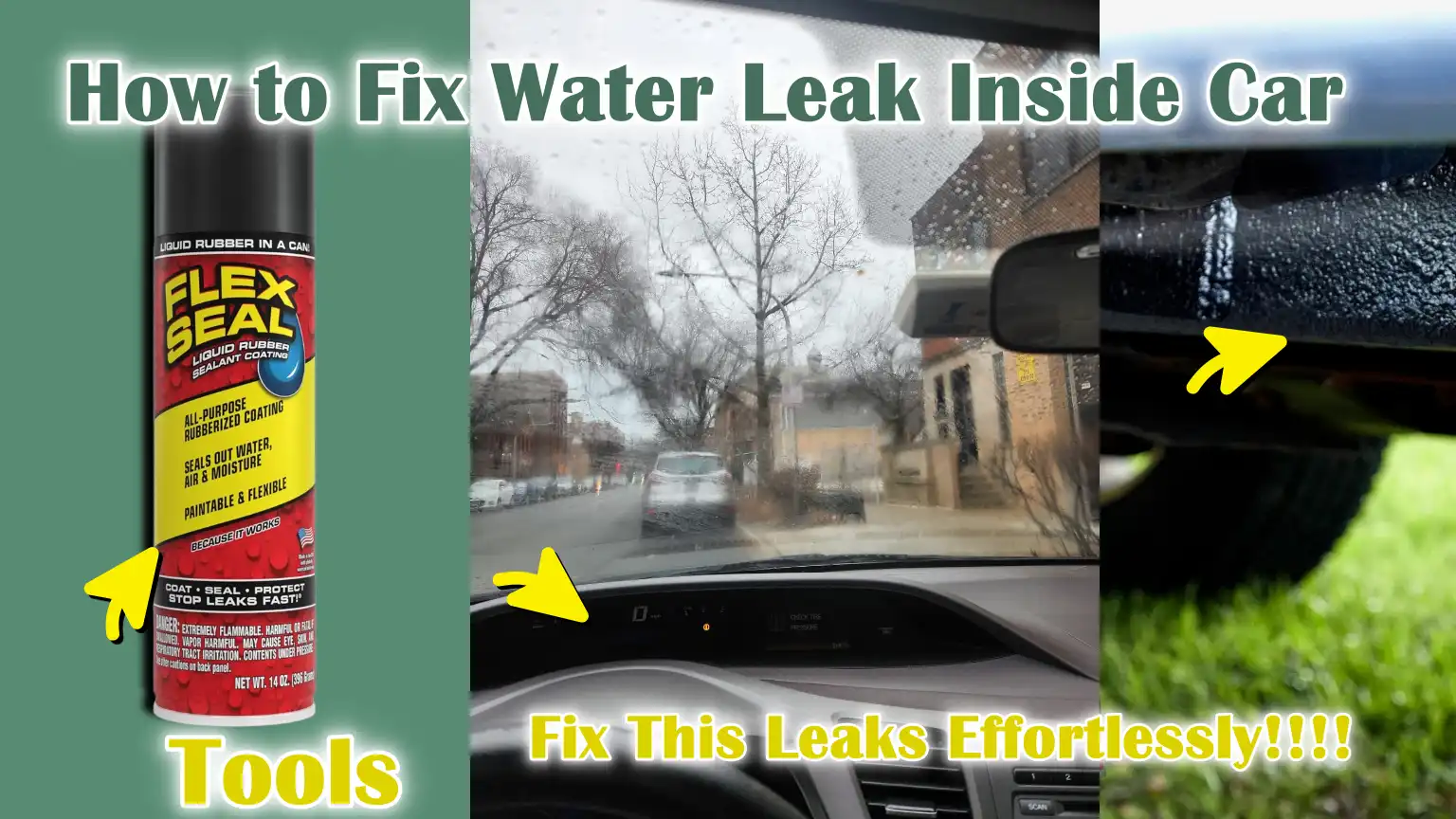
But, in this guide you’ll learn How to Fix Water Leak Inside Car so that you can identify and fix with simple inspection and with the use of basic available tools.
Now, Let’s Understand About The Water Leaks in Cars
Water intrusion into a car’s interior is a common problem, yet it is often misunderstood.
If not correctly identified and rectified, it can cause serious and long-lasting damage to the vehicle.
Modern cars are designed with sealed cabins; they feature drainage channels to expel water and protective barriers to prevent moisture from entering.
However, over time, due to accumulated dirt, aging components, or a lack of proper maintenance, these systems can fail.
When water enters a car, it is not always immediately visible; it often seeps beneath the carpeting, into the insulation and behind interior panels, where it continues to spread gradually.
This hidden moisture can remain trapped inside for days or weeks, creating the perfect environment for damage to occur, and often, the driver remains completely unaware of it until much later.
It is crucial to understand exactly what constitutes a water leak and why it is harmful; by being informed, you can take immediate action, avoid costly repairs and keep your car safe, clean and comfortable.
1. What Is a Water Leak in a Car’s Interior?
A water leak in a car’s interior occurs when rainwater, condensation, or external moisture inadvertently enters the vehicle’s cabin, specifically in areas where it is not supposed to be.
This water typically enters through vulnerable points where rubber seals have worn out, drainage channels have become clogged, or components such as the windshield or doors have not been properly sealed.
It is important to distinguish between water leaks in a car and leaks involving other types of fluids.
For instance, a coolant leak originates from the engine’s cooling system; it often has a distinct color, a slightly viscous texture and may emit a sweet odor.
In contrast, a leak from the air conditioning (AC) system is typically just condensation, that is, the moisture that the AC unit naturally expels.
This is considered normal, provided that the drain tube is not clogged and the water does not begin to seep into the car’s interior.
Conversely, an actual water leak is usually clear and odorless and it often manifests after rain, a car wash, or during periods of high humidity.
Understanding this distinction helps you avoid confusion and ensures that you address the actual problem rather than attempting to fix an issue that does not exist.
2. Why is a Water Leak Dangerous?
Water intrusion into a car’s interior is dangerous because it can damage multiple components of the vehicle simultaneously, often in ways that are not immediately apparent.
When water seeps into the carpeting, seats and floor insulation, it degrades these materials, causes staining and creates a persistent, foul odor that is extremely difficult to eliminate.
Over time, excessive moisture can accumulate within the padding beneath the carpet, gradually leading to rust formation on the car’s metal floor (floor pan) and compromising its structural integrity.
One of the most serious risks involves the electrical system, as many modern vehicles feature wiring harnesses, sensors and electronic control units located beneath the seats or along the floorboards.
Exposure to even a small amount of moisture can trigger short circuits, cause sensor malfunctions, or illuminate warning lights on the dashboard.
Beyond physical damage, trapped moisture creates an ideal breeding ground for mold and bacteria, which often begin to multiply rapidly within just a day or two.
This not only results in an unpleasant odor but can also degrade the air quality inside the car, potentially causing respiratory difficulties, particularly for those with allergies.
Given these risks, even minor water leaks should never be overlooked; addressing them as quickly as possible is the most effective way to avoid serious and costly problems in the future.
Know, Common Causes of Water Leaks Inside a Car
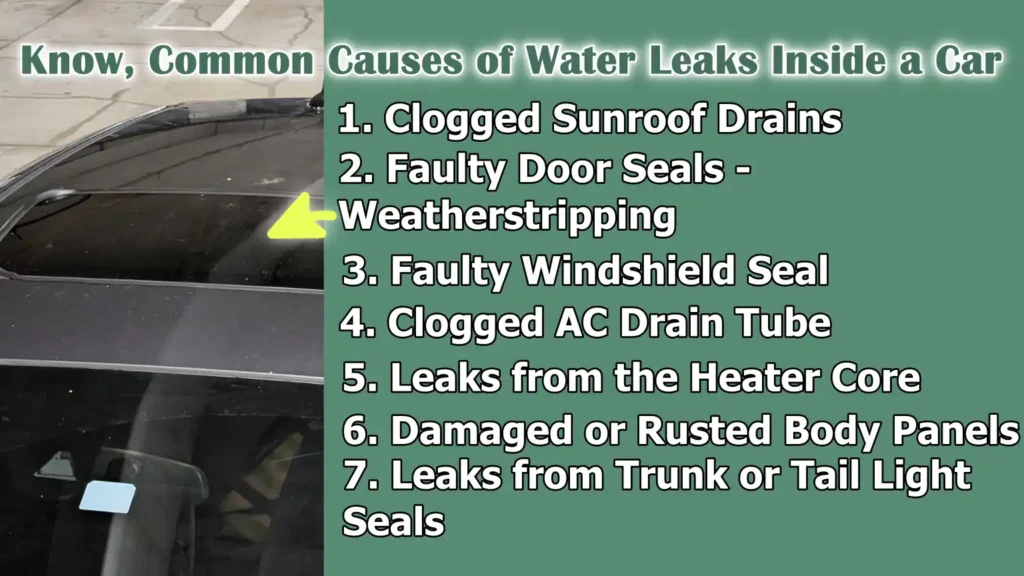
Water can enter a car from various sources and in most cases, this issue stems from minor faults in components designed to keep water out or drain it safely.
Modern vehicles are constructed with intricate drainage systems, rubber seals and tightly fitted panels; however, over time, dirt, dust, weather conditions and aging materials can compromise their effectiveness.
When these systems cease to function correctly, water is no longer kept at bay; instead, it finds the path of least resistance into the vehicle’s interior, often spreading to hidden areas such as beneath the carpeting or inside the body panels.
Understanding the most common causes of water leaks helps you quickly identify the root of the problem and take the appropriate steps to rectify it before any significant damage occurs.
1. Clogged Sunroof Drains
Cars equipped with sunroofs feature internal drainage channels that collect rainwater and channel it downward, typically through small tubes, to exit the vehicle, usually near the lower edges of the doors.
This system operates effectively as long as it remains clear; however, over time, the accumulation of dust, leaves and debris can clog these narrow drain tubes.
When the drains become blocked, water cannot exit as intended; instead, it pools within the roof structure and begins to overflow.
This trapped water then seeps along the headliner, potentially dripping onto the seats, pillars, or floorboards.
As these blockages are often hidden, many drivers remain unaware of the issue until water-related damage becomes visibly apparent; therefore, regular cleaning of these drains is essential.
2. Faulty Door Seals – Weatherstripping
Rubber seals, also known as weatherstripping, are installed around car doors to create a robust barrier that prevents water, wind and noise from entering the cabin.
These seals are constantly exposed to sunlight, heat, rain and dust, causing them to dry out, crack, or lose their shape over time.
When the seals do not fit properly, tiny gaps form between the door and the car body, allowing rainwater to seep in, particularly during heavy rain or while washing the car.
Common symptoms of faulty seals include visible cracks, flattened rubber, or water stains along the door edges.
Even a small gap can allow a significant amount of water to enter; therefore, the condition of the seals plays a crucial role in preventing leaks.
3. Faulty Windshield Seal
The windshield is attached to the car using a strong adhesive seal, which holds it firmly in place and prevents water intrusion.
If the windshield was not installed correctly, or if the adhesive has deteriorated due to age, temperature fluctuations, or vibrations, small gaps may form along the edges.
Water can then slowly seep through these gaps, making its way behind the dashboard or into the front floor area.
Such leaks are often difficult to detect, as the water may flow along interior surfaces before becoming visible.
Over time, this can damage wiring, insulation and internal components; therefore, a properly sealed windshield is essential for keeping the car dry.
4. Clogged AC Drain Tube
When you use the air conditioning system, it automatically extracts moisture from the air inside the car, resulting in condensation.
This water should drain out of the vehicle through a small tube known as the AC drain tube.
However, this tube can become clogged due to an accumulation of dirt, dust, or mold.
When this occurs, the water has nowhere to go and begins to pool inside the HVAC system, eventually seeping onto the floor, typically on the passenger side.
A common indicator of this issue is wet carpeting inside the car, even in the absence of rain.
If detected early, this represents one of the most common, and easily remediable, causes of water intrusion into a vehicle’s interior.
5. Leaks from the Heater Core
The heater core is a small, radiator-like component located inside the dashboard that utilizes hot coolant from the engine to circulate warm air throughout the car’s interior.
If the heater core develops a leak, it releases coolant, rather than plain water, into the cabin.
This differs from a standard water leak, as coolant typically possesses a distinct, sweet odor and may leave behind a slightly sticky or colored residue.
Other common symptoms include window fogging (particularly when the heater is active) and a noticeable drop in the engine’s coolant level.
A leaking heater core constitutes a more serious issue than a simple water leak and typically requires immediate attention to prevent further damage.
6. Damaged or Rusted Body Panels
Over time, exposure to moisture, road salt and the surrounding environment can cause rust to form on certain parts of a car’s metal body.
If this rust becomes severe, it can lead to the formation of small holes or cracks in the car’s floorboards, wheel wells, or other body panels.
These openings allow road water or rainwater to seep directly into the vehicle’s interior.
Unlike other types of leaks, this issue is structural in nature; if left unaddressed, it will inevitably worsen over time.
Water entering through rusted areas can spread rapidly beneath the carpeting, potentially causing corrosion within the interior components; therefore, it is crucial to identify and repair this problem as soon as possible.
7. Leaks from Trunk or Tail Light Seals
The car’s trunk area is also protected by rubber seals and gaskets, particularly around the trunk lid and tail lights.
If these seals become worn, loose, or damaged, water can enter the trunk during rainfall or while washing the vehicle.
Complaints regarding water leaks from tail light assemblies are common, as these units are attached to the car’s body via gaskets that can deteriorate over time.
When water enters the trunk, it often pools in the spare tire well, where it may go unnoticed for extended periods.
This accumulated water can lead to rust formation, foul odors and damage to items stored in the trunk; therefore, it is essential to regularly inspect the trunk seals and ensure they are in good condition.
What are the Signs of Water Leaks Inside the Car
The problem of water leaking inside a car is often subtle and hidden; however, if you know what to look for, clear signs will begin to emerge.
These signs may develop gradually and are sometimes overlooked because, initially, they do not appear serious.
Nevertheless, even a small amount of trapped moisture can spread beneath the carpeting, inside seat foam and behind interior panels, areas where moisture can persist for long periods without drying properly.
This hidden moisture can damage various parts of the car, including the upholstery, metal components and electrical systems.
By recognizing the early warning signs of a water leak, you can detect the problem promptly, take corrective measures before the situation worsens and avoid expensive repair bills.
By paying regular attention to these signs, you can keep your car clean, dry and safe.
1. Visible Water or Wet Carpets
One of the clearest signs of a water leak is the presence of visible water or a sensation of dampness inside the car, particularly on the floor carpeting or mats.
This can occur after rain, after washing the car, or even after prolonged use of the air conditioning (AC) system.
In many cases, the upper surface of the carpet may feel only slightly damp, yet the padding underneath can absorb a significant amount of water, much like a sponge.
This trapped moisture can persist for several days, as it often does not receive sufficient airflow to dry out completely.
If left unaddressed, this moisture can begin to damage the carpet fibers, degrade the floor insulation and even cause rust to form on the metal floor beneath.
By regularly checking sections of the floor by hand, and gently applying pressure to the carpet, you can immediately detect any hidden moisture.
2. Musty or Moldy Odors
A strong, musty, or mold-like odor inside the car is a clear indication that moisture has been present for some time.
When water gets trapped in the carpeting, seats, or insulation, it creates a damp environment where mold and bacteria can thrive rapidly, often within just one to two days.
This odor is usually most noticeable when you first open the car door, or after the vehicle has remained parked and closed for several hours.
Mold growth not only looks unsightly but can also degrade the air quality inside the car and cause respiratory issues, particularly for those with dust allergies or sensitivities.
If this foul odor is present, it is crucial to identify and rectify the source of the moisture rather than merely attempting to mask the smell.
3. Foggy Windows – Interior
Windows that appear foggy on the inside, specially when the weather is not particularly cold, may indicate that moisture levels inside the car have risen.
When water becomes trapped inside, it increases the humidity level in the air.
This moisture then condenses on the cold glass surfaces, creating a fog that is often difficult to clear quickly.
If you notice that your windows fog up frequently, even in the absence of heavy rain or significant temperature fluctuations, it may be a sign that water is accumulating somewhere inside the vehicle.
This is not only inconvenient but can also obstruct visibility while driving, thereby becoming a serious safety concern.
4. Electrical Malfunctions
In modern vehicles, numerous electrical components are situated beneath the seats, along the floorboards and behind interior panels.
When water infiltrates these areas, it can damage the wiring, connectors and electronic control units.
This can trigger sudden electrical issues, such as warning lights illuminating on the dashboard, power windows failing to operate correctly, malfunctions in the central locking system, or problems with seat controls.
In some instances, water intrusion can lead to short circuits, causing permanent damage to sensitive electronic components.
Repairing these issues can be costly; therefore, paying close attention to early signs of moisture and electrical irregularities can help you avoid significant damage.
5. Water Stains on Upholstery or Headliners
Water stains are another clear indication of a leak inside the car.
These stains may appear on the seats, carpets, door panels, or headliner, depending on the point of water entry.
For example, stains on the headliner or pillars often signal an issue with the sunroof or windshield seals, while stains near the floorboards may indicate leaks originating from the doors or the AC system.
These marks typically manifest as discolored patches or dried water rings and they may darken over time if the leak persists.
Even if the surface feels dry to the touch, the presence of these stains confirms that water was present in that area, suggesting that water may still be infiltrating the vehicle’s interior.
Regularly inspecting for such marks can make it easier for you to identify the source of the leak.
Tools
| Tool / Material | Why These are Needed |
|---|---|
| Flashlight | A flashlight helps you inspect the dark and hidden areas inside the car where water may have accumulated. It is useful for checking underneath seats, inside corners and behind panels. Its bright beam makes it easy to quickly identify leaks and damp spots. |
| Dry Towels or Microfiber Cloths | These are used to absorb water from carpets, seats and floor sections. Microfiber cloths are highly effective, as they absorb significantly more water than ordinary cloths. After fixing a leak, they also assist in cleaning and drying the affected surfaces. |
| Silicone Sealant | Silicone sealant is used to seal small cracks and holes through which water enters the car. It creates a waterproof barrier that prevents moisture from seeping in. It is easy to apply and works exceptionally well around windows, doors and joints. |
| Replacement Weatherstrips | Weatherstrips are rubber seals installed around doors and windows to prevent water and air from entering the car. If the existing seals are cracked or have become loose, replacing them restores the vehicle’s protective integrity. New seals improve both water resistance and the overall comfort of the car’s interior. |
| Compressed Air or Flexible Wire | These tools are used to unclog blocked drain tubes, particularly those associated with the sunroof or AC system. Compressed air flushes out dirt and debris, while a flexible wire can be used to gently dislodge blockages. Keeping the drains clear ensures that water drains out properly rather than leaking into the car’s interior. |
| Water Hose – for Testing Leaks | A water hose helps you pinpoint the exact location of a leak, as it allows you to direct water onto specific areas of the car. In this controlled manner, it becomes easy to pinpoint the exact location from which water is entering the car. This is a simple and effective way to confirm whether or not the problem has been resolved. |
How to Identify the Source of a Leak
Locating the exact source of a water leak inside a car is the most crucial step to take before commencing any repair work.
Water does not always enter at a single specific point and remain localized there; it can flow along surfaces, travel through hidden channels and pool in an area quite distant from its actual entry point.
This can make detecting the leak somewhat challenging; however, with a systematic approach, the precise source can be accurately identified.
Most leaks originate from common areas, such as door seals, sunroof drains, windshields, or clogged drainage systems.
By carefully inspecting both the exterior and interior of the vehicle, you can trace the path of the water and pinpoint the exact location where it is entering.
Taking the time to accurately identify the leak prevents unnecessary repairs and ensures that the problem is resolved completely, rather than merely being addressed with a temporary fix.
1. Visual Inspection Method
When beginning the process of detecting a water leak, a visual inspection is the first, and simplest, method to employ.
This involves carefully examining the areas where water is most likely to enter and checking for any visible signs of damage or moisture.
Start by inspecting the rubber seals surrounding the doors and windows; check to see if they are torn, loose, or flattened, as even tiny cracks can allow water to seep through.
Next, check the carpets and floor mats for moisture; apply gentle pressure to them to determine if there is any hidden dampness underneath.
It is also crucial to inspect the headliner (the fabric lining the roof), particularly around the edges and near the sunroof (if your vehicle is equipped with one), as water entering from above often leaves marks or stains in these areas.
Discoloration, water spots, or sagging fabric can be indicators that water is seeping in from the roof.
This method is simple, yet highly effective in providing initial clues regarding the source of a leak.
2. Water Hose Inspection Technique
The water hose inspection technique is a more controlled and precise method for detecting leaks, specially when the source of the leak is not immediately apparent.
In this method, water is applied gradually to specific sections of the car while a second person checks the interior for signs of leakage.
Rather than spraying water over the entire car at once, it is essential to test individual sections such as: the windshield, doors, roof, or trunk, one at a time.
This controlled approach helps you pinpoint exactly where the water is entering the vehicle.
The water should be applied gently, mimicking the flow of natural rainfall; using a high-pressure spray can force water into areas it would not typically reach, potentially leading to misleading results.
During the testing process, carefully observe the car’s interior for any signs of dripping water, wet spots, or changes in moisture levels.
This technique is widely utilized because it closely simulates real-world conditions, thereby making it easier to accurately locate the source of a leak.
3. Interior Inspection
An interior inspection involves examining the hidden areas within the car where water can accumulate and become trapped.
This step is critical because, while the surface may appear dry when viewed from the outside, moisture may still be present underneath.
First, lift the carpet to inspect the padding underneath; this material can absorb a significant amount of water without displaying any obvious signs on the surface.
To detect moisture, feel the padding with your hand and look for any signs of rust or discoloration on the metal floor pan beneath it.
Additionally, check under the seats and along the edges of the floor, particularly in areas where wiring and other components are installed, as water often tends to accumulate in these spots.
In some cases, removing small interior panels can help you determine whether water is seeping in from behind the trim.
Such a thorough inspection helps you gauge the extent of the water intrusion and confirms whether the leak is a recent occurrence or a long-standing issue.
How to Fix Water Leak Inside Car – Quick & Efficient Fix
Fixing water leaks inside a car requires a clear and methodical approach, as different types of leaks originate from various locations and demand specific solutions.
The most critical step is to address the actual source of the leak, rather than merely drying up the water visible on the surface.
Many leaks stem from minor issues, such as clogged drains, worn-out rubber seals, or small cracks through which water seeps in.
If executed correctly, these problems can often be resolved using common tools and household supplies.
It is also important to recognize that while some leaks can be easily fixed at home, others may require professional assistance, particularly those involving major vehicle components or hidden structural defects.
By taking the appropriate steps for each specific type of leak, you can prevent water intrusion, preserve your car’s interior and avoid long-term damage.
1. Fixing Clogged Sunroof Drains
Sunroof drains are designed to channel rainwater away from the roof area and expel it outside the vehicle through a network of small tubes.
When these drains become clogged with dirt, leaves, or debris, water cannot drain properly and begins to seep into the car’s interior.
To resolve this issue, first locate the drain holes; these are typically situated at the corners of the sunroof frame.
Once the holes are found, gently clear the blockage using compressed air or a thin, flexible wire, taking care not to damage the drain tubes.
After cleaning, pour a small amount of water into the drain channel to ensure that it flows out properly from underneath the car.
Keeping these drains clear ensures that water drains exactly as intended, thereby preventing future leaks.
2. Repairing Door Seals
Door seals play a crucial role in keeping water out, as they form a robust barrier between the door and the car’s body.
Over time, dirt can accumulate on these rubber seals; they may lose their elasticity or develop cracks, allowing water to seep inside.
To begin, thoroughly clean the seals using a soft cloth and a mild cleaner to remove accumulated dust and debris, as this grime can compromise the seals’ water-blocking capabilities.
After cleaning, inspect the seals for any signs of damage (such as cracks, gaps, or flattening).
If the seals are worn out or damaged, the best solution is to replace them with new weatherstripping.
Properly installed seals help the doors close securely once again and effectively prevent water from entering during rain or car washes.
3. Sealing Windshield Leaks
Windshield leaks typically occur when the adhesive seal surrounding the glass weakens or deteriorates, allowing water to seep in through tiny gaps along the edges.
To repair minor leaks, an automotive-grade sealant can be carefully applied to the affected areas to fill these gaps and create a watertight barrier.
Before applying the sealant, it is essential to ensure that the surface is clean and dry to allow for proper adhesion.
However, if the leak is caused by poor installation, large cracks, or structural issues, it is best to seek professional assistance.
A properly sealed windshield is crucial not only for preventing water leaks but also for maintaining the vehicle’s structural integrity and safety.
4. Clearing AC Drain Tube Blockages
The air conditioning system extracts moisture from the air and this water is designed to be expelled from the vehicle through a drain tube.
When this tube becomes clogged due to an accumulation of dirt or debris, water begins to pool inside the system and eventually starts dripping onto the floor, typically on the passenger side.
To resolve this issue, locate the AC drain pipe; it is usually situated underneath the vehicle, near the firewall area.
Once located, clear the blockage by using a thin wire or by blowing compressed air through the tube.
In some cases, flushing the tube with a small amount of water can help remove any residual debris.
Ensuring that the drain is clear guarantees that moisture drains properly and prevents water from entering the cabin.
5. Fixing Heater Core Issues
The distinction between a leaking heater core and a standard water leak is that, in this instance, engine coolant begins to seep into the vehicle’s interior.
This problem can be identified by several specific symptoms, such as a sweet odor, fogging on the windows and the presence of dampness near the dashboard.
If the heater core is leaking, a temporary fix can be achieved by using a cooling system sealant, although this does not constitute a permanent solution.
A proper repair typically requires replacing the heater core; this can be a challenging task, as the unit is located behind the dashboard.
Ignoring this problem can lead to further damage and negatively impact the heating system; therefore, it is essential to have it repaired as soon as possible.
6. Sealing Leaks or Rust Holes in the Body
Leaks in the car body caused by cracks or rust allow water to enter directly from the outside, particularly through the underbody or the areas surrounding the wheels.
To repair small holes or cracks, thoroughly clean the affected area and apply a waterproof sealant, or use a specialized automotive repair patch kit designed for this purpose.
This creates a barrier that prevents water intrusion and protects the metal from further corrosion.
For larger areas or sections where rust has caused significant damage, professional repairs or panel replacement may be required.
Sealing these holes in a timely manner preserves the structural integrity of the car body and prevents leak-related issues from worsening over time.
7. Fixing Leaks in the Trunk
Trunk leaks are often caused by worn-out seals around the trunk lid or deteriorated gaskets surrounding the taillights.
Water can seep through these points and accumulate inside the trunk, particularly in the spare tire well, where it may go unnoticed for some time.
To resolve this issue, inspect the trunk seal for any cracks, gaps, or loose sections and replace it if necessary.
Additionally, inspect the taillight assemblies and their seals, as these are common entry points for water.
Ensuring that all seals are properly seated and in good condition will prevent water from accumulating in the trunk, thereby protecting both the vehicle and the items stored inside.
How to Dry the Car’s Interior After a Leak
After repairing the source of a water leak, it is crucial to thoroughly dry the car’s interior, as trapped moisture can continue to cause damage even after the leak has been sealed.
Many people make the mistake of drying only the surface layer; however, water often remains hidden within the carpet padding, seat foam and insulation, areas where it can take days or even weeks to dry on its own.
If the moisture is not completely removed, it can lead to foul odors, mold growth and even rust beneath the floorboards.
Proper drying not only restores comfort but also protects the car’s materials and electrical components from long-term damage.
Taking the necessary steps to completely eliminate moisture ensures that the problem does not recur and that the vehicle remains clean, safe and hygienic for use.
1. Removing Excess Water
The first step in drying the interior is to remove as much water as possible from the affected areas.
Begin by soaking up visible water using dry towels or absorbent cloths; press firmly on the carpets and seats to draw the moisture out.
In many cases, the padding beneath the carpet holds more water than the surface itself; therefore, lifting the carpet slightly to dry the underlying area can make a significant difference.
If a large amount of water has accumulated, using a wet vacuum can be a more effective method for extracting deeply embedded moisture.
The goal is to reduce the water levels as much as possible before initiating the drying process, as the less moisture present, the faster and more thoroughly the drying will proceed.
2. Using Fans or Dehumidifiers
Once the majority of the water has been removed, proper airflow becomes crucial for drying out the remaining moisture.
Using fans creates a continuous circulation of air inside the car, which accelerates water evaporation and prevents moisture from becoming trapped within the interior.
Leaving the doors or windows slightly ajar in a safe, dry location can also help improve airflow.
A dehumidifier is even more effective, as it directly extracts moisture from the air, thereby lowering humidity levels inside the car and allowing wet surfaces to dry more rapidly.
In warm weather, sunlight can also be beneficial; however, airflow plays the most critical role in removing moisture that has penetrated deep into the materials.
3. Preventing Mold Growth
If moisture persists inside the car, mold can begin to grow in just a day or two, specially in warm and humid climates.
Preventing mold growth is essential not only for keeping the car clean but also for maintaining good air quality.
To mitigate this risk, drying efforts should begin immediately the moment a leak is detected.
Maintaining proper airflow and keeping the car’s interior dry are paramount; ensure that no wet items or surfaces are left unattended.
In some instances, using mild anti-mold products or home remedies can help prevent mold from taking hold.
The most effective way to avoid long-term problems associated with mold and bacteria is to take immediate and thorough action.
4. Interior Cleaning and Disinfection
Once the car’s interior has completely dried, it is crucial to clean and disinfect all affected areas to eliminate any residual dust, bacteria, or odor-causing particles.
Water entering the vehicle can carry dust, pollutants, or grime, which may settle on the upholstery and interior surfaces.
Cleaning the carpets, seats and floorboards with an appropriate cleaning solution helps restore freshness and remove stains.
Disinfection ensures the elimination of any bacteria or mold spores, thereby improving the car’s overall hygiene and sanitary condition.
This final step not only leaves the car smelling fresh and clean but also ensures that the interior remains safe, comfortable and pleasant for daily use.
How to Prevent and Maintain Your Vehicle
Preventing water leaks inside a car is far easier and less expensive than repairing the damage after it has occurred.
Most leaks develop gradually, often due to accumulated debris, aging components, or a lack of routine inspections, meaning they can frequently be avoided through a few simple maintenance habits.
Modern cars are equipped with water drainage systems and protective seals; however, these components require some care to ensure they continue to function correctly.
By taking certain preventive measures, you can significantly reduce the risk of water intrusion into your vehicle, protect interior components from damage and maintain a clean, comfortable cabin environment.
Paying regular attention to these areas not only saves money but also extends the vehicle’s lifespan and preserves its resale value.
Additionally, there’s scientific studies that shows that moisture inside a car is not only cause by the leaks but also if there’s human activity and environmental conditions influences this as well, as research on the car cabin humidity has actually found out that passenger themselves can generate a significant amount of moisture, which literally increases humidity levels inside the vehicle, so whenever this moisture is not properly ventilated or drained, then it can combine with the leaks and actually creates a long-term damp conditions inside the car, that’s why even small leaks can quickly become serious safety hazard if the internal humidity is already that high.[¹]
1. Regularly Clean the Drain Channels
Drain channels are strategically located in various parts of the vehicle such as: the sunroof, doors and body panels, to ensure that water drains safely out of the car.
Over time, dust, leaves and small debris can accumulate in these channels, obstructing the flow of water and causing it to back up and seep into the vehicle’s interior.
Regularly cleaning these channels ensures that water flows without obstruction and exits the car exactly as intended by its design.
During rainfall or while washing the car, even a minor blockage can lead to a leak; therefore, keeping these drainage pathways clear is the most effective way to prevent water-related issues.
Periodically inspecting and cleaning these channels, specially after driving in dusty environments or areas with dense foliage, helps maintain proper water drainage and keeps your vehicle protected.
2. Periodically Inspect the Seals
The rubber seals surrounding the doors, windows, windshield and trunk play a crucial role in preventing water from entering the car’s interior.
Constant exposure to sunlight, heat and fluctuating weather conditions can cause these seals to deteriorate over time, leading to hardening, cracking, or loosening.
Regularly inspecting these seals allows you to identify early signs of damage before they develop into leaks.
If any gaps, cracks, or flattening are observed in the seals, taking immediate action such as: cleaning or replacing them, is an effective way to prevent water intrusion.
Well-maintained seals ensure that doors close securely and provide reliable protection against rain and moisture.
3. Park in a Covered Area
Parking your car in a covered or sheltered location protects it from the adverse effects of rain, moisture and bad weather.
Prolonged exposure to water can accelerate the deterioration of seals and increase the likelihood of leaks over time.
A covered parking space, a garage, or even a simple car cover can shield the vehicle from direct rainfall and minimize water contact with the car’s sensitive components.
This not only prevents leaks but also safeguards the vehicle’s exterior and interior from long-term damage.
Limiting water exposure is a simple yet effective method for reducing the risk of leak-related issues.
4. Maintain the AC Drain System
When the air conditioning system removes moisture from the air inside the car, it generates water (condensation), which must be expelled through a dedicated drain tube.
If the AC drain system is not properly maintained, the tube can become clogged due to the accumulation of dirt, dust, or mold; this causes water to back up internally and begin dripping onto the car’s floor.
When the AC is running, regularly checking to see if water is dripping underneath the car serves as a good indicator that the system is functioning correctly.
If no water is visible, it may signal a blockage that requires attention.
Keeping the AC drain system clean ensures that water (condensation) drains out properly, thereby preventing the buildup of unnecessary moisture inside the vehicle.
Read More:
When You Should Go for the Professional Help
While many water leaks inside a car can be fixed using common tools and simple methods, there are certain situations where professional assistance becomes essential to prevent further damage and ensure proper repairs.
Some leaks are more complex, they may be hidden deep within the vehicle’s structure or involve critical systems that require specialized tools and expertise.
Attempting to fix such problems without the right knowledge can sometimes exacerbate the issue or result in incomplete repairs.
Knowing when to consult an expert is crucial, as it protects your car from long-term damage, saves time and ensures that the repairs are performed correctly and safely.
1. Severe Leaks
Severe leaks are situations where a large volume of water rapidly enters the car, particularly during heavy rainfall or while washing the vehicle.
In such cases, water may pool on the floor, soak the seats, or spread to various interior components.
This typically indicates a major underlying issue, such as a significant gap, a faulty seal, or a structural defect.
When water intrudes to this extent, locating its exact source without the proper tools can be challenging.
Professional technicians possess the necessary tools and expertise to accurately diagnose the leak and repair it effectively, thereby preventing further damage to the interior components and the vehicle’s structure.
2. Electrical Damage
Water and electrical systems do not mix and even a small amount of moisture can cause serious problems in modern vehicles.
If you notice warning lights illuminated on the dashboard, power windows malfunctioning, issues with the central locking system, or any other unusual electrical behavior accompanied by signs of water intrusion, it is imperative to seek professional assistance immediately.
Electrical components such as: wiring, sensors and control units, are often located beneath the floorboards or under the seats, making them highly susceptible to water damage.
Professionals can safely inspect and repair these systems without causing further harm, a task that is difficult to execute without proper training.
3. Persistent Mold Issues
If a car continues to emit a persistent musty odor even after being cleaned and dried, it may indicate that mold has penetrated deep into the interior components.
Mold can thrive within carpet padding, seat foam and ventilation systems, where it remains hidden from view.
This can compromise air quality and, over time, lead to respiratory health issues.
Professional cleaning services utilize specialized equipment and techniques to completely eradicate mold and prevent its recurrence.
Properly addressing persistent mold problems is crucial for both the cleanliness of the vehicle and the health of its occupants.
4. Windshield or Structural Repairs
Leaks involving the windshield or structural components of the vehicle often require professional assistance, as these areas incorporate critical safety elements.
The windshield serves not only as a barrier against water but also as an integral part of the vehicle’s structural integrity.
If the surrounding seals are damaged or improperly installed, it is essential to repair or replace them using the correct techniques and materials.
Similarly, leaks caused by rusted or damaged body panels may necessitate welding, sealing, or the replacement of specific components.
These repair tasks require great precision and expertise to ensure that the vehicle remains safe, structurally sound and completely watertight.
Estimated, Cost of Fixing Water Leaks in a Car
The cost of repairing a water leak inside a car depends on several factors: the actual cause of the leak, the extent of the damage incurred and whether you choose to fix it yourself or hire a professional.
In many cases, if the leak is detected early, the cost remains relatively low, as minor issues such as: clogged drains or worn-out seals, do not require significant expenditure to repair.
However, if water has been leaking into the car for an extended period, it can damage the carpeting, insulation, metal components and electrical systems, thereby significantly increasing the total repair cost.
Understanding these potential expenses allows you to plan more effectively and choose the most appropriate repair method.
Taking immediate action not only reduces repair costs but also helps prevent serious issues that could negatively impact the car’s resale value and overall performance.
1. Estimated Cost of DIY Repairs
Fixing a water leak yourself is typically the most economical option, specially for common issues such as clogged drains, minor cracks in seals, or blockages in the AC drain tube.
The primary expense involved is the purchase of basic tools and supplies such as: sealants, cleaning agents, or replacement rubber seals, which are generally inexpensive and readily available.
In many instances, the total cost remains very low because you do not have to pay for professional labor.
However, the effectiveness of a DIY repair depends entirely on your ability to accurately locate the source of the leak and apply the correct solution.
If executed correctly, a DIY repair can completely resolve the issue at a minimal cost; conversely, if the repair is performed incorrectly, the problem may recur later, potentially leading to even higher expenses down the road.
2. Cost of Professional Repairs
Professional repairs are typically more expensive, as the cost covers not only the technician’s labor but also the use of specialized tools and materials.
This cost can vary depending on the type of leak and the complexity of the repair.
Simple tasks such as: clearing a clogged drain or replacing a seal, may incur moderate costs, whereas more complex procedures such as: resealing a windshield, replacing a heater core, or diagnosing electrical system faults, as it can result in significantly higher expenses.
Professional technicians are skilled at precisely locating the source of a leak and repairing it correctly, thereby minimizing the risk of the problem recurring.
Although the initial outlay may be higher, professional repairs often yield long-lasting results and are frequently essential for resolving severe or intricate issues.
3. Factors Influencing Cost
Several factors influence the total cost of repairing a water leak in a car.
A primary factor is the location of the leak; fixing simple issues is less expensive, whereas repairing complex or hidden leaks requires more time and effort.
The severity of the damage also plays a significant role; if water has penetrated the carpeting, insulation, or electrical systems, both the scope of the repair work and the associated costs will increase.
The make and model of the car can also impact the price, as some vehicles feature more intricate designs that make repair work more challenging.
Labor rates, geographic location and the quality of materials used also contribute to the overall cost.
Understanding these factors allows you to estimate the potential expenses more accurately and make more informed decisions regarding your repair options.
Conclusion – How to Fix Water Leak Inside Car
It is not about the small or heavy water leakage, it is about the safety and that can cost your vehicle’s electrical problems as well.
What often begins as a small damp patch can gradually escalate into serious damage, potentially compromising the car’s interior, electrical systems and even its structural integrity.
The key to effectively resolving this issue lies in early detection, accurately identifying the source of the leak and repairing it properly using the appropriate methods.
In most cases, water leaks stem from simple, common issues such as: clogged drains, worn-out seals, or a blocked AC system; this means that if addressed in a timely manner, these problems can often be resolved without incurring significant costs.
It is also crucial to understand that fixing the leak itself constitutes only one part of the complete solution.
Thoroughly drying the car’s interior and preventing moisture from becoming trapped inside is equally vital to avert mold growth, eliminate foul odors and prevent long-term damage.
Regular maintenance such as: cleaning drain channels, inspecting seals and ensuring proper water drainage, plays a pivotal role in preventing future leaks.
So, that’s it from this one and you can comment for more.
Frequently Asked Questions
Q1. Why is water leaking into my car?
Answer: Water can leak into your car due to several common causes, such as clogged sunroof drains, damaged door seals, blocked AC drain tubes, or improper windshield sealing. These components are designed to keep water out or divert it away; however, when they become dirty, worn, or damaged, water finds its way inside. In many cases, a leak is not immediately visible because water can flow through hidden channels and pool beneath the carpeting or behind interior panels. Identifying the exact source of the leak is crucial so that you can address the root cause rather than simply drying up the water.
Q2. How do I determine where the water is leaking from?
Answer: To pinpoint the exact source of a water leak, you must carefully inspect both the interior and exterior of your car. Start by checking common areas such as: door seals, windows, the headliner and floorboards for signs of moisture or damage. An easy and effective method is to use a garden hose to test different sections of the car one by one, while a second person monitors the interior for any signs of leakage. During this process, it is essential to proceed slowly and test each section individually so that you can clearly identify exactly where the water is entering. This systematic approach eliminates guesswork and ensures that the necessary repairs are carried out correctly.
Q3. Can I fix a car water leak myself?
Answer: Yes, you can fix many types of water leaks at home, provided the issue is relatively simple and easily accessible. Issues such as a clogged drain tube, minor cracks in seals, or dirty weatherstripping can often be resolved with the help of a few common tools and supplies. However, if the leak stems from a more complex issue such as: a problem with the heater core, a compromised windshield seal, or a faulty electrical component, it is best to seek professional assistance. Attempting to repair complex problems without the proper knowledge can often exacerbate the situation.
Q4. Is it safe to drive a car that has an internal water leak?
Answer: It is not advisable to drive a car with an internal water leak, as this can lead to several serious problems over time. Water can damage the carpeting, seats and insulation; furthermore, it can adversely affect electrical components located on the floorboards or beneath the seats. This can result in issues such as control malfunctions, illuminated warning lights, or short circuits. Additionally, moisture inside the cabin can cause the windows to fog up, reducing visibility and making driving unsafe. Therefore, it is best to have the leak repaired as soon as possible.
Q5. Why does my car’s floor get wet even when it isn’t raining?
Answer: If your car’s floor remains wet even when there is no rain, the most likely culprit is a clogged air conditioning drain tube. The AC system generates condensation (water droplets), which is typically designed to be drained to the outside of the vehicle. When the drain tube becomes clogged, this water begins to accumulate inside the cabin and drips onto the floor often on the passenger side. This is a common issue and can typically be resolved by clearing the blockage stuck within the drain tube.
Q6. How long does it take to fix a water leak in a car?
Answer: The time required to fix a water leak depends on the root cause of the problem. Minor issues such as: clearing a clogged drain tube or cleaning a seal, as it can typically be resolved in a very short amount of time. However, more complex problems such as: replacing a heater core, repairing electrical faults, or fixing structural defects in the car’s body, as it may take several hours or even longer to repair. Most importantly, the first step is to identify the actual source of the leak, as this determines how long the repair process will take.
Q7. Can water accumulation inside a car lead to mold growth and foul odors?
Answer: Yes, water accumulation inside a car can very quickly lead to mold growth and generate unpleasant odors. When moisture gets trapped in the carpets, seats, or insulation, it creates a damp environment where mold and bacteria can thrive often within just a day or two. The result is a distinct, musty smell that can be difficult to eliminate. This can also negatively impact the air quality inside the vehicle and cause discomfort to passengers. To prevent this issue, it is crucial to thoroughly dry and clean the car.
Q8. Will car insurance cover water leaks?
Answer: Car insurance coverage for water leaks depends on the type of policy you hold and the underlying cause of the leak. If the damage was caused by a natural event such as: heavy rainfall or flooding comprehensive insurance coverage may cover the cost of repairs. However, if the leak is due to the vehicle’s age, poor maintenance, or normal wear and tear of parts, it is typically not covered. To fully understand what is included in your coverage, it is always advisable to carefully review the details of your specific insurance policy.
References:
[1] Modeling of Humidity in Passenger Cars Equipped with Mechanical Ventilation
https://www.mdpi.com/1996-1073/13/11/2987

Guys, I’m a car audio enthusiast and customization expert and I love clear sound and clean installation. Plus, I have spent years helping people build their dream audio setups. And whenever I’m working on cars, I probably listen to music and thinks about the next big upgrade.