
Written By: Don Dodi
Fact Checked By: Kristen Brown
Reviewed By: Diego Rosenberg
Basically, a safe highways journey actually depends more on your habits than your vehicle’s performance.
As, highways driving is very different from the normal city driving, as vehicles literally moves at much higher speeds; that clearly means that even a small mistake can lead to the serious consequences.
And, whenever a car moves really fast, then the distance it travels in just one second also increases sharply, that’s why it becomes way more harder for driver to stop quickly or avoid sudden obstacles.
Plus, it is the skill to maintain the safe distance, use the mirrors properly and stay fully focused on the highways.
Along with this, good highway driving is not just about drive that thing “FAST”, but you need to drive it smartly, stay calm and make safe decisions consistently.
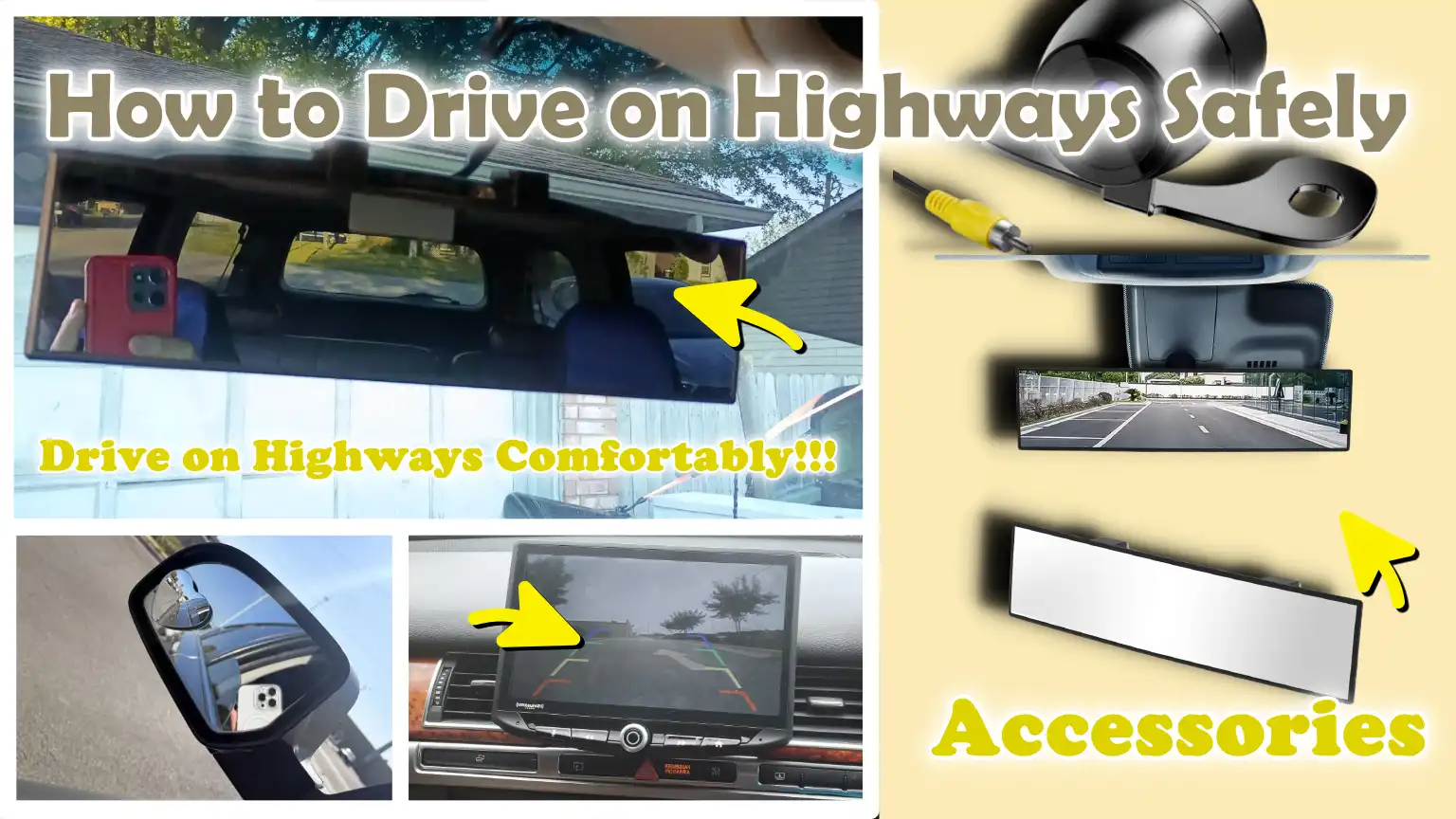
Now, in this guide you’ll learn How to Drive on Highways Safely so that you can learn right highway driving practices that actually helps you to be on the safe side during journey.
How to Prepare Before Hitting the Highway
Proper preparation before setting out on the highway is one of the most crucial steps in safe driving, yet many drivers tend to overlook it.
Vehicles travel at very high speeds on highways, meaning there is very little time to react if something goes wrong; therefore, both your vehicle and your mindset must be prepared in advance.
A well-prepared driver is less likely to face sudden issues while driving such as: mechanical failures, loss of vehicle control, or confusion.
A few simple checks and a little advance planning can significantly mitigate risks, boost your confidence and make your journey smoother and safer right from the start.
1. Check Your Vehicle’s Condition
Before heading onto the highway, it is essential to ensure that your vehicle is functioning properly, as even a minor malfunction can become dangerous at high speeds.
Tire pressure must always be correct; under-inflated or over-inflated tires can compromise road grip and increase the risk of a blowout, whereas adequate tread depth ensures consistent traction, specially on wet roads.
Your brakes must be in perfect working order, as stopping a vehicle on a highway requires a greater distance and weak brakes can slow down your reaction time in emergency situations.
The engine should run smoothly, with oil, coolant and other fluid levels at the appropriate marks, as engine overheating or mechanical failure can leave you stranded in unsafe situations.
Lights, turn signals and mirrors must also be in excellent condition, as they help you maintain clear visibility and communicate effectively with other drivers, particularly when changing lanes, overtaking other vehicles, or driving in low-light conditions.
2. Plan Your Route in Advance
Planning your route before embarking on your journey helps you avoid confusion and prevents you from making risky decisions while driving at high speeds.
By utilizing navigation tools such as Google Maps, you can obtain advance information regarding road maps, traffic conditions and estimated travel times.
Knowing the location of your exits, gas stations and rest stops ensures you are prepared and helps you avoid making sudden maneuvers on the road.
When drivers fail to plan ahead, they often execute last-minute lane changes or make sudden turns, actions that can be extremely dangerous on a highway.
A clear route plan helps you remain calm, drive smoothly and prioritize safety rather than making hasty decisions under pressure.
3. Ensure Driver Preparedness
When it comes to highway safety, the driver’s physical and mental state is just as critical as the condition of the vehicle.
Driving while fatigued or drowsy can slow down your reaction time and impair your ability to make split-second decisions, risks that are significantly amplified at high speeds.
Before beginning your journey, it is essential to be well-rested and mentally alert so that you can maintain your focus over extended periods.
Alcohol or any substance that impairs concentration should always be avoided, as it can severely compromise your judgment and coordination.
Proper seating posture also plays a vital role in safe driving; correctly adjusting your seat, mirrors and steering wheel helps you maintain control over the vehicle and reduces fatigue during long journeys.
When a driver is comfortable, alert and fully focused, the likelihood of making safe and timely decisions on the highway increases significantly.
How to Safely Enter on the Highway
Entering a highway is one of the most critical moments in driving, as you transition from a slower road into high-speed traffic where vehicles may be traveling at very high speeds.
At this juncture, drivers must make immediate yet controlled decisions while remaining fully aware of their surroundings.
Many accidents during merging (i.e., joining the flow of traffic) occur due to hesitation, sudden maneuvers, or a lack of situational awareness.
Safe highway entry relies on gradually increasing speed, proper observation and clear communication with other drivers.
When executed correctly, merging becomes predictable and safe, allowing traffic to flow continuously without disruption or unnecessary risk.
1. Make Proper Use of the Acceleration Lane
The acceleration lane is designed to help you gradually increase your speed so that it matches the speed of vehicles already traveling on the highway.
This is crucial because a significant speed differential between vehicles can lead to collisions or force other drivers to brake suddenly.
As soon as you enter the acceleration lane, you should continuously increase your speed while keeping an eye on traffic conditions ahead.
You must avoid stopping in the acceleration lane, unless absolutely necessary for safety, as a stationary vehicle in a high-speed merging zone poses a serious hazard.
A smooth and confident approach helps you merge naturally into the flow of traffic without causing confusion or creating safety risks for yourself or others.
2. Check Blind Spots Before Merging
Before merging onto a highway, it is essential to check your blind spots, those areas not visible in your mirrors, because mirrors alone cannot provide a complete view of every area surrounding your vehicle.
Blind spots are zones where other vehicles may not appear in your mirrors, particularly when they are in close proximity to your car.
A quick glance over your shoulder helps confirm whether the lane is clear and reduces the risk of side-impact collisions.
In addition to checking blind spots, your driving maneuvers should be smooth and predictable so that other drivers can anticipate your intentions.
Sudden lane changes or hesitation can confuse nearby drivers and increase the likelihood of accidents, specially in high-speed traffic.
3. Use Turn Signals Effectively
Turn signals are one of the simplest yet most critical tools for safe highway driving, as they enable you to clearly communicate your intentions to other drivers.
Signaling in advance gives other drivers sufficient time to adjust their speed or position, making the merging process safer and more orderly.
Late lane changes or changing lanes without signaling can startle other drivers and create hazardous situations, particularly when vehicles are traveling at high speeds.
The consistent and correct use of turn signals fosters a predictable driving environment where everyone can react safely and confidently, thereby reducing the risk of sudden braking or collisions.
How to Maintain Proper Speed and Distance
Maintaining the correct speed and keeping a safe distance from other vehicles are two of the most critical aspects of highway safety.
At high speeds, your vehicle covers a significant distance in just a few seconds; this means that if a sudden incident occurs, you have very little time to react.
The faster you drive, the longer it takes to bring the vehicle to a halt and the greater the impact will be in the event of a collision.
Therefore, controlling your speed and distance is not merely a matter of adhering to regulations, but a matter of saving your own life and the lives of others.
Safe drivers constantly adjust their speed and distance based on road conditions, traffic flow and visibility to ensure they always have sufficient time and space to react calmly and safely.
1. Adhere to Speed Limits
Speed limits on highways are carefully established based on road design, traffic patterns and safety studies; therefore, adhering to them is essential to minimize the risk of accidents.
Generally, both minimum and maximum speed limits are enforced to help maintain a smooth and predictable flow of traffic.
Driving too fast reduces your reaction time and increases your stopping distance; conversely, driving too slowly can disrupt the flow of traffic and create hazardous situations.
It is also crucial to adjust your speed according to conditions such as heavy traffic, rain, fog, or reduced visibility, even if this requires you to drive below the posted limit.
The definition of a safe speed is determined not solely by what is written on a signpost, but by how safely you can handle the prevailing conditions.
2. Maintain a Safe Distance
Maintaining a safe distance from the vehicle ahead provides you with sufficient time to react should that vehicle suddenly slow down or come to a stop.
The most effective and simple method for doing this is the ‘3-Second Rule’; this means that, relative to a specific point on the road, you should pass that point at least three seconds after the vehicle ahead of you has passed it.
This time interval provides your mind with the opportunity to identify any potential hazards and allows your body to react without panicking.
In adverse weather conditions such as: rain or fog, or when driving at high speeds, this distance should be increased, as brakes become less effective and visibility is reduced in such situations.
Maintaining an appropriate distance from the vehicle ahead creates a “safety buffer,” which can help prevent accidents even in sudden or unexpected situations.
3. Do Not Drive Too Closely – Avoid Tailgating
“Tailgating”, that is, driving too closely behind the vehicle ahead, is one of the most common and dangerous mistakes made on highways.
When you drive too close to another vehicle, you do not have sufficient time to react if the car ahead suddenly applies its brakes; this can result in a rear-end collision.
As speeds are often very high when driving on highways, such accidents are frequently quite severe due to the immense force generated by the impact.
Driving too closely (tailgating) also places pressure on other drivers and can trigger stress or sudden reactions, thereby increasing the overall risk on the road.
By maintaining a safe distance and exercising patience, you retain greater control over your vehicle and significantly reduce the likelihood of being involved in a serious accident.
How to Maintain Position and Lane Discipline
For safe driving on the highway, maintaining lane discipline and holding one’s position is crucial, as it keeps the flow of traffic predictable and orderly.
When every driver remains in the correct lane and maintains a steady position, it becomes easier for others to anticipate their movements and react safely.
At high speeds, even minor errors such as: drifting within a lane or making sudden lane changes, as it can lead to serious accidents.
Good lane discipline minimizes confusion, prevents unnecessary braking and allows traffic to flow smoothly.
It also helps drivers remain more focused and in control, particularly during long journeys or in heavy traffic conditions.
1. Understanding Lane Usage
Understanding how lanes should be utilized is a fundamental yet vital aspect of highway driving.
In most countries, the left lane is primarily used for overtaking; this means drivers should not linger there for extended periods unless they are actively passing another vehicle.
The middle lane is generally used for steady driving at a consistent speed, making it the most common choice for everyday commuting.
The right lane is typically reserved for slower-moving vehicles or for entering and exiting the highway.
Adhering to this arrangement helps alleviate congestion and prevents faster-moving vehicles from being held up, situations that could otherwise trigger risky overtaking maneuvers and aggressive driving behaviors.
2. Avoid Unnecessary Lane Changes
Frequent lane changing is not only unnecessary, but it also significantly increases the risk of accidents.
Every time you change lanes, you must check your mirrors, gauge the speed of surrounding traffic and calculate distances, all of which increase the potential for error.
Frequent lane changes can confuse other drivers and disrupt the smooth flow of traffic, thereby increasing the likelihood of sudden braking or collisions.
By staying in your lane as much as possible, you are able to maintain better focus and preserve a steady driving rhythm.
Safe drivers change lanes only when it is truly necessary such as: to overtake another vehicle or to prepare for a highway exit, and they always do so in a calm and controlled manner.
3. Stay in the Center of Your Lane
Positioning your vehicle precisely in the center of your lane is crucial for maintaining control and avoiding accidental collisions with other vehicles.
Drifting too far to one side can bring you dangerously close to vehicles in adjacent lanes, particularly at high speeds, where the margin for error is minimal.
Staying centered helps you maintain balance and ensures that there is ample space on both sides of your vehicle.
This also enhances your ability to react instantly to any sudden incidents such as: an unexpected obstruction or another vehicle drifting into your lane.
Maintaining proper lane positioning is a simple habit that plays a vital role in preventing accidents and making the driving experience smoother.
How to Overtake and Passing the Vehicles
Overtaking is one of the most critical and hazardous maneuvers on a highway, as it involves changing lanes, adjusting speed and driving in close proximity to other vehicles, some of which may be traveling at very high speeds.
Safe overtaking requires sound judgment, precise timing and a comprehensive awareness of surrounding traffic conditions.
Many highway accidents occur due to haste, poor visibility, or sudden, impulsive decisions made while attempting to overtake.
When executed correctly, an overtaking maneuver should feel effortless and controlled, ensuring that other drivers are not forced to brake or alter their position.
The key to safe overtaking lies in patience, foresight and ensuring that you have ample space and time to complete the maneuver without any rush or pressure.
1. Overtake Only When Necessary
Overtaking should not be performed frequently or merely to save a few seconds, as every attempt to overtake increases the risk of an accident.
Frequent or aggressive overtaking can create dangerous situations, particularly in heavy traffic or at high speeds.
Safe drivers understand that taking such significant risks simply to reach their destination a few minutes earlier is not a sensible trade-off.
Before attempting to overtake, it is always advisable to remain calm and wait for a clear, safe opportunity to present itself on the road.
Patience plays a crucial role in maintaining highway safety, as it enables you to make better decisions and avoid the unnecessary risks that frequently lead to accidents.
2. Follow Proper Overtaking Procedures
Proper overtaking procedures involve a series of actions that must be executed with great care and control to ensure the safety of all road users.
Before attempting to overtake, it is crucial to check your mirrors to assess the position and distance of vehicles approaching from behind; subsequently, be sure to check your “blind spots” (those areas of the vehicle not visible in the mirrors) to ensure that no other vehicle is hidden from your view.
Once the road is clear, you should signal in advance so that other drivers are made aware of your intentions.
The entire overtaking maneuver should be executed smoothly and at a consistent speed; you should neither accelerate abruptly nor turn the steering wheel sharply.
After passing the vehicle you are overtaking, you should return to your original lane only when there is sufficient space to do so; while doing so, ensure that you do not obstruct the other driver’s path.
Adhering to these practices helps maintain a smooth and safe flow of traffic.
3. Avoid Overtaking on the Wrong Side
Overtaking on the wrong side is extremely dangerous, as it violates established driving norms and makes your actions difficult for others to anticipate.
Most drivers expect overtaking to occur from a specific, designated side; therefore, when a driver attempts to overtake from the opposite side, it can create confusion and delay the reactions of other drivers.
This uncertainty, particularly at high speeds, increases the likelihood of side-impact collisions and sudden braking incidents.
In many jurisdictions, overtaking on the wrong side is also illegal due to the inherent risks involved.
By always overtaking on the correct side and adhering to established driving regulations, you minimize confusion and contribute to creating a safer driving environment for everyone.
How to Handle Traffic Situations on the Highway
Handling various traffic situations on the highway requires keen awareness, patience and the ability to adapt one’s driving style to specific circumstances.
Highways are not always smooth and empty; traffic can suddenly become heavy, involve large vehicles, or move at very high speeds.
Each situation presents its own challenges and drivers who fail to adapt to these conditions are more prone to making mistakes.
Safe driving on the highway involves not merely adhering to traffic laws, but also understanding the road, anticipating the actions of other drivers and maintaining complete control over the vehicle at all times.
By understanding how to navigate changing traffic conditions, you reduce stress, avoid hazardous situations and make your journey safer and more comfortable.
1. Driving in Heavy Traffic
Driving in heavy traffic on the highway can be stressful, as vehicles are in close proximity to one another and their speeds are often slow and unpredictable.
In such situations, it is crucial to remain calm and avoid sudden braking, as this can trigger chain-reaction accidents involving multiple vehicles.
Maintaining a steady speed helps sustain the flow of traffic and reduces the likelihood of abrupt stops.
Drivers should also maintain a safe following distance from the vehicle ahead, even when traffic is moving slowly, to ensure they have sufficient time to react.
Patience is paramount in heavy traffic, as aggressive behavior such as: frequent lane changes or rapid acceleration, increases risks without significantly reducing travel time.
2. Dealing with Large Vehicles
Large vehicles, such as trucks and buses, require special attention because they are larger and heavier than smaller cars and they require a greater distance to come to a complete stop.
These vehicles also possess large “blind spots”, areas surrounding the vehicle where the driver cannot see other traffic.
Driving too close to a truck, or driving alongside one for an extended period, can be dangerous because the truck driver may be unaware of your presence.
It is always safer to maintain a safe distance and, when necessary, to overtake large vehicles quickly and cautiously.
Understanding their limitations enables you to make better decisions and avoid situations that could put you at risk.
3. Handling High-Speed Traffic
Driving in high-speed traffic requires complete concentration, as events unfold very rapidly, leaving very little time to react.
When vehicles are traveling at high speeds, even a momentary lapse in attention can have serious consequences.
Drivers must remain fully focused on the road and avoid distractions such as mobile phones or unnecessary conversations.
Keeping both hands on the steering wheel improves vehicle control and allows you to react quickly to sudden changes in traffic conditions.
At high speeds, it is crucial to drive smoothly and steadily, as sudden maneuvers can lead to a loss of vehicle control.
By remaining alert and maintaining proper control, drivers can safely navigate the challenges of high-speed highways.
How to Drive in Varying Weather Conditions
Weather has a profound impact when driving on highways, as it directly affects visibility, road traction and a driver’s ability to react quickly to changing circumstances.
Conditions such as rain, fog and darkness can diminish your ability to see clearly and increase the distance required to bring your vehicle to a halt.
At high speeds, even a slight compromise in control or visibility can lead to serious accidents.
Safe drivers understand that, rather than driving in the same manner in every situation, they must adjust their speed, following distance and driving technique to suit the prevailing weather conditions.
Exercising caution and making timely adjustments helps in avoiding hazardous situations, thereby ensuring the safety of both yourself and other road users.
1. Rain and Wet Roads
Driving on wet roads is inherently risky, as water reduces the friction between your tires and the road surface, making it easier to lose control of the vehicle.
One of the most dangerous situations during rainy weather is ‘aquaplaning’ (or hydroplaning), where a layer of water forms between the tires and the road, causing the vehicle to slide rather than maintain traction.
This typically occurs when driving at high speeds on wet surfaces; therefore, reducing your speed during rain is absolutely essential.
Using your headlights improves visibility for both you and other drivers, particularly during heavy downpours when it becomes difficult to clearly identify other vehicles.
Applying brakes gently and steering with a light touch are also crucial, as sudden steering maneuvers or abrupt braking can cause the vehicle to skid.
By remaining cautious and reducing your speed, you can significantly minimize the risk of accidents on wet roads.
2. Fog and Low Visibility
Fog presents one of the most challenging conditions for driving, as it severely limits visibility, making it difficult to spot vehicles ahead, road markings, or obstacles.
In such situations, it is essential to use ‘low-beam’ headlights, as the light from ‘high-beams’ can reflect off the fog and further impair visibility.
Drivers should reduce their speed and maintain a greater distance from the vehicle ahead to allow themselves more time to react.
It is also crucial to pay close attention to lane markings on the road and to avoid sudden lane changes.
When visibility is extremely poor, driving cautiously and slowly becomes far more important than maintaining high speeds, as this helps prevent collisions and provides you with greater control over your vehicle.
3. Night Driving
Driving at night presents its own unique challenges, as reduced lighting makes it difficult to judge distances and identify hazards in a timely manner.
The improper use of ‘high-beam’ headlights can dazzle oncoming drivers and increase the risk of accidents; therefore, they should be used only when no other vehicle is approaching from the opposite direction.
Staying alert is paramount during nighttime hours, as fatigue levels tend to be higher, specially during long journeys, which can slow down reaction times and diminish concentration.
Drivers should take breaks whenever they feel fatigued and ensure that their full attention remains focused on the road.
The proper use of lighting, combined with alertness and cautious driving, helps make night travel significantly safer and more controlled.
How to Avoid Distractions While Driving
Avoiding distractions while driving is the most critical aspect of safe highway driving, as even a momentary lapse in attention, which may last only a few seconds, as it can lead to a serious accident.
When traveling at high speeds on a highway, a vehicle can cover a significant distance in a very short time; this means it is absolutely essential for your mind and eyes to remain fully focused on the road at all times.
Distractions prevent you from accurately observing changes in traffic conditions, reacting quickly and making safe decisions.
Research by organizations such as the World Health Organization (WHO) indicates that distracted driving significantly increases the risk of accidents, particularly on high-speed roadways.
Safe drivers understand that driving demands undivided attention and they deliberately avoid anything that could divert their eyes, hands, or mind away from the task of driving.
1. Mobile Phone Usage
Using a mobile phone while driving is one of the most dangerous forms of distraction, as it simultaneously compromises your visual attention, cognitive processing and physical control.
Sending text messages or talking on the phone takes your eyes off the road, your hands off the steering wheel and your mental focus away from driving, even if only for a few seconds.
Even this brief moment of distraction is sufficient to cause sudden braking, lane deviations, or a failure to spot upcoming obstacles.
The use of “hands-free” phone devices should also be minimized, as they too can diminish your mental focus and slow down your reaction time.
The safest approach is to refrain from using a phone entirely while driving and to use it only after you have pulled the vehicle over to a safe location on the side of the road.
2. Eating, Drinking, or Multitasking
Eating, drinking, or performing other tasks while driving may seem harmless to you, but it diminishes your ability to maintain focus and react quickly.
When one of your hands is removed from the steering wheel or your attention becomes divided, you lose full control of the vehicle.
Small actions such as: reaching to pick up food, adjusting items, or glancing away from the road, as it can cause a delay of a few precious seconds in your reaction time.
On highways, where vehicle speeds are very high, such delays can lead to dangerous situations.
Keeping both hands on the steering wheel and devoting your full attention to driving helps ensure that you are always prepared for sudden changes in traffic conditions.
3. Maintaining Mental Focus
When driving on a highway, mental concentration is just as important as physical control.
Daydreaming, feeling stressed, or dwelling on personal problems can divert your mind from the road, even if your eyes remain fixed on it.
This reduces your awareness of your surroundings and slows down your reaction time to sudden events.
Drivers must remain mentally alert and constantly monitor traffic, road signs and the behavior of other vehicles.
Taking periodic breaks during long journeys helps keep your mind fresh and reduces fatigue.
Maintaining a calm and focused mind enables you to make better decisions, thereby making the driving experience safer for both you and others.
How to Handle Emergency Situations on the Highway
Emergency situations on the highway can arise suddenly and often without warning; therefore, every driver must be prepared to react calmly and correctly.
At high speeds, if a minor issue is not handled properly, it can quickly escalate into a serious hazard.
The key to handling emergencies is to remain calm, avoid sudden movements and make controlled decisions that ensure your safety as well as that of other drivers.
Panic can lead to overreactions such as: slamming on the brakes or jerking the steering wheel, which significantly increases the likelihood of an accident.
Understanding how to handle common highway emergencies such as: vehicle breakdowns, tire blowouts and traffic incidents ahead, as it can help you mitigate risks and maintain control of your vehicle during critical moments.
1. Vehicle Breakdowns
A vehicle breakdown on the highway can be dangerous, as other vehicles are traveling at high speeds and do not expect to face a stationary vehicle.
If your vehicle shows signs of malfunction such as: strange noises or a loss of power, you should carefully steer the vehicle to the side of the road or onto the shoulder as soon as possible.
This minimizes the risk of obstructing traffic flow and keeps you clear of the main driving lanes.
It is crucial to activate your hazard lights, as this alerts other drivers that your vehicle is not operating normally and gives them time to react accordingly.
While remaining inside the vehicle, staying seated with your seatbelt fastened is often safer than standing outside on a busy highway, unless stepping out is absolutely necessary for safety reasons.
2. Tire Blowout
A tire blowout can be a frightening experience, specially at high speeds, as it may cause the vehicle to suddenly lose its balance or veer sharply to one side.
In this situation, the most critical action is to grip the steering wheel firmly and keep the vehicle as steady as possible.
You should avoid slamming on the brakes, as this can exacerbate the situation and lead to a loss of control over the vehicle.
Instead, you should gradually ease your foot off the accelerator to reduce your speed and allow the vehicle to slow down naturally.
Once your speed has decreased, you can carefully steer the vehicle off the road to a safe location.
Remaining calm and making smooth, steady movements is the key to safely handling a tire blowout situation.
3. Accident Ahead
When an accident occurs ahead on a highway, traffic conditions can change very rapidly; this often results in vehicles suddenly slowing down or coming to a complete halt.
As soon as you spot any warning signs such as: brake lights, traffic congestion, or hazard signals, it is crucial to reduce your speed immediately.
Decelerating gradually helps prevent rear-end collisions and provides you with sufficient time to assess the situation.
Drivers should always remain alert and follow the instructions of traffic authorities or heed warning signs, as these measures help guide vehicles safely away from or around the accident site.
In such situations, maintaining a safe distance from the vehicle ahead is also essential, as it provides adequate space to react if traffic comes to a sudden stop.
Exercising patience and caution ensures the safety of everyone on the road.
How to Safely Exit from the Highway
Exiting the highway is just as critical as entering it, as it involves transitioning from high-speed traffic to slower-speed roads in a short span of time.
Many accidents occur near exits due to sudden braking, last-minute lane changes, or inattention.
At highway speeds, drivers require greater time and distance to react; therefore, every maneuver should be executed deliberately and smoothly.
A safe exit requires advance preparation, proper speed control and full attention to surrounding traffic.
When drivers exit correctly, they reduce stress, avoid confusion and help maintain a safe flow of traffic for everyone on the road.
Plus, there’s report from World Health Organization Global Status on the road safety that shows that the road traffic crashes causes approximately 1.19 million deaths every year worldwide, that makes them one of the leading causes of death, specially among young people who are aged 5 to 29 years, even report explains that high-speed roads such as: highways significantly increases the severity of accidents because of the higher speeds actually reduces reaction time and increases impact force, plus according to the same data, road injuries literally cost the global economy nearly $1.8 trillion annually, which shows how important it is to stay safe during highway drives.[¹]
1. Plan Your Exit in Advance
Planning your exit in advance helps you avoid making hasty and risky decisions while driving at high speeds.
Exit signs are typically placed well before the actual exit point, providing drivers with ample time to prepare and merge into the correct lane.
Paying attention to these signs allows you to change lanes smoothly without disrupting other vehicles.
Last-minute decisions such as: suddenly changing lanes to catch an exit, are extremely dangerous and can lead to serious accidents.
By remaining aware of your route and preparing in advance, you can exit the highway in a calm and controlled manner.
2. Use the Deceleration Lane
Deceleration lanes are designed to help drivers safely reduce their speed before exiting the highway.
Rather than slowing down abruptly within the main traffic lanes, drivers should merge into the deceleration lane and gradually reduce their speed.
This allows vehicles following you to maintain a steady speed without having to apply sudden brakes.
Signaling before exiting is also crucial, as it communicates your intentions to other drivers and gives them time to adjust their speed or position.
The proper use of the deceleration lane facilitates a smooth transition from high-speed highway traffic to slower-speed exit roads.
3. Remain Alert During Exits
Even while exiting, drivers must remain alert, as this area often involves merging traffic, varying speeds and multiple vehicles moving in different directions.
Keeping an eye on vehicles entering or exiting the highway is essential to avoid collisions.
Drivers should adjust their speed according to changing road conditions and traffic flow, ensuring they do not drive too fast or too slowly for the prevailing situation.
Maintaining focus and control throughout the exit process helps prevent confusion and ensures a safe and smooth departure from the highway.
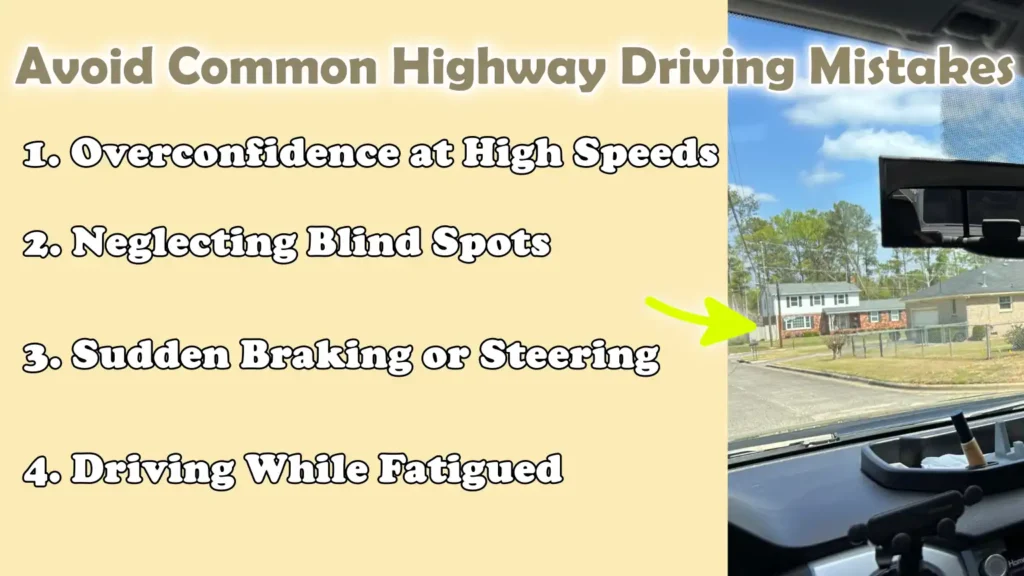
Avoid Common Highway Driving Mistakes
Many accidents on highways occur not due to a lack of driving skills, but rather because of common mistakes that drivers often overlook or underestimate.
At high speeds, minor errors can quickly escalate into critical situations, as the reaction time is reduced and the margin for correction is extremely narrow.
Understanding these mistakes and actively avoiding them can significantly enhance safety and minimize the risk of accidents.
Safe driving entails not merely knowing what to do, but also knowing what not to do.
By recognizing risky behaviors and correcting them in a timely manner, drivers can maintain better control, make more prudent decisions and foster a safer environment for everyone on the road.
1. Overconfidence at High Speeds
Overconfidence is one of the most dangerous mistakes when driving on highways, as it leads drivers to take unnecessary risks.
When drivers become overly confident in their abilities, they may exceed safe speed limits, follow other vehicles too closely (tailgate), or attempt to overtake other vehicles in a hazardous manner.
High speeds reduce reaction time and increase braking distances; consequently, even a minor error can have severe repercussions.
Overconfident drivers often underestimate road conditions, traffic behavior, or their own limitations.
Remaining humble and staying alert to potential risks helps drivers remain vigilant and make safe choices, particularly when driving at high speeds.
2. Neglecting Blind Spots
Neglecting blind spots is a major cause of accidents, particularly when changing lanes or overtaking other vehicles.
Mirrors do not provide a view of every area surrounding the vehicle and other cars can easily remain hidden within these unseen zones.
If a driver changes lanes without checking their blind spots, they may cut directly into the path of another vehicle, creating a risk of a side-impact collision.
Performing a quick “shoulder check” before changing lanes can prevent such accidents and enhance situational awareness.
Remaining cautious and fully alert while monitoring your surroundings ensures that no vehicle goes unnoticed, thereby helping to maintain a safe flow of traffic on the highway.
3. Sudden Braking or Steering
Sudden braking or abrupt steering maneuvers can result in a loss of vehicle control, specially at high speeds, when the vehicle’s balance is more precarious.
Sudden movements can cause the vehicle to skid, lose traction on the road, or even collide with nearby vehicles that may not have sufficient time to react.
Smooth and gradual movements are always safer, as they allow both your vehicle and other drivers to naturally synchronize and adjust.
Maintaining a consistent driving style preserves vehicle stability and reduces the likelihood of sudden accidents.
Controlled movements are paramount for staying safe on the highway.
4. Driving While Fatigued
Driving while fatigued is extremely dangerous, as it impairs both mental concentration and physical reaction times.
Due to fatigue, your ability to react to sudden changes may slow down, your attention may wander and you could even momentarily doze off without any warning.
When driving at high speeds on a highway, even a slight lapse in concentration can lead to a serious accident.
Drivers do not always realize just how tired they are, which further heightens this risk.
Taking regular breaks, staying hydrated and avoiding driving long distances without rest are some essential measures to prevent fatigue.
Staying alert and fully rested ensures that you can react quickly and make safe decisions throughout your entire journey.
Learn, Pro Tips for Safe Highway Driving
Safe highway driving entails not merely adhering to basic traffic laws, but also employing smart techniques that enhance comfort, control and situational awareness during long-distance journeys.
Experienced drivers adopt simple yet effective habits to minimize stress, avoid errors and remain prepared for sudden contingencies.
At high speeds, even minor refinements in driving behavior can make a significant difference in safety.
By utilizing vehicle features judiciously, making their driving predictable and staying prepared for emergencies, drivers can navigate highways with greater confidence and mitigate risks for themselves and others.
1. Use Cruise Control Wisely
Cruise control is a useful feature that helps maintain a consistent speed without the need to constantly depress the accelerator, thereby reducing driver fatigue during long highway journeys.
It is particularly beneficial on clear, open roads with light traffic and stable conditions, as it allows the driver to focus more intently on steering and observing the road ahead.
However, the use of cruise control should be avoided in heavy traffic, during rain or fog, or on roads where speed limits fluctuate frequently, as it may compromise your ability to react instantly.
In such situations, it is essential for drivers to maintain full manual control over their speed to adapt immediately to changing conditions.
While the judicious use of cruise control can enhance comfort, it should always be employed while maintaining complete awareness of the surrounding environment.
2. Make Your Driving Predictable
Predictable driving is one of the most essential habits for highway safety, as it helps other drivers anticipate your actions and react accordingly.
Performing smooth and consistent maneuvers such as: gradually changing lanes and maintaining a steady speed, reduces confusion and prevents sudden reactions from other drivers.
Unpredictable actions such as: sudden braking, sharp turns, or rapid lane changes, as it can startle other drivers and increase the risk of accidents.
When your driving behavior is steady and clear, it makes the flow of traffic safer and more orderly, allowing everyone on the road to react calmly and safely.
3. Always Keep an Emergency Kit Ready
Keeping an emergency kit in your vehicle is a crucial step toward being prepared for unexpected situations on the highway.
Vehicle breakdowns, minor accidents, or delays can occur at any time and having basic supplies close at hand can make a significant difference in how you handle these situations.
A simple kit, containing first-aid supplies, a flashlight and some basic tools, as it can help you address minor issues and stay safe until assistance arrives.
Being prepared also helps reduce panic and enables you to react more effectively during emergencies.
A well-equipped vehicle gives you added confidence and ensures that you are ready for the various situations that may arise during long highway journeys.
Read More:
- How to Merge Lanes Safely
- How to Overtake Safely
- How to Use Turn Signals Properly
- How to Fix Turn Signals on a Car
- How to Check Blind Spot While Driving
- How to Use Mirrors When Driving
- How to Use ABS Brakes Properly
- How to Brake Safely on Steep Roads
- How to Drive Uphill Safely
- How to Drive Safely in Strong Winds
- How to Prevent Aquaplaning
Conclusion – How to Drive on Highways Safely
The speed is something highways loves, that’s why you needs to be really discipline, focus and drive that thing smartly to avoid unnecessary time wastage.
Highways are designed for efficiency and speed; yet, they demand a far greater degree of awareness, discipline and responsibility from drivers.
At high speeds, your reaction time diminishes, stopping distances increase and the consequences of any error become significantly more severe.
This is why every small habit such as: maintaining a safe following distance, checking blind spots, signaling correctly and staying focused, plays a crucial role in ensuring complete safety.
A safe journey on the highway is the result of preparation, patience and consistently good driving behavior.
From inspecting your vehicle before setting off, to merging smoothly into traffic, maintaining lane discipline and navigating various traffic and weather conditions, every step contributes to minimizing risk.
Avoiding distractions, remaining alert and knowing how to react in emergency situations further strengthens your ability to stay in control.
These are not difficult skills, but rather simple habits that, if practiced consistently, can prevent most accidents and make driving a far safer experience.
It is also essential to remember that driving on the highway is not solely about your own safety, but also about the safety of everyone around you.
Every decision you make has an impact on other drivers, passengers and pedestrians.
Driving responsibly initiates a safety “chain reaction,” wherein predictable and vigilant behavior encourages others to behave in the same manner.
So, that’s all from this guide and you can still ask related questions below in the comment box.
Frequently Asked Questions
Q1. What is the safest speed for driving on a highway?
Answer: The safest speed on a highway is one that adheres to the posted speed limit while also taking actual road conditions into account. Speed limits are established based on road design and safety studies, but they are generally set for ideal driving conditions. If traffic is heavy, the road is wet, or visibility is poor, it is safer to drive at a speed lower than the posted maximum limit. Driving too fast reduces your reaction time and increases your stopping distance, whereas driving too slowly can disrupt the flow of traffic and create a hazard. The best approach is to maintain a steady speed that allows you to retain control of your vehicle and react comfortably to any situation.
Q2. How much distance should I maintain from the vehicle in front of me?
Answer: Maintaining a safe distance from the vehicle ahead is crucial on a highway, as it provides you with sufficient time to react if the vehicle in front of you suddenly slows down or stops. An easy way to estimate this distance is to use the “three-second rule,” which ensures that there is a gap of at least three seconds between your vehicle and the vehicle ahead. At higher speeds or during adverse weather conditions, this distance should be increased to four seconds or more. Maintaining this distance helps prevent rear-end collisions and gives you greater control over your vehicle in unexpected situations.
Q3. What should I do if I feel fatigued while driving on a highway?
Answer: If you feel fatigued while driving, it is essential to take it seriously, as fatigue can impair your reaction time and concentration. If you feel drowsy, you should never attempt to continue driving, as this significantly increases the risk of accidents. The safest option is to pull over at a rest stop or a safe location and take some time to rest. Even a brief rest can help refresh your mind. During long journeys, maintaining proper hydration and taking regular breaks can also help prevent fatigue and keep you alert.
Q4. How can I safely merge onto a highway?
Answer: To safely merge onto a highway, you should use the “acceleration lane” to increase your speed so that it matches the speed of the traffic already flowing on the highway. You should check your mirrors and “blind spots” (areas around the vehicle that are not visible in the mirrors) to locate a safe gap and use your “turn signal” to indicate your intentions. It is crucial to merge onto the highway smoothly, without any sudden maneuvers or hesitation. Do not stop in the acceleration lane unless absolutely necessary to find a safe opening, as stopping can create a hazardous situation for vehicles approaching from behind you.
Q5. Why is it important to check blind spots?
Answer: Blind spots are areas around your vehicle that are not visible in your mirrors. If you rely solely on your mirrors, you may fail to spot another vehicle that is in close proximity, specially when you are changing lanes. Checking your blind spots by looking over your shoulder ensures that no vehicle remains hidden from your view. This simple habit can prevent side-impact collisions and is one of the most essential habits for safe highway driving.
Q6. Is it safe to use cruise control on the highway?
Answer: When used in the appropriate conditions, cruise control can be both safe and beneficial. It is best utilized on long, clear stretches of road and in light traffic, where maintaining a consistent speed is easy. However, it should not be used in heavy traffic, during rain or fog, or on roads where speed limits change frequently, as doing so may compromise your ability to react quickly. Drivers must always remain alert and be prepared to take full control of the vehicle whenever necessary.
Q7. What should I do if I face heavy traffic on the highway?
Answer: In heavy traffic, it is crucial to remain calm and avoid aggressive driving. You should maintain a consistent speed and keep a safe distance from the vehicle ahead. Sudden braking or frequent lane changes can increase the risk of accidents. Patience is essential in such situations, as driving in a relaxed and controlled manner helps maintain a safe flow of traffic and reduces stress.
References:
[1] Health at a Glance: Asia/Pacific 2024, Road safety
https://www.oecd.org/en/publications/health-at-a-glance-asia-pacific-2024_51fed7e9-en/full-report/road-safety_cef8ac06.html

Guys, I’m a car audio enthusiast and customization expert and I love clear sound and clean installation. Plus, I have spent years helping people build their dream audio setups. And whenever I’m working on cars, I probably listen to music and thinks about the next big upgrade.