
Written By: Don Dodi
Fact Checked By: Kristen Brown
Reviewed By: Diego Rosenberg
It is true that every year, snow-covered roads actually causes thousands because the icy roads can be ten times more slippery than dry pavement, but yes these accidents can actually be preventable with the right guide.
Yes, it is the really big challenge to drive in the snowy condition and lot of motorists actually have to face this thing each winter which is very dangerous as well.
As well as, according to the U.S. Federal Highway Administration, there are over 1,300 people are killed and more than 116,800 are injured every year in the vehicle crashes on snowy, slushy or icy roads and it is enough to scares the hell out of you.
Basically, snow and ice actually reduces the tire traction and that makes the braking distances longer and lower visibility literally turns the even short trips into the potential risks if drivers are not prepared for it.
Not only this, AAA’s study also shows that winter weather can reduce the car’s stopping distance by up to 10 times compared to the dry pavement, which literal meaning is that even a simple mistakes such as: braking too late or following too closely can quickly lead to the accidents.
So, you needs to have completely different kind of mindset: and this guide tell you exactly all about How to Drive Safely in the Snow, which included: how you can slower the speeds, smoothly handle it and plan it carefully.
How to Prepare Your Vehicle Before You Drive
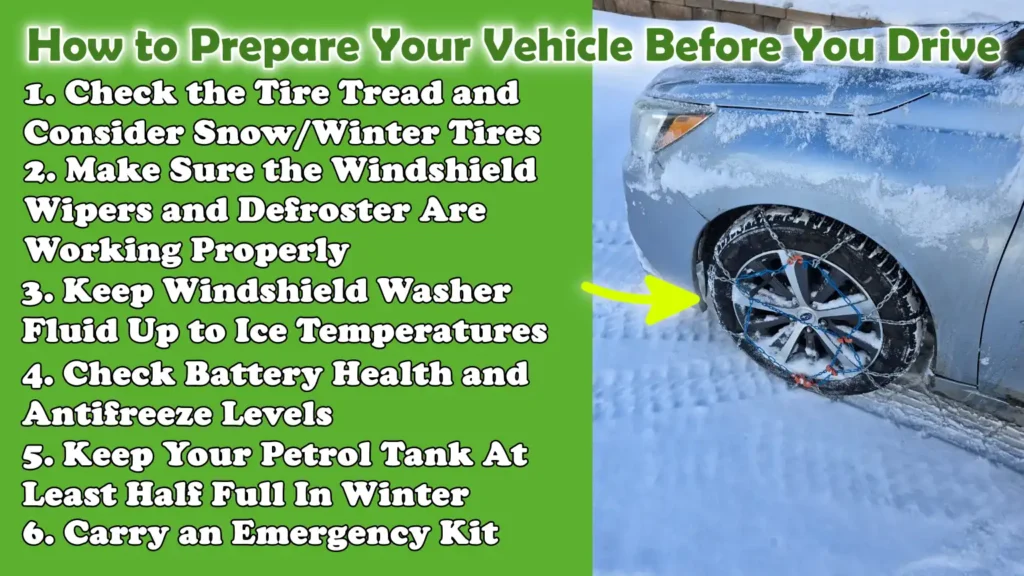
1. Check the Tire Tread and Consider Snow/Winter Tires
Tires are the first and most important part of your car that makes contact with the road and in snowy conditions, they can make the difference between driving safely and losing control.
According to the National Highway Traffic Safety Administration (NHTSA), worn tires are one of the leading causes of winter driving accidents because they fail to properly grip snowy or icy surfaces.
The safe tire tread depth for winter driving should be at least 4/32 inch.
If you live in an area with heavy snowfall, switching to winter or snow tires can improve traction by 25 to 50 percent compared to all-season tires, as they are made with softer rubber and deeper tread patterns that work better in cold conditions.
2. Make Sure the Windshield Wipers and Defroster Are Working Properly
Good visibility is crucial when driving in snow and windshield wipers play a huge role in keeping your view clear.
Old or worn wiper blades can leave streaks on the glass or even freeze, making it dangerous to see the road ahead.
Experts recommend replacing wiper blades at least once a year, specially before winter.
Also, have the defroster and heater checked to make sure they can quickly clear fog and ice from your windows.
A working defroster not only improves visibility but also prevents dangerous ice buildup on the inside and outside of the windshield.
3. Keep Windshield Washer Fluid Up to Ice Temperatures
Using regular washer fluid in the winter can be risky because it can freeze in the tank or on your windshield when temperatures drop.
Special winter washer fluids are designed to prevent ice buildup and some are designed to remain fluid even at temperatures as low as -20°F (-29°C).
Keeping your washer fluid fully filled and winter-appropriate ensures that you can easily remove snow, salt and road grime that can block your vision while driving.
Running out of washer fluid on a snow-covered highway can leave you nearly blind, so this simple step is one of the most important parts of winter car preparation.
4. Check Battery Health and Antifreeze Levels
Cold weather puts a huge strain on car batteries because the chemical reactions inside the battery slow down when temperatures drop.
AAA research shows that at 0°F (-18°C), a car battery loses about 60 percent of its power, while at 32°F (0°C) it loses about 35 percent.
That’s why many cars won’t start on winter mornings.
Getting your battery checked before winter weather begins can help prevent sudden failures.
Also, get the antifreeze (also called coolant) checked, as it keeps the engine’s cooling system from freezing.
Most antifreezes are effective down to -34°F (-37°C) when mixed correctly, so making sure your car has the right amount of antifreeze can keep your engine safe in extreme cold.
5. Keep Your Petrol Tank At Least Half Full In Winter
A common winter driving tip is to never leave your petrol tank less than half full and there’s a good reason for that.
In cold weather, condensation can build up inside the petrol tank, causing water to freeze in the fuel lines, which can stop fuel flow.
Keeping your petrol tank at least half full not only prevents this problem, but also ensures that you have enough fuel if you’re stuck in traffic or caught in a blizzard.
Running out of petrol in the bitter cold can quickly become dangerous, specially if you’re far from help.
6. Carry an Emergency Kit
Even the best-prepared drivers can face unexpected problems in icy weather, so keeping an emergency kit in your car can be very helpful.
Experts such as the American Red Cross recommend keeping things like warm blankets, extra gloves, non-perishable snacks, bottled water, a flashlight with extra batteries, a small shovel and a first aid kit.
If you’re stranded for several hours, these items can help keep you safe and comfortable.
Many drivers also carry sand, salt or kitty litter to strengthen the car if they get stuck in the snow.
An emergency kit may seem unnecessary until you need it , and in the winter, it can save lives.
What to Change In Your Driving Technique
1. Drive Slower Than Normal to Improve Visibility and Grip
One of the most important rules of driving in snow is to reduce your speed.
According to the U.S. Department of Transportation, snow and ice can reduce the grip of tires by more than 50 percent, which means your car may not stop or turn as quickly as it would on a dry road.
Driving slower gives you more control and extra time to react to unexpected hazards like hidden ice patches or stalled vehicles.
A slight change, such as reducing your speed by 5 to 10 mph, can significantly reduce the risk of skidding or losing control.
In snowy conditions, the speed limit should be considered a maximum, not a goal.
2. Increase Following Distance for Longer Stops
On a dry road, a minimum three-second following distance is recommended, but in snowy or icy conditions, experts recommend increasing this distance to at least eight to ten seconds.
This extra space gives you more time to stop safely if the car in front brakes suddenly.
Studies done by the AAA Foundation for Traffic Safety show that braking distances can be four times longer on ice and ten times longer on snow.
By leaving more space between you and the car in front, you significantly reduce the chance of a collision, even if you have to stop quickly.
3. Avoid Sudden Braking, Rapid Acceleration or Sharp Steering
Snow and ice make the road surface slippery and sudden movements can cause your tires to lose grip immediately.
Hard braking, rapid acceleration or sharp turns can all cause a skid.
Instead, every movement should be light and slow, light pressure on the brake pedal, slow steering and careful acceleration.
Safety research shows that smooth driving reduces the likelihood of a skid by keeping tire-road friction constant.
Think of it as driving with “eggshells” under your foot; Pushing too hard will break the vehicle, but gentle control will help you move safely.
4. Use Lower Gears When Going Up or Down Hills
Hills are the most dangerous when driving in snow because gravity makes it hard to maintain grip.
When climbing a snowy hill, using a lower gear gives the wheels more controlled power and reduces the risk of spinning.
When going downhills, using a lower gear naturally slows the car down, so you don’t have to rely so much on the brakes, which can jam easily on icy surfaces.
Experts in driving safety programs recommend driving slowly, maintaining a steady speed and never stopping in the middle of the road, because it is very difficult to restart a vehicle on snow.
5. Learn to Handle Slips Calmly and Safely
Even the most careful drivers can face slips on snow or ice, but knowing how to react can prevent an accident.
If your car starts to skid, it’s important to stay calm and avoid applying the brakes.
Safety experts recommend gently steering in the direction of the rear of the car, this is called “steering into a skid”.
For example, if the rear of your car skids to the right, turn the steering wheel to the right until the car regains traction.
Panicking or oversteering can make the skid worse, but controlled steering and patience usually help keep the car steady.
Practising this skill in a safe, open area, such as an empty snowy parking lot, can prepare you for real conditions.
How to Use The Brakes In Correct Way
1. Understand How ABS/Anti-Lock Braking System Works
Most modern cars today are equipped with ABS, or anti-lock braking systems, designed to prevent the wheels from locking up when you brake hard on slippery roads.
When the wheels lock up, they stop rotating and begin to slide on the surface, making steering impossible.
ABS helps by automatically pressing the brakes several times per second, allowing the tires to maintain grip even as the car slows down.
According to the National Highway Traffic Safety Administration (NHTSA), ABS has been proven to significantly reduce skidding accidents, specially on wet or icy roads.
Drivers should note that when ABS is activated, they may feel vibrations or pulsations in the brake pedal, this is perfectly normal and indicates that the system is working.
Instead of panicking, the best solution is to keep pressing the brakes firmly and let the system do its job.
2. Apply Slow and Steady Pressure to The Brakes Rather Than Pressing Hard
Even with ABS, the safest way to brake on ice is to apply slow and steady pressure to the pedal rather than pressing hard.
When you brake too hard, specially at high speeds, your car’s weight shifts forward quickly, causing the rear tires to lose grip and increasing the chance of a skid.
Research shows that slow braking allows the tires to grip the road surface better, giving you more control.
Slowing down before stop signs, intersections, or turns is a good habit.
By pressing the brake pedal quickly, you give your car more time and room to stop safely without skidding.
3. If Your Car Doesn’t Have ABS, Brake Carefully
Older cars without ABS require a different braking method to prevent the wheels from locking up.
Drivers should brake gently by repeatedly pressing and releasing the pedal rather than pressing hard.
This technique works in a similar way to ABS, preventing the wheels from locking up and giving the tires a chance to regain grip each time you apply the brake.
The important thing is to do this smoothly, not in a panic.
According to driving safety experts, practicing this method in a safe place before winter storms gives drivers confidence and helps them be prepared for real-life emergencies.
For drivers without ABS, learning proper pumping can be the difference between a controlled stop and running into danger.
How to Deal with Different Snow Conditions
1. Fresh Snow vs Frozen Snow vs Black Ice
Not all roads are the same in winter and each layer of snow has its own hazards.
Fresh snow may seem soft, but it can quickly lose traction and cover up hazards like potholes, curbs or patches of ice hidden underneath.
Snow that has accumulated due to traffic can be even more slippery because it often turns into an ice-like layer that gives tires less grip.
The most dangerous is black ice, a nearly invisible layer of thin ice that forms on the road when temperatures are below or near zero.
Unlike fresh or frozen snow, black ice reflects very little light, making it difficult to spot, specially at night.
Studies by the Federal Highway Administration show that black ice is a leading cause of winter accidents because drivers often don’t realize it’s there until they lose control.
2. Driving on Plowed vs Unplowed Roads
Plowed roads are generally safer because snow and ice are removed, allowing tires to grip the pavement better.
However, even on plowed surfaces, thin layers of compacted snow or slush may remain, which can cause skidding when drivers brake or drive too fast.
Unplowed roads present a different challenge, as snow accumulation can hide lane markings, curbs, or even stopped cars.
Driving on unplowed roads also increases the chance of getting stranded, specially if the snow is deeper than your car’s clearance.
Experts recommend avoiding unplowed roads as much as possible, but if you must drive on them, it’s best to keep a steady speed, avoid sudden stops and follow the tracks of other vehicles for better grip.
3. Recognizing and Avoiding Black Ice – Specially On Bridges and Shady Areas
Black ice is one of the trickiest hazards for drivers because it’s nearly invisible.
It often forms on shaded areas of the road, overpasses and bridges, as these places freeze faster than regular road surfaces due to cold air blowing from above and below.
Drivers can sometimes recognize black ice when the road ahead appears slightly wet or shiny, even if the temperature is below freezing.
The best way to avoid losing control on black ice is to remain cautious in known hazardous areas, reduce speed and avoid sudden steering or braking.
Safety experts advise that if you face black ice, the safest course of action is to stay calm, keep the steering wheel straight and gradually ease off the accelerator until your tires regain traction.
How to Have Clear Visibility and Awareness
1. Remove Snow and Ice from Windows, Mirrors, Lights and Roof Before Driving
Before you start your trip in snowy weather, it’s important to completely clear snow and ice from every part of your car, not just the windshield.
Snow on the roof can slide onto the windshield while you’re driving, suddenly blocking your view, or it can fly off and pose a hazard to cars behind you.
Snow-covered windows or headlights can also reduce your ability to see or be seen.
Studies show that poor visibility is a major cause of accidents in winter and something as small as properly cleaning your vehicle can greatly reduce the risk.
Many states even have laws that require drivers to remove snow and ice from their vehicles before driving, as failure to do so has led to serious accidents.
Taking a few extra minutes to thoroughly clean your car ensures that you can see clearly and that others can see you.
2. Use Headlights During the Day, Even in Snowy Conditions
Blizzards and cloudy winter nights can make the road appear darker than usual, reducing visibility for both you and other drivers.
Using headlights during the day in snowy conditions makes your car more visible, even if it’s bright outside.
The Federal Highway Administration reports that vehicles with headlights on are easier to see from a distance, reducing the chance of a collision in low-visibility conditions.
Daytime running lights are helpful, but turning on your regular headlights provides more light and ensures that both front and rear lights are on.
This simple step can make a big difference in safety during snowy driving.
3. Don’t Use High Beams in Heavy Snowfall Because They Cause Glare
It may seem natural to turn on high beams when visibility is poor, but they can make it difficult to see in heavy snowfall.
High beams reflect off falling snowflakes and create a bright glare that can blind the driver and reduce visibility even further.
Low beams, on the other hand, provide better illumination without reflecting as much snow back into your eyes.
Road safety experts consistently recommend using low beams to get the clearest view of the road during snowy or foggy weather.
Knowing when to use the right lights can prevent accidents and help drivers have better control of their surroundings.
4. Be Alert for Snowplows and Give Them Extra Space
Snowplows play an important role in keeping roads safe, but extra caution is needed when driving around them.
Snowplows often move slower than traffic and they can kick up snow, ice and even rocks into the air, making it dangerous to drive too close to them.
The Federal Motor Carrier Safety Administration recommends giving snowplows enough room to work and avoiding overtaking them unless absolutely necessary.
Overtaking from the right is specially risky, as snowplows push snow in that direction and visibility of nearby cars may be limited.
By being patient and giving snowplows the necessary space, you not only protect yourself, but also help them clear the roads more efficiently for everyone.
What To Do If You Get Stuck
1. Stay Calm and Avoid Over-Spinning Your Tires
Being stuck in snow can be stressful, but staying calm is the most important first step.
Many drivers make the mistake of pressing the gas pedal too hard to get the car out, but this only makes the situation worse.
Over-spinning the tires will sink them deeper into the snow, creating ruts and making driving even more difficult.
Studies from winter driving safety programs show that if tires start spinning faster than the snow can grip them, the chances of survival decrease rapidly.
Instead, drivers should apply gentle pressure and be patient, as controlled methods are much more effective than aggressive methods.
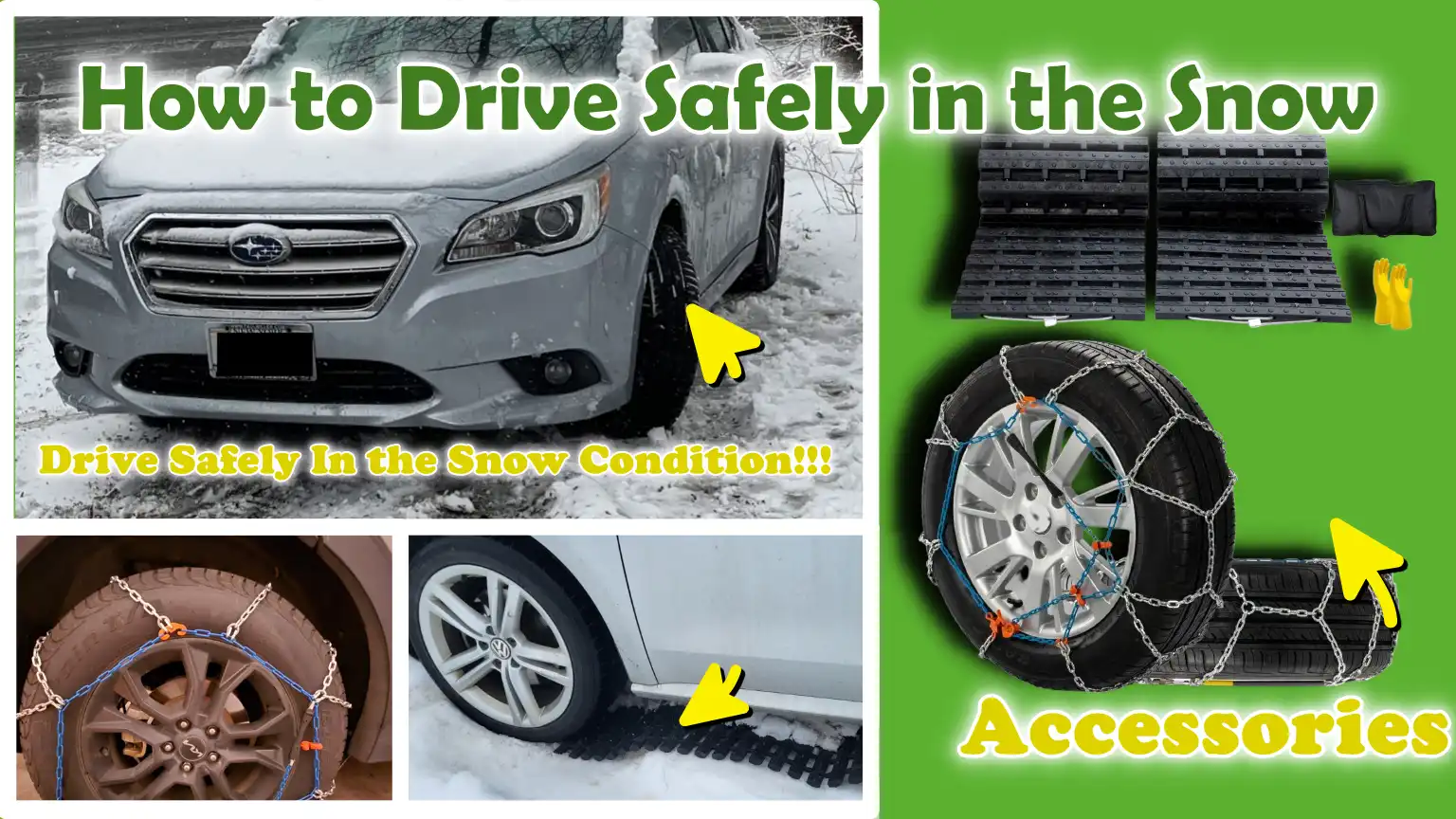
2. Use Sand, Kitty Litter or Traction Mats for Grip
If your tires can’t get traction, creating friction underneath them is the best way to avoid getting stuck.
Items like sand, lump-free kitty litter, salt or specially designed traction mats can provide the grip the tires need to move forward.
These mats work because they create a rough surface that increases the friction between the tires and the snow.
According to roadside assistance statistics, placing these materials directly in front of or behind the drive wheels can often extricate a car in just a few minutes.
Keeping a small bag of one of these items in your trunk in the winter can help you avoid being stranded for hours and get back on the road quickly.
3. Extricate the Car by Gently Rocking it Back and Forth
Another effective method is to gently rock the vehicle back and forth to build up momentum.
This technique involves shifting between drive and reverse, applying light pressure to the gas each time and allowing the car to roll slightly forward each time.
Research by winter driving experts shows that this back-and-forth motion reduces the resistance of snow accumulated under the tires and can often help extricate the car without outside assistance.
The important thing is to drive slowly and at a controlled speed, as pressing the accelerator too hard while rocking can create deep ruts that can further strand the vehicle.
4. If You are Stranded, Stay with Your Vehicle and Call for Help If Needed
If the snow is too deep or conditions are too bad for you to get out alone, the safest option is to stay with the vehicle and call for help.
Leaving a stranded vehicle in snowy weather can be dangerous, specially during a blizzard when visibility is poor.
Road safety agencies such as the National Weather Service advise that staying inside the vehicle provides you with shelter and warmth and makes it easier for rescuers to find you.
If the exhaust pipe is clear of snow, it is safe to warm up the engine intermittently, but it should be kept running intermittently to save fuel.
In such situations, it is important to have a charged phone, emergency kit and extra clothes and immediately contact roadside assistance or emergency services for help.
How to Prepare for Long-Distance and Emergency in Snow
1. Check Weather and Road Conditions Before Traveling
One of the most effective ways to stay safe when traveling long distances in icy weather is to plan in advance.
According to the U.S. Federal Highway Administration, about 70 percent of U.S. roads are located in icy areas and about 70 percent of the population lives in these same areas, meaning that winter travel risks are very common.
Getting the weather forecast and road condition information before starting a trip helps drivers be prepared for potential hazards like blizzards, icy highways, or road closures.
Many state transportation departments provide real-time online maps that show plowing progress, road closures and accident reports.
Knowing what’s coming ahead helps drivers decide whether to delay a trip, choose an alternate route, or pack extra for safety.
2. Tell Someone Your Route and Estimated Arrival Time
When traveling in the winter, specially in rural or less traveled areas, it’s important to tell a friend or family member your route and estimated arrival time.
If your car gets stuck due to snow or ice, this information helps others notify authorities and narrow the search area, which can save valuable time.
Safety organizations like the American Red Cross always recommend sharing your winter travel plans, as this increases the chances of being found quickly if something goes wrong.
Even a simple text message about your route and arrival time can provide peace of mind to both you and your loved ones.
3. Pack Extra Warm Clothing and Supplies for Emergencies
When traveling long distances in the winter, it’s important to be prepared for unexpected circumstances.
If you get stranded without proper protection, cold temperatures can quickly become life-threatening.
Experts recommend packing extra warm clothing such as gloves, hats, socks and blankets, as well as an emergency kit that includes water, non-perishable food, a flashlight and a small shovel.
Case studies of winter survivalists show that those who had these items were far more likely to stay safe and comfortable while waiting for rescue.
Extra clothing and items not only keep you warm, but also reduce stress, allowing you to think clearly and make safe decisions when facing an emergency.
4. Avoid Driving During Severe Storms If Possible
No amount of preparation can make driving during a major winter storm completely safe.
Severe blizzards reduce visibility, blowing snow and increase the risk of black ice, making it extremely difficult for even experienced drivers to stay safe.
The National Weather Service does not recommend driving during a blizzard unless there is a dire emergency.
If you must travel, postponing your trip until plows and salt trucks are on the roads can greatly reduce the risk.
Choosing safety over urgency in dangerous conditions is the most reliable way to keep yourself and others safe on the road.
Read More:
- How to Drive Safely in Fog
- How to Drive Safely at Night
- How to Clean Car Headlights
- How to Replace a Headlight Bulb
- How to Fix Headlight System Malfunction
Know, Common Mistakes to Avoid During Snow Weather Conditions
Yes, there’s even government safety agencies that strongly emphasizes that preparation and caution are the key to surviving the winter driving conditions, as the NHTSA also shows that simple actions such as: slowing down, maintaining distance and preparing for emergencies that can significantly reduces the risk of any possible crashes and injuries during the snowy weather conditions.[¹]
1. Overconfidence in All-Wheel Drive (AWD) and Four-Wheel Drive (4WD) Vehicles
Many drivers believe that all-wheel drive (AWD) or four-wheel drive (4WD) systems make them invincible in snowy weather, but this is one of the most dangerous misconceptions.
Although AWD and four-wheel drive improve acceleration and grip when driving on slippery surfaces, they don’t reduce braking distances or prevent skidding on ice.
Research from the Insurance Institute for Highway Safety (IIHS) shows that AWD-equipped SUVs and trucks are more likely to be involved in winter accidents because drivers drive them beyond safe limits, assuming these systems can handle any situation.
The truth is that no drivetrain can overcome the laws of physics, icy roads require slower speeds, longer stopping distances and careful driving, no matter what type of vehicle you’re driving.
2. Driving Behind the Wheel In Snowy Conditions
Driving too closely is always risky, but it can be even more dangerous in snowy or icy conditions.
The AAA Foundation for Traffic Safety has found that braking distances on snow can be up to four times longer than normal, while stopping on ice can take up to ten times longer than normal.
Driving behind the wheel leaves little room for error and even a small mistake can cause a rear-end collision.
In the winter, experts recommend following at least eight to ten seconds behind the vehicle in front.
This extra space provides the time needed to react safely, specially if sudden braking or evasive maneuvering is needed.
3. Not Completely Removing Snow From The Car
A common mistake many drivers make is scraping only a portion of the windshield and leaving snow or ice on the roof, hood and windows.
This can be extremely dangerous for both the driver and other people on the road.
Snow on the roof can slide onto the windshield while you’re driving, immediately blocking visibility, or it can fly into traffic and hit other vehicles.
Snowflakes falling off moving cars cause serious winter accidents and injuries.
Many states are now enforcing “snow removal” laws that require drivers to completely remove snow from their vehicles before driving.
Taking the time to remove snow from all surfaces, including headlights and taillights, ensures maximum visibility and avoids dangerous road hazards.
4. Ignoring Road Condition Warnings or Alerts
Another mistake that puts drivers at risk is ignoring weather warnings, road condition updates and closure warnings.
Winter storms often bring rapidly changing road conditions and driving without checking for updates can leave you stranded in dangerous conditions such as whiteout snow, ice patches, or impassable roads.
Agencies like the National Weather Service and state transportation departments provide real-time alerts and highway cameras to give travelers accurate information.
Studies show that drivers who change their plans based on these updates are much less likely to be involved in winter-related accidents.
Ignoring these warnings not only puts you at risk, but also increases the likelihood of emergency services being overwhelmed during severe weather events.
Conclusion – How to Drive Safely in the Snow
Yes, the snow is the natural part of the winter, but you need to be sure it don’t lead to the crashes, as now you know how they are not inevitable.
According to the Federal Highway Administration, during the winter season alone, the United States experiences more than 1.2 million crashes, 116,800 injuries and over 1,300 fatalities annually.
These statistics underscore just how dangerous snow and ice can be if drivers are unprepared.
The good news is that most of these accidents are preventable, provided drivers adhere to proven safety practices.
Ensuring that your vehicle is equipped with the proper tires, fluids and emergency supplies guarantees that you are fully prepared even before you turn on the ignition.
Adjusting your driving habits such as: reducing speed, maintaining a greater distance from the vehicle ahead and braking gently, minimizes the risk of losing control on slippery surfaces.
Staying alert to changing road conditions, knowing how to handle a skid and respecting snowplows, all these factors contribute to safe driving on winter roads.
Most importantly, knowing when not to drive, by monitoring weather alerts and avoiding risky decisions, as it can save your life.
Now, that’s all from this guide about How to Drive Safely in the Snow, even if you still have unsolved queries: just ask them on the comment box.
Frequently Asked Questions
Q1: Why is driving in snow more dangerous than normal driving?
Answer: Driving in snow is more dangerous because snow and ice reduce the grip your tires have on the road. This makes accelerating, steering and stopping safely more difficult. For example, studies show that stopping on icy pavement can take ten times longer than on dry pavement. Snow can also block your view, cover road markings and hide hazards such as black ice or potholes. Small mistakes in such conditions, such as braking too late or driving too fast, can cause accidents.
Q2: How slowly should I drive during a blizzard?
Answer: There is no set speed limit for every situation, but the main rule is to always drive slower than the posted speed limit when the road is icy or snowy. Speed limits are made for normal conditions, not for winter roads. Reducing your speed by even 5 to 15 mph can make a big difference in your ability to stop safely. The goal is to drive at a speed where you feel in full control of your car and can stop without skidding if something unexpected happens.
Q3: Do winter tires really make a difference?
Answer: Yes, winter tires make a big difference in snowy or icy conditions. Unlike all-season tires, winter tires are made of softer rubber and have special tread patterns that grip better on snow and ice. Research shows that winter tires can reduce stopping distances by 30 to 50 percent compared to regular tires in snowy conditions. They also stay flexible in cold temperatures, while regular tires tend to harden and lose grip.
Q4: Is all-wheel drive enough to keep me safe on snowy roads?
Answer: All-wheel drive helps your car move more easily in snow, but it doesn’t help you stop quickly or avoid sliding on ice. Many people mistakenly assume that all-wheel drive makes them completely safe and this overconfidence leads to more accidents. Safety experts point out that although all-wheel drive gives the car better grip for starting off and climbing hills, braking and steering still depend on tire grip and driver behavior. This means you should drive slowly, leave extra space and use winter tires, even if your car has all-wheel drive (AWD).
Q5: What should I do if my car starts to skid on ice?
Answer: If your car starts to skid, the most important thing is to stay calm and not slam on the brakes. You should gently ease off the accelerator and steer in the same direction as the rear of your car. For example, if the rear of your car is skidding to the right, turn the steering wheel to the right until the car straightens out. This technique is called “steering into a skid.” Overcorrecting or panicking can make a skid worse, so the safest way to regain control is to drive slowly and steadily.
Q6: How can I prepare my car before driving in snow?
Answer: Before driving in snowy conditions, make sure your tires have good tread or use winter tires. Make sure your windshield wipers, defroster and heater are working properly and fill your washer tank with winter-appropriate washer fluid. Also check your battery and antifreeze levels as these can weaken in cold weather. Keep your gasoline tank at least half full to prevent fuel lines from freezing. It’s also wise to pack an emergency kit, such as blankets, food, water, a flashlight and a small shovel, in case you get stuck.
Q7: What is black ice and how can I avoid it?
Answer: Black ice is a thin layer of transparent ice that forms on the road when the temperature is around zero degrees Celsius. It is very difficult to see because it looks more like a wet road than snow. Black ice is most common on bridges, overpasses and shaded sections of the road because these areas freeze quickly. The best way to avoid accidents caused by black ice is to drive slowly, be cautious in dangerous areas and avoid sudden braking or steering. If you suspect black ice, keep the steering wheel straight and gradually release the gas until you pass the slippery section.
Q8: Should I use high beams when driving in heavy snowfall?
Answer: It’s best not to use high beams in heavy snowfall because the light reflects off the snowflakes and creates a glare that makes it hard to see. Instead, use low beams, which illuminate the road without reflecting much. It’s a good idea to use your regular headlights even during the day in snowy weather because it makes your car more visible to other drivers.
References:
[1] nhtsa.gov, Winter Weather Driving Tips
https://www.nhtsa.gov/winter-driving-tips

Guys, I’m a car audio enthusiast and customization expert and I love clear sound and clean installation. Plus, I have spent years helping people build their dream audio setups. And whenever I’m working on cars, I probably listen to music and thinks about the next big upgrade.