

Written By: Don Dodi
Fact Checked By: Kristen Brown
Reviewed By: Diego Rosenberg
There are many unwanted things rests in the windshield of your Chevy Sonic such as: dust, debris, snow and rain water that can literally blur your vision ahead; even heat or sunlight can damage wiper blades, which is why even unused wipers lose their effectiveness over the period of time.
Additionally, there are road safety and automotive visibility studies that shows that the poor windshield visibility is actually a major factor in rain-related accidents, also worn-out wiper blades can drastically reduces visibility by more than half during the heavy rain and other harsh weather conditions.
As well as, the Chevrolet Sonic is designed with a compact windshield and a precise wiper sweep pattern, so that you actually have to select correct sized, proper fit and durable good-quality wiper blades so that it can actually provide the clear vision.
Because, it is true that high-performance wipers actually helps to remove rain, dust, mud, insects and road grime as well.
Now, we have come up with these 5 Best Chevrolet Sonic Windshield Wipers that provides noise-free wipes and maintains safe visibility during drive.
The 5 Best Chevrolet Sonic Windshield Wipers – High Build Quality
These are the specifically designed windshield wipers for Chevy Sonic, even these wipers comes with lots of features to maintain your Sonic’s vision ahead.
#1. BERG REGEN

Now, it is the BERG REGEN that comes with this high quality and custom-fit windshield wiper for Chevy Sonic.
Also, it has wiper size of 26 inch + 15 inch that makes it fully compatible with Chevy Sonic 2012 to 2020 models.
As well as, it is designed with premium rubber and high-quality frame that actually responsible for its smooth working, streak-free wipes and even it performs well in all-weather and seasons.
Plus, there’s a nicely designed spoiler that maintains constant windshield contact at the high speed to ensure a clear vision in rain, snow and other harsh conditions.
#2. WINDSMILE

This windshield wiper is manufactured by WINDSMILE and it is perfect replacement for 2012 to 2020 Chevy Sonic, as it has size of 26 inch + 15 inch and rear wiper blade of 11 inches.
Additionally, to ensure the quality and durability it is made of high-quality rubber, also it ensures efficient and streak-free wipes as well.
Not only this, it is designed in aerodynamic way that reduces the wind lift and noise generated in the high speed driving conditions.
#3. VEIGEIR

So, VEIGEIR is the designer of this premium Chevy Sonic windshield wiper, which is fully compatible with Chevrolet Sonic from 2012 to 2017.
Even, it is designed with an Exact Fit OE wiper interface, which is why you can effortlessly install them in your Sonic, as it allows for quick and hassle-free replacement, so that you can also remove them and clean them easily.
Moreover, it features a durable zinc alloy base that provides much needed stability and exact fit memory steel spring is available for providing consistent pressure across the windshield to achieve the clear visibility.
#4. Raidbee

Now, the Raidbee comes with this ultra-protective and amazing chevy sonic windshield wiper, which is specifically constructed according to the windshield of 2012 to 2020 Chevy Sonic models, so that the fitment won’t be a issue anymore.
Not only this, it uses premium rubber compound and corrosion-resistant frame that delivers the smooth operation and provides streak-free wipes without affected in all kinds of seasons.
It also comes with spoiler that maintains constant windshield contact, even when you drive your Sonic in the high speed, basically it ensures proper pressure on the windshield during drive.
#5. Wenyant

So, this time Wenyant comes with this highly compatible windshield wiper for Chevrolet Sonic, also it comes with the sizes of 26 inch for driver side, 15 inch wiper blade for passenger side and 11 inches blade for rear side, which is why you can comfortably install them in your 2012 to 2017 Sonic model.
It provides streak-free and noise-free wiping experience, even it ensures crystal clear view of the road ahead, that helps you to reduce the risk of any possible accidents.
Because of the specific kind of design and it can provide you the clear windshield during harsh weather conditions.
Let’s Understand About the Chevrolet Sonic Windshield Wiper System
The Chevrolet Sonic windshield wiper system is designed to keep the driver’s view clear in rain, dust, fog and everyday road grime.
While it may appear simple from the outside, this system is carefully engineered to ensure the wipers operate at the correct speed, apply even pressure to the glass and clean the windshield without leaving streaks.
A properly functioning wiper system enhances visibility, reduces driver eye strain and helps maintain safe control of the vehicle in bad weather.
Understanding how this system works helps Chevrolet Sonic owners choose the correct wiper blades, identify problems early and maintain safe driving conditions.
1. Factory-Installed Wiper Setup Explained
From the factory, the Chevrolet Sonic comes with a pair of matching front windshield wipers of a specific size.
These original wipers are selected to provide smooth and quiet operation, covering the driver’s entire field of vision.
The factory setup ensures proper contact with the glass and correct attachment of the wiper arms.
This setup also prevents uneven pressure on the windshield surface, which can lead to streaking or missed areas.
Using the correct replacement wipers that match the factory design is crucial for maintaining the same level of performance and safety.
2. Single-Arm vs Dual-Arm Configurations – Front and Rear
The Chevrolet Sonic utilizes a dual-arm configuration on the front windshield, meaning two separate wiper arms work together to clean the glass.
This design provides better coverage and balance, specially during heavy rainfall.
On hatchback models, the rear windshield typically features a single wiper arm, specifically designed for the smaller rear glass area.
The rear wiper operates in a smaller sweep pattern and helps clear rain, dust and road spray that accumulates on the back of the car.
Sedans typically do not have a rear wiper because the trunk design keeps the rear window relatively clean.
3. How the Wiper Motor, Linkage and Arms Work Together
The wiper system uses a combination of electrical and mechanical parts.
When the driver activates the wipers, an electric motor begins to rotate.
This motor transmits movement through a linkage system, which converts the motor’s rotational motion into the side-to-side motion of the wiper arms.
The wiper arms then press the blades against the windshield with controlled tension, allowing the rubber edges to evenly wipe away water and debris.
If any part of this system is weak, loose, or worn, the wipers may slow down, move erratically across the glass, or stop working altogether.
4. Differences Between Front and Rear Wiper Systems – If Equipped
In the Chevrolet Sonic, the front and rear wiper systems are designed for different purposes.
The front wipers are larger, more powerful and designed to handle heavy rain at higher driving speeds.
They operate at multiple speeds and often have an intermittent setting for light rain.
The rear wiper, if equipped, is smaller and operates at a slower speed because dirt and water accumulate differently on the rear windshield.
The rear wiper focuses more on clearing mist, dust and road spray rather than heavy rain.
Due to these differences, the front and rear wiper blades are not interchangeable and it’s essential to replace them with the correct blade type for proper operation.
Compatible Sizes of Chevrolet Sonic Windshield Wipers – All Model Years
Choosing the correct windshield wiper size for your Chevrolet Sonic is crucial because the windshield is compact and uniquely curved.
When the wiper size is correct, the blade covers the glass evenly, clears water without leaving streaks and doesn’t hit the edges of the windshield or overlap incorrectly.
Using the wrong size can lead to reduced visibility, noise, premature wiper motor failure and even damage to the windshield.
Chevrolet designs its wipers with very precise sizing, so matching the correct size for your Sonic helps maintain factory-level performance and safe driving in rain and dust.
1. Front Driver-Side Wiper Blade Size
The front driver-side windshield wiper blade on the Chevrolet Sonic is longer because it is responsible for clearing the main viewing area directly in front of the driver.
Most Chevrolet Sonic models across different years use a driver-side wiper that is approximately 26 inches long.
This length allows the blade to clear a large area of the windshield while maintaining the correct pressure on the glass.
If the blade is too short, water and debris will remain in the driver’s line of sight, while if the blade is too long, it may hit the edge of the windshield or put excessive stress on the wiper arm.
2. Front Passenger-Side Wiper Blade Size
The front passenger-side wiper blade on the Chevrolet Sonic is shorter than the driver-side blade because it covers a smaller portion of the windshield.
In most model years, this wiper is typically approximately 14 inches long.
This size is carefully chosen to work in balance with the longer driver-side blade, ensuring both operate smoothly without colliding or overlapping incorrectly.
Using a blade longer or shorter than the specified size can result in uneven wiping, noise, or poor contact with the windshield, specially during heavy rain.
3. Rear Wiper Blade Size – Hatchback Models
The Chevrolet Sonic hatchback model features a rear windshield wiper to improve visibility at the back of the vehicle.
The rear wiper blade is significantly shorter than the front blades and typically measures around 10 inches in length.
This size is designed to match the smaller rear window area and effectively clear water, dust and road spray.
Rear wipers are constructed differently from front wipers, with unique mounting styles and sweep angles, so using the correct rear blade size is crucial for proper operation and secure fitment.
4. Model-Year Differences and Why Checking Year and Trim is Important
While many Chevrolet Sonic models share the same wiper sizes, there can be slight variations depending on the model year, body style and trim level.
Changes in windshield shape, wiper arm design, or rear window size can affect the required blade length.
Hatchback and sedan models differ and special editions may also have slightly different fittings.
For this reason, it’s recommended to confirm the model year, trim and body style before purchasing replacement wipers.
Checking the owner’s manual or a reliable fitment guide ensures the wipers will fit correctly, perform optimally and last longer.
What are The Types of Windshield Wipers Compatible with the Chevrolet Sonic
Several types of windshield wiper blades can be used on the Chevrolet Sonic and each type is designed to perform differently depending on weather conditions, road conditions and driving habits.
Choosing the right wiper type is just as important as choosing the correct size, as the blade design affects how effectively water, dust and debris are removed from the windshield.
The right wiper type improves visibility, reduces noise, prevents streaking and protects both the windshield glass and the wiper motor from unnecessary stress.
1. Conventional/Frame-Style Wiper Blades
Conventional wiper blades, also known as frame-style wipers, use a metal or plastic frame with multiple pressure points to press the rubber blade against the windshield.
These are commonly found on older vehicles and are often the most economical option for Chevrolet Sonic owners.
They perform well in light to moderate rain and are easy to replace.
However, in heavy rain, dusty conditions, or extreme heat, the exposed frame can warp, become clogged with debris, or experience uneven pressure, leading to streaking or uneven wiping over time.
2. Beam/Frameless Wiper Blades
Beam wiper blades are a modern and popular option for the Chevrolet Sonic because they do not use an external frame.
Instead, they feature a flexible internal structure that applies even pressure across the entire windshield.
This design allows the blade to conform more precisely to the curved shape of the Sonic’s windshield.
Beam blades perform exceptionally well in heavy rain, at high speeds and in dusty conditions.
They are also quieter and less prone to clogging with debris.
Although these are typically more expensive than conventional blades, they last longer and provide better overall visibility.
3. Hybrid Wiper Blades
Hybrid wiper blades combine the features of both conventional and beam blades.
They feature a sturdy inner frame for stability and a sleek outer cover that protects the frame from dust, water and sunlight.
For Chevrolet Sonic drivers who want durability and good performance without a completely frameless design, hybrid blades are a balanced option.
They offer better pressure distribution than traditional frame blades and better protection than open designs, making them suitable for mixed weather conditions and regular city driving.
4. Rear-Specific Wiper Blades
Rear windshield wiper blades are specifically designed for Chevrolet Sonic hatchback models.
These blades are shorter and have unique mounting systems that fit precisely onto the rear wiper arm.
The rear wiper is designed to clear water, mist, dust and road spray that accumulates on the back of the car, specially during rain or when driving on wet roads.
Using rear-specific blades is crucial because front wipers are not designed to fit or function correctly on the rear windshield.
5. Advantages and Disadvantages of Each Type for Chevrolet Sonic Driving Conditions
Each type of wiper has different advantages depending on how and where the Chevrolet Sonic is driven.
Conventional blades are budget-friendly and readily available, but they can wear out quickly in harsh weather.
Beam blades offer superior performance in heavy rain, extreme heat and dusty environments, making them ideal for extended use and highway driving.
Hybrid wiper blades offer a good balance of durability and safety for drivers who experience varying weather conditions.
Rear wiper blades are essential for hatchback models and help maintain rear visibility, but it’s crucial to replace them with the correct-fitting blades.
Choosing the right type ensures better visibility, safer driving and long-lasting performance.
What are The Difference Between OEM vs Aftermarket Chevrolet Sonic Windshield Wipers
When it comes to replacing windshield wipers on a Chevrolet Sonic, owners typically choose between OEM and aftermarket options.
OEM stands for Original Equipment Manufacturer, meaning these wipers are the same as those that came installed from the factory.
Aftermarket wipers are manufactured by other companies and designed to fit and work on the Chevrolet Sonic.
Both options can effectively clean the windshield, but they vary in design, material, price and durability.
Understanding these differences helps drivers choose the best option based on safety, budget and driving conditions.
1. What OEM Wipers Offer
OEM windshield wipers for the Chevrolet Sonic are designed to precisely match the original factory specifications.
They are engineered to fit perfectly into the wiper arms and follow the shape of the windshield as specified by Chevrolet engineers.
OEM wipers typically offer smooth operation, quiet wiping and consistent performance under normal driving conditions.
Because they are manufactured to factory standards, they reduce the risk of poor fit, uneven pressure, or installation problems.
However, OEM wipers often prioritize standard performance over advanced features and they are just as susceptible to wear and tear as basic replacement blades.
2. Benefits of Aftermarket Wiper Blades
Aftermarket windshield wiper blades offer a variety of options for Chevrolet Sonic owners.
Many aftermarket brands use improved rubber compounds, such as synthetic or silicone rubber, which can last longer and perform better in extreme heat, dust and heavy rain.
Some aftermarket wipers also feature aerodynamic designs that reduce air pressure at high speeds, ensuring consistent contact with the windshield.
Another major advantage is availability, as aftermarket wipers are readily available online and at local auto parts stores, often in a variety of sizes and styles.
3. Price, Performance and Durability Comparison
OEM windshield wipers are typically more expensive because they are sold through dealerships and retain the original factory branding.
Their performance is reliable but often basic, making them suitable for everyday use.
Aftermarket wipers are available at various prices, from budget-friendly options to premium models that offer longer lifespan and better wiping performance.
In terms of durability, high-quality aftermarket wipers often outlast OEM blades, specially in hot weather or dusty environments, due to their stronger rubber material and protective coating.
4. When is OEM better and when is aftermarket better?
For Chevrolet Sonic owners who want a guaranteed factory fit and prefer to keep their vehicle as original as possible, OEM windshield wipers are a good option.
They are specially suitable for drivers who drive in mild climates and replace their wipers regularly.
For those who frequently drive in heavy rain, extreme heat, or dusty conditions, or who require long-lasting performance and better value for money, aftermarket wipers are a more profitable option.
Choosing between OEM and aftermarket wipers depends on driving needs, weather and how often the wipers are used.
How to Choose the Right Windshield Wipers for Chevrolet Sonic
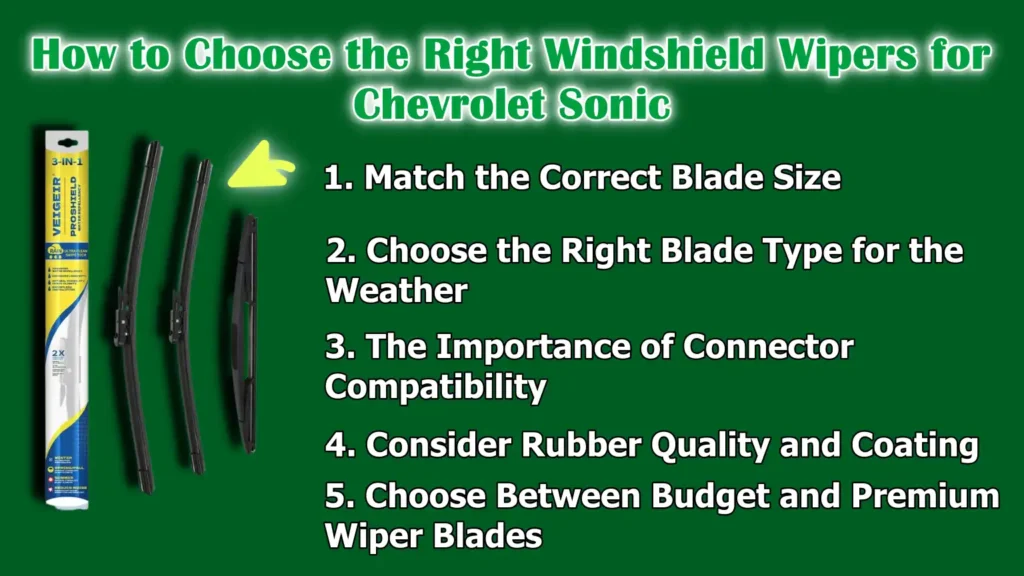
Choosing the right windshield wipers for your Chevrolet Sonic isn’t just about buying any blade that fits.
The right choice leads to better visibility, reduced noise, streak-free wiping and a longer lifespan for the wiper system.
Because the Chevrolet Sonic’s windshield is compact and curved, incorrect wiper blades can leave unwiped areas, wear out quickly, or put excessive strain on the wiper motor.
Understanding size, blade type, connection style, rubber quality and price helps drivers make a smart and safe decision.
1. Match the Correct Blade Size
The correct blade size is the first and most crucial factor when choosing windshield wipers for your Chevrolet Sonic.
Each wiper arm is designed for a specific blade length to ensure the wipers move smoothly without hitting the edges of the windshield or overlapping incorrectly.
A blade that’s too long can cause noise, damage the wiper arm, or scratch the glass, while a blade that’s too short can leave unwiped areas in the driver’s line of sight.
Always confirm the exact size based on the model year and body style to maintain proper wiping coverage and safety.
2. Choose the Right Blade Type for the Weather
Weather plays a significant role in how well windshield wipers perform.
In areas with heavy rainfall, beam-style wiper blades are often more effective because they apply even pressure across the windshield and resist wind lift at higher speeds.
In dusty or hot climates, wipers with a sealed design and heat-resistant rubber perform better and last longer.
For mild weather and occasional use, traditional or hybrid blades may suffice.
Choosing blades designed for local weather conditions ensures clear vision and longer blade life.
3. The Importance of Connector Compatibility
For wiper blades to function correctly, they must be securely attached to the wiper arm.
The Chevrolet Sonic typically uses a standard hook-style connector, but the exact design may vary depending on the year and trim level.
A blade that doesn’t fit the connector properly may feel loose, fall off, or fail to maintain sufficient pressure against the windshield.
Choosing wiper blades that explicitly state compatibility with your Chevrolet Sonic model helps ensure easy installation and reliable performance.
4. Consider Rubber Quality and Coating
The quality of the rubber edge directly impacts how cleanly and quietly the wipers operate.
High-quality rubber remains flexible longer and wipes away water smoothly without streaking.
Some wipers use silicone or coated rubber, which reduces friction, prevents cracking and performs better in extreme temperatures.
Coated blades also help repel water, improving visibility during rain.
Lower-quality rubber can harden quickly, leading to streaking and noise, specially in hot or dusty conditions.
5. Choose Between Budget and Premium Wiper Blades
Budget windshield wipers are typically less expensive and suitable for short-term or light use, but they may wear out quickly and require frequent replacement.
Premium wiper blades are more expensive but often offer superior wiping performance, quieter operation and a longer lifespan.
For Chevrolet Sonic drivers who frequently drive in rain or bad weather, premium wipers may offer better value over time.
The best option depends on driving habits, weather conditions and how often the wipers are used.
Read More:
How to Replace Chevrolet Sonic Windshield Wipers – Full & Easy Step
Replacing the windshield wipers on a Chevrolet Sonic is a simple maintenance task that most drivers can complete at home in just a few minutes.
Proper replacement ensures clear visibility, reduces noise and provides the correct pressure on the windshield.
When done correctly, new wipers effectively remove water without streaking and put less strain on the wiper motor.
Understanding each step helps avoid common mistakes, such as damaging the windshield, installing the wrong blades, or leaving the wiper arm loose.
1. Tools – If Any
In most cases, replacing Chevrolet Sonic windshield wipers does not require any special tools.
The wiper blades are designed with quick-release connectors that attach directly to the wiper arm by hand.
Some rear wipers on hatchback models may require light pressure or a simple plastic clip release, but tools are still generally not needed.
Having a soft cloth or towel handy is helpful to protect the windshield while working.
2. Safely Lift the Wiper Arms
Before removing the old wiper blades, the wiper arms should be carefully lifted away from the windshield.
Each arm is spring-loaded, meaning it will snap back quickly if released.
Placing a cloth on the windshield prevents the metal arm from hitting the glass and causing cracks or breaks.
Gently lifting the arms and securing them in place protects both the windshield and the wiper mechanism during the replacement process.
3. Remove the Old Wiper Blades
To remove the old wiper blades, locate the connector where the blade meets the wiper arm.
Most Chevrolet Sonic models have a hook-style connector that releases by pressing a small tab or sliding the blade downwards.
Once released, the blade slides off easily.
Carefully removing the blade prevents bending the wiper arm or damaging the connector, which could affect the fit of the new blade.
4. Install the New Wiper Blades Correctly
To install the new windshield wiper blade, slide it into the connector until it clicks firmly into place.
This click confirms that the blade is securely attached and will not come loose during use.
The blade should be straight along the arm and rest evenly against the windshield.
Correct installation ensures even pressure on the glass, minimizing streaks and improving wiping performance.
5. Test the Wipers After Installation
After installing both wiper blades, gently lower the wiper arms back onto the windshield.
Turn on the wipers using the windshield washer fluid to test their movement.
The blades should move smoothly, wipe evenly and operate quietly without sticking or leaving streaks.
Testing confirms proper installation and ensures your Chevrolet Sonic is ready for safe driving in rain or bad weather conditions.
How to Replace the Rear Windshield Wiper – If You Have
Rear windshield wipers are primarily found on Chevrolet Sonic hatchback models and play a crucial role in maintaining clear visibility at the rear in rainy, foggy and dusty conditions.
Due to airflow at the rear of the vehicle, water and debris accumulate differently on the rear window compared to the front windshield.
A properly functioning rear wiper helps drivers clearly see approaching vehicles and improves overall driving safety, specially when reversing or changing lanes.
Replacing the rear wiper correctly ensures smooth wiping, good contact with the glass and long-lasting performance.
1. Identifying Rear Wiper Compatibility
Rear windshield wipers differ from front wipers in both size and design.
The Chevrolet Sonic’s rear wiper has a specific blade length and a unique connector designed specifically for the rear wiper arm.
Front wiper blades cannot be used at the rear as they will not fit properly and will not conform to the shape of the rear window.
It’s important to check the model year and body style, as hatchback models have rear wipers while sedan models typically do not.
Confirming compatibility ensures the blade fits securely and wipes evenly without coming loose.
2. Removal and Installation Process
To replace the rear windshield wiper, the wiper arm should be gently lifted away from the glass until it locks into place.
The old blade can then be removed by pressing or sliding the release mechanism at the connection point.
Once released, the blade slides off easily.
The new rear wiper blade is then slid onto the arm until it locks into place.
A secure fit is essential because rear wipers operate at a fixed speed and rely on the correct attachment to maintain constant contact with the glass.
3. Common Mistakes When Replacing Rear Wipers
A common mistake is using front wiper blades instead of the specific rear blades, resulting in a poor fit and ineffective wiping.
Another mistake is forcing the blade on or off, which can damage the wiper arm or connector.
Some drivers forget to check that the blade is properly locked into place, causing it to come loose during use.
Allowing the wiper arm to hit the glass without a blade attached can even shatter the rear windshield.
Avoiding these mistakes ensures a safe, quiet and effective rear wiper replacement.
What are The Signs That Your Chevrolet Sonic Wiper Blades Need Replacement
Windshield wipers deteriorate gradually, meaning many Chevrolet Sonic drivers continue using them even after they’re no longer effective.
Worn wipers reduce visibility, increase driver fatigue and increase the risk of accidents in rain or bad weather.
Heat, sunlight, dust and daily use cause the rubber edge to degrade over time, making it less flexible and less effective at clearing water.
Recognizing the early signs of wiper wear allows drivers to replace them promptly and maintain safe, clear visibility.
1. Streaks and Smudges on the Windshield
The most common sign that your Chevrolet Sonic windshield wipers need replacing is streaking or smudging.
When the rubber edge is worn or dirty, it can’t clear water evenly, leaving lines or hazy patches on the glass.
These streaks can be particularly problematic at night or during heavy rain, making it difficult to see the road and oncoming headlights clearly.
Persistent streaking usually means the rubber has lost its smooth edge and is no longer sealing properly against the windshield.
2. Skipping or Chattering Noises
Skipping or chattering occurs when the wiper blades bounce across the windshield instead of gliding smoothly.
This noise is often caused by hardened rubber, uneven pressure, or a lack of flexibility in the blade.
For Chevrolet Sonic drivers, this can be specially noticeable on a dry or lightly wet windshield.
Skipping not only creates noise but also reduces cleaning effectiveness and can lead to uneven wear on the windshield surface over time.
3. Uneven Wiping or Missed Spots
If parts of the windshield remain wet or dirty after the wipers pass over, it’s a clear indication that the blades are no longer making full contact with the glass.
Uneven wiping can be caused by worn rubber, a bent wiper arm, or an incorrect blade size.
Missed spots are dangerous because they often occur directly in the driver’s line of sight, reducing reaction time and increasing the risk of driving in the rain.
4. Cracked, Hardened, or Deteriorated Rubber
Visible deterioration of the wiper blade rubber is a sure sign that replacement is needed.
Over time, exposure to heat, sunlight and dust causes the rubber to dry out and crack.
Hardened or cracked rubber loses its flexibility, preventing the blade from effectively clearing water.
For Chevrolet Sonic owners, worn rubber means the blades won’t function properly, even if they appear to be moving normally.
5. Poor Visibility in Rain
Poor visibility in the rain is the most serious sign of faulty windshield wipers.
If the windshield remains hazy, water accumulates quickly, or the wipers fail to clear the rain effectively, it’s time to replace them.
Clear visibility is crucial for safe driving and worn wipers can significantly increase braking distances and driver stress.
Replacing the wipers restores clear vision and improves driving confidence.
How to Maintain Chevrolet Sonic Windshield Wipers – Quality Tips
Proper windshield wiper maintenance provides Chevrolet Sonic owners with improved visibility, quieter operation and longer blade life.
Wiper blades are constantly exposed to dust, road grime, heat, sunlight and rain, which gradually degrades their performance.
Simple maintenance practices can prevent premature wear, reduce streaking and ensure the wipers function correctly when needed.
Regular care also reduces stress on the wiper motor and protects the windshield from scratches.
1. How often should you clean your wipers?
Windshield wipers should be cleaned at least once every one to two weeks, specially if the vehicle is driven regularly.
Dirt and dust accumulate on the rubber edges and act like sandpaper on the windshield, reducing wiping performance.
In dusty or polluted environments, more frequent cleaning maintains smooth contact with the glass.
Regularly cleaning the wipers prevents dirt buildup, reducing streaking and sticking.
2. The best way to clean wiper rubber edges
The best way to clean wiper rubber edges is to use a soft cloth or paper towel dampened with water or a mild windshield washer fluid.
Gently wiping the rubber edges removes dirt, oil and debris without damaging the blades.
Harsh chemicals and abrasive materials should be avoided as they can dry out or tear the rubber.
Clean rubber remains flexible longer and wipes the windshield more evenly.
3. Parking Tips for Rubber Protection
Parking habits can affect the lifespan of windshield wipers.
Whenever possible, parking your Chevrolet Sonic in shaded areas helps protect the rubber from direct sunlight, which can cause it to crack and harden.
In extreme heat, lifting the wiper arms slightly off the windshield for short periods reduces heat buildup on the rubber.
Avoiding parking in dusty areas, under trees, or near construction zones prevents debris from accumulating on the blades.
4. Seasonal Maintenance Tips
Seasonal changes significantly impact wiper performance.
In the summer, heat can dry out the rubber, making regular cleaning and inspection essential.
During the rainy season, checking the wipers more frequently ensures they can handle heavy rainfall without streaking.
In cold weather, never scrape ice and frost off the wipers, as this can tear the rubber.
Adapting your maintenance habits to the seasons will keep your Chevrolet Sonic’s windshield wipers working effectively year-round.
What are The Common Chevrolet Sonic Windshield Wiper Problems
Windshield wiper problems in a Chevrolet Sonic can occur suddenly or develop gradually over time.
These issues often affect visibility and can make driving unsafe in rainy or dusty conditions.
The wiper system relies on a combination of electrical and mechanical parts working together and when one part malfunctions or wears out, the entire system can be affected.
Understanding common wiper problems helps drivers quickly identify the cause and determine whether simple maintenance or professional repair is needed.
1. Wipers Not Working at All
When the windshield wipers don’t work at all, the problem is usually electrical.
This could be due to a blown fuse, a faulty wiper switch, or a defective wiper motor.
In some cases, the motor may be receiving power but is unable to rotate due to an internal malfunction.
For Chevrolet Sonic owners, this problem is critical as it completely eliminates the ability to clear the windshield during rain.
Checking the fuse is often the first step, as it’s the easiest and least expensive solution.
2. Slow or Weak Wiper Movement
Slow or weak wiper movement often indicates that the system is struggling to function properly.
This can be caused by a worn wiper motor, increased friction from dry or worn wiper blades, or dirt buildup in the linkage.
Cold weather can also thicken the grease inside the motor, slowing down the movement.
When wipers move slowly, they cannot effectively clear water, specially during heavy rain, compromising driving safety.
3. Wipers Stopping Mid-Sweep
Wipers that stop mid-sweep usually indicate a problem with the wiper motor, internal motor contacts, or linkage alignment.
This problem can also occur if the wiper arms are loose or misaligned.
For Chevrolet Sonic drivers, this issue is particularly dangerous as it can block the driver’s view at the worst possible time.
Ignoring this problem can lead to complete wiper failure over time.
4. Uneven Pressure or Poor Contact with the Glass
Uneven wiping or poor contact with the windshield is often caused by worn wiper blades, bent wiper arms, or low spring tension in the arm.
When the pressure is uneven, parts of the blade lift off the glass, leaving streaks or missed areas.
This problem is common as vehicles age and is often resolved by replacing the wiper blades or adjusting the wiper arms.
As well as, there’s research which is conducted with an advanced experimental setup to collect and analyze the friction, vibration and noise data between the wiper blade and windshield glass, so that study also shows that the frictional vibration and noise literally depends on blade pressure, motion speed, surface wetness and the rubber or glass interaction as well, which is why the mechanical structure and system design actually influence the noise generation and operational stability as well under the various conditions.[¹]
5. Motor, Fuse, or Linkage Issues
The windshield wiper system operates using a combination of a motor, fuse, relay, linkage and arms.
A blown fuse interrupts the power supply, a faulty motor reduces the force of movement and worn linkages can cause jerky or uneven movement.
Regular inspections can detect these problems early.
For Chevrolet Sonic owners, addressing these issues promptly ensures that the wipers remain reliable and the windshield stays clear, even in bad weather.
Full Information About Windshield Wiper Motor and Fuse
The windshield wiper motor and fuse are key components of the Chevrolet Sonic wiper system.
The motor provides the power to drive the wiper arms, while the fuse and relay protect the electrical system from overload and damage.
If either of these parts malfunctions, the wipers may stop working or operate erratically.
Understanding how these parts function allows drivers to quickly identify problems and avoid driving in low visibility conditions during rain or bad weather.
1. Replacing the Wiper Motor
In the Chevrolet Sonic, the windshield wiper motor is typically hidden under the plastic cowl panel, near the base of the windshield under the hood.
This location protects the motor from direct exposure to rain and road debris, while also keeping it close to the wiper arms and linkage.
Accessing the motor usually requires removing the cowl cover, which should be done carefully to avoid damaging clips or seals.
Knowing the motor’s location helps in troubleshooting issues such as water intrusion or loose electrical connections.
2. Basic Wiper Fuse and Relay
The wiper fuse and relay control the flow of electrical power to the wiper motor.
The fuse is designed to break the circuit if an electrical overload occurs, preventing damage to the motor or wiring.
The relay acts as a switch that allows the wiper system to safely handle higher currents.
In the Chevrolet Sonic, these components are typically found in a fuse box under the hood or inside the cabin.
A blown fuse is one of the most common reasons for wipers suddenly stopping.
3. Symptoms of a Faulty Motor or Fuse
When the wiper motor or fuse begins to fail, the wipers may exhibit some clear warning signs.
Wipers that don’t move at all often indicate a blown fuse or a faulty motor.
Slow, weak, or erratic movement can indicate that the motor is worn out or failing.
Wipers that operate intermittently or only at certain speeds may also signal electrical problems.
Recognizing these symptoms early can prevent wiper failure during challenging driving conditions.
4. When is replacement or repair necessary?
Replacement or repair is necessary when simple solutions, such as replacing a fuse, don’t restore normal wiper operation.
A worn or damaged motor usually requires replacement because the internal components are not easily repairable.
If the relay or wiring is faulty, proper repair can restore correct functionality.
For Chevrolet Sonic owners, timely repair or replacement ensures reliable wiper performance and safe visibility, specially during heavy rain or low-light conditions.
What are The Windshield Wiper Arm Problems
Windshield wiper arms play a crucial role in how well the Chevrolet Sonic’s windshield wipers function.
Most drivers focus on the wiper blades, but the arms are responsible for holding the blades at the correct angle and applying consistent pressure to the glass.
Over time, normal wear and tear, weather exposure and accidental damage can lead to problems with the wiper arms.
When the arms are damaged or worn, even new wiper blades won’t clean the windshield properly, resulting in reduced visibility and potentially dangerous driving conditions.
1. Bent or Loose Wiper Arms
Bent or loose wiper arms are a common problem, often caused by forcing wipers off an icy windshield, improper blade installation, or accidental impact.
A bent arm alters the angle at which the blade contacts the glass, leading to uneven wiping or missed spots.
Loose arms can wobble while in motion or fail to maintain consistent pressure.
For Chevrolet Sonic owners, these issues can result in streaking, noise and reduced cleaning performance, specially during heavy rain.
2. Reduced Spring Tension
Each windshield wiper arm contains a spring that presses the blade firmly against the windshield.
Over time, constant movement and weather exposure can weaken this spring.
When the spring tension is reduced, the blade doesn’t make full contact with the glass, allowing water to slip underneath.
This problem often becomes more noticeable at higher speeds when wind pressure pushes the blade away from the windshield, further impairing visibility.
3. Alignment Problems and Their Effects
Alignment problems occur when the wiper arms are not positioned correctly on the windshield.
Misaligned arms can stop too high or too low on the glass or overlap incorrectly during operation.
This can leave portions of the windshield dirty or block the driver’s view when the wipers are off.
Poor alignment also increases wear and tear on the blades and motor, leading to premature failure and a shortened system lifespan.
4. When to Replace Wiper Arms
Wiper arm replacement is necessary when the arm is severely bent, loose at the base, or fails to maintain proper pressure even after installing new blades.
If adjustments don’t correct uneven wiping or missed spots, the arm itself may be worn out.
For Chevrolet Sonic drivers, replacing a faulty wiper arm restores proper blade contact, improves visibility and helps prevent further damage to the windshield and wiper motor.
How to Do Seasonal Wiper Care for the Chevrolet Sonic
Seasonal changes significantly impact the performance of the Chevrolet Sonic’s windshield wipers.
Rain, heat, dust and cold all place different types of stress on the wiper blades and arms.
Using the right wipers for each season ensures clear visibility, reduces wear and tear on the wiper system and ultimately improves driving safety.
Understanding how weather affects wipers helps drivers prepare proactively rather than reacting to unexpected performance issues.
1. Use During Monsoon and Heavy Rain
During the monsoon season or heavy rainfall, windshield wipers are used more frequently and at higher speeds.
For Chevrolet Sonic drivers, this means the blades must maintain strong and consistent contact with the windshield to quickly clear large amounts of water.
Wipers that are already worn may experience problems, leading to streaking and reduced visibility.
Regular checks are crucial during the rainy season, as heavy rain accelerates rubber wear.
High-quality blades designed for wet conditions provide superior water removal and quieter operation.
2. Impact of Heat on Wiper Rubber
High temperatures and direct sunlight are among the biggest contributors to wiper blade deterioration.
Heat dries out the rubber, making it hard and brittle, reducing flexibility and wiping effectiveness.
In a Chevrolet Sonic parked in the sun for extended periods, the wipers can crack or develop rough edges even when not in use.
Regularly cleaning the blades and parking in shaded areas helps mitigate heat damage and extend blade life.
3. Winter Performance -If Applicable
In colder climates, winter weather affects wiper performance differently.
Low temperatures can stiffen the rubber, reducing its ability to conform to the windshield.
Ice and frost can also damage the rubber if the wipers are used to scrape a frozen windshield.
For Chevrolet Sonic drivers in cold climates, using blades that remain flexible in low temperatures improves visibility and reduces strain on the wiper motor.
Avoiding using the wipers on a frozen windshield helps prevent tearing and damage to the motor.
4. When to Change Wipers Seasonally
Changing windshield wipers seasonally helps maintain consistent performance throughout the year.
Wipers used heavily during the monsoon months may wear out quickly and should be inspected or replaced before the start of summer.
Similarly, blades exposed to extreme heat may not perform as well when heavy rains return.
For Chevrolet Sonic owners, checking the wipers at the beginning of each major season and replacing them at the first signs of wear ensures clear vision and safe driving in all weather conditions.
How Long do Chevrolet Sonic Windshield Wipers Last?
The lifespan of Chevrolet Sonic windshield wipers depends on several factors, including the type of wiper blade, weather conditions and how often the wipers are used.
Even high-quality wipers wear down over time as the rubber edge is constantly exposed to heat, sunlight, dust and friction against the glass.
Understanding how long wipers typically last helps drivers replace them before visibility is compromised and driving safety is affected.
1. Average Lifespan of Different Wiper Types
Traditional frame-style wiper blades typically last about six months under normal driving conditions.
Their open frame and basic rubber compound wear down quickly, specially in harsh weather.
Beam-style wiper blades often last longer, usually nine to twelve months, as they use more durable rubber and apply even pressure across the windshield.
Hybrid wiper blades fall in between, offering a balance of durability and performance.
The rear windshield wiper on Chevrolet Sonic hatchback models may last slightly longer due to less frequent use, but still requires regular inspection.
2. Driving and Weather Factors Affecting Lifespan
Weather significantly impacts the lifespan of windshield wipers.
High temperatures and intense sunlight dry out the rubber quickly, causing it to crack and harden.
Heavy rain and frequent wiper use increase friction, leading to faster wear of the rubber edge.
Dusty or polluted environments cause dirt to accumulate on the blades, accelerating wear.
Drivers who operate their Chevrolet Sonic in harsh weather conditions may need to replace their wipers more often than those driving in milder climates.
3. Usage Habits That Affect Wiper Life
Driving habits play a significant role in the lifespan of your windshield wipers.
Using the wipers on a dry or dusty windshield increases friction and causes the rubber to wear down.
Failure to clean the blades regularly allows dirt to abrade the rubber edges.
On the other hand, using windshield washer fluid, cleaning the blades frequently and parking your car in shaded areas will help extend the life of your wipers.
With careful use and proper maintenance, your Chevrolet Sonic windshield wipers will provide long-lasting performance.
How to Ensure Safety of Chevrolet Sonic Windshield Wipers
Windshield wipers are a crucial safety feature in the Chevrolet Sonic, specially during rain and bad weather.
Clear visibility allows the driver to see road markings, other vehicles, pedestrians and sudden hazards in time to react safely.
When wipers malfunction or fail to operate properly, visibility is rapidly reduced, increasing the risk of accidents.
Following basic safety guidelines related to windshield wipers ensures the safety of both the driver and others on the road.
1. The Importance of Clear Visibility in Rain
Clear visibility is paramount when driving in the rain, as water on the windshield can distort vision and reduce contrast.
Properly functioning wipers remove rainwater evenly, allowing the driver to maintain a clear view at all times.
In the Chevrolet Sonic, with its compact windshield, even small streaks can obstruct crucial parts of the driver’s field of vision.
Good visibility reduces reaction time, improves lane control and helps drivers more accurately judge distance and speed on wet roads.
2. Risks of Driving with Faulty Wipers
Driving with faulty windshield wipers is dangerous because worn rubber blades cannot effectively clear water.
Streaks, smudges and missed areas can obscure road signs, pedestrians and brake lights, specially at night.
Faulty wipers can also create glare from oncoming headlights, making it difficult to focus.
For Chevrolet Sonic drivers, neglecting faulty wipers increases stress, fatigue and the risk of losing control during sudden heavy downpours.
3. Safe Driving Practices During Heavy Rain
During heavy rain, using properly functioning windshield wipers is only one part of safe driving.
Slowing down helps maintain better control and allows the wipers to clear the water more effectively.
Maintaining a safe distance from other vehicles reduces the risk of sudden braking.
Using windshield washer fluid helps remove dirt and oil, which can combine with rainwater to reduce visibility.
Before driving in heavy rain, ensuring your wipers are working properly enhances safety and confidence on the road.
Conclusion – Best Chevrolet Sonic Windshield Wipers
Windshield Wipers are literally protective accessories that prevent your windshield’s visibility and ensure you always get the safe vision ahead.
Furthermore, they ensure that drivers have a clear view of the road in rain, dust, fog and other adverse weather conditions, which directly impacts reaction time and overall driving safety.
Choosing the correct wiper size, type and quality, whether OEM or aftermarket, is crucial for optimal performance.
Regular maintenance, including cleaning, inspection and timely replacement, extends the lifespan of the wipers and protects both the windshield and the wiper motor.
Weather factors such as heat, rain and cold further affect wiper performance, making it essential to adapt maintenance practices accordingly.
By understanding common problems, signs of wear and safe replacement procedures, Chevrolet Sonic owners can ensure consistent visibility, reduce the risk of accidents and enhance driving confidence.
Investing a little time and money in windshield wiper maintenance or upgrades yields significant benefits in terms of safety, comfort and peace of mind.
Now, you can comment down below for more information.
Frequently Asked Questions
Q1. How do I know what size wiper blades I need for my Chevrolet Sonic?
Answer: To find the correct wiper blade size for your Chevrolet Sonic, consult your owner’s manual or measure your existing blades. Note that the driver-side and passenger-side blades are typically different lengths. For hatchback models, the rear wiper is shorter and also needs to be checked separately. Choosing the correct size ensures proper contact with the windshield, prevents streaking and protects the wiper motor and arms from damage. Always confirm the size for your specific model year and trim level, as there may be slight variations.
Q2. What types of wiper blades can I use on my Chevrolet Sonic?
Answer: Three main types of wiper blades can be used on a Chevrolet Sonic: conventional (frame-style), beam (frameless) and hybrid. Conventional blades have a metal or plastic frame and are generally less expensive, but they can wear out faster and don’t perform as well in heavy rain. Beam blades are flexible, provide even pressure across the windshield and perform very well in rain, wind and snow. Hybrid blades combine the strength of a conventional frame with the sleek design of beam blades. Hatchback models also utilize a specific blade for the rear window, designed for a proper fit and effective wiping.
Q3. Should I choose OEM or aftermarket wiper blades?
Answer: OEM wipers are manufactured by Chevrolet to match factory specifications. They offer a perfect fit and reliable performance but are typically more expensive. Aftermarket wipers are made by third-party manufacturers and are often available in a wider range of styles and price points. Many high-quality aftermarket wipers can outperform OEM blades because they use stronger rubber and advanced designs. The choice depends on your budget, weather conditions and how long you want the blades to last.
Q4. How often should I replace my Chevrolet Sonic wiper blades?
Answer: On average, conventional wipers last about six months, while beam or hybrid blades can last nine to twelve months. Harsh weather conditions such as heavy rain, intense sunlight, or dusty roads can shorten their lifespan. Wipers should also be replaced if they leave streaks, skip, chatter, or make noise when wiping. Regular checks every few months are a good practice to ensure safe visibility.
Q5. How do I know if my wiper motor or fuse is failing?
Answer: If the wipers don’t move at all, move slowly, intermittently, or only work at certain speeds, the problem could be with the wiper motor, fuse, or relay. A blown fuse is often easy to fix, but a faulty motor may require replacement. Checking the motor’s location under the cowl panel and inspecting the fuse box helps in troubleshooting. Timely repairs ensure the wipers function reliably during rain or bad weather.
Q6. Can I replace my Chevrolet Sonic wipers myself?
Answer: Yes, most wipers are easy to replace and don’t require any tools. The front and rear blades typically have quick-release connectors that slide or click into place. Carefully lifting the wiper arms and following the connector instructions ensures proper installation. Always test the wipers after replacement to ensure they move smoothly, maintain even pressure and clean the windshield effectively.
Q7. How do I maintain my wipers to make them last longer?
Answer: Regular maintenance includes cleaning the rubber edges with water or a mild washer fluid to remove dirt, dust and debris. Avoid using the wipers on a dry windshield or to remove ice, as this can damage the rubber. Parking in shaded areas and lifting the wipers in extreme heat or cold helps preserve the rubber and spring tension. Seasonal checks are recommended to adjust maintenance based on weather and driving conditions.
Q8. What are some common problems with Chevrolet Sonic wipers?
Answer: Common problems include streaking, intermittent operation, uneven wiping, noise and wipers stopping mid-sweep. These issues can be caused by worn blades, bent or loose wiper arms, weak spring tension, motor problems, or blown fuses. Identifying the cause quickly helps maintain visibility and prevents further damage to the wiper system or windshield.
Q9. How much do Chevrolet Sonic wipers cost?
Answer: Front wiper blades typically range from budget options to premium blades. Traditional blades are the least expensive, while beam and hybrid blades are more expensive but offer longer lifespan and better performance. Rear wipers for hatchback models are smaller and slightly less expensive. OEM wipers are usually more expensive than aftermarket options and DIY installation is free, while service center installation may incur labor charges.
References:
[1] A Study on an Experimental System of Wiper–Windshield Friction Vibration and Noise
https://www.mdpi.com/2075-4442/13/7/296

Guys, I’m a car audio enthusiast and customization expert and I love clear sound and clean installation. Plus, I have spent years helping people build their dream audio setups. And whenever I’m working on cars, I probably listen to music and thinks about the next big upgrade.