
Written By: Don Dodi
Fact Checked By: Kristen Brown
Reviewed By: Diego Rosenberg
So, the Honda Pilot has the large windshield that actually demands wiper blades to deliver the strong and even cleaning power all across its wide viewing area.
Basically, you need specially designed windshield wiper blades to match the Honda Pilot’s wide, tall and slightly curved windshield, even they should have aerodynamic shape to maintain the downward force during the high speed driving for perfect visibility.
If the windshield wiper have the poor fitment or incorrect sizes then it can literally leave streaks, create the blind spots and even it can increase the glare from the oncoming headlights that reduces the reaction time drastically during the sudden braking or lane changes.
That’s why, we have come up with these 5 Best Honda Pilot Windshield Wiper Blades that has the high-quality performance and it operates in quiet and smooth fashions.
Also, these wiper blades are designed to match the Pilot’s windshield shape to resits heat and UV exposure and that’s why it performs reliably in extreme weather conditions such as: summer heat, winter cold and monsoons as well.
Know, The Correct Windshield Wiper Blade Sizes for the Honda Pilot
| Honda Pilot Vehicle Model | Driver’s Side Wiper Blades | Passenger’s Side Wiper Blades | Rear Side Wiper Blades |
|---|---|---|---|
| From 2016 to 2022 Honda Pilot | 26-Inch | 24-Inch | 14-Inch |
| From 2009 to 2015 Honda Pilot | 22-Inch | 21-Inch | 14-Inch |
| From 2003 to 2008 Honda Pilot | 24-Inch | 21-Inch | 14-Inch |
1. Standard Front Wiper Blade Size Specifications
The Honda Pilot uses two different front windshield wiper blade sizes, one for the driver’s side and one for the passenger’s side, because the driver’s viewing area is larger and more critical.
The driver-side blade is always longer to ensure clear visibility, while the passenger-side blade is slightly shorter to match the curvature of the windshield.
This difference is intentional and allows the wipers to operate smoothly without colliding or leaving uncleaned areas.
Using the correct front blade sizes ensures the wipers clean the glass evenly, minimize streaking and provide clear visibility in rain, dust, or road spray.
Installing blades that are too long or too short can result in poor wiping performance, noise, or even damage to the wiper arms and windshield edges.
2. Rear Windshield Wiper Blade Size and Function
The Honda Pilot also features a rear windshield wiper, which is specially important because SUVs tend to accumulate more dust, mud and water on the rear window due to airflow patterns during driving.
The rear wiper blade is shorter than the front blades and is specifically designed to match the precise curvature and size of the rear window.
Its primary function is to maintain a clear view of the rear while reversing, parking, or driving in rain and fog.
Using the correct size rear wiper blade ensures smooth operation and prevents missed spots that could obstruct visibility.
An incorrect rear blade size can lead to incomplete cleaning or uneven pressure, resulting in streaking and impaired rearward visibility.
3. Honda Pilot Variations by Model Year and Generation
The wiper blade sizes for the Honda Pilot can vary depending on the model year and generation, as Honda has updated the windshield shape, wiper arm design and overall body structure over time.
Newer generations may use different blade lengths or connector types compared to older models.
Even minor design changes in the windshield curvature or hood angle can affect how the wipers sit on the glass.
Due to these differences, a wiper blade that fits one Honda Pilot year may not fit another correctly.
This is why it’s crucial to confirm the exact model year and generation before purchasing replacement wiper blades.
4. The Importance of Confirming Trim Level and Production Year Before Purchasing
The Honda Pilot is available in several trim levels and in some cases, the wiper arm style or the design of the factory-installed blades may differ slightly depending on the trim or production batch.
Verifying the trim level and production year ensures that the wiper blades you choose are fully compatible with your vehicle.
This simple step prevents common problems such as incorrect attachment, loose fitting, uneven wiping, or premature wear.
Taking the time to confirm the correct size and fit leads to better wiping performance, longer blade life and improved safety by maintaining clear visibility in all driving conditions.
What are the Basic Types of Windshield Wiper Blades Compatible with the Honda Pilot
1. Conventional Frame – Style Windshield Wiper Blades
Conventional frame-style windshield wiper blades feature a metal framework with multiple pressure points that press the blade against the windshield.
This design has been used for many years and is commonly found on older vehicles and some factory-installed setups.
In the Honda Pilot, conventional blades can provide acceptable wiping performance in light to moderate rain, specially for everyday city driving at lower speeds.
However, because the Pilot’s windshield is large and curved, frame-style blades can sometimes struggle to maintain consistent contact across the entire glass surface.
The metal frame can also accumulate dirt and debris over time, reducing wiping smoothness and potentially causing uneven pressure or noise if not cleaned regularly.
2. Beam-Style/Frameless Windshield Wiper Blades
Beam-style windshield wiper blades, also known as frameless blades, are designed with a single, flexible structure that naturally conforms to the curve of the windshield.
This design allows them to apply more even pressure across the Honda Pilot’s wide windshield, which helps improve visibility in heavy rain and at higher speeds.
Because there is no exposed metal frame, these blades are less prone to accumulating dirt, ice, or debris, making them more reliable in bad weather conditions.
Beam-style blades also perform better at highway speeds as they resist wind pressure and maintain stronger contact with the glass, resulting in smoother and quieter wiping.
3. Hybrid Windshield Wiper Blade Designs
Hybrid windshield wiper blades combine features of both conventional and beam-style designs.
These typically feature a supportive internal frame for strength and stability, covered by a smooth outer shell that improves airflow and protects the blade from dirt and moisture.
In the Honda Pilot, hybrid blades offer a good balance between flexibility and durability.
They are designed to conform to the shape and curvature of the windshield while maintaining consistent contact in varying weather conditions.
This type of blade is often chosen by drivers who want improved performance compared to traditional frame-style blades, without switching to a completely frameless design.
4. Pressure Distribution, Durability and Performance Comparison
Pressure distribution is one of the most critical factors in wiper blade performance, specially in a large SUV like the Honda Pilot.
Blades that distribute pressure evenly across the windshield are more effective at clearing water and debris without leaving streaks or missed spots.
Durability depends on how well the blade material withstands heat, sunlight, rain and constant movement across the glass.
Performance is measured by how smoothly and quietly the blade wipes, how well it clears the windshield in heavy rain and how long it maintains consistent contact.
Designs that manage pressure evenly and protect the blade structure generally last longer and provide better visibility over time.
5. Suitability for City Driving, Highway Speeds and Off-Road Conditions
Different driving environments place different demands on windshield wiper blades.
In city driving, where speeds are lower and there are frequent stops, smooth and quiet operation is important for comfort.
On the highway, the Honda Pilot faces high winds, so the blades must resist lifting at high speeds and maintain consistent contact.
During off-road driving or travel on dusty or muddy roads, the wiper blades must be able to handle dirt and debris without sticking or leaving streaks.
Choosing a blade type that matches how and where the Honda Pilot is driven helps ensure reliable visibility, reduced wear and tear and safer driving in all conditions.
How to Ensure Wiper Blade Material and Construction Quality
1. Durability and Flexibility of the Rubber Compound
The rubber portion of the windshield wiper blade is the part that comes into direct contact with the glass, so its quality significantly impacts visibility and safety.
In the Honda Pilot, the rubber must be flexible enough to conform to the curve of the large windshield while effectively clearing water, dust and road debris.
High-quality rubber remains soft and pliable over time, allowing it to glide smoothly and evenly across the glass without skipping.
Poor-quality rubber can harden, crack, or lose its shape, specially after prolonged exposure to sunlight and heat.
When this happens, the blade may leave streaks on the windshield or fail to clear certain areas, reducing visibility during rain or bad weather.
2. Metal vs Composite Internal Structure
Every wiper blade has an internal supporting structure that helps maintain even pressure of the rubber edge against the windshield.
Traditional blades often use metal components for strength, while newer designs may utilize composite materials that are lighter and more flexible.
In a vehicle like the Honda Pilot, with its wide and curved windshield, the internal structure plays a crucial role in maintaining consistent contact.
A well-designed structure helps the blade naturally conform to the glass, while a poorly designed one can lead to uneven pressure or lifting at the edges.
Composite structures offer better resistance to bending, corrosion and long-term wear compared to some basic metal designs, specially in wet or dusty environments.
3. Protection from UV Rays, Heat, Dust and Heavy Rain
The windshield wiper blades on your Honda Pilot are constantly exposed to sunlight, heat, rain, dust and changing weather conditions.
The sun’s UV rays can gradually degrade the rubber, making it hard and less effective.
High temperatures can accelerate this process, while dust and sand can wear down the blade’s edge as it moves across the glass.
During heavy rain, the blades must remain strong and stable to quickly clear large amounts of water.
Blades made from weather-resistant materials handle these conditions better, maintaining their shape and wiping ability for longer.
4. How Construction Quality Affects Streaking, Noise and Lifespan
The quality of construction directly impacts how smoothly and quietly wiper blades operate.
When a blade is well-made, it moves evenly across the windshield, providing a clean wipe without any rattling or squeaking.
Poor construction leads to wipers that don’t function properly, resulting in streaking, vibration and irritating noise.
Over time, lower-quality blades deteriorate quickly, losing their ability to effectively clean the windshield.
Investing in high-quality wiper blades for your Honda Pilot extends their lifespan, improves visibility in all weather conditions and makes for a more comfortable and safer driving experience.
How to Ensure Performance in Different Weather Conditions and Seasonal Considerations
1. Performance in Heavy Rain and Monsoon Conditions
The Honda Pilot is often driven in heavy rain and monsoon conditions, where visibility can be rapidly reduced.
In such weather, the windshield wiper blades must be able to clear large amounts of water in a single pass without leaving streaks or water lines.
Because the Pilot’s windshield is wide and tall, rainwater spreads across a large surface area, making a strong and consistent wiping action essential.
High-performance wiper blades help efficiently remove water, allowing the driver to clearly see road markings, other vehicles and pedestrians even during heavy downpours.
Weak or worn blades can struggle in these conditions, leading to streaking and delayed water removal, increasing the risk of driving hazards.
2. Dealing with Dust, Pollen and Pollution
In many driving environments, specially urban and arid areas, dust, pollen and airborne pollutants accumulate on the windshield throughout the day.
When the wipers are used, this dry buildup can cause streaking or scratching if the blades are not in good condition.
Effective windshield wiper blades for the Honda Pilot are designed to evenly wipe away fine particles without scratching the glass.
Good performance in dusty conditions helps maintain clear vision and reduces glare, particularly during sunrise, sunset, or nighttime driving when a dirty windshield can scatter light and strain the driver’s eyes.
3. Wiping Consistency and Frost Resistance in Cold Weather
In cold weather, windshield wiper blades must remain flexible even as temperatures drop.
Cold weather can stiffen lower-quality rubber, reducing its ability to conform to the windshield and wipe effectively.
For the Honda Pilot, consistent wiping in cold conditions is crucial as frost, light snow and road salt can quickly impair visibility.
Blades that resist freezing and remain flexible help clear moisture easily without streaking or excessive noise.
This ensures reliable performance during winter mornings and long cold-weather drives.
4. Performance in Warm Weather and the Risk of Rubber Hardening
High temperatures and intense sunlight can be particularly damaging to windshield wiper blades.
Prolonged exposure to heat can cause the rubber to dry out, harden and lose its shape.
In the Honda Pilot, which may be parked outdoors for extended periods, heat damage can lead to cracking and reduced wiping efficiency.
When the rubber hardens, it fails to maintain proper contact with the windshield, resulting in streaking and uneven cleaning.
Choosing blades designed to withstand warm weather helps maintain a smooth wiping action and extends the blades’ lifespan.
5. All-Season vs Seasonal Wiper Blade Options
Some windshield wiper blades are designed for year-round use, while others are engineered to perform best in specific seasons.
All-season blades aim to strike a balance between flexibility, durability and performance across varying weather conditions.
Seasonal blades may offer superior performance in extreme heat or cold, but they may not last as long outside of their intended conditions.
For Honda Pilot owners, choosing the right option depends on local climate and driving habits.
Understanding the differences allows drivers to select wiper blades that provide reliable visibility, enhanced durability and safer driving throughout the year.
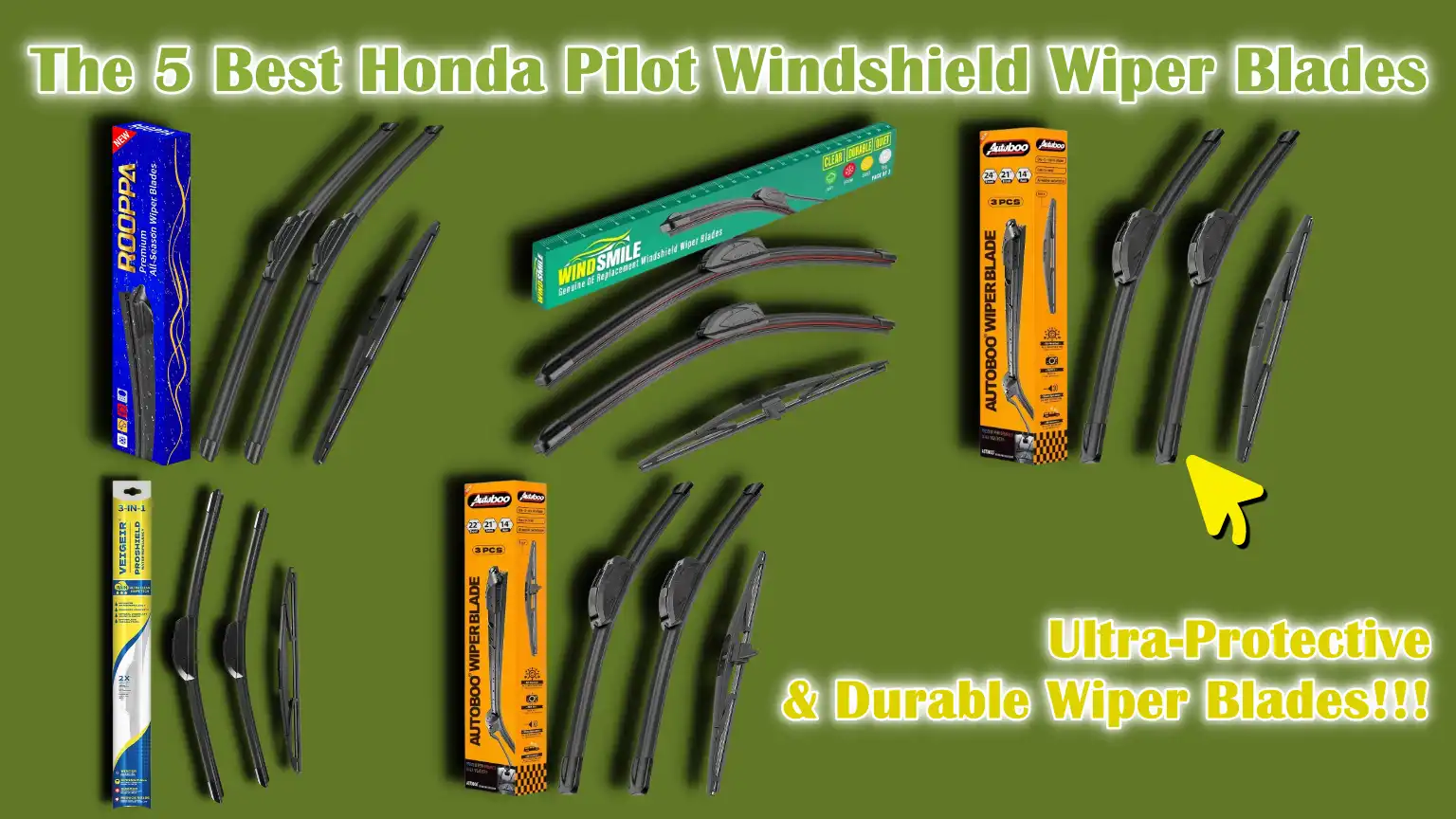
The 5 Best Honda Pilot Windshield Wiper Blades – Premium Quality Wipers
These are high-quality windshield wipers for Honda Pilot, also there are lot of features available to maintain the clear visibility in varieties of seasons.
#1. Rooppa

Specifically Designed for: 2016 to 2022 Honda Pilot
Wiper Blade Sizes: 26-Inch Driver’s Side + 24-Inch Passenger’s Side + 14-Inch Rear Wiper Blades
Rooppa is the manufacturer of this specifically designed windshield wipers, that even matches the correct size, curvature and wiping angle of the Honda Pilot’s windshield, that’s how it ensures full surface contact from edge to edge.
Even, there are aerodynamic blade structure is available that distributes the pressure in even manner and these blades design helps it to eliminate the streaking, skipping and missed spots problems during the heavy rain and other harsh weather conditions.
Not only this, it is build with high quality rubber and stainless steel material that made them truly durable and adapts the windshield curvature as rubber material gives it much needed flexibility.
Also, these blades have sizes of 26-inch, 24-inch and 14-inch that’s why you can easily install them on 2016 to 2022 Honda Pilot comfortably and it doesn’t requires any adjustments as well.
#2. WINDSMILE
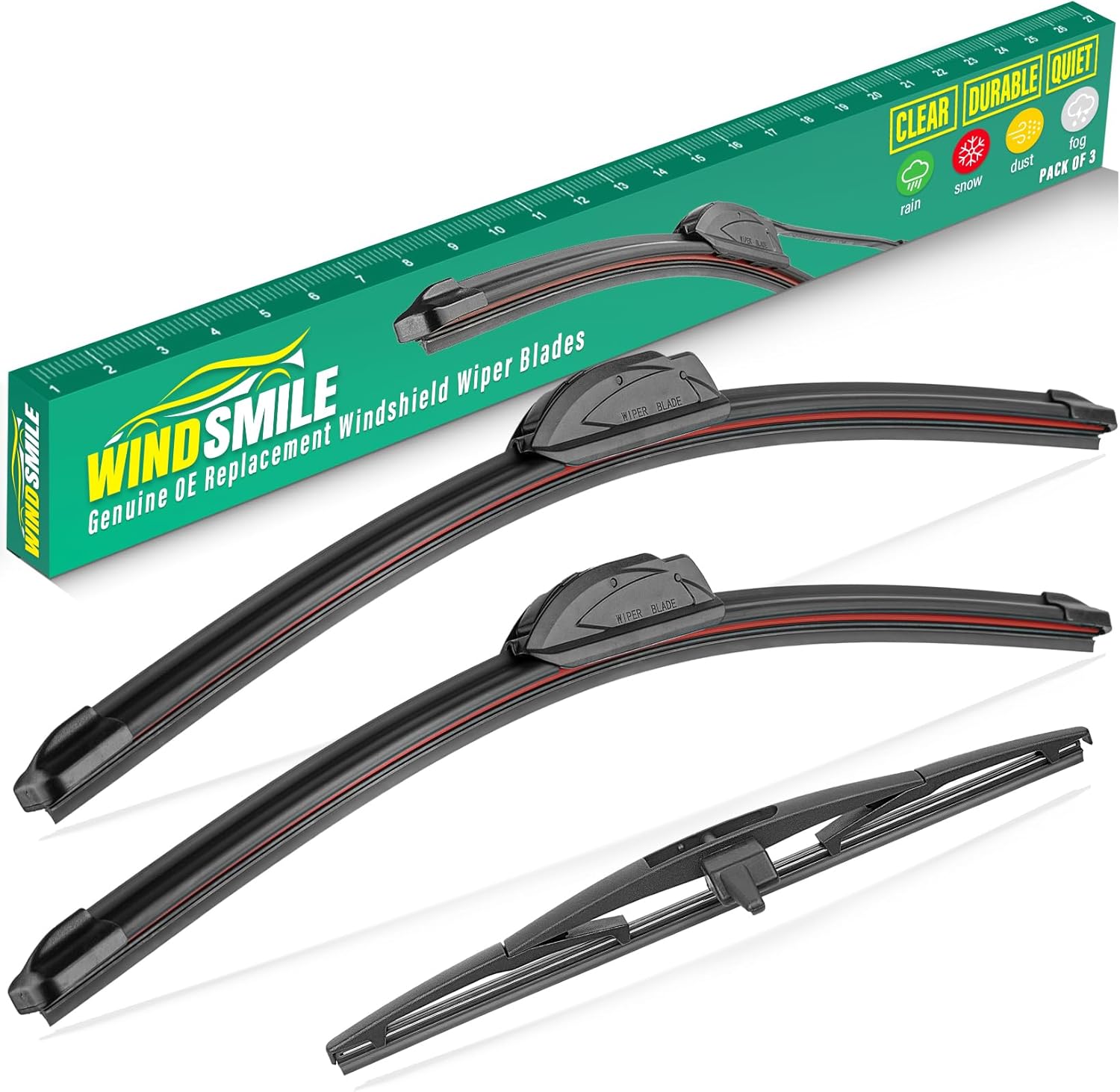
Specifically Designed for: 2009 to 2015 Honda Pilot
Wiper Blade Sizes: 22-Inch Driver’s Side + 21-Inch Passenger’s Side + 14-Inch Rear Wiper Blades
WINDSMILE is the designer of this aerodynamic windshield wipers for Honda Pilot, because of the specific design it reduces wind lift and vibration and these are durable enough to provide the clear vision in higher speeds or in unpredictable weather.
Additionally, it is made of combination of rubber and stainless steel materials that provides durability and there’s precisely engineered profile that allows air to flow smoothly over the blade, that keeps it firmly pressed against the windshield even during storms or highway driving.
Also, there are 22-inch, 21-inch and 14-inch wiper blades are available and these are fully compatible with 2009 to 2015 Honda Pilot, which is why you can quickly and easily replace them with worn-out ones.
#3. AUTOBOO

Specifically Designed for: 2003 to 2008 Honda Pilot
Wiper Blade Sizes: 24-Inch Driver’s Side + 21-Inch Passenger’s Side + 14-Inch Rear Wiper Blades
AUTOBOO comes with this heavy-duty windshield wiper blades for Honda Pilot, these blades can perform well in harsh climates such as: intense heat, heavy rain and freezing conditions as well.
Because of the rubber and stainless material, the blade resists cracking, splitting and surface wear which is caused by the UV exposure and other environmental contaminants as well.
Even, the wiping edge is designed to maintain the flexibility across a wide range of temperature changes, also it allow it to glide up and down smoothly that’s why you don’t have to worry about the visibility in high speed.
Plus, there are 24-inch, 21-inch and 14-inch wiper blades that is fully compatible with Honda Pilot from 2003 to 2008 vehicle model.
4. VEIGEIR

Specifically Designed for: 2016 to 2022 Honda Pilot
Wiper Blade Sizes: 26-Inch Driver’s Side + 24-Inch Passenger’s Side + 14-Inch Rear Wiper Blades
VEIGEIR is the manufacturer and it is engineered with a focus on quiet operation and smooth motion, that’s why these Honda Pilot windshield wiper blades provides high quality wipes and reduced cabin noise as well.
As well as, it is engineered with high-quality natural rubber that delivers exceptional wiping performance and doesn’t squeaks.
It’s frame is precisely-balanced that provides even pressure distribution to help you to prevent the vibration and sudden jerking movement during the up and down movement.
Also, you can easily install them on 2016 to 2022 Honda Pilot model, as wiper blades sizes are: 26-inch, 24-inch and 14-inch.
#5. AUTOBOO

Specifically Designed for: 2009 to 2015 Honda Pilot
Wiper Blade Sizes: 22-Inch Driver’s Side + 21-Inch Passenger’s Side + 14-Inch Rear Wiper Blades
AUTBOO comes with this truly dependable windshield wiper blades for Honda Pilot, even it has the ideal blade design that maintains consistent contact with the windshield.
Even, there is high quality rubber material is used that’s why it has the ability to adapt to the glass curvature accordingly and provide efficient wiping quality.
Also, to improve the visibility in harsh weather conditions, these wiper blades has smooth and efficient wiping edges that clears the rain, dust and other light debris.
Moreover, these wiper blades has 22-inch, 21-inch and 14-inch wiper sizes that’s why you can easily install them on 2009 to 2015 Honda Pilot model.
How to Ensure Fitment, Mounting and Compatibility with Honda Pilot
1. Honda Pilot Wiper Arm Connector Types
The Honda Pilot utilizes a specific wiper arm connector design that ensures secure attachment of the windshield wiper blades and smooth movement across the glass.
These connectors are designed to firmly hold the blade in place while maintaining the correct angle and pressure during operation.
Because connector designs can vary depending on the model year and generation, not every wiper blade will fit correctly without the proper matching connector.
Using a blade designed for the Honda Pilot’s wiper arm ensures proper alignment, stable movement and consistent wiping performance, specially on the vehicle’s large windshield.
2. Pre-Installed Adapters vs Multi-Adapter Systems
Some windshield wiper blades come with pre-installed adapters that are pre-configured to fit specific vehicles like the Honda Pilot.
These blades are typically easier and quicker to install as they involve fewer steps and reduce the likelihood of incorrect fitting.
Other blades utilize a multi-adapter system that includes several connector options in a single package.
While these systems offer flexibility, they require careful selection and installation of the correct adapter.
If the wrong adapter is used or not properly locked into place, the blade may not sit correctly on the windshield, leading to uneven wiping or noise.
3. OEM-Style Fit vs Universal Fit Blades
OEM-style windshield wiper blades are designed to match the original factory specifications of the Honda Pilot.
This means they closely adhere to the windshield curvature, wiper arm angle and pressure requirements specified by the manufacturer.
Universal fit blades are designed to work on many different vehicles, including the Honda Pilot, but their performance depends on how well they match the specific windshield design.
While universal blades can be convenient, OEM-style fit blades often provide more consistent wiping, quieter operation and better long-term reliability because they are engineered to the vehicle’s exact specifications.
4. The Importance of Secure Locking to Prevent Blades from Lifting or Detaching
Secure locking is one of the most critical aspects of windshield wiper blade fitment.
When a blade is properly locked onto the wiper arm, it remains firmly in place, even during heavy rain, high-speed driving and strong winds.
In the Honda Pilot, which experiences considerable airflow due to its size and height, a loose or improperly locked blade can lift off the windshield or even detach completely.
Proper locking ensures consistent contact with the glass, preventing sudden loss of visibility and protecting both the windshield and the wiper arm from damage.
How to Prevent Noise, Streaks and Enhance the Wiping Clarity
1. Causes of Rattling, Squeaking and Vibration
Rattling, squeaking, or vibrating noises coming from the windshield wiper blades usually indicate that something isn’t working correctly.
In the Honda Pilot, these noises often occur when the rubber edge is hardened, uneven, or worn.
Dirt, oil and road grime on the windshield can also increase friction, causing the blade to stick and release as it moves, resulting in noise.
Incorrect blade size or poor fit can exacerbate this problem, disrupting smooth movement across the glass.
These noises aren’t just annoying; they often mean the wipers aren’t cleaning the windshield properly, which can reduce visibility during rain.
2. How Blade Edge Design Affects Wiping Smoothness
The edge of a wiper blade is carefully designed to glide smoothly across the windshield and push water away.
A well-designed blade edge maintains a clean, even line of contact with the glass, helping to remove water in a single, smooth motion.
If the edge is damaged, uneven, or deformed, it can drag across the windshield instead of gliding, causing streaks and juddering.
On a large windshield like that of the Honda Pilot, the correct edge design is specially important because any minor imperfection can become more noticeable across the larger wiping area.
3. The Impact of Windshield Condition on Wiping Performance
The condition of the windshield also plays a significant role in how well the wiper blades perform.
Scratches, small chips and accumulated residue can disrupt the smooth movement of the blades, leading to uneven wiping and streaking.
Hard water spots and leftover cleaning chemicals can also prevent the blades from making proper contact with the glass.
For Honda Pilot owners, keeping the windshield clean and in good condition allows the wiper blades to work more effectively and last longer.
Even high-quality blades can perform poorly if the glass surface is dirty or damaged.
4. Maintaining Consistent Contact Across the Entire Glass Surface
Consistent contact between the wiper blades and the windshield is crucial for clear visibility.
On the Honda Pilot’s wide and curved windshield, the blades must apply even pressure from one end to the other.
If the pressure is uneven, some areas may remain wet or dirty after each swipe.
Properly fitted and well-maintained blades are designed to closely follow the contour of the glass, ensuring consistent contact across the entire surface.
This consistent contact reduces streaking, minimizes noise levels and ensures the driver always has a clear view of the road.
Why Aerodynamics and High-Speed Stability Really Matters?
1. The Impact of Air Pressure on Large SUV Windshields
When driving at high speeds, the large and tall windshield of the Honda Pilot is subjected to significant air pressure, which can create lift on the wiper blades.
Wind lift occurs when air pressure causes the blade to separate slightly from the glass, reducing contact and impairing wiping effectiveness.
This is particularly common in SUVs due to their taller front profile, which results in greater air resistance compared to smaller cars.
If not properly managed, wind lift can cause even high-quality blades to leave streaks or fail to clear water effectively at high speeds, compromising visibility and safety.
2. The Role of Aerodynamic Spoilers on Wiper Blades
Many modern wiper blades for the Honda Pilot feature integrated aerodynamic spoilers in the blade design.
These spoilers utilize the airflow over the vehicle to press the blade more firmly against the windshield, rather than allowing it to lift.
This helps the blade maintain consistent contact, specially at highway speeds.
The spoiler also aids in water dispersion and reduces the likelihood of streaking or chattering, ensuring a clear windshield even when the car is traveling at high speeds.
3. Stability During Highway Driving and Strong Crosswinds
Highway driving and strong crosswinds can cause wiper blades to vibrate, lift, or move erratically.
In large SUVs like the Honda Pilot, the combination of a wide windshield surface and a tall vehicle profile increases the susceptibility to these air pressure effects.
These blades are designed for stability that actually pressures and maintain consistent wiping, preventing uneven clearing of water or debris.
Properly fitted and aerodynamic wiper blades are essential for keeping the windshield clean and preventing driver distraction, specially when traveling at high speeds.
4. Preventing streaking and uneven pressure at high speeds
Streaking occurs when the wiper blade moves unevenly across the glass, leaving streaks or dry spots.
Uneven pressure can also reduce the blade’s ability to effectively remove water or debris.
In the Honda Pilot, the risk of streaking increases at high speeds if the blades are not properly designed or installed.
Quality blades with aerodynamic features and flexible construction conform to the shape of the windshield and resist wind pressure, ensuring even pressure from top to bottom.
This results in smooth wiping, reduced noise and clear visibility even in strong winds or heavy rain.
How to Install and Replace Honda Pilot Windshield Wiper Blades
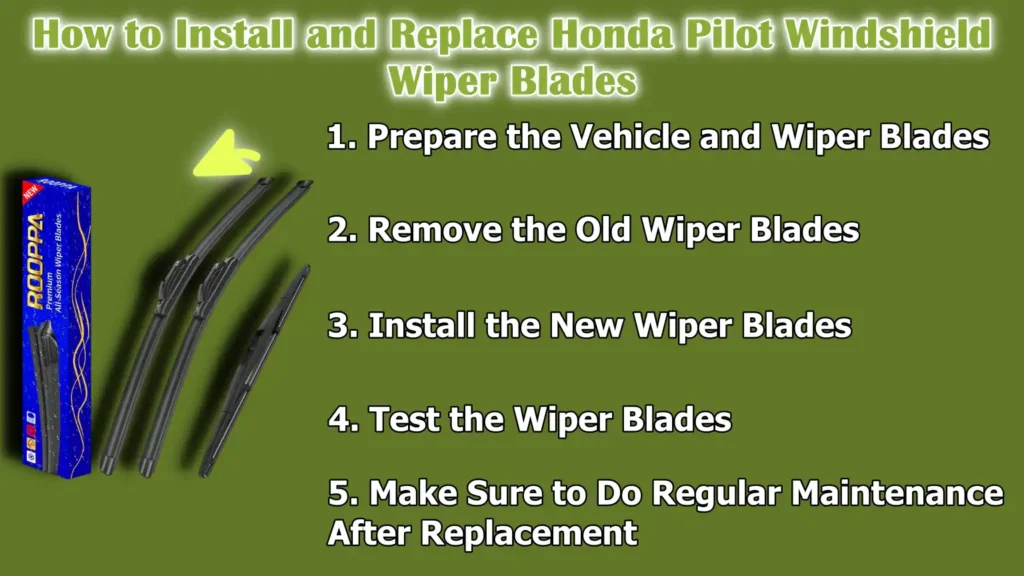
1. Prepare the Vehicle and Wiper Blades
Before replacing the windshield wiper blades on your Honda Pilot, ensure the vehicle is parked on a level surface and the ignition is turned off.
Carefully lift the wiper arms away from the windshield to prevent them from snapping back and damaging the glass.
Remove the new wiper blades from their packaging and verify that they are the correct size for the driver’s side, passenger’s side and rear windows, if applicable.
Check that any adapters included with the blades match the wiper arm connectors on your specific Honda Pilot model year and trim.
2. Remove the Old Wiper Blades
To remove the old wiper blades, locate the connector where the blade attaches to the wiper arm.
Most Honda Pilot wipers have a hook- or clip-style connector.
Press or lift the locking tab to release the blade, then carefully slide it off the arm.
Do not let the wiper arm snap back onto the windshield, as this could crack or shatter the glass.
Inspect the wiper arms for any signs of corrosion or damage that could interfere with the installation of the new blades.
3. Install the New Wiper Blades
Take the new wiper blade and align it with the wiper arm connector.
If your blade has a pre-attached adapter, slide it onto the arm until you hear or feel a secure click.
For blades with multiple adapters, select the correct one for your Honda Pilot’s wiper arm before installation.
Ensure the blade is fully seated and locked in place.
Gently test the arm by moving it back and forth to ensure it is not loose and maintains proper alignment with the windshield.
4. Test the Wiper Blades
After installation, carefully lower the wiper arms back onto the windshield.
Turn on the wipers at a low speed and spray some water onto the windshield to test their performance.
Check that the blades are cleaning the windshield evenly, without streaking, skipping, or lifting.
If any issues are observed, inspect the blade’s fitting and locking mechanism and adjust as needed.
Ensure that both the front and rear blades, if applicable, operate smoothly and cover the entire intended wiping area.
5. Make Sure to Do Regular Maintenance After Replacement
Once the new wiper blades are installed and working correctly, regular maintenance is essential to extend their lifespan.
Keep the windshield clean of dust, dirt and road grime.
Occasionally wipe the blades with a damp cloth to remove debris and prevent streaking.
Avoid using the wipers for extended periods on a dry windshield and protect them from extreme heat or ice buildup whenever possible.
Regular checks will ensure that the blades continue to function safely and efficiently, keeping your Honda Pilot’s windshield clear in all driving conditions.
Read More:
How to Maintain Honda Pilot Windshield Wiper Blades
1. Cleaning Wiper Blades to Extend Service Life
Regularly cleaning your Honda Pilot’s wiper blades maintains their performance and extends their lifespan.
Over time, dust, pollen, road grime and oil from the windshield accumulate on the rubber edges.
This buildup can cause streaking, skipping and uneven wiping.
Gently wipe along the length of the blades using a soft cloth or sponge with mild soapy water to remove dirt and debris.
Rinse with clean water and allow the blades to dry before use.
Proper cleaning ensures the rubber remains flexible, maintains smooth contact with the windshield and performs effectively in all weather conditions.
2. Proper Windshield Cleaning to Reduce Blade Wear
A clean windshield reduces the amount of friction and wear on the wiper blades.
Dirt, sand and abrasive particles can scratch both the windshield and the rubber blades, shortening the blades’ service life.
Before operating the wipers, thoroughly clean the windshield using a good quality glass cleaner and a microfiber cloth.
Regular windshield cleaning also helps maintain clear visibility, prevents streaking and reduces noise caused by the blades dragging across a dirty surface.
This practice is specially important after long drives on dusty roads or after rain when mineral deposits can accumulate.
3. Parking and Storage Tips to Prevent Rubber Degradation
How you park and store your Honda Pilot can affect the condition and performance of the wiper blades.
In hot weather, prolonged exposure to direct sunlight can soften and degrade the rubber, while cold weather can make it brittle.
Whenever possible, park in shaded areas or use a windshield cover to protect the blades from extreme temperatures.
During the winter months, lift the wiper arms slightly when the vehicle is parked to prevent them from freezing to the windshield.
Proper parking and storage habits help maintain the blades’ shape, flexibility and wiping efficiency over time.
4. Avoiding Damage During Car Washing and Snow Removal
Wiper blades can easily be damaged during automatic car washes or manual snow removal.
High-pressure water jets, brushes, or scraping ice can bend the blade frame, tear the rubber edge, or loosen the blade from the wiper arm.
When washing your car, ensure the wipers are lifted or, if the system requires it, that the blades are covered.
During the winter, remove snow gently using a soft ice scraper or de-icer spray, rather than forcing the blades against the glass.
Avoiding mechanical damage ensures the blades function correctly and provide consistent visibility, safety and performance for your Honda Pilot in all conditions.
How to Choose the Best Windshield Wiper Blades for Your Honda Pilot
1. Match Blade Type to Driving Environment and Weather Conditions
Choosing the right windshield wiper blades for your Honda Pilot starts with understanding your driving environment and weather conditions.
If you frequently drive in areas with heavy rainfall, frameless or hybrid blades that provide consistent pressure and withstand wind pressure are ideal.
In dusty or polluted areas, blades with protective coatings or aerodynamic designs help prevent dirt buildup and minimize streaking.
For cold weather with frost or snow, flexible rubber blades that remain pliable at low temperatures are essential.
Matching the blade type to your local weather conditions ensures your wipers maintain clear visibility, reduce streaking and perform reliably in all driving situations.
Additionally, there is experimental research that shows that the friction and pressure between the wiper blade and the windshield surface very strongly affect the wiping quality and the noise generation as well, because the blades that do not fit in the correct way, doesn’t actually provide the stable contact and that increases the vibration, that’s why it is important to select the blades with the correct size and material characteristics also important to ensure the smooth and quiet performance in all-weather conditions.[¹]
2. Balance Durability, Performance and Cost
High-quality wiper blades strike a balance between durability, wiping performance and affordability.
Durable blades are made from weather-resistant rubber and robust internal structures that resist warping, cracking and UV damage.
Performance is measured by how effectively the blades clear the windshield without streaking, skipping, or chattering, even at high speeds.
While premium blades may have a higher initial cost, their longer lifespan and consistent performance often make them more cost-effective in the long run.
Choosing a blade that balances these factors saves Honda Pilot owners from frequent replacements and ensures reliable visibility.
3. Key Features for Daily Driving vs Long Trips
When choosing wiper blades for daily driving, prioritize smooth operation, quiet performance and reliable, streak-free wiping in typical conditions.
For long trips or highway driving, consider wiper blades with an aerodynamic design that withstands wind pressure and maintains consistent contact even at high speeds.
Features such as water-repellent coatings, durable rubber edges and corrosion-resistant frames are beneficial for both short and long journeys.
Prioritizing these features ensures a clear view through the Honda Pilot’s large windshield, reducing eye strain and improving driving safety in all conditions.
4. Final Checklist Before Buying
Before purchasing wiper blades for your Honda Pilot, confirm the correct size for both the front and rear blades, check the type of wiper arm connector and verify compatibility with your model year and trim.
Examine the blade material for weather resistance, flexibility and durability.
Evaluate features such as aerodynamic design, streak-free performance and longevity.
Ensuring all these factors are considered helps avoid improper fit, uneven wiping, or premature wear.
A thorough final checklist guarantees you select wiper blades that provide optimal visibility, comfort and safety in all driving conditions.
Conclusion – Best Honda Pilot Windshield Wiper Blades
So, these are the very reliable and high performance windshield wiper blades for Honda Pilot, as it has the correct size and design that matches Pilot’s windshield comfortably.
And, when you choose the right windshield wiper blades, they effectively clear rain, snow, dust, pollen and road debris, reducing glare, streaks and blind spots.
Also, the high-quality blades designed for your Pilot’s windshield size, curvature and airflow pattern apply consistent pressure across the entire glass, prevent lifting at high speeds and maintain smooth, quiet operation.
Not only this, its proper fit, installation and regular maintenance like: cleaning the blades, keeping the windshield free of debris and protecting the blades from harsh weather, as it actually extend their lifespan and improve overall performance.
Moreover, it is really important to invest the time and effort in selecting the right wiper blades for your Honda Pilot is a small step with big rewards, providing you and your passengers with clear visibility, reliable performance and a safer journey.
Now, it is time to ask queries or unsolved questions in the comment section below.
Frequently Asked Questions
Q1. How often should I replace the windshield wiper blades on my Honda Pilot?
Answer: Windshield wiper blades should typically be replaced every 6 to 12 months, depending on how often you drive and the weather conditions in your area. Blades may wear out faster in areas with heavy rain, snow, or intense sunlight. Signs that your wipers need replacing include streaking on the windshield, skipping, chattering, or leaving wet spots. Regular checks and timely replacement ensure clear visibility and safe driving.
Q2. What size wiper blades does a Honda Pilot use?
Answer: The Honda Pilot uses different sizes for the driver-side and passenger-side front wiper blades and a smaller blade for the rear windshield. The driver-side blade is always longer to cover the main viewing area, while the passenger-side blade is slightly shorter. The exact sizes may vary depending on the model year, so consult your owner’s manual or confirm the correct sizes before replacing them. Using the correct size ensures full coverage and even wiping.
Q3. What are the different types of wiper blades suitable for a Honda Pilot?
Answer: The main types are traditional frame-style blades, beam-style frameless blades and hybrid blades. Traditional blades have a metal frame and multiple pressure points, beam blades are flexible and naturally conform to the shape of the windshield and hybrid blades combine the strength of a frame with the smooth performance of a beam design. Each type has its advantages depending on driving conditions, such as city traffic, highway speeds, or bad weather. Choosing the right type improves wiping performance and reduces streaking.
Q4. How do weather conditions affect wiper blade performance?
Answer: Weather significantly impacts wiper blade performance. If the blades are not functioning properly, heavy rain, snow, dust and road debris can quickly reduce visibility. In cold weather, some rubber blades can become stiff and brittle, while in hot weather, the rubber can harden and crack. High-quality blades with weather-resistant rubber and robust internal construction maintain flexibility, resist wear and provide consistent wiping in all conditions. Choosing the type of blade best suited to your local climate ensures optimal performance.
Q5. Can I install wiper blades on my Honda Pilot myself?
Answer: Yes, replacing wiper blades on a Honda Pilot is typically a straightforward process and can be done at home without professional assistance. It involves lifting the wiper arms, removing the old blades, attaching the new blades with the correct connectors and testing them to ensure they are working properly. Always ensure the new blades are the correct size for your model year, securely lock onto the arm and properly clear the windshield. Correct installation ensures safety, prevents damage and provides smooth wiping action.
Q6. How can I extend the life of my Honda Pilot wiper blades?
Answer: Regular maintenance can significantly extend the life of your wiper blades. Clean the blades with mild soap and water to remove dirt and debris, keep the windshield clean to reduce friction, avoid using the blades on a dry windshield and protect them from extreme heat or cold temperatures. Parking in the shade or using a windshield cover in hot weather and gently removing ice in the winter prevents the rubber from deteriorating or cracking. Proper care ensures the blades function efficiently and safely for a longer period.
Q7. What causes streaking or skipping on the windshield?
Answer: Streaking and skipping occur when the wiper blade doesn’t maintain consistent contact with the glass. This can happen if the rubber edge is worn, hardened, or dirty, if there is debris or scratches on the windshield itself, or if the blade is the wrong size or not properly installed. Ensuring the correct blade size, regularly cleaning both the windshield and the blades and replacing worn blades helps maintain clear, streak-free visibility.
References:
[1] A Study on an Experimental System of Wiper–Windshield Friction Vibration and Noise
https://www.mdpi.com/2075-4442/13/7/296

Guys, I’m a car audio enthusiast and customization expert and I love clear sound and clean installation. Plus, I have spent years helping people build their dream audio setups. And whenever I’m working on cars, I probably listen to music and thinks about the next big upgrade.