 Skip to content
Written By: Don Dodi
Fact Checked By: Kristen Brown
Reviewed By: Diego Rosenberg
The correct blade size and design is necessary to efficiently perform in all-weather conditions.
As, Volkswagen Passat is the compact vehicle that’s why wiper blades needs to cover more surface evenly and still have to maintain constant contact with the glass.
Which is why, we have listed the 5 Best Volkswagen Passat Windscreen Wiper Blades that comes with custom-fit design and aerodynamic nature that’s why you can have crystal clear wiping performance even at the high speed driving.
Also, these wipers are made from the combination of high quality materials that is why these are truly durable and has stable base to maintain proper vision throughout the journey.
Even, these high quality wipers applies pressure distribution evenly across the blade that is why, you can easily remove the water, road grime and other debris without scratching the glass.
How to Know, The Correct Wiper Blade Size for Your Volkswagen Passat
| Volkswagen Passat Model Year | Driver’s Side Blade Size | Passenger’s Side Blade Size | Generation Name of VW Passat |
|---|---|---|---|
| From 2002 to 2005 | 21-Inch | 19-Inch | B5/B5.5 VW Passat |
| From 2006 to 2011 | 24-Inch | 19-Inch | B6/B7 |
| From 2012 to 2018 | 24-Inch | 19-Inch | B7 |
| From 2015 to 2025 | 26-Inch | 18-Inch | B8 – Sedan/Estate |
Choosing the correct wiper blade size for your Volkswagen Passat is crucial for clear visibility and safe driving.
The Passat has a wide windscreen, so it’s essential to carefully match the blade length to cover the maximum amount of glass without putting undue stress on the wiper arms or motor.
When the blade size is correct, the wipers move smoothly across the windscreen, apply even pressure and effectively clear water and debris.
Using blades that are too long or too short can result in reduced cleaning performance, increased noise and difficulty clearing crucial areas of the windscreen, specially during heavy rain or nighttime driving.
1. Wiper Blade Size Variations by Model Year
Wiper blade sizes for the Volkswagen Passat vary depending on the model year and generation, as windscreen sizes and wiper arm designs have changed over time.
Older Passat models typically have different blade lengths compared to newer versions, which feature wider windscreens and more advanced wiping systems.
Even a slight difference in size can affect how well the blades conform to the glass surface.
Therefore, it’s essential to confirm the correct model year before selecting wiper blades.
Matching the blade size to the specific Passat generation ensures proper coverage, smooth operation and consistent wiping performance in all weather conditions.
2. Front Driver-Side vs Passenger-Side Blade Length Differences
In the Volkswagen Passat, the front driver-side wiper blade is typically longer than the passenger-side blade.
This difference exists because the driver requires the clearest view of the road and the wiping pattern is designed to prioritize the driver’s line of sight.
The passenger-side blade is shorter to prevent overlap, reduce wind resistance and maintain balanced pressure during operation.
Using the correct blade length on each side ensures the wipers move in unison, eliminates friction or contact between the blades and guarantees a clear, streak-free windscreen directly in front of the driver.
3. Rear Wiper Availability on Estate or Wagon Variants
The sedan version of the Volkswagen Passat does not have a rear wiper because the rear glass is designed to allow rain and dirt to run off naturally.
However, the Passat estate or wagon variants often have a rear windscreen wiper because the rear glass is more vertical.
This rear wiper requires a different blade size and design than the front wipers.
Using the correct rear blade length helps maintain clear rear visibility during rain, reversing and highway driving, specially in dusty or muddy conditions.
Choosing the correct size ensures smooth movement and effective cleaning without putting excessive load on the rear wiper motor.
4. How the Correct Blade Size Ensures Consistent Pressure and Flawless Cleaning
The correct wiper blade size is crucial because it directly affects the pressure distribution on the windscreen.
When the blade length matches the wiper arm design and the curvature of the windscreen, the pressure remains consistent from one end of the blade to the other.
This consistent pressure helps the blade edge maintain continuous contact with the glass, preventing streaks, gaps and water lines.
An incorrect blade size can result in uneven pressure, leading to missed spots and noise.
Correctly sized wiper blades help maintain clear visibility, protect the windscreen surface and ensure reliable performance in all driving conditions.
Understand, What Types of Windscreen Wiper Blades Suits the Volkswagen Passat
The windscreen wiper blades for the Volkswagen Passat must match the car’s wide, curved windshield and refined wiping system to ensure clear visibility in all conditions.
Different types of wiper blades are designed with varying structures, pressure patterns and performance characteristics.
Choosing the right type minimizes streaking, noise and uneven wiping, while also improving durability and comfort.
Understanding how each wiper blade type works makes it easier to select the most suitable blades for your Passat’s model year, driving style and weather conditions.
1. Traditional Frame Wiper Blades and Their Compatibility
Traditional frame wiper blades feature a metal or rigid frame with multiple pressure points that press the blade against the windscreen.
These blades were commonly used in older Volkswagen Passat models with flatter windshield designs.
When properly sized, they can provide reliable wiping performance in normal rain conditions.
However, because the Passat’s windscreen is quite curved, traditional blades may struggle to maintain consistent contact at the edges on newer models.
During high-speed driving or heavy rain, these blades can sometimes lift slightly, resulting in streaking or missed areas.
They are generally best suited for older Passat generations or drivers who prefer a basic, traditional design.
2. Beam-Style Wiper Blades for Modern Passat Models
Beam-style wiper blades are designed as a single, flexible piece without an external frame, allowing them to naturally conform to the curved windshields of modern Volkswagen Passat models.
This design helps distribute pressure evenly across the entire length of the blade, resulting in consistent wiping and reduced streaking.
Beam blades are particularly effective at high speeds because their sleek design reduces wind pressure and vibration.
They also perform better in heavy rain, dust and changing weather conditions.
For newer Passat models with advanced aerodynamics and rain-sensing systems, beam-style wiper blades often provide quieter operation and longer-lasting performance.
3. Hybrid Wiper Blades and Their Structural Advantages
Hybrid wiper blades combine features of both traditional and beam-style designs.
They utilize a supportive internal frame for stability while maintaining a streamlined outer shape that helps manage airflow.
In the Volkswagen Passat, hybrid blades offer a balance between robust pressure control and flexible windscreen contact.
This makes them suitable for drivers who want improved performance without resorting to a completely frameless design.
Hybrid blades handle the uneven curves of the windscreen better than traditional blades, while also providing good durability and vibration resistance during highway driving.
These are a practical option for Passat owners who want reliable performance in varying weather conditions.
4. OEM-Style Wipers vs Aftermarket Options
OEM-style wiper blades are designed to match the original specifications used by Volkswagen for the Passat, including the correct length, connector type and pressure characteristics.
These blades are designed to work seamlessly with the car’s wiper arms and electronic systems, such as automatic wiping features.
Aftermarket options vary widely in quality, design and fitment.
When high-quality aftermarket blades are specifically designed for the Passat, they can perform as well as or better than OEM blades.
However, poorly matched aftermarket blades can result in noise, uneven wiping, or a shorter lifespan.
Choosing a blade that closely follows OEM specifications helps ensure smooth operation, clear visibility and long-lasting reliability.
Understand, Why Volkswagen Passat Windscreen Curvature and Pressure Distribution Really Plays a Key Role in Wiper Stability and Cleaning Efficiency
The Volkswagen Passat uses a wide, smoothly curved windscreen designed to improve aerodynamics, reduce wind noise and provide the driver with a clear view ahead.
This curved shape means that the wiper blades must flex and bend properly to maintain contact with the glass at all points.
If a blade is not aligned with the windscreen’s curvature, some areas may clean effectively, while others may remain partially wet or dirty.
Proper blade flexibility and correct wiper arm tension are essential to ensure that the blades follow the shape of the glass from edge to edge, specially during heavy rain or at high driving speeds.
1. How the Passat’s curved windscreen affects blade contact
Because the Passat’s windscreen is curved both horizontally and vertically, the wiper blades must maintain consistent contact throughout its entire length as they move in an arc.
This curvature creates different pressure requirements at the center and edges of the blade.
If the blade is too stiff, it may press tightly in the center but lift at the edges.
If it is too soft or poorly supported, it may lose contact near the center.
Volkswagen designs its wiper system so that the blade naturally conforms to the shape of the windscreen, which is why using the correct, compatible blade type and size is essential for consistent wiping and clear visibility.
2. The Importance of Even Pressure Distribution at the Wiping Edge
Even pressure distribution at the wiping edge is one of the most important factors in wiper performance.
When pressure is evenly distributed, the blade edge lies flat against the glass, allowing it to remove water, dust and road grime in a single, smooth pass.
In the Volkswagen Passat, balanced pressure helps prevent streaking and ensures clear vision in the driver’s primary field of view.
Uneven pressure can cause parts of the blade to skip or drag, reducing cleaning effectiveness and increasing noise and wear over time.
Proper pressure distribution also helps prevent uneven wear on the windscreen surface.
3. The Role of Spoiler Design in Maintaining Contact at Highway Speeds
Modern Volkswagen Passat wiper blades often incorporate an aerodynamic spoiler into the blade design.
This spoiler uses airflow to gently push the blade against the windscreen as the vehicle speeds up.
At highway speeds, wind pressure can try to lift the blade away from the glass, reducing wiping effectiveness.
A spoiler resists this effect by improving blade stability and contact.
This design is specially important for the Passat, which is often driven at high speeds on long journeys.
A well-designed spoiler helps maintain consistent wiping performance, reduces vibration and keeps the blade firmly in place during high-speed driving.
4. Uneven Pressure Affects Streaking and Judder
When pressure on the wiper blade is uneven, the blade may move in a jerky or vibrating motion, known as judder.
This occurs when some parts of the blade grip the glass while others slide, causing irregular movement.
In the Volkswagen Passat, judder and streaking are often signs of poor blade fitment, incorrect size, or worn wiping edges.
These problems can reduce visibility, specially in light rain or at night when glare is more noticeable.
Ensuring the correct pressure balance allows the blade to glide smoothly across the windscreen, resulting in quieter operation, cleaner wiping and a more comfortable driving experience.
Know, How Material Quality & Blade Construction Affects the Performance and Durability
The performance of the windscreen wiper blades on a Volkswagen Passat depends heavily on the quality of the materials used and how the blades are manufactured.
Because the Passat is often driven in a variety of conditions, including city traffic, highways, dust, heat and rain, the wiper blades must be durable, flexible and stable simultaneously.
Well-made blades maintain smooth contact with the windscreen, clean effectively without noise and last a long time without losing performance.
Poor material quality can lead to premature wear, uneven wiping and reduced visibility, specially in challenging weather conditions.
1. The Importance of High-Grade Wiping Edge Material
The wiping edge is the part of the blade that comes into direct contact with the windscreen, making it the most critical component of the wiper.
High-grade wiping edge material is designed to remain flexible while maintaining a sharp, clean edge that can effectively remove water and fine debris in a single pass.
In the Volkswagen Passat, a consistent wiping edge helps minimize streaking and prevents smudging during light rain.
Lower quality edges can harden quickly, leading to skipping and noise.
A durable wiping edge also reduces friction, helping to protect the windscreen surface from scratches and long-term damage.
2. The Role of Internal Tension Springs and Frame Strength
Many wiper blades incorporate internal tension springs or support elements that help distribute pressure evenly along the length of the blade.
In the Volkswagen Passat, these internal components are crucial for the blade to conform to the curved windscreen.
The correct tension ensures that the blade presses firmly but gently against the glass, maintaining consistent contact throughout each wipe.
The rigidity of the frame also plays a crucial role, preventing the blade from twisting or bending unevenly during operation.
A good balance of flexibility and strength ensures smooth movement, quiet operation and consistent wiping performance.
3. Protection Against Heat, Dust, Rain and UV Rays
Volkswagen Passat wiper blades are constantly exposed to harsh environmental conditions, including intense sunlight, high temperatures, dust, heavy rain and pollution.
Quality materials are designed to resist heat hardening and damage from ultraviolet rays.
Dust and road grime can act as abrasive particles, so the blades must be durable enough to clean effectively without premature wear.
Good resistance to weather and environmental exposure helps the blades maintain their shape, flexibility and cleaning ability over time, even in challenging driving environments.
4. Long-Lasting Performance in Varying Driving Conditions
Longevity is a critical factor for wiper blades used in the Volkswagen Passat, specially for drivers who travel long distances or drive regularly in varying weather conditions.
Durable blades maintain consistent pressure, uniform cleaning and quiet operation throughout their lifespan.
They are less likely to crack, warp, or lose effectiveness when exposed to changing temperatures and road conditions.
Investing in high-quality blades reduces the need for frequent replacements and provides reliable visibility year-round.
Robust durability also protects the wiper motor and arms, minimizing unnecessary stress caused by uneven or jerky blade movement.
How to Ensure Optimal Performance In Different Weather Conditions
Volkswagen Passat windscreen wiper blades are expected to deliver reliable performance in various weather conditions, as this car is typically driven in cities, on highways and during long-distance journeys.
Changing weather directly impacts how well the wiper blades can clear the windscreen and the quality of the blades plays a crucial role in maintaining clear visibility.
A well-designed wiper blade ensures consistent contact with the glass, smooth movement and effective removal of water, dust and moisture without any juddering or noise.
1. Effectiveness During Heavy Rain and Monsoons
During heavy rain and monsoon conditions, Volkswagen Passat wiper blades need to quickly clear large amounts of water to maintain clear forward visibility.
Efficient blades clear water in a single pass, preventing water buildup that can obstruct the driver’s view.
The correct blade design and even pressure distribution help minimize streaking and smearing, which are common problems in continuous rain.
Strong wiping performance during monsoon driving also reduces driver fatigue by minimizing the need for constant manual speed adjustments and frequent wiping cycles.
2. Performance in Dusty and Polluted Environments
In dusty and polluted environments, Volkswagen Passat wiper blades face additional challenges from fine particles, road grime and residue from air pollution.
These particles can adhere to the windscreen and reduce clarity even in dry conditions.
Effective wiper blades remove dust smoothly without dragging it across the glass, helping to prevent scratches and smudges.
Consistent cleaning performance in such environments ensures that accumulated dust doesn’t turn into thick streaks that can obstruct visibility during sudden rain or when using washer fluid.
3. Reliability in Cold Weather and Foggy Conditions
In cold weather and foggy conditions, when visibility is already reduced, reliable wiping performance is crucial for maintaining clear vision.
In cold temperatures, the wiper blades must remain flexible so they can move smoothly across the windscreen without sticking or becoming stiff.
Reliable blades help clear condensation, light moisture and thin layers of fog from the glass, specially during driving in the early morning or at night.
Consistent performance in these conditions improves reaction time and overall driving confidence when road conditions are less predictable.
4. Noise Control and Smooth Wiping Behavior
Noise control and smooth wiping behavior are important for driving comfort in the Volkswagen Passat, which is designed to provide a refined and quiet cabin experience.
Well-made wiper blades move smoothly across the windscreen without any squeaking, rattling, or juddering.
Smooth wiping minimizes driver distraction and indicates that the blades are maintaining even contact with the glass.
Quiet operation also suggests that the blades are properly fitted and the pressure is balanced, leading to long-lasting durability and consistent performance in all weather conditions.
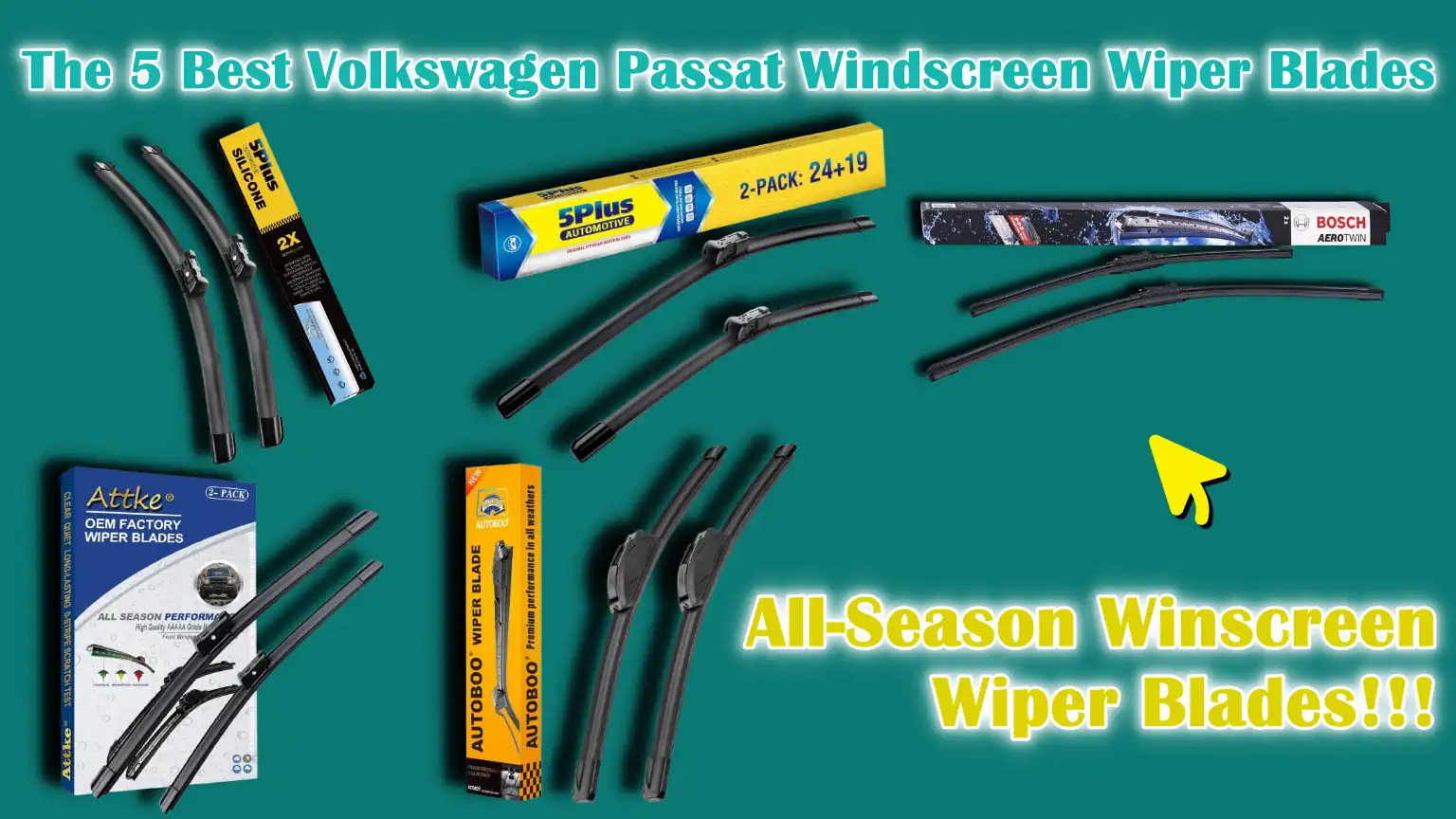
The 5 Best Volkswagen Passat Windscreen Wiper Blades – High Performance Windshield Wipers
These are the truly durable and reliable wipers that you can use them to get crystal clear vision when nature is rude at you, even these are made from combination of durable materials that provides high stability.
#1. 5 PLUS
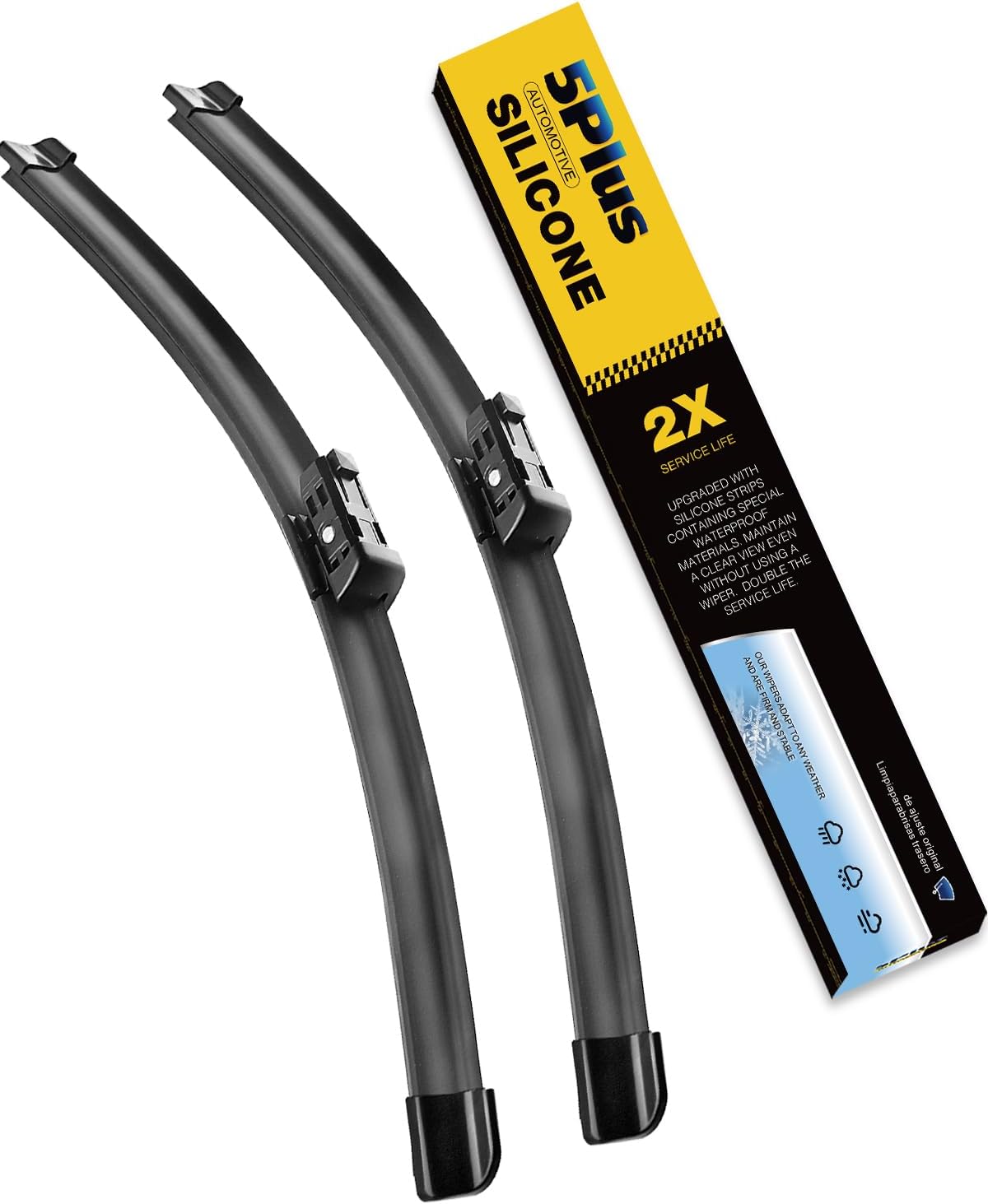
Compatible With: 2012 to 2018 Volkswagen Passat Model
Build With: Silicone Material
These are the premium wiper blades that are engineered for the Volkswagen Passat, also it is made by the 5 PLUS that is known for their high-grade wipers that delivers exceptionally smooth wiping and extended blade life as well.
Along with this, there is silicone material is used that maintains the flexibility in hot and cold temperatures, even it resits the hardening and cracking effect.
Even, it features metallic base with double precision memory steel spring stripes, that’s why these blades provides even pressure across the entire windscreen, reduces the streaks, smearing and skipping as well.
Plus, you can quickly install them on your 2012 to 2018 Volkswagen Passat, as the blade dimensions are: 24-inch and 19-inch.
#2. 5 PLUS

Compatible With: 2007 to 2010 VW Passat
Build With: Rubber Material
Now, this is the aerodynamically designed VW Passat windscreen wiper blades that is made with precision to ensure the consistent contact and pressure distribution along the entire blade length and it is designed by 5 PLUS.
Additionally, the durable rubber material allows it to deliver strong wiping performance in heavy rain and light snowfall, as well as these blades provides smooth, quiet and truly reliable wiping with reduces noise and vibration free.
Even, you don’t have to worry about the wind lift during the high-speed driving, as these are designed with advanced aerodynamic shape that is why these blades uses airflow to help it to press the blade against the windscreen, that further enhance the wiping performance.
Furthermore, these blades are specifically designed for 2007 to 2010 VW Passat, as these blades comes with 24-inch and 19-inch blade size.
#3. BOSCH

Compatible With: 2007 to 2018 Volkswagen Passat
Build With: Rubber
Now, these are the really stable and high-quality wiper blades that comes from BOSCH, which is known for their strength and adaptable wipers.
These blades has custom beam curvature and dual precision-tensioned steel springs that maintains and strengthens the structural support against wind lift and twisting forces, also its precision-engineered rubber wiping edge provides streak free wipes as well.
Not only this, the manufacturer also features asymmetrical spoiler design that helps it to distribute the pressure more evenly across the blade, which significantly minimizes uneven wear and perform well in a range of weather conditions.
Also, these blades comes in dimensions of 24-inch and 19-inch set, so that you can easily install them on your VW Passat with the similar dimensions blade size.
#4. ATTKE

Compatible With: 2015 to 2021 B8 – Sedan/Estate Volkswagen Passat
Build With: High Quality Natural Rubber + Double High Flexibility Steel Sheet + TPE POM ABS High Strength Plastic
Now, this all-season VW Passat windscreen wiper blades manufactured by ATTKE, which used natural rubber to maintain the flexibility across a wide temperature range, also it ensures really dependable wiping peroformance in both hot summers and colder months as well.
As well as, these wipers features streamlined wind design, which is truly aerodynamic that enhances the water clearance even when you drive your Passat in speed.
Also, these wipers comes with corrosion-resistant blades, that’s why the because of the perfect geometry and robust frame design resists the bending and provides enhanced water, snow, dust and debris even in the harsh weather.
Plus, these blades are specifically designed for 2015 to 2021 Volkswagen Passat B8 – Sedan/Estate vehicle model, as these blades comes in sizes of: 26-inch and 18-inch.
#5. AUTOBOO

Compatible With: 2002 to 2005 Volkswagen Passat
Build With: Rubber + Stainless Steel
Now, these heavy-duty wiper blades for VW Passat is engineered by AUTOBOO and these are great for drivers who regularly faces extreme weather conditions such as: heavy monsoon rain, snow flurries and sut-covered roads.
As, these wipers comes with the durable wiping edges which is made from rubber and high-tensile memory spring steel sheet is available to provide it truly stable support to maintain the even pressure distribution to have the better contact with the windshield, without leaving any gaps or doesn’t produces noise during the operation.
These wiper blades also includes an aerodynamic design that reduces the wind uplift and that’s how it drastically improves the blade adherence at the higher speed.
Also, these blades comes with the sizes of: 21-inch and 19-inch blade dimension, which is why you can easily install them on your 2002 to 2005 VW Passat model.
How to Install and Ensure Perfect Fitment of Windscreen Wiper Blades for Volkswagen Passat
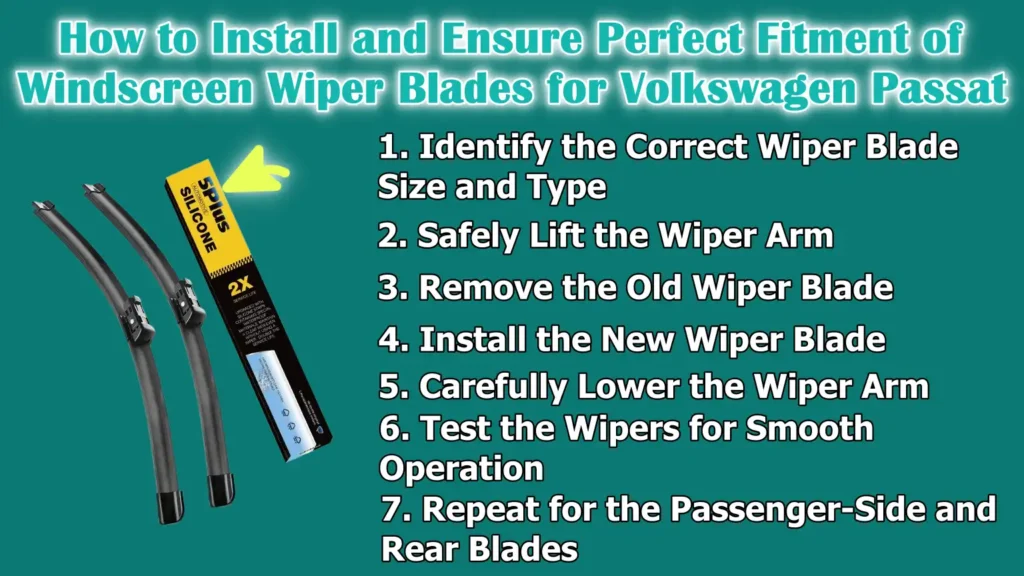
Correct installation and fitment of wiper blades for your Volkswagen Passat are crucial for smooth, streak-free wiping, optimal visibility and reliable performance.
Even high-quality blades will not function properly if they are not installed correctly.
The steps below outline the installation process in a simple, practical and safe manner.
1. Identify the Correct Wiper Blade Size and Type
Before beginning, verify the correct wiper blade size required for your Volkswagen Passat model year.
Typically, the driver-side blade is longer than the passenger-side blade and estate or wagon variants may also have a rear wiper blade.
Choose the correct type based on your model and personal preference, whether it’s a conventional frame, beam-style, or hybrid.
Ensure the connector type matches your wiper arm, which may be a hook-style or push-button style.
The correct choice ensures proper contact with the windscreen and complete wiping coverage.
2. Safely Lift the Wiper Arm
Gently lift the wiper arm away from the windscreen until it is in a vertical position.
Be careful not to let the arm snap back onto the glass, as this could crack or damage the windscreen.
Lifting the arm provides clear access to the existing wiper blade and facilitates safe removal and replacement.
It’s important to perform this step slowly and carefully to prevent bending the wiper arm or scratching the windscreen surface.
3. Remove the Old Wiper Blade
Locate the connector where the blade attaches to the wiper arm.
Depending on the style, either press the release button on the push-button connector or slide the hook-type connector to detach the old blade.
Gently pull the blade away from the arm without forcing it, ensuring you don’t damage the connector or the spring mechanism inside the arm.
Completely removing the old blade clears the way for easy installation of the new one.
4. Install the New Wiper Blade
Align the new wiper blade with the wiper arm connector.
For hook-type connectors, slide the hook into the designated slot until it securely clicks into place.
For push-button connectors, press the blade until the locking mechanism engages.
Ensure the blade is properly seated and locked to prevent it from detaching during wiping.
Correct attachment ensures even pressure distribution on the windscreen and smooth movement during operation.
5. Carefully Lower the Wiper Arm
Once the new blade is properly installed, gently lower the wiper arm back onto the windscreen.
Ensure the blade sits flat against the glass and is correctly aligned with the curvature of the windscreen.
Check that the blade is not lifted or bent and that it rests in its resting position without any tension or gaps.
Proper seating protects both the wiper and the windscreen and ensures optimal wiping efficiency.
6. Test the Wipers for Smooth Operation
Turn on the wiper system at a low speed and observe the new blades in action.
Verify that they clean the windscreen evenly, remove water without leaving streaks and move smoothly without sticking or making noise.
Test the wipers in different modes, including intermittent and continuous speeds and if your Passat has rain-sensing functionality, ensure the automatic wiping is working correctly.
Thorough testing confirms that the installation was successful and the blades are operating as expected.
7. Repeat for the Passenger-Side and Rear Blades
Repeat the same steps for the passenger-side blade and, if applicable, for the rear wiper blade on estate or wagon variants.
Ensure each blade is the correct size, fits properly and aligns with the curvature of the windscreen.
Double-check that all blades are securely locked in place and move smoothly when activated.
Consistent fitment across all wipers ensures maximum visibility and safe driving in all weather conditions.
Read More:
So, How to Recognize the Clear Warning Signs That Indicate Your Volkswagen Passat Wiper Blades Need Replacement Now
Volkswagen Passat windscreen wiper blades are parts that gradually deteriorate due to weather, dust and regular use.
Even if they appear fine at first glance, worn blades can significantly reduce visibility, specially during rain or nighttime driving.
Recognizing the early signs of wear allows drivers to replace wiper blades before they become a safety hazard.
Timely replacement ensures clear vision, protects the windscreen and keeps the wiper system functioning smoothly.
1. Streaking, Skipping and Chattering Symptoms
The most common sign that Volkswagen Passat wiper blades need replacing is streaking on the windscreen.
Streaking occurs when the wiping edge fails to maintain consistent contact with the glass.
Skipping or juddering indicates uneven pressure or hardening of the blade edges, preventing a smooth glide.
Chattering noises are often caused by the blade rubbing against the glass instead of gliding smoothly.
These symptoms reduce visibility and can be particularly distracting during rain, indicating that the blades are no longer functioning effectively.
2. Reduced Cleaning Effectiveness During Heavy Rain
Reduced cleaning effectiveness during heavy rain is a significant indicator of worn wiper blades.
In a Volkswagen Passat, properly functioning blades should clear water quickly and evenly in one or two passes.
If water remains on the glass or visibility only improves briefly before water accumulates again, the blades are likely worn.
Poor performance in heavy rain increases reaction time and driver stress, specially at highway speeds.
Replacing the blades restores proper water removal capabilities and improves driving safety.
3. Visible wear, cracks, or hardening on the blade edges
You can also tell when your wiper blades need replacing through visual inspection.
Over time, exposure to sunlight and frequent use can cause cracks, tears, or uneven areas on the blade edges.
In some cases, the blade may appear shiny or feel rough to the touch, indicating hardening.
Hardened or worn edges may not conform to the windshield surface, resulting in streaking and noise.
Recognizing these visible signs early allows for timely replacement before the blades damage the windshield or fail during bad weather.
4. Recommended replacement interval
Most Volkswagen Passat wiper blades should be replaced at regular intervals to maintain consistent performance, even if there is no visible damage.
Depending on driving conditions and weather, replacement is often recommended once or twice a year.
Constant exposure to heat, dust and heavy rain can shorten the lifespan of the blades.
Replacing the blades at the appropriate time ensures optimal wiper performance, prevents unnecessary strain on the wiper motor and provides clear visibility throughout the year.
What are the Proper Maintenance Practices to Extends Wiper Blade Life of VW Passat
Proper maintenance can significantly extend the life of your Volkswagen Passat’s windscreen wiper blades and help maintain clear visibility year-round.
Wiper blades are constantly exposed to sunlight, heat, dust, rain and pollution, gradually degrading their performance.
Simple care methods can prevent premature wear, improve wiping performance and reduce the need for frequent replacement.
Well-maintained blades also protect the windscreen surface and ensure smooth, quiet operation during daily driving.
1. Regular Cleaning of the Blade Edges and Windscreen
Regular cleaning of the wiper blade edges and windscreen removes dirt, dust and road grime that can damage the wiping surface.
In a Volkswagen Passat, accumulated debris can cause the blades to rub against the glass, causing streaks and scratches.
Gently cleaning the blade edges keeps them flexible and sharp, allowing them to glide smoothly across the windscreen.
A clean windscreen also reduces friction, improves wiping efficiency and helps the blades perform better during sudden heavy rain.
2. Parking Habits to Minimize Exposure to Sunlight and Heat
Sunlight and heat are the main causes of premature wiper blade wear.
When the Volkswagen Passat is parked in direct sunlight for extended periods, the heat and ultraviolet rays can harden the blade edges, reducing their flexibility.
Parking in shaded areas or covered parking helps slow this damage.
Minimizing exposure to sunlight helps the blades maintain their original shape and softness, ensuring they maintain proper contact with the windscreen for longer.
3. Seasonal Inspection and Maintenance Practices
Seasonal inspection of wiper blades helps identify early signs of wear before performance deteriorates.
Inspecting the blades at the start of each season allows drivers to detect cracks, stiffness, or uneven edges.
In the Volkswagen Passat, changing weather conditions place varying demands on the wipers, making regular inspections crucial.
Seasonal maintenance ensures the blades are ready for heavy rain, dust, or cold temperatures, reducing the risk of poor visibility during sudden weather changes.
4. Avoiding Damage from Dry Wiping and a Frozen Windshield
Dry wiping, which occurs when wipers are used on a dry or dusty windshield, can quickly wear down the blade edges.
In the Volkswagen Passat, dry wiping increases friction, causing the blades to lose their smooth wiping ability.
Similarly, operating wipers on a frozen windshield can damage both the blades and the wiper mechanism.
Allowing ice or frost to melt and using washer fluid before wiping helps prevent damage.
Following these methods protects the blades, improves performance and extends their life.
Conclusion – Best Volkswagen Passat Windscreen Wiper Blades
These are the ultra-protective and custom-fit wiper blades that provides perfect fitment, even you don’t have to do any kind of adjustments.
Not only this, there’s aerodynamic simulations that shows that the adjusting the blade-spoiler geometry that can convert the harmful lift forces into the downward pressing forces at the certain angles, that means redesigning the spoiler shapes can helps the wiper blade to maintain the contact with the glass even in the turbulent airflow.[¹]
So, always consider windshield wiper blades with the aerodynamic design and specific kind of blade design that can maintains the down-side pressure for quality wipes.
Yes, there are many factors such as: windshield curvature, pressure distribution, blade material quality and proper installation, basically they all works together to deliver consistently good wiping performance.
So, a correctly installed blade maintains even contact with the glass, minimizing streaks, gaps and noise and protecting the windshield from damage.
And, this is specially crucial in the Volkswagen Passat, where the rain-sensing and automatic wiping systems rely on a clean and evenly wiped glass surface to function correctly.
So, that’s all from this one and if you still have unsolved queries in mind, just let us know by commenting below this guide.
Frequently Asked Questions
Q1. How often should I replace my Volkswagen Passat’s windscreen wiper blades?
Answer: Volkswagen Passat windscreen wiper blades should be replaced regularly to maintain clear and effective visibility. In most climates, replacing the blades once or twice a year is a good rule of thumb. If you live in an area with heavy rainfall, excessive dust, intense sunlight, or frequent freezing temperatures, you may need to replace them more often. It’s a good idea to check the blades every few months for signs of wear and tear, such as cracks, tears, or hardening of the rubber edge. If the blades are not cleaning properly or you hear squeaking or chattering noises, it’s time to replace them, even if a full year hasn’t passed.
Q2. Can I install the wiper blades on my Passat myself, or will I need a mechanic?
Answer: Yes, you can install the wiper blades on your Volkswagen Passat yourself and most owners find it easy. The wiper arm usually has a simple connector that allows you to remove the old blade and attach the new one. Some Passat models have a hook-type connector while others have a push-button style, but both are designed for easy self-replacement. Before installation, carefully lift the wiper arm so it doesn’t fall back onto the windscreen, which could crack the glass. Make sure the blade is properly attached and locked in place so it doesn’t come loose while driving or in heavy rain.
Q3. Do Passat cars with rain-sensing systems require special wiper blades?
Answer: Volkswagen Passat cars with rain-sensing systems use sensors mounted behind the windscreen to detect moisture and automatically adjust the wiper speed. These systems don’t require “special” wiper blades, but they work best when the blades clean the windscreen evenly and smoothly. If the blades leave streaks or don’t clean properly, the sensors may misread the moisture levels and the automatic wiping system may not function correctly. Using high-quality blades that fit properly and clean without leaving streaks ensures that the rain-sensing system works accurately and provides you with maximum convenience in rainy conditions.
Q4. What are the common signs that my Passat wiper blades need replacing?
Answer: Common signs that your Volkswagen Passat wiper blades need replacing include streaking on the windscreen after wiping, sticking or chattering on the glass, loud squeaking or scraping noises, or the inability to properly clear the windscreen during rain. You may also notice that the blade edge is cracked, hardened, or worn when you examine it closely. If water remains on the windscreen after a single wipe or the driver’s area is not cleared, the blades are no longer functioning correctly. Replacing worn blades promptly ensures clear visibility and safe driving.
Q5. How can I make my Passat wiper blades last longer?
Answer: To make your Volkswagen Passat wiper blades last longer, keep both the blade edges and the windscreen clean. If dirt and grime are not regularly cleaned, the rubber edge can wear down quickly. Avoid using the wipers on a dry or dusty windscreen, as this increases friction and wear. When temperatures are very cold, allow any ice or frost to melt before using the wipers to prevent the blades from bending or tearing. Parking your car in shaded areas can also reduce damage from sun and heat, extending the life of the blades.
References:
[1] Improving aerodynamic performance for a reliable wiper system
https://dergipark.org.tr/en/pub/ijaet/article/308418

Guys, I’m a car audio enthusiast and customization expert and I love clear sound and clean installation. Plus, I have spent years helping people build their dream audio setups. And whenever I’m working on cars, I probably listen to music and thinks about the next big upgrade.
