
Written By: Don Dodi
Fact Checked By: Kristen Brown
Reviewed By: Diego Rosenberg
So, convertible tops are literally difficult to clean as these are not like the metal car roof, but you just need to give it protective treatment and right method will work like the charm.
Basically, the metallic roof protected by the paint and clear coat, but it is not true for convertible top; as these are made of fabrics, vinyl or modern composite materials as well: even they constantly faces exposure to ultraviolet rays, rain, bird droppings, tree sap, dust, air pollution and temperature changes as well.
And over the time, these elements actually cause it to be faded, cracked, mold can grow, water leaks and weakens the seams as well.
Not only this, top fabric can also trap the moisture and dirt if it is not get cleaned in proper way, other than this vinyl tops can dry out and lose their flexibility without proper conditioning.
Which is why, it becomes really important to know How to Clean a Convertible Car Roof, so that you can maintain the water resistance and extend the life of the roof comfortably.
First, Identify the Type of Your Convertible Roof
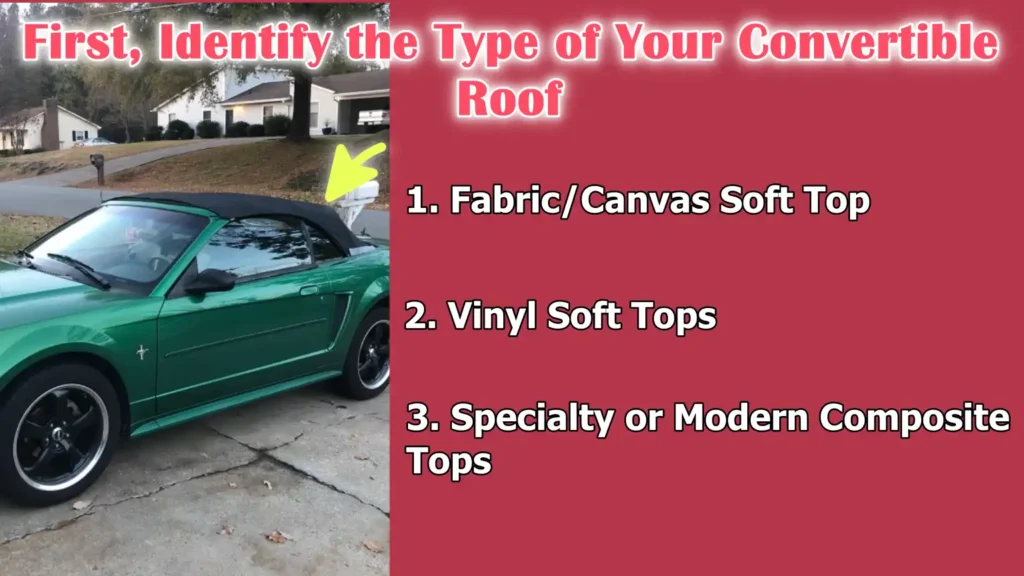
Before you begin cleaning your convertible roof, it’s important to know what material it’s made of.
Not all convertible tops are the same and using the wrong cleaning method can cause them to fade, shrink, crack, or even leak.
Most convertible roofs fall into three main categories: fabric or canvas soft tops, vinyl soft tops and modern composite tops.
Each material reacts differently to sunlight, water, cleaning products and temperature changes.
Understanding your roof type helps you choose the right cleaner, brush and protectant, which can extend the roof’s life and prevent costly repairs.
1. Fabric/Canvas Soft Top
Fabric or canvas soft tops are commonly found on premium vehicles and many classic convertibles.
These tops are typically made from tightly woven synthetic fibers, such as acrylic or polyester blends, designed to resemble traditional canvas but with improved durability.
Even though they are factory-applied with a water-resistant coating, the material is still slightly porous.
This means it can absorb moisture, dust, pollen and pollution over time.
Due to this porous nature, fabric tops are more prone to mold, specially in humid climates or if the car is parked outside.
Dirt can become deeply embedded in the fibers, making stains difficult to remove if cleaning is delayed.
Regular gentle hand washing and applying a fabric protectant restores water-repellency and keeps the fibers strong, flexible and resistant to UV damage.
2. Vinyl Soft Tops
Vinyl soft tops have a smooth, rubbery surface that doesn’t absorb water like fabric.
This makes them easier to clean because dirt typically settles on the surface rather than soaking in.
Vinyl is generally less prone to deep stains, but it also has its drawbacks.
Over time, exposure to intense sunlight and heat can dry out vinyl.
When vinyl loses its natural flexibility, it can fade, weaken and eventually crack.
Cracks not only affect the car’s appearance but can also cause leaks.
To prevent this, vinyl roofs require regular cleaning with mild automotive products and conditioning treatments, which keep the material soft and protect it from UV rays.
Lack of conditioning is a major cause of premature aging of vinyl tops.
3. Specialty or Modern Composite Tops
Many newer convertible vehicles use advanced composite tops that consist of multiple layers of material.
These roofs may have an outer fabric layer, a waterproof membrane in the middle and an inner insulation layer to improve noise reduction and temperature control.
Some high-end models also use acoustic materials to keep the cabin quiet at highway speeds.
Because these roofs are more complex, they require careful handling and often manufacturer-recommended products.
Using harsh chemicals can damage protective coatings or weaken the layered structure.
It’s specially important to consult your vehicle’s owner’s manual for approved cleaning methods.
Proper care ensures that the roof maintains its waterproof seal, sound insulation and overall strength for many years.
Tools
| Tool or Supply | What It Is | Why It Is Important |
|---|---|---|
| Soft-Bristle Brush – Automotive Use | A brush with soft, flexible bristles designed for car surfaces. | Helps remove dirt from fabric or vinyl without scratching or tearing it. |
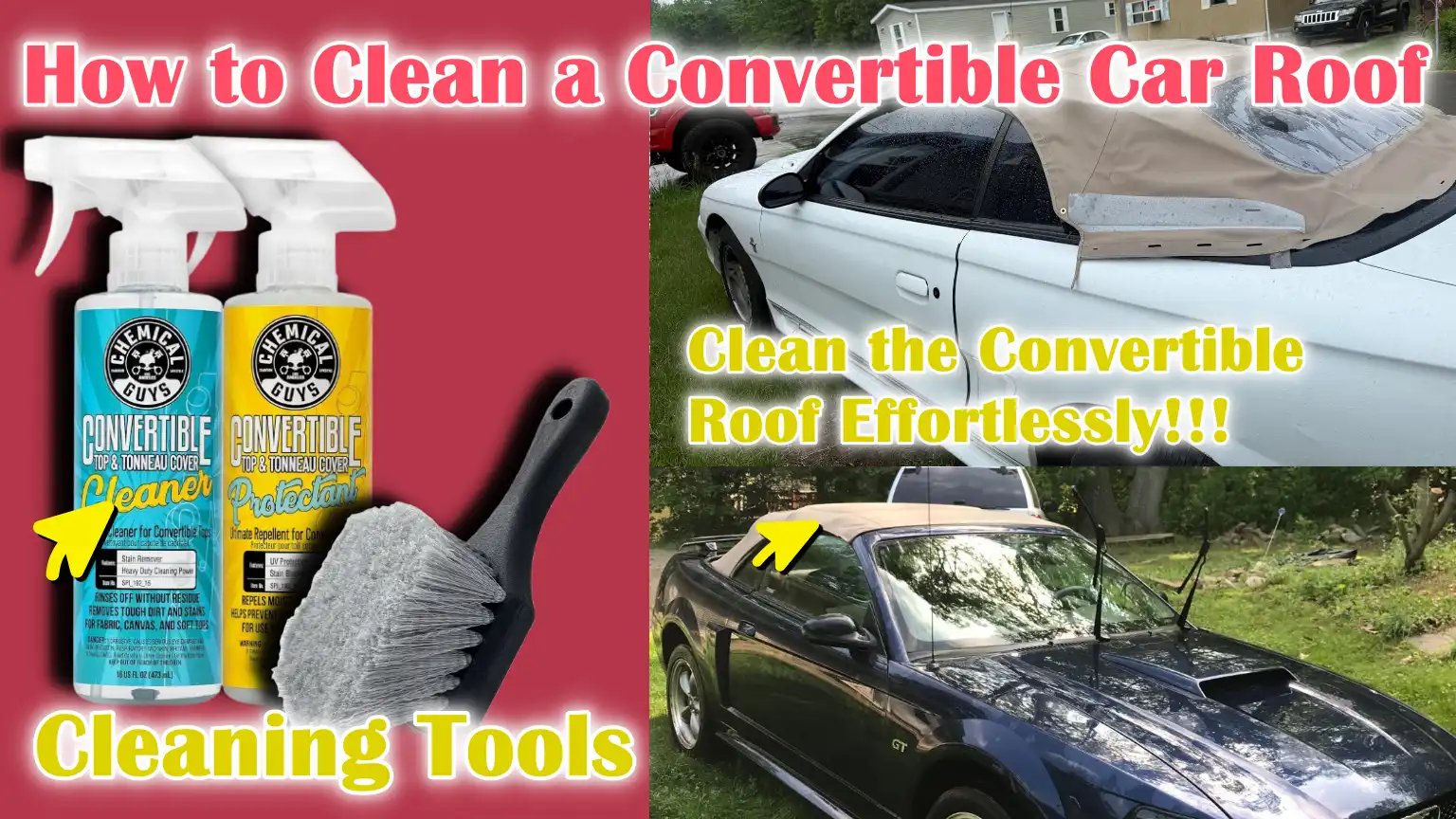
| Convertible Top Cleaner – Fabric-Safe or Vinyl-Safe | A cleaning solution specifically formulated for soft tops. | Removes dirt, stains, mildew and road grime without damaging the material. |
| Microfiber Towels | Soft, lint-free cloths made from fine synthetic fibers. | Water-absorbent and less likely to scratch or streak. |
| Low-Pressure Hose or Gentle Spray Nozzle | A water source that sprays gently rather than forcefully. | Washes away dirt and cleaner without water getting into the joints. |
| Convertible Top Protectant – UV and Water Repellent | A protective spray designed for fabric or vinyl roofs. | Protects against water and prevents sun damage and discoloration. |
How to Prepare the Vehicle Before Cleaning the Convertible Car Top
Proper preparation is one of the most important steps when cleaning a convertible roof.
Many roof problems, such as water leaks, shrinkage of the fabric, streaks and poor cleaning, occur because the surface was not properly prepared.
Convertible tops are made of flexible materials that react to heat, moisture and pressure.
Taking a few extra minutes to properly prepare the roof helps prevent damage and ensures a thorough cleaning.
When the roof is cool, safe and free of loose dirt, the cleaning process becomes safer, easier and more successful.
1. Park the car in a shaded area
Always park the car in a shaded area before cleaning a convertible roof.
Direct sunlight can quickly heat the surface, specially dark-colored tops, causing the material to expand and dry too quickly.
When cleaners dry too quickly, they can leave stains or residue.
Heat can also cause cleaning products to react differently, reducing their effectiveness.
Cleaning in the shade keeps the surface temperature stable and gives you plenty of time to thoroughly scrub and rinse without rushing.
A garage, covered parking space, or shaded driveway works best.
2. Ensure the Roof is Completely Closed and Latched
Before applying any water or cleaning solution, make sure the roof is completely closed and latched tightly.
Convertible roofs only seal properly when they are completely secure.
If the roof is slightly open or not locked in place, water can seep in through the edges and joints, causing damage, electrical problems, or mold inside the car.
A properly latched roof keeps the fabric stretched evenly, allowing you to thoroughly clean all areas without leaving gaps or straining the material.
3. Let the roof surface cool completely
If the car has been parked in the sun or recently driven, let the roof cool completely before cleaning.
Cleaning products can evaporate faster on warm or hot surfaces, leaving streaks or rough patches.
Excessive heat can also soften the vinyl and make it more sensitive to pressure, increasing the risk of marks or surface damage.
Cleaning on a cool surface helps maintain the material’s strength and flexibility and allows the cleaner to work as intended.
4. Remove loose debris with a soft brush or vacuum
Before using water, remove loose dirt, dust, leaves and small debris with a soft brush or vacuum attachment.
Dry debris can act like sandpaper when rubbed and scrubbed with water, which can wear down fabric fibers or scratch vinyl surfaces.
Removing loose particles first reduces the risk of scratches and allows the cleaning solution to focus on deeper dirt rather than surface dust.
Pay special attention to joints and edges, where dirt often accumulates.
5. Gently Rinse to Remove Surface Dust
After removing dry debris, lightly rinse the ceiling with low-pressure water.
This step washes away any remaining dust and softens any stuck-on dirt before applying the cleaner.
Gently rinsing prevents you from rubbing dry particles into the material.
It also prepares the surface so the cleaning solution can spread evenly.
Avoid using high-pressure water, as high-pressure jets can force water into joints and weaken the ceiling’s structure over time.
A light, even rinse is sufficient to safely prepare the ceiling for the next cleaning step.
How to Clean a Fabric Convertible Roof – Clear Steps
Cleaning a fabric convertible roof requires patience and proper methods, as the material is woven and slightly porous.
Most fabric roofs are made of strong synthetic fibers, such as acrylic or polyester blends, with a water-resistant coating.
Although durable, dirt, pollution, bird droppings and tree sap can become deeply embedded in the fibers over time.
If not cleaned properly, moisture can become trapped within the fabric and lead to mold or mildew.
Following the correct steps protects the fibers, maintains water resistance and keeps the roof looking clean and fresh for years.
1. Pre-rinse with low-pressure water
First, rinse the roof with low-pressure water.
This step removes loose dirt, dust, pollen and small particles from the surface.
Pre-rinsing is essential because dried dirt can act like sand when rubbed, damaging the fibers.
Always use gentle water rather than high-pressure water.
High-pressure water can penetrate joints and weaken them over time.
A gentle and even rinse prepares the surface for safe cleaning.
2. Apply a fabric-safe cleaner evenly
After washing, apply a cleaner specifically formulated for fabric convertible tops.
Regular household cleaners can remove protective coatings and fade or harden the color.
Spray or apply the fabric-safe cleaner evenly over the entire roof, making sure no area is left untreated.
This even application ensures even loosening of dirt and prevents patchy results.
Let the cleaner sit for the time recommended on the label so it can effectively break down the dirt.
3. Gently agitate using a soft-bristled brush
Use a soft-bristled brush made for vehicle surfaces to gently scrub the roof.
Brush in small circular motions with light pressure.
Fabric tops are sturdy, but you shouldn’t scrub them hard.
Gently rotating them helps remove dirt from within the woven fibers without damaging the texture.
Take your time and work over each area to ensure the entire roof is cleaned evenly.
3. Pay attention to stains or moldy areas
Pay special attention to stains or moldy areas.
These areas often include areas under trees, near joints, or areas that remain damp for a long time after rain.
If moisture remains trapped, mold and mildew can begin to grow in damp areas within a day or two.
If you notice dark stains or a musty smell, carefully clean the area again with a soft brush.
Avoid using bleach or harsh chemicals as they can weaken the fibers and discolor the fabric.
4. Rinse thoroughly until the water runs clear
After scrubbing, rinse the roof thoroughly with low-pressure water.
Continue rinsing until the water flowing from the ceiling is completely clear.
Residual soap can attract dirt and cause streaks or hardening when it dries.
Thorough rinsing ensures that all loose dirt and cleaning solution are removed from the fibers.
5. Pat dry with a microfiber towel
After rinsing, use a clean microfiber towel to gently pat the surface dry.
Don’t rub hard, as wet fibers are slightly more flexible and can stretch them.
Microfiber towels are best because they absorb water well, reducing the risk of lint or scratches.
Squeezing out excess water also prevents water spots.
6. Let it air dry completely before applying protectant
Finally, let the ceiling air dry completely before applying any protectant.
This step is crucial because applying a protectant to a wet surface can trap moisture in the fabric.
Trapped moisture can reduce its water-repellency and encourage mold growth.
Once the roof is completely dry, you can apply a fabric protectant to restore its water-repellency and protect it from UV damage.
Proper drying provides long-lasting results, keeping your convertible roof strong and clean.
How to Clean a Vinyl Convertible Roof
A vinyl convertible roof is made of a flexible plastic material with a smooth outer surface.
Unlike fabric tops, vinyl doesn’t absorb water easily, making it easy to clean.
However, vinyl is sensitive to heat and sunlight.
Over time, strong UV rays can break down the material, causing it to fade, dry out and lose its flexibility.
As vinyl dries and weakens, small cracks may appear and these cracks can enlarge with temperature changes.
Proper cleaning and conditioning helps keep the vinyl soft, sealed and prevents it from aging quickly.
Following the right steps can extend the roof’s life and prevent costly replacements.
1. Wash to Remove Dirt and Grime
First, wash the roof with low-pressure water.
This removes loose dirt, dust, bird droppings and road grime from the surface.
Even though vinyl is smooth, dirt can still stick to it and make it look dull.
Pre-washing prevents dry particles from rubbing against the surface during cleaning, which can cause fine scratches.
Always use lukewarm water, as high-pressure water can introduce moisture into joints and weaken seals around windows and edges.
2. Apply a Vinyl-Safe Cleaner
After washing, apply a cleaner specifically formulated for vinyl convertible tops.
Household cleaners, harsh detergents, or alcohol-based products can remove protective layers and cause the material to dry faster.
Vinyl-safe cleaners are designed to remove dirt and light stains without damaging the surface.
Spread the cleaner evenly over the entire surface.
Allow it to sit for a certain amount of time to thoroughly remove dirt, according to the product instructions.
3. Use a Soft Brush or Microfiber Applicator
Use a soft-bristled brush or a clean microfiber applicator to gently clean the surface.
Use small, controlled motions to remove dirt without damaging the vinyl.
The goal is to clean only the top layer, as vinyl doesn’t absorb dirt as deeply as cloth.
Gentle cleaning protects the smooth finish and helps maintain the ceiling’s original texture.
4. Avoid Excessive Scrubbing
It’s important not to scrub too hard.
Excessive scrubbing can wear away the vinyl’s outer protective layer and cause light spots.
Excessive pressure can stretch or weaken the material over time.
Vinyl is flexible, but that doesn’t mean it can’t be removed.
Cleaning should be done with control and ease, not force.
Applying gentle pressure will yield better results in the long run.
5. Rinse thoroughly
Once the surface is clean, rinse the ceiling thoroughly with low-pressure water.
Make sure all cleaning residue is removed.
Leftover cleaner can leave marks or attract dust after drying.
Thorough rinsing restores the vinyl’s natural shine and prepares it for the next step.
6. Dry thoroughly
After rinsing, dry the ceiling thoroughly with a clean microfiber towel.
Removing excess water prevents water spots and reduces the risk of moisture accumulating in joints.
Ensure the ceiling is completely dry before applying any protective product.
Trapped moisture can reduce the effectiveness of the conditioner and cause odors or mold in damp areas.
7. Apply a vinyl conditioner or protectant to prevent cracking
The final and most important step is to apply a vinyl conditioner or protectant.
Vinyl contains plasticizers that keep it soft and flexible.
Over time, heat and sunlight degrade these plasticizers, causing the material to harden.
A good protectant restores flexibility, provides UV protection and protects against dirt and moisture.
Regular conditioning helps prevent discoloration, cracking and premature aging.
When properly maintained, a vinyl convertible roof can remain strong, flexible and attractive for many years.
How to Remove Common Stains from Convertible Roofs
Convertible roofs are constantly exposed to the outside, making stains very common.
Because soft tops are made of fabric or vinyl rather than painted metal, they can react differently to dirt.
Some stains are acidic, some are sticky and some are caused by moisture and minerals.
If not removed quickly and properly, these stains can permanently discolor, weaken the material, or reduce its water resistance.
Taking immediate action and using safe cleaning methods can preserve both the appearance and strength of the roof.
1. Bird droppings
Bird droppings are one of the most damaging stains to any vehicle’s surface.
They contain uric acid, which can begin to affect the material within a short time, specially in strong sunlight.
On fabric tops, the acid can soak into the fibers and leave deep marks.
On vinyl tops, it can stain and weaken the surface layer.
It’s best to remove bird droppings as soon as possible.
First, gently wash the area to soften the buildup, then use a fabric-safe or vinyl-safe cleaner with a gentle brush.
Avoid scraping dried droppings, as this can spread the stain and damage the surface.
2. Tree Sap
Tree sap is sticky and can harden when exposed to air and sunlight.
Over time, it becomes more difficult to remove and can become strongly attached to the roof material.
On fabric tops, the sap can penetrate the fibers and attract more dirt.
On vinyl, pulling too hard can leave shiny spots or light marks.
To remove the sap safely, first soften it with warm water and a specialized automotive cleaner.
Work the area gently, without using sharp tools.
Pulling or scraping the hardened sap can tear the fabric or damage the vinyl coating.
3. Mold and Mildew Stains
Mold and mildew grow in damp, shady areas, specially on fabric convertible tops that remain wet for extended periods.
The risk increases in humid weather because moisture can become trapped in the fibers.
Mold appears as black spots and may emit a musty odor.
If not treated promptly, it can spread and weaken the material.
Clean the affected area with a cleaner designed for convertible tops and gently brush the surface.
Never use household bleach, as it can weaken the fibers and discolor the ceiling.
Keeping the ceiling dry and applying a protectant reduces the chance of mold returning.
4. Hard Water Stains
Hard water stains are caused by minerals like calcium and magnesium that remain after water evaporates.
These stains often appear as white or light-colored marks on both fabric and vinyl ceilings.
Over time, mineral deposits can diminish the vinyl’s sleek look and create visible rings on the fabric.
To remove hard water stains, thoroughly wash the area and use the right convertible top cleaner.
Drying the roof thoroughly after washing helps prevent mineral deposits from forming again.
5. Road Grime and Pollution Buildup
Road grime is a mixture of dirt, oil particles, brake dust and airborne pollutants.
In urban areas, pollution particles from traffic and industry can settle on the roof and, combined with moisture, create stubborn stains.
This buildup can gradually reduce the roof’s water-repellency and cause discoloration.
Regular cleaning prevents dirt from becoming deeply embedded in the material.
Using the right cleaner and thoroughly rinsing helps maintain the roof’s original color and texture.
Regular care is the best way to prevent long-term stains and surface damage.
How to Apply a Convertible Roof Protectant
Applying a protectant to a convertible roof isn’t just an optional step for shine.
It’s an essential part of long-term maintenance.
Convertible roofs are constantly exposed to sunlight, rain, dust, bird droppings, pollution and temperature changes.
Over time, these factors gradually deteriorate the material.
A good quality protectant creates a protective barrier that helps reduce damage from UV rays, moisture and dirt.
Whether the roof is fabric or vinyl, using the right type of protectant can significantly extend its life, preserve its original color and prevent costly repairs.
1. The Importance of UV Protection
Ultraviolet rays from the sun are one of the biggest causes of roof damage.
Constant exposure to sunlight can weaken fabric fibers, fade color and dry out vinyl.
UV radiation gradually breaks down the chemical bonds in the material, weakening and cracking vinyl and weakening the fibers of fabric tops.
This is why roofs on cars parked outdoors for extended periods often age faster.
A protectant containing UV blockers acts as a sunscreen for the roof.
It reduces the effects of sunlight and helps maintain flexibility, strength and color for longer.
2. Benefits of Water Repellency
Fabric convertible tops are treated at the factory to repel water, but this protective layer gradually deteriorates due to washing, weather and rubbing.
When water stops pooling on the surface and instead soaks into the fabric, it means water resistance is reduced.
Absorbed moisture can lead to mold, odors and stains.
Fabric protectants improve water repellency, allowing raindrops to roll off the surface.
For vinyl roofs, protectants help seal small pores in the surface and reduce the chance of moisture seeping through joints.
Strong water repellency helps prevent leaks and keeps the interior dry.
3. How to Apply Evenly
Before applying the protectant, the roof must be completely clean and dry.
Any remaining dirt on the surface can become sealed under the protective layer.
Shake the product well and apply evenly and evenly over the entire roof.
Apply in small areas to avoid missing spots.
Even coverage is essential, as uneven application can cause patches or discoloration.
Avoid applying too much product to a single area, specially on fabric, as applying too much product can cause uneven texture.
For best results, carefully read the instructions on the product label.
4. Drying and Curing Time
After application, the protectant needs the right amount of time to dry and cure.
Drying usually takes several hours, but it may take longer to fully cure depending on temperature and humidity.
During this time, the roof should remain dry and protected from rain.
Closing or folding the roof before it is completely dry can trap moisture and reduce its effectiveness.
Proper drying ensures that the protective layer adheres well to the material, providing maximum durability.
5. How Often It’s Recommended to Apply
How often to apply the protectant depends on the weather and how often the car is exposed to the weather.
In sunny or rainy areas, it’s often recommended to apply the protectant every three to four months.
In milder climates or for vehicles stored indoors, two to three sprays a year may be sufficient.
A simple test is to spray a small amount of water on the roof.
If the water comes up and rolls off, the protection is still active.
If the water drips or spreads flat, it’s time to reapply.
Regular protection keeps the convertible roof strong, water-resistant and visually appealing for many years.
How to Maintain the Convertible Car Roof Neat & Clean
A regular maintenance schedule is crucial to extending the life of a convertible roof.
Soft tops are exposed to sunlight, moisture, dust, pollution and organic matter every day.
Without regular care, even a small amount of dirt and moisture can gradually accumulate and weaken the material.
Over time, this can lead to discoloration, water leaks, mold and cracks.
Following a simple and regular schedule helps prevent damage before it becomes serious.
Preventative care is always less expensive and more effective than repairing or replacing a damaged roof.
Along with this, there’s research that shows that the UV radiation directly contributes tot he physical breakdown of the convertible roof materials, as it literally reduces fiber strength and flexibility. Also, there are controlled studies: that shows that the fabrics commonly used in the automotive applications lost significant mechanical properties after extended UV exposure, that shows that why you need to clean and provide UV-protective treatments to maintain roof durability for years to come.[¹]
1. Weekly Washing
Waking with light water once a week removes surface dust, pollen, bird droppings and fresh dirt before they can become embedded in the material.
Even if the car looks clean, fine dust and pollution particles can stick to the roof and gradually erode its protective coating.
Using low-pressure water prevents dirt from hardening, making it difficult to remove later.
This simple step also helps maintain the roof’s appearance and reduces the need for excessive scrubbing in the future.
2. Light Cleaning Every Month
A light cleaning once a month is recommended to remove built-up dirt that can’t be washed away with just water.
Road grime, air pollution, tree sap residue and light stains can slowly accumulate over time.
Using a cleaner designed for fabric or vinyl roofs ensures that dirt is safely removed and the material isn’t damaged.
Cleaning once a month also gives you a chance to carefully inspect the roof for wear, loose seams, or minor cracks.
Catching problems early can prevent costly repairs.
3. Deep Cleaning Every 3–6 Months
Deep cleaning every three to six months restores the roof’s original condition.
This process involves carefully washing, thoroughly brushing joints, removing stubborn stains and rinsing thoroughly.
In humid climates or areas with high pollution, deep cleaning may be required more frequently.
Over time, dirt can become deeply embedded in the fabric fibers or firmly adhere to vinyl surfaces.
Deep cleaning removes built-up dirt and prepares the roof for a new protective treatment.
4. Reapply Protectant Every 2–4 Months
Protective coatings wear down due to rain, sun and regular washing.
Reapplying protectant every two to four months helps maintain strong UV protection and water resistance.
If water droplets stop forming on the surface and begin to soak into the fabric, it’s a clear sign that the protection is fading.
Regular reapplication can prevent moisture absorption, fading and cracking.
Protecting your roof reduces the impact of harsh weather and extends its life.
5. Seasonal Inspection Checklist
At the beginning of each season, carefully inspect the roof.
Look for loose seams, minor cracks, discoloration, mildew stains and crevices.
Check the rubber seals around windows and edges to ensure they are flexible and intact.
Temperature changes between seasons can cause materials to expand and contract, creating stress points.
Seasonal inspections allow you to fix minor problems before they become major issues.
Regular inspections, combined with cleaning and protection, help keep a convertible roof strong, waterproof and reliable year-round.
How to Fix Common Problems During Cleanup
Even with regular care, convertible roofs can sometimes experience problems.
Soft tops are exposed to intense sunlight, heavy rain, pollution, temperature changes and physical movement every time the roof is opened or closed.
Over time, these factors can cause visible and hidden damage.
Understanding common problems and their causes helps you take immediate action before problems become costly or permanent.
Early attention can often prevent minor issues from turning into major repairs.
1. Persistent Stains
Persistent stains typically occur when dirt, bird droppings, tree sap, or pollution remain on the roof for too long.
On fabric tops, stains can sink into the woven fibers and become difficult to remove.
On vinyl tops, some stains may react with heat and adhere to the surface.
If normal cleaning doesn’t remove the stain, it could be because the protective coating has weakened, allowing dirt to penetrate further.
In such cases, a special cleaner designed for convertible tops may be needed.
Acting immediately after a spill or mess greatly increases the chances of complete removal.
Delaying treatment will cause the stain to set permanently due to heat and moisture.
2. Color Fading or Discoloration
Fading is usually caused by prolonged exposure to the sun’s ultraviolet rays.
UV radiation gradually breaks down color pigments and weakens the material.
Darker-colored roofs often have a more pronounced appearance.
Pollution and acid rain can also contribute to color fading over time.
In vinyl roofs, color fading can be accompanied by dryness and hardening.
In fabric roofs, it may appear uneven or patchy.
Regular use of a UV-protective treatment can slow this process.
If the discoloration is severe, professional restoration products can help improve the look, but it’s not always possible to completely restore the color.
Prevention is more effective than repair.
3. Water Leaks After Cleaning
If water leaks after cleaning, it’s often due to pressure or improper sealing.
High-pressure water may have forced moisture under seams or edges.
It’s also possible that seals around windows or roof edges were already worn and cleaning revealed weaknesses.
Convertible roofs rely on tight seals and proper alignment to remain waterproof.
If there are leaks, carefully inspect the seams, rubber seals and latch alignment.
Water can seep in through small gaps during rain.
Repairing seal damage quickly can prevent internal water damage, mold and electrical problems.
4. Shrinking or Loosening of the Fabric
Fabric upholstery expands and contracts with changes in temperature.
Extreme heat can cause it to tighten, while cold weather can make it feel stiff.
Over time, repeated exposure to heat and moisture can cause it to shrink or loosen slightly.
Improper cleaning methods, such as using harsh chemicals or vigorous scrubbing, can also weaken the fibers and stitching.
If the fabric appears loose, check that the ceiling frame is properly aligned and fully latched.
If it feels too tight or difficult to close, do not force it shut, as this could damage the structure.
Regular, gentle cleaning and proper care help maintain the material’s flexibility and strength, reducing the risk of long-term damage.
Read More:
Conclusion – How to Clean a Convertible Car Roof
Now, you have understood that when you protect your convertible roof in proper way, then you can preserve the beauty and also protect your investment and drive in the comfort for really long time.
As unlike the metal panels, soft tops are made of flexible materials like woven fabric or vinyl, which can age quickly if not properly cared for.
Also, ultraviolet rays gradually weaken the fibers and dry out the vinyl.
Dirt and pollution can reduce water resistance and fade the color.
But, the good news is that most convertible roof problems can be prevented.
As well as, regular washing removes harmful deposits before they become deeply embedded in the material.
Also, cleaning once a month keeps the surface healthy and free of harmful dirt.
And, applying a protectant restores water repellency and prevents UV damage.
Now, you can ask related questions in the comment section of this guide.
Frequently Asked Questions
Q1. How often should I clean my convertible car roof?
Answer: If the car is parked outside, you should lightly wash your convertible roof once a week. This helps remove dust, pollen, bird droppings and fresh dirt before they can settle into the material. A deep cleaning with a suitable convertible top cleaner should be done about once a month. If you live in a humid area, near the ocean, or in a highly polluted city, you may need to clean it more often. Regular cleaning prevents stains, mildew, discoloration and accelerated material deterioration.
Q2. Can I use regular car shampoo to clean my convertible roof?
Answer: Unless it’s labeled as safe for convertible tops, regular car shampoo is not recommended. Many standard car shampoos are designed for painted metal surfaces and can strip the protective coating from fabric or dry out vinyl. Convertible roofs require a cleaner specifically formulated for their material type. Using the right cleaner protects the fibers, prevents discoloration and helps maintain water resistance.
Q3. Is it safe to use a pressure washer on a convertible roof?
Answer: It is unsafe to use a high-pressure washer on a convertible roof. High water pressure can force water into the seams, weakening the seams and damaging the rubber seals. Over time, this can cause leaks inside the vehicle. High pressure can also damage the fabric fibers. It is always best to use low-pressure water from a hose with a light spray setting.
Q4. How do I know if my convertible roof is fabric or vinyl?
Answer: Fabric tops typically have a textured, woven feel and can resemble canvas. They may feel slightly rough to the touch. Vinyl tops have a smooth, rubbery surface and often have a shiny appearance. If you’re unsure, consult your vehicle’s owner’s manual. It’s important to know the material, as fabric and vinyl require different cleaners and protectants.
References:
[1] Multi-criteria decision analysis for supporting the selection of car upholstery fabric under degradation due to UV exposure
https://www.researchgate.net/publication/362974686_Multi-criteria_decision_analysis_for_supporting_the_selection_of_car_upholstery_fabric_under_degradation_due_to_UV_exposure

Guys, I’m a car audio enthusiast and customization expert and I love clear sound and clean installation. Plus, I have spent years helping people build their dream audio setups. And whenever I’m working on cars, I probably listen to music and thinks about the next big upgrade.