
Written By: Don Dodi
Fact Checked By: Kristen Brown
Reviewed By: Diego Rosenberg
Literally, your engine can suddenly stop, struggles to start or lose the power on the road, if there’s failing fuel pump is available in your car.
Without a doubt, a fuel pump is important part of your vehicle’s system as it actually used to deliver fuel from the tank to the engine at the exact pressure, which is needed for the proper combustion.
So, without having the right fuel pressure, just know this: your engine cannot start at all, can’t run in smooth way, or can’t produce that full power.
Also, there’s automotive research published by the Society of Automotive Engineers that shows that the modern fuel-injected engines actually relies on the precise fuel pressure: which is often lies between 40 and 60 PSI in gasoline vehicles, which is actually need for having efficient combustion and lower the emissions.
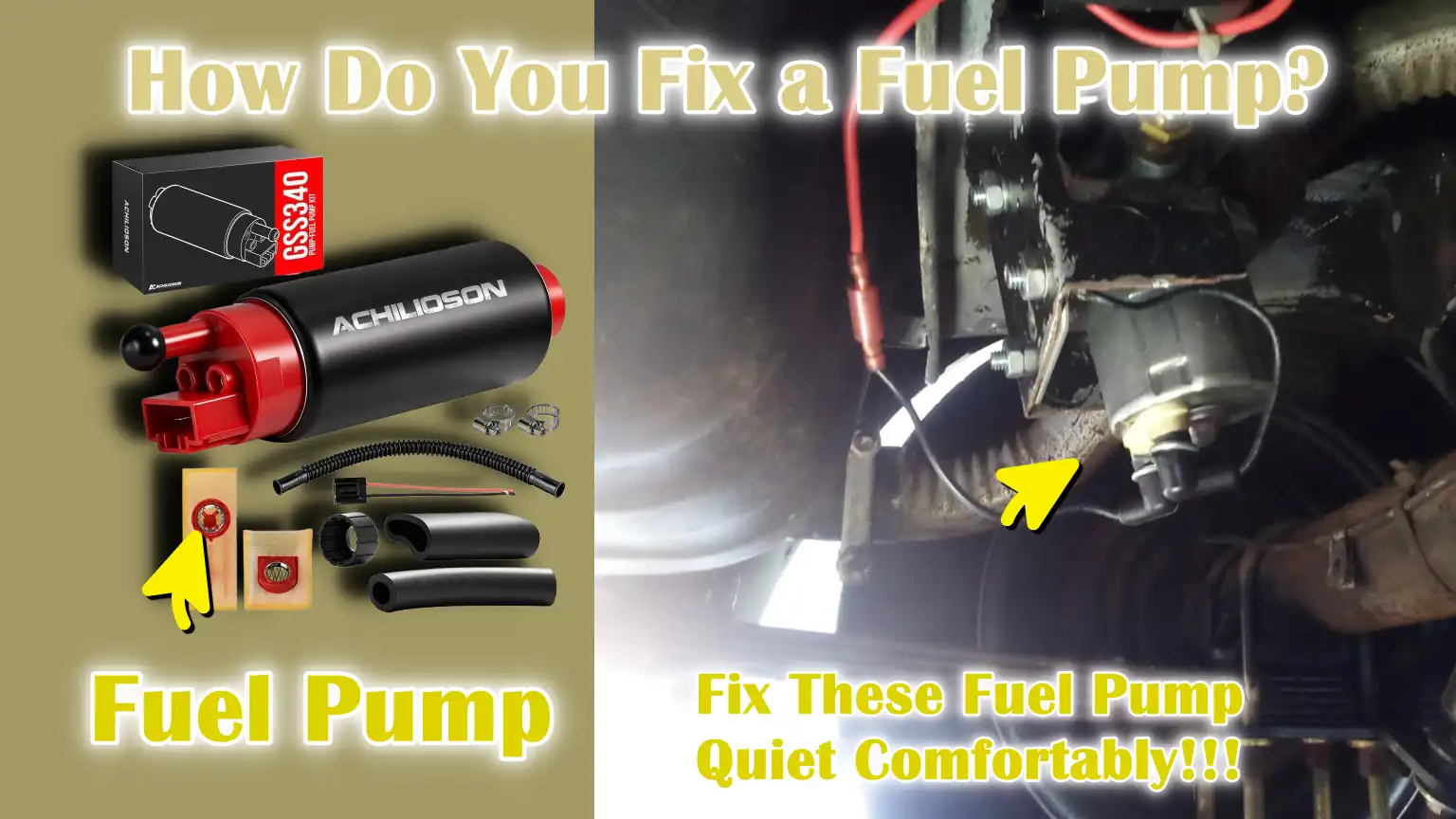
Now, in this guide you’ll know How Do You Fix a Fuel Pump, so that you can properly diagnose and fix a fuel pump to restore engine performance and also improve the reliability, safety and fuel efficiency of your vehicle.
What Is a Fuel Pump and How Does It Work?
1. Definition and Purpose of a Fuel Pump
The fuel pump is a vital component of your vehicle’s fuel system, delivering fuel from the fuel tank to the engine for combustion.
The engine cannot run without a consistent and properly pressured fuel supply.
Simply put, the fuel pump ensures that the engine always receives the correct amount of fuel at the correct time.
In gasoline vehicles, the pump delivers fuel to the fuel injectors, where it mixes with air and burns inside the cylinders to produce power.
If the fuel pump fails or weakens, the engine may crank but fail to start, experience a loss of power during acceleration, stall suddenly, or malfunction.
Modern vehicles are carefully engineered to maintain a specific fuel pressure level, as even a slight decrease in pressure can reduce combustion efficiency, decrease fuel economy and increase emissions.
2. Mechanical vs Electric Fuel Pumps
Fuel pumps come in two main types: mechanical and electric.
Mechanical fuel pumps were commonly used in older vehicles with carburetors.
These pumps are typically mounted on the engine and driven by the engine’s camshaft.
As the engine rotates, the pump uses a diaphragm mechanism to propel fuel.
They operate at very low pressures because carbureted systems don’t require high fuel pressure.
Electric fuel pumps, on the other hand, are used in almost all modern vehicles.
These pumps are typically located inside the fuel tank and are powered by the vehicle’s electrical system.
Electric pumps are more efficient and can generate very high pressures, which are essential for fuel-injected engines.
They also help reduce vapor lock and improve consistent fuel delivery under varying driving conditions.
3. How Modern Fuel Injection Systems Rely on High-Pressure Pumps
Modern fuel injection systems rely on a high-pressure electric fuel pump to deliver fuel efficiently and effectively.
In most gasoline vehicles, fuel injectors often require a pressure between 40 and 60 psi, while direct injection systems can require much higher pressures.
This higher pressure sprays fuel into the engine as a fine mist, improving combustion, increasing power and reducing fuel waste.
If the pressure is too low, the engine may hesitate, misfire, or fail to start.
If the pressure is unstable, performance may be poor and inconsistent.
Because modern engines are electronically controlled, the fuel pump must work in perfect coordination with sensors and control modules to maintain the correct pressure at all times.
4. The Role of the Fuel Filter and Fuel Pressure Regulator
The fuel filter and fuel pressure regulator are two essential components that work in conjunction with the fuel pump.
The fuel filter cleans the fuel before it reaches the engine, removing dirt, rust and other contaminants that can damage the injectors or reduce performance.
A clogged fuel filter can force the fuel pump to work harder, leading to early pump failure.
The fuel pressure regulator controls and maintains proper pressure in the fuel system.
It ensures that excess fuel is returned to the tank and a consistent and balanced supply is provided to the injectors.
When the regulator malfunctions, fuel pressure can become too high or too low, which can lead to poor engine performance, engine damage, or starting problems.
The fuel pump, filter and regulator together form a complete system that keeps the engine running smoothly, efficiently and safely.
Common Signs of a Fuel Pump Failure
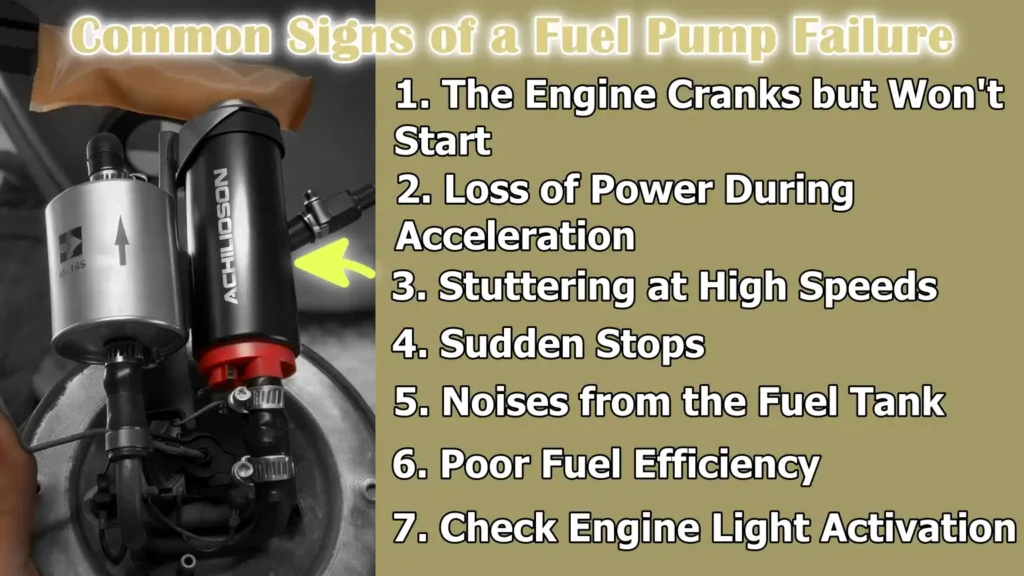
1. The Engine Cranks but Won’t Start
The most common sign of a fuel pump failure is when the engine cranks normally but won’t start.
This is because the starter motor is working and turning the engine, but the fuel pump isn’t delivering fuel to the injectors at the proper pressure.
Without fuel, combustion can’t occur, so the engine can’t run.
In many modern vehicles, when you turn the key to the “ON” position, you should hear a faint buzzing sound from the fuel tank area for a few seconds.
If you don’t hear this sound, the fuel pump may not be priming.
However, before replacing the pump, it’s important to confirm the problem by checking the fuel pressure with a gauge and checking the fuel pump fuse and relay.
2. Loss of Power During Acceleration
A weak fuel pump cannot deliver enough fuel when the engine needs more power, specially during acceleration or when driving uphill.
When you press the accelerator, the engine requires extra fuel for acceleration.
If the pump cannot maintain the correct pressure, the engine may hesitate, feel sluggish, or have difficulty picking up speed.
This condition is often more noticeable under load, such as when carrying passengers or towing.
Over time, low fuel delivery can also lead to a poor air-fuel mixture, which can increase engine temperature and reduce overall performance.
3. Stuttering at High Speeds
Stuttering or jerking while driving at a constant speed can be another sign of a fuel pump problem.
At high speeds, the engine requires a consistent and even flow of fuel.
If the pump is worn or slightly damaged, it may deliver fuel unevenly instead of a smooth flow.
This can cause the engine to misfire or temporarily lose power before recovering.
Many drivers describe this as the car stalling briefly and then restarting.
Ignoring this symptom can lead to more serious performance problems over time.
4. Sudden Stops
A malfunctioning fuel pump can cause the engine to suddenly stall while driving or idling.
This occurs when fuel pressure suddenly drops, preventing the engine from receiving adequate fuel.
Stopping at low speeds can be difficult, but stalling at highway speeds can be dangerous.
In some cases, the car may restart after a few minutes if the pump cools down, but repeated stalling is a sure sign that the pump is nearing complete failure.
Immediate diagnosis is essential to prevent a malfunction.
5. Noises from the Fuel Tank
Any strange noise or buzzing sound coming from the fuel tank area could indicate a problem with the fuel pump motor.
Electric fuel pumps typically make a gentle noise, but a loud, high-pitched noise could indicate that the pump is having trouble functioning.
This could be caused by internal wear, dirt, or repeatedly driving with very low fuel levels, which forces the pump to work harder and overheats.
If the noise becomes louder over time, it’s wise to have the fuel system tested before the pump fails completely.
6. Poor Fuel Efficiency
A weak or failing fuel pump can also affect fuel efficiency.
If the pressure from the pump is inconsistent, the engine control system may adjust the air-fuel mixture to compensate.
This can lead to excessive fuel consumption.
You may notice that you’re filling up the tank more often than usual.
Poor fuel economy, as well as a vehicle that won’t start properly or hesitates, is often linked to fuel delivery issues.
Checking the fuel pressure and inspecting the fuel filter can help confirm whether the problem lies with the pump.
7. Check Engine Light Activation
Modern vehicles use sensors to monitor fuel pressure and engine performance.
If the fuel pump isn’t delivering fuel properly, the engine control module may detect abnormal readings and turn on the check engine light.
Diagnostic trouble codes related to a lean fuel mixture, fuel pressure issues, or misfires may be stored in the system.
While the check engine light doesn’t always mean the fuel pump is faulty, it provides an important warning that something in the fuel system needs attention.
Scanning the vehicle with an OBD-II scanner can help determine if the problem is with the fuel pump, fuel pressure regulator, injectors, or another component.
Know, Causes of Fuel Pump Failure
1. Frequent Driving When Fuel Is Low
Frequently driving when the fuel tank is low is one of the most common causes of fuel pump failure.
In most modern vehicles, the electric fuel pump is located inside the fuel tank and is cooled and lubricated by the surrounding fuel.
When the fuel level is too low, the pump may not be fully covered, causing it to heat up more than normal.
Overheating can damage the internal motor and reduce its life.
Furthermore, low fuel levels make it easier for debris from the bottom of the tank to enter the system, increasing wear.
Keeping the tank at least a quarter full is a simple habit that can help extend the life of the fuel pump.
2. Bad or Dirty Fuel
Fuel containing dirt, rust, water, or other contaminants can severely damage the fuel pump.
Even small particles can enter the pump and cause scratches, clogging, or reduced performance.
Water in the fuel can also cause corrosion inside the pump and fuel lines.
Poor fuel can come from a poor-quality fuel station, an old storage tank, or a rusty vehicle fuel tank.
Over time, dirt forces the pump to work harder and reduces its ability to maintain proper fuel pressure.
Using clean, good-quality fuel and avoiding poor fuel sources helps protect the entire fuel system.
3. Clogged Fuel Filter
The fuel filter is designed to trap dirt and debris before fuel reaches the engine.
However, if the filter becomes clogged and isn’t replaced according to the recommended schedule, it can block fuel flow.
When fuel flow is blocked, the pump has to work harder to push fuel through the blockage.
This increased pressure increases heat and internal wear, which can ultimately lead to pump failure.
A clogged fuel filter can also cause symptoms similar to a malfunctioning fuel pump, such as poor acceleration or difficulty starting.
Regular filter replacement is an essential maintenance step to maintain fuel pump health.
4. Electrical Wiring Problems
Electric fuel pumps rely on proper voltage and strong electrical connections to function properly.
Bad wiring, loose connectors, bad terminals, or poor grounding can disrupt the pump’s power supply.
If the pump doesn’t receive stable voltage, it may run weakly, intermittently, or stop working altogether.
Electrical problems can sometimes cause fuel pump failure, so it’s important to test the wiring and voltage before replacing the pump.
Correcting faulty wiring quickly can prevent unexpected failures and unnecessary part replacement.
5. Bad Fuel Pump Relay or Fuse
The fuel pump relay and fuse are protective electrical parts that control power to the pump.
The fuse protects the circuit from overload, while the relay acts as a switch that turns on the pump when the engine starts.
If the fuse blows or the relay fails, the pump will not receive power and the engine may crank but will not start.
Sometimes the problem isn’t with the pump, but rather a simple problem with the relay or fuse.
Checking and replacing these parts is usually quick and inexpensive, making it an important initial diagnostic step.
6. Lifespan and Wear
Like any mechanical or electrical part, fuel pumps wear out over time.
Most fuel pumps are designed to last for many years, often exceeding 100,000 kilometers, depending on driving habits and maintenance.
The pump contains moving parts and an electric motor that gradually wear out with constant use.
Heat, vibration and normal friction gradually reduce efficiency.
As the pump ages, it can have trouble maintaining proper fuel pressure, causing the vehicle to struggle to start, lose power, or stall.
Regular maintenance, clean fuel and good driving habits can help prevent age-related failure, but eventually, like any normal vehicle, it will need to be replaced.
Tools
| Tool / Material | Usage |
|---|---|
| Socket Set and Ratchet | Used to remove bolts holding the fuel tank, pump cover, or bracket in place. Different socket sizes may accommodate different bolt heads. Loosening and tightening with a ratchet makes this quick and easy. |
| Fuel Pressure Gauge | Used to check if the fuel pump is delivering fuel at the correct pressure. It connects to the fuel rail or test port on the engine. This tool helps confirm whether the pump is weak or functioning properly. |
| Screwdrivers | Needed for removing hose clamps, covers and small screws. Typically, both flat-head and Phillips screws are needed. They help open panels and carefully separate parts. |
| Jack and Jack Stands | Used to safely raise and support the vehicle if the fuel tank needs to be lowered. A jack raises the car and jack stands stabilize it. Never work under a car supported only by a jack. |
| Safety Gloves and Goggles | Protect your hands from sharp edges and contact with fuel. Goggles protect your eyes from fuel splashes or dirt. Safety gear reduces the risk of injury during repairs. |
| Replacement Fuel Pump | If the old pump is completely damaged, a new pump is needed. It usually comes in a complete assembly with a strainer and sensor. Always match the pump to your vehicle’s model and engine type. |
| Fuel Line Disconnect Tool | A special tool used to safely remove the fuel line without damaging it. It helps remove the locking clip inside the quick-connect fitting. This prevents the fuel connector from breaking. |
| Multimeter | Used to check the voltage and electrical connections on the fuel pump. It helps confirm that the pump is receiving proper power. This tool is essential for diagnosing wiring or relay problems. |
How to Make Sure the Safety Before You Begin
1. Disconnecting the Battery
Before working on the fuel pump, always disconnect the vehicle’s battery to avoid an electrical accident.
The fuel pump is powered by electricity and even a small spark from a connected battery can ignite fuel vapor.
Removing the negative battery terminal first helps reduce the risk of a short circuit.
This simple step protects you from sudden shock and prevents damage to electronic components.
It also ensures that the fuel pump doesn’t suddenly activate while you’re handling the fuel line or connector.
2. Reducing Fuel System Pressure
Modern fuel systems operate at high pressure, often between 40 and 60 PSI in many gasoline vehicles.
If this pressure isn’t released before disconnecting the fuel line, fuel can spray violently and cause injury.
Relieving pressure usually involves removing the fuel pump fuse or relay and running the engine until it stops, or using a fuel pressure release valve, if available.
This step prevents fuel from spraying onto your face or hot engine parts.
Taking time to release pressure makes the repair safer and cleaner.
3. Work in a Well-Ventilated Area
Fuel vapors can ignite quickly and inhaling large amounts can cause dizziness, headaches, or breathing difficulties.
Always perform fuel pump repairs in an open and well-ventilated area, such as a garage with the door open or outdoors.
Good airflow prevents the formation of dangerous vapors.
Avoid working in small, enclosed spaces where fumes can accumulate.
Proper ventilation reduces the risk of fire and protects your health during repairs.
4. Avoid Open Flames or Sparks
Gasoline vapors can easily ignite, even from small sparks.
Keep all open flames, cigarettes, heaters and spark-producing tools away from your work area.
Even turning power tools on and off can create small sparks, so handle tools carefully.
Avoid using metal tools near open fuel in a way that could create sparks.
Eliminating sources of ignition is one of the most important safety rules when working on any part of the fuel system.
5. Wearing Protective Gear
Wearing the right protective gear reduces the risk of injury while repairing a fuel pump.
Safety gloves protect your skin from fuel, which can cause irritation and dryness.
Protective goggles protect your eyes from fuel splashes and dirt particles.
Wearing long sleeves can also prevent minor cuts from sharp metal edges around the fuel tank area.
Simple safety clothing and gear makes the work area safer and helps you complete repairs with confidence and less risk.
How to Diagnose Fuel Pump Problems
1. Checking the Fuel Pump Fuse and Relay
The first and easiest step in diagnosing a fuel pump problem is to check the fuse and relay.
The fuse protects the fuel pump circuit from electrical overload and if it blows, the pump will lose power.
The relay acts as a switch that turns on the pump when the engine starts.
A faulty relay can prevent the pump from working, even if the pump itself is fine.
You can check for a broken metal strip in the fuse or test it with a multimeter.
The relay can often be replaced with another similar relay in the fuse box to see if the problem changes.
This basic check can save time and money before replacing expensive parts.
2. Listen for the Fuel Pump Priming Sound
Most modern vehicles activate the fuel pump briefly for two to three seconds when the key is turned to the “ON” position.
This is called priming and it builds pressure in the fuel system before the engine starts.
You can usually hear a faint humming sound from the rear of the vehicle, where the fuel tank is located.
If you don’t hear this sound, it could mean the pump isn’t receiving power or is internally faulty.
However, a quiet pump doesn’t always mean it’s faulty, so further testing is necessary.
Listening is a quick and easy first check that can provide clues.
3. Testing Fuel Pressure with a Gauge
Testing fuel pressure with a gauge is one of the most accurate ways to confirm a fuel pump problem.
Many gasoline engines require fuel pressure between 40 and 60 PSI, although the exact value depends on the vehicle.
The gauge connects to a test port in the fuel rail or fuel line.
If the pressure reading is below manufacturer specifications, the pump may be weak, the fuel filter may be clogged, or there may be a problem with the pressure regulator.
Consistent and accurate pressure readings usually mean the pump is functioning properly.
Always compare the readings to the vehicle’s service manual for a correct diagnosis.
4. Checking the Voltage at the Fuel Pump Connector
If fuel pressure is low or absent, it’s important to check the pump’s power supply.
A multimeter can measure the voltage at the fuel pump connector with the ignition on.
Most vehicles should provide a voltage close to the battery voltage, usually around 12 volts.
If the pump isn’t receiving the correct voltage, the problem could be poor wiring, poor grounding, or a bad control module.
If the voltage is correct but the pump isn’t running, the pump motor itself may be faulty.
This step helps distinguish electrical problems from mechanical pump failure.
5. Check for leaks or blockages in the fuel lines
Fuel delivery problems aren’t always caused by the pump alone.
Corroded, leaking, or blocked fuel lines can reduce pressure and flow.
Look for cracks, loose connections, or wet fuel spots in the fuel lines.
A clogged fuel filter can also restrict flow and force the pump to work harder.
Blockages can cause symptoms like hesitation, rough running, or stalling.
Checking the entire fuel path helps ensure the pump isn’t responsible for a problem caused by another component.
6. Scanning for Diagnostic Trouble Codes – OBD-II
Modern vehicles use onboard diagnostics systems to monitor engine performance.
If the fuel pump isn’t functioning properly, the engine control module may store trouble codes related to low fuel pressure, a lean air-fuel mixture, or a misfire.
You can quickly read these codes using an OBD-II scanner.
While a code doesn’t always mean the fuel pump is faulty, it does provide guidance for further testing.
Combining code scanning with pressure and voltage checks provides a more complete and accurate diagnosis.
A correct diagnosis prevents unnecessary replacements and ensures the underlying problem is corrected.
How Do You Fix a Fuel Pump – Temporary Solution for Fuel Pump: Emergency Situations Only
1. Tap the Fuel Tank Temporary Solution
In some emergency situations, gently tapping the bottom of the fuel tank while someone else turns the ignition key can sometimes temporarily restart a faulty fuel pump.
This method only works if the electric motor inside the pump has become stuck due to wear.
Gently tapping may loosen worn brushes or internal parts enough to get the pump working again.
However, this is not a real repair and should only be used to get the vehicle to a safe place or a repair shop.
If the pump stops working once, it is very likely to fail again soon.
Repeated tapping can damage the tank or other parts, so this should be done with caution and only as a last resort.
2. Cooling Down an Overheated Pump
Fuel pumps can overheat, specially if the vehicle is frequently driven with very low fuel levels.
Because most electric fuel pumps are cooled by the surrounding fuel, low fuel reduces cooling and increases heat.
If the pump stops working due to overheating, letting the vehicle cool down for 20 to 30 minutes may restart it temporarily.
If the problem is low fuel, adding fuel to the tank can also help cool the pump.
While this may restart the engine, overheating usually means the pump is already worn or damaged internally.
Continued driving without replacement increases the risk of a complete failure.
3. Adding Fuel System Cleaner
If fuel flow is slightly reduced due to minor deposits or dirt, adding a good-quality fuel system cleaner to a full tank of fuel can improve performance in some cases.
Fuel cleaners are designed to dissolve minor dirt or carbon deposits in fuel lines and injectors.
However, it’s important to understand that cleaners cannot repair a broken or severely worn fuel pump.
If the pump motor is weak or internal components are defective, no additive can completely repair the pump.
This method is more useful for minor fuel delivery problems than for a complete pump failure.
4. When These Solutions May Work and What Are Their Limitations
Temporary solutions may only work if the fuel pump is slightly worn, overheated, or has a temporary problem.
They will not fix electrical problems, major internal damage, or severe wear.
These short-term measures are meant to help you reach a safe location or repair site, not to provide a proper diagnosis and repair.
Ignoring obvious symptoms such as frequent stalling, failure to start, or loud noises increases the risk of unexpected stranding.
The safest and most reliable solution for a faulty fuel pump is proper testing, followed by professional repair or complete replacement if necessary.
How to Replace a Fuel Pump – Easy guide
1. Reduce Fuel System Pressure
Before removing any fuel system parts, it’s crucial to reduce accumulated fuel pressure.
Most modern gasoline vehicles operate at high pressure, often between 40 and 60 PSI and some direct injection systems operate at even higher levels.
If this pressure isn’t reduced, fuel can rapidly escape when the line is disconnected.
Pressure can usually be reduced by removing the fuel pump fuse or relay and starting the engine until it stalls, or by using a pressure release valve on the fuel rail if the vehicle has one.
This step prevents injury, minimizes fuel leakage and makes the repair process safer and cleaner.
2. Disconnect the Battery
After reducing the fuel pressure, disconnect the negative terminal of the battery.
This prevents sparks, short circuits and the fuel pump from suddenly starting during operation.
Because fuel vapor is highly flammable, even a small spark can pose a serious danger.
Disconnecting the battery also protects the vehicle’s electronic control module from electrical damage.
Always disconnect the negative cable first to reduce the risk of accidental contact with metal parts.
3. Access the Fuel Pump
In most modern vehicles, the fuel pump is located inside the fuel tank.
Some cars have an access panel under the rear seat or inside the trunk area.
If your vehicle has this panel, you can remove it to access the fuel pump without lowering the tank.
This method saves time and effort.
If there is no access panel, the fuel tank should be carefully lowered using a jack and proper support.
The tank may need to be slightly emptied to reduce the weight.
Lowering the tank requires careful handling to avoid damaging fuel lines, vapor hoses, or electrical connectors.
4. Disconnect the Fuel Line and Electrical Connector
Once the pump assembly is visible, carefully disconnect the fuel line and electrical connector.
Many vehicles use quick-connect fittings that require a special disconnect tool.
Always work slowly to avoid breaking the plastic clips or fittings.
A little fuel may drip during this step, so keep a clean cloth nearby.
Properly disconnecting these connections ensures that the new pump can be installed without any leaks or electrical problems.
5. Remove the Old Fuel Pump Assembly
The fuel pump is usually part of a larger assembly that includes a fuel level sensor and a strainer.
It is usually secured with a locking ring or retaining bolt.
Carefully remove the locking ring, then remove the pump assembly from the tank.
Make sure the float arm of the fuel level sensor is not bent.
Check the inside of the tank for dirt or debris, as dirt can shorten the life of the new pump.
Removing the old assembly gently can prevent damage to the tank opening and sealing surface.
6. Install the New Fuel Pump
Before installing the new pump, carefully compare it to the old pump to ensure it matches in size and connector type.
Install a new gasket or sealing ring to prevent fuel leaks.
Carefully lower the new assembly into the tank, ensuring it is in the correct position.
Secure it with the manufacturer’s specified locking ring or bolts.
Correct installation is crucial, as a poor seal could cause a fuel leak or trigger the vapor system warning light.
7. Reassemble the Parts
Once the new pump is properly installed, firmly reconnect the fuel line and electrical connectors.
Double-check that all connections are tight and properly aligned.
If the fuel tank was lowered, carefully lift it back into place and reinstall all mounting straps and bolts.
Reinstall any removed access panels, seats, or covers.
Taking the time to reassemble everything correctly helps prevent future problems like fuel odors, leaks, or loose wiring.
8. Reassemble and Test the Battery
After reassembling all parts, reconnect the negative battery terminal.
Without starting the engine, turn the ignition key to the “ON” position and listen for the fuel pump priming.
This step allows the system to build up pressure again.
Check for fuel leaks around the connections before starting the engine.
After starting, let the engine idle for a few minutes and see if it is operating properly.
A short test drive can confirm proper acceleration and performance.
Careful testing ensures that the replacement was successful and that the vehicle is safe to drive.
How to Repair an External Fuel Pump – Mechanical Fuel Pump
1. Location in an Older Engine
Mechanical fuel pumps are commonly found in older vehicles that use carburetors instead of modern fuel injection systems.
These pumps are typically mounted on the side of the engine block and are driven by a small lever arm from the engine’s camshaft.
Unlike electric fuel pumps mounted inside the fuel tank, mechanical pumps are external and easier to see and access.
They operate at lower pressures, as carbureted engines typically require only 4 to 7 psi of fuel pressure.
Knowing the pump’s exact location helps you inspect the fuel line, check for leaks and confirm whether the pump is the cause of fuel delivery problems.
2. Removing the Mounting Bolts
To remove a mechanical fuel pump, first disconnect the battery to avoid accidental sparks.
Then carefully disconnect the inlet and outlet fuel lines and keep a cloth nearby to catch any spilled fuel.
The pump is usually held in place by two mounting bolts attached to the engine block.
Use the correct sized socket to avoid rounding the bolt heads.
When removing the bolts, gently pull the pump away from the engine.
Note that the internal lever on the camshaft may exert a slight pull.
Carefully removing the pump will prevent damage to the mounting surface.
3. Gasket Replacement
There is a gasket between the fuel pump and the engine block that creates a tight seal and prevents oil or fuel leaks.
When replacing a mechanical pump, always install a new gasket.
Before installing the new gasket, clean the mounting surface on the engine to remove old gasket material and dirt.
A clean and smooth surface ensures a proper seal.
Some mechanics apply a thin layer of gasket sealant, as recommended by the manufacturer, but excessive sealant should be avoided.
A properly installed gasket prevents oil leaks from the engine and maintains proper alignment of the pump.
4. Installing the New Mechanical Pump
To install the new pump, carefully position it so that the lever arm fits snugly on the camshaft.
You may need to apply some pressure to align the pump when installing the mounting bolts.
Tighten the bolts evenly to the specified torque specifications to ensure a snug fit.
Reconnect the fuel lines securely and check that the hose clamps are tight.
Proper installation ensures the pump can efficiently deliver fuel from the tank to the carburetor.
If installed incorrectly, the pump may malfunction or leak.
5. Testing for Leaks
After installation, reconnect the battery and start the engine.
Let it idle and carefully inspect the pump area for any signs of fuel or oil leaks.
Check the gasket area around the fuel line connections and the pump mounting surface.
Mechanical pumps operate with engine movement, so take a few minutes to check the area to make sure there are no slow leaks.
A short test drive can help confirm stable engine performance and proper fuel delivery.
Thorough testing ensures that the repair is complete and the vehicle is running safely and reliably.
How to Do Post-Repair Checks
1. Checking for Fuel Leaks
After replacing or repairing a fuel pump, the first and most important step is to carefully check for fuel leaks.
Fuel is highly flammable and even a small leak can pose a serious safety hazard.
Before starting the engine, turn the ignition key to the “ON” position and allow the fuel system to build pressure.
Thoroughly inspect all fuel line connections, pump seals, locking rings and removed hoses.
Look for wet spots, fuel odors, or drips.
Any moisture should be repaired immediately.
A proper seal ensures not only safety but also proper fuel pressure and engine performance.
2. Verifying Fuel Pressure
Once you’ve confirmed that no leaks are visible, the next step is to verify that the fuel pump is producing the correct pressure.
Use a fuel pressure gauge attached to the fuel rail or test port.
Most gasoline engines require pressure between 40 and 60 PSI, although the exact value depends on the vehicle model.
Compare the reading to the manufacturer’s specifications.
Stable and correct pressure confirms that the pump, filter and regulator are functioning properly.
If the pressure is too low or unstable, further testing may be necessary to check for installation issues, a clogged filter, or a faulty regulator.
3. Test Drive the Vehicle
After confirming the correct pressure, start the engine and let it idle for a few minutes.
Listen for smooth and steady engine operation.
Then take the vehicle for a short and careful test drive.
Pay attention to acceleration, engine response and overall smoothness.
The vehicle should start easily, accelerate without hesitation and maintain consistent power at different speeds.
The test drive helps confirm that the fuel system is providing consistent fuel flow under real driving conditions.
Any signs of stalling, jerking, or hesitation should be corrected before regular use.
4. Clearing Diagnostic Codes
If the vehicle’s Check Engine light was on before the repair, diagnostic trouble codes may still be stored in the Engine Control Module.
After confirming the repair was successful, use an OBD-II scanner to clear these codes.
Clearing the codes resets the system and allows you to see if any new problems have arisen.
If the Check Engine light returns, it may indicate an unresolved problem, such as a faulty sensor or fuel pressure issue.
Resetting and monitoring the system ensures that the repair completely corrected the original fuel pump problem and that the vehicle is running properly.
What Could Be Possible Cost to Repair or Replace a Fuel Pump
1. Average Parts Cost
The cost of a fuel pump depends on the type of vehicle, the engine design and whether the pump is electric or mechanical.
In most modern gasoline vehicles, the electric fuel pump is sold as a complete assembly that may include a fuel level sensor and strainer.
On average, parts can range from medium to high depending on the make, quality and model of the vehicle.
Standard passenger vehicles typically have more affordable pumps, while luxury cars, high-performance engines and diesel systems often require more expensive parts.
Choosing a high-quality replacement part is crucial, as a low-cost pump can wear out quickly and require frequent repairs.
Always ensure the new pump meets the exact specifications for your vehicle.
2. Labor Cost Estimate
Labor costs depend on how difficult it is to access the fuel pump.
If the vehicle has an access panel under the rear seat or trunk, labor time is shorter and more affordable.
However, if the fuel tank needs to be lowered, the process becomes more time-consuming because the tank needs to be supported, disconnected and carefully removed.
This can significantly increase labor charges.
For many vehicles, total labor time can range from a few hours to more, depending on the vehicle’s complexity.
Repair shops calculate labor based on hourly rates, which vary by location and type of service center.
Understanding labor requirements helps explain why total repair costs can vary significantly between vehicles.
3. DIY vs Professional Repair Comparison
Repairing the fuel pump yourself can reduce labor costs, but it requires the right tools, mechanical knowledge and strict safety precautions.
Do-it-yourself repairs save labor, but still require purchasing the correct pump, gasket and related parts.
However, working with fuel systems involves handling flammable fuel, safely releasing pressure and correctly reinstalling parts to prevent leaks.
Professional mechanics have the training, proper equipment and experience to diagnose wiring faults or pressure regulator problems.
Although professional repairs cost more, they often include labor warranties and reduce the risk of installation errors.
The decision between DIY and professional repair depends on skill level, comfort with available tools and safety practices.
4. Factors Affecting Total Cost
Several factors affect the total cost of repairing or replacing a fuel pump.
The make and model of the vehicle play a significant role, as some designs require more labor time or specialized parts.
The type of engine, such as direct injection or diesel systems, can increase parts prices due to higher pressure requirements.
Additional repairs can also increase the cost, such as replacing a clogged fuel filter, damaged wiring, or a faulty fuel pressure regulator.
Local labor rates and the shop’s reputation can also further impact the price.
In some cases, related issues discovered during the inspection can increase the total cost.
Understanding these factors helps vehicle owners plan financially and avoid unexpected repair bills.
How to Avoid Other Fuel Pump Problems
Not only this, there’s detailed failure analysis of diesel fuel pumps and that shows that the moisture and rust particles in the fuel actually can accelerate the wear and cause the early pump failure, that shows why it is really important to have clean fuel and proper water separation to prevent the fuel system problems later on.[¹]
1. Avoid Driving with an Empty Tank
The easiest and most effective way to protect your fuel pump is to avoid driving with very low fuel levels.
In most modern vehicles, the electric fuel pump is located inside the fuel tank and is cooled and lubricated by the surrounding fuel.
When the tank is nearly empty, the pump is exposed to more heat and can easily overheat.
Overheating increases internal wear and reduces the life of the pump motor.
Low fuel levels can also easily allow dirt and debris from the bottom of the tank to enter the system.
Keeping the tank at least one-quarter full of fuel maintains proper cooling and reduces pressure on the pump.
2. Change the Fuel Filter Regularly
The fuel filter plays a vital role in protecting the fuel pump and engine from dirt, rust and other contaminants.
Over time, the filter becomes clogged as it traps fuel particles.
When a filter becomes clogged, the fuel pump has to work harder to push fuel through it.
This increased effort increases heat and mechanical stress within the pump.
Replacing the fuel filter at the vehicle manufacturer’s recommended time ensures proper fuel flow and reduces the load on the pump.
Regular maintenance of this small and inexpensive part can significantly extend the life of the fuel pump.
3. Use Good Quality Fuel
Using clean, high-quality fuel helps protect the fuel pump and injectors from damage caused by dirt.
Poor-quality fuel can contain excess dirt, water, or harmful deposits, which can impact the entire fuel system.
Bad fuel can damage or block the small passages within the pump, reducing performance.
Choosing a good fuel station and avoiding old or defective fuel sources reduces the risk of harmful particles entering the tank.
Clean fuel burns smoothly, the engine runs smoothly and fuel system parts last longer.
4. Maintain the Health of the Electrical System
As modern fuel pumps are powered by electricity, maintaining the electrical system is crucial.
A weak battery, bad connectors, faulty wiring, or a bad relay can cause problems with the pump’s voltage supply.
Voltage fluctuations force the pump to work harder and can lead to premature failure.
Regularly checking the battery’s condition, cleaning the terminals and securing the electrical connections helps maintain a regular power supply.
Addressing minor electrical issues quickly can prevent major problems and ensure reliable fuel pump operation over time.
Read More:
When You Should Consider to See a Professional Mechanic
1. Persistent Starting Problems
If your vehicle continues to struggle with starting despite basic checks like fuse, relay and battery checks, it’s wise to consult a professional mechanic.
Frequent hard starts, prolonged cranking, or failure to start at all may indicate deeper fuel system problems, requiring advanced testing.
A professional can use specialized diagnostic tools to measure proper fuel pressure, check injector pulse signals and examine engine control data.
Persistent starting problems may also be related to system faults, such as ignition timing or sensor failure.
A proper diagnosis may prevent the need for part replacement and ensure the root cause of the problem is identified.
2. Electrical Diagnosis Beyond Basic Testing
Today’s vehicles rely heavily on electronic control systems, wiring networks and sensors.
If voltage tests, fuse checks and relay replacements don’t resolve the problem, advanced electrical diagnostics may be necessary.
Professional technicians use advanced scan tools and wiring diagrams to diagnose circuit faults, detect poor grounding and identify control module communication errors.
Electrical problems can sometimes mask fuel pump failure, even if the pump itself appears to be functioning properly.
Without the proper equipment and experience, diagnosing complex wiring problems can be difficult and time-consuming.
Seeking professional help reduces the risk of damaging sensitive electronic components.
3. Hybrid or High-Pressure Diesel Systems
Hybrid vehicles and high-pressure diesel engines have more complex fuel systems than standard gasoline engines.
Diesel systems, specially common rail designs, operate at very high pressures, which can exceed several thousand PSI.
These systems require specialized tools and strict safety procedures.
Hybrid vehicles may require additional safety measures due to their high-voltage components.
Attempting repairs without proper training can be dangerous and result in costly damage.
Professional mechanics are trained to handle these advanced systems safely and correctly.
4. Lack of the Right Tools
Replacing and inspecting a fuel pump requires specialized tools, such as a fuel pressure gauge, a multimeter, line disconnect tools and sometimes lifting equipment to safely lower the fuel tank.
If you don’t have these tools or are unsure how to use them properly, it’s safer to seek professional service.
Working without the right equipment increases the risk of fuel leaks, electrical damage, or injury.
A professional repair shop has the right tools, service knowledge and experience to complete the job efficiently and safely.
Seeking professional help in such situations provides confidence and peace of mind.
Conclusion – How Do You Fix a Fuel Pump?
The fuel supply is must, as doesn’t matter how advanced technology and powerfully engineered your vehicle is, but it literally can’t operate without having a steady fuel pressure, as nothing moves forward then.
As, the fuel pump plays a crucial role in delivering the right amount of fuel at the correct pressure so the engine can start easily, run smoothly and deliver consistent power.
Modern engines rely on proper fuel delivery for proper combustion, good fuel economy and low emissions.
And, even a slight decrease in fuel pressure can cause hesitation, stalling, hard starting, or poor performance.
That’s why a proper diagnosis always comes first.
Plus, testing the fuel pressure, checking the electrical supply, inspecting filters and scanning fault codes helps confirm the actual problem before spending money on parts.
And, when you understand the warning signs of a bad fuel pump can help you take immediate action and prevent a sudden breakdown.
Now, you have understand there are symptoms such as: the engine cranking without starting, losing power during acceleration, noises from the tank, or frequent stalling should never be ignored.
Now, that’s all from this one and you can ask related questions in the comment box.
Frequently Asked Questions
Q1. What happens when a fuel pump fails?
Answer: When a fuel pump fails, it can’t deliver the proper amount of fuel from the tank to the engine. Without proper fuel pressure, the engine may crank but not start, lose power while driving, stall suddenly, or hesitate during acceleration. In many cases, drivers notice rough idling or poor fuel efficiency before the engine fails completely. If the pump stops working completely, the car won’t start at all because combustion requires fuel. A bad pump often gives warning signs before it fails completely, so early diagnosis is crucial.
Q2. Can I drive with a bad fuel pump?
Answer: Driving with a weak fuel pump is risky. Initially, the car may run, but performance will likely be unstable. The engine may hesitate, struggle during acceleration, or stall without warning. Sudden stops, specially at high speeds or in traffic, can be dangerous. A faulty fuel pump can also cause the engine to lean, which can lead to overheating and engine damage over time. It’s always safer to repair or replace a faulty fuel pump as soon as possible.
Q3. How long does a fuel pump typically last?
Answer: Most modern fuel pumps are designed to last a long time, often 100,000 kilometers or more, depending on driving habits and maintenance. Some pumps, if properly maintained, can last the entire life of the vehicle. However, frequent driving on a nearly empty tank, poor fuel quality, clogged filters and electrical problems can shorten the pump’s life. Regular maintenance and good fuel habits help extend its life.
Q4. How do I know if it’s a fuel pump problem or something else?
Answer: Fuel pump problems are sometimes mistaken for problems with the battery, starter motor, fuel filter, or ignition system. The best way to confirm a fuel pump problem is to test the fuel pressure with a gauge and check the electrical voltage at the pump connector. Listening for the pump’s priming sound when the key is turned to the “ON” position can also provide clues. If fuel pressure is low or absent and power supply is good, the pump is likely the problem. Proper testing prevents unnecessary replacement of good parts.
Q5. Is replacing the fuel pump difficult?
Answer: Replacing the fuel pump can be a bit tricky depending on the vehicle’s design. Some vehicles have an access panel under the rear seat, making this easier. Others require lowering the fuel tank, which can be time-consuming and labor-intensive. This task requires careful handling of fuel lines, proper safety precautions and proper installation of seals and connectors. Experienced DIY mechanics can do this, but new mechanics may prefer to seek professional help for safety and accuracy.
Q6. How much does it cost to repair a fuel pump?
Answer: The total cost depends on the type of vehicle, the design of the pump and labor requirements. Parts prices vary by quality and brand. Labor costs increase if the fuel tank needs to be removed. Generally, the total repair cost includes the time required to assemble and install the new pump. Getting a proper diagnosis first ensures that you only replace the parts that truly need replacing.
Q7. Can a clogged fuel filter cause fuel pump problems?
Answer: Yes, a clogged fuel filter can cause the fuel pump to work harder than normal. When the filter is blocked, fuel flow is restricted. The pump has to push fuel through the blockage, increasing heat and pressure on the internal motor. Over time, this excess pressure can shorten the pump’s life. Changing the fuel filter at recommended intervals helps protect the pump and maintain proper fuel pressure.
References:
[1] Failure analysis of fuel pumps used for diesel engines in transport utility vehicles
https://www.sciencedirect.com/science/article/abs/pii/S1350630719306934

Guys, I’m a car audio enthusiast and customization expert and I love clear sound and clean installation. Plus, I have spent years helping people build their dream audio setups. And whenever I’m working on cars, I probably listen to music and thinks about the next big upgrade.