 Skip to content
Written By: Don Dodi
Fact Checked By: Kristen Brown
Reviewed By: Diego Rosenberg
Do you know that? Your car heater does not “make” that so cold heat, but it literally borrows heat from your engine and sends it into the cabin.
So, if your vehicle heater starts blowing cold air in the middle of the harsh winter, then it is often a sign that something is wrong inside your vehicle’s cooling system.
As, most of the car heaters don’t create heat on their own, instead of this they uses the engine’s hot coolant to warm the air that flows into your cabin.
Also, modern vehicles also relies on a closed-loop cooling system that keeps the engine operating at the ideal temperature of about 90°C to 105°C.
So, if the coolant levels drops, then the thermostat fails, air gets trapped in the system or the heater core becomes clogged as well, then the warm air you expect can quickly turn into cold one.
As well as, according to the National highway Traffic Safety Administration: the cooling system failures are one of the common contributors to the engine breakdowns, specially during the extreme weather.
Now, this is the proper guidance about How to Fix Car Heater Blowing Cold Air, so that you can comfortably prevent heater problems and costly engine damage as well.
How the Car Heater System Works?
The car heater system works by harnessing the heat already generated by the engine.
When fuel burns inside the engine, it creates power but also generates a lot of heat.
Instead of letting that heat go to waste, the car safely controls a portion of it and uses it to heat the cabin.
This system relies on warm coolant, proper temperature control and airflow through the dashboard.
If any part of this process fails, the heater may blow cold air or produce less heat.
Understanding how each part works together makes it easier to diagnose problems and maintain reliable comfort in the cabin.
1. The Role of the Engine Cooling System
The engine cooling system keeps the engine at a safe and stable temperature, typically between 195 and 220 degrees Fahrenheit.
It uses a mixture of coolant, water and antifreeze to absorb heat from the engine block and cylinder head.
This hot coolant then travels through hoses to the radiator, where most of the heat is released into the outside air.
At the same time, some of that hot coolant is directed into the heater core inside the dashboard.
Without a cooling system, the engine would quickly overheat and suffer serious damage.
The heater system relies entirely on this controlled heat transfer process, so if there are leaks, blockages, or low coolant levels in the cooling system, the heater will not function properly.
2. The Function of the Heater Core
The heater core is a small metal unit that resembles a mini radiator and is located inside the dashboard.
As hot coolant flows through it, the metal fins inside the heater core heat up.
A blower fan then forces air across these hot fins, absorbing the heat and venting it into the cabin.
This way, warm air reaches the passengers.
If the heater core becomes clogged due to rust, dirt, or old coolant deposits, the flow of hot liquid is reduced.
When this happens, the air coming from the vents may feel cool or slightly warm.
In some cases, a leaking heater core can cause a sweet smell inside the cabin or fogging on the windshield.
3. Importance of Coolant Circulation
For the system to function properly, coolant must continuously circulate through the engine, radiator and heater core.
This movement is accomplished by the water pump, which circulates coolant when the engine is running.
Proper circulation ensures even heat dissipation and prevents the engine from overheating.
If circulation is poor due to a faulty water pump, trapped air, or clogged hoses, the heater core may not receive enough hot coolant.
This can lead to poor heating performance, specially when the vehicle is idling.
Smooth coolant flow is essential for both engine safety and cabin warmth.
4. Role of the Thermostat
The thermostat is a small but essential valve located between the engine and radiator.
Its function is to control when coolant begins to fully circulate through the system.
When the engine is cold, the thermostat remains closed to allow the engine to warm up quickly.
Once the engine reaches the correct temperature, the thermostat opens and allows coolant to flow freely.
If the thermostat is left open, the engine will never reach full operating temperature and the heater will blow cold air.
If it is closed, the engine may overheat.
A properly functioning thermostat ensures stable temperature control and reliable cabin heat.
5. Blend Door and HVAC System Operation
Inside the dashboard, the HVAC system, which stands for heating, ventilation and air conditioning, controls how air flows through the vehicle.
A small door called the blend door directs air away from the heater core for warm air or around it for cool air.
When you turn the temperature control knob, a small electric motor called a blend door actuator moves this door.
If the actuator fails or the door becomes stuck, the system can blow cool air even when there’s hot coolant.
The HVAC system also controls fan speed and the direction of air toward the floor, dashboard, or windshield.
When all these parts work properly, the result is a stable, comfortable heat inside the vehicle.
Know, Common Causes of Cold Air from a Car Heater
When your car heater blows cold air instead of warm air, the problem is almost always related to the engine cooling system or the HVAC system inside the dashboard.
The heater relies on hot coolant flowing from the engine to the heater core and it also relies on proper airflow control inside the cabin.
If the coolant level is low, if parts are blocked, or if air is trapped inside the system, heat cannot be transferred properly.
In other cases, the engine cannot even reach its normal operating temperature, which means there is not enough heat to warm the cabin.
Electrical components inside the dashboard can also malfunction and prevent warm air from reaching you.
Clearly understanding each possible cause helps you avoid guesswork and replacing parts that aren’t actually broken.
1. Low Coolant Level
Low coolant is one of the most common and easiest causes of cold air coming from a car heater.
Coolant is a mixture of water and antifreeze that absorbs heat from the engine and carries it to the heater core.
When the coolant level drops below the minimum mark, not enough hot liquid flows through the heater core to create warm air.
This means the fan may still run at full speed, but the air will feel cold because it’s not passing over any hot surfaces.
Signs of coolant loss include the temperature gauge rising higher than normal, a warning light on the dashboard, visible puddles under the car, or a sweet smell coming from the engine area.
Coolant leaks can also be caused by broken hoses, loose clamps, a leaking radiator, a bad water pump, or a worn head gasket.
Over time, even a small leak can lower the coolant level enough to impact heater performance, so it’s important to check and maintain the correct coolant level.
2. Bad Thermostat
The thermostat controls when coolant is allowed to circulate through the engine and radiator.
When the engine is cold, it remains closed to allow for quick warm-up and then opens again when the engine reaches its normal operating temperature, which is typically around 195 to 220 degrees Fahrenheit.
If the thermostat is stuck open, coolant continues to flow and the engine never fully warms up.
When this happens, the heater doesn’t receive enough hot coolant and the air coming out of the vents remains cold or slightly warm.
If the thermostat is stuck open, you may notice that the temperature gauge remains lower than normal even after driving for extended periods.
On the other hand, if the thermostat is stuck closed, the engine can overheat quickly, which is dangerous.
In many cases, with cold air coming from the heater and a low temperature reading on the gauge, a loose thermostat is the main cause.
3. A Clogged Heater Core
The heater core is a small radiator located inside the dashboard, responsible for transferring heat from the coolant to the cabin air.
Over time, old coolant, rust particles and debris can accumulate inside the heater core’s narrow passages.
This buildup reduces or completely blocks the flow of hot coolant.
When coolant can’t flow smoothly, the heater core can’t heat up enough to warm the air.
This can cause low heat in one area and cold air in another, or no heat at all.
Reduced coolant flow can also cause system pressure problems.
In some cases, a clogged heater core can cause a sweet smell inside the car or, if leaking, fog on the windshield.
Regular coolant flushes can clear blockages and keep the heater working properly.
4. Trapped Air in the Cooling System
Air trapped in the cooling system can prevent proper circulation of coolant.
If the system isn’t bled properly, air pockets often form after a coolant change.
These can also be caused by leaks that allow air into the engine when it’s cold.
Unlike coolant, air doesn’t conduct heat well, so when air becomes trapped in the heater core or hoses, it blocks the flow of hot liquid.
This can lead to poor heating performance or sudden changes between hot and cold air.
You may also hear a gurgling sound behind the dashboard, which is a common sign of an air leak from the heater core.
After adding or replacing coolant, it’s important to properly bleed the system to remove trapped air.
Proper bleeding ensures proper coolant flow and consistent cabin heating.
5. Blend Door Actuator Malfunction
The blend door actuator is a small electric motor inside the dashboard that controls the direction of airflow through the heater core.
When you turn the temperature knob from cold to hot, the actuator moves the blend door to allow air to pass through the hot heater core.
If this actuator malfunctions, the door may become stuck in the cold position even when the engine and coolant are hot.
This means that even if the heating system is working properly, cold air can still flow in.
A common sign of a malfunctioning blend door actuator is a clicking or tapping sound behind the dashboard when adjusting the temperature.
Another obvious symptom is that changing the temperature setting doesn’t change the air temperature at all.
This problem could be caused by an electrical fault inside the actuator, worn gears, or a bad motor.
6. Water Pump Malfunction
The water pump is responsible for pushing coolant through the engine, radiator and heater core.
Without strong circulation, coolant cannot dissipate heat properly.
If the water pump begins to fail, coolant flow may become weak or uneven, directly affecting heater performance.
In such cases, the heater may blow cool air at idle, but may become slightly warm when driving at high speeds.
A faulty water pump can cause the engine to overheat and cause cabin heat loss, which is a serious warning sign.
If the pump bearings are worn, you may hear a rattling, squealing, or grinding noise from the front of the engine.
In some cases, coolant may leak from the pump area.
Because the water pump plays a vital role in both engine cooling and cabin heating, it’s essential to replace it immediately to prevent serious engine damage and restore proper heat.
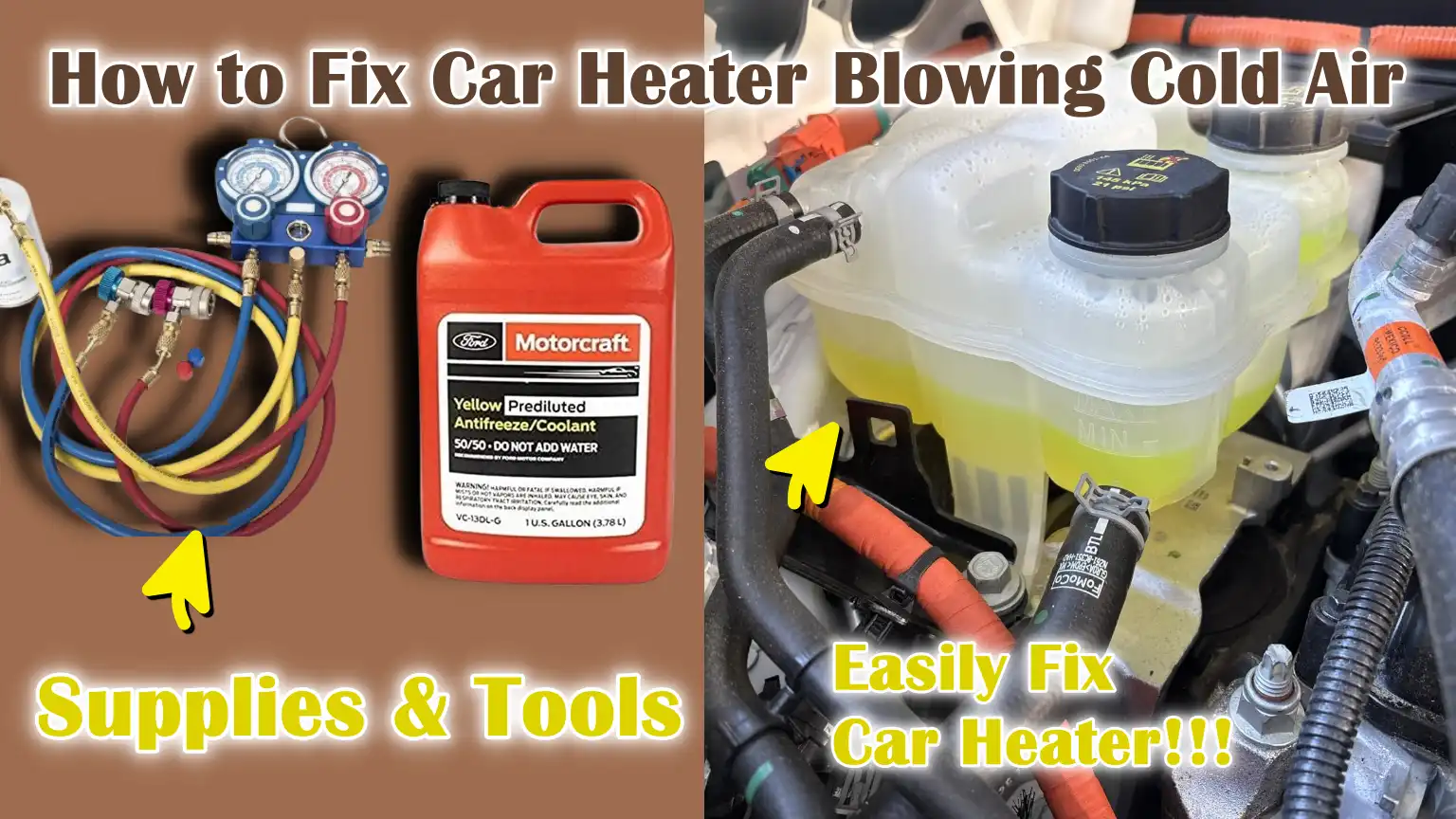
How to Fix Car Heater Blowing Cold Air – Easy & Working Method
Fixing a cold car heater requires careful and logical action.
The heating system relies on warm coolant, proper circulation, consistent engine temperature and a functioning airflow control system inside the dashboard.
If even one part fails, the system cannot deliver warm air to the cabin.
The most effective way to troubleshoot is to first check the simplest and most common causes, then work on more complex ones.
Always ensure the vehicle is parked on a level surface, the engine is off and safety precautions are followed.
This step-by-step approach helps avoid mistakes, save money and reduce the risk of engine damage.
1. Check the Coolant Level
Allow the engine to cool completely before touching anything, as opening the hot radiator cap can cause serious burns from pressurized steam and boiling coolant.
After the engine has cooled, open the hood and locate the coolant reservoir, which is usually a clear plastic tank with minimum and maximum level marks on the side.
The coolant level should be between these marks.
If it drops below the minimum level, the heater will not be able to provide enough hot liquid to produce warm air.
If necessary, carefully remove the radiator cap after the engine has cooled and check the radiator level.
In some vehicles, the radiator may be full but the radiator level may be low, which can still cause heating problems.
Top up the system using the manufacturer’s recommended coolant type, as adding the wrong coolant can cause corrosion or blockages.
After refilling, monitor the level for the next few days to ensure it doesn’t drop again, which could indicate a leak.
2. Check for Coolant Leaks
If the coolant level is low, the next step is to determine where it’s going.
Carefully inspect all visible hoses connected to the radiator and engine.
Look for cracks, soft spots, loose clamps, or wet areas.
Look for signs of rust or damage in the radiator and check for moisture near the heater core connection on the firewall.
Look under the vehicle for small puddles or dried coolant stains, which often appear green, orange, or pink, depending on the type of coolant.
A sweet smell near the engine bay may also indicate a leak.
If no visible leaks are found, a cooling system pressure test may be necessary.
This test uses a special tool to pressurize the system and detect hidden leaks.
It’s important to identify and repair leaks quickly, as even a small coolant loss can damage the heater and cause the engine to overheat.
3. Test the Thermostat
Start the engine and observe the temperature gauge on the dashboard.
After driving for a few minutes, the needle should slowly return to the normal operating range.
If the gauge remains very low even after the engine has run for a while, the thermostat may be stuck open.
Another easy test is to carefully feel the upper radiator hose after the engine has warmed up.
If the hose heats up very quickly right after starting the engine, the thermostat may not be closing properly.
A loose thermostat prevents the engine from reaching full temperature, which means the heater can’t produce warm air quickly.
Replacing a faulty thermostat is usually inexpensive and can significantly improve both heating performance and engine efficiency.
Always properly fill and bleed the cooling system after replacing the thermostat.
4. Flush the Heater Core
If the coolant level and thermostat are working properly, but the heater is still blowing cold air, the heater core may be clogged.
To flush it, locate the two heater hoses leading from the engine to the firewall.
After making sure the engine is cool, carefully disconnect both hoses.
Using a garden hose or the correct flush solution, gently flush the heater core with water in the opposite direction of normal flow.
This process is called backflushing and helps remove rust, dirt and debris that may be blocking the internal passages.
Continue flushing until the water runs clear.
After cleaning, securely reconnect the hoses and refill the cooling system with fresh coolant.
A thorough flush of the heater core often restores good and consistent heating inside the cabin.
5. Bleed the Cooling System
Air trapped inside the cooling system can block the proper flow of coolant and prevent heat from reaching the heater core.
After adding coolant or making repairs, it’s important to remove the trapped air.
Some vehicles have a bleed valve near the thermostat housing or on the coolant pipe.
Carefully open this valve to release air when the engine is warm.
If there is no bleed valve, run the engine with the radiator cap removed and the heater set to the highest temperature setting.
As the engine reaches operating temperature, air bubbles may rise to the top.
Allow them to escape before sealing the system.
Proper bleeding ensures continuous coolant circulation and consistent cabin heat.
6. Check the Blend Door Actuator
If the engine is warm and coolant is flowing properly, but only cold air is coming from the vents, the problem may be inside the dashboard.
Adjust the temperature control from cold to hot and listen carefully for clicking or knocking sounds.
These sounds often indicate a bad blend door actuator.
Also, check if the air temperature changes when you adjust the settings.
If there is no change, the actuator may not be moving the blend door properly.
In this case, warm air is not escaping from the heater core despite the heat.
Replacing the bad actuator usually restores proper airflow control and the heater starts functioning normally again.
7. Check the Water Pump
The water pump is responsible for pushing coolant throughout the system.
If it’s worn out, circulation is weakened and the heater may blow cold air, specially when the car is idling.
Check for coolant leaks around the water pump area, which may be visible on the front of the engine.
Listen for rattling, grinding, or squealing noises when the engine is running, as these sounds may indicate worn bearings inside the pump.
If the heater produces little or no heat, or the engine overheats, poor circulation may be the cause.
A faulty water pump should be replaced immediately, as continued driving can cause serious engine damage.
Restoring proper coolant flow will improve both engine cooling and cabin heating performance.
Tools
| Tool or Material | Usage |
|---|---|
| Coolant – Manufacturer-Recommended Type | Coolant is the liquid that carries heat from the engine to the heater core. To avoid damage or corrosion inside the system, you should use only the type recommended in your vehicle’s manual. The right coolant prevents overheating, freezing and internal corrosion. |
| Screwdrivers and Socket Set | These basic hand tools help you loosen and tighten clamps, bolts and covers. You’ll need them to remove hoses, open access panels, or replace parts like the thermostat. Using the correct size prevents stripping screws and damaging bolts. |
| Drain Pan | A drain pan collects old coolant when you drain the system. Coolant is harmful to pets, people and the environment, so it should not be spilled on the ground. A wide and deep pan makes draining clean and safe. |
| Funnel | A funnel helps you pour coolant into the radiator or reservoir without spilling it. This reduces air bubbles and keeps the engine bay clean. Using a funnel also prevents coolant waste. |
| Hose Clamps | Hose clamps tightly secure coolant hoses in place. Loose or worn clamps can cause leaks and reduce heating performance. Replacing weak clamps helps maintain proper pressure and flow. |
| Cooling System Pressure Tester – Optional | This tool checks for hidden coolant leaks by applying safe pressure to the system. It helps you find small cracks or weak seals that are difficult to see. Although optional, it is very helpful for a correct diagnosis. |
How to Ensure Safety While Fixing Car Heater
Working on a car’s heating and cooling system can be safe if you take the right precautions.
The cooling system operates under high temperatures and pressure, specially when the engine is running.
Hot coolant can reach temperatures exceeding 200 degrees Fahrenheit and pressure remains in the system even after the engine is turned off.
Because of this, rushed repairs without proper care can result in burns, eye injuries, or environmental damage.
Taking simple safety steps not only keeps you safe but also prevents damage to your vehicle.
Understanding why these precautions are important will help you work with confidence and responsibility.
1. Never Open the Radiator Cap When It’s Hot
You should never open the radiator cap when the engine is hot because the cooling system is under pressure.
When coolant heats up, it expands and creates pressure inside the radiator and hoses.
If you remove the cap while the system is hot, boiling coolant and steam can rapidly escape, causing serious burns to your face, hands and arms.
Even if the temperature gauge appears normal, the system may still be very hot.
Always shut off the engine and allow it to cool completely, which may take at least 30 to 45 minutes.
A safe way to check is to gently touch the upper radiator hose; if it feels hot, wait a little longer.
Only open the cap slowly after confirming that the engine has cooled.
2. Use Gloves and Safety Glasses
It is very important to wear gloves and safety glasses when working with coolant and engine parts.
Coolant contains chemicals such as ethylene glycol or propylene glycol, which can irritate your skin and eyes.
Prolonged contact with skin may cause dryness or mild irritation and watery eyes may cause severe burns.
Gloves protect your hands from sharp metal edges, hot surfaces and harmful liquids.
Safety glasses protect your eyes from splashes, dirt and debris when disconnecting hoses or flushing the heater core.
Simple protective gear greatly reduces the risk of injury and makes the repair process safer and more comfortable.
3. Dispose of Coolant Properly
Old coolant should never be poured onto the ground, down drains, or into regular trash.
Antifreeze has a sweet smell and taste that can attract pets and wildlife, but it is toxic if ingested.
Even small amounts can be dangerous to animals and harmful to the environment.
Always collect used coolant in a clean drain pan and store it in a sealed container.
Most auto parts stores, service centers, or local recycling centers accept used coolant for proper disposal.
Properly disposing of coolant can prevent unnecessary harm to your community, your pets and the environment.
4. If lifting your vehicle, support it firmly
If you need to lift your vehicle to check for leaks or drain coolant, ensure it is securely supported.
Never rely solely on a car jack to hold it up while you’re working underneath.
Jacks are designed to lift a car, not to support it for long periods of time.
Always use sturdy jack stands placed on a flat, solid surface.
Ensure the parking brake is engaged and wheel chocks are placed behind the tires to keep them on the ground.
Proper support prevents the vehicle from sliding or falling, which can cause serious injury.
Taking a few extra minutes to properly secure the car can prevent a fatal accident.
When You Should Consult to the Professional Mechanic
While many heater problems can be fixed at home, there are some situations where professional help is the safest and most prudent option.
Modern vehicles have complex cooling systems and electronic HVAC controls that require specialized tools and training for proper repair.
Ignoring serious warning signs can damage the engine, increase repair costs, or even impair driving conditions.
A certified mechanic has the tools to test system pressure, scan for electronic faults and confirm internal problems that may not be visible from the outside.
Knowing when to stop and seek expert help can save both your vehicle and your wallet.
1. Persistent Overheating
If your engine continues to overheat even after adding coolant or replacing simple parts, this is a serious warning sign.
Normal engine temperature is usually between 195 and 220 degrees Fahrenheit.
If the temperature gauge dips into the red zone or the warning light flashes repeatedly, the engine may be at risk of serious damage.
Persistent overheating can damage engine parts, damage the head gasket, or crack the cylinder head.
These repairs are expensive and require professional tools and experience.
If overheating persists after basic checks, a mechanic should immediately inspect the thermostat, water pump, radiator, cooling fan and other internal engine components.
2. Frequent Coolant Loss
If you frequently refill the coolant but the level continues to drop, there may be a hidden leak or an internal engine problem.
Small external leaks can be from hoses, clamps, the radiator, or the water pump.
However, internal leaks, such as a broken head gasket, can cause coolant to enter the engine cylinders or mix with the engine oil.
Signs of internal coolant loss include white smoke from the exhaust, milky oil on the dipstick, or bubbles in the radiator.
These problems require pressure testing, a combustion leak test and other advanced diagnostics, which only a professional shop can properly perform.
Repeated coolant loss should never be ignored, as low coolant can quickly lead to overheating and engine failure.
3. Suspect Replacing the Heater Core
Replacing the heater core is often a difficult and time-consuming task.
In many vehicles, the heater core is located inside the dashboard, which may require removing large sections of internal panels, wiring connections and air ducts.
This process can take several hours and requires careful handling to avoid damaging the electrical system or trim parts.
If you notice coolant leaking inside the cabin, a strong, sweet odor, or persistent fogging on the windshield, the heater core may be leaking.
Due to the labor involved and the risk of improper reassembly, it’s usually best to have the heater core replaced by a trained mechanic with the proper tools and a repair manual.
4. Electrical HVAC Problems
Modern heating and air conditioning systems rely on electronic sensors, control modules and small electric motors to manage airflow and temperature.
If the heater blows cold air even when the engine is fully warmed up and the coolant level is correct, the problem may be electrical.
A bad blend door actuator, faulty wiring, a faulty control panel, or a faulty climate control module can all prevent warm air from reaching the cabin.
Diagnosing these problems often requires a scan tool to read error codes and test electronic components.
Electrical HVAC problems can be difficult to diagnose without the right equipment, so professional diagnosis helps avoid unnecessary part replacement and ensures the correct repair.
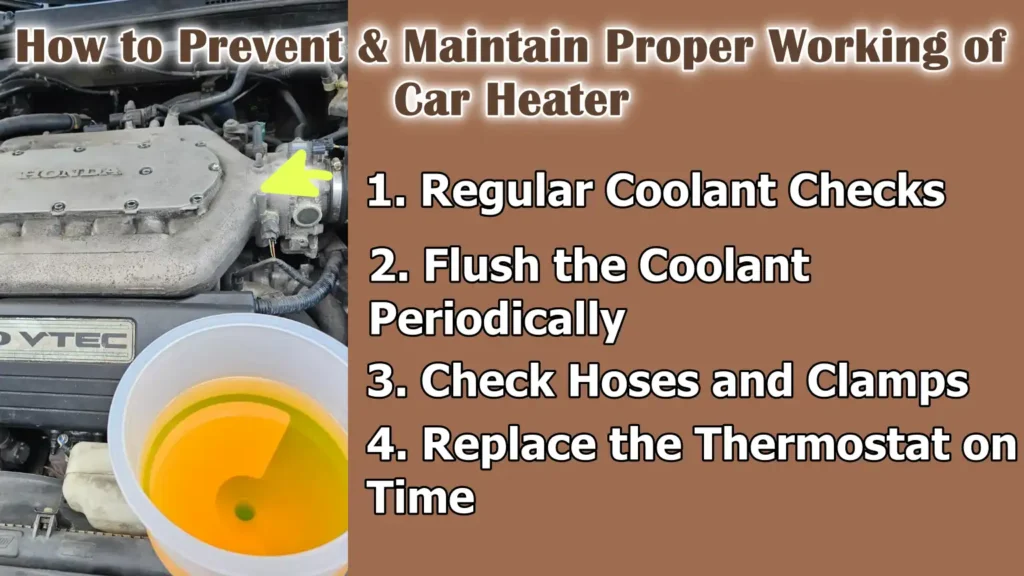
How to Prevent & Maintain Proper Working of Car Heater
Preventative maintenance is the most effective way to avoid heater problems and costly engine repairs.
Your car’s heating system relies entirely on the cooling system, which operates at high temperatures and pressures every time you drive.
Over time, coolant deteriorates, rubber hoses wear out and small parts like the thermostat lose their accuracy.
When these parts are properly maintained, your engine stays at the right temperature and your heater works reliably even in cold weather.
Simple routine checks can extend your vehicle’s life, improve fuel efficiency and prevent unexpected breakdowns.
Performing minor repairs regularly is much easier and cheaper than fixing major damage later.
Additionally, there’s HVAC system study that shows that the automobile’s heater does not actually generate the heat by itself but it harnesses engine waste heat and successfully delivers through circulating coolant to a small radiator-like heater core inside the dashboard, so if the coolant flow is blocked, restricted or improperly controlled, then the system just can’t transfer the heat to the cabin, which is often why the heater blows the cold air during the winter driving instead of hot one.[¹]
1. Regular Coolant Checks
Checking your coolant level regularly is one of the easiest and most important maintenance steps.
Coolant prevents the engine from overheating in the summer and freezing in the winter.
Most vehicles have a clear coolant reservoir with minimum and maximum markings, making it easy to see if the level is correct.
You should check the level at least once a month and before long trips.
To avoid burns, always check the coolant when the engine is completely cold.
If the level drops below the minimum line, add the manufacturer’s recommended coolant mixture.
A steady drop in the coolant level may indicate a small leak, which should be repaired quickly before it becomes serious.
Keeping the coolant at the correct level helps maintain stable engine temperatures and keep the cabin warm.
2. Flush the Coolant Periodically
Over time, coolant loses its protective properties and becomes less effective at preventing rust and corrosion.
Old coolant can contain dirt, rust particles and mineral deposits that block flow within the radiator and heater core.
Most manufacturers recommend a coolant flush every 2 to 5 years, or according to the mileage specified in the owner’s manual.
A coolant flush removes old fluid and replaces it with fresh coolant, which promotes proper heat transfer and corrosion protection.
Clean coolant flows more easily through narrow passages, allowing the heater core to function efficiently.
Regular flushing prevents internal damage to the water pump, radiator and engine components and helps the heating system function optimally.
3. Check Hoses and Clamps
Rubber hoses carry hot coolant between the engine, radiator and heater core.
Because they are exposed to heat, pressure and vibration, hoses can soften, crack, swell, or weaken over time.
Loose or rusted clamps can also cause small leaks, gradually reducing the coolant level.
It’s important to check hoses for cracks, bulges, or wet spots and gently squeeze them to ensure they’re not too soft.
Hose connections should feel secure and dry.
Replacing worn hoses and weak clamps before they deteriorate can prevent sudden coolant loss and overheating.
A small crack today can turn into a major leak tomorrow, so early inspection saves time and money.
4. Replace the Thermostat on Time
The thermostat controls engine temperature by regulating coolant flow.
Although it’s a small component, it plays a crucial role in both engine health and cabin heating.
Over time, the thermostat can become stuck open or closed due to wear, corrosion, or a defect in the internal spring.
If the thermostat is stuck open, heater performance can be affected and fuel efficiency can decrease because the engine runs too cold.
If the thermostat is stuck, dangerous overheating can occur.
Many experts recommend replacing the thermostat as a precaution during major cooling system service or when replacing the water pump.
Installing a new thermostat at the recommended time will help maintain stable engine temperatures and ensure consistent warm air during cold weather.
Read More:
What Can Be The Estimated Repair Cost of Car Heater
Understanding repair costs helps you plan your budget and decide whether to fix the problem yourself or consult a professional mechanic.
The cost of repairing a car heater that blows cold air depends on the specific problem, the type of vehicle, labor rates in your area and whether original or aftermarket parts are used.
Simple tasks like adding coolant or replacing the thermostat are usually inexpensive, while more complex repairs like replacing the heater core can require labor time.
Taking action quickly often reduces repair costs, as even minor cooling system problems can cause significant engine damage if ignored.
Knowing the general price range gives you confidence when discussing repairs with a shop.
1. DIY Repair Cost Range
If the problem is minor and you decide to fix it yourself, the cost is usually limited to parts and basic supplies.
Adding the correct coolant can cost $20 to $50, depending on the type and amount of coolant needed.
Replacing a thermostat typically costs $15 to $60 for parts and coolant to refill the system.
Heater core flush kits are generally inexpensive and can cost between $10 and $40.
Most homes already have basic tools like a screwdriver and socket set.
Overall, simple DIY jobs cost around $20 to $150, depending on the problem.
However, this doesn’t include your time and improper installation may require further repairs.
2. Professional Repair Cost Range
When you take your vehicle to a professional mechanic, you pay for both parts and labor.
Labor rates vary greatly by location, but many repair shops charge $75 to $150 per hour.
A simple service like replacing a thermostat can cost $150 to $400 for parts and labor.
Cooling system diagnostics and pressure testing may incur additional service fees.
Professional repairs cost more than DIY work, but they offer accurate diagnosis, the right tools and warranty protection on parts and labor.
In many cases, professional service can prevent problems caused by incorrect repairs from recurring.
3. Heater Core Replacement Cost
Replacing a heater core is often one of the most expensive heater repairs.
The part can cost between $100 and $300, depending on the vehicle model.
However, labor is the most expensive because the heater core is usually located under the dashboard.
In many vehicles, mechanics must remove large sections of interior trim, panels and air ducts to access it.
Labor time can range from 5 to 10 hours or more.
Because of this, the total replacement cost often ranges from $600 to $1,500, or even more for some vehicles.
Therefore, regular coolant maintenance is essential, as it helps prevent damage to the heater core.
4. Thermostat Replacement Cost
Replacing a thermostat is usually one of the most inexpensive cooling system repairs.
The thermostat itself is a small part and typically costs between $15 and $60.
Including labor and coolant refills, the total cost at a repair shop often ranges from $150 to $400, depending on the vehicle’s design.
Some engines come with readily available thermostats, reducing labor time, while others require additional parts.
Promptly replacing a faulty thermostat not only improves cabin heating but also improves fuel efficiency and prevents engine overheating.
Replacing a thermostat is a more affordable and cost-effective option than major engine repairs.
Conclusion – How to Fix Car Heater Blowing Cold Air
Now, you have clearly understood that having a heater that blows a cold air is the first small warning indicator before a bigger cooling system problem, better to solve it now.
Your heater relies heavily on engine heat, proper coolant levels, proper thermostat function, consistent circulation from the water pump and control of airflow under the dashboard.
When any of these parts fail, the system can’t deliver warm air to the cabin.
Fortunately, many causes, such as low coolant, trapped air, or a stuck thermostat, are inexpensive and easy to fix if detected early.
Ignoring heater problems can lead to major problems.
Low coolant can cause the engine to overheat, damaging internal engine components like the head gasket or cylinder head.
Poor circulation can cause engine wear and reduce fuel efficiency.
Small leaks can become larger over time, leading to seemingly inexpensive repairs that turn into costly ones.
By regularly checking the coolant level, flushing the system in a timely manner, inspecting hoses and replacing worn parts when necessary, you protect both your engine and your comfort.
Now, that’s it from this guide and you can ask us related questions for more information.
Frequently Asked Questions
Q1. Why is my car heater blowing cold air instead of warm air?
Answer: Your car heater blows cold air when hot coolant isn’t reaching the heater core or when there’s no airflow from the heating system inside the dashboard. The heater doesn’t generate heat; it uses heat from the engine. If the coolant level is low, the thermostat is stuck open, air is trapped in the cooling system, or the heater core is clogged, warm air can’t be generated. In some cases, the blend door actuator inside the dashboard may be faulty, preventing warm air from entering the cabin even when the engine is warm. Checking the coolant level and engine temperature is usually the first step to finding the cause.
Q2. Can low coolant cause the heater to stop working?
Answer: Yes, low coolant is one of the most common reasons for a car heater not working properly. Coolant carries heat from the engine to the heater core. If there’s not enough coolant in the system, the heater core doesn’t receive enough hot liquid to heat the air. This can cause cold air to blow out of the vents even when the engine is running. Low coolant can be caused by leaks, evaporation over time, or poor maintenance. Keeping the coolant level between the minimum and maximum levels ensures optimal heating performance.
Q3. How do I know if my thermostat is bad?
Answer: A bad thermostat often causes the engine temperature to be too low or too high. If the thermostat is stuck open, the engine may take longer to warm up and cold or lukewarm air may come out of the heater. The temperature gauge may remain below the normal range even after driving for several minutes. If the thermostat is stuck closed, the engine can quickly overheat. Replacing a bad thermostat is usually inexpensive and can improve both heating and engine performance.
Q4. What are the symptoms of a clogged heater core?
Answer: A clogged heater core can cause little or no heat inside the cabin, even when the engine is fully warm. You may notice a heating difference, with one part of the cabin feeling hotter than another. Other symptoms include a sweet smell inside the vehicle, fogging on the windows, or coolant leaks under the dashboard. The heater core has small passages that can become blocked by corrosion or old coolant debris. Flushing the heater core can sometimes restore proper flow, but serious blockages may require replacement.
Q5. Can trapped air in the cooling system cause cold air from the heater?
Answer: Yes, air pockets inside the cooling system can block the flow of hot coolant. After a coolant refill or repair, if the system was not properly bled, air can remain trapped. Air does not conduct heat like liquid coolant, so it prevents the heater core from heating up. If air is present, you may hear a gurgling sound from behind the dashboard. Bleeding the cooling system removes trapped air and helps restore consistent heat inside the vehicle.
Q6. Is it safe to drive if the heater is blowing cold air?
Answer: This depends on the cause. If the problem is simply related to the blend door actuator, the vehicle may run normally but without cabin heat. However, if the problem is due to low coolant, a faulty thermostat, or poor circulation, it could cause the engine to overheat. Overheating can cause serious engine damage and require expensive repairs. If you notice a rising temperature on the gauge or a warning light, it’s best to stop driving and check the cooling system.
Q7. How much does it cost to fix a car heater that’s blowing cold air?
Answer: The cost depends on the specific problem. Adding coolant may cost a small amount, while replacing the thermostat is usually quite expensive. However, replacing a heater core can be expensive because it requires removing parts of the dashboard. Simple problems can cost less than a few hundred dollars, while more complex repairs can cost significantly more. Early detection helps keep costs down.
Q8. How often should I change the coolant to avoid heater problems?
Answer: Most manufacturers recommend changing the coolant every two to five years, depending on the type of engine being used and driving conditions. Over time, coolant loses its ability to protect against rust and corrosion. Old coolant can clog the heater core and reduce heating efficiency. Following the maintenance schedule provided in your owner’s manual helps maintain both engine health and cabin comfort.
References:
[1] HVAC System for Cars and Automotive Vehicles
https://www.cedengineering.com/userfiles/M06-045%20-%20HVAC%20System%20for%20Cars%20and%20Automotive%20Vehicles%20-%20US.pdf

Guys, I’m a car audio enthusiast and customization expert and I love clear sound and clean installation. Plus, I have spent years helping people build their dream audio setups. And whenever I’m working on cars, I probably listen to music and thinks about the next big upgrade.
