
Written By: Don Dodi
Fact Checked By: Kristen Brown
Reviewed By: Diego Rosenberg
Just listen this: a safe lane merge is not about the speed: but it is all about having “PERFECT TIMING” & “AWARENESS”
Plus, there’s even studies and road safety reports from the organizations such as: World Health Organization that clearly shows that road traffic injuries are a leading cause of death in worldwide and a significant number of crashes just happens due to the poor lane discipline, sudden lane changes and unsafe merging behavior as well.
So, whenever a driver fail to judge the speed, ignore the blind spots or literally hesitate at the wrong moment, then it can clearly lead to the rear-end collisions, side-impact crashes or dangerous traffic slowdowns.
Because, safe lane merging is not just about moving your car into another lane: but it is about understanding the traffic flow, matching the speed with other vehicles, maintaining the safe distance and communicating clearly using signals.
Now, in this guide you’ll learn exactly: How to Merge Lanes Safely so that you can learn techniques to properly observe, decide and act in calm way so that you can reduce the risk and improve the traffic flow as well.
Know, The Importance of Safe Lane Merging
Safe lane merging is a fundamental driving skill that directly impacts road safety, traffic efficiency and the overall driving experience.
When drivers merge lanes correctly, they reduce the likelihood of sudden collisions between vehicles, maintain a smooth flow of traffic and create a more predictable environment for everyone on the road.
According to global road safety findings by the World Health Organization, human errors such as: poor judgment, a lack of awareness and improper lane changes, are primary causes of road accidents.
Safe lane merging requires drivers to observe carefully, match their speed to that of surrounding vehicles and communicate clearly using signals so that other drivers can react appropriately.
When all drivers adhere to these basic principles, roads become safer, smoother and less stressful, even in heavy traffic conditions.
1. Accident Prevention
One of the most critical reasons for learning safe lane merging is accident prevention.
Unsafe lane merging frequently leads to side-impact collisions, which occur when a driver enters a lane without checking their “blind spots” or by misjudging the position of another vehicle.
When a driver slows down abruptly or attempts to force their way into traffic, the vehicle approaching from behind may experience a delay in reacting, thereby increasing the risk of a rear-end collision.
These types of accidents are very common on highways and busy roads, where vehicles travel at high speeds and there is less time to react.
Safe lane changing relies heavily on coordination between drivers; this means that one driver signals their intentions in advance, while other drivers adjust their speed or position to create space.
This mutual understanding minimizes confusion and provides everyone with sufficient time to react safely.
When drivers remain alert, properly check their mirrors and blind spots and avoid sudden maneuvers, they significantly reduce the risk of collisions and make the road safer for all users.
2. Maintaining Traffic Flow
Another major benefit of safe lane changing is maintaining the smooth flow of traffic.
When drivers change lanes correctly, that is, by matching their speed to the flow of traffic and selecting appropriate gaps, vehicles continue to move forward without interruption.
However, when lane changes are not executed properly, issues such as sudden braking, hesitation, or aggressive driving often arise, which can lead to traffic congestion.
Even a minor error by a single driver can trigger a “chain reaction” involving multiple vehicles, ultimately resulting in traffic disruptions or jams.
The smooth merging of vehicles helps prevent these problems by keeping traffic flow stable and predictable.
Techniques such as gradually adjusting speed and maintaining a safe distance enable vehicles to blend seamlessly into the traffic flow without causing disruptions.
This not only saves time for all drivers but also reduces fuel consumption and driver stress.
Simply put, when lane merging is performed correctly, the entire road system operates more efficiently.
3. Legal and Safety Responsibilities
Safe lane merging is not merely a skill; it is also a legal and safety responsibility that every driver must uphold.
In most countries, traffic regulations clearly stipulate that when a driver is merging into an active lane, particularly when entering a highway or changing lanes, they must yield the “right of way” or make room.
Failure to adhere to these rules may result in fines, penalties, or, in the event of an accident, even legal action.
More importantly, it is the drivers’ responsibility to ensure that their actions do not pose a hazard to others.
This includes activating turn signals in advance, checking mirrors and “blind spots,” and merging into a lane only when it is safe to do so.
Awareness regarding the “right of way” is particularly crucial, as it helps drivers understand who has priority to proceed and who must wait; this reduces confusion and minimizes the risk of potential collisions.
By respecting these rules and responsibilities, drivers not only safeguard themselves but also contribute to creating a safer and more disciplined driving environment for everyone on the road.
Now, Let’s Understand About the Different Types of Lane Merging
Lane merging is not uniform across all situations and understanding its various types helps drivers make better decisions on the road.
Each type of merging requires a slightly different approach, depending on factors such as speed, traffic density and road design.
Road systems are meticulously planned, incorporating specific lanes, markings and signage, to properly guide drivers during the merging process; however, these measures function most effectively only when drivers understand how to utilize them correctly.
Research and road safety guidelines from organizations such as the Federal Highway Administration indicate that proper merging techniques enhance both safety and traffic flow, as they reduce instances of sudden braking and minimize driver confusion.
By learning how to adjust their speed in every situation, observe traffic patterns and position their vehicle correctly, drivers can navigate merging scenarios with greater ease and avoid common hazards.
1. Highway On-Ramp Merging
Highway on-ramp merging represents one of the most critical and high-speed merging scenarios, requiring drivers to safely integrate into fast-moving traffic.
The most essential step in this process is to increase the vehicle’s speed to match that of the traffic already traveling on the highway; a significant disparity in speed can be hazardous and may force other drivers to brake suddenly.
Merge lanes, also referred to as “acceleration lanes”, are designed to provide drivers with sufficient space and time to attain the appropriate speed before entering the main flow of traffic.
Instead of coming to a complete stop at the end of the ramp, drivers should maintain their forward momentum, constantly monitoring traffic flow by utilizing their mirrors and checking their blind spots and identifying a safe gap in the traffic stream well in advance.
Steering smoothly and continuously adjusting one’s speed helps facilitate a seamless integration into the flow of traffic without causing any disruption.
When executed correctly, this method of merging feels very natural and does not impede the movement of other vehicles.
2. Lane Reduction – Two Lanes Merging into One
Lane reduction merging occurs when two lanes converge into a single lane; this is often caused by road construction, accidents, or a narrowing of the roadway.
In such situations, drivers must be particularly alert to warning signs, lane-closure markers and pavement markings that direct them to merge at the appropriate location.
Ignoring these signals, or attempting to change lanes either too early or too late, as it can create confusion and slow down the flow of traffic.
Drivers should remain in their original lane until they reach the designated merge point and then, while adjusting their speed and maintaining a safe distance, smoothly transition into the available lane.
Patience and mutual cooperation among drivers are crucial here, as aggressive behavior or hesitation can lead to sudden stops and increase the risk of collisions.
A proper understanding of these merging zones ensures that traffic flow remains smooth, even under challenging road conditions.
3. The Zipper Merge Technique
The Zipper Merge technique is a highly effective method utilized during periods of heavy traffic or in lane-reduction situations.
In this method, vehicles from both lanes merge alternately into a single lane, much like the teeth of a closing zipper interlocking with one another.
This technique ensures that both lanes are utilized to their full capacity right up to the merge point, thereby reducing long traffic queues and improving overall traffic flow.
Traffic management studies indicate that if drivers correctly practice the zipper merge technique, it can significantly reduce congestion and waiting times.
The underlying principle is simple: a vehicle from the lane that is closing merges in behind a vehicle in the open lane, establishing a fair and orderly sequence.
This reduces the tendency for sudden braking and helps curb aggressive driving behaviors.
Although this method may seem unfamiliar to some drivers, when everyone cooperates and adheres to the system, traffic flow becomes smoother, faster and safer.
4. Merging into an Exit Lane
Merging into an exit lane entails diverging from the main flow of traffic onto a designated exit route; this requires advance planning and the careful positioning of one’s vehicle.
Drivers should begin their preparations well in advance, checking their mirrors, signaling their intentions and gradually steering their vehicle toward the exit lane without making any sudden maneuvers.
Waiting until the very last moment to merge into an exit lane may necessitate sharp turns or sudden braking, which can also create confusion for other drivers.
To execute the lane-changing process amidst the flow of traffic smoothly and without disruption, proper timing and adherence to lane regulations are essential.
Exit lanes are designed to allow vehicles to safely decelerate after leaving the main roadway; therefore, entering these lanes at the appropriate time ensures the safety of both drivers exiting the road and those continuing straight ahead.
By remaining vigilant and planning ahead, drivers can navigate the process of merging into an exit lane calmly and efficiently.
Learn, Key Principles of Safe Lane Merging
Safe lane merging relies on several key principles that assist drivers in making sound decisions amidst rapidly changing traffic conditions.
These principles are grounded in the natural flow of traffic and the ways in which drivers interact with one another on the road.
When a driver remains aware of their surroundings, appropriately adjusts their speed, maintains a safe distance and signals clearly, the merging process transforms from a potentially hazardous undertaking into a smooth and predictable operation.
Road safety guidelines issued by organizations such as the National Highway Traffic Safety Administration emphasize that the majority of accidents stem from human factors, specifically, failure to observe properly, selecting an inappropriate speed and a lack of communication.
By focusing on these core principles, drivers can minimize sudden surprises, avoid confusion and create a safer environment for both themselves and others.
1. Situational Awareness
Situational awareness entails maintaining a comprehensive understanding of everything occurring around your vehicle at all times.
This involves keeping a keen eye on vehicles traveling ahead of, behind and alongside you, a task accomplished by utilizing your mirrors in conjunction with quick “shoulder checks.”
A driver must not merely look; they must also interpret the movements of other vehicles, for instance, recognizing which vehicles are accelerating, decelerating, or preparing to change lanes.
Anticipating the behavior of other drivers is a critical component of this skill, as it provides you with the extra time necessary to react safely.
For example, if a vehicle is weaving erratically within its lane or traveling at a significantly higher speed relative to the surrounding traffic, it may be preparing to execute a sudden lane change.
By remaining alert and keeping a constant watch on the road, drivers can avoid sudden incidents and make more informed decisions when merging.
Possessing the right information reduces anxiety and helps maintain control in busy traffic situations.
2. Matching Speed
Matching your speed is one of the most critical aspects of safe lane merging, particularly on highways or high-speed roads.
When merging, your vehicle’s speed should closely match the speed of the traffic flowing in the lane you intend to enter.
If your speed is too low, vehicles behind you may be forced to brake suddenly, thereby increasing the risk of a rear-end collision.
Conversely, if your speed is too high, you may overshoot the available gap or place unsafe pressure on other drivers.
The objective is to adjust your speed smoothly so that your vehicle integrates naturally into the flow of traffic.
This minimizes sudden reactions and allows other drivers to easily anticipate your movements.
Proper speed coordination ensures that the process of joining the lane feels smooth and controlled, rather than forced or hazardous.
3. Maintaining a Safe Distance
Maintaining a safe distance involves identifying an appropriate gap between vehicles before merging into a lane.
There should be sufficient space between two cars to allow your vehicle to enter comfortably, without forcing other drivers to brake suddenly or alter their course.
Understanding the concept of “following distance” is crucial here, as it helps you assess whether there is adequate space to change lanes safely.
A general rule of safe driving is to maintain a gap of at least a few seconds between vehicles; this provides ample time to react in the event of any sudden incident.
When selecting a space, drivers should seek out stable and predictable gaps rather than attempting to force their way into tight spots.
Maintaining a safe distance not only prevents accidents but also ensures that the flow of traffic continues smoothly and without interruption.
4. Clear Communication
Clear communication helps other drivers understand your intentions and react safely.
When changing lanes, the most basic and essential method of communication is the timely use of turn signals; typically, the signal should be activated a few seconds before initiating the lane-changing maneuver.
This provides other drivers with ample advance warning, allowing them to adjust their speed or position as necessary.
In addition to signals, drivers can also convey their intention to change lanes through subtle cues, such as their vehicle’s positioning or by driving in a straight line.
In certain specific situations, particularly when traveling at low speeds, briefly making eye contact with nearby drivers can also be helpful in confirming mutual understanding.
A lack of proper or timely communication often leads to confusion and sudden reactions, which can result in accidents.
When drivers communicate clearly and consistently, changing lanes becomes safer, easier and more predictable for everyone on the road.
How to Merge Lanes Safely – Clear Guide
Merging safely is a step-by-step process that relies on observation, proper timing and precise vehicle control.
When every step is followed in the correct sequence, the entire process becomes smooth, predictable and safe for everyone on the road.
Many accidents occur during merging because drivers skip certain steps such as: checking their blind spots, or fail to adjust their speed properly.
The road safety guidelines of the National Highway Traffic Safety Administration emphasize that careful observation and clear signaling play a crucial role in preventing collisions.
By adopting a systematic approach, drivers can minimize risks, avoid sudden reactions and merge with confidence, even in heavy traffic.
1. Check Your Mirrors Immediately
Checking your mirrors immediately provides you with a clear assessment of traffic conditions before you take any action.
The rearview mirror helps you see vehicles traveling directly behind you, while the side mirrors reveal vehicles moving in adjacent lanes.
Drivers should begin checking these mirrors a few seconds before merging, rather than waiting until the very last moment.
Constant vigilance is essential because traffic conditions change rapidly; a gap that appears safe one moment may no longer be safe the next.
By regularly checking their mirrors, drivers remain aware of the speed, distance and movements of surrounding vehicles, enabling them to make better and safer decisions.
2. Check Your Blind Spots
Blind spots are those areas surrounding your vehicle that you cannot see through your mirrors; overlooking them is one of the most common causes of side-impact collisions.
By turning your head slightly and glancing quickly over your shoulder, you can determine whether a vehicle is hidden in that area.
This step becomes even more critical when merging into a lane with fast-moving traffic or when vehicles are traveling in close proximity to one another.
Even modern vehicles equipped with sensors cannot detect every situation; therefore, performing a manual check yourself remains the safest option.
By carefully checking their blind spots, drivers can avoid hidden hazards and ensure that the lane is completely clear before proceeding.
3. Signal Your Intentions
Using your turn signals correctly helps other drivers understand what you are about to do.
You should activate your signal a few seconds before you begin to merge, giving nearby drivers ample time to react.
Signaling in advance fosters cooperation, as other drivers may slightly reduce their speed or create space for you to enter the lane.
It is crucial to keep your signal activated throughout the entire merging process, until you have fully entered the new lane.
Changing lanes late or without signaling often causes confusion and necessitates sudden braking, thereby increasing the risk of accidents.
Providing clear signals makes your actions predictable and enhances overall safety.
4. Adjust Your Speed Appropriately
Correctly adjusting your speed is essential for changing lanes smoothly and safely.
Drivers should gradually increase or decrease their speed to match the flow of traffic in the target lane.
Sudden changes in speed can startle other drivers and create hazardous situations.
When your speed closely matches that of surrounding vehicles, merging into a gap becomes easier and other drivers are not forced to react abruptly.
Maintaining proper control over your speed helps balance the flow of traffic and reduces stress for both you and other drivers.
Adjusting your speed correctly makes the lane-changing process feel natural and controlled.
5. Identify a Safe Gap
Identifying a safe gap means selecting a space between vehicles that is large enough for your car to merge into easily.
Drivers must accurately estimate both distance and time, ensuring that there is sufficient space both in front of and behind their vehicle once the lane-changing maneuver is complete.
By finding an appropriate gap, you can change lanes smoothly without forcing other drivers to brake suddenly or change lanes themselves.
Rather than attempting to force your way into tight spaces, it is crucial to exercise patience and wait for the right opportunity.
Carefully selecting your gap minimizes risk and ensures that traffic continues to flow smoothly without interruption.
6. Change Lanes Smoothly
Merging smoothly means gradually guiding your vehicle into the new lane without any sudden or abrupt movements.
Adopting a steady and controlled approach allows other drivers to anticipate your actions and adjust their positioning if necessary.
Abruptly swerving or rapidly changing lanes can startle nearby drivers and increase the risk of a collision.
Keeping your hands steady on the steering wheel and maintaining a consistent speed ensures a clean and safe transition.
Merging smoothly is a hallmark of good vehicle control and contributes to maintaining overall stability within the flow of traffic.
7. Cancel Signal and Stabilize
Once the merging process is complete, it is essential to cancel your turn signal and focus on stabilizing your position within the new lane.
Maintaining a consistent speed and proper lane positioning ensures that you do not disrupt the flow of traffic behind you.
Drivers should regularly check their mirrors to remain aware of surrounding vehicles and make adjustments as needed.
Forgetting to cancel your signal can confuse other drivers, leading them to believe that you intend to change lanes again.
By properly completing this final step, drivers ensure that the merging process concludes safely and that normal driving resumes without any confusion or hazard.
Common Mistakes to Avoid When Merging
Merging lanes may seem simple, but many drivers make minor errors that can quickly escalate into dangerous situations.
These mistakes often stem from a lack of awareness, poor timing, or a failure to properly understand the flow of traffic.
A single misjudgment while merging can necessitate sudden braking, create confusion among drivers, or lead to serious accidents.
Road safety data shared by the National Highway Traffic Safety Administration indicates that human error such as: improper lane changes and failing to monitor one’s surroundings, is a leading cause of accidents.
By understanding the most common mistakes and recognizing why they are dangerous, drivers can avoid them and make safer, more reliable decisions on the road.
1. Merging Too Slowly
Merging too slowly is a very common mistake that poses a risk to both the driver and others on the road.
When a vehicle enters a high-speed lane at a significantly lower speed, drivers approaching from behind are forced to brake suddenly or swerve abruptly, thereby increasing the risk of a rear-end collision.
This issue is particularly critical on highways, where speed differentials are greater and reaction times are shorter.
Driving too slowly while merging also disrupts the natural flow of traffic and can lead to congestion.
To merge safely, it is essential to attempt to match your speed to the flow of traffic as closely as possible, allowing your vehicle to integrate smoothly into the lane without any sudden maneuvers.
2. Failing to Check Blind Spots
Failing to check blind spots is one of the most dangerous mistakes a driver can make while merging.
Mirrors do not provide a view of every area surrounding the vehicle and another car can easily remain hidden within a blind spot.
If a driver changes lanes without checking this area, it can lead to a side-impact collision, an incident that can be quite severe at high speeds.
Glancing over one’s shoulder is the easiest and most effective way to ensure that the lane is clear.
Skipping this step might save a second, but it can have serious consequences.
Properly checking blind spots ensures that no hidden vehicle is overlooked before merging.
3. Signaling Late or Not at All
Failing to signal, or signaling too late, creates confusion for other drivers and increases the likelihood of accidents.
Turn signals are the primary means by which drivers communicate their intentions on the road; without them, other drivers cannot anticipate your next move.
Signaling late does not give others sufficient time to react, while failing to signal at all may force surrounding vehicles to brake suddenly or change lanes unexpectedly.
Clear and timely signaling fosters coordination among drivers, allowing everyone to safely adjust their speed or position.
Effective communication through signals is a simple yet powerful way to prevent misunderstandings on the road.
4. Forcing One’s Way into Traffic
Forcing one’s way into traffic is an aggressive behavior that can quickly create dangerous situations.
This occurs when a driver attempts to merge into a lane without sufficient space, expecting other drivers to suddenly slow down or yield the right of way.
Such actions can trigger panicked reactions, sudden braking, or even collisions.
Safely merging into traffic relies on cooperation and patience, rather than aggression or speed.
Waiting for the right opening (gap) and merging smoothly is always safer than attempting to force one’s way into tight spaces.
Respecting the space of other drivers helps maintain order and reduces the risk of accidents.
5. Hesitation or Indecision
When merging into traffic, hesitation or indecision can be just as risky as aggressive driving.
When a driver is uncertain, repeatedly altering their speed or delaying their entry into traffic, it creates unpredictability for other drivers, who are unable to anticipate what will happen next.
Due to this uncertainty, other drivers may brake suddenly, accelerate, or change lanes, thereby increasing the likelihood of accidents.
Once a safe opening (gap) becomes visible, it is crucial to make a confident and timely decision.
Drivers should observe carefully, make clear decisions and execute their maneuvers smoothly without any unnecessary delay.
Remaining calm and decisive helps maintain a steady flow of traffic and ensures a safe merging experience for everyone.
Learn, Defensive Driving Tips for Safe Merging
During lane merging, defensive driving entails thinking ahead, remaining calm and being prepared for the sudden maneuvers of other drivers.
Merging zones are environments where vehicles travel at varying speeds and drivers make split-second decisions; consequently, adopting a defensive approach significantly mitigates risk.
The road safety guidance provided by the National Highway Traffic Safety Administration emphasizes that anticipating hazards, remaining alert and maintaining a safe distance are essential elements in preventing accidents.
Defensive drivers do not merely react to circumstances; they actively observe, anticipate and proactively adjust their behavior to avoid potential problems.
By adopting a few simple yet effective habits such as: staying alert, exercising patience and maintaining ample space, drivers can make the merging process smoother, safer and less stressful for everyone on the road.
1. Anticipate the Actions of Other Drivers
Anticipating the actions of other drivers during merging is one of the most critical skills in defensive driving.
Drivers should always be prepared for the possibility that others may change lanes abruptly, slow down without warning, or fail to signal properly.
By monitoring the movements and positioning of surrounding vehicles such as: a car weaving within its lane or approaching rapidly from behind, drivers can anticipate potential maneuvers before they actually occur.
This early insight provides additional time to react safely, thereby eliminating the need for sudden braking or abrupt steering adjustments.
Anticipation helps prevent sudden incidents and enables drivers to maintain control over their vehicles, even in heavy traffic or at high speeds.
2. Be Patient and Courteous
Patience and courtesy play a pivotal role in safe lane merging.
Roads are meant for everyone’s use and mutual cooperation among drivers makes the flow of traffic smoother and safer.
When it is safe to do so, yielding space for another vehicle to merge reduces unnecessary stress and minimizes the likelihood of aggressive behavior.
Rushing or competing for space often leads to sudden maneuvers and creates confusion.
Adopting a calm and patient approach ensures a consistent flow of traffic and fosters trust among drivers.
Small acts of courtesy such as: easing off the accelerator to create space, as it can make a significant difference in preventing accidents and ensuring that traffic continues to move smoothly.
3. Avoid Distractions
Avoiding distractions while merging is crucial, as even a momentary lapse in attention can lead to serious errors.
Activities such as using a mobile phone, adjusting vehicle controls, or taking one’s eyes off the road compromise a driver’s ability to observe their surroundings and react in a timely manner.
Merging into another lane requires undivided attention, as drivers must simultaneously check their mirrors, scan for blind spots, adjust their speed and gauge gaps in the traffic flow.
Maintaining focus ensures that drivers can react swiftly to changing traffic conditions and make safe decisions.
When merging into another roadway, keeping both hands on the steering wheel and maintaining a steady gaze on the road significantly enhances both safety and vehicle control.
4. Maintain a Safe Following Distance
Maintaining a safe distance from the vehicle ahead provides drivers with ample space to adjust their speed and react safely while merging into another roadway.
Keeping a safe distance affords you the necessary time to make positional adjustments, whether slowing down, accelerating, or changing lanes, without the need for sudden or abrupt maneuvers.
If vehicles are traveling too close to one another, even a minor error can trigger a chain reaction of braking and potentially lead to collisions.
Maintaining a gap of a few seconds between your vehicle and the one ahead acts as a safety buffer, particularly in high-speed traffic.
This spacing also makes it easier for other vehicles to merge into the traffic flow smoothly and without undue difficulty.
Maintaining a proper following distance is a simple yet highly effective method for enhancing safety and ensuring a continuous flow of traffic.
Consider Special Circumstances and Challenges
In certain specific situations, changing lanes becomes significantly more difficult such as: when visibility is poor, traffic is extremely heavy, or vehicles of varying sizes are traveling together.
Navigating safely in these conditions requires heightened caution, accurate judgment and prudent decision-making.
Numerous road safety reports, including guidelines issued by the World Health Organization, indicate that environmental factors such as darkness, adverse weather and traffic congestion substantially increase the risk of accidents.
Under such circumstances, drivers must adapt their driving style, for instance, by reducing their speed, remaining extra vigilant and maintaining a greater distance between their vehicle and others.
Understanding how to effectively address these challenges enables drivers to maintain control over their vehicles and avoid hazardous situations, even when road conditions are less than ideal.
1. Lane Changing in Heavy Traffic
Changing lanes in heavy traffic can be a stressful experience, as available space is limited and vehicles often travel at varying speeds.
In such scenarios, employing the “Zipper Merge” technique proves highly effective; this method involves drivers from each lane merging into the adjacent lane in an alternating fashion, one vehicle at a time.
This approach ensures the efficient utilization of both lanes and helps prevent the formation of excessively long traffic queues.
Remaining calm and patient is paramount, as rushing or attempting to force one’s way into the traffic flow can necessitate sudden braking and significantly heighten the risk of a collision.
Drivers should focus on maintaining a consistent speed, keeping a keen eye on surrounding vehicles and cooperating with other drivers.
By driving calmly and in an orderly manner, the flow of traffic can be maintained without disruption, even amidst heavy congestion.
2. Lane Changing at Night
Changing lanes at night presents greater challenges, primarily due to reduced visibility, which makes it difficult to accurately judge distances and estimate the speed of other vehicles.
The headlights of other vehicles can sometimes cause glare, making it hard to see clearly.
Drivers must use their headlights correctly to illuminate the road ahead and ensure they remain visible to other vehicles.
Turn signals become even more critical at night, as they clearly communicate your intentions when visibility is poor.
Drivers should rely more heavily on their mirrors and exercise extra caution when checking for “blind spots”, areas around the vehicle that are not directly visible.
Slightly reducing your speed and taking a little extra time to assess traffic conditions helps you make safer decisions when changing lanes at night.
3. Lane Changing in Adverse Weather
Changing lanes during adverse weather conditions such as: rain, fog, or slippery roads, becomes significantly more hazardous because tire traction is reduced and visibility is impaired.
Stopping a vehicle takes a greater distance on wet or icy roads; this means that more space is required to slow down or adjust your speed.
In such conditions, drivers should reduce their speed, increase the distance between their vehicle and the vehicle ahead and avoid sudden acceleration or abrupt braking.
Fog can make it difficult to spot other vehicles, making the proper use of lights and maintaining vigilance absolutely essential.
Driving smoothly and cautiously helps in maintaining control over the vehicle.
By adapting their driving habits to the prevailing weather conditions, drivers can minimize risks and navigate safely through traffic, even in challenging situations.
4. Driving Alongside Large Vehicles in Traffic
Extra caution is required when driving alongside large vehicles such as: trucks and buses, in traffic, as these vehicles have larger “blind spots” (areas invisible to the driver) and require more space to turn or stop.
If drivers of smaller vehicles get too close to large vehicles, particularly alongside them or directly behind them, they may become completely invisible to the truck drivers.
It is crucial to avoid lingering in these blind spots; instead, one should either overtake the large vehicles quickly yet safely, or carefully merge into the traffic flow alongside them.
Large vehicles also require a greater distance to slow down; therefore, suddenly cutting in front of them can be dangerous.
Maintaining a slightly greater distance from large vehicles and exercising patience helps prevent accidents, thereby ensuring that both vehicles can proceed safely.
Understanding the limitations of large vehicles enables drivers to make more prudent decisions when navigating traffic alongside them.
The Role of Road Signs and Markings
Road signs and markings play a crucial role in helping drivers change lanes safely, as they provide clear instructions and advance warnings regarding upcoming road conditions.
These visual guides are designed using standardized conventions, enabling drivers to interpret them instantly and without confusion, even while driving at high speeds.
According to Federal Highway Administration guidelines, the proper use of signs and markings enhances driver awareness, minimizes the need for sudden decision-making and helps maintain a smooth flow of traffic.
When drivers pay attention to these signs, they can prepare in advance, gradually adjust their speed and position their vehicles correctly before initiating a lane change.
Ignoring or misinterpreting these signs often leads to delayed reactions, sudden braking and an increased risk of accidents.
By learning to read and respond to road signs and markings, drivers can make safer and more confident decisions during lane-changing situations.
1. Lane Change Signs and Lane Indicators
Lane change signs and lane indicators are placed ahead of lane-changing zones to alert drivers that lanes are about to merge or shift.
These signs provide drivers with ample time to assess traffic conditions, adjust their speed, slowing down or accelerating as necessary, and prepare to execute a safe lane change.
Understanding these warning signs is critical, as they often indicate which lane is ending or the specific direction in which vehicles need to merge.
Having this information in advance helps drivers avoid making last-minute decisions, which is a common cause of accidents.
Lane indicators such as: arrows or directional markings, inform drivers how to position their vehicles correctly within a lane before reaching the actual point where a lane change is to occur.
When drivers adhere to these signals properly, lane changes become more orderly and predictable, thereby reducing confusion and enhancing overall road safety.
2. Road Markings
Road markings consist of colored lines and symbols painted directly onto the road surface, providing drivers with continuous guidance during lane changes.
Broken lines generally indicate that changing lanes is permissible, meaning drivers may switch lanes whenever it is safe to do so.
Conversely, solid lines often signify that changing lanes in that specific area is either inadvisable or prohibited, thereby helping to prevent unsafe driving maneuvers.
Lane arrows marked on the road surface indicate the intended direction of travel for vehicles; they can also provide advance notice regarding upcoming lane changes or exits.
Collectively, these markings offer drivers step-by-step guidance, particularly in complex or high-traffic areas.
By paying close attention to road markings, drivers can precisely determine where and when to execute a lane change, thereby facilitating smoother movement and minimizing the likelihood of errors or accidents.
How to Use Technologies for Safe Merging
Modern vehicles are increasingly being equipped with Advanced Driver Assistance Systems (ADAS), which make lane merging safer, easier and more predictable than ever before.
These technologies are designed to help drivers better perceive their surroundings, minimize blind spots and maintain a safe distance from other vehicles.
Research and safety assessments conducted by the National Highway Traffic Safety Administration (NHTSA) demonstrate that such systems can significantly reduce human errors such as: overlooking objects or reacting too slowly, which are primary causes of accidents occurring during lane changes or merging maneuvers.
While these technologies do not eliminate the need for cautious driving, they serve as an additional layer of safety by providing timely alerts and visual aids.
As drivers learn to utilize these features effectively, they are able to make better decisions and handle merging situations with greater confidence and control.
And, there’s even studies that shows that lane merging does not only affects the safety but also directly impacts how smoothly traffic moves, so poor merging behavior actually creates the traffic jams and slow down the entire highways, that’s why safe merging is an actual important skill for both safety and efficiency during drive.[¹]
1. Blind Spot Monitoring Systems
Blind Spot Monitoring Systems are designed to detect vehicles that are not visible in the side mirrors; during merging, these areas often represent high-risk zones.
These systems utilize sensors, typically mounted near the rear of the vehicle, to monitor surrounding traffic and provide an alert when another vehicle is present in a blind spot.
This alert may take the form of a light indicator on the side mirror, or an audible warning if the driver attempts to change lanes while another vehicle is detected in that space.
By providing drivers with enhanced awareness of hidden vehicles, this technology helps to mitigate the risk of side-impact collisions.
However, it is important to remember that these systems are merely assistive tools and drivers must still physically turn their heads (perform a shoulder check) to ensure that the lane is clear.
2. Rearview Cameras
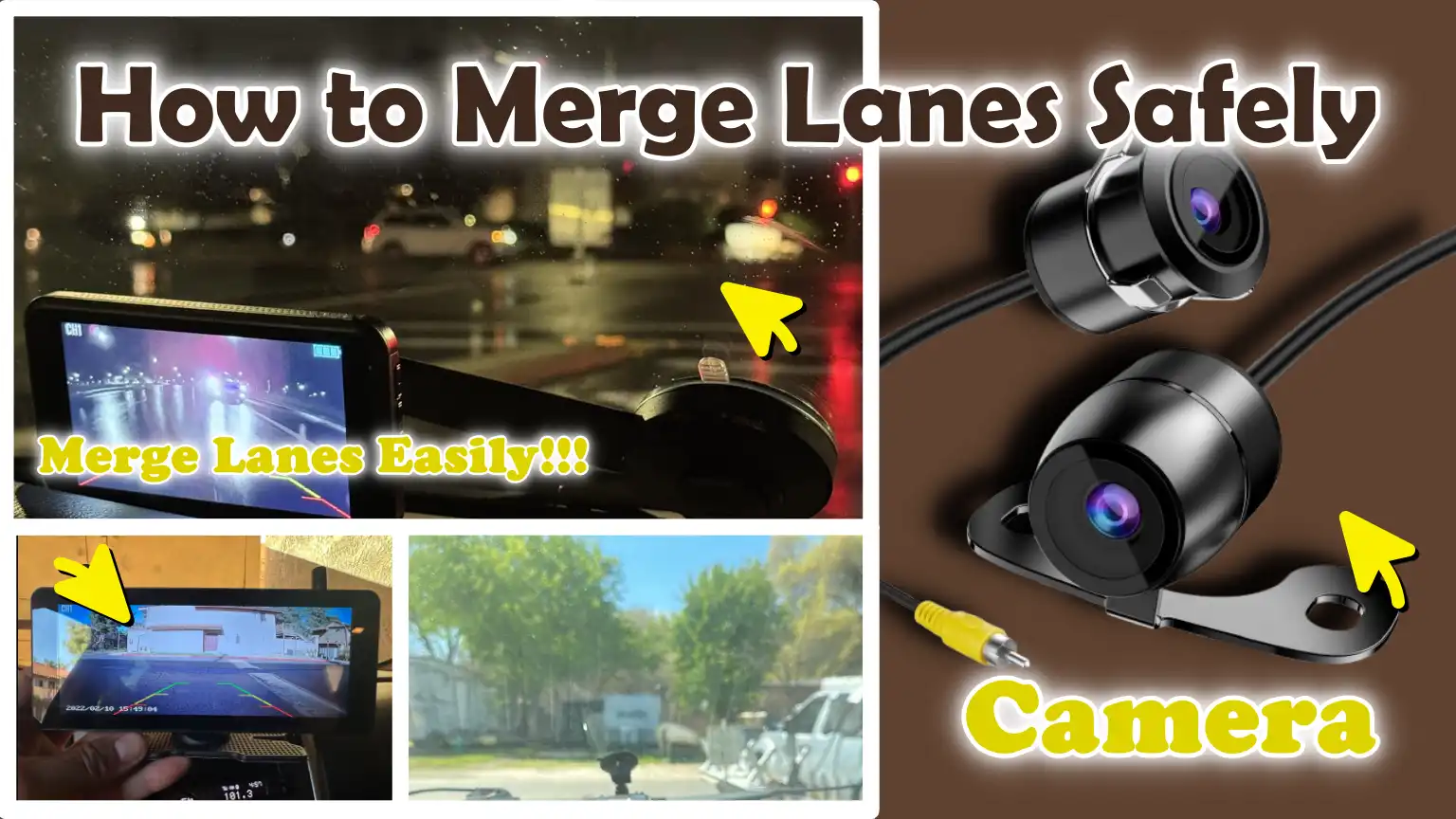
Rearview cameras provide a clear visual display of the area behind the vehicle; this is particularly useful when you are preparing to change lanes or merge in congested or slow-moving traffic.
These cameras display a live video feed on the dashboard screen, helping drivers identify objects or vehicles that may not be clearly visible through mirrors alone.
This enhanced visibility proves beneficial in heavy traffic situations or when vehicles are in close proximity to one another.
Although rearview cameras are typically used for reversing, they also enhance a driver’s overall situational awareness by providing a more comprehensive view of the surrounding environment.
By combining the camera view with mirror checks, drivers can better gauge the position of nearby vehicles and make safer decisions regarding merging into traffic.
3. Adaptive Cruise Control
Adaptive Cruise Control is a system that automatically adjusts the vehicle’s speed to maintain a safe distance from the vehicle traveling ahead.
This technology utilizes sensors or radar to detect traffic conditions and regulates the car’s speed as necessary, a feature that is particularly advantageous when driving on highways and during lane changes.
This technology helps drivers avoid getting too close to other vehicles, thereby reducing the risk of rear-end collisions.
When changing lanes, it assists in maintaining a steady and precise speed, enabling a smooth and seamless integration into the flow of traffic.
Although this feature offers both convenience and safety, drivers should remain vigilant and be prepared to take manual control of the vehicle at any time.
When used correctly, Adaptive Cruise Control helps maintain a consistent, safe distance and reduces stress during long or busy journeys.
Read More:
- How to Overtake Safely
- How to Use Turn Signals Properly
- How to Fix Turn Signals on a Car
- How to Check Blind Spot While Driving
- How to Use Mirrors When Driving
- How to Use ABS Brakes Properly
- How to Brake Safely on Steep Roads
- How to Drive Uphill Safely
- How to Drive Safely in Strong Winds
- How to Prevent Aquaplaning
Learn, Some Practical Tips for Beginners
Learning to safely merge into traffic lanes requires time, practice and a calm temperament, specially for new drivers, who may feel overwhelmed in heavy traffic.
Merging into traffic demands specific skills, including keen observation, accurate timing and sound decision-making; consequently, beginners often require repeated practice to build confidence and maintain control of their vehicle.
According to road safety guidelines from the National Highway Traffic Safety Administration, inexperience and hesitation are common causes of driving errors, particularly when changing lanes or merging into traffic.
Fortunately, with simple practice methods and the right mindset, beginners can rapidly improve their ability to anticipate the flow of traffic, identify safe gaps and merge with ease.
By focusing on a few basic habits such as: starting in low-pressure environments, learning to time their maneuvers correctly and remaining calm in stressful situations, new drivers can master the skill of merging safely and confidently; a skill that will serve them well in all types of driving conditions.
1. Practice in Low-Traffic Areas
Practicing in low-traffic areas is the most effective way for beginners to learn how to merge without feeling overwhelmed.
Quiet streets, less congested highways, or driving during off-peak hours provide a safe environment where drivers can focus on mastering the merging process without the added pressure of high-speed traffic.
In such settings, beginners can practice checking their mirrors, signaling, adjusting their speed and smoothly integrating into a lane.
Repeatedly performing these actions allows the body to develop a habit and boosts self-confidence, making the entire process feel more natural over time.
As their confidence grows, drivers can gradually venture onto busier roads and apply these same techniques there as well.
Starting in simpler situations enables beginners to learn safely, ensuring they do not panic when eventually faced with more challenging driving scenarios.
2. Learn Proper Timing and Decision-Making
Proper timing and sound decision-making are essential skills that determine how safely and smoothly a driver can merge into traffic.
Beginners often struggle to decide when to enter a lane or how much space is sufficient; however, careful observation and practice lead to improvement in this area.
Learning to estimate the speed and distance of other vehicles helps drivers identify safe gaps and choose the right moment to merge into the flow of traffic.
Proper timing implies entering a lane in such a way that other drivers are not forced to brake suddenly or alter their direction.
By observing experienced drivers, specifically how they merge into traffic, and engaging in regular practice, new drivers can enhance their ability to make quick and accurate decisions.
Over time, this skill becomes second nature and significantly enhances safety on the road.
3. Stay Calm Under Pressure
Remaining calm under pressure is crucial for merging safely into traffic, particularly in congested or high-speed environments.
Panic or fear can lead to hasty decisions, hesitation, or errors, thereby increasing the risk of accidents.
New drivers should focus on staying composed, controlling their breathing and adhering to the fundamental steps for merging into traffic without rushing.
If no safe space is available, it is always better to wait for the next opportunity rather than attempting to force your way in.
When drivers trust in their training and exercise patience, their confidence grows.
A calm mind helps drivers think clearly, react appropriately and maintain full control over the vehicle, making driving in traffic safer and more efficient in every situation.
Conclusion – How to Merge Lanes Safely
Now, you have clearly understand that mastering the lane merging is not difficult, as it requires proper attention, patience and the right habits every time you go for the drive.
When drivers understand the flow of traffic and adhere to proper procedures such as: checking mirrors, scanning blind spots, adjusting speed and selecting the right opportunity, merging transforms from a hazardous undertaking into a smooth and predictable process.
Numerous real-world accident reports indicate that minor errors such as: misjudgment, failing to signal, or hesitation, as it can lead to serious collisions, particularly in high-speed or congested traffic conditions.
This is why merging safely is not solely about one’s own safety, but also about respecting other drivers and contributing to the creation of a safer road environment for everyone.
By adopting the principles of defensive driving and utilizing available road signs, markings and modern vehicle technologies, drivers can minimize confusion and avoid the need for sudden, abrupt reactions.
Merging safely also improves traffic flow by preventing unnecessary braking and congestion, thereby saving time, reducing stress and even lowering fuel consumption.
The more consistently drivers practice these habits, the more natural and intuitive the act of merging becomes over time.
Whether you are a novice learning the basics or an experienced driver refining your skills, the key is to remain alert, stay calm and always make deliberate decisions.
Also, you can ask the questions below for more information about this guide on How to Merge Lanes Safely.
Frequently Asked Questions
Q1. What is lane merging in driving?
Answer: Lane merging is the process of moving your vehicle from one lane into another where traffic is already flowing. This typically occurs when you are entering a highway, when a lane is ending, or when you need to change lanes to reach an exit. The primary objective of merging is to integrate into the flow of traffic in a manner that does not force other drivers to brake suddenly or alter their direction. Safe merging involves adjusting your speed, monitoring your surroundings and entering the lane in a controlled and predictable manner.
Q2. Why is safe lane merging important?
Answer: Safe lane merging is crucial because it helps prevent accidents and ensures the smooth flow of traffic. When drivers merge improperly, it can lead to rear-end collisions, side-impact crashes, or traffic congestion. Merging correctly reduces confusion among drivers, allowing everyone to react calmly. It also enhances overall road safety by making the general flow of traffic more stable and predictable.
Q3. When should I start preparing to merge?
Answer: You should begin preparing to merge as early as possible, typically the moment you spot a “Merge” sign or realize that your current lane is about to end. Preparing early gives you ample time to check your mirrors, monitor traffic conditions, signal your intentions and adjust your speed accordingly. Waiting until the last moment may force you to make sudden decisions, thereby increasing the risk of errors and accidents.
Q4. How do I know if it is safe to merge?
Answer: Merging is safe when there is sufficient space between vehicles for your car to enter the lane easily, without forcing any other vehicle to brake suddenly or change lanes. You should check your mirrors, look over your shoulder to check your “blind spots” (areas not visible in the mirrors) and estimate the speed and distance of nearby vehicles. The safe distance between vehicles should be such that you can enter the lane easily while maintaining a steady speed.
Q5. What should be the correct speed when merging?
Answer: When merging, your speed should be approximately the same as the speed of the traffic moving in the lane you wish to enter. If you are moving too slowly, you may disrupt the flow of traffic and force other drivers to brake suddenly. If you are moving too fast, you may not be able to safely fit into the available gap between vehicles. Matching your speed to that of the traffic allows your vehicle to blend into the flow of traffic naturally and without interruption.
Q6. Why should I check my “blind spots” (invisible areas) before merging into a lane?
Answer: Blind spots are areas around your vehicle that are not visible in your mirrors; another vehicle could be hidden in these areas. If you do not check your blind spots (areas not directly visible), you may inadvertently move into a lane where another vehicle is already present, thereby increasing the risk of a side-impact collision. Before merging into a lane, glancing over your shoulder ensures that the lane is indeed clear.
Q7. How important are turn signals when merging into a lane?
Answer: Turn signals are extremely important because they communicate your intentions to other drivers. Signaling in advance gives others ample time to adjust their speed or position and make room for you. Without a signal, your actions can confuse other drivers and increase the risk of accidents. Always keep your turn signal activated until you have fully merged into the lane.
References:
[1] Efficient and Safe Merging Solutions – Advanced Freeway Merge Assistance: Harnessing The Potential of Connected Vehicles
https://www.fhwa.dot.gov/publications/research/ear/14045/index.cfm

Guys, I’m a car audio enthusiast and customization expert and I love clear sound and clean installation. Plus, I have spent years helping people build their dream audio setups. And whenever I’m working on cars, I probably listen to music and thinks about the next big upgrade.