
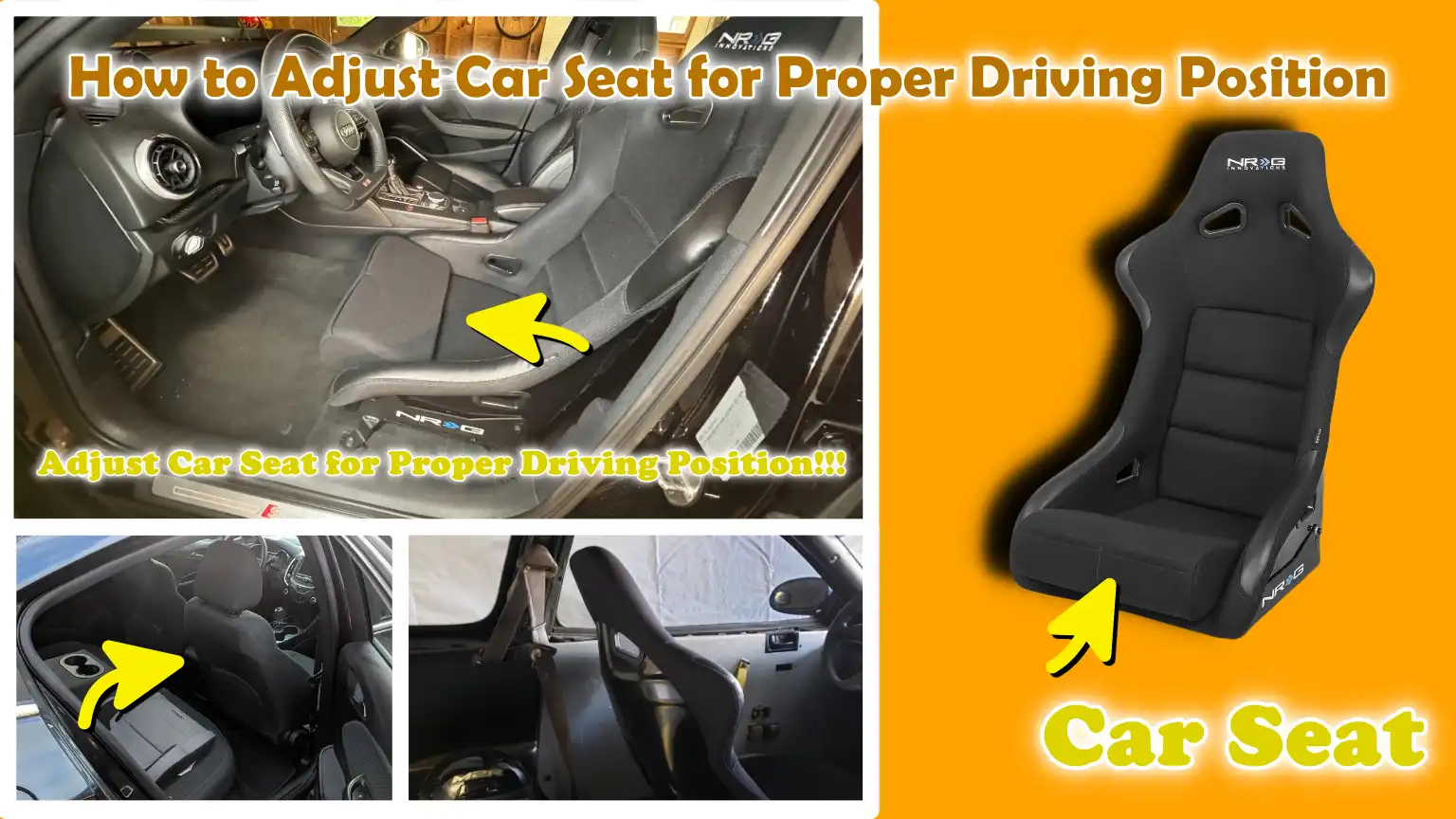
Written By: Don Dodi
Fact Checked By: Kristen Brown
Reviewed By: Diego Rosenberg
Basically, a small change in your seat position literally makes a big difference in your safety.
But, most of the drivers do not realizes that the way they sit in their car directly affects how safely they can drive.
You need to understand that: when you properly adjust car seat enhances the comfort, as well as it plays a major role that improves control, visibility and reaction time on the road as well.
Plus, NHTSA also explains that correct seating position literally helps the drivers to maintain full control of the steering wheel and pedals specially during the sudden braking or emergencies as well.
Because, whenever your seat is too far, too close or poorly angled, then it can slow down your response and increase the fatigue: which are the common causes of driving errors.
As well as, research in ergonomics shows that proper posture reduces the strain on y our back, neck and legs, that allows you to stay focused for longer periods.
Now, in this guide you’ll learn How to Adjust Car Seat for Proper Driving Position so that you can improve your driving confidence, reduce the tiredness and make every journey way more safer than ever.
Let’s, Understand About the Correct Driving Position
The correct driving position serves as the foundation for safe, controlled and comfortable driving; yet, many drivers frequently overlook it.
The way you sit in your car directly impacts how well you can see the road, how you control the vehicle and how you react to sudden situations.
Road safety authorities such as: the National Highway Traffic Safety Administration, emphasize that a proper seating position helps drivers maintain full control over steering, braking and acceleration, particularly during emergency situations.
When your body is correctly aligned, your movements become quicker and more precise, a critical factor in avoiding accidents.
Scientific research in ergonomics also indicates that a balanced and natural posture reduces muscle strain and ensures that the driver remains comfortable over extended periods.
The correct driving position is not merely a matter of comfort; it is a hallmark of safety, stability and efficiency, helping you remain focused and confident every time you are on the road.
1. What Does the Correct Driving Position Entail?
The correct driving position involves sitting in a manner that keeps your body in a comfortable state while simultaneously ensuring that you maintain full control over the vehicle at all times.
Your back should be straight and fully supported by the seat, neither slouched nor loose, as an upright posture aids in maintaining balance and reduces the pressure placed on your spine.
Your hips should be firmly seated against the back of the seat and your shoulders should rest against the backrest, allowing you to turn the steering wheel without having to lean forward.
When gripping the steering wheel, your arms should be slightly bent; This provides better control and prevents fatigue in your shoulders and arms.
Furthermore, your leg positioning should be such that, even when the pedals are fully depressed, your knees remain slightly bent; this allows you to apply the brakes easily and firmly whenever necessary.
This posture keeps your body stable, minimizes unnecessary movement and enables you to react quickly without losing control of the vehicle.
2. Benefits of Properly Adjusting the Seat
Properly adjusting your seat offers several significant benefits that directly enhance your driving safety and comfort.
When your seat is correctly adjusted, your visibility improves significantly, allowing you to easily view the road, mirrors and surrounding environment without straining your neck or eyes.
This reduces the likelihood of overlooking critical elements such as other vehicles, pedestrians, or road signs.
Proper seat adjustment also alleviates physical strain on your back, neck and legs, helping you avoid pain and fatigue, particularly during long journeys.
Ergonomic studies indicate that reduced physical strain allows drivers to remain alert and focused for longer periods, thereby lowering the risk of errors caused by fatigue.
Moreover, a correct seating position improves your reaction time, as your hands and feet are already positioned to quickly manipulate the steering wheel and pedals.
It also ensures that safety systems such as: seatbelts and airbags, function effectively, as they are designed to provide maximum protection only when you are seated in the correct position.
Overall, properly adjusting your seat not only makes driving more comfortable but also plays a crucial role in keeping you safe on the road.
How to Adjust Car Seat for Proper Driving Position – Easy Steps
Properly adjusting your car seat is one of the most critical steps for safe driving; yet, many drivers rush through this process without fully grasping its significance.
Your seat position directly impacts how effectively you can control the pedals, how quickly you can react in an emergency and how comfortable your body feels while driving.
Safety organizations, such as the National Highway Traffic Safety Administration, emphasize that proper seat adjustment helps drivers maintain complete control over the vehicle, particularly during sudden braking or unexpected situations.
When your seat is set at the correct distance and angle, your body remains stable, your movements become more precise and the likelihood of making errors is significantly reduced.
Research in ergonomics also indicates that proper seating posture minimizes muscle strain and enhances coordination between your hands and feet.
Taking a few extra seconds to properly adjust your seat can significantly boost your safety, comfort and confidence behind the wheel.
1. How to Adjust Seat Distance – Forward and Backward
The distance between your seat and the pedals is one of the most crucial adjustments, as it directly affects your control over the vehicle.
If you sit too far back while driving, you will have to overextend your legs to reach the pedals, preventing you from applying firm and rapid pressure when necessary.
Conversely, sitting too far forward can cause your legs to become overly cramped, limiting their natural freedom of movement, a factor that can also negatively impact your reaction time.
When the seat distance is properly adjusted, your legs can move naturally and comfortably without any strain.
This also helps maintain your body’s balance; your back remains firmly supported against the seat, while your legs efficiently operate the pedals.
The correct seating distance ensures that you can apply the brakes firmly and with complete control, a crucial factor, specially in emergency situations where every second counts.
Correct Leg Positioning
Correct leg positioning plays a vital role in maintaining both comfort and control while driving.
Your knees should always remain slightly bent, even when you fully depress the pedals.
This slight bend is essential because it keeps your leg muscles active and ready, providing you with greater power and better control when engaging the brakes or accelerator.
If your legs remain completely straight (locked), your muscles become less responsive, which can slow down your reaction time during critical moments.
Furthermore, your thighs should rest comfortably on the seat, neither lifting off nor bearing excessive pressure; this ensures proper blood circulation and reduces fatigue.
A natural and comfortable leg position allows you to drive for extended periods without discomfort, while also ensuring that you can react quickly and easily when necessary.
Checking Pedal Control
Once you have adjusted the seat distance, it is crucial to verify that you are able to control the pedals properly.
You should be able to depress the brake pedal firmly and fully, without locking your knee or overstretching your leg.
This is crucial because effective braking requires both power and control, specially in emergency situations where you need to bring the vehicle to a rapid halt.
Your foot should be able to move effortlessly between the accelerator, brake and clutch pedals, without requiring you to shift your body position or lift your heel excessively.
This subtle adjustment helps maintain balance and facilitates a quicker reaction time.
According to driving safety guidelines, having full and comfortable access to the brake pedal is one of the most critical factors in preventing accidents.
Properly checking your pedal control ensures that your seating position supports safe driving, enabling you to maintain quick, firm and precise control over your vehicle at all times.
2. How to Adjust Seat Height
Adjusting your car seat height is crucial for maintaining clear visibility and secure control over the vehicle.
Many drivers focus solely on comfort, forgetting that seat height directly impacts how much of the road they can see and how well they can perceive surrounding traffic.
When your seat is set at the correct height, your field of vision improves, allowing you to spot road signs, signals, pedestrians and other vehicles much sooner.
Safety agencies, such as the National Highway Traffic Safety Administration, emphasize that enhanced visibility helps drivers make quicker and safer decisions, particularly in congested or unpredictable traffic conditions.
Research in ergonomics (the science of designing objects to suit the human body) also indicates that proper seat height adjustment reduces the need to strain your neck or lean forward, thereby preventing physical fatigue and keeping your body in a relaxed posture.
Sitting too low can obscure your view of the road, while sitting too high can compromise your balance and make it difficult to control the vehicle comfortably.
Maintaining a balanced seat height ensures that you remain comfortable, alert and fully aware of everything happening around you, all of which are essential for safe driving.
Eye Level
Your eye level plays a pivotal role in how clearly and safely you can view the road ahead.
Ideally, your eyes should be positioned right in the middle of the windshield; this provides you with a broad and balanced view of both the road and the surrounding traffic.
This position helps you better judge distances and react more quickly to situations such as sudden stops or unexpected obstructions.
If your seat is positioned too low, your view of the road may be obscured by the dashboard or other vehicles, potentially delaying your reaction time.
Conversely, if your seat is too high, you may experience discomfort and compromised balance, particularly when negotiating turns or performing sudden maneuvers.
Maintaining your eye level at the correct height ensures that your gaze remains in a natural and comfortable posture; this reduces strain on your neck and eyes, allowing you to focus your full attention on the task of driving.
Visibility Over the Dashboard
While driving, maintaining a clear line of sight over the dashboard is crucial for maintaining control of the vehicle and remaining aware of your surroundings.
You should have a clear and unobstructed view of the road ahead without having to crane your neck, lift your body, or lean forward.
When your seat height is adjusted correctly, your field of vision should encompass both the road immediately in front of your vehicle and the traffic ahead; this enables you to safely plan your driving maneuvers.
Poor visibility can cause you to overlook critical elements such as speed breakers, road markings, or sudden changes in traffic flow.
This significantly increases the risk of accidents and transforms the act of driving into a highly stressful experience.
The correct seat height keeps your head aligned naturally, thereby reducing fatigue and ensuring that you remain in a comfortable position, even during long-distance journeys.
Ensuring clear visibility over the dashboard may seem like a minor adjustment, yet it has a profound impact on your safety, confidence and overall driving experience.
3. How to Adjust the Seat Backrest Angle
Adjusting the angle of the seat backrest is crucial for keeping your body stable, comfortable and ready to react while driving.
Many drivers sit either too upright or reclined too far back; both of these seating postures can compromise vehicle control and lead to increased fatigue over time.
A properly adjusted backrest supports the natural curvature of your spine and keeps your upper body balanced without placing excessive strain on your muscles.
Safety guidelines from organizations such as the National Highway Traffic Safety Administration indicate that proper back support helps drivers maintain better control over the steering wheel and improves reaction times in sudden or unexpected situations.
Research in ergonomics also demonstrates that correct seating posture reduces strain on the back and shoulders, enabling drivers to remain comfortable and focused for extended periods.
When the backrest angle is set correctly, your body remains alert even while in a relaxed state, precisely what is required for safe and confident driving.
The Ideal Seating Angle
The ideal seating angle for your seat backrest involves a slight recline, typically between 100 and 110 degrees, which allows your spine to rest in a natural and supported position.
This angle is important because sitting completely upright at a 90-degree angle can place excessive pressure on your lower back, whereas reclining too far back can make it difficult to control the steering wheel and maintain a clear view of the road.
A slight recline distributes your body weight more evenly across the seat and backrest, thereby minimizing pressure points and enhancing comfort.
This also helps keep your head and neck aligned, thereby preventing stiffness and fatigue during long journeys.
Maintaining this angle allows your arms to move freely and comfortably, giving you better control over the steering wheel without the need to lean forward or exert excessive force.
Upper Body Support
Providing proper support to the upper body is crucial for maintaining control and minimizing fatigue while driving.
Your shoulders should remain in constant contact with the seat’s backrest, even when you are turning the steering wheel.
This contact helps stabilize your body and prevents unnecessary movements that could compromise your control over the vehicle.
If your shoulders slump forward or lose contact with the seat, it indicates that the angle of your backrest or the seat position is not set correctly; this can lead to strain on your arms, neck and upper back.
Supporting your upper body ensures that your arms remain slightly bent and in a relaxed posture, thereby improving your grip on the steering wheel and reducing fatigue.
Furthermore, proper upper body support enables you to react more quickly in emergency situations, as your posture remains stable and controlled.
Providing adequate support to your shoulders may seem like a minor detail, but it plays a significant role in making your driving experience safer, easier and more comfortable.
4. How to Adjust the Steering Wheel Position
Properly adjusting the steering wheel position is crucial for safe and controlled driving, as it directly impacts your ability to maneuver the vehicle effectively, react quickly and safely benefit from safety systems such as airbags.
Many drivers overlook this aspect, positioning the steering wheel either too close or too far away, doing so can compromise vehicle control and increase the risk of injury in the event of a collision.
According to safety guidelines from the National Highway Traffic Safety Administration, maintaining the correct distance and angle of the steering wheel allows drivers to retain full control over the vehicle while simultaneously ensuring a safe clearance zone for airbag deployment.
Research in ergonomics (the science of workplace efficiency) indicates that when your arms are in a natural, slightly bent position, your movements are more precise and you experience less fatigue.
The steering wheel should be adjusted in such a way that you can grip it comfortably without having to overextend or excessively bend your arms.
It should also be tilted so that it is aimed toward your chest rather than your face, thereby enhancing both comfort and safety.
A properly adjusted steering wheel helps you maintain a comfortable posture, react swiftly and retain superior control over your vehicle in all driving conditions.
Distance from the Steering Wheel
Maintaining the correct distance between your chest and the steering wheel is essential for both safety and comfort.
The recommended distance is approximately 10 to 12 inches (or 25 to 30 centimeters); this provides you with ample space to move your arms freely while simultaneously ensuring your safety in the event of an airbag deployment.
If you sit too close to the steering wheel, the airbag may deploy with excessive force and cause injury, particularly to your chest and face.
Conversely, if you sit too far away, you may have to strain your arms to reach the steering wheel, which diminishes your control and slows down your reaction time.
Maintaining the correct distance ensures that your arms remain slightly bent, providing you with greater strength and precision while steering.
It also helps you maintain your balance in the seat, thereby reducing the strain placed on your shoulders and upper body.
This small adjustment plays a crucial role in enhancing both your driving safety and your overall comfort.
Hand Positioning
Maintaining the correct hand position on the steering wheel is essential for maintaining control over the vehicle and reacting quickly to changing road conditions.
The safest and most highly recommended position is to place your hands at the 9 and 3 o’clock positions; this provides balanced control and allows you to turn the steering wheel with ease and precision.
In this position, your arms remain in a relaxed and slightly bent posture, which reduces fatigue and provides the necessary leverage for rapid steering maneuvers.
It also helps you maintain stability when taking sharp turns or handling the vehicle during emergency situations.
Modern safety guidelines also advocate for this specific position, as it keeps your hands away from the center of the steering wheel, where the airbag deploys, thereby significantly reducing the risk of injury.
Keeping your hands in the correct position ensures that you maintain full control over the vehicle at all times, leaving you fully prepared to react instantly to any situation while remaining in a comfortable posture.
5. How to Adjust the Headrest Position
Properly adjusting the headrest is a crucial part of safe driving, even though many drivers overlook it or view it merely as a comfort feature.
In reality, the headrest is designed as a critical safety component that protects your head and neck during sudden jolts, particularly during rear-end collisions.
Safety guidelines from the National Highway Traffic Safety Administration indicate that a headrest positioned correctly helps limit the rearward movement of your head during a collision, thereby reducing the risk of severe neck injuries.
Research in ergonomics (the science of adapting the work environment to the human body) also demonstrates that providing proper support to the head and neck improves posture and reduces muscle strain during long journeys.
The headrest should be positioned as close to the back of your head as possible, though not so close that it pushes your head forward, to ensure that your neck remains in a natural and comfortable position.
When adjusted correctly, it not only enhances comfort but also plays a vital role in protecting you from injury, making it an indispensable element of your overall driving setup.
Correct Height
Determining the correct height for the headrest is paramount to ensuring adequate safety and support.
The top of the headrest should be level with the top of your head so that it can effectively support your head during sudden movements.
If the headrest is positioned too low, it will fail to provide sufficient support; in the event of a collision, your head could snap backward violently.
Conversely, if it is positioned too high, it will not align properly with your head, thereby diminishing its effectiveness.
Positioning the headrest at the correct height ensures that your head remains supported in a natural position, which also helps to alleviate strain on your neck and shoulders.
This proper alignment enables you to maintain a comfortable seating posture while driving and ensures that the headrest’s safety function operates exactly as intended.
Safety Benefits
The primary safety benefit of a correctly adjusted headrest is the prevention of neck injuries, specifically, the prevention of a condition known as “whiplash,” which typically occurs during rear-end collisions.
When a car is struck from behind, the body moves forward while the head snaps rapidly backward, placing strain on the neck muscles and the spinal cord.
A correctly positioned headrest mitigates this sudden movement by supporting the head and keeping it aligned with the body.
This significantly reduces the risk of pain, injury and long-term damage.
Beyond accident protection, a correctly adjusted headrest also aids in maintaining proper posture during normal driving, thereby reducing neck fatigue and discomfort during long journeys.
By spending just a few seconds to correctly adjust your headrest, you can significantly enhance both your safety and comfort every time you drive.
6. How to Adjust the Lumbar Support
Adjusting the lumbar support is crucial for keeping your lower back comfortable, supported and free of strain while driving.
The lumbar region of your spine features a natural inward curve; rather than flattening this curve or pushing it too far forward, your car seat should provide support for it.
When this part of your back lacks proper support, your muscles are forced to work harder to keep you upright, which can lead to premature fatigue and discomfort, particularly during long journeys.
Guidelines from the National Highway Traffic Safety Administration indicate that effective seat support helps drivers maintain better posture and control, while research in ergonomics demonstrates that proper lumbar support reduces pressure on the spine and enhances overall comfort.
When adjusted correctly, lumbar support stabilizes your back, allows your upper body to remain in a relaxed position and helps you focus better on the road without being distracted by discomfort or pain.
Lower Back Support
Lower back support should be adjusted to fit naturally into the curve of your lower spine without forcing your body into an uncomfortable position.
When set correctly, it fills the gap between your lower back and the seat, providing gentle support that keeps your spine properly aligned.
If the support is insufficient, your back may slouch or flatten out, leading to increased muscle strain and poor posture.
Conversely, if the support is excessive, it may push your back too far forward and cause discomfort.
The objective is to achieve a balanced position where your spine maintains its natural shape and your back receives full support.
This proper alignment helps your body maintain comfort and stability, making it easier to control the vehicle without any unnecessary effort.
Prevention of Back Pain
One of the greatest benefits of proper lumbar support is the prevention of back pain and fatigue caused by driving.
Sitting for prolonged periods without adequate support can lead to muscle stiffness, soreness and even chronic issues such as lower back pain.
When your lumbar support is adjusted correctly, it reduces pressure on your spine and distributes your body weight more evenly across the seat.
This allows your muscles to relax and prevents them from becoming overworked.
Consequently, you feel less fatigued and more comfortable, even during long journeys.
Proper support also helps you maintain good posture throughout the entire trip, which improves blood circulation and leaves your body feeling refreshed.
By taking a little time to properly adjust your lumbar support, you can significantly alleviate discomfort and make your driving experience safer, healthier and more enjoyable.
How to Tune Your Driving Position
Fine-tuning your driving position is the final, and crucial, step that ensures everything works in harmony to provide maximum safety, comfort and control.
Even after adjusting the seat, subtle details such as: mirror angles, seatbelt placement and body posture, as it can significantly impact your visibility on the road and your ability to react effectively in various situations.
Many drivers overlook this step; however, proper adjustment eliminates blind spots, enhances situational awareness and ensures that all safety systems function correctly.
Guidelines from the National Highway Traffic Safety Administration indicate that the proper positioning of mirrors and seatbelts plays a significant role in reducing the risk of accidents and injuries.
Furthermore, research in ergonomics suggests that a balanced driving posture reduces fatigue and helps drivers maintain higher levels of concentration over extended periods.
Fine-tuning does not always entail making major alterations, but rather making minor adjustments to small details that collectively make the driving experience safer and more comfortable.
1. Adjusting Mirrors After Setting the Seat
Mirrors should always be adjusted only after you have set your seat position, as even a slight change in your seating posture can affect your field of view in the mirrors.
The rear and side mirrors should be adjusted to provide a clear and expansive view of the road behind and alongside your vehicle, without requiring you to turn your head excessively.
Correct mirror positioning helps minimize blind spots, those areas you cannot see directly, which are a common cause of accidents when changing lanes or making turns.
When your mirrors are properly adjusted, you can easily monitor surrounding traffic and make safer decisions while driving.
This simple step enhances your awareness of your surroundings and helps you feel more confident on the road.
2. Seatbelt Positioning
Correct seatbelt positioning is crucial for your safety and should always be checked after adjusting your seat.
The seatbelt should fit snugly across the center of your chest and rest against your shoulder, not across your neck, nor should it slip off your arm.
This positioning is vital because, in the event of a sudden stop or collision, the seatbelt is designed to distribute the force of the impact across the strongest parts of your body such as: your chest and shoulders.
If the belt is positioned incorrectly, it may fail to protect you effectively and could even result in injury.
Fastening your seatbelt properly and securely ensures that it works in conjunction with other safety features, such as airbags, to provide maximum protection in the event of an accident.
3. Balancing Comfort and Control
For safe driving, striking the right balance between comfort and control is essential.
While it is natural to adjust your seat for comfort, this should never compromise your ability to properly control the vehicle.
You should be able to reach the pedals, steering wheel and other controls with ease, without having to overstretch or strain your body.
Furthermore, your seating posture should be comfortable enough to prevent fatigue during long journeys.
If you prioritize comfort in your seating position too highly such as: sitting too far back or reclining excessively, it can slow down your reaction time and impair your visibility.
Conversely, if your seating position is too rigid or cramped, it can cause discomfort and distract you.
A balanced position helps you remain comfortable while maintaining full control over the vehicle, enabling you to drive safely and confidently in all situations.
Read More:
- How to Use Lane Assist Features
- How to Drive with Adaptive Cruise Control
- How to Park on a Hill
- How to Reverse Park Safely
- How to Parallel Park
- How to Park Safely on Busy Streets
- How to Drive in Heavy Traffic Safely
- How to Drive on Highways Safely
- How to Merge Lanes Safely
- How to Overtake Safely
- How to Use Turn Signals Properly
- How to Fix Turn Signals on a Car
- How to Check Blind Spot While Driving
- How to Use Mirrors When Driving
- How to Use ABS Brakes Properly
- How to Brake Safely on Steep Roads
- How to Drive Uphill Safely
- How to Drive Safely in Strong Winds
- How to Prevent Aquaplaning
Know, Some Safety Considerations
When establishing your driving position, it is crucial to prioritize safety above all else, as it directly impacts your well-being, whether you are driving on a daily commute or navigating an emergency situation.
Many drivers focus solely on comfort; however, proper seating posture is deeply intertwined with the effective functioning of safety systems, such as airbags and seat belts.
When your position is correct, your body remains stable, your reaction times are quicker and the risk of injury is significantly reduced.
Guidelines from the National Highway Traffic Safety Administration indicate that proper seating posture enhances vehicle control, facilitates immediate reactions and ensures that safety features perform exactly as they were designed to.
Research in ergonomics also suggests that when the body receives proper support, fatigue is minimized, allowing drivers to remain alert for longer periods.
Paying attention to these safety-related aspects ensures that, while driving, you are not only in a comfortable position but also completely safe.
1. Safe Distance from Airbags
Maintaining an appropriate distance from the steering wheel is vital for airbag safety, as airbags deploy with immense speed and force in the event of a collision.
It is recommended that you maintain a distance of approximately 10 to 12 inches between your chest and the steering wheel; this distance provides sufficient space for the airbag to fully inflate and properly cushion your body.
If you sit too close to the steering wheel, the airbag may strike you with great force before it has fully inflated, potentially causing severe injuries to your chest, face, or neck.
Conversely, if you sit too far back, the airbag will be unable to provide you with full protection, as your body may not be in the optimal position to fully benefit from the airbag’s support.
Maintaining the correct distance ensures that the airbag functions exactly as it was designed to; this mitigates the impact of a collision and protects your body’s vital organs during an accident.
2. Seating Posture and Reaction Time
While driving, your seating posture has a direct impact on how quickly and accurately you can react to sudden situations.
When you sit in the correct position, meaning your back is supported, your arms are slightly bent and your feet are properly positioned on the pedals, your body remains constantly poised to react without delay.
This state of readiness is crucial in emergency situations, as even a momentary delay in braking or steering can make a significant difference.
An incorrect seating posture such as: slouching or leaning too far back, as it can slow down your movements and compromise your control over the vehicle.
Proper seating posture keeps your muscles active and balanced, enabling you to react more quickly and naturally.
This enhances your driving proficiency and allows you to avoid accidents more effectively.
3. Preventing Fatigue During Long Journeys
Proper seating posture plays a pivotal role in preventing fatigue during long journeys; fatigue is often a common cause of driver distraction and errors.
When your seat is adjusted correctly, it supports your back, neck and legs in a natural alignment, thereby reducing the strain placed on your muscles.
This provides physical comfort and helps prevent the stiffness, discomfort and fatigue that can accumulate over time.
Without proper support, your muscles can experience excessive strain, leading to pain and a decline in concentration.
A properly adjusted seat also improves blood circulation, making your body feel more active and alert.
By minimizing physical strain and maintaining comfort, correct seating posture helps you stay focused on the road for extended periods, making your journey safer and more enjoyable.
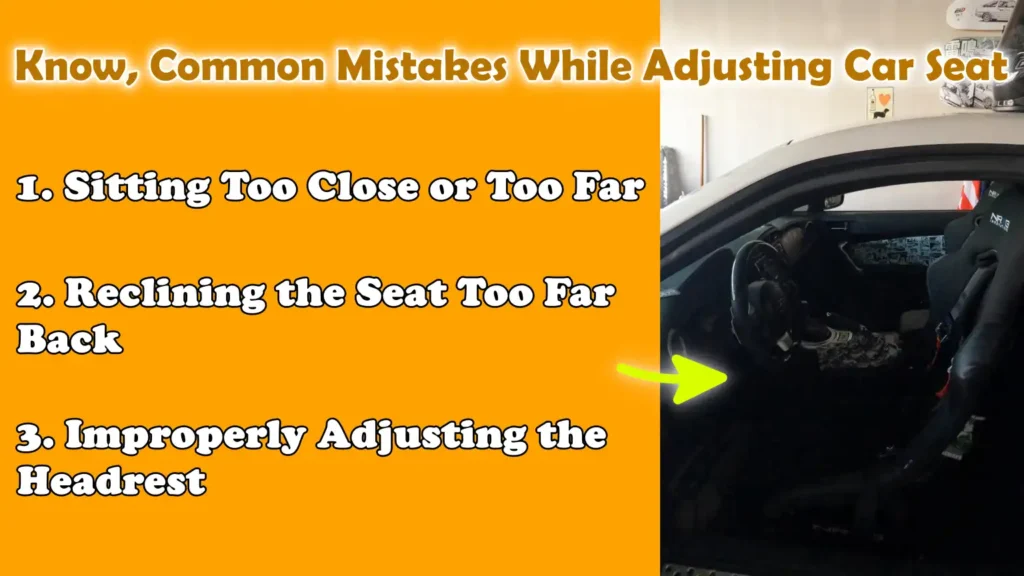
Know, Common Mistakes While Adjusting Car Seat
Many drivers make minor, yet serious, mistakes when adjusting their seats.
These errors can compromise vehicle control, increase fatigue and heighten the risk of injury in the event of an accident.
Seat-related issues may seem trivial at first, but they can significantly impact your reaction speed, your visual focus on the road and the effectiveness of the vehicle’s safety systems in protecting you.
According to guidelines from the National Highway Traffic Safety Administration (NHTSA), improper seating posture is a common cause of diminished driving performance and an increased risk of injury.
Research in ergonomics further indicates that poor posture and incorrect seat adjustment contribute to muscle strain, delayed reactions and reduced concentration levels.
Avoiding these common mistakes is not difficult; it simply requires awareness and a few simple adjustments that can significantly enhance both safety and comfort while driving.
Plus, there’s study involved with multiple participants by using different vehicles and seating setups that shows that seat positioning directly influences perceived comfort and physical strain, so it found out that improper seating leads to the increased to discomfort, specially in the lower back and shoulders and that’s why correct adjustments can improve the overall driving experience, so this research literally confirms that driver posture actually plays a major role to reduce the fatigue and maintains the focus.[¹]
1. Sitting Too Close or Too Far
Sitting too close to, or too far from, the steering wheel and pedals is one of the most common mistakes drivers make and it has a direct impact on both vehicle control and safety.
When you sit too close, your legs become cramped and your arms may be bent at an excessive angle; this restricts your freedom of movement, making steering feel both difficult and uncomfortable.
It also increases the risk of injury in the event of an airbag deployment, as the airbag lacks sufficient space to inflate safely.
Conversely, sitting too far back forces you to stretch your legs and arms to reach the pedals and steering wheel; this diminishes your ability to apply strong, immediate pressure when braking.
In emergency situations, this can slow down your reaction time.
Maintaining the correct distance preserves your body’s balance, ensures that your movements remain unhindered and keeps your control over the vehicle strong and precise.
2. Reclining the Seat Too Far Back
Reclining the seat too far back is another common mistake that can severely compromise your ability to control the vehicle.
While reclining the seat slightly can be beneficial for comfort, tilting it back excessively alters your seating posture in a way that makes it difficult to reach the steering wheel and clearly see the road ahead.
When your seat is reclined too far, your shoulders may lift away from the seatback; this reduces stability and makes your steering control less precise.
It can also affect how well your seatbelt fits against your body, potentially reducing its effectiveness in protecting you during a collision.
Furthermore, reclining the seat too far back can slow down your reaction time, as your body is not positioned in an active and alert stance.
Maintaining a moderate angle for the seatback ensures that you remain in a comfortable position while simultaneously retaining full control and maintaining a clear field of vision.
3. Improperly Adjusting the Headrest
Failing to properly adjust the headrest is a mistake made by many drivers, often because they do not realize its critical importance regarding safety.
The headrest is designed to protect your neck from sudden jolts, particularly during rear-end collisions, but it can only perform this function effectively if it is positioned correctly.
If the headrest is set too low or is positioned too far away from your head, it cannot provide adequate support, thereby increasing the risk of neck injuries (such as whiplash).
In the event of a collision, your head may snap violently backward; and without proper support, this sudden jolt can cause strain or injury to your neck muscles and spinal cord.
A properly adjusted headrest keeps your head aligned with your body and protects you from this sudden impact.
Taking just a few seconds to properly adjust your headrest significantly reduces the risk of injury and enhances your overall safety while driving.
Useful and Great, Tips for Different Drivers
Every driver possesses a unique body build and level of driving experience; consequently, the optimal seating position is not exactly the same for everyone.
Properly adjusting your seat to suit your specific height and comfort requirements is crucial for safety, vehicle control and clear visibility.
A position that may be ideal for one individual might not be suitable for another; therefore, it is essential to adjust the seat to accommodate each person’s specific needs.
Guidelines from the National Highway Traffic Safety Administration indicate that correctly adjusting the seat to fit the driver improves reaction times, reduces fatigue and enables more effective operation of vehicle controls.
Research in ergonomics further demonstrates that when the seat is adjusted to align with the driver’s physique, it minimizes physical strain and enhances the overall driving experience.
Understanding how to tailor your seating position to your specific requirements makes driving more comfortable, safer and easier to control under any circumstances.
1. Shorter Drivers
Shorter drivers often face challenges regarding clear visibility and comfortably reaching the pedals; however, these issues can be easily resolved through proper adjustments.
Increasing the seat height provides a clearer view of the road ahead, allowing you to see clearly over the dashboard without straining your neck.
Additionally, the seat should be positioned far enough forward to ensure that your feet can easily reach the pedals while keeping your knees slightly bent.
If the vehicle’s built-in height adjustment features are insufficient, using a firm cushion can aid visibility, provided that doing so does not compromise your balance or stability.
Maintaining a safe distance from the steering wheel is also crucial, even if you are seated quite close to it, to ensure that safety systems, such as airbags, can function correctly.
By making these careful adjustments, drivers of shorter stature can achieve both clear visibility and firm control over the vehicle.
2. Taller Drivers
Taller drivers should focus on creating ample legroom while simultaneously maintaining proper vehicle control and a correct seating posture.
Sliding the seat slightly backward provides the necessary legroom; however, it is essential to ensure that your hands can still comfortably reach the steering wheel and that your elbows remain slightly bent.
Your knees should remain slightly bent when operating the pedals, allowing for both acceleration and deceleration to be executed with ease and control.
Lowering the seat height can provide additional headroom, ensuring that your head does not sit too close to the vehicle’s roof.
Furthermore, maintaining a safe distance from the steering wheel is vital to ensure that the airbags can deploy correctly.
For taller drivers, making the right adjustments ensures that control over the vehicle is not compromised for the sake of comfort, thereby facilitating safe and effective driving.
3. New Drivers
Before beginning to drive, new drivers should dedicate a little extra time to finding and practicing the correct seating position, as this plays a pivotal role in building both confidence and control.
Sitting in the correct position helps new drivers understand how the vehicle responds to their inputs, making steering, braking and accelerating easier.
Practicing seat adjustments while the vehicle is stationary allows you to focus on your seating posture, pedal reach and visibility without any rush or distraction.
This preparation helps reduce nervousness and improves coordination between your hands and feet.
The correct seating position also enables new drivers to react more quickly and safely to sudden or unexpected situations.
By adopting this habit right from the start, new drivers can develop strong driving skills and maintain safe control on the road.
Conclusion – How to Adjust Car Seat for Proper Driving Position
So, even with the small seat adjustments can literally create a big difference in your safety and control as well.
While many drivers focus on speed, traffic regulations, or vehicle features, it is your seating position that establishes your direct connection with the vehicle and influences every movement you make.
A properly adjusted seat ensures that your body remains stable, your line of sight remains clear and your limbs can react swiftly in any situation.
Safety guidelines from the National Highway Traffic Safety Administration emphasize that a correct seating position improves reaction times and facilitates the effective operation of safety systems such as: seat belts and airbags.
Furthermore, research in ergonomics indicates that a proper seating position reduces physical strain on the body, allowing you to remain comfortable and focused even during long drives.
From adjusting seat distance and height to positioning the steering wheel and headrest correctly, taking the right steps creates a balanced driving posture that improves both your driving performance and your overall physical well-being.
Now, you can still ask some related questions below this guide.
Frequently Asked Questions
Q1. Why is it important to adjust your seat while driving?
Answer: Properly adjusting your car seat is crucial, as it directly impacts how safely and comfortably you can drive. When your seat is set correctly, you can easily reach the steering wheel and pedals without experiencing any strain or stiffness. This enables you to react quickly in emergency situations, such as sudden braking or avoiding obstacles. Safety experts, such as those at the National Highway Traffic Safety Administration, point out that a correct seating position improves vehicle control and helps safety systems, like airbags and seat belts, function effectively. It also reduces strain on your back, neck and legs, allowing you to maintain focus and feel less fatigued during long journeys.
Q2. What is the correct seating position while driving?
Answer: The correct driving position is one in which your body is upright, supported and comfortable. Your back should rest firmly against the seat, your shoulders should touch the backrest and your arms should be slightly bent when holding the steering wheel. Your knees should also remain slightly bent when fully depressing the pedals. This position helps you maintain balance and control without placing excessive strain on your body. Research in ergonomics indicates that maintaining a natural seating position enhances comfort and allows drivers to react with greater speed and precision.
Q3. How far away from the steering wheel should I sit?
Answer: You should sit approximately 10 to 12 inches, or 25 to 30 centimeters, away from the steering wheel. This distance provides you with sufficient space to move your arms comfortably while also keeping you safe in the event that the airbag deploys. Sitting too close to the steering wheel can increase the risk of injury, as airbags deploy with considerable force. Conversely, sitting too far back can compromise your control over the steering wheel. Maintaining the correct distance ensures that your arms remain slightly bent, allowing you to drive with both ease and safety.
Q4. How high should my seat be while driving?
Answer: Your seat height should be adjusted so that your eyes are positioned roughly in the middle of the windshield. This position provides a clear and comprehensive view of the road without requiring you to strain your neck or lean forward. You should also be able to see clearly over the top of the dashboard. Sitting too low can obstruct your line of sight, while sitting too high may make you feel unstable. The correct seat height helps you maintain awareness of your surroundings and react more quickly to changing traffic conditions.
Q5. What is the correct angle for the seat backrest?
Answer: The seat backrest should be reclined slightly, typically between 100 and 110 degrees. This angle supports the natural curvature of your spine and keeps your body comfortable without compromising your control. Sitting completely upright can place excessive strain on your back, whereas reclining too far back can make it difficult to reach the steering wheel and see the road clearly. A slight recline helps distribute your body weight evenly, ensuring that your seating position remains both comfortable and stable.
Q6. How should I position my hands on the steering wheel?
Answer: Your hands should be positioned on the steering wheel at the 9 and 3 o’clock positions. This grip provides you with superior control, allowing you to turn the wheel easily and quickly whenever necessary. It also ensures that your arms remain comfortable and slightly bent, thereby reducing fatigue. This hand position is recommended because it helps maintain balance and keeps your hands away from the center of the steering wheel, the area where the airbag deploys.
Q7. Why is it important to adjust the headrest?
Answer: Adjusting the headrest is crucial because it protects your neck during sudden collisions, particularly rear-end impacts. When positioned correctly, the headrest supports your head and prevents it from snapping backward suddenly. This reduces the risk of neck injury, commonly referred to as “whiplash.” The top of the headrest should be level with the top of your head and it should be positioned close enough to provide support without pushing your head forward.
References:
[1] Driver sitting comfort and discomfort (part I): Use of subjective ratings in discriminating car seats and correspondence among ratings
https://www.researchgate.net/publication/223178616_Driver_sitting_comfort_and_discomfort_part_I_Use_of_subjective_ratings_in_discriminating_car_seats_and_correspondence_among_ratings

Guys, I’m a car audio enthusiast and customization expert and I love clear sound and clean installation. Plus, I have spent years helping people build their dream audio setups. And whenever I’m working on cars, I probably listen to music and thinks about the next big upgrade.